Categories
Accountability crime and punishment general freedom local leaders moral hazard nannyism national politics & policies privacy property rights responsibility too much government U.S. Constitution

The Minimal Use of a Finger

Drivers in Washington State have a new law to . . . swerve from?

“New distracted driving law starts Sunday, July 23,” the Washington State Department of Transportation (WSDOT) tweeted last week. “The law forbids,” Washingtonians were told,  “virtually all use of handheld gadgets such as phones, tablets, laptop computers and gaming devices while driving.”

The idea is to prevent accidents. Though distracted driving’s danger has been contested, texting while driving certainly seems a kind of crazy.  

Thankfully, it’s possible to talk “hands free.”

Which, it turns out, the new law does allow. Drivers may activate and de-activate hands-free devices (and apps) with the “minimal use of a finger.”

Eating and drinking while driving are also disallowed, but those are “secondary offenses,” which police are not allowed to pull you over for.

At this point, another meaning of “minimal use of a finger” may occur to some readers. What starts out as secondary offenses have been known to be upgraded, legally and practically, to primary offense status.

Does a shiver runs down your back?

Yet another rule! More fines!

More interactions with police.

And if all this doesn’t feel “police state-y” enough for you, there is argument in Seattle about whether pedestrians should be prohibited from “distracted walking.”

Yes, some are actually considering that.

I’m reminded of an argument against socialism: government-run enterprises tend to be run “ruthlessly and with special attention to prosecution (and overburdening) of the poor.” Why would anyone want such techniques writ society-wide, in every sector?

Meanwhile, we apparently must live and drive with more rules and more fines and more harassment.

This is Common Sense. I’m Paul Jacob.


Printable PDF


Categories
education and schooling free trade & free markets general freedom ideological culture media and media people national politics & policies privacy property rights responsibility too much government U.S. Constitution

According to Economics

“Everywhere you look, economics is despised,” writes Tom Woods in his Tuesday email letter.

You know what isn’t despised? A daily email letter.*

But I digress; back to economics.

“The gimme-free-stuff people hate it because they don’t like being told that there might be undesirable side effects from seizing other people’s things.”

Well, true enough. But turn it around: many people demand free stuff at least in part because they do not understand the bigger picture . . . which Mr. Woods ably provides in his daily podcast and on his weekly Contra Krugman podcast with economist Bob Murphy.

“Politicians hate it, because it imposes logical constraints on what political activity can accomplish.”

True, but, like many in the general public (from whence they come), politicians’ prior lack of economic knowledge also leads, in part, to their hubris.

“Even some folks in the business world hate it, because (1) they’d rather agitate for special privileges than hear the case for free markets, and (2) they’d rather have low interest rates than be warned about the causes of the business cycle.”

Yes, too true. But, again, business people are generally just people, most of whom haven’t even been exposed to something beyond boring and misleading textbook econ, if that. Mr. Woods knows that, since that’s what his mission is, exposing more folks to ideas beyond what he calls “the index card of allowable opinion.”

Well, I’m all about allowing the unallowable — if it’s right!

This is Common Sense. I’m Paul Jacob.

 

* Historian Woods is now doing what I’ve been doing since 1999, providing a daily common-sense thought that is short and easy-to-read and dropped into your email box every weekday. Mine goes up online at ThisIsCommonSense.com; I don’t see his on his website . . . but I do see a lot of books and podcasts!


Printable PDF


Categories
Accountability folly free trade & free markets general freedom moral hazard nannyism national politics & policies responsibility too much government U.S. Constitution

According to Logic

“Polling on every possible option confounds all logic,” or so writes Tiana Lowe about ObamaCare and its repeal, at National Review.

“Americans overwhelmingly dislike the individual mandate and prioritize lowering the cost of health care over all other health problems in the country,” Ms. Lowe elaborates, “but a majority of Americans do not want to roll back Obamacare’s guaranteed coverage of pre-existing conditions. Just a quarter of Americans are happy with Obamacare as-is, but a mere 12 percent favor the now-dead Senate health-care bill.”

Perceptively, she notes that the situation is as bad or worse for politicians, who want to “have their cake and eat it too.” The problem with politicians is pretty obvious: they lie because they are afraid of confronting the truth.

But it seems to me, on the evidence Lowe herself provides, Americans mostly have it right.

We want to lower costs of health care. Well, that should be the first priority. It should’ve been government’s highest priority, since government caused our predicament.

A huge supermajority is unhappy with ObamaCare, which makes sense. The Affordable Care Act is not affordable. But the Senate health-care bill was worse than ObamaCare, so folks were right to oppose it.

The only real issue? Many Americans don’t seem to understand that the “pre-existing coverage” mandate necessarily raises costs. Forcing insurance companies to pay for non-eventualities* requires them to pass those extras onto customers in general. Here is where leadership would be of help.

And where it has failed, our President most of all.

Lowe criticizes Trump for not pushing the Senate’s bill more effectively. I’m thankful for that.

This is Common Sense. I’m Paul Jacob.

 

* Insurers wager against unpredictable future illness or accident, not the sucker’s bet of paying for an existing predicament.


Printable PDF


Categories
Accountability crime and punishment government transparency moral hazard national politics & policies property rights responsibility too much government U.S. Constitution

The Police State Is in Sessions

U.S. Attorney General Jeff Sessions threatens to make himself one of the biggest threats to your liberty.*

President Donald Trump’s pick for Attorney General just promised to encourage police departments to seize the personal property (cars, houses, cash) of criminal suspects.

The practice is called asset forfeiture. It comes in two forms, criminal and civil. Compelling objections have been raised against civil forfeiture, which accounts for nearly 90 percent of all forfeitures. Abuse is rampant in cities, counties and states around the country, routinely used against people who have not even been charged, much less prosecuted and convicted. (Often not really even suspected of criminality.)

“No criminal should be allowed to keep the proceeds of their crime,” he told conference attendees in Minneapolis, Minnesota, on Monday.** But how can our top federal law enforcement officer ignore the profound difference between a suspect and a criminal?

No one is a criminal, before the law, until proved in court. Taking away property to make it harder for suspects to defend themselves — which is what RICO laws and other Drug War reforms intended to do — is obviously contrary to the letter of the Fourth and Fifth Amendments as well as the spirit of the U.S. Constitution.

Sessions announced he’ll soon offer a “new directive on asset forfeiture — especially for drug traffickers.” Unless he clearly indicates that it will only be used against the property of persons legally convicted of crimes, Sessions will be merely making charges of an “American Police State” stick.

America’s top lawman argues completely contrary to American principles of justice.

This is Common Sense. I’m Paul Jacob.
 

* Bigger than Eric Holder was. Bigger than Loretta Lynch.

** Sessions also went on to say that “sharing with our partners” — local police departments around the nation — is a good thing. This is, systemically, the most dangerous aspect of it all, for it encourages police departments to take things for their own benefit.


Printable PDF


Categories
general freedom initiative, referendum, and recall national politics & policies responsibility tax policy term limits U.S. Constitution

Brexit 1776-2017

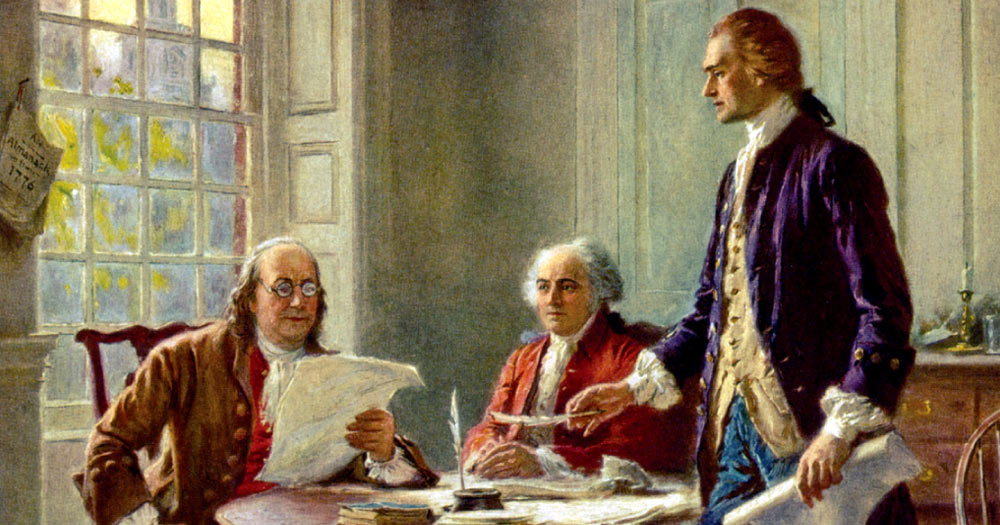
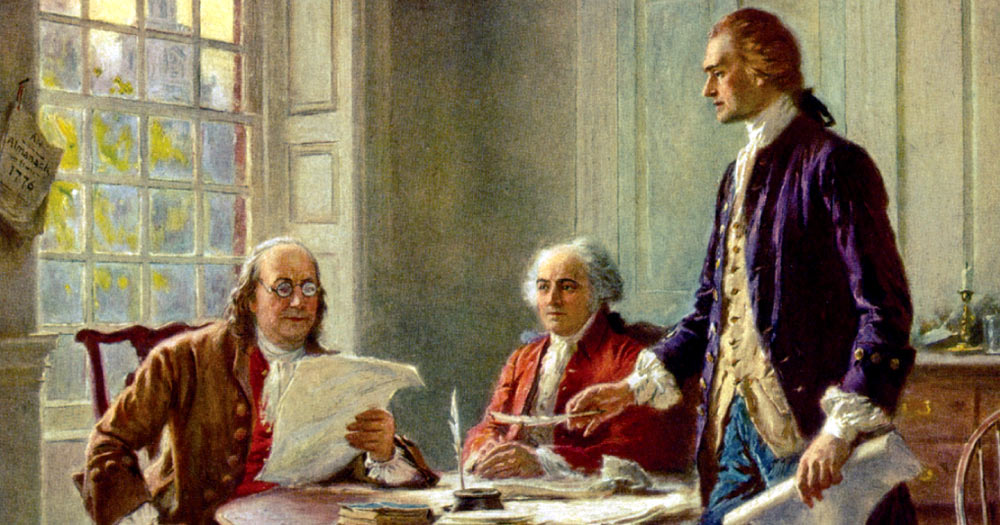
These united States* got their start, officially, on July 2, 1776.

That’s when the Second Continental Congress voted to separate from King George’s government across the water. But it was two days later when that same Congress approved its formal Declaration, and it was the wording of that Declaration that impressed everybody — including folks back in England.

July Fourth, not the Second, became “Independence Day.”

Today, the English are insisting on independence. Last year’s referendum to exit the European Union was a major step in throwing off the abusive relationship from Brussels and the central government there.

The Brits have every right to their “Brexit,” since, as our Congress argued so persuasively, governments “deriv[e] their just powers from the consent of the governed,” which entails that “whenever any Form of Government becomes destructive of these ends, it is the Right of the People to alter or to abolish it.”

Americans have never had more cause for fellow-feeling with the British. Not only are they copying us, we are copying us.

To gain anything like control over what has become a runaway central government in Washington, D.C., Americans in the states will have to continue to (in effect) nullify federal law regarding marijuana and take the lead on criminal justice reforms and improving government ethics and accountability. More work must be done, fighting for free speech and against corruption. And overbearing taxation and regulation and cronyism And insane debt accumulation.

Across the pond, it’s Brexit. Here, it’s just our continuing Revolution.

This is Common Sense. I’m Paul Jacob.
 

* For just today I’ll use the odd, old capitalization, just as it was used in the Declaration of July 4, 1776.


Printable PDF


Categories
Accountability First Amendment rights incumbents local leaders Regulating Protest U.S. Constitution

Homer’s Recall Odyssey

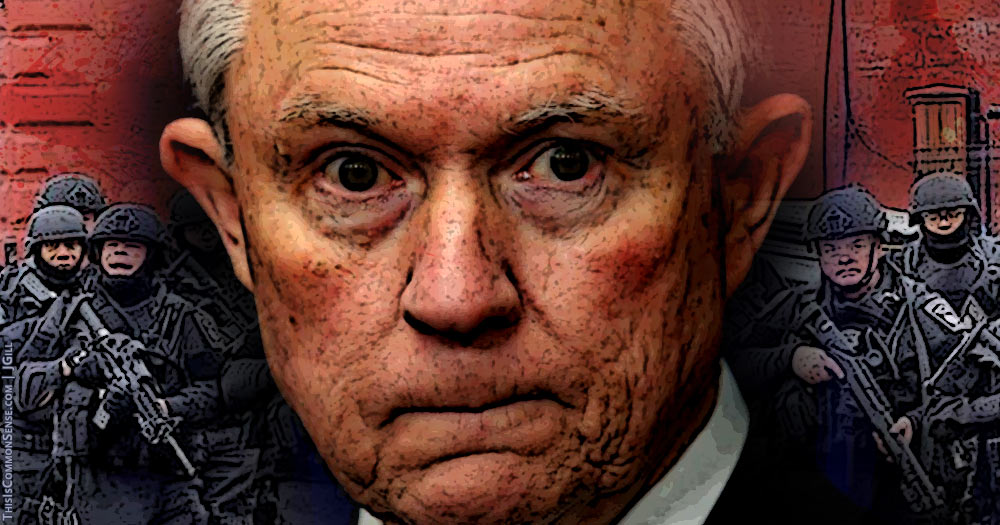
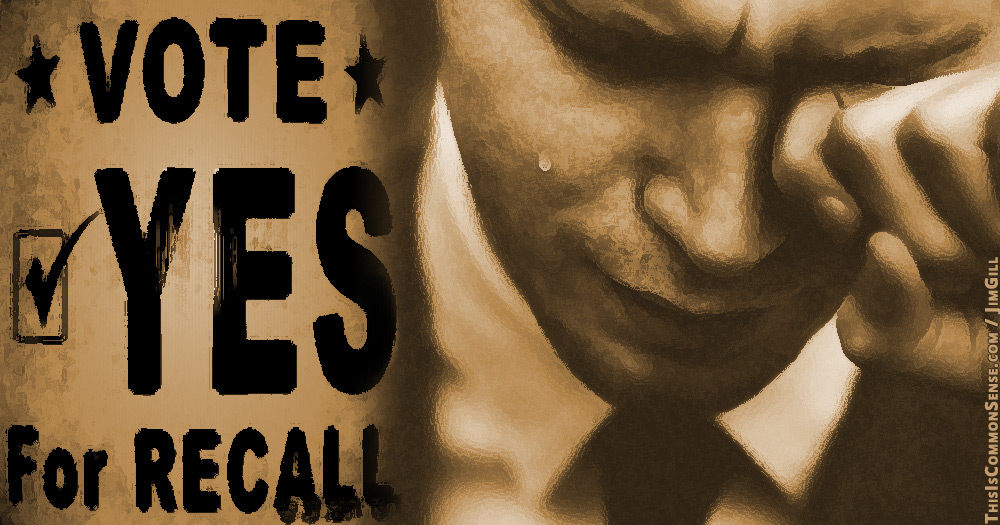
Freedom of speech isn’t a free pass to avoid the consequences of what one says. Or does. Tell that to three members of the Homer, Alaska, city council — Donna Aderhold, David Lewis and Catriona Reynolds — who are the subject of a recall petition.

Well, a superior court judge just did.

Represented by the ACLU, the trio sued to block a recall petition with more than enough voter signatures. Their lawsuit challenged the city attorney’s acceptance of the legal rationale for the recall, claiming the recall attempt punishes the politicians for their speech.

“To conclude that anytime a recall petition is based in part or in whole on what a politician said is protected by the First Amendment,” Superior Court Judge Erin Marston ruled, “would be to eviscerate the recall statute to such an extent that the populace would almost never be able to seek recall of any of their elected officials.”

Now the recall moves forward.

In most of this Land of the Free, citizens lack the ability to recall their elected officials. In places that do have the process, it is rarely used. When it is used, it is often portrayed as voters throwing a temper tantrum.

Or an unfair election do-over.

Or mean-spirited ‘vendetta politics.’

Not so. The petition requirements make recalls very difficult. Recalls don’t happen without some serious problems with the current officeholder(s). And once a recall is triggered, there follows a democratic vote to decide whether citizens want to keep the sitting hireling or find someone new.

Seems pretty reasonable.

When politicians are recalled and removed, they deserve it.*

This is Common Sense. I’m Paul Jacob.
 

* The problem seems never to be that good politicians are being recalled, but that too many politicians who should be recalled are not. Back in 2003, the governor of California was recalled. He deserved it. In 2011, a whopping 88 percent of Miami-Dade County voted to recall Mayor Carlos Alvarez. He earned it, too.


Printable PDF


Categories
Accountability moral hazard national politics & policies responsibility U.S. Constitution

The Chicken-Ostrich Congress

Those who work for the president must tell the POTUS hard truths — on matters of war, most of all. Citizens must also be told hard truths. After all, we are, at least theoretically, the ultimate decision-makers . . . the president works for us.

That was my point yesterday.

But when it comes to life-and-death decisions about war and peace, there is also a congressional check on executive power.

Well, theoretically.

The big problem isn’t chicken-hawks in Congress, but chicken-ostriches. Bird-brained members of Congress implant their heads deep into the sand when it comes to foreign policy.

Where is the congressional debate over what to do in Afghanistan, our nation’s longest war? Rather than helping shape policy, Congress gladly lets the commander-in-chief control every aspect of foreign and military policy.

This gives the president unitary war-making power, anathema to the original character of our Republic, but it also means precious members of Congress are never held accountable for the disasters. After all, they didn’t do anything.

When mistakes are made or policy fails, the legislative branch can hold hearings to carp and moan and pontificate for the TV cameras.

American citizens, on the other hand, cannot so easily dodge the consequences of unaccountable foreign policies. In addition to engaging in military action in seven countries at present, the U.S. Government has pledged to defend another 50 countries, about one-fourth of the world.

Should more conflicts erupt, Congress won’t fight them. But our sons and daughters will.

This is Common Sense. I’m Paul Jacob.

Printable PDF


Categories
Accountability crime and punishment government transparency moral hazard national politics & policies U.S. Constitution

Feckless, Indeed

Last night, House Oversight Committee Chairman Jason Chaffetz (R-Utah) appeared on Fox News’ Tucker Carlson Tonight, where Chaffetz was asked how he would know if the Justice Department fully complied with subpoenas issued by his committee for documents.

“Look, we have a storied and horrific background on this,” explained the Utah representative, retiring after this, his fifth term in Congress. “You can go from everything from Fast and Furious to the Benghazi investigation, email, IRS, anything pretty much over the last eight years, which I’ve served in Congress, and I don’t believe we ever got a full production out of the Department of Justice or the State Department.”*

“I can issue a subpoena unilaterally. It’s part of my constitutional responsibility to provide that check and balance,” argued Chaffetz. “But that subpoena is only as strong as its ability to be enforced.”

Problem? Enforcement requires Congress to work through the DOJ, part of the executive branch. Tricky . . . when the Department of Justice** itself is being subpoenaed.

“You’ve seen, for instance, Judicial Watch,” Rep. Chaffetz noted. “Tom Fitton has much more power using a Freedom of Information Act, because he can get to the courts and the courts can force them.”

“The Department of Justice is afraid of a court; they’re not afraid of Congress.”

He added, “And we don’t use the power of our purse; we don’t beat it over their head and we don’t enforce it. And so it’s somewhat feckless, and it’s very frustrating as somebody who is chairman of the oversight committee.”

“Congress should have an expedited way to get to the courts to enforce those subpoenas,” Chaffetz offered.

Why, then, doesn’t Congress enact such a process?

This is Common Sense. I’m Paul Jacob.
 

* “And that continues, by the way,” Chaffetz added. “One of my frustrations, with all due respect to the Trump administration, is that they have not loosened up the documents that we have been requesting for years.”

** Or, for that matter, any another executive branch agency.


Printable PDF


Categories
Accountability general freedom insider corruption local leaders moral hazard national politics & policies too much government U.S. Constitution

Separation of Senators

The separation of powers doctrine has been a bedrock principle of small-r republican government. Each branch — legislative, executive, judicial — should be independent, and check the power of the other branches.

This requires that no person hold positions simultaneously in more than one branch of government.

Which brings us to Nevada State Senator Heidi Gansert. In addition to being a legislator, she’s currently employed by the University of Nevada-Reno as executive director for external relations . . . an executive branch position.

One can certainly understand why she wants to keep her prestigious legislative perch, while maintaining her annual $203,000 from the university. But those pesky folks at the Nevada Policy Research Institute’s Center for Justice and Constitutional Litigation insist Gansert adhere to the constitution.

They’ve filed a lawsuit.

As if to dramatize why “separation of powers” matters, consider Senate Bill 358, which sought to reform civil asset forfeiture in Nevada. The legislation couldn’t get out of the Senate Judiciary Committee, where State Senator Nicole Cannizzaro is vice-chair. She also holds a $99,000 position as a Clark County deputy district attorney.

Senator Cannizzaro’s presence on the Senate Judiciary Committee, as it pertains to forfeiture legislation, begs for a lesson on separation of powers,” the Nevada Policy Research Institute’s Daniel Honchariw wrote in the Las Vegas Review-Journal.

“Reform would’ve meant less money for district attorneys,” Honchariw explained, “which, in addition to police departments, directly profit from forfeitures.”

Nevada’s legal precedent on separation of powers is less clear-cut regarding Cannizzaro’s conflicting role in local government, than for Gansert’s state position. But the potential for mischief is the same — and obvious.

This is Common Sense. I’m Paul Jacob.
 

Printable PDF


Categories
crime and punishment First Amendment rights general freedom ideological culture moral hazard national politics & policies Regulating Protest U.S. Constitution

Thorns in the Parade

Portland, Oregon, styles itself as “The City of Roses.” For over a century, this Pacific Northwest city has held an annual Rose Festival, complete with multiple parades.

This year, there will be at least one parade less.

“The annual 82nd Avenue Rose Parade and Carnival scheduled for Saturday have been canceled because of threats against the Multnomah County Republican Party, a longtime participant in the parade,” we learn from the Portland Tribune. “In a Tuesday afternoon email, the 82 Avenue Business Association, which sponsors the Rose Festival-sanctioned event, said it canceled the entire event because [it] could not guarantee the safety of the community.”

KOIN-6 News reported that the threats came from the Direct Action Alliance, an “antifa”-styled group that “created a Facebook event called ‘Defend Portland from Fascists at the Avenue of Roses Parade.’ The group wanted to disrupt the march because of ‘Nazis and fascists’ participating.”

Now, what you regard as “white supremacist” and what young pseudo-antifascists think of as “white supremacy” are probably very different. I doubt that many real Nazis and fascists would have marched on Saturday.

But the identification issue is irrelevant. If fascists want to peacefully parade, let them.

What is objectionable? Those who engage in violence to suppress views of which they disapprove.

Also objectionable? The organizers and the City of Roses police, who, by caving in, let free speech and assembly be squelched.

Spontaneous marches did occur on parade day, corralled to the left and right sides of the street. Literally and figuratively. Three violent activists were arrested but not identified by affiliation.

Portlanders used to worry that the clouds would rain on their parades. Now, it is ideological violence casting a dark shadow.

This is Common Sense. I’m Paul Jacob.

Printable PDF