Categories
Accountability crime and punishment government transparency media and media people moral hazard national politics & policies privacy Snowden

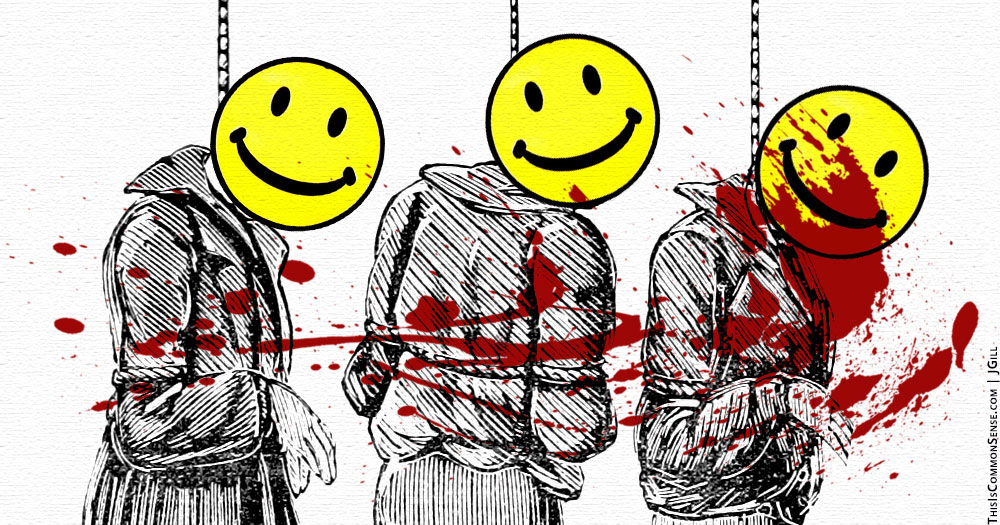
Clapper into the Clink?

Lying to Congress is a strange crime. A number of people have been prosecuted for it over the years, but Congress isn’t a court of law and, more to the point, Congress may present the densest source of lies in the United States.

The idea that it would be illegal for a citizen to lie to a den of liars is, well, a bit amusing.

But it is illegal, and definitely should be illegal, for government functionaries to give false testimony before Congress.

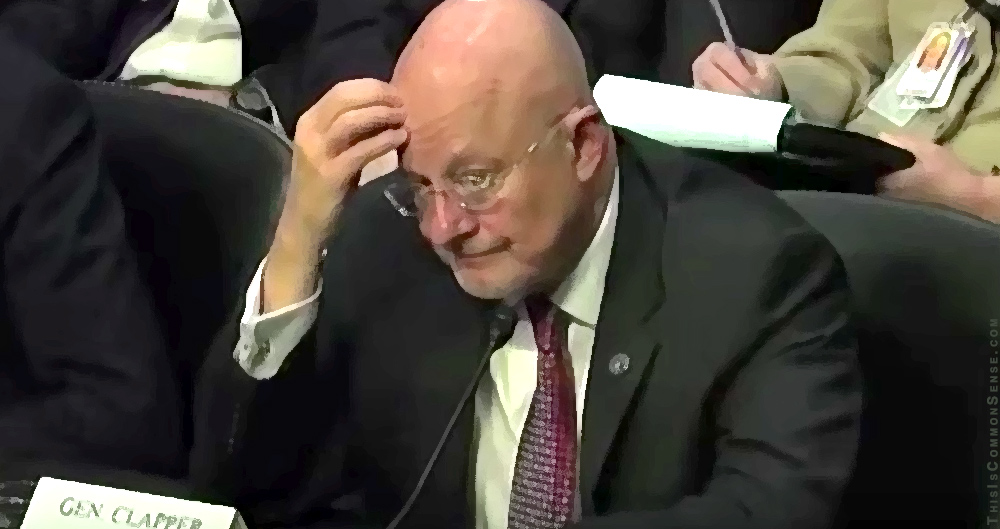
That’s why the case of the admittedly “untruthful”* James Clapper is so aggravating. When asked by Senator Ron Wyden, on the Senate floor, about data collection of phone calls by the U.S. federal government, he — the director of national intelligence under President Barack Obama from 2010 to 2017 — lied through his teeth.

And had not Edward Snowden leaked information on the National Security Administration’s metadata collection program, we would not have learned anything about it.

No wonder, then, that several congressmen want to prosecute Clapper before March 12, when the Statute of Limitations runs out on his crime. Steven Nelson at the Washington Examiner quotes Rep. Ted Poe (R-Tex.), Rep. Thomas Massie (R-Ky.), Rep. Louie Gohmert (R-Tex.), and Rep. James Sensenbrenner (R-Wis.) as all being in favor of siccing federal prosecutors on the forked tongue spymaster.

Senator Wyden warns that letting lies such as Clapper’s go unaddressed encourages Americans to be cynical about government, and “makes it possible, even probable, for hucksters and authoritarians to take power.”

Too late?

This is Common Sense. I’m Paul Jacob.


* Clapper’s March 2013 whopper at the Senate Intelligence Committee hearing was that the NSA was “not wittingly” collecting “any type of data at all” on millions of Americans. Later, to MSNBC, he characterized his artful dodge as having been “the least untruthful” way for him to respond.


PDF for printing


Categories
Accountability general freedom moral hazard nannyism national politics & policies privacy tax policy

Hey, It’s Your Money

I leave it up to you how to spend your own money. You decide, based on your own circumstances and priorities.

Oh, you don’t need my permission?

Of course not.

But some people think that if you spend your own money on your own priorities in accordance with your own judgment, it is indeed a problem. At least when you get to keep more of your own money because of tax cuts.

President Trump has often suggested that recipients of new corporate tax cuts will spend the additional money mostly on increasing wages and hiring new workers. Yet some major corporations reportedly say that they will spend the additional money on paying dividends or buying back shares. Maybe others will buy more advertising, storage space or tools. Various commentators fret. But why should a firm hire new workers if other expenditures would be more productive at the moment?

Of course, in the long run, a company that is more profitable and successful can hire more people and can pay them more.

But wages are not the only expense that companies must cover in order to be successful in the long run. Managers do, and should, devote resources first to the improvements that they conclude are most urgent. That a company’s resources increase because of a tax cut doesn’t alter the necessity or reasonableness of pursuing economic goals in accordance with one’s best judgment.

An approach that, to be sure, also benefits present employees as well as future ones.

This is Common Sense. I’m Paul Jacob.

PDF for printing


Categories
crime and punishment folly general freedom nannyism privacy property rights responsibility

The New Ortho-Doxing

“What a nice Halloween,” my wife remarked as we turned out the lights. 

Well, not in nearby Oakton, Virginia, where Jamie Stevenson walked past her neighbor’s home last Saturday and saw “a racist display.”

“She knew it was a Halloween decoration,” the Washington Post reported.

Heedless, she contacted her homeowners association, the Southern Poverty Law Center, and the perpetrator: “What you appear to be displaying is an effigy of a black person being lynched. As your neighbor and a person of color [Stevenson is Asian], I find this racist . . . deeply offensive. I’m sure this is not your intent.”

“It is not my intent to offend anyone,” was her neighbor’s immediate and predictable response to her email. Shockingly, he had never noticed that his “Monster in the tree had darker skin.”

So, on a rainy Sunday, he took it down.

One might think that, with Stevenson’s sensitivity, she wouldn’t perform her own social media lynching — or doxing — against her neighbor. But on Monday, acknowledging that no offense had been intended and with the offending display removed, Stevenson still posted “a flier” on Facebook with a photo of an actual 1889 lynching next to the picture she had snapped of her neighbor’s Halloween display, declaring: “RACISM and HATE have no place in our neighborhood.”

She called for a boycott of her neighbor’s free Halloween candy . . . and handily provided his home address.

“[W]hen you point out racism, people have a choice to make,” she insisted. “They either acknowledge it and have to do something about it, or they deny it and are complicit in it.”

Or then again, neighbor, maybe you’ve got racism on the noggin and folks are only complicit in sharing a traditional joy with the neighborhood kids.

This is Common Sense. I’m Paul Jacob.

PDF for printing


Categories
Accountability crime and punishment general freedom local leaders moral hazard nannyism national politics & policies privacy property rights responsibility too much government U.S. Constitution

The Minimal Use of a Finger

Drivers in Washington State have a new law to . . . swerve from?

“New distracted driving law starts Sunday, July 23,” the Washington State Department of Transportation (WSDOT) tweeted last week. “The law forbids,” Washingtonians were told,  “virtually all use of handheld gadgets such as phones, tablets, laptop computers and gaming devices while driving.”

The idea is to prevent accidents. Though distracted driving’s danger has been contested, texting while driving certainly seems a kind of crazy.  

Thankfully, it’s possible to talk “hands free.”

Which, it turns out, the new law does allow. Drivers may activate and de-activate hands-free devices (and apps) with the “minimal use of a finger.”

Eating and drinking while driving are also disallowed, but those are “secondary offenses,” which police are not allowed to pull you over for.

At this point, another meaning of “minimal use of a finger” may occur to some readers. What starts out as secondary offenses have been known to be upgraded, legally and practically, to primary offense status.

Does a shiver runs down your back?

Yet another rule! More fines!

More interactions with police.

And if all this doesn’t feel “police state-y” enough for you, there is argument in Seattle about whether pedestrians should be prohibited from “distracted walking.”

Yes, some are actually considering that.

I’m reminded of an argument against socialism: government-run enterprises tend to be run “ruthlessly and with special attention to prosecution (and overburdening) of the poor.” Why would anyone want such techniques writ society-wide, in every sector?

Meanwhile, we apparently must live and drive with more rules and more fines and more harassment.

This is Common Sense. I’m Paul Jacob.


Printable PDF


Categories
education and schooling free trade & free markets general freedom ideological culture media and media people national politics & policies privacy property rights responsibility too much government U.S. Constitution

According to Economics

“Everywhere you look, economics is despised,” writes Tom Woods in his Tuesday email letter.

You know what isn’t despised? A daily email letter.*

But I digress; back to economics.

“The gimme-free-stuff people hate it because they don’t like being told that there might be undesirable side effects from seizing other people’s things.”

Well, true enough. But turn it around: many people demand free stuff at least in part because they do not understand the bigger picture . . . which Mr. Woods ably provides in his daily podcast and on his weekly Contra Krugman podcast with economist Bob Murphy.

“Politicians hate it, because it imposes logical constraints on what political activity can accomplish.”

True, but, like many in the general public (from whence they come), politicians’ prior lack of economic knowledge also leads, in part, to their hubris.

“Even some folks in the business world hate it, because (1) they’d rather agitate for special privileges than hear the case for free markets, and (2) they’d rather have low interest rates than be warned about the causes of the business cycle.”

Yes, too true. But, again, business people are generally just people, most of whom haven’t even been exposed to something beyond boring and misleading textbook econ, if that. Mr. Woods knows that, since that’s what his mission is, exposing more folks to ideas beyond what he calls “the index card of allowable opinion.”

Well, I’m all about allowing the unallowable — if it’s right!

This is Common Sense. I’m Paul Jacob.

 

* Historian Woods is now doing what I’ve been doing since 1999, providing a daily common-sense thought that is short and easy-to-read and dropped into your email box every weekday. Mine goes up online at ThisIsCommonSense.com; I don’t see his on his website . . . but I do see a lot of books and podcasts!


Printable PDF


Categories
Accountability folly general freedom ideological culture moral hazard nannyism national politics & policies privacy responsibility too much government

UK Death Panel

Six days ago, the European Court of Human Rights sided against the parents of Charlie Gard, a severely ill boy, refusing to allow them to take their infant son to America where he could receive full (and privately funded) experimental treatment. The court ruled that removing the child from the hospital would cause him “significant harm” — and authorized the termination of life support.

Yesterday, this site quoted Ben Shapiro on the case. Shapiro sees this sad story as a grand demonstration of what is wrong with government-funded and -managed health care:

Bernie Sanders tweets about how nobody should be denied care because they can’t afford it? But that’s what happens all the time under socialized medicine — the difference being, it’s not about you not being able to afford it, it is about the government not being able to afford it.

Economists tell us that, in a world of scarcity, there will be rationing, willy nilly: either by price (according to consumer and producer choices) or else by government diktat.

Last week, the European Court of Human Rights did its due diligence to ration resources — serving as a Death Panel.

The scheduled to pull the plug on Charlie last Friday, but there’s been a last-minute reprieve — no doubt a result of pressure from America and the Vatican.

Though the doctor who testified before the court insisted that any American medical institution would have provided the treatment he offers, the best the Gards can apparently hope for, now, is to be allowed to take Charlie home to die.

Think of it as socialized medicine in action.

This is Common Sense. I’m Paul Jacob.


Printable PDF


Categories
ideological culture media and media people nannyism national politics & policies privacy responsibility too much government

Women and Men for Life

At Townhall on Sunday, I applauded the Women’s March on Washington for being peaceful, despite Madonna’s F-bomb laden speech, culminating with her daydream of “blowing up the White House.”

We’ll never know how many more folks marched in that much-heralded event than attended last weekend’s pro-life march, because the mainstream media did not pay enough attention to the later, inconvenient-to-their-narrative event, and crowd-counters didn’t count.

The two marches did “intersect” (figuratively) when a pro-life group was kicked out as a “partner” to the women’s march.

“If you want to come to the march you are coming with the understanding that you respect a woman’s right to choose [abortion],” declared Linda Sarsour, one of four chairwomen for the women’s march, who was described by the New York Times as “a Brooklyn-born Palestinian-American Muslim racial justice and civil-rights activist.”

In its favor, the pro-life march, anti-celebrating the 44th year since the Roe v. Wade decision, had far more tasteful placards — despite the fact that pro-life protesters are often remembered for grisly signs picturing aborted fetuses. I particularly liked a sign held by a young women, reading:

“We are having a clump of cells.” — [said] No One Ever

Speaking of young people, Slate magazine reported that “the demographic outlook for the pro-life movement looks anything but bleak,” citing a 2015 poll wherein “52 percent of millennials said the label ‘pro-life’ describes them somewhat or very well.”

Remember, the pro-life movement has been marching all these years not to secure government benefits for themselves, but to protect others.

This is Common Sense. I’m Paul Jacob.


Printable PDF


Categories
folly general freedom ideological culture nannyism privacy property rights too much government U.S. Constitution

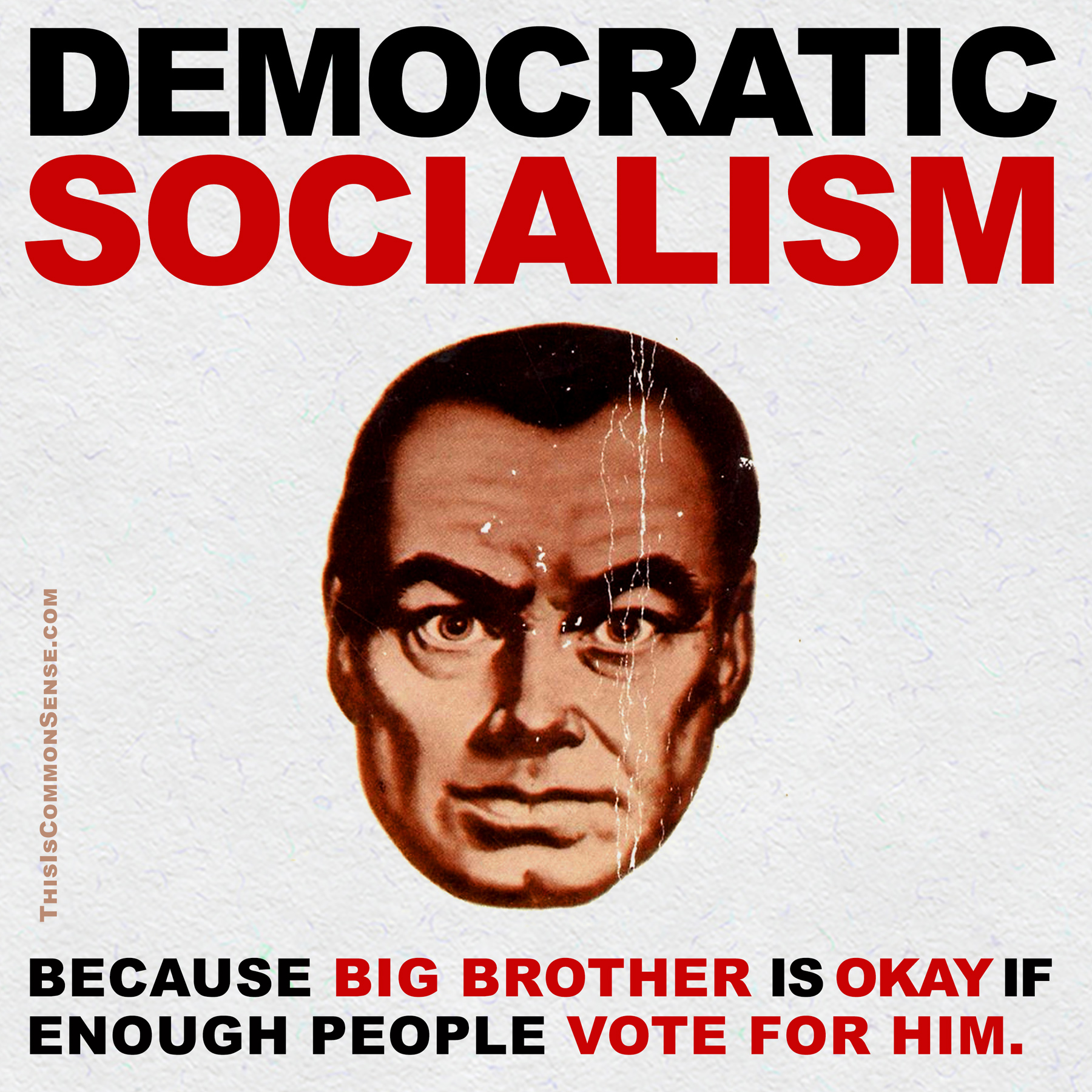
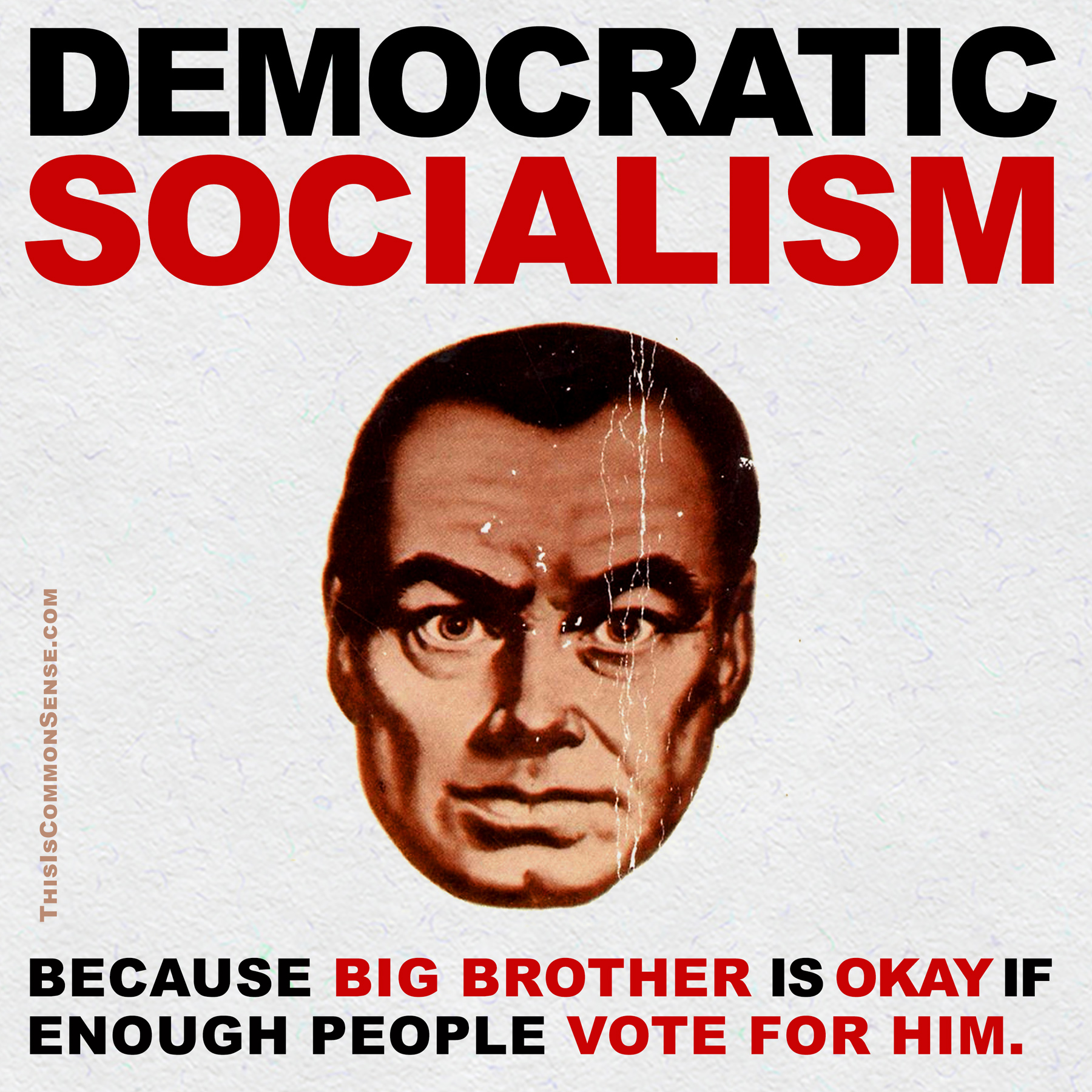
Democratic Socialism. . .

Because BIG BROTHER is okay as long as enough people vote for him!


CLICK BELOW for a high resolution version of this image:

Democratic Socialism, Big Brother, socialism, vote, voting, egalitarian, meme, Jim Gill, Paul Jacob, Common Sense


Categories
Accountability crime and punishment general freedom moral hazard national politics & policies privacy responsibility

In Plain Sight

The Berlin terrorist attack just a little over a week ago fit a noteworthy pattern. German authorities had investigated Anis Amri — the Tunisian man who drove that large truck into a crowded Christmas market, killing 12 and wounding 56 others — and found “links with Islamic extremists.”

Later killed in Milan, Italy, Amri had been wanted in Tunisia for “hijacking a van” and jailed in Italy for arson and a “violent assault at his migrant reception center.” And yet with all that known or easily knowable, the German authorities couldn’t prevent him from killing innocent Germans.

It’s not just a European phenomenon, either.

Consider Omar Mateen, this country’s worst mass shooter, having massacred 49 people in Orlando’s Pulse nightclub. The FBI had spent ten months looking into Mateen.

Years before the Boston Marathon bombing, the FBI had tracked Tamerlan Tsarnaev, one of the bombers.*

“In case after case . . . authorities have come forward after the fact to say that they had enough cause to place the suspect under surveillance well before the violence,” the Washington Post recently noted. This was the case with the majority of recent lone-wolf terrorism plots.

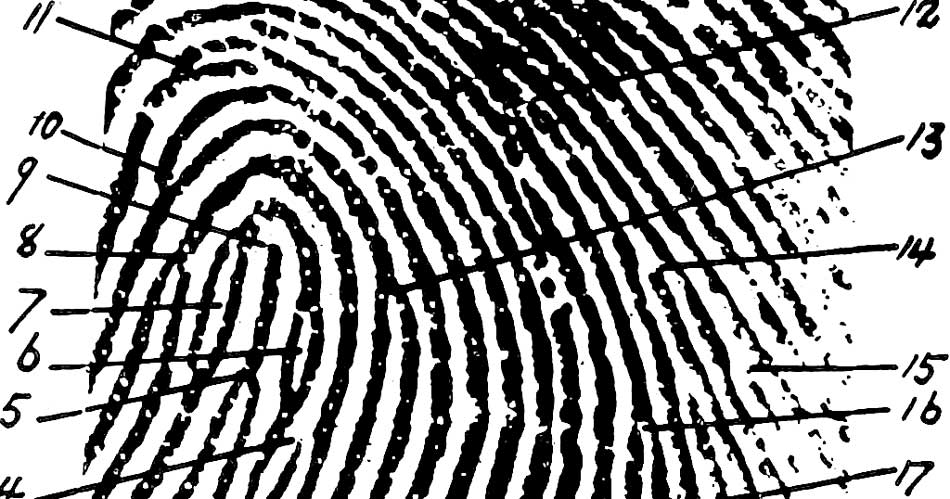
“If any lesson can be learned from studying the perpetrators of recent attacks,” a report in The Intercept concluded, “it is that there needs to be a greater investment in conducting targeted surveillance of known terror suspects and a move away from the constant knee-jerk expansion of dragnet surveillance . . .”

Yet intelligence agencies are still grabbing our metadata in violation of the Fourth Amendment. That needs to stop.

The fact that known threats are consistently not being stopped suggests curtailing mass surveillance won’t hurt our security, but improve it.

This is Common Sense. I’m Paul Jacob.

 

* The same is true regarding the Ft. Hood (work-place) shooter, Nidal Hasan. Likewise, Abdulhakim Mujahid Muhammad (formerly Carlos Bledsoe), who was under the active eye of the FBI after returning from Yemen . . . until he opened fire on a Little Rock, Arkansas, recruiting station killing one soldier and wounding another. Ditto Ahmad Khan Rahami, the less deadly bomber in New York City and New Jersey.


Printable PDF

terrorism, surveillance, privacy, fingerprint, targeted, illustration


Categories
Accountability folly ideological culture media and media people moral hazard national politics & policies privacy property rights responsibility too much government

A Hailstorm of Orthodoxy

Don’t worry, scientist Roger Pielke, Jr., informs us. He is doing fine — he has tenure.

It is too bad, though, that he no longer works in climate science.

He was drummed out of that endeavor by journalists, big-monied foundations, and the White House.

Climate Scientist

Are you skeptical? Well, drill down into the Podesta emails on WikiLeaks. There you can read infamous billionaire Tom Steyer gloating, “I think it’s fair [to] say that, without Climate Progress, Pielke would still be writing on climate change for 538,” a popular website. Pielke has not been published there at all since 2014.

Pielke had made the mistake of publishing the results of his research. He claims not to be heretical on the main points of the current orthodoxy. But Pielke ticked off all the wrong people with his demonstration that the evidence did not back up the climate change movement’s much-repeated charge that the weather has gotten more traumatic as the planet has gotten warmer.

Pielke relates all this in a fascinating Wall Street Journal commentary, “My Unhappy Life as a Climate Heretic.” Pielke is actually somewhat philosophical about the political and foundational forces arrayed against him — expressing more dismay at his betrayal by journalists and academics.

“You should come with a warning label,” jested one journalist who had merely quoted him. “Quoting Roger Pielke will bring a hailstorm down on your work from the London Guardian, Mother Jones, and Media Matters.”

This “hailstorm” is more widespread and damaging than the results of global warming itself. It effectively distorts both scientific research and the news.

Thus, a political orthodoxy rides herd over public opinion. Over us. By squelching good journalism and honest science.

This is Common Sense. I’m Paul Jacob.


Printable PDF

global warming, climate change, skeptic, Pielke, science, illustration