Categories
Accountability crime and punishment moral hazard nannyism national politics & policies property rights too much government U.S. Constitution

Watcha Gonna Do?

At a White House meeting last week between President Trump and law enforcement officials, a Texas sheriff raised a concern about legislation introduced by a state senator to require a conviction before police could take someone’s property.

Mr. Trump asked for that senator’s name, adding, “We’ll destroy his career.” The room erupted with laughter.

“That joke by President Trump,” Fox News’s Rick Schmitt said on Monday, “has the libertarian wing of the Republican Party raising their eyebrows, instead of laughing.”

Not to mention the civil libertarians in the Democratic Party and the Libertarian Party itself.

Civil asset forfeiture, as we’ve discussed, allows police to take people’s cash, cars, houses and other stuff without ever convicting anyone of a crime — or even bringing charges. The person must sue to regain their property.

Lawyers aren’t free.

Two bedrock principles are at stake:

  1. that innocent-until-proven-guilty thing, and
  2. Our right to property.

Since police departments can keep the proceeds of their seizures, they’re incentivized to take a break from protecting us — to, instead, rob us.

“Our country is founded on liberties,” offered Jeanne Zaino, a professor at Ionia College. “[G]overnmental overreach is not something that is natural for Republicans to embrace.”

Schmitt acknowledged that “Libertarians would hate this. They don’t want big government. But they don’t have a lot of pull.”

Libertarian-leaning Republicans like Sen. Rand Paul and Rep. Justin Amash are trying to end civil forfeiture, but the president will likely veto their legislation.*

Let’s not wait. Activists in three Michigan cities put the issue on last November’s ballot and won. You can, too.

This is Common Sense. I’m Paul Jacob.


* FoxNews.com reported that, “Trump signaled he would fight reforms in Congress, saying politicians could ‘get beat up really badly by the voters’ if they pursue laws to limit police authority.”


Printable PDF


Categories
crime and punishment folly ideological culture media and media people moral hazard national politics & policies responsibility

God Knows You’re Good

“The trouble with fighting for human freedom,” wrote H. L. Mencken, “is that one spends most of one’s time defending scoundrels.”

Henry Louis Mencken (1880 – 1956), master prose stylist and social critic, knew whereof he wrote. But he also penned things to which few would give their hearty assent.

Today, we find several controversialists who, like Mencken, side with individualism against collectivism. They are raising a ruckus.

But are they “scoundrels”?

Does it matter?

The big news, last week, was the anti-Milo Yiannopoulis riot in Berkeley. But also last week, Robby Soave explains, “Black bloc ‘anti-fascists’ attacked right-wing media figure Gavin McInnes outside a New York University building,” where things got so crazy that one protester, a professor, screamed at the police for protecting Mr. McInnes when they “should” have — get this — been beating him up!

She called McInnes a Nazi. And insinuated he was a rape threat, etc.

So what did Reason writer Soave do? “McInnes,” he noted, “routinely says obnoxious things that deserve criticism. He’s something of a Diet Milo.”

What Soave did not do was ever address the Nazi charge, the rape charge, or any of the calumnies hurled at McInnes. Were Mencken the one being attacked, would he have written that the Sage of Baltimore “routinely writes obnoxious things that deserve criticism”?

Sure, true. But is that the stance you want to take?

Soave finds Milo and Gavin icky.

I feel his pain. But . . . when “Nazi” is the charge, calling the accused “obnoxious” and “deserv[ing] criticism”?

Gavin McInnes isn’t a Nazi. Or a rapist. And he retains free speech rights, regardless of what one thinks about his anti-feminism, or other controversial opinions.

This is Common Sense. I’m Paul Jacob.


Printable PDF

Categories
folly general freedom moral hazard national politics & policies responsibility U.S. Constitution

Deplorable Distrust?

The United States is no longer a “full-fledged democracy.”

According to a New York Post story, our union is, instead, a “flawed democracy.”

Hmmm. Where to begin?

Despite the article’s featured photo of President Trump, the downgrading of America’s democratic status occurred prior to the billionaire’s swearing-in.

Technically, of course, the United States is not now nor has ever been a full-fledged (much less a flawed) democracy. We live in a republic . . . if we can keep it.

As is often the case, folks use the term “democracy” not to indicate it as a form of government — a pure democracy — but as a shorthand for a country with democratic elections, where “basic political freedoms and civil liberties are respected,” and with “an independent judiciary.”

An organization associated with The Economist, the Economist Intelligence Unit (EIU), has for a decade been rating the world’s countries based on numerous political factors. For the first time, this year, the United States has dropped out of the top tier and into the second, joining the likes of Botswana, Ghana and India.

“The U.S. is the second-highest ranking flawed democracy,” the Post noted, “coming in right behind Japan and tying with Italy.” Norway garnered first place among the 19 “full-fledged democracies,” including most Western European countries.

Why was the U.S. downgraded? The EIU report explained the lower score “was caused by the same factors that led Mr. Trump to the White House: a continued erosion of trust in government and elected officials.”

So, if the American people simply placed their heads in the sand, blindly trusting politicians, we’d be “full-fledged,” eh?

Full-fledged fools fiddling away our freedom, that is.

This is Common Sense. I’m Paul Jacob.


Printable PDF


Categories
ideological culture meme moral hazard nannyism national politics & policies Popular too much government U.S. Constitution

How Socialism Kills

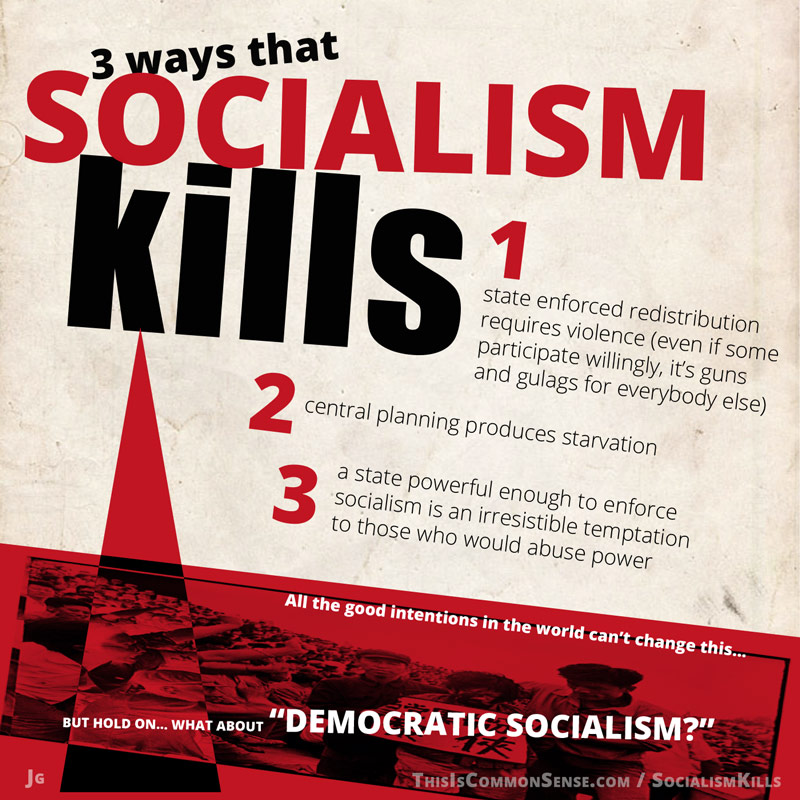
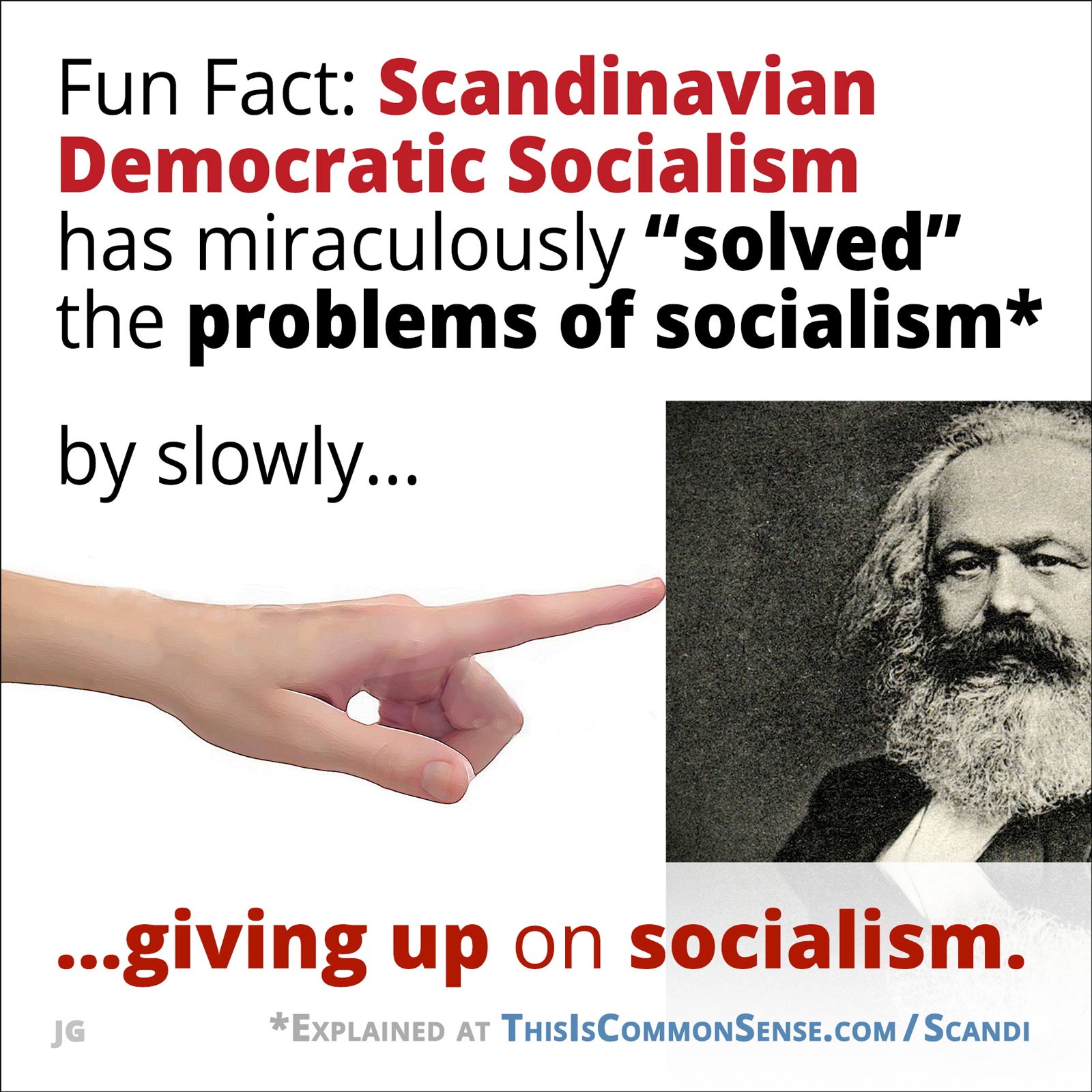
3 Ways That Socialism Kills:

  1. state enforced redistribution requires violence (even if some participate willingly, it’s guns and gulags for everybody else)
  2. central planning produces starvation
  3. a state powerful enough to enforce socialism is an irresistible temptation to those who would abuse power

All the good intentions in the world can’t change this…

but hold on… what about “democratic socialism?”


Categories
Accountability folly general freedom ideological culture media and media people moral hazard national politics & policies too much government

Bring Back the Eunuchs?

“Everybody knows that ordinary Americans are a bunch of idiots,” a Health and Human Services official told Benjamin Ginsberg. “Why do you need to do a survey to find that out?”

Actually, he was not surveying Americans for their IQs and knowledge levels. He was surveying Washington insiders. Like her.

She hadn’t been listening.

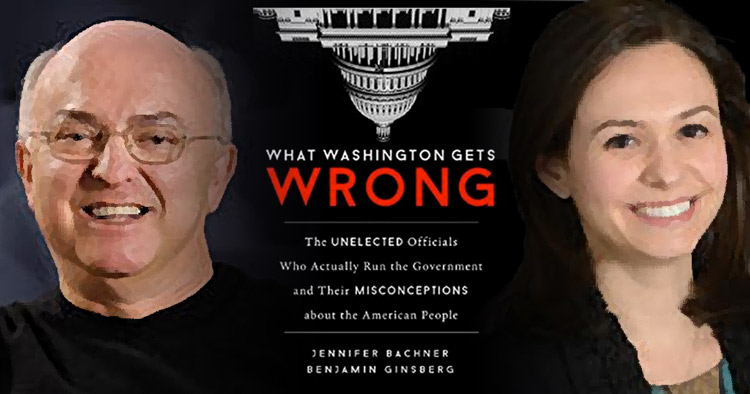
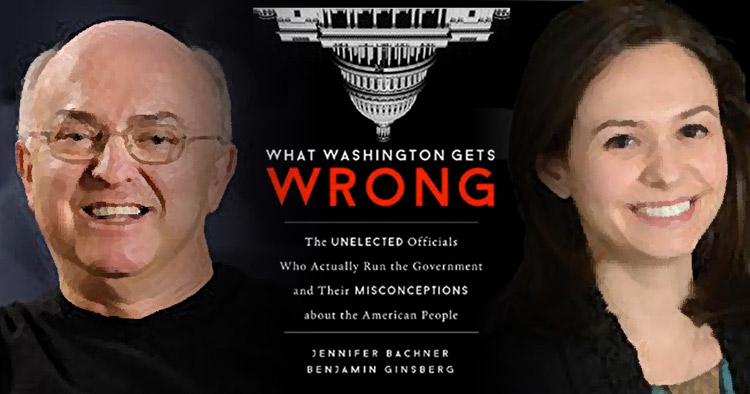
Ginsberg and co-author Jennifer Bachner have a new book out, What Washington Gets Wrong (2016). “We found that public officials,” Ginsberg told C-SPAN’s Brian Lamb last month, “the people who really govern this country . . . don’t think much of ordinary Americans.”

Surprise, surprise. This has been an “open secret” for some time. Washington insiders “are wealthier,” “better educated,” and “think ordinary Americans don’t really know very much.” More alarmingly, they think that the government should “not pay too much attention to what ordinary folks think.”

According to Ginsberg and Bachner, this has been a long time coming. Progressive Era reformers transformed government in an effort to make it less partisan.

They succeeded — only to make it less accountable and less . . . American.

In ancient times, great administrative states were run by eunuchs, men gelded to curb their appetites the better to serve their sovereigns (pharaohs; emperors; kings). Not their own interests.

Is it time to bring back the practice?

Just joking. Instead, Congress can tame the bureaucratic leviathan it has created by trimming its ranks and pulling back on pay and benefits until they’re more in line with the private sector.

Let’s hope the House’s recent passage* of the REINS Act, requiring congressional approval of major regulations, is a sign that Congress’s lackadaisical attitude about the bureaucracy is changing.

This is Common Sense. I’m Paul Jacob.


* Let’s hope the Senate follows suit.


Printable PDF


Categories
Accountability ideological culture moral hazard nannyism national politics & policies

We Demand Inefficiency

It’s all about the money.

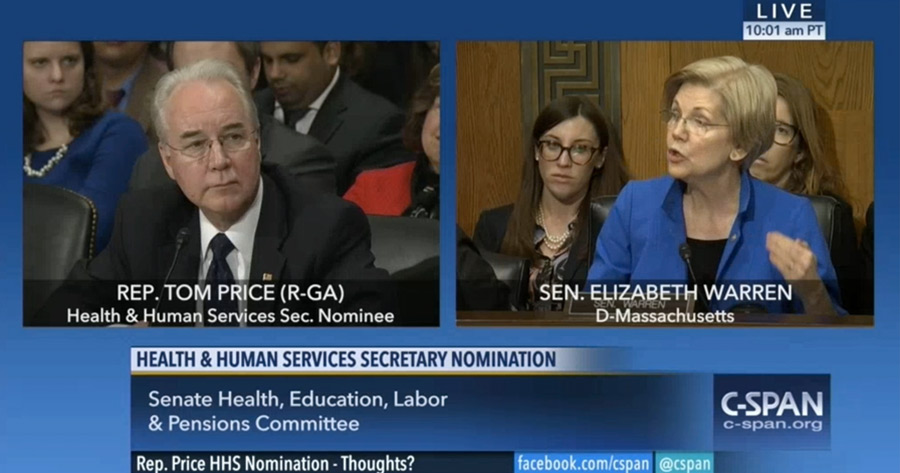
Well, that is what Senator Elizabeth Warren believes.

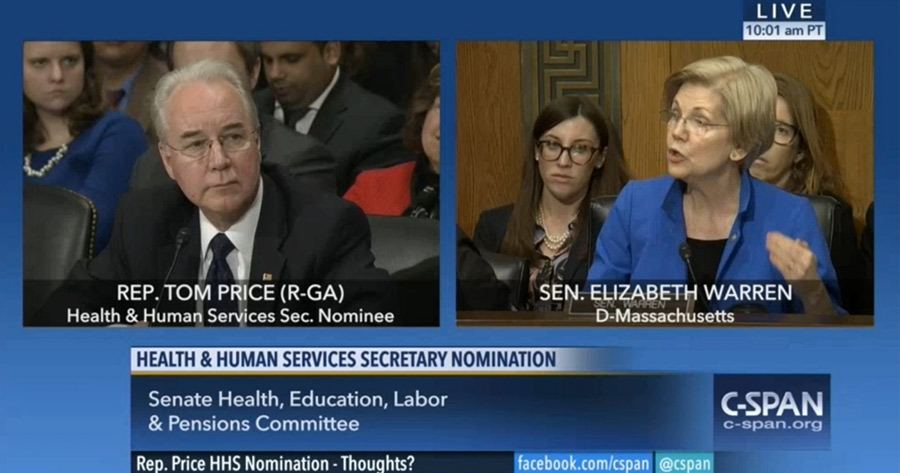
Grilling Republican Congressman Tom Price, the physician turned congressman Donald Trump picked to be Secretary of Health and Human Services, Warren demanded that Price answer a simple question: would he swear on a stack of medical books that he would never, ever “carry out a single dollar of cuts to Medicare or Medicaid eligibility or benefits.”

Trump had said he would not cut either program. But Price, who is known for his skepticism about the efficiency of government programs and has proposed cuts to the programs before, worries Warren.

So she demanded an answer, using words like “guarantee” and “safeguard.”

Price said neither “yes” nor “no.” Instead, he evaded the question.

Thoughtfully.

“What the question presumes is that money is the metric,” Dr. Price replied. “In my belief . . . from a scientific standpoint, if patients aren’t receiving care, even though we’re providing the resources, then it doesn’t work for patients.”

Elizabeth Warren, the doyen of progressive politicians for several years now, was mighty upset about Price’s attempt to switch the standard (“metric” is the buzzword for this) for judging a program to the practical from the simple, easy-to-demagogue-with disbursement tally.

She could have said, “We demand inefficiency; all we care about is the money. Actually helping people? Too complicated. But we sure can score points in debate when you try to cut something.”

What she said* was, “The metric is money.”

Same thing, actually.

Thus it is that government grows while real human welfare is ignored.

This is Common Sense. I’m Paul Jacob.


* Peter Suderman, over at Reason, sums it up like this: “What Warren seems to want from Price is a commitment to spend more regardless of a program’s results.” Suderman calls Warren’s reaction “a surprisingly blunt expression” of a view “that undermines the programs it is designed to defend.”


Printable PDF


Categories
Accountability general freedom ideological culture media and media people moral hazard national politics & policies

Don’t Trump the Gun

The 2016 presidential election will go down in history as a doozy. The Trump win was a surprise, even shocking many of his supporters. But the most obvious lesson we learned pertains to the modal Obama-Hillary voter.

Well, make that lessons. Plural.

  1. Today’s most vocal Democrats don’t seem to understand democracy. The “deal” of our democratic republic, as I learned in Civics and “on the streets,” is that you do your best for your party, candidate, or policy, and accept the results . . . until the next election. Whiners, rioters and Hollywood actors (to place them in descending order of tolerability) would serve their cause better by remembering this.
  2. It has become commonplace, now, to make sweeping judgments about one’s opponents based on little or no information. Or erroneous info. On no basis whatsoever, nearly every lefty YouTuber and street shouter I have seen yammers on about how anti-gay Trump is. Truth is? No president has ever entered the White House more pro-gay than Donald J. Trump.
  3. Actual policy issues mean too little to too many. What does matter? Style. Obama has “good style.” Bush had “dumb style.” Trump has “evil style.” Substance? Results?

Blankout.

Tomorrow the President-elect becomes President. And Resident of 1600 Pennsylvania Avenue*. As skeptical as some of us may be (myself included), we owe it to ourselves, our neighbors, and the country — perhaps the world — to give the president a chance. At least, take a deep breath and let him make a mistake before pouncing.

Meanwhile, let’s also stop denigrating half the country — that is, those who voted for Trump. Consider their alternative.

This is Common Sense. I’m Paul Jacob.


* Part-time? Will he really spend a lot of time in Trump Tower?


Printable PDF

Trump, president, inauguration, democracy, election, protest


Categories
Accountability folly free trade & free markets general freedom moral hazard

Oil’s Bad that Ends Bad

Sometimes socialism seems reasonable.

Emphasis on “seems.”

Take natural resource socialism. Ores and oil are “just there in the ground” and “belong to everybody.” So it “just makes sense” that “the people” should “own” the mining and drilling and refining industries, and run these operations to share the profits to help “everybody,” not just a few.

The Mexican government bought into this back in 1938, when it nationalized the U.S.- and Dutch-based oil companies. Today, the industry is under-capitalized, its equipment old and inefficient. Mexico itself is a mess. The government is corrupt and the people far poorer than would have been the case had they not bought into the nationalization mania.

The cause of the problems should not be in dispute. “By cutting off Mexican oil exploration from foreign investment and foreign know-how,” Ryan McMaken writes in an interesting analysis, “the Mexican state has only succeeding in making the Mexican oil industry less efficient, and less capable of taking advantage of the natural resources in Mexico.”

Which is why the government has been making tentative “liberalization” moves, de-monopolizing Pemex, the government’s oil outfit.

Unfortunately, though the damage done by bad government policy and monopolistic privilege is everywhere to see, many people (especially intellectuals) in Mexico blame “neo-liberalism” and non-existent “free markets” for rising prices and the specter of economic collapse.

Once bitten by the natural resource socialism bug, it’s apparently easy to dismiss evidence. Or the common-sense notion that government over-reach has made the mess they now struggle with.

This is Common Sense. I’m Paul Jacob.


Printable PDF

Mexico, oil, nationalize, socialism, neoliberalism


Categories
Accountability crime and punishment education and schooling ideological culture moral hazard

The Damage Done

In his Washington Post op-ed, “The dangerous myth of the ‘missing black father,’” Mychal Denzel Smith argues that “responsible fatherhood only goes so far in a world plagued by institutionalized oppression.”

He asks:

If black children were raised in an environment that focused not on bemoaning their lack of fathers but on filling their lives with the nurturing love we all need to thrive, what difference would an absent father make? If they woke up in homes where electricity, running water and food were never scarce, went to schools with teachers and counselors who provided everything they needed to learn, then went home to caretakers of any gender who weren’t too exhausted to sit and talk and do homework with them, and no one ever said their lives were incomplete because they didn’t have a father, would they hold on to the  pain of lack well into adulthood?”

Hmmm. The first question answers itself. If all children get everything they “need to thrive,” it is assumed they’ll thrive. The second question is impossible to know . . . at least until the creation of that perfect utopia with universal material abundance, a flawless education system and indefatigable single-parents.

Fatherlessness is not just a black problem. And let’s agree there are great single-parent (or no-parent) homes as well as terrible two-parent homes.

Still, fathers are nice. Oftentimes they help children thrive, in part by providing “electricity, running water and food” as well as “love” — both tough and nurturing. Proclaiming that fathers would not matter in a society where everything’s automatically supplied is . . . simple-minded.

Often called socialism.

Smith raises the issues of “racist drug laws, prosecutorial protection of police officers who kill, mass school closures . . . the poisoning of their water.” He’s right: having a father won’t magically solve those.

But it would solve the problem of not having a father.

This is Common Sense. I’m Paul Jacob.


Printable PDF

black, father, racism, children, race


Original photo by Sunil Soundarapandian on Flickr


Categories
free trade & free markets general freedom meme moral hazard nannyism national politics & policies Popular too much government

Is Denmark Socialist?

First… some definitions:

Socialism advocates the public ownership (or control) of business and industry in service of a more equal distribution of wealth.

Bernie Sanders and his version of “democratic socialism” places emphasis on redistribution and downplays the public ownership and control part of the system.

However… Bernie seems never to have met a government monopoly he didn’t love, or a free market enterprise he didn’t distrust or despise.

What are the problems (dangers) of socialism?

It idealizes envy.


It rationalizes theft.
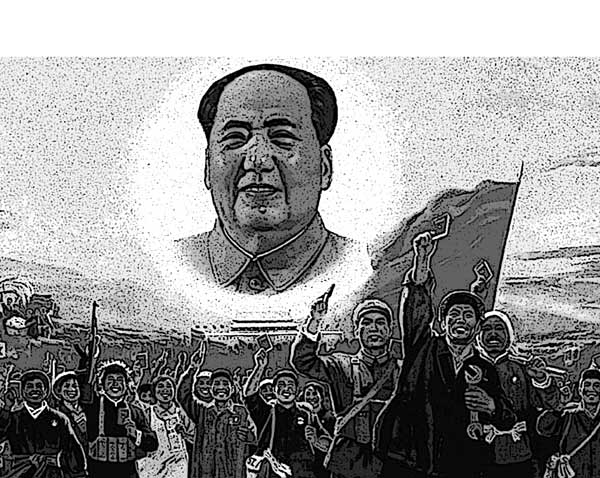

It idealizes state power.
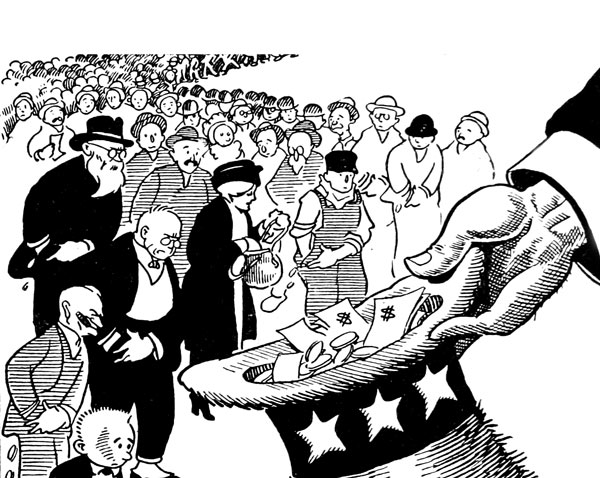

It penalizes accomplishment.
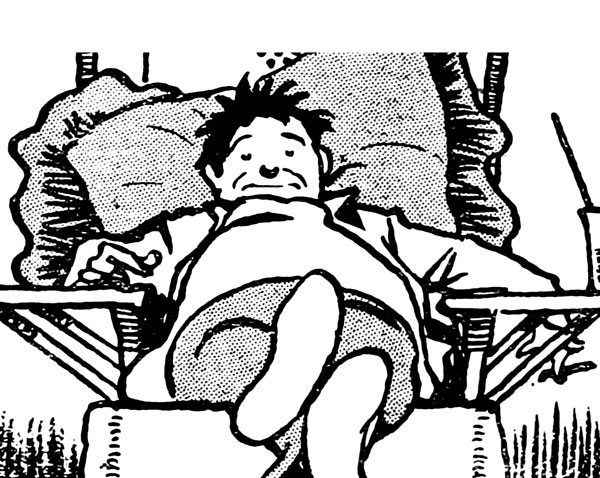

It rewards indolence.


It promotes obedience to the state.
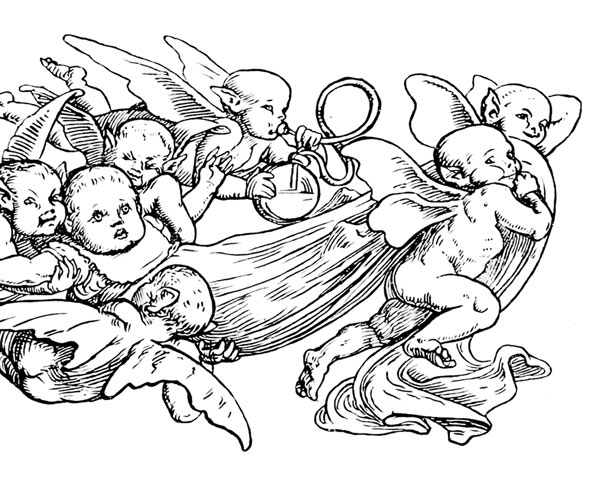

It encourages dependence on the state by treating citizens as children.

It dismisses the protection of individual rights with a vague appeal to the “collective good” or “public good.”


It has repeatedly led to economic collapse, oppression, poverty and starvation. So how have Scandinavian democratic socialists managed to overcome these problems?


Quote from the current Prime Minister of Denmark:

“I know that some people in the US associate the Nordic model with some sort of socialism. Therefore I would like to make one thing clear. Denmark is far from a socialist planned economy. Denmark is a market economy.”
Speech, Harvard Institute of Politics


From “Scandinavian Unexceptionalism” (from the Institute of Economic Affairs):

Today the Nordic economies are again growing, following a return to broadly free-market policies that served them well before policies changed during the 1960s and 1970s.

The countries are changing in the face of serious long-term problems that have developed over the last 30 years.

Finland, Sweden and Denmark have…introduced far-reaching market reforms. These changes include greater openness to trade, clear reductions in the tax burden, private provision of welfare services, the introduction of personal retirement accounts and, in Denmark, even a shift towards a liberal labour market.

—Scandinavian Unexceptionalism (highly recommended!)

And the moral hazards?

The development of Scandinavian welfare states has led to a deterioration in social capital.

Nordic societies have for hundreds of years benefited from  a strong Lutheran work ethic, a strong sense of individual responsibility and high levels of trust and civic participation.

In the early stages of their transition to “democratic socialism”, safety nets DID exist, but few used them. Over time, an increasing share of the population became dependent on government transfers. The welfare states moved from offering services to the broad public to transferring benefits to those who did not work.

The situation that exists in Nordic societies today is one in which ethics relating to work and responsibility are not strongly encouraged by the economic systems. Individuals with low skills and education have limited gains from working. This is particularly true of parents of large families, which gain extra support if on welfare.

It is true that welfare systems have reduced poverty. However, especially in the second generation, they have also created a form of social poverty of the same type that is apparent in the countries from which many of the admirers of the Scandinavian systems come. Detailed research clearly shows that welfare systems have formed a culture of dependency which is passed on from parents to children.

MUCH MORE HERE on the moral and economic capital that preceded the welfare state, and its gradual disintegration over time… 


Do you believe that socialism is a good idea that has simply been corrupted by ruthless dictators? Consider the story of the Chinese Cultural Revolution. . .  a mass movement of Chinese youth dedicated to eradicating capitalism and advancing socialism. Its bloody history tells us quite a lot about the logic of this flawed political philosophy. . . “Socialism’s Idealistic Youth”


 Useful References

Scandinavian Unexceptionalism (Institute of Economic Affairs)
This paper is especially valuable because it was written by someone who actually favors a large welfare state. His willingness to concede the problems inherent in such a state are refreshingly honest… and useful for anyone interested in the issues.

What Can the United States Learn from the Nordic Model? (CATO Institute)

Myth: The Scandinavian countries are proof socialism works (Being Classically Liberal)

The Myth of the Scandinavian Model

Economic Freedom of the World: 2013 Annual Report

International government spending (Wikipedia)

Index of Economic Freedom (Heritage Foundation)


A healthy democracy depends on the spreading of good ideas. If you found this article useful,  please share it with friends by clicking on any of the social media icons below.

Also, please consider showing your appreciation by dropping something in our tip jar  (this link will take you to the Citizens in Charge donation page… and your contribution will go to the support of the Common Sense website). Maintaining this site takes time and money. Your help in spreading the message of common sense and liberty is very much appreciated!