Categories
Accountability crime and punishment general freedom moral hazard nannyism national politics & policies Second Amendment rights too much government U.S. Constitution

Government Control

When do we say enough is enough?” asked California Senator Kamala Harris after Devon Patrick Kelley murdered 26 churchgoing Texans in cold blood, last Sunday.

“The terrifying fact is that no one is safe so long as Congress chooses to do absolutely nothing in the face of this epidemic,” argued Connecticut Senator Chris Murphy.

President Trump, on the other hand, not only pointed out that criminals will violate gun laws to acquire weapons, he speculated that had Stephen Willeford, the former National Rifle Association instructor, not come upon the scene, armed, “instead of having 26 dead, you would have had hundreds more dead.”

After previous mass shootings, Democrats pushed legislation that, even if it had been the law, would not have prevented that particular killer from obtaining the weapons. This time it’s different, since the killer should not, by current law, have been allowed to purchase the firearms he used. Kelley’s conviction for domestic violence, while serving in the Air Force, disqualified him.*

But the Air Force did not do its job, failing to report his record to the FBI. So the background check found . . . nothing.

The Pentagon has known for at least two decades about failures to give military criminal history information to the FBI,” the Associated Press informed, “including the type of information the Air Force didn’t report about the Texas church gunman.  . . .”

The Obama administration, through its command of the military, failed to execute the law designed to keep guns out of dangerous hands. And it sounds like this failure dates back to Bush and Clinton days.

Where does the buck stop?

We don’t need gun control; we need government control.

This is Common Sense. I’m Paul Jacob.


* Note also that the murderer, as Ben Shapiro recounted at National Review: “escaped from a mental institution in 2012, threatened his superior officers and attempted to smuggle weapons onto a military base to carry out those threats, cracked the skull of his infant stepson, beat his wife, abused a dog.”

PDF for printing


Categories
Accountability government transparency insider corruption local leaders moral hazard porkbarrel politics responsibility too much government

More-Equal-Ness

“All animals are equal,” wrote George Orwell, “but some animals are more equal than others.”

That was the regime’s final slogan in Orwell’s allegorical novella, Animal Farm . . . and it currently serves as the operating principle for local government.

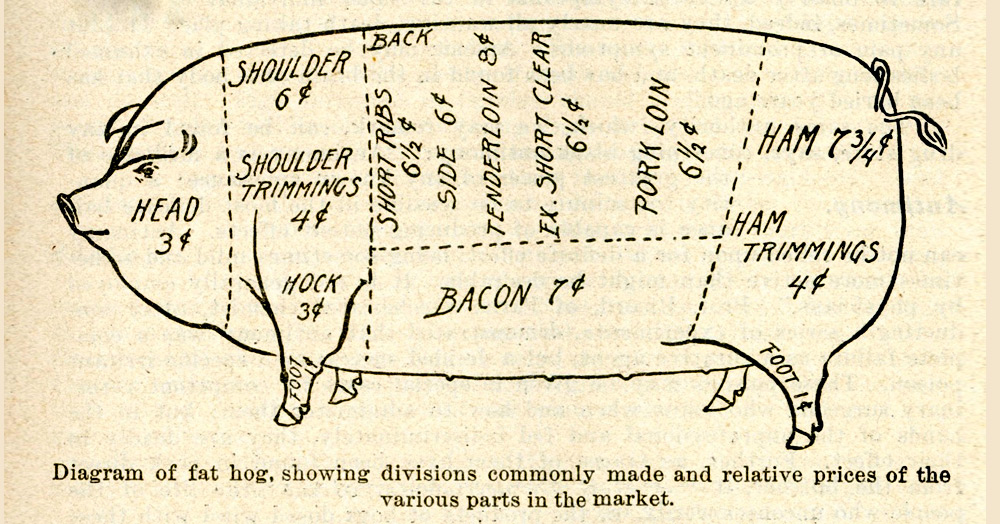
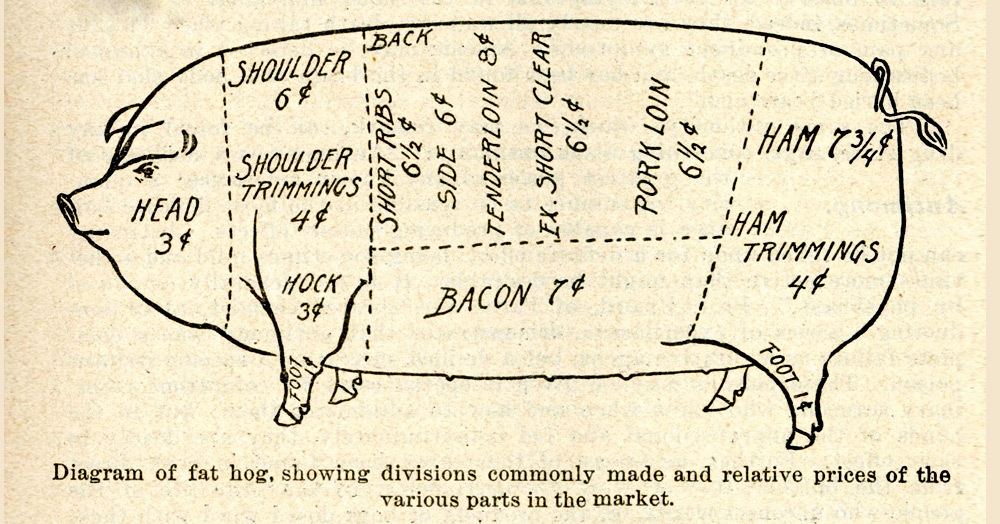
Well, at least in Washington, D.C., our country’s pig trough.

Washington Post reported that the District of Columbia’s Board of Ethics and Government Accountability spelled out the details of its official reprimand of Kaya Henderson, the former chancellor of D.C. Public Schools.

Henderson, the article explained, “violated the city’s Code of Conduct by granting permission for some people — including a White House official, an employee of the mayor’s office, a district principal and a former classmate — to choose the school they wanted their children to attend even though other D.C. families had to go through a competitive lottery system.”

Using one’s position of trust to hijack a public benefit and gift it to one’s cronies at the expense of everyone else is clearly corrupt. Henderson deserves more serious repercussions than a belated reprimand, especially since she has already moved on professionally. She now works as “a distinguished scholar in residence at Georgetown University,” researching “racial justice.”

Ms. Henderson offered weighty reasons for her cronyism. Regarding her special treatment for City Administrator Rashad Young, she offered that D.C. officials “do not necessarily get paid as much as we should.”

Young’s annual salary? $295,000 a year.

Did you also notice she said “we”? As chancellor, Henderson was paid a mere $284,000 a year.

Being “more equal” is nice. It’s especially nice to be friendly with those “more equal” folks, who can bestow a little more-equal-ness on you.

This is Common Sense. I’m Paul Jacob.


PDF for printing


Categories
Accountability crime and punishment free trade & free markets general freedom ideological culture moral hazard nannyism national politics & policies property rights responsibility too much government

The Owners of Twitter Have Rights

Roger Stone is suing Twitter for kicking him out.

Without saying exactly why they booted him, Twitter implies that the reason is abusive language. For his part, Stone accuses the social media giant of targeting right-wing tweeters while letting left-wing tweeters off the hook for the same or worse alleged wrongdoing.

I’ll stipulate that Stone is justified in accusing Twitter of rank, ideologically motivated hypocrisy in applying its micro-blog policies. But he’s wrong to sue.

As I have argued before — indeed, just yesterday — government should not regulate Internet forums and should not compel Twitter or other firms to provide a soapbox for anybody else. The only relevant legal issue here is whether Twitter has violated a contract. But Twitter does not agree to let anyone use its services unconditionally. And I don’t think that Stone is alleging any violation of contract.

Our right to freedom of speech does not include the right to force others to give us access to their property in order to exercise that freedom. Nor do the rights of any individuals to use and dispose of their own property disappear if they happen to create a very big and successful enterprise. There are many ways to try to make Twitter pay for bad policies without using force against the company, including boycott and direct competition.

I agree with the guy who said that one’s right to freedom is not contingent upon a guarantee “that one will always do the right thing as others see it.”

This is Common Sense. I’m Paul Jacob.


PDF for printing


Photo by Nigel on Flickr


Categories
Accountability First Amendment rights folly media and media people moral hazard national politics & policies too much government U.S. Constitution

Our Royals Are Not Amused

“You created these platforms,” Sen. Dianne Feinstein (D-CA) informed the top legal minds at Facebook, Twitter, and Google, “and now they’re being misused.”

“And you have to be the ones who do something about it — or we will.”

Take that as a threat.

But also take it as the grand moment when the Establishment showed its hand.

Consider: Facebook, Twitter, and YouTube (a Google product) are “media platforms.” So are books, libraries, newspapers and newsstands. Imagine being a king right after Johannes Gutenberg invented the printing press. Very quickly, the world changed.

People thought differently. And they began demanding change from government. The sovereigns had to make room for subjects-turned-citizens.

Royalty and aristocracy did try to regulate the new platforms of information and opinion. Censorship was all-too-common. The rulers killed upstarts for writing the wrong things, saying the wrong things.

So, which side would you be on, Mrs. Feinstein?

That is Scott Shackford’s basic take on this. I’m with him.

I just wish to expand: in my lifetime the media platforms of newspapers and television were regulated. Heavily. Mergers and business purchases were subject to government permission; the electromagnetic spectrum was licensed rather than treated as private property, and the actual content of radio and TV shows were regulated by the FCC.

And the Feinsteins of Washington got awfully secure in their positions. Had the regulation of American media done its trick?

Enter new media, uncorking the bottle of opinion.

No wonder the Establishment is scared.

We shouldn’t let them regulate political content on the Internet. Demand, instead, the opposite: a complete repeal of the regulation of business management — and non-criminal content regulation — of all media platforms

This is Common Sense. I’m Paul Jacob.


PDF for printing


Categories
crime and punishment folly general freedom ideological culture media and media people moral hazard national politics & policies responsibility

Five Fascist Things

Mass protests have been planned for this Saturday in many major cities across the country. “On November 4, 2017,” says the Refuse Fascism website:

Take To The Streets And Public Squares in cities and towns across the country continuing day after day and night after night — not stopping — until our DEMAND is met:

This Nightmare Must End:

The Trump/Pence Regime Must Go!

In the Name of Humanity, We REFUSE to Accept a Fascist America!

The group took out a full-page ad in the New York Times, repeating all that along with the ominous “Nov 4 • It Begins.”

Now, I am against fascism. You may have noticed that . . . reading between the lines. I’m for limited government, a classical liberal, a modern libertarian. Fascism arose in no small part as a replacement for liberalism, which fascists scorned for not promoting activist government.

And though I’m not gung-ho about President Trump, I do not see much fascism coming from the White House. I challenge tomorrow’s protesters to name five fascist things* the new president has done . . . that the previous president had not also done.

And then, I ask, what practical way could you oppose these putatively fascist things without taking to everybody’s streets until you get your way?

Also, please keep non-violent, as promised. When protesters become rioters, bad things happen — including conjuring up greater authoritarian sentiment from some.

That reaction may not be fascism. But it wouldn’t be good.**

And, on the right: don’t welcome civil war, as some have already done.

Do you want to see blood running in the streets? I sure don’t.

This is Common Sense. I’m Paul Jacob.


* Or four? Three? Two? One? Remember, we are talking about new fascism.

** Alas, everything bad in this world is not automatically fascism.


PDF for printing


Categories
Accountability crime and punishment government transparency insider corruption media and media people moral hazard national politics & policies responsibility

Stranger Counsels

The office of special counsel, like that of the special prosecutor in days (and administrations) of yore, is a strange one. Not mentioned in the Constitution, it is institutionally slippery. An executive branch position designed to investigate the executive branch — there is no way it cannot be . . . “problematic.”

Just in time for Halloween, Special Counsel Robert Mueller, tasked with looking into the Russian connections of the Trump administration — particularly electoral mischief* — landed his first fish this week, Paul Manafort and Rick Gates. The two have been charged with, and pled innocent to, twelve criminal counts related to their activities in Ukraine before their association with Trump. There are tax dodging charges, too, including something called “conspiracy to commit money laundering.”

And while the whole bizarre Russia story has now launched into a feeding frenzy, it appears that it just became . . . mundane. “Legal experts said the court filings indicate Mueller is running a serious, deliberative, and far-sighted inquiry,” says The Atlantic.

Meanwhile, the weird relations between the Clintons and Russia loom on the horizon, rather like that smoky monster from the Upside Down on Stranger Things 2.

But hey, none of this is shocking. Troll through the modern state and you will find corruption. You can land all sorts of fish.

Including suckers.

Could we be those suckers?

Since this sort of thing can always be found — and the Manafort skullduggery seems somewhat tangential to Russian electoral influence, despite the man having served a stint as Trump’s campaign manager — is this just a way to get us to look the other direction from anything really meaningful?

This is Common Sense. I’m Paul Jacob.

*And let’s not pretend this is new. Foreign influence was an issue in the campaign of 1800.


PDF for printing

Categories
Accountability Common Sense incumbents initiative, referendum, and recall local leaders moral hazard national politics & policies responsibility term limits

Agreeable America

Americans actually agree on a lot of things; it’s a pity that today’s media and political debates play up the discord.

Or so argues A. Barton Hinkle at The Richmond Times-Dispatch. Sure, he admits, “[a] lot of people seem willing to tear your head off over the smallest thing.” But “on some topics, the public is of one mind, or as close to that as you can get.”

Hinkle notes that “Nine out of 10 Americans think a background check should be required for every firearm purchase.”  A few percentage points fewer wish to keep “Dreamers” in the country; a mere one point fewer disapprove of civil asset forfeiture. Medical marijuana is approved of by 83 percent of Americans.

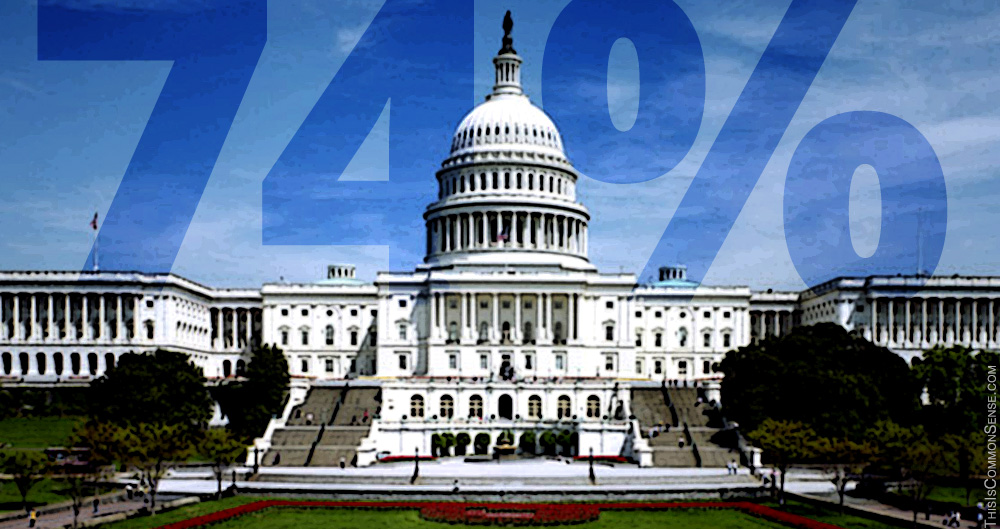
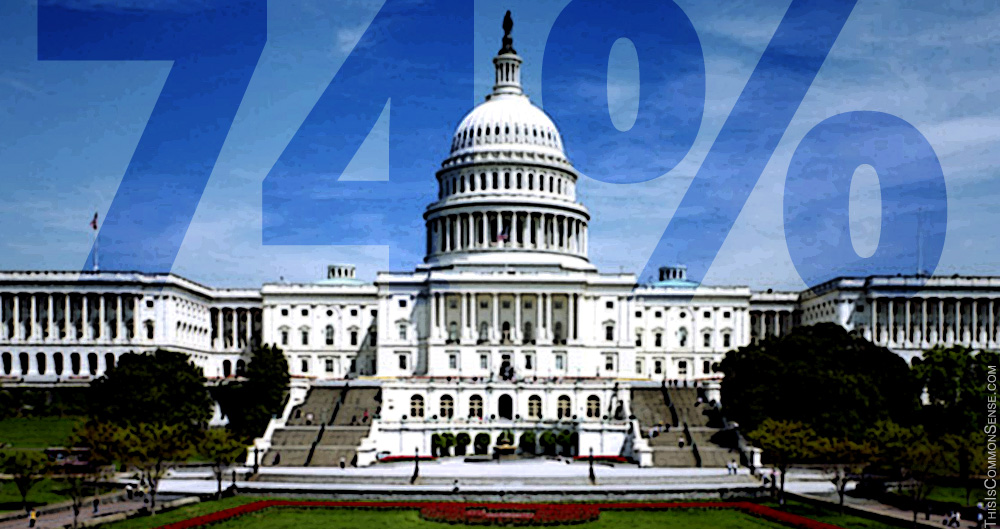
Not on Hinkle’s list? American agreement on term limits. A year ago, a Rasmussen Poll found support for limiting congressional terms at 74 percent of likely voters, with only 13 percent opposed and 13 percent undecided. This overwhelming public support has been consistent for many decades.

But consistently ignored by Congress. Not so surprisingly.

Can Americans put their united oomph behind their overwhelming agreement? U.S. Term Limits thinks so.

The group isn’t depending on cajoling the Congress, either. They’re mobilizing concerned citizens to convince 34 state legislatures to call a Term Limits Convention.* The convention’s purpose is to propose a constitutional amendment for congressional term limits, which then still requires 38 states to ratify it.

Rather than brewing up a civil war over tweets and “microaggressions,” join the Term Limits Team.

Let’s agree to agree. And make our representatives agree, too.

This is Common Sense. I’m Paul Jacob.

* As Article V of the U.S. Constitution states, “The Congress . . . on the application of the legislatures of two thirds of the several states, shall call a convention for proposing amendments, which, in either case, shall be valid to all intents and purposes, as part of this Constitution, when ratified by the legislatures of three fourths of the several states . . .


PDF for printing


Categories
Accountability incumbents insider corruption local leaders moral hazard national politics & policies responsibility term limits

Our Experience with Experience

It seems exceedingly plausible that the longer one serves as a legislator, the better legislator one would become.

Yet voters back home have noticed something: the longer in office, the less representative their so-called representative tends to become.

No wonder that in those states where Americans have been permitted to vote on congressional terms limits, that vote has been a resounding, “Let’s limit ’em!”

In a Washington Post op-ed, Greg Weiner, associate professor of political science at Assumption College, praised Senators Jeff Flake (R-Ariz.) and Bob Corker (R-Tenn.) as “voices for congressional power” and “defenders of congressional prerogative.” He worries their departure weakens Congress as an institution, further eroding a critical check on the president and the executive branch.

“The problem pertains far less to opposition to this president,” Weiner points out, “than to the long-range erosion of congressional resistance to the presidency as an institution.”

This caught my attention because we desperately need Congress to function as a co-equal branch of government and because opponents of state legislative limits* often assert a similar argument: term-limited legislatures are less able to check the power of the governor and executive branch agencies.

“Congress has been in decline for generations,” Weiner acknowledges. What else has been happening over this time? Politicians have been loitering in Congress longer and longer, term after term after term. 

Hmmm. The correlation is between a weakened Congress and more experience, not less.

Let’s further note that Flake is only in his first Senate term and Corker his second.

After nearly four decades in office, is, say, doddering Sen. Thad Cochran (R-Miss.), providing better oversight?

This is Common Sense. I’m Paul Jacob.


* The 15 states that have them — Arizona, Arkansas, California, Colorado, Florida, Louisiana, Maine, Michigan, Missouri, Montana, Nebraska, Nevada, Ohio, Oklahoma, South Dakota — contain 37 percent of us.


PDF for printing


Categories
crime and punishment general freedom moral hazard national politics & policies Popular The Draft

Daughter Draft

“A man’s gotta do what a man’s gotta do.” 

For years, the Selective Service System — the friendly folks who bring us the military draft — used the above slogan to portray registering for the draft as a rite of manhood. 

If macho draft registration is now expanded to women, perhaps the slogan will change to: “Men and women have to do what they’re told — equally.” That’s where the issue is headed: to equality. Equality before the law is important, sure — but we don’t want equal servitude. Equal freedom is better.

“It appears that, for the most part, expanding registration for the draft to include women would enhance further the benefits presently associated with the Selective Service System,” stated a Pentagon report to Congress recommending the mandatory registration of women.

What benefits are those?

Spending $25 million each year on a Washington bureaucracy to keep a woefully inaccurate and incomplete list of young people between 18 and 25 years of age for a possible future military draft doesn’t hold any benefit for me.

If a draft were conducted, many observers believe the Selective Service would throw away its coerced list of young people (gathered by threatening and punishing and imprisoning young people*) and simply purchase a list or lists on the open list market.

But there is no need for conscription. Never has been. Citizens in these United States have always stepped forward. Today, the All Volunteer Force is the best military in the world.

Most of all, conscription is anathema to the idea of individual liberty. We can and will defend ourselves, but without registering or forcing our daughters into the military.

Or our sons.

Ending registration, forswearing conscription, that’s equal freedom.

This is Common Sense. I’m Paul Jacob. 


* I know, I was one of those prosecuted back in the 1980s.


Additional Reading:

Common Sense: For Genderless Freedom

Common Sense: Needless List?

Townhall: Obama’s New Rite

Common Sense: Equal or Free?

Common Sense: Junk the Law

Townhall: Draft the Congress and Leave My Kid Alone

Townhall: Americans Gung-Ho to Draft Congress


PDF for printing


Categories
Accountability Common Sense folly general freedom media and media people moral hazard nannyism national politics & policies responsibility term limits too much government

It’s the Stupid Spending

These United States are approaching a crisis. Mounting debt seems increasingly unpayable. Sovereign default and financial chaos are “in the offing” — drifting from the (future) horizon to the (present) shore.

The costs of our debt load have been accommodated as astute economists predicted, with the weakest recovery in American history.

Seven years ago I wrote:

According to increasing numbers of Americans, it’s the level of spending by government that must decrease. We must balance budgets. Soon.

One could play sloganeer and say “It’s the spending, stupid”; or, twist that, to say “It’s the stupid spending.” But however you formulate the problem, what the new Republican House must do is find a way to cut spending.

They haven’t. Is there any reason, even with super-duper businessman Donald Trump riding herd, that they will make net cuts?

We can expect gross spending to increase and the debt to balloon even bigger.

Why?

Well, we are trapped.

Even the politicians themselves feel trapped.

You see, once the government begins a program, a constituency comes to depend upon it, and resists being “betrayed.” And the media supplies a steady stream of sob stories about the brutality of “austerity.” Politicians fear the passion of voters reacting to a specific hyped human need more than the general desire for less spending. So politicians increase the stupid spending.

Well, if the politicians are trapped, release them. Free them.

How? Term limits.

Congressional term limits would un-trap not just the pols — it’d free the voters, too. Let’s end the pretense that sending the same politicians to Washington term after term can produce local prosperity. Oh, the power of incumbency may lavish benefits on career congressmen, but it doesn’t pay off for the rest if us.

This is Common Sense. I’m Paul Jacob.


* It was President Harry Truman who said that term limits would “help to cure senility and seniority — both terrible legislative diseases.”


PDF for printing


Illustration: Gustave Doré, Avaricious and Prodigal”