Categories
Accountability crime and punishment government transparency media and media people moral hazard national politics & policies privacy Snowden

Clapper into the Clink?

Lying to Congress is a strange crime. A number of people have been prosecuted for it over the years, but Congress isn’t a court of law and, more to the point, Congress may present the densest source of lies in the United States.

The idea that it would be illegal for a citizen to lie to a den of liars is, well, a bit amusing.

But it is illegal, and definitely should be illegal, for government functionaries to give false testimony before Congress.

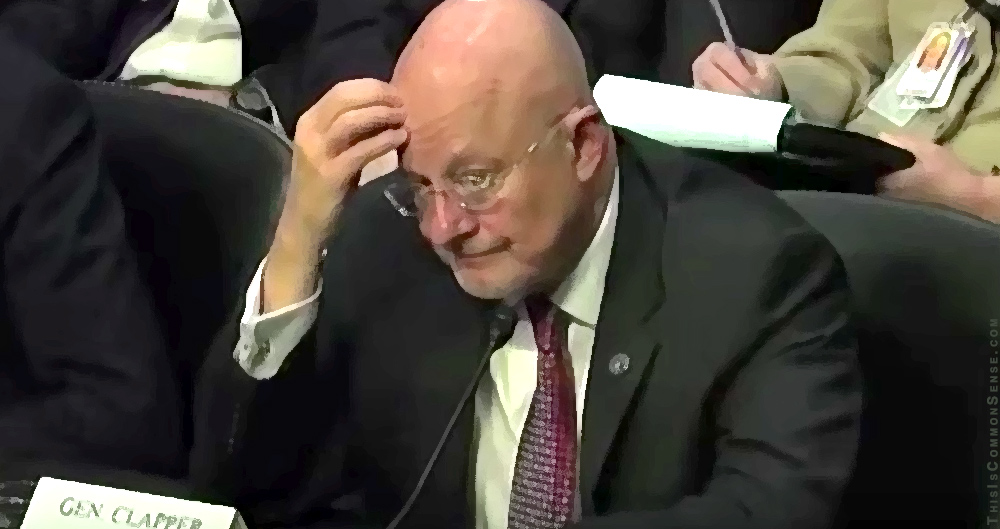
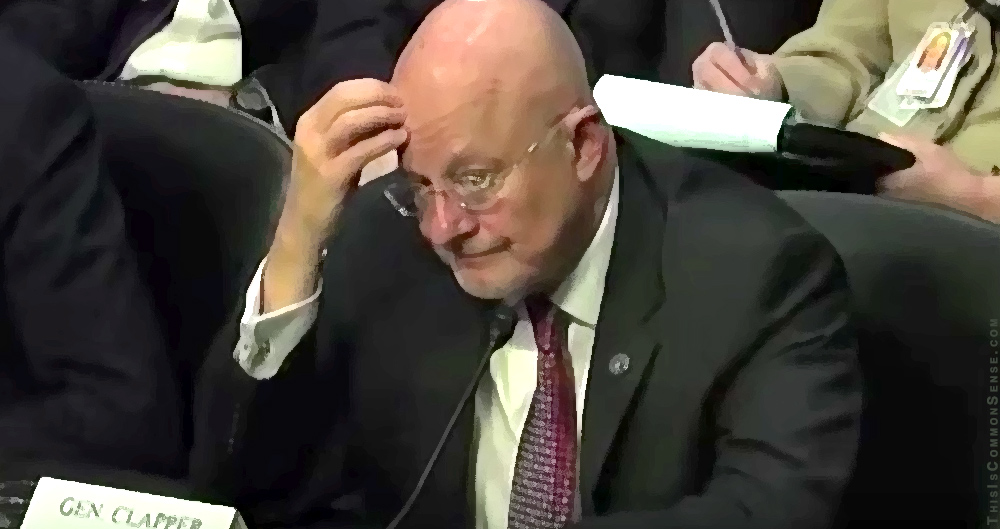
That’s why the case of the admittedly “untruthful”* James Clapper is so aggravating. When asked by Senator Ron Wyden, on the Senate floor, about data collection of phone calls by the U.S. federal government, he — the director of national intelligence under President Barack Obama from 2010 to 2017 — lied through his teeth.

And had not Edward Snowden leaked information on the National Security Administration’s metadata collection program, we would not have learned anything about it.

No wonder, then, that several congressmen want to prosecute Clapper before March 12, when the Statute of Limitations runs out on his crime. Steven Nelson at the Washington Examiner quotes Rep. Ted Poe (R-Tex.), Rep. Thomas Massie (R-Ky.), Rep. Louie Gohmert (R-Tex.), and Rep. James Sensenbrenner (R-Wis.) as all being in favor of siccing federal prosecutors on the forked tongue spymaster.

Senator Wyden warns that letting lies such as Clapper’s go unaddressed encourages Americans to be cynical about government, and “makes it possible, even probable, for hucksters and authoritarians to take power.”

Too late?

This is Common Sense. I’m Paul Jacob.


* Clapper’s March 2013 whopper at the Senate Intelligence Committee hearing was that the NSA was “not wittingly” collecting “any type of data at all” on millions of Americans. Later, to MSNBC, he characterized his artful dodge as having been “the least untruthful” way for him to respond.
PDF for printing


Categories
general freedom media and media people national politics & policies too much government U.S. Constitution

Happy Birthday, America!

What? Oh, sure, I know the United States of America has its birthday on July 4th, that day in 1776 when the Second Continental Congress adopted the Declaration of Independence.

Let’s agree I’m early. (Oh, how I wish it were July.)

But the interesting thing about history is how we get to those moments wherein the great “we” declare our independence or fill the streets or storm the beaches — or the polls. The many big, important days that lead to THE day.

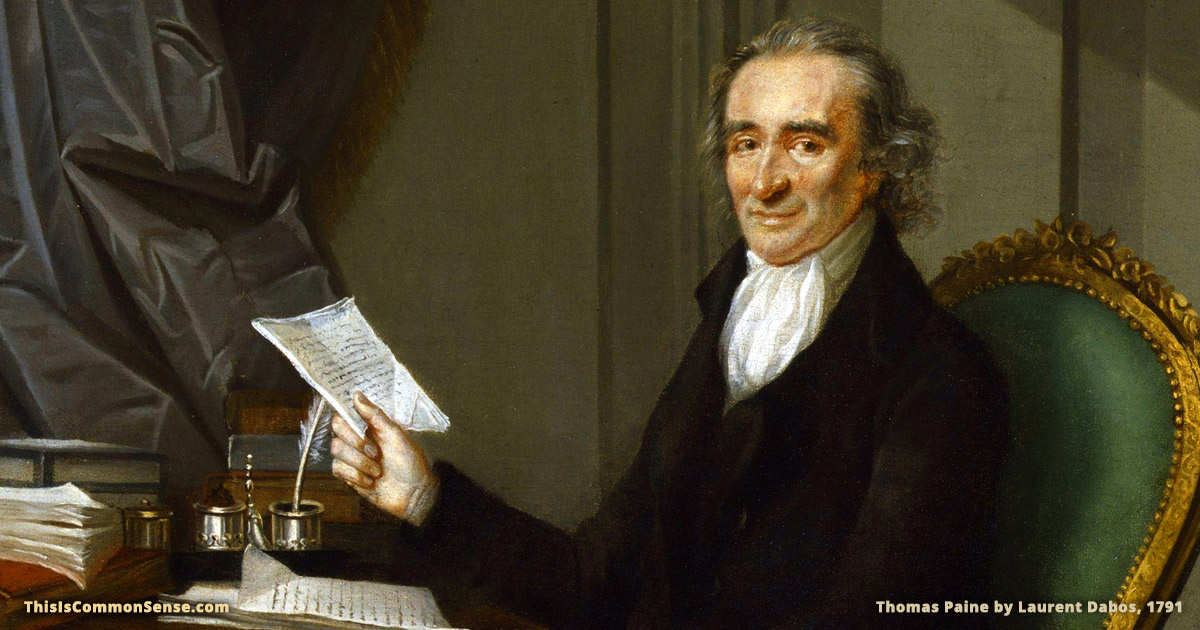
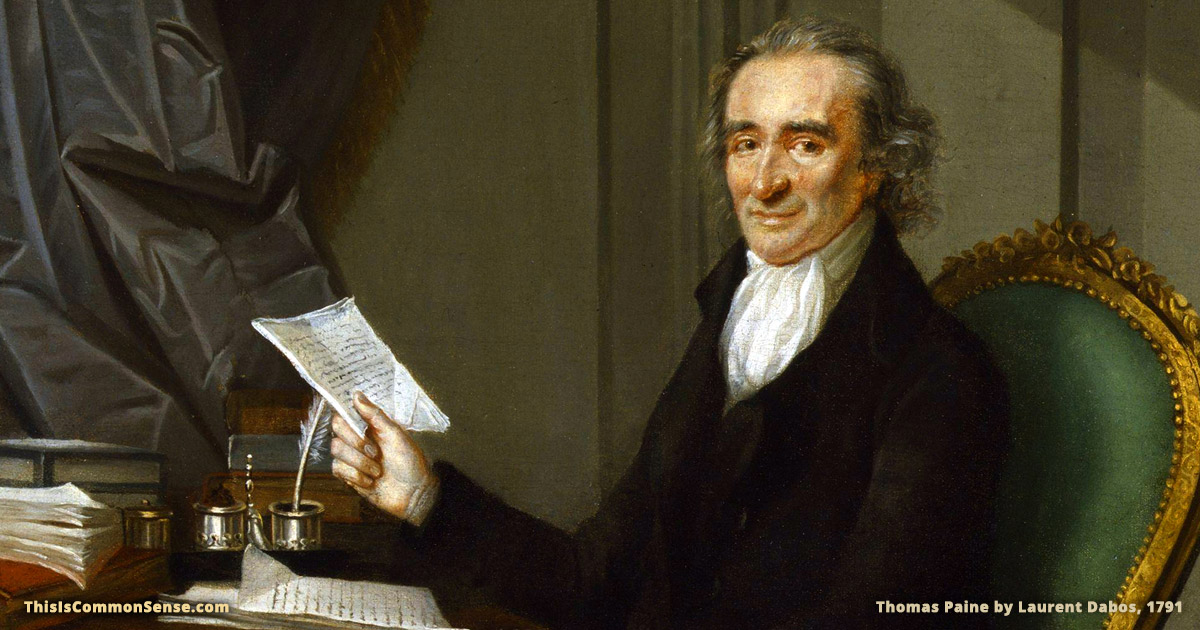
Today is such a date, because 242 years ago on January 10, 1776, Thomas Paine published Common Sense. Without this day 242 years ago, we wouldn’t have had Independence Day six months later.

Using common and direct language, and speaking to all the “inhabitants of America,” Common Sense made the case for both independence from Britain and the establishment of a democratic republic. Boy, did it make the case. On a per capita basis, Paine’s pamphlet is the bestselling American publication in history.

His pamphlet or parts were read publicly, reprinted in newspapers and spread throughout the colonies. This common man — barely an American,* having landed on our shores in November 1774 — used the universal language, speaking truth to power.

“Every spot of the old world is overrun with oppression,” Paine told his fellow Americans. “Freedom hath been hunted round the globe. Asia, and Africa, have long expelled her. Europe regards her like a stranger, and England hath given her warning to depart. O! receive the fugitive, and prepare in time an asylum for mankind.”

The original idea of these United States was freedom.

And that, my friends, is Common Sense. (I’m Paul Jacob.)


* Of course, this makes Paine almost quintessentially American.


PDF for printing


Categories
Accountability general freedom ideological culture media and media people national politics & policies responsibility too much government

The Times Must Change

“Political leaders prefer to project a noble history, sometimes by turning complicity in atrocities into claims of victimhood,” the New York Times informed us last Sunday. “In Russia, Mr. Putin and many of his lieutenants came from the K.G.B. and resisted fully confronting its repressive history. And they, like many of their countrymen, prefer to portray Stalin not only as the architect of the Gulag but also as the leader who built Russia’s industrial might and led it to victory in the Great Patriotic War.”

The Gray Lady here marks the passing of Arseny Roginsky, an organizer and activist who kept alive the memory of state mass murder in his homeland. The Times quotes the late hero as insisting that common talk of “victims of repression” is nowhere near enough. The repression did not merely descend upon the people as “a plague.”

The victims were targets of “state terror.”

But there was something missing in this too-brief notice. Though the Nazis were mentioned, the Union of Soviet Socialist Republics wasn’t.

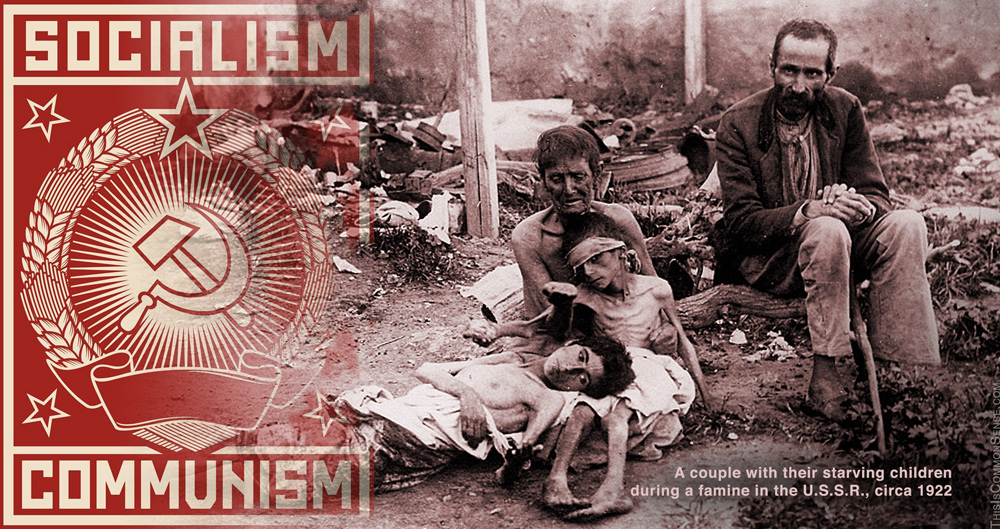
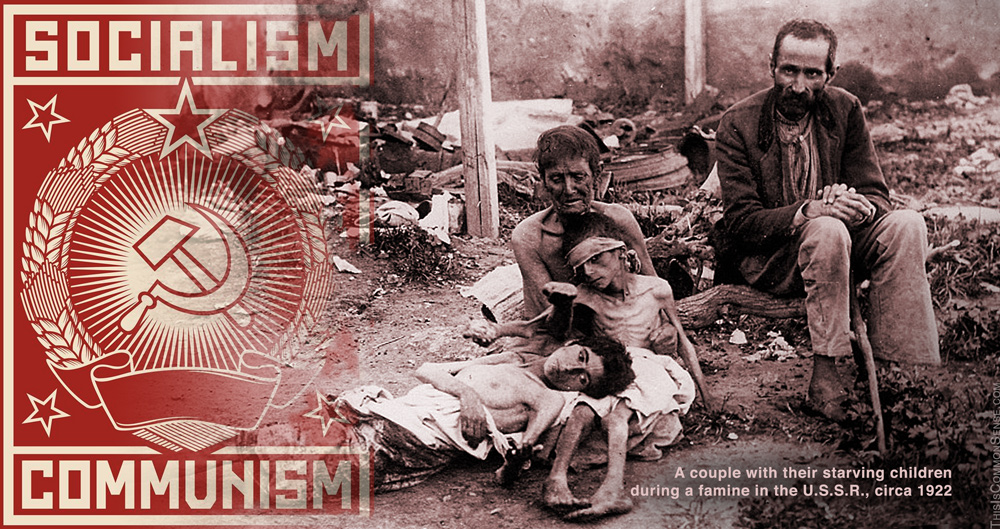
Communism was not.*

State terror did not infect its perpetrators biologically, like the world’s worst case of x-oplasmosis. It neither descended from the heavens nor ascended from the swamps. The infection was ideologicalthe result of Marxian socialism, of unworkable communism.

By not mentioning socialism or communism or even the USSR, the New York Times carries on its sad history of leftist apologetics. The case of the lying propagandist Walter Duranty — the Times’ award-winning foreign correspondent and author of Mission to Moscow — should have been the last of that.

It isn’t, apparently. The Times still protects its safe-space socialist readers.

This is Common Sense. I’m Paul Jacob.


* The omissions were also present in the Timesinitial obituary.


PDF for printing


Categories
Accountability folly ideological culture local leaders media and media people national politics & policies

Where Have You Gone, Al Franken?

Today, finally, is the day. Barring some last-minute hijinks in the extended resignation ritual announced almost four weeks ago by Sen. Al Franken (D-Minn.), the comedian turned cad turned politician turned pervert leaves his U.S. Senate seat.

And hopefully keeps his mitts off other people’s seats to boot.

Even without deadline hijinks, the Franken saga has been strange. After hearing Franken’s resignation statement on the Senate floor, CNN’s Chris Cizzilla wrote, “He didn’t believe he had done anything for which he should have been forced to resign.”

But note: No one “forced” Senator Franken to step down. As my Sunday Townhall.com column reminded, he did so voluntarily. 

Why?

Peer pressure. Three-quarters of fellow Democratic Party senators demanded Franken leave, to clear the way for election-year attacks on Republican sexual sleaze-balls without partisan distraction.

And now some cry crocodile tears. They want the no-longer-amusing Franken out. Sure. But they also wish to continue the pretense that Franken is a wonderful fellow just the same.

“His voice will be stronger than ever,” argued fellow Minnesota Sen. Amy Klobuchar—ridiculously. A Vox article was headlined, “Al Franken resigned amid sexual misconduct allegations, but Democrats aren’t making him leave in disgrace.”

Is it a paraphrase of the old joke: “Don’t go away in disgrace, Senator, just go away”?

But Franken is leaving in disgrace. Should be.

Eight women have come forward with allegations of sexual misconduct. The senator’s response has been to publicly apologize, profusely, and then, later, claim that “some of the allegations” are “not true.”

Others he remembers “differently.”

Not good enough, ex-senator.

This is Common Sense. I’m Paul Jacob.


PDF for printing


Categories
Accountability folly ideological culture media and media people national politics & policies tax policy too much government

The Hyperbole Is Falling

A mad killer is on the loose!

That is one way to get attention . . .

The sky is falling!

You are getting the idea . . .

Trump is literally Hitler!

Extravagant hyperbole is not necessary to criticize the current President. Indeed, as Chicken Licken and the Boy Who Cried Wolf demonstrate, that can backfire. Especially when you are complaining about something on which Trump has proved to be pretty darn good — the tax bill, for instance.

Nevertheless, as it passed through Congress, Democrat pols and the major media dinosaurs have doubled down on overstatement: A “middle-class con job” was Sen. Ron Wyden’s characterization; singer-actress Barbra Streisand (presumably now living in Australia or Canada), re-tweeting a New York Times piece on “the Great American Tax Heist,” accused Trump of pushing the bill for “personal gain”; Bernie Sanders calls it a “tax cut for billionaires” who, instead of being helped, he says, should be “asked to pay more in taxes.”

Yes, the richest (by and large) will get the most reductions, since they pay the most taxes already. Bernie should be reminded that it is the very nature of taxes that “ask” is the wrong active verb. And calling a cut in what’s taken from taxpayers a “heist” is too absurd for commentary.

It does look like most taxpayers will get tax relief. That’s good. Alas, the debt may grow larger, depending on the economic growth spurred by the tax reform. But I notice that the Democrats tend to complain about deficits only when Republicans are in charge. And vice-versa.

Partisan Derangement Syndrome at work.

This is Common Sense. I’m Paul Jacob.


PDF for printing


Categories
Accountability general freedom media and media people moral hazard nannyism national politics & policies porkbarrel politics responsibility too much government U.S. Constitution

A Good Tragedy Not Wasted

No matter how “not as bad as we feared” President Donald Trump may be appearing, as we close out the year let’s remember why some of us did not trust him in the first place: his knee-jerk reactions are too often witlessly statist.

The speeding Amtrak train that derailed over I-5 in Washington State on Monday was a horror show, sure. And we have come to expect the President — any President, either party, all administrations — to provide words of comfort after such events. Trump conformed to expectations.

And, admittedly, his initial Tweet was all very proper. But his verbal response was . . . very . . . Old School. After mentioning the federal government’s role in handling the tragedy — “monitoring” and “coordinating with local authorities” — he used the event as an excuse to expound upon the idea that the event provides “all the more reason why we must start immediately fixing the infrastructure of the United States.”

This is bad, old-fashioned policy opportunism. The worst time to cook up “solutions” is right after a tragedy. That’s when emotions are highest and reason is lowest.

More importantly, the train was going through its initial run over newly upgraded infrastructure!

One could more reasonably surmise that the recent infrastructure upgrade was the cause of the derailment — though, let us be honest, it looks like the train was way above the stretch’s speed limit.

Note to Donald Trump: just because there’s a microphone in front of you doesn’t mean you are required to “make a point.” That’s not the President’s job.

Mister, we could use a man like . . . Calvin Coolidge again.

This is Common Sense. I’m Paul Jacob.


PDF for printing


Categories
crime and punishment First Amendment rights general freedom government transparency ideological culture media and media people moral hazard nannyism national politics & policies too much government

No Joking Matter

He thought he was just horsing around.

Using the popular app WeChat, a Chinese construction worker supervisor Chen Sho Uli made a gossipy joke about government officials while chatting in a chat group. But being too casual about what you say — and where — can be dangerous in China. For his sin Chen was incarcerated for several days.

Picking quarrels” is another no-no in the country.

In lieu of Orwell’s telescreen in every room, modern Internet technology enables repressive governments to punish citizens for thoughtcrime that becomes app-speech crime. If the Chinese government can spy on you, it will. And penalize you for remarks it deems offensive to the dignity of the state.

Because of such repression, blogger Stephen Green observes that “strong encryption is everybody’s friend — except the tyrant’s.”

Agreed. Encryption is an important line of defense.

But some societies require this more than others, because harmless, incidental communications are not equally attacked by government, from country to country. Which means that encryption is actually a second line of defense.

The first is a cultural and political tradition respecting individual rights.

For one thing, robust encryption helps only those who engage in hyper-careful private discourse, or hyper-careful anonymous public discourse. Encryption won’t help thinkers of controversial thoughts who wish to express those thoughts publicly and under their own name. Everywhere we can, then, we must strengthen both the technological and cultural defenses of open discourse — recognizing that the latter is the more crucial and fundamental.

This is Common Sense. I’m Paul Jacob.


PDF for printing


Categories
Accountability folly general freedom local leaders media and media people moral hazard national politics & policies responsibility

Another Election “Against”

As I write, Democratic candidate Doug Jones has just taken the stage to declare himself the winner of the Alabama Senate race, the one in which Roy Moore became more infamous than famous, and better known for the worst kind of reasons.

The final counts are not in, and I suppose there could be a turnaround at the last moment, but it doesn’t look like it. It looks like Republicans lost the seat. Hillary Clinton is already crowing that this is a sign of more Democratic victories to come.

Maybe.

Too soon to tell.

Meanwhile, what to make of it all? Jones has declared that “This entire race has been about dignity and respect. This campaign has been about the rule of law.” And I am not certain that is a good description. It seemed to me what the campaign turned into was a referendum on whether voting for a man accused of sexual assault and statutory rape was a good idea.

There were also Republicans thankful that Moore lost. “Decency wins” is what Senator Jeff Flake tweeted; “Suck it, Bannon,” is Meghan McCain’s eloquent taunt. (Steve Bannon had backed Moore.) Reason’s Scott Shackford probably put it best, writing that “Polls have closed in Alabama as voters there decide between controversial former judge Roy Moore and … um … not Roy Moore.”

The modern American political process is now firmly a matter of reiterating this pattern: voting against more than for.

A horrible development? Well, there sure is a lot more to be against in American politics, than for.

This is Common Sense. I’m Paul Jacob.


PDF for printing


Categories
general freedom ideological culture media and media people Popular

Memed Into the Public Domain?

When the definitive history of the 2016 presidential election is written, the central figure may turn out to be . . . a frog.

“Pepe,” to be precise.

The cartoon frog with red lips started out as a minor figure in a Matt Furie webcomic, but came to symbolize so much more.

“This iconic amphibian has been labeled a Nazi, condemned by a presidential candidate, and now is at the center of an important First Amendment battle in an era of unlimited replication, imitation, and mutation,” writes Zach Weissmueller in a highly entertaining story in Reason. “It’s a fight that involves the alt-right, Trump voters, a powerful Washington, D.C.-based law firm, and the anonymous online image board 4chan. . . .”

Mike Cernovich, the pro-Trump, anti-SJW publicity artist, has found himself at the center of the legal controversy. He’s hired a lawyer.

Oddly — or maybe not, politics and culture wars being what they are — the lawyer for Pepe’s creator makes much of the alt-right/hate group usages of Pepe:

“You can’t copy other people’s ideas and claim free speech,” says Tompros. “[The alt-right is] absolutely free to spout hate in some other form. We just don’t want them using Pepe the Frog to do it.”

Contra Furie’s lawyer, you are allowed to copy others’ ideas in a free society. Copyright is something a bit narrower. Trickier.

This fight over the satirical use of a Trickster figure may turn out to be a legal and cultural landmark. “Fair use” could come to mean what Mr. Cernovich’s lawyer argues, ideas “memed into the public domain.”

Meanwhile, to the many causes of Hillary Clinton’s cruel fate in 2016, we can add a cartoon frog.

This is Common Sense. I’m Paul Jacob.


PDF for printing

Categories
folly government transparency media and media people national politics & policies too much government U.S. Constitution

Peel Back the Onion

Yesterday, an Onion title caught my attention: “Hooded Members of Congress Drown Another Love Child in the Potomac to Prevent Affair from Getting Out.” This is not funny because it is true, but because it is so close to the truth. Too close for comfort.

A similar story, the day before, sported a title so sublime that you do not really need to read further: “Al Franken Tearfully Announces Intention To Step Down From Role As Harasser Of Women.” The week before that, another satire gave us this extravaganza: “Paul Ryan Announces New Congress Sexual Harassment Training Will Create Safe Work Atmosphere, Plausible Deniability.

But sex scandals are easy. If The Onion were seriously in the satire biz, the farcical-on-the-surface nonsense of the Consumer Financial Protection Bureau brouhaha that I wrote about on Tuesday would get incisive treatment as well.

My advice to Onion writers? Don’t go halfway into the problem, like David A. Graham does in The Atlantic: “The Fight Over the CFPB Reveals the Broken State of American Politics.” Sure, that’s true. But concluding that “neither party sees the political process as effective in resolving these basic issues is worrying” hardly goes far enough, and the next line — “the fact that they might both be right is worse still” — shies from the full extent of the predicament.

The Constitution was designed to avoid problems like the CFPB nonsense. Start there. Something like this comes close: “Politicians Shocked, Shocked to Discover That an Un-Constitutional, Partisan Bureau Becomes Subject to Constitutional Dispute Along Partisan Lines.”

I have confidence that, if The Onion went there, it’d be funnier.

Even without a sex angle.

This is Common Sense. I’m Paul Jacob.


PDF for printing