Categories
Accountability crime and punishment folly general freedom ideological culture media and media people moral hazard nannyism privacy property rights responsibility tax policy too much government U.S. Constitution

Brave New Paternalism

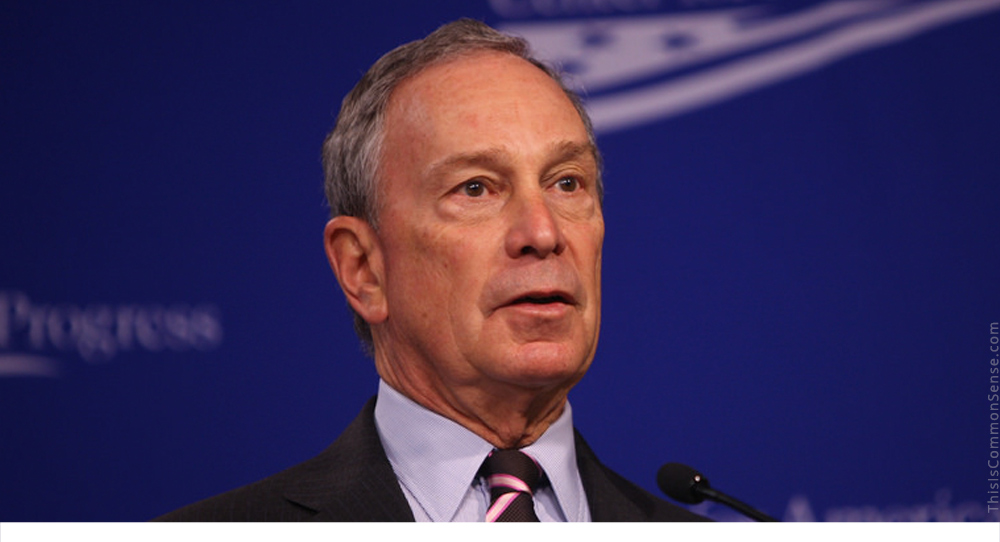
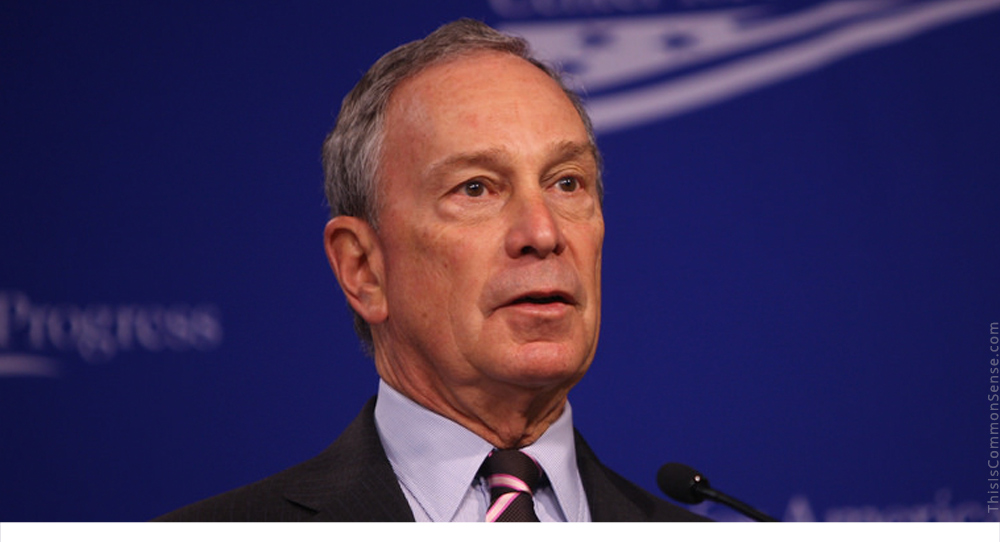
Michael Bloomberg is rich. He’s also in politics — a public health crusader.

And, for years, he “has personally funded and promoted all sorts of regressive taxes and regulations in an attempt to push people around,” the folks at Americans for Tax Reform tell us. “He uses the coercive power of the government to force people to live their lives as he sees fit.”

Onstage at a globalist event, One-on-One with Christine Lagarde — who is managing director of the International Monetary Fund — Bloomberg blurts out his approach to government policy regarding what he calls “those people.”

“If you raise taxes on full sugary drinks,” he says, “they will drink less and there’s just no question that full sugar drinks are one of the major contributors to obesity and obesity is one of the major contributors to heart disease and cancer and a variety of other things.”

Against the charge often made that such taxes fall heaviest upon the poor, he is forthright. Regressive? “That’s the good thing about them because the problem is in people that don’t have a lot of money.”

Notice that he is not talking about a public service campaign to help people learn how to drink (and eat) better. And he is not talking about removing all the government policies that have encouraged bad eating and drinking habits (as well as lethargy) — the government programs to encourage the overuse of high fructose corn syrup; the welfare state’s poverty trap that stifles life at the lower incomes; the subsidized consumption of food and drink — he wants to add another government program.

He can only see betterment by increased governmental bullying.

This is Common Sense. I’m Paul Jacob.



PDF for printing

Michael Bloomberg, tax, policy, nanny state, vice, social engineering, statist, technocrat

Photo by Center for American Progress

Categories
Accountability folly general freedom media and media people national politics & policies

The Ex-Explosion

When I was a kid, the trendy worry was “the population bomb.” Now we are supposed to worry about a population . . . fizzle?

“The U.S. birth rate has hit a new record low,” writes Peter Dockrill in Science Alert, “with women in nearly every age group giving birth to fewer babies than a year ago.” Titled “U.S. Fertility Rates Have Plummeted Into Uncharted Territory, And Nobody Knows Why,” Dockrill’s article fails to mention that diminishing population by reduced reproduction is an old worry.

It fanned the flames of eugenics and racism in Europe and America in the first half of the 20th century. Progressivism was full of this concern, in its heyday.*

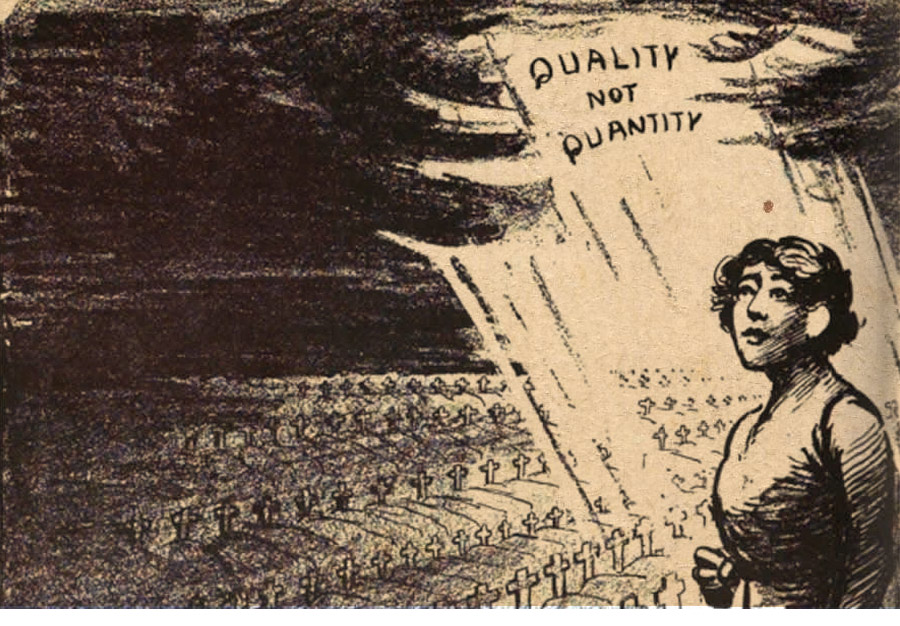
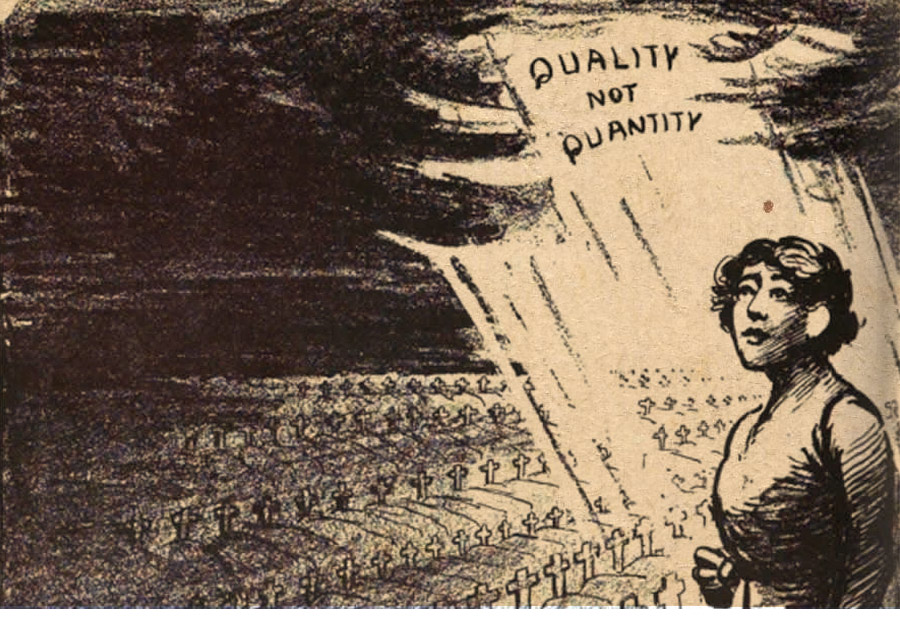
As societies get wealthier, reproduction rates decrease. Economist Theodore W. Schultz called it the swapping of “quantity of children” for “quality of children.” This appears to be a natural, voluntary sort of eugenics — which scares actual eugenicists.

The study that Science Alert focused on fingered a different cause: lead in the environment. Over at Reason, Ronald Bailey sees some plausibility in this Lead Poison Theory. But mostly, Bailey writes, population rates in America (and elsewhere) are declining “largely because Americans are choosing to have fewer children.”

Is this really a problem?

Well, for Big Government it is.** German’s demographic collapse appears to have been one factor prodding Angela Merkel to open the doors to millions of refugees — whom Europe seems to have more trouble assimilating than does America.

I like kids — both making and rearing them. But to each his or her own, of course. Still, maybe if people freaked out less about population explosions, the implosion would prove less serious.

This is Common Sense. I’m Paul Jacob.



* Before progressivism changed its name to “liberalism.” And now back. Oh, and note that the Nazis’ more famous eugenic programs were not identical to progressives.

** Ponzi-based safety-net pension systems worldwide were designed for growing populations. Oops!

PDF for printing

(Illustration from Margaret Sanger’s “Birth Control Review” from 1918.)

Categories
Accountability First Amendment rights general freedom local leaders media and media people

The Steps Beyond Argument

Rob Port’s job is to have an opinion. Opinions breed counter-opinions. Unfortunately, they sometimes conjure up concerted campaigns to pressure opinion-makers to shut up.

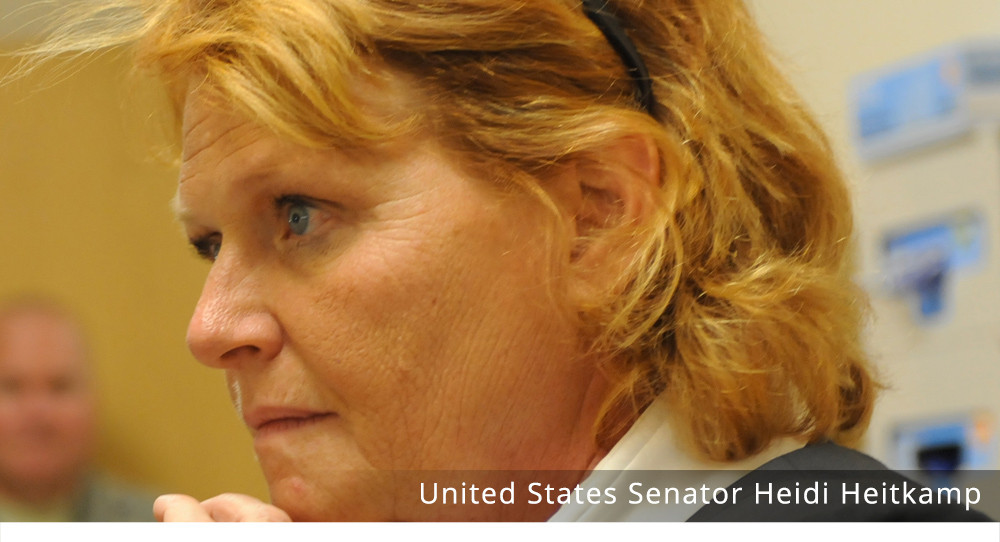
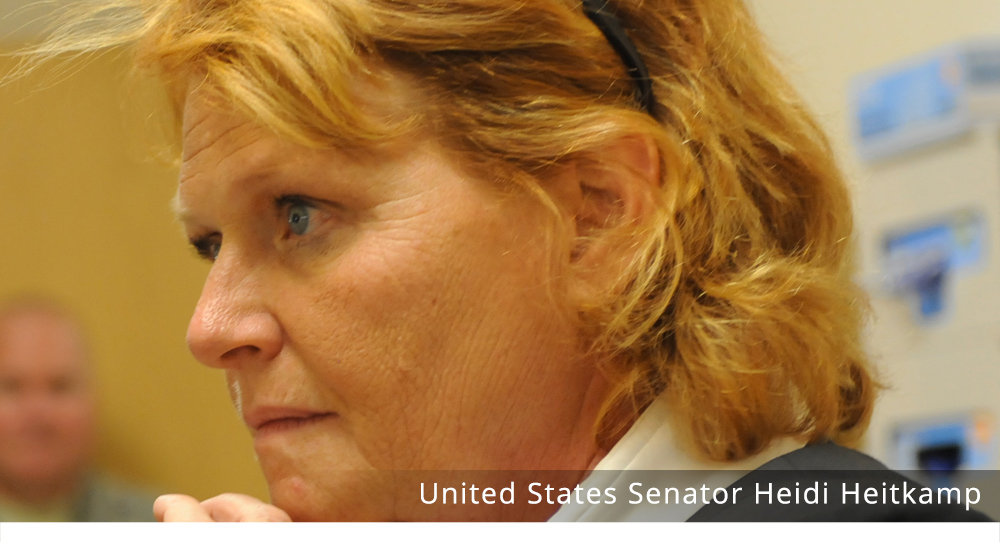
So, no surprise that his reporting — on his radio talk show and in print — on the doings and not-doings of North Dakota’s junior U.S. Senator, Heidi Heitkamp, a Democrat, has riled up nasty “feedback.”

Earlier this month, Mike McFeely, a “left of center” columnist at the Fargo Forum, where Port also writes, published a column calling Port’s “obsession” with Heitkamp “suffocatingly limited and boring” and acknowledging, “I have often voiced my concerns about the one-trick-pony nature of Port to my bosses.”

Port notes that McFeely’s criticisms are based on subject matter, not content, and suggests that journalism doesn’t spend too much time holding politicians accountable.

It gets nastier, though. Senator Heitkamp’s brother, Joel, is also in the radio business, managing a competing station and hosting one of its morning programs. Mr. Heitkamp got his mitts on Mr. Port’s divorce papers and tweeted out, “The #FargoForum is paying him 71K for part time work! What do the full-time employees get? #Wow #790KFGO #wishicould.”

Meanwhile, here comes the Senate Leadership Fund, associated with Senate Majority Leader Mitch McConnell (R-Ky.), to suggest the FCC remove Heitkamp’s station’s license due to his advocacy for his sister’s campaign.

Port, for his part, objects to the corrupt “help.”

“The FCC really has no grounds for getting involved,” he argues. “Free people should be allowed to speak freely.”

In the chaos of our current political battles, Rob Port stands on principle, offering equal freedom to his sleazy opponent.*

This is Common Sense. I’m Paul Jacob.



* For the complete story, check out this weekend’s Townhall column, and the links at the column’s splash page.

PDF for printing


Categories
Accountability free trade & free markets general freedom media and media people national politics & policies responsibility too much government

Working for Whom?

Two articles on Sen. Rand Paul appeared in my Reason feed the other day. Up top.

So it was hard not to look.

They were “John McCain: It ‘Wasn’t Incorrect’ to Say Rand Paul Was ‘Working for Vladimir Putin’” and “Rand Paul’s Plan to Balance the Budget by 2023 Will Get a Senate Vote This Week.”

The latter story is the bigger one, of course. In it, Eric Boehm asked, “Do Republicans have the guts to impose strict spending caps?”

His answer was “probably not.” Good guess.

“Passing the Kentucky Republican’s so-called ‘Penny Plan’ would be a dramatic reversal for Congress,” Boehm wrote, “which earlier this year approved enormous spending hikes that busted Obama-era spending caps and threaten to put the country on pace for a $1 trillion annual deficits. . . . Paul tells Politico that it will be a ‘litmus test for Republicans who claim to be conservative, but are only too happy to grow the federal government and increase our debt.’”

I am afraid the litmus paper has turned . . . red. As in red ink. As in accumulating debt till we drop.

Yesterday Paul’s plan was voted down, 21-76.

In the other Reason piece, Matt Welch noted that Arizona’s senior senator stands by his calumny, last year, against Kentucky’s junior senator. Paul had delayed “ratification of Montenegro’s entry into the North Atlantic Treaty Organization (NATO).” McCain, a gung-ho NATO expansion proponent, accused Paul of “working for Vladimir Putin.”

If Putin really seethes with ill will towards America, wouldn’t he want to see the country burdened with debt?

So, on this vote, those 76 senators who didn’t “stand with Rand” are undoubtedly working for Putin.

This is Common Sense. I’m Paul Jacob.


PDF for printing


Photo of Rand Paul by Gage Skidmore | Photo of John McCain from Wikimedia Commons


Categories
Accountability folly general freedom media and media people Second Amendment rights too much government

Simplistically Wrong

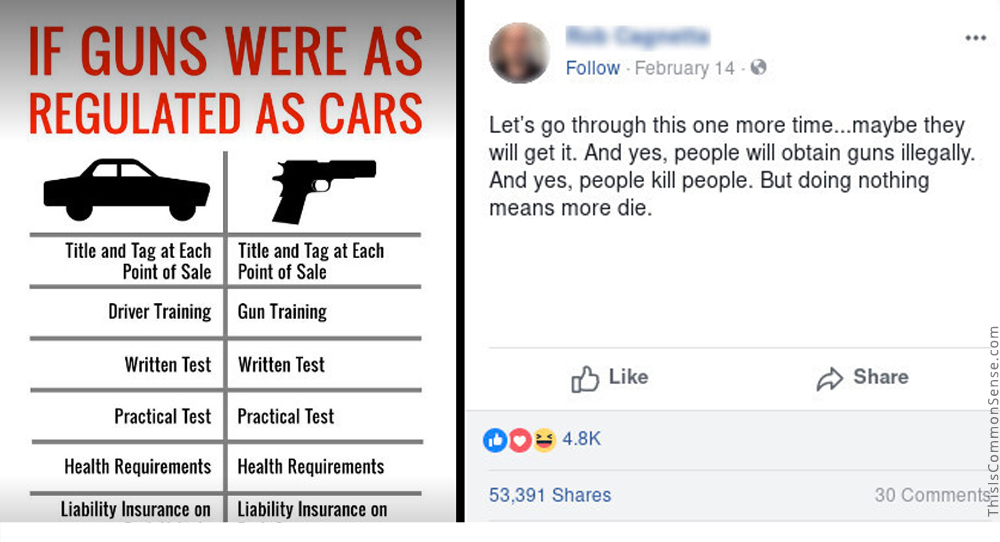
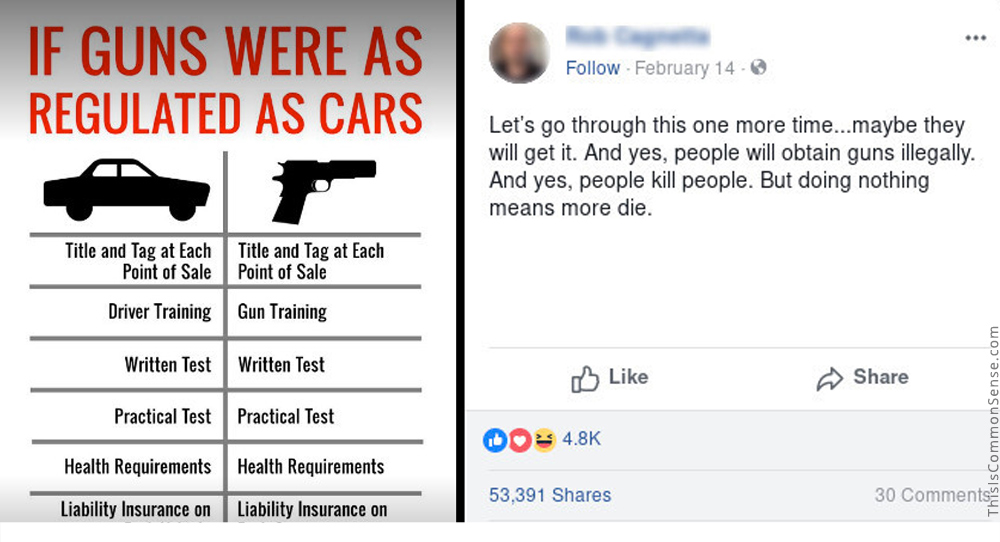
A clever “meme” made the rounds earlier this year showing, in two columns, what it would be like were guns regulated like cars.

How reasonable that would be!

“Title and tag at each point of sale”; “Driver training”/“Gun training”; Liability insurance on each vehicle/gun”; etc. It seems sound, no?

No.

The memester failed to address a context: our car and driver regulations apply to vehicles and drivers on government-run roads. On your own property you can drive all sorts of vehicles, unregulated. And it is on their own property that most gun owners’ firearms stay most of the time.

So, treating “guns like cars” would put government deeper into our private affairs.*

The meme came into an economist’s view packaged under the slogan “doing nothing means more people die.” He saw problems. For example, “someone might propose that each person above the age of 10 years old be interned in a mental-health camp, until and unless experts appointed by the state certified that he or she was not a danger to society.”

Same logic — we cannot do nothing, can we?

Another economist dubbed the problem we have identified here as “a simplistic model of public policy.” Policy advocates tend to assume that if you change a policy we get only one effect. Not true.  

A third economist (I’m going for a trifecta!) discovered that even adding safety features to cars comes at a cost in human life: feeling safer, drivers compensate . . . and it is non-drivers who suffer. More drivers hit more pedestrians.

Be cautious when you drive, sure. Be cautious when you shoot, of course.

But be cautious, especially, when you prescribe new laws.

This is Common Sense. I’m Paul Jacob.


* Not to mention that gun rights are specifically enshrined in the Constitution and vehicle rights . . . not so much.

PDF for printing


Categories
Accountability folly government transparency local leaders media and media people too much government

Low Bigotry Expectations

“Man, it just started snowing out of nowhere this morning, man. Y’all better pay attention to this climate control, man, this climate manipulation,” explained Washington, D.C. Councilman Trayon White back in March.

White (who is black) went on to accuse “the Rothschilds” (who were Jewish financiers) of “controlling the climate to create natural disasters they can pay for to own the cities, man.”

Man. Oh. Man.

White later apologized, taking up the invitation of the Jewish Community Relations Council of Greater Washington to tour the Holocaust Museum. During the tour one of White’s staffers referred to the infamous Warsaw Ghetto as “a gated community.” Then, before the tour’s end, the councilmen unceremoniously bugged out.

Next, news broke that Councilman White had used his constituent services account,* which the Washington Post reports “must [by law] benefit D.C. residents,” to send $500 to a Nation of Islam event in Chicago.

At which Minister Louis Farrakhan denounced Jews.

The Post noted how all this “turned into a test of the ability of city officials to handle the explosive race and class resentments that can arise in a city whose prosperity masks a troubling gap between its haves and have-nots.”

Even D.C. Council member Elissa Silverman (who is Jewish) echoed the partial excuse that White “represents the poorest parts of our city, . . . whose residents feel like they haven’t benefited, and the remarks were directed at a community that’s largely affluent here, and seen as powerful.”

Is bigotry against an entire religion wrong or not so much, depending on the race or socio-economic status of the people espousing the bias?

No, man.

This is Common Sense. I’m Paul Jacob.


* Why do we have programs allowing politicians to hand out free money? This never ends well.


PDF for printing


Categories
Accountability general freedom media and media people moral hazard national politics & policies responsibility too much government U.S. Constitution

Matter-of-After-the-Fact

“For some time now,” writes Sen. Rand Paul for The American Conservative, “Congress has abdicated its responsibility to declare war.”

Kentucky’s junior senator knows how unconstitutional this is. “The Founders left the power to make war in the legislature on purpose and with good reason,” Rand Paul explains — correctly. “They recognized that the executive branch is most prone to war.”

So, Washington Senators Bob Corker and Tim Kaine are here to help?

This bipartisan pair has retrieved — from deep within the bowels of congressional R & D — a new Authorization for Use of Military Force (AUMF). This would, explains Paul, give “nearly unlimited power to this or any other president to be at war whenever he or she wants, with minimal justification and no prior specific authority.”

The wording of the new AUMF “would forever allow the executive unlimited latitude in determining war, and would leave Congress debating such action after forces have already been committed” — allowing Congress only carping rights.

Shades of the Roman Republic, in which the Senate appointed dictators in tough times.*

These days, all times are tough times.

Meanwhile, Bob Corker is in the news for having just received the “George Washington University Institute for Public Diplomacy and Global Communication’s first annual Walter Roberts Award for Congressional Leadership in Public Diplomacy.”

And Kaine just a few weeks ago made a big deal about his no vote for Trump’s Secretary of State nominee: “We have a president who is anti-diplomacy and I worry that Mike Pompeo has shown the same tendency to oppose diplomacy.”

How does making a foreign policy dictator out of Trump (or any future president) advance diplomacy?

This is Common Sense. I’m Paul Jacob.


* Arguably Congress’s open-ended AUMF’s are much worse than ancient Roman practice, since today’s crises are not specified and the dictator is not forced to step down after the problem is solved — or a term limit of six months reached.


PDF for printing


Categories
education and schooling folly ideological culture media and media people moral hazard privacy

The Propriety of Cultural “Appropriation”

Young Keziah Daum committed a terrible crime. She wore a traditional Chinese dress and displayed it online.

No wonder she was chastised by hordes of frothing guardians of cultural purity.

Many Chinese themselves say they find the criticism baffling. Perhaps they are burdened by common sense. They are probably not sociologically sophisticated enough to mind when an American orders Chinese takeout, either.

“Puritanism is the haunting fear,” H.L. Mencken once explained, “that someone, somewhere, may be happy.”

Cultural appropriation” is the currently favored bludgeon wielded by today’s “puritans” to ruin enjoyment. According to this misbegotten notion, it is somehow wrong-souled to enjoy somebody else’s culture.

The very idea is hard to pin down. It is unduly fuzzy. How? Well, borders between countries or groups are pretty arbitrary as cultural boundaries. To try to be consistent, enemies of culture-grabbing would have to berate any partaking of culture not strictly one’s own.

Alas, the amount of culture a person can produce single-handedly is paltry.

Nor can anybody create any unit of culture without being influenced by — “appropriating” — the creations of others. Cultural creators have shamelessly “appropriated” each other’s stuff for millennia, a process that accelerated with improvements in travel and communication.

Should all seven billion of us live our lives in separate cubicles?

Enemies of “cultural appropriation” subscribe to every kind of silliness when they attack watching foreign films or wearing socks, dresses or Halloween costumes that evoke the culture of another country, state, town, or block.

No matter from whom they stole the idea of “cultural appropriation,” they should give it back.

This is Common Sense. I’m Paul Jacob.

PDF for printing


Categories
Accountability crime and punishment government transparency insider corruption local leaders media and media people Popular

Sweet Schadenfreude?

Yesterday, jurors convicted former Arkansas State Senator Jon Woods on 15 felony counts consisting of conspiracy, wire fraud, mail fraud and money laundering.

Woods was at the center of a corrupt scheme to reward cronies at Ecclasia College and AmeriWorks with GIFs — state General Improvement Funds — in return for kickbacks. Former State Rep. Micah Neal, his co-conspirator, pleaded guilty more than a year ago. And last month, the former president of Ecclesia College, Oren Paris III, also admitted guilt.

Regular readers may remember Woods as the Senate author of Issue 3, placed on the 2014 ballot by legislators — along with a summary for voters to read that fibbed about “establishing term limits” and imposing a gift ban between lobbyists and legislators.

Enough voters were hoodwinked,* leading to the gutting of term limits (allowing a legislator to stay in the same seat for 16 years), the empowering of a legislature-appointed “Independent” Commission to bestow a 150 percent pay raise on legislators, and the enabling of legislators to eat every meal at the lobbyists’ trough.

Mr. Woods now faces as many as 20 years on each of 14 counts and ten more years on the money laundering conviction. Having experienced, in a previous life, the poor customer service in the federal prison system, I do not wish that on anyone.

But justice has been done.

More good news: the Arkansas Supreme Court has since ruled the entire corrupt GIF program unconstitutional . . . while Arkansas Term Limits closes in on completion of their petition drive to place a measure on this November’s ballot to restore the term limits stolen by Woods.

This is Common Sense. I’m Paul Jacob.


* The measure passed 52 to 48 percent at the ballot box.


Previous coverage here of Woods’ corruption:


PDF for printing


Categories
crime and punishment free trade & free markets general freedom media and media people moral hazard nannyism national politics & policies property rights too much government U.S. Constitution

The Studio System: The Sequel

Evermore virtue signaling, everless virtue — that pretty much encapsulates Oscars’ night. The industry that brought us Harvey Weinstein and the occasion for #MeToo made the 90th Academy Awards two months ago unwatchable for most of us.

Now, as the Academy of Motion Pictures Arts and Sciences loses touch with audiences around the country, Netflix appears to have decided to horn its way into the Oscars. “Netflix will reportedly begin purchasing movie theatres,” informs The Independent, “to help it get ahead in the race for Academy Awards.

The streaming giant has aimed to land an Oscar nod since the release of its first original feature in 2015, Beasts of No Nation

I have not seen that film, but I have made time for some entertainment (and a few documentaries) on Netflix. After Stranger Things and Wormwood, I think I can safely repeat a point I’ve made before: this is the new Golden Age of Television.

But Netflix wants more prestige than the TV industry’s “Emmys.”

Whether the company succeeds with the Oscars, notice: Netflix is becoming a major studio — complete with “vertical integration.” Just what the Supreme Court tried to kill in 1948 when it ruled against the studio system’s “monopoly” status.

That decision, plus the rise of broadcast television, dealt a death blow to the studios — and arguably movie quality.

Maybe a new studio system (also courtesy of Amazon Prime, Apple, and other players) will make for a renaissance.

For feature-length films.

If we can just keep government out of it.

This is Common Sense. I’m Paul Jacob.


PDF for printing