Categories
Accountability folly ideological culture local leaders national politics & policies term limits

The Great Dood Drain of ’17

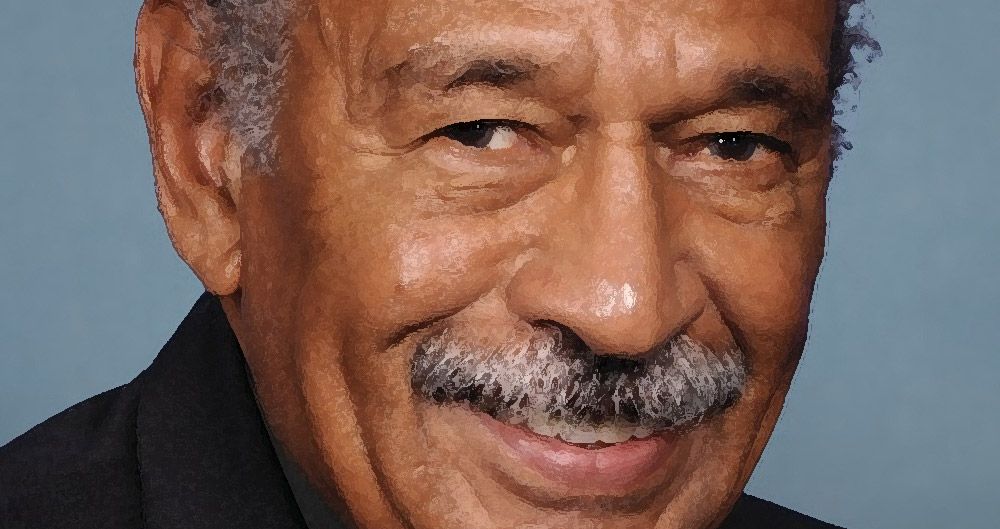
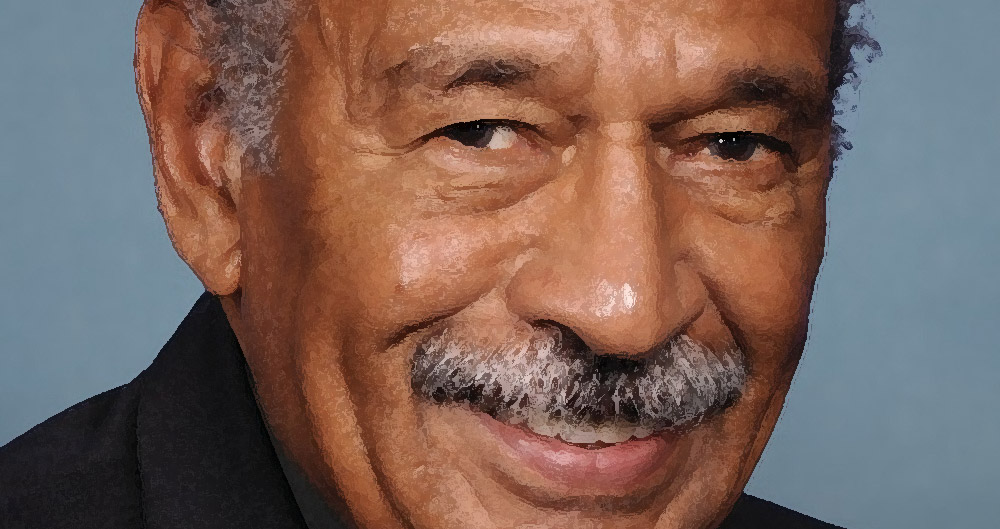
How can we expect the federal government to continue to function at its usual peak efficiency without the awesome 52 years of experience and institutional knowledge supplied by Michigan Congressman John Conyers?

American government faces a congressional brain drain, Conyers’s resignation in the wake of accusations of sexual harassment not being anything like unique. Yesterday, Senator Al Franken (D-Minn.) announced his impending resignation, as did Rep. Trent Franks (R-Ariz.) — before allegations against him had even hit the news.

Also imperiled? The talents of an unknown number of other eminent gropers and experienced molesters, a treasury of firsthand knowledge of how government really works.

Sure, the nation survived back when George Washington stepped down after two terms as president; when Congress lost Daniel Webster and Henry Clay and John C. Calhoun, the institution carried on. 

But just think of the complexity of modern governance, and the great expertise and finely crafted statesmanship exhibited by someone like Congressman Conyers. Are we being sent up the proverbial Detroit River sans oar?

If only someone could step forward with the same skill-set as the iconic Conyers! Well, in announcing his resignation, and that his “legacy can’t be compromised or diminished in any way by what we’re going through now,” the congressman endorsed his son, John Conyers III, as his replacement.

Qualifications? you dare ask.

Back in 2010, the III tweeted, “My dad’s a f*cking player and reckless as hell! He just got at this doods wife super low-key.” Earlier this year, the young Conyers was arrested (but not prosecuted) on a domestic abuse charge.

Indeed, the “dood” appears more than able to carry on.

This is Common Sense. I’m Paul Jacob.

PDF for printing


Categories
Accountability education and schooling folly local leaders responsibility

Learning to Cheat

Months ago, Ballou High was widely lauded for posting impressive gains in graduation rates — from a abysmal 51 percent two years ago to a much less terrible 64 percent this year — and for the even more remarkable feat of getting every single graduate accepted by a community college or university.

“Pay-dirt!” I sarcastically proclaimed at Townhall.com.

But the real dirt was dug up by WAMU, a National Public Radio affiliate in the nation’s capital. What did Ballou students learn? How to cheat.

Well, that appears to have been the lesson plan, anyway.

In numerous interviews — many given on conditions of anonymity for fear of retribution — teachers charged they were pressured by the administration to give grades that students did not earn, so those students could nonetheless graduate.

“Last year, DCPS put school administrators entirely in control of teacher evaluations. . . .” And those evaluations, which grade teachers and administrators on student performance, can mean as much as $30,000 in bonus pay.

The incentive to cheat is both obvious and sizable.

The mayor and the chancellor of the D.C. Public Schools quickly announced an investigation, but regular observers suspect the usual “white-wash.”

“This is [the] biggest way to keep a community down,” protested one black teacher. “To graduate students who aren’t qualified, send them off to college unprepared, so they return to the community to continue the cycle.”

That tragic cycle is captured in public education’s corrupt cycle: promised reforms followed by false claims of progress . . . followed by the discovery of cheating.

This is Common Sense. I’m Paul Jacob.


PDF for printing


Categories
Accountability folly general freedom government transparency initiative, referendum, and recall local leaders moral hazard national politics & policies term limits

Illinois’s Chicken-and-Fish Supreme Court

A constitution is the law of the land only to the extent that it’s enforced. And in Illinois, the right of citizen initiative — provided for in the state constitution — is not enforced.

The constitution’s wording is explicit: “Amendments . . . may be proposed by a petition signed by a [specified number of electors]. . . . Amendments shall be limited to structural and procedural subjects contained in Article IV.”

Does that Article IV discuss the subject of election procedures, including eligibility requirements, thereby opening the door to a citizen-initiated term limits amendment? Yes, it does. Section 2, subsection (c), for example, specifies citizenship, age, and residency requirements.

Yet the Illinois Supreme Court has repeatedly chucked the results of effective petition drives to get a state legislative term limits question on the ballot.

The justices rely on the venerable Fallacy of Tortured Misreading.

Former Illinois legislator Jim Nowlin recently pointed out that in 1976, the court concluded that the wording about how initiative proposals “‘shall be limited to structural and procedural subjects’. . . meant a proposal must make both kinds of changes.” The lone dissenter on the court “opined to the effect: When I see a restaurant sign that says, ‘We have chicken and fish,’ that doesn’t mean you have to order both chicken and fish!”

The right of citizen initiative is a crucial means of reforming government when those in government won’t reform themselves. The citizens of Illinois have that right. But, for now, they also don’t.

That ain’t Common Sense. I’m Paul Jacob.


PDF for printing


Categories
Accountability government transparency insider corruption local leaders moral hazard porkbarrel politics responsibility too much government

More-Equal-Ness

“All animals are equal,” wrote George Orwell, “but some animals are more equal than others.”

That was the regime’s final slogan in Orwell’s allegorical novella, Animal Farm . . . and it currently serves as the operating principle for local government.

Well, at least in Washington, D.C., our country’s pig trough.

Washington Post reported that the District of Columbia’s Board of Ethics and Government Accountability spelled out the details of its official reprimand of Kaya Henderson, the former chancellor of D.C. Public Schools.

Henderson, the article explained, “violated the city’s Code of Conduct by granting permission for some people — including a White House official, an employee of the mayor’s office, a district principal and a former classmate — to choose the school they wanted their children to attend even though other D.C. families had to go through a competitive lottery system.”

Using one’s position of trust to hijack a public benefit and gift it to one’s cronies at the expense of everyone else is clearly corrupt. Henderson deserves more serious repercussions than a belated reprimand, especially since she has already moved on professionally. She now works as “a distinguished scholar in residence at Georgetown University,” researching “racial justice.”

Ms. Henderson offered weighty reasons for her cronyism. Regarding her special treatment for City Administrator Rashad Young, she offered that D.C. officials “do not necessarily get paid as much as we should.”

Young’s annual salary? $295,000 a year.

Did you also notice she said “we”? As chancellor, Henderson was paid a mere $284,000 a year.

Being “more equal” is nice. It’s especially nice to be friendly with those “more equal” folks, who can bestow a little more-equal-ness on you.

This is Common Sense. I’m Paul Jacob.


PDF for printing


Categories
Accountability Common Sense incumbents initiative, referendum, and recall local leaders moral hazard national politics & policies responsibility term limits

Agreeable America

Americans actually agree on a lot of things; it’s a pity that today’s media and political debates play up the discord.

Or so argues A. Barton Hinkle at The Richmond Times-Dispatch. Sure, he admits, “[a] lot of people seem willing to tear your head off over the smallest thing.” But “on some topics, the public is of one mind, or as close to that as you can get.”

Hinkle notes that “Nine out of 10 Americans think a background check should be required for every firearm purchase.”  A few percentage points fewer wish to keep “Dreamers” in the country; a mere one point fewer disapprove of civil asset forfeiture. Medical marijuana is approved of by 83 percent of Americans.

Not on Hinkle’s list? American agreement on term limits. A year ago, a Rasmussen Poll found support for limiting congressional terms at 74 percent of likely voters, with only 13 percent opposed and 13 percent undecided. This overwhelming public support has been consistent for many decades.

But consistently ignored by Congress. Not so surprisingly.

Can Americans put their united oomph behind their overwhelming agreement? U.S. Term Limits thinks so.

The group isn’t depending on cajoling the Congress, either. They’re mobilizing concerned citizens to convince 34 state legislatures to call a Term Limits Convention.* The convention’s purpose is to propose a constitutional amendment for congressional term limits, which then still requires 38 states to ratify it.

Rather than brewing up a civil war over tweets and “microaggressions,” join the Term Limits Team.

Let’s agree to agree. And make our representatives agree, too.

This is Common Sense. I’m Paul Jacob.

* As Article V of the U.S. Constitution states, “The Congress . . . on the application of the legislatures of two thirds of the several states, shall call a convention for proposing amendments, which, in either case, shall be valid to all intents and purposes, as part of this Constitution, when ratified by the legislatures of three fourths of the several states . . .


PDF for printing


Categories
Accountability incumbents insider corruption local leaders moral hazard national politics & policies responsibility term limits

Our Experience with Experience

It seems exceedingly plausible that the longer one serves as a legislator, the better legislator one would become.

Yet voters back home have noticed something: the longer in office, the less representative their so-called representative tends to become.

No wonder that in those states where Americans have been permitted to vote on congressional terms limits, that vote has been a resounding, “Let’s limit ’em!”

In a Washington Post op-ed, Greg Weiner, associate professor of political science at Assumption College, praised Senators Jeff Flake (R-Ariz.) and Bob Corker (R-Tenn.) as “voices for congressional power” and “defenders of congressional prerogative.” He worries their departure weakens Congress as an institution, further eroding a critical check on the president and the executive branch.

“The problem pertains far less to opposition to this president,” Weiner points out, “than to the long-range erosion of congressional resistance to the presidency as an institution.”

This caught my attention because we desperately need Congress to function as a co-equal branch of government and because opponents of state legislative limits* often assert a similar argument: term-limited legislatures are less able to check the power of the governor and executive branch agencies.

“Congress has been in decline for generations,” Weiner acknowledges. What else has been happening over this time? Politicians have been loitering in Congress longer and longer, term after term after term. 

Hmmm. The correlation is between a weakened Congress and more experience, not less.

Let’s further note that Flake is only in his first Senate term and Corker his second.

After nearly four decades in office, is, say, doddering Sen. Thad Cochran (R-Miss.), providing better oversight?

This is Common Sense. I’m Paul Jacob.

 

* The 15 states that have them — Arizona, Arkansas, California, Colorado, Florida, Louisiana, Maine, Michigan, Missouri, Montana, Nebraska, Nevada, Ohio, Oklahoma, South Dakota — contain 37 percent of us.


PDF for printing


Categories
Accountability local leaders media and media people moral hazard national politics & policies political challengers responsibility term limits

Sic Transit Gloria Flake

Yesterday, a major American politician gave up.

Sort of.

Senator Jeff Flake, the junior member of the upper chamber from the State of Arizona, took to the Senate floor to announce that his “service in the Senate will conclude at the end of my term in early January, 2019.”

Actually, most of the speech was an appeal to President Trump.

Or a lambasting.

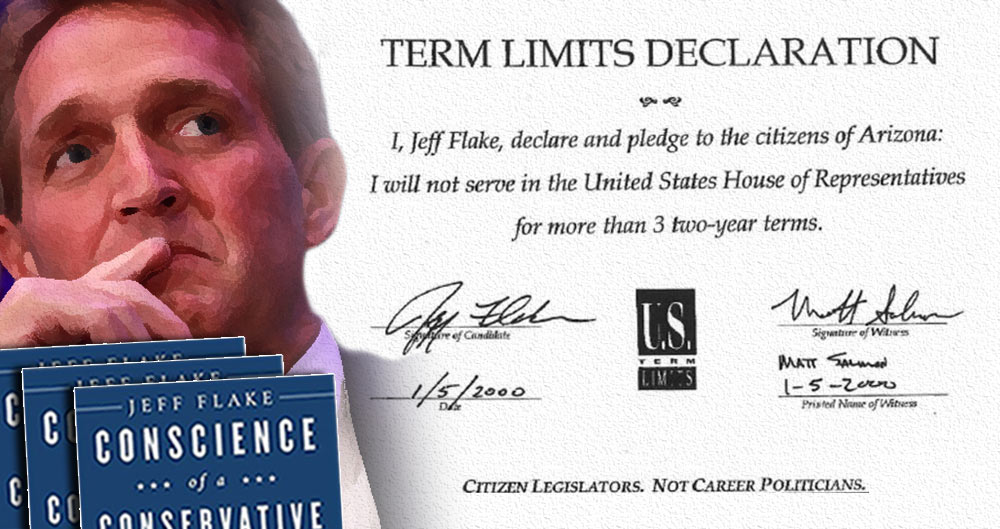
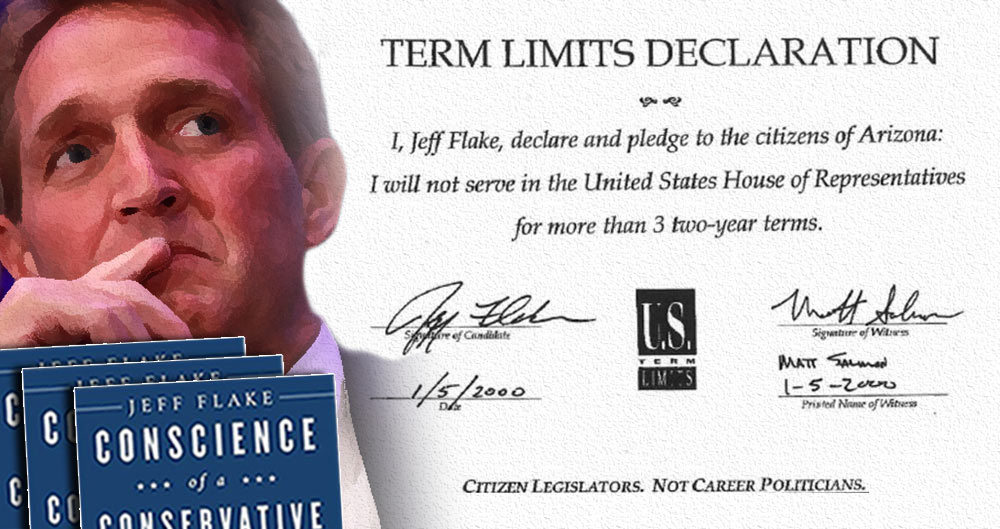
In either case, he was echoing his recent book, Conscience of a Conservative: A Rejection of Destructive Politics and a Return to Principle, which columnist David Brooks has described as a “thoughtful defense of traditional conservatism and a thorough assault on the way Donald Trump is betraying it.”

In the Age of Trump, anti-Trumpian manifestos are . . . controversial in GOP ranks. And his opposition has cost him. All bets were against him winning re-election.

“I believe that there are limits to what government can and should do,” Flake wrote in a letter to supporters, going on to say “that there are some problems that government cannot solve, and that human initiative is best when left unfettered, free from government interference or coercion.”

Solid principles. Principles I share. But how principled was Flake? He began his career promising to limit his own terms, in accordance with . . . conservative principles. And yet the man from Snowflake, Arizona, broke that promise in 2006, holding on to his House seat for three more terms.

For his remaining 14 months in the Senate, Flake can return to the principle he reminded himself of in yesterday’s speech: “Sustained incumbency is certainly not the point of seeking office.”

There’s life after Congress. And Jeff Flake can do good things in the real world.

This is Common Sense. I’m Paul Jacob.


PDF for printing


Categories
Accountability government transparency insider corruption local leaders moral hazard national politics & policies political challengers responsibility

Omission of Character

One downside to jumping to the wrong conclusion is that the failure to even look for the correct, accurate conclusion inevitably follows. 

This sleepy odd-year campaign for governor of Virginia has recently been riled by charges of racism. Democratic Party gubernatorial nominee Frank Northam made the “mistake” of “omitting the party’s candidate for Lt. Governor, Justin Fairfax, from a small printing of literature for union members about the Democrats’ statewide slate. 

Northam is white and Fairfax is black. 

“[A] slap in the face to Justin and to black voters,” is what Quentin James, who runs a PAC working to elect black candidates, called the removal of Fairfax from the literature. He added that it “reeks of subtle racism” and “sends a signal across the state, that we, as black voters, are expendable.”

Noting that black voters make up 20 percent of the state’s electorate, Think Progress dubbed Fairfax’s deletion: “mindboggling.”  

Was this a “dis” and did it really have anything to do with Fairfax being black?

Well, Fairfax labeled it a “mistake,” but his exclusion from the flyer was certainly not inadvertent. It was by clear-eyed design.

The Laborers’ International Union of North America (LiUNA), a $600,000 donor to the coordinated state Democratic campaign, requested that Fairfax be removed from literature their members will distribute. The union is at odds with Fairfax over his opposition to two state pipeline projects the union favors.

So, Northam didn’t throw Fairfax under the bus because Fairfax is black. No sirree. Northam threw Fairfax under the bus to placate a powerful, well-heeled special interest group.

Northam isn’t a racist. He’s just a self-interested, disloyal politician.

This is Common Sense. I’m Paul Jacob.


PDF for printing


Categories
Accountability government transparency incumbents local leaders moral hazard national politics & policies term limits

Frail and Disoriented

Senator Thad Cochran sure is experienced: eight years in the House of Representatives followed by 36 years in the upper chamber. So who better to chair the powerful Senate Appropriations Committee?

Rephrase that: who wouldn’t be better?

“The 79-year-old Cochran appeared frail and at times disoriented during a brief hallway interview on Wednesday,” Politico reported. “He was unable to answer whether he would remain chairman of the Appropriations Committee, and at one point, needed a staffer to remind him where the Senate chamber is located.”*

The senator also allegedly had trouble correctly casting his vote on legislation, i.e. deciding between yea and nay.

The Mississippi Republican “has faced questions about his health for the past several years,” the article noted, adding, however, that “his aides and political allies insisted he was fine.”

Fine?

That seems to be the party line. “Top Senate Republicans say they are not pressuring Cochran to retire or step down as Appropriations Committee chairman,” acknowledged Politico.

Why not? Were Cochran to step down — in 2020 or sooner — his replacement would likely be more aligned with President Trump than with Senate Majority Leader Mitch McConnell and the Republican congressional establishment.

Super-incumbent Cochran only narrowly survived a 2014 challenge from a more conservative candidate in the GOP Primary. How? By mobilizing Democrats to cross over and vote for the more liberal Cochran.

A statesman steps down when no longer able to perform effectively. But the Establishment, on the other hand, sees Cochran’s role not as a representative but as a placeholder.

For their power.

This is Common Sense. I’m Paul Jacob.



* Opponents of term limits always told us that it would take six or eight years for newbie legislators to find the capitol’s bathrooms. That hasn’t turned out to be accurate, but obviously finding the Senate chamber, even after four decades in the capitol, is no gimme.


PDF for printing


Categories
Accountability general freedom government transparency incumbents initiative, referendum, and recall local leaders political challengers

Initiative Surplus?

Only nine out of 50 states can pay their bills and meet their obligations; 41 cannot, barring major tax increases or spending cuts.

That’s what we learn in last month’s “Financial State of the States” report from Truth in Accounting (TIA).

Alaska is in the best shape, “with $11 billion in assets to pay future bills”; New Jersey’s in the worst, needing “to come up with $208 billion in order to meet its promised obligations.”

Sheila Weinberg, TIA’s founder, works hard to counter governments’ creative accounting. It’s trickery, really, which “would be considered criminal for private sector corporations.” One gimmick is “promising to pay employee benefits in the future, but not fully funding the benefits programs as they rack up obligations.”*

Thankfully, TIA’s financial analysis includes items such as already-made pension and healthcare commitments.

Now, let’s expand the analysis, collating these findings to separate between initiative and non-initiative states**:

  • Seven of the nine states with a “taxpayer surplus” — where government can pay its bills and meet its obligations — have the ballot initiative process.
  • The 23 initiative states comprise 46 percent of the states. Yet, initiative states comprise a whopping 78 percent of financially healthy states.
  • Of the 20 states carrying a larger-than-average taxpayer burden, 15 states (75 percent) lack the initiative process.

Granted, this represents a correlation between states with citizen-initiated ballot measures and healthier fiscal policy, not necessarily causation. Still, I’m not surprised states where citizens have more say so are better governed.

This is Common Sense. I’m Paul Jacob.

 

* “This short term fix allows governments to artificially ‘balance their budgets’ by not counting certain obligations as official debt.”

** There are 23 initiative states and 27 non-initiative states. Two referendum-only states— Maryland and New Mexico — are considered non-initiative states, and so is Illinois. Illinois is considered a non-initiative state, because its ballot initiative process is so severely restricted as to be non-existent. Only one measure has ever appeared on the ballot.


PDF for printing