Categories
crime and punishment ideological culture judiciary national politics & policies Second Amendment rights Tenth Amendment federalism term limits U.S. Constitution

Perry Mason for the Court

Legend has it that a juror once ran up to attorney Neil Gorsuch, after Gorsuch won a case proving a gravel pit owner had been cheated, declaring, “You’re Perry Mason.”

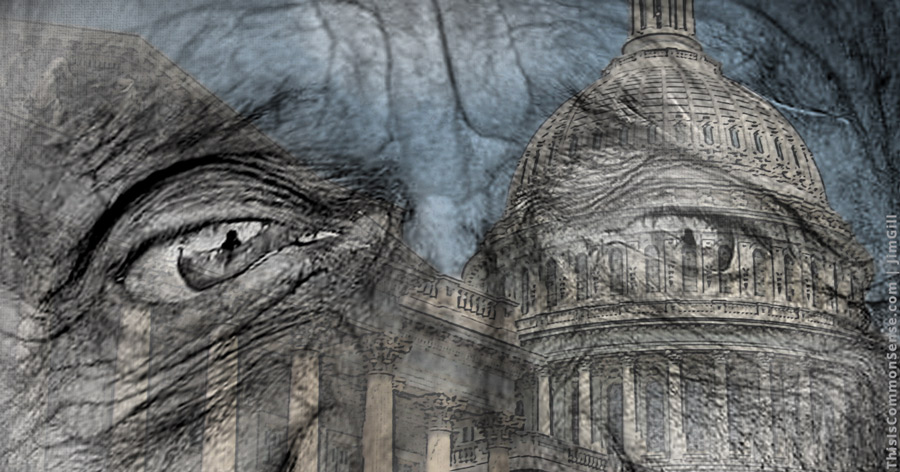
These days, Gorsuch sits on the Tenth Circuit Court of Appeals, and is President Donald Trump’s nominee for the late Justice Scalia’s seat on the nation’s highest court.

And now Gorsuch is receiving testimonials worthy of the indefatigable TV lawyer.

Brad Smith, the chairman of the Center for Competitive Politics, expressed his pleasure “that President Trump has nominated someone who will defend a robust First Amendment.”

Ballot access expert Richard Winger noted that Gorsuch has a “good record in cases involving independent candidates and minor parties.”

“I am hard-pressed to think of one thing President Trump has done right in the last 11 days since his inauguration,” wrote Neal Katyal in the New York Times. “Until Tuesday,” continued the Georgetown law professor, “when he nominated an extraordinary judge and man, Neil Gorsuch, to be a justice on the Supreme Court.”

Katyal, who had served as an acting solicitor general in the Obama administration, added that Gorsuch’s record of holding government officials accountable “should give the American people confidence that he will not compromise principle to favor the president who appointed him.”*

Even I have pertinent testimony: back in 1992, Gorsuch argued (in a co-authored Cato Institute paper) that term limits were “constitutionally permissible” as “institutional constraints on the power of government” that “the Framers,” if alive today, would likely see as “necessary preconditions for liberty.”

No, Gorsuch is not actually Perry Mason — I never knew where Perry stood on term limits.

This is Common Sense. I’m Paul Jacob.
 

* On Reason’s Hit & Run blog, Damon Root strongly agreed.


Printable PDF


Categories
Accountability crime and punishment general freedom ideological culture judiciary national politics & policies U.S. Constitution

The Best Case for Trump Isn’t

I support neither Hillary Clinton nor Donald Trump for the presidency. Still, I do understand several reasons to vote for Trump, including, most obviously, “he’s not a Clinton.”

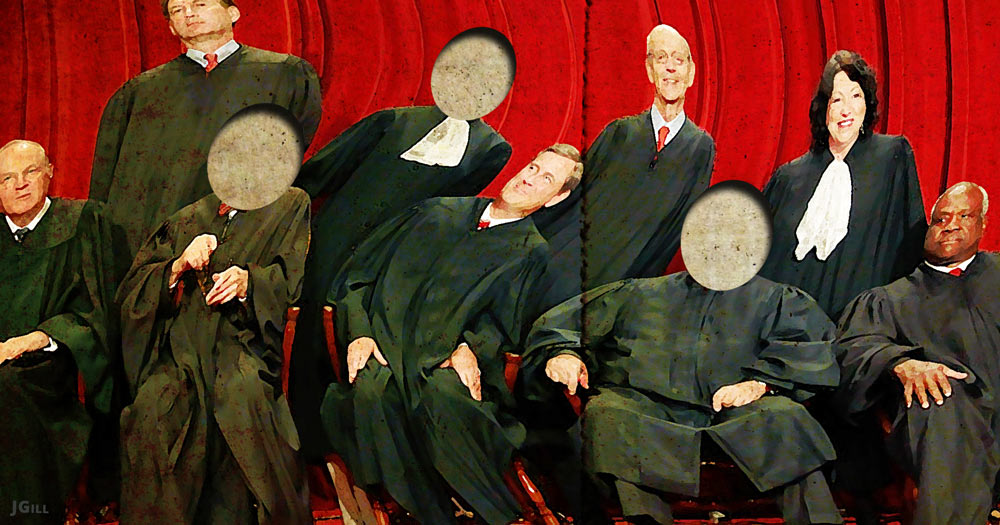
The most persuasive strategic reason given for voting for the man, however, and the one that has most purchase with me, is that he would appoint better Supreme Court justices than would Mrs. Clinton.

Note: if the Democrats gain hold of the U.S. Senate, an elected Donald Trump would “negotiate.” And the next set of Supremes might be quite bad.

But is all this irrelevant? It does not look like Trump will be elected, so any vote thrown at him will be just as “wasted” as a vote for Johnson, Stein, or Mickey Mouse.

More importantly, if Hillary wins, no biggie on the Supreme Court front IF (a big “if”?) the Republicans maintain congressional dominance.

Why?

Our Senators are not required to vote for any of a president’s appointees. But, alas, that is not what Democrats are saying now! Forget such self-serving nonsense. The Constitution does not specify the number of justices on the Supreme Court. It is nine now, sure, but the Highest court in the land was first manned by five justices, then seven.

So, after the election, unpack the court.* Back down to seven, at least.

And then let’s talk terms for the currently “serving for life” justices, and term limits.

In any case, the best case for Trump isn’t so much a case for him, as a plan of action no matter who is elected.

This is Common Sense. I’m Paul Jacob.

 

*This notion is more doable, I think, than Franklin Delano Roosevelt’s infamous court packing scheme, in which he threatened to put more justices in to over-rule those justices who thought his “New Deal” program unconstitutional. Congress, not required to vote in any proposed Supreme Court candidate, could balk at all and then, by law, reduce the number, even removing one justice from office if need be.


Printable PDF

Supreme Court, Congress, Hillary Clinton, Donald Trump, election, illustration


Questions Answered:
Does the best reason to vote for Donald Trump really hold water?
Does the Constitution specify the number of justices that should be on the Court?
Is Congress really at the mercy of any bully who occupies the Oval Office?

Ask the next question. --Theodore SturgeonThe Next Question:
Will voting for someone other than Trump be more of a “wasted vote” than voting for Trump himself, if, as polls indicate, he loses?


Categories
crime and punishment general freedom ideological culture individual achievement judiciary media and media people national politics & policies obituary

Life After Scalia

President Reagan appointed Supreme Court Justice Antonin Scalia to the nation’s highest court in 1986. Scalia served for 29 years before passing away over the weekend at age 79. May he rest in peace.

None of the rest of us will get any.

Why? An often conservative 5-4 majority is gone. The court is now tied, deadlocked, at 4-4.

“With the passing of Justice Antonin Scalia, President Barack Obama will make another nomination to the Supreme Court,” explained an email from the very liberal Democracy for America (I’m on a lot of lists). “It is critically important that President Obama choose a strongly progressive person who can lead the Supreme Court and our country in a new direction.”

That’s Obama’s prerogative, of course. But the president’s nominee must be approved by the United States Senate — controlled 54 to 46 by Republicans.

And guess what?

Almost as fast, Senate Majority Leader Mitch McConnell issued this statement: “The American people‎ should have a voice in the selection of their next Supreme Court Justice. Therefore, this vacancy should not be filled until we have a new President.”

Now, our Democratic president could negotiate with the Republican Senate majority, come up with a consensus (yeah, right) or compromise choice (watch out).

But don’t hold your breath.

You may also want to plug your ears. There will be shouting. The media will overwhelmingly take Obama’s side — surprise, surprise— and berate Republicans for obstructing.

Republican Senators have a constitutional duty to provide advice and consent to the president’s pick. Unless Mr. Obama’s choice will improve the High Court, those senators should withhold their consent.

This is Common Sense. I’m Paul Jacob.


Printable PDF

Antonin Scalia, Justice, Supreme Court, battle, death, Common Sense


Categories
crime and punishment general freedom government transparency judiciary moral hazard national politics & policies property rights too much government

Government Burglars

If you try to compare those police who take people’s money and property through civil asset forfeiture laws to burglars, who rob folks in more traditional ways, you are just not being fair.

To the burglars.

The Institute for Justice recently released an updated Policing for Profit report showing that federal asset forfeiture topped $5 billion in 2014. The FBI disclosed that in that same year $3.5 billion of value was lost in burglaries.

Then, folks did the math.

Steven Greenhut’s piece at reason.com was headlined, “Cops Now Take More Than Robbers.”

At The Washington Post Wonkblog, Christopher Ingraham explained there was an especially big haul in seized assets in 2014, including $1.7 billion from Bernie Madoff. Moreover, the dollar figure for burglary doesn’t include larceny, motor vehicle theft, etc. All such theft combined totaled more than $12 billion that year.

So, law enforcement isn’t stealing quite as much from citizens as the criminals they are supposed to be protecting us from are. Sort of a backhanded compliment, though.

Recent polling finds more than 70 percent of Americans opposed to seizing assets without a criminal conviction, i.e. innocent until proven guilty, but taking cash and cars and stuff from folks never charged with or convicted of a crime has become a big business for “our” government.

When legislation to mildly reform civil forfeiture failed recently in California, Mr. Greenhut called legislators’ votes “about money, not justice.” Ferocious lobbying by the California District Attorneys Association and the California Police Chiefs warned money-grubbing legislators that budgets would take an $80 to $100 million hit.

Theft is apparently quite lucrative. Who knew?

This is Common Sense. I’m Paul Jacob.

Printable PDF

civil asset forfeiture, police, abuse, robbery, Common Sense


Categories
Accountability crime and punishment general freedom judiciary moral hazard national politics & policies property rights

Our Innocent Stuff

The Institute for Justice’s new report, Policing for Profit: The Abuse of Civil Asset Forfeiture, details a “big and growing problem” that “threatens basic rights to property and due process.”

Through both criminal and civil forfeiture laws, governments can seize property used in — or the proceeds of — a crime. Criminal forfeiture requires that a person be charged and convicted of a crime to transfer title to government. Civil forfeiture, on the other hand, allows governments to take people’s stuff without being convicted — or even charged — with a crime.

No surprise that 87 percent of asset forfeiture is now civil, only 13 percent criminal. And governments are grabbing more and more. The federal financial take has grown ten-fold since 2001.

“Every year,” IJ’s researchers document, “police and prosecutors across the United States take hundreds of millions of dollars in cash, cars, homes and other property — regardless of the owners’ guilt or innocence.” Then, the innocent victim must sue the government to have his or her stuff returned.

Incentive to steal? “In most places, cash and property taken boost the budgets of the very police agencies and prosecutor’s offices that took it,” an accompanying IJ video explains.

IJ’s report concludes that, “Short of ending civil forfeiture altogether, at least five reforms can increase protections for property owners and improve transparency.” Those five reforms are improvements, sure, but let’s end civil forfeiture completely.

It’s the principle!

Two principles, actually.

Civil forfeiture laws pretend law enforcement is taking action against our property, and that our property has no rights. But what about our property rights!

We’re innocent until proven guilty, too . . . and so is our stuff.

This is Common Sense. I’m Paul Jacob.

Printable PDF

civil forfeiture, civil asset forfeiture, crime, theft, police, abuse, property rights, Common Sense


Categories
Common Sense crime and punishment folly general freedom ideological culture judiciary national politics & policies too much government

Just Doing Our Jobs?

I didn’t really want to talk about Kim Davis, County Clerk of Rowan County, Kentucky, who refused to issue marriage licenses to same-sex couples. Last week, she got put in jail for not doing her job; this week, she got released.

Generally, I’m for people doing their jobs. Especially, those in government.

However, when they are instructed to do something destructive, I’d prefer they refrain. Unfortunately, government workers too often select the wrong things not to enforce. I could use a lot more “blue flu” over Drug War efforts, or stealing our property through civil forfeiture, or shooting pet dogs.

No such luck, usually.

Recently, a 17-year-old boy was charged, as an adult, for child pornography. But the “child porn” was a naked picture of his own body on his very own cell phone. A law designed to protect him from sexual exploitation was turned against him, making him a “sexual predator.”

The police and prosecutor in this North Carolina case didn’t really do their jobs.

In Washington County, Pennsylvania, a barbershop has been fined $750 for refusing to cut one woman’s hair. The owner claims he has nothing against doing women’s hair, but merely that this particular shop wasn’t set up to handle women’s typical hair concerns. Public servants fined him anyway.

Do we really need government to patrol beauty salons and barbershops for “discrimination” “crimes”?

After all, they cannot even patrol themselves coherently. Witness the messy case of Kim Davis, Democratic County clerk in rural Kentucky. About which I hope I need not say more.

This is Common Sense. I’m Paul Jacob.


Printable PDF

Just Doing My Job, Collage, editorial


Categories
Common Sense crime and punishment free trade & free markets general freedom judiciary nannyism national politics & policies too much government

Legalize, But Prohibit?

Last week, I warned of marijuana legalization.

Not that I’m against it. But how much will actual freedom be increased?

Note: I’m not bemoaning, as one activist friend argued, that “if you can’t toke up and celebrate in public when it passes, it’s not legalization.”

One cannot now legally smoke tobacco in most public buildings (meaning those open for business as well as government-owned structures) or drink a beer in most public parks or while navigating sidewalks. But you can smoke and drink at home or on certain types of private property.

Ending the drug war and treating newly legalized marijuana pretty much as we treat alcohol and tobacco seems like a long overdo common sense approach.

There’s also the freedom of home cultivation. I have friends who make wine at home, for private consumption. It’s legal; it’s proper. It should also be legal to grow cannabis at home. Yet, many a politician thinks otherwise.

And they are inspired, in a sense, by the popular legalization mantra, “legalize, tax and regulate.” That sends an ominous signal: in order to maximize revenues, politicians see the revenue advantage in forbidding hard-to-tax home cultivation — cultivation that is, let’s face it, a traditional freedom, a right “retained by the people.”

The excuse for this continued prohibition could be “think of the children.” But it’s probably just greed for revenue . . . and the even more hidden enticements of “crony capitalism,” which plagues almost all industry.

You should be able to grow a plant. And self-medicate. These are basic human rights, and the state should work around those.

This is Common Sense. I’m Paul Jacob.


Printable PDF

Pot Pot, legalization, collage, photo-montage, Paul Jacob, Jim Gill


Categories
crime and punishment general freedom government transparency judiciary national politics & policies

Court Vindicates Snowden

Sometimes if you postpone something long enough, someone else will do the job.

Last week, when the U.S. Court of Appeals for the Second Circuit ruled the National Security Agency’s metadata collection program unlawful, I immediately saw it as a vindication of Edward Snowden and his “illegal” leaks.

It will be hard to charge the man with treason for uncovering programs that have been determined, in court, to be themselves treasonous — or at least unconstitutional.

But I was busy last week; didn’t have time to make the case.

Nicely, Noah Feldman made it for me, at Bloomberg View. “This is the most serious blow to date,” writes Feldman in his May 7 article, a blow against “the legacy of the USA Patriot Act and the surveillance overreach that followed 9/11.

The linkage with Snowden is in no way an imposition on the story:

The first striking thing about the court’s opinion was how openly it relied on Snowden’s revelations of classified material.  The court described how the program was known — by Snowden’s leaks. It also analyzed the NSA order to Verizon, leaked by Snowden, that proved the existence of the program and revealed indirectly the legal reasoning that the government relied on to authorize the metadata collection.

More importantly, Feldman recognizes that the decision rightly breaks “the bad precedent of secret law created by the NSA.”

A republic isn’t a republic if its laws are secret.

Now, of course, it’s time for Americans to cease their procrastination. If we don’t recognize that our government is out of control, no one else’s determination will matter.

Except, perhaps, history’s.

This is Common Sense. I’m Paul Jacob.


Printable PDF

Edward Snowden


Categories
crime and punishment folly judiciary

Contemptible Court

Judge Tim Grendell missed his calling. Given his dictatorial impulses, he should have been a Soviet commissar or ancient Egyptian vizier. O, but for time, and place, and the mismatches of metempsychosis!

Grendell has lashed out punitively at Nancy McArthur, chairman of the Geauga County (Ohio) Republican Party, for seeking to undermine his authority with vilecriticism. What happened? Did she interrupt courtroom proceedings with her aspersion-casting? Shout obloquy as he sought to instruct a jury?

Nothing like that. McArthur was never in Grendells court.

She did badmouth the judge, however . . . in private conversation.

The person McArthur was talking to is involved in a case presided over by Grendell, and, in a private email, reported on McArthurs comments. Grendell, somehow, got hold of that email.

His response? Slap a subpoena on McArthur, demanding that she show cause why she should not be held in Contempt of Court for making vile, contemptuous, slanderous, and insulting language directed at the Judge which reflects negatively on the integrity of the Court and impedes the Court in the administration of justice. . . .

Yikes. McArthur was actually threatened with incarceration for speaking of this judge as if he were the type to do the sort of thing he did. Fortunately, his attempt to hold her in contempt has been blocked by an appellate court.

This isnt the first time Grendells judicial reach has exceeded his ethical and constitutional grasp. Guilty of outrageous malpractice, he deserves a boot to his rear, ejecting him from the bench.

This is Common Sense. Im Paul Jacob.


Printable PDF

Categories
Common Sense general freedom individual achievement judiciary U.S. Constitution

Racial Justice Advanced

[mks_dropcap style=”letter” size=”60″ bg_color=”#ffffff” txt_color=”#000000″]I[/mks_dropcap] don’t know if Juan Williams is right about who qualifies as America’s most influential thinker on race. But I hope he is.

In a Friday Wall Street Journal op-ed, Fox News’s liberal-leaning political analyst and author of Thurgood Marshall: American Revolutionary (1998), argues that our country’s most important influencer of thought on race is neither some current and trendy academic writer nor our current president (or his outgoing attorney general). Instead, it is none other than Supreme Court Justice Clarence Thomas.

While more famous figures of African-American descent have dominated the news talk shows and airwaves and popular consciousness, Justice Thomas has gone about “reshaping the law and government policy on race by virtue of the power of his opinions from the bench.” While previous African-American racial activists and thinkers have striven to defend the rights of black people, Justice Thomas, “the second black man on the court, takes a different tack. He stands up for individual rights as a sure blanket of legal protection for everyone, including minorities.”

Opposed to “perpetual racial tinkering,” Thomas has marshaled Frederick Douglass’s words to make his case: “What I ask for the Negro is not benevolence, not pity, not sympathy, but simply justice.” And justice, in Clarence Thomas’s judgment, does not entail a constant rescue-worker attitude towards minorities, or other disadvantaged folks. It requires nothing other than equality of rights before the law.

And perhaps some hard work on the part of the disadvantaged.

Hats off, then, to Juan Williams for recognizing the importance of Thomas’s common sense contention that “black people deserve to be treated as independent, competent, self-sufficient citizens.”

This is Common Sense. I’m Paul Jacob.