Categories
crime and punishment general freedom media and media people moral hazard

Porn, Video Games and British Crime

British freedom is eroding. The attack comes from two directions.

First, there is the over-bearing police-state style, surveillance-everywhere government.

Second, there is the increasing violence.

Thing is, the justification for Britain’s mass surveillance, as well as for strict gun controls, was to prevent crime.

Oops.

So of course the Labour Party “shadow home secretary” Diane Abbott points an accusatory finger at porn and video games. These two influences may be “desensitising young people to vicious behaviour.”

Well, porn and video games are changing our cultures, on both sides of the pond. But in America, at least, the crime rate for the past two decades plumetted while video games and Internet porn have become ubiquitous, explicit and . . . admittedly, appalling.

Look elsewhere for the crime uptick.

The Brexit fiasco, with the Tory government messing up implementation of the 2016 referendum results, has surely increased, not decreased, tensions all around, as has immigration policy, the collapsing National Health system, and much more. But worst of all? The nanny state, treating citizens as childish subjects. The police arrest people for nothing more than saying mean or just edgy things online. 

If people cannot be free legally, they will take license — illegally. 

Previously, we heard about a rash of acid attacks: acid thrown in the faces of pedestrians. More recently, the headlines are about stabbings — after years of knife control, of government crackdowns on even kitchen knives.

Ms. Abbott places the primary blame for rising crime not on the above, however, but on poverty and malfunctioning education. Not mentioned? The possibility that taking away British citizens’ rights of self-defense may have the perverse (unintended?) consequence of increasing offensive violence.

This is Common Sense. I’m Paul Jacob.


PDF for printing

Great Britain, British, England, knives, violence, freedom, surveillance,

See all recent commentary
(simplified and organized)
See recent popular posts

Categories
Fourth Amendment rights general freedom national politics & policies Popular too much government

Snowden Won?

“The phone records program” that Edward Snowden risked life, limb and freedom to expose “had never thwarted a terrorist attack,” the New York Times informs in a somewhat startling bit of reportage published on Monday.

But that isn’t the startling part. 

The National Security Administration’s unauthorized metadata phone-records collection program was a wish-list snoop system snuck into practice under cover of the Patriot Act. After the Snowden revelation, Congress halted it, replacing it with a similar operation in 2015, via the U.S.A. Freedom Act. But we have long known that U.S. spies could do most of what they “need” without pre- or post-Snowden versions.

What is startling in the Times article, “Disputed N.S.A. Phone Program Is Shut Down, Aide Says,” is there in the title: the federal government’s top spy agency has allegedly not used the program in its Freedom Act version in months, has even closed it.

And the Freedom Act, up for renewal, may just be allowed to die a quiet death.

Nick Gillespie, at Reason, cautions that “the possible end of the USA Freedom Act doesn’t mean the federal government doesn’t have access to all sorts of tools needed to secretly snoop on you, or that your personal data isn’t being collected in any number of ways you have little control over.” And he cites a recent Reason piece on how Patriot Act survellaince powers have been used to bust up a prostitution ring.

Which shows how terrorism is not the only government target. 

And why giving government vast surveillance powers could be used for anything.

Not to mention that niggly problem of abridging the Fourth Amendment rights that had so concerned Ed Snowden.

This is Common Sense. I’m Paul Jacob.


PDF for printing

surveillance, metadata, Snowden, Edward Snowden

See all recent commentary
(simplified and organized)
See recent popular posts

Categories
general freedom too much government

New York, Pre Scission

What might be the pluses and minuses to splitting New York State in two? 

“Let’s look at it, get definitive figures,” says a first-term state senator, Daphne Jordan.

Sen. Jordan serves a region in the eastern part of the state. Her proposal for an official study, as yet unsponsored in the Assembly, focuses on splitting the downstate region (all five New York City boroughs, Long Island, and Westchester and Rockland counties) from the 53 upstate counties.

The U.S. Congress would have to approve the creation of a new state, of course, and a split would almost certainly be tricky, requiring the geographically larger portion to reconfigure governance completely.

Which is the point. 

Downstate politicians and voters have placed a lot of alien and debilitating rules, taxes and (worse yet) subsidies upon the increasingly malfunctional upstate, rural region. Sen. Jordan responded to a charge from a spokesman for Democratic Gov. Andrew Cuomo that her proposal is “the Godzilla of Pandering” in horror-movie form: the governor’s policies are, she says, “the curse of Dr. Cuomostein.”

In Cities and the Wealth of Nations, New York urban analyst Jane Jacobs noted a historical pattern: cities together with their regions constitute the salient macro-economic entities, not “nations.” Trouble is, big cities like New York no longer treat their rural areas as partners — in today’s globalist environment, the whole world serves as a major city’s “region.” 

Rural areas have become mere playthings, whipping boys and dumping grounds for out-of-control urban nightmare politics.

Hence the divorce talk.

This is Common Sense. I’m Paul Jacob.


PDF for printing

New York, Five Boroughs, split, division,

See all recent commentary
(simplified and organized)
See recent popular posts


Categories
general freedom national politics & policies The Draft

National Disservice

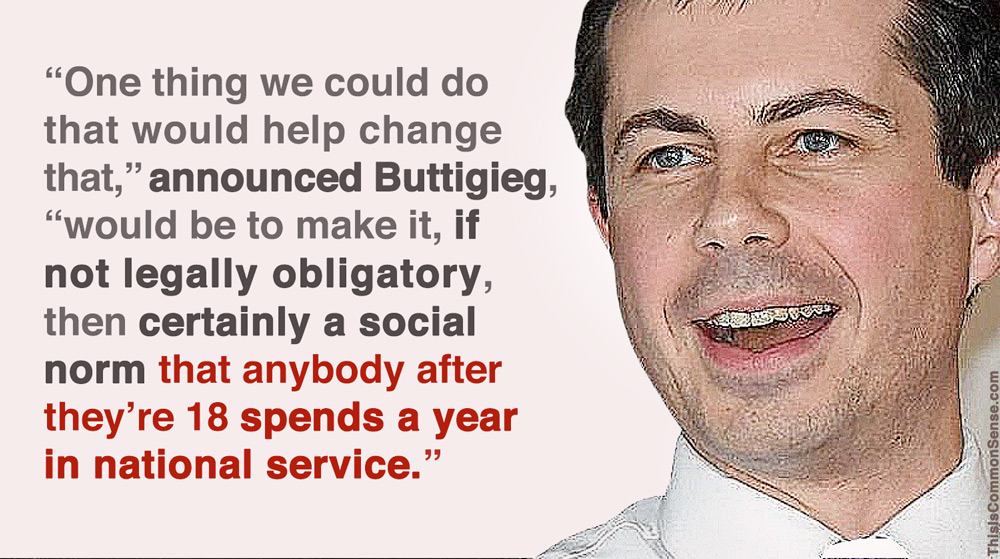
Common Sense focused on the draft, last week, specifically the idea of “national service,” too often portrayed as a wonderful enriching experience.

My midweek commentaries “Old Codger Draft,” “The Opposite of Freedom,” and “Green New Conscript?” pinpointed the plethora of problems with enslaving folks. 

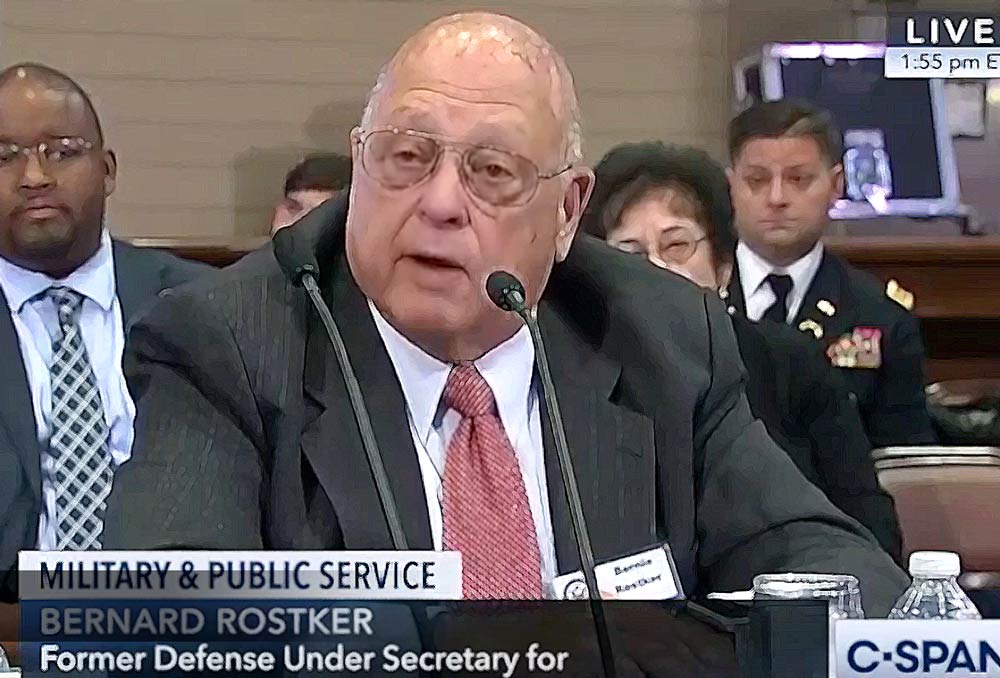
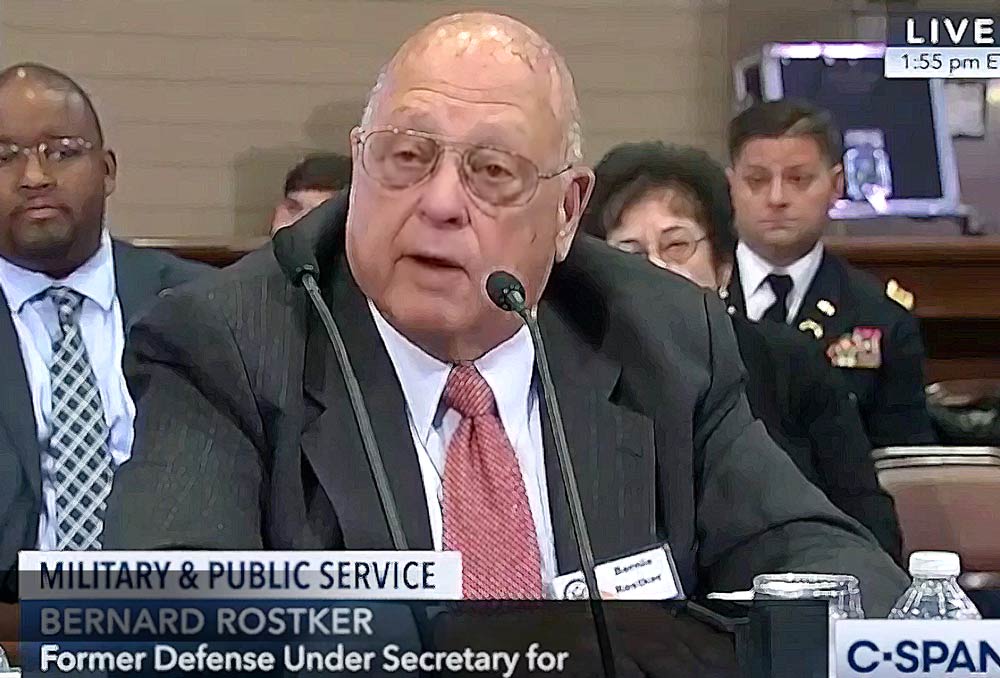
On Thursday, I traveled with two threatened members of that now vulnerable population known as “young people” to a public hearing at American University. There I testified for three-and-a-half minutes of the two allotted to me by the National Commission on Military, National, and Public Service. I implored them to “forswear any forced service whatsoever.”*

“That shouldn’t happen,” I said, “in America.”

Then, late Friday, a federal judge ruled that the Selective Service System’s male-only draft registration program is unconstitutional. Since all combat positions are now open to women, a draft registration program excluding women violates the equal protection rights of men. The lawsuit brought by the National Coalition for Men doesn’t ask that registration be extended to women, only ended in its current discriminatory form. 

The judge, however, did not issue an injunction, and there will be an appeal.

“This ruling is going to force the government eventually,” the group’s attorney told the Washington Post, “to either get rid of the selective service requirement or require both sexes to register.”

Between now and the 2020 election, the issue of conscription — for men and for women, for war or for street sweeping — will be before the Congress, the President and candidates for those positions.

Let’s ask them: Whose life is it?

This is Common Sense. I’m Paul Jacob.


* And I offered important advice on the proper website domain name for the Commission, to boot. 

PDF for printing

Paul Jacob, draft, registration, selective service, slavery, freedom
Categories
general freedom ideological culture Popular

Ever Again?

Today marks a solemn anniversary. Seventy-six years ago — on Feb. 22, 1943 — three German students at the University of Munich were tried for treason by the Nazis, convicted and then executed, all in one day.

The method of execution: guillotine.

Days earlier, Hans Scholl and his sister Sophie had been caught distributing a leaflet at the university. It was damning — of the Nazi regime; and, from the perspective of that Nazi regime, of the Scholls: “In the name of German youth, we demand restitution by Adolf Hitler’s state of our personal freedom, the most precious treasure we have, out of which he has swindled us in the most miserable way.”

Hans had in his pocket a draft of another leaflet, in Christoph Probst’s handwriting. That seventh leaflet, never distributed, led to the arrest and execution of Christoph, along with Hans and Sophie.

The three were part of a cadre of students who wrote and distributed leaflets under the name The White Rose — a symbol of purity standing against the monstrous evil of the Third Reich. The leaflets decried the crimes of National Socialism, including the mass murder of Jews. And they urged Germans to rise up.

Three more members were later executed: Willi Graf, Alex Schmorell and Professor Kurt Huber. Another eleven were imprisoned.

Their resistance was ultimately futile, unsuccessful . . . but not pointless. 

They would not remain cogs in the killing machine that had taken the most advanced society in the world to the depths of depravity. They took a stand against what George Orwell later characterized as “a boot stamping on a human face, forever.”

We often say, with earnest piety, “Never again.” But our dedication should be inspired by the White Rose. When we encounter tyranny, think of the Scholls and say “Again for Freedom.”

This is Common Sense. I’m Paul Jacob.


N.B. For an excellent account of The White Rose, consult the aptly titled A Noble Treason, by Richard Hanser. See also Jacob Hornberger’s The White Rose — A Lesson in Dissent. The Orwell quotation is from the dystopian novel 1984.

PDF for printing

Sophie Scholl, White Rose, Nazis, Germany, Third Reich

See all recent commentary
(simplified and organized)
See recent popular posts


Categories
general freedom national politics & policies The Draft too much government

Green New Conscript?

It can happen here. Congress could simply identify a group of citizens and pass a law forcing them into servitude.

At least, Congress thinks it has this incredibly abusive power . . . even though the 13th Amendment specifically prohibits it.*

In fact, the idea of conscription — not merely for military service, but also for performing the most routine civilian government functions — is this very day being debated in Washington by a congressionally-empowered body: The National Commission on Military, National and Public Service. The commission is charged with advising Congress on whether to expand draft registration to women or end it for men, as well as whether or not to create a mandatory “national service” program for young people.**

“Should Service be Mandatory?” is the title of the afternoon hearing at American University. 

The Brookings Institution’s William Galston and author Ted Hollander will advocate for drafting all young Americans and sentencing each to a year of compulsory service to the federal government. Thank goodness, my friend Doug Bandow, a senior fellow at the Cato Institute, will speak against mandatory national service, as will soon-to-be-friend Lucy Steigerwald, a contributing editor at Antiwar.com. 

The public can comment for up to two minutes, and I certainly will demand the commission abandon any contemplation of assaulting the freedom of young people under the false claim of “national service.” 

True public service is not involuntary servitude to the government. And vice-versa. Americans, even young Americans, have rights.

Tell the Commission to tell Congress: No forced service.

This is Common Sense. I’m Paul Jacob. 


TELL THE COMMISSION: NO

MY STATEMENT: Leave Those Kids Alone


* Regarding the military draft, the U.S. Supreme Court has somehow sidestepped the Amendment’s very clear language.

** No surprise that politicians and “experts” are targeting the politically least established adult age group.

PDF for printing

See all recent commentary
(simplified and organized)
See recent popular posts
Categories
general freedom ideological culture national politics & policies The Draft

The Opposite of Freedom

Do your young adult children need the government to take over their lives for, say, a year, to whip them into tip-top citizenship shape?

Forced service could be the new rite of passage into adulthood. Right after our kids finally get through high school or college, slap 12 months of “service to the nation” on them to help foster appreciation for the freedom . . . they had, instead, hoped to start enjoying. 

Sound good?

No. Not even to the folks at the National Commission on Military, National and Public Service (NCMNPS). Appointed to advise Congress on whether to end draft registration or expand it to women, and whether to force all young people to give up a year of their lives doing military or civilian “national service” for the federal government, the commissioners seem to eschew compulsion. 

Their emails, their website address expresses “inspire2serve.gov” . . . not “force2serve.gov.” Because inspiring people is noble, while conscription is despicable and wrong. 

Commissioners talk about a “personal commitment,” “a culture of service,” and the “overwhelming desire to serve” they’ve found among young people. Is it all just a rouse in route to a recommendation to Congress that young people should be forced against their will into government service?

And not even to repel invading hordes, not for any real emergency, but for basic government make-work and pretend nation-building.

Tomorrow at American University in the nation’s capital, the commission is holding a public hearing entitled, “Should Service be Mandatory?” 

No. Involuntary servitude is a stupid idea. And the opposite of freedom.

This is Common Sense. I’m Paul Jacob. 


PDF for printing

service, mandatory, draft, slavery, hearings, involuntary servitude

See all recent commentary
(simplified and organized)
See recent popular posts
Categories
general freedom The Draft too much government

Old Codger Draft

Stay calm. Dan Glickman has discovered serious problems. 

“Washington is a divided town in a very politically divided nation,” Glickman wrote in The Hill last year. “From the confirmation of Brett Kavanaugh, to the extreme rhetoric on social media, to the bombs mailed to public officials, to the mass shooting in Pittsburgh, to the inability of our elected leaders to reach consensus on nearly all major issues facing the country, it is not easy to see a way out of this mess.”

Nonetheless, he’s found one: less freedom.

Specifically, he wants to take away young people’s freedom. 

For how long? Say a year or so, he argues, right after high school or college, when they don’t have a hold yet in society and are less able to fight back; force them to join the military or some non-military federal conscript workforce. It’ll be good for the little buggers. And very egalitarian. 

Always-adult-acting Washington knows best.

“Not only does this benefit the individual,” asserts this current Executive Director of the Aspen Institute Congressional Program and former Cabinet Secretary,* “but helps our national community move away from division and towards a more cohesive society.”

Wait a second. The exceptionally well-connected Glickman and friends screwed up our world. So, make young people pay for their mistakes?

And where does Congress conjure up such power?

This Thursday, a congressional commission debates mandatory “national service” for young people.** 

It would make more sense to draft 74-year-old Glickman, who actually helped cause the problems . . . or even 58-year-old me, who couldn’t stop him.

This is Common Sense. I’m Paul Jacob.


* Glickman’s career path, prior to his current position, has been illustrious: a former nine-term congressman; Secretary of Agriculture under President Clinton; Director of the Institute of Politics at Harvard University’s John F. Kennedy School of Government; and Motion Picture Association of America Chairman.

** Please go here to submit your own comments on forcing young people to give up a year of their life to the federal government.

PDF for printing

Dan Glickman, draft, selective service, slavery, freedom

See all recent commentary
(simplified and organized)
See recent popular posts


Categories
Accountability general freedom national politics & policies term limits

The Soul of Citizen Government

Today’s federal holiday represents a truly spectacular feat of modern public administration: actual downsizing.

By our federal government, no less.

Where once there were two federal holidays, Washington’s Birthday and Lincoln’s Birthday, now there is just one: Presidents’ Day.

There is no equal in public sector simplicity, frugality, efficiency. Stand in awe, fair citizens.*

In that spirit of brevity (the soul of citizen government?) I’ll cut out the middle-man, moi, and let presidents speak to a classic example of less being more, term limits.

“If our American society or the United States Government are overthrown,” Abraham Lincoln wrote, “it will come from the voracious desire for office, this wriggle to live without toil, work, or labor — from which I am not free myself.”

“We want to see new voices and new ideas emerge,” explained President Barack Obama. “That’s part of the reason why I think that term limits are a really useful thing,”

‘Actions speak louder than words’ could have been George Washington’s motto. His greatness may spring more from giving up power than from wielding it. He could have been president for life, but he stepped down after two terms, eight years.

In his second term, President Thomas Jefferson expressed hope that his retirement would help establish that two-term tradition for presidents, ultimately leading to a constitutional requirement.**

Success! This February 27th marks the 68th anniversary of the 1951 ratification of the 22nd Amendment: presidential term limits. 

And having declared the 27th to be Term Limits Day, U.S. Term Limits and supporters are rallying all around the country next Wednesday.

Join in celebrating term limits and help push for limits on Congress.

It’s Common Sense. I’m Paul Jacob.


* That’s what it seems like, anyway. The true story? Much more complicated. Officially, the U.S. Government still considers Presidents’ Day to be Washington’s Birthday, believe it or not.

** Jefferson had harshly critiqued the new Constitution for its “abandonment in every instance of the necessity of rotation in office, and most particularly in the case of the President.”


Contact U.S. Term Limits:
termlimitsday@termlimits.com


PDF for printing

See all recent commentary
(simplified and organized)
See recent popular posts

Categories
general freedom national politics & policies The Draft

Service Sans the Smile

“A personal commitment of time, energy and talent to a mission that contributes to the public good by protecting the nation and its citizens, strengthening communities or promoting the general welfare.” That’s how the National Commission on Military, National and Public Service (NCMNPS) officially defines service

“It’s time to talk about a culture of service,” Commission Chairman Joe Heck told reporters Wednesday at the release of an interim report, “where Americans not only aspire to serve, but face no barriers.”

Remove the impediments where possible, sure.

But the Commission, as created by Congress, is primarily charged with looking into whether draft registration should continue, and if so, whether to expand it to women.*

Face it, military conscription doesn’t have anything at all to do with “service.” Not by the NCMNPS’s own definition — or any reasonable one. Surely the commissioners weren’t thinking that “personal commitment” could simply be coerced. 

The NCMNPS is also “exploring what a program that requires every American to complete a dedicated period of military, national, or public service might look like.”

Stop. It won’t resemble freedom. 

Why even consider coercing young people? The All-Volunteer Force is working well and creating a massive civilian chain-gang will be expensive. 

“There is an overwhelming desire to serve,” Chairman Heck confirmed. But he explained that while young people “want to do it. They just don’t want to be told to do it.”

Sounds 100-percent American to me.

This is Common Sense. I’m Paul Jacob.


* Nearly four decades ago, the U.S. Supreme Court upheld the current male-only registration program specifically predicated on women being blocked from combat roles. All those roles are now open to women. Eventually, a case will get back to the High Court, which will very, very likely strike down a registration program that does not include young women.

You can share your own opinion with the Commission here.


PDF for printing

registration, draft, selective service, slavery

See all recent commentary
(simplified and organized)
See recent popular posts