Categories
Accountability crime and punishment folly free trade & free markets general freedom ideological culture nannyism national politics & policies

Digs at the Gig Economy

In Texas’s progressive enclave of Austin, the government has regulated Uber and Lyft out of the city.

Massachusset’s uber*-progressive Sen. Elizabeth Warren cautions that the “much-touted virtues”of the “gig economy” that these services represent are actually dark signs of the times, providing workers a false “step in a losing effort to build some economic security in a world where all the benefits are floating to the top 10 percent.”

Vermont’s Sen. Bernie Sanders, the independent candidate for the Democratic Party’s presidential nomination, is also no fan. Why? These services are not regulated.

Sanders’s charge that these person-to-person (P2P) ride-sharing services are “unregulated” is of course the opposite of the truth. They are self-regulated for safety and efficiency in ways that taxi services never were. How much extra value did governments add, with their regulations of the taxicab industry? They just reduced competition and made cabs more expensive.

P2P online cooperation is revolutionary. And “progressives” are stuck in the past, itching to suppress that revolution. “Initially,” writes Jared Meyer in the July issue of Reason, “hostility mostly came from state and municipal governments, at the behest of local special interests.” But as the services became more popular, opposition shifted. To the national Democrats like Sanders, Warren and . . . Hillary Clinton. She promises to “crack down on bosses who exploit employees by misclassifying them as contractors or even steal their wages.”

Par for the course: the Internet provides more opportunity than ever, and all some progressives see are the old socialist fears of “exploitation” and “greed” . . . while they greedily suck up to unions and special interests.

The bright side, Meyer argues, is that they are on the losing side.

This is Common Sense. I’m Paul Jacob.
 

*I guess the pun here is intended. Or not. You choose, P2P style.


Printable PDF

Uber, Lyft, sharing, economy, HIllary, Bernie, illustration


Categories
Accountability ideological culture media and media people nannyism national politics & policies property rights responsibility

The Climate Cassandra

Thirty years ago, in June, 1986, the Senate Environment and Public Works Committee met to consider the problems of ozone depletion, the greenhouse effect, and climate change.

Present at those hearings was today’s climate Cassandra, James Hansen, then of the Goddard Institute of Space Studies. And he was predicting that “global temperatures should be nearly 2 degrees higher in 20 years,” according to Associated Press reporting at that time.

There was some sloppiness either in Hansen’s account, or the AP’s, for in one part of his testimony Hansen claimed that his institute’s climate models projected, for “the region of the United States, the warming 30 years from now is about 1 1/2 degrees C, which is about 3 F.”

Ronald Bailey, the science writer over at Reason, tries to make sense of this mess of numbers, models, and predictions.

Oh, and actual, tabulated results.

Hansen’s predictions went, as Bailey put it, “definitively off the rails when tracking the temperature trend for the contiguous U.S. between 2000 and 2016. Since 2000, according to the NOAA calculator, the average temperature trend has been downward at -0.06 F degree per decade.”

That’s not the whole picture, though: “global temperatures have increased by 0.51 C degree since 1986, so perhaps the man-made global warming signal has finally emerged.”

No matter, though, as Bailey notes, “the United States and the Earth have warmed at considerably slower pace than Hansen predicted 30 years ago.”

Which suggests that Hansen’s models may be inspired more by wish, fear, and ideology than genuine science.

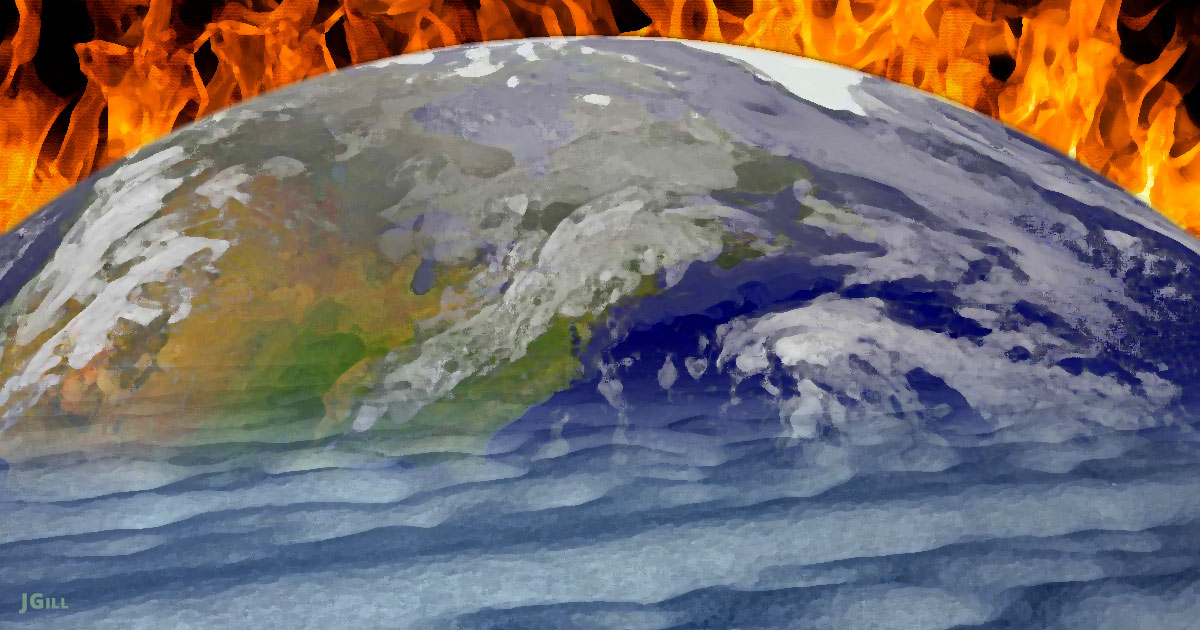
So, to those who wish to rush to “do something” (anything?) to combat “climate change,” take it slow. Follow the pace of the Earth itself.

This is Common Sense. I’m Paul Jacob.


Printable PDF

Global warming, climate change, illustration


Categories
Accountability crime and punishment general freedom national politics & policies too much government

What Doesn’t Fly

After the Orlando massacre, isn’t it finally time to get guns out of the hands of . . . licensed security guards?

Omar Mir Seddique Mateen, who murdered 49 people and wounded 53 others in the Pulse nightclub, worked for the globe’s largest security firm, Britain’s G4S. He passed two background checks conducted by the company, and his government credentials included “a Florida state-issued security guard license and a security guard firearms license.”

Not to mention that Omar Mateen was twice investigated by the FBI — in 2013 and again in 2014 — and cleared by the agency both times. Though on the terrorist watch list for a while, he was removed from that list after the FBI closed its investigations.

So we need more and tougher background checks? Must the FBI check every gun purchaser three times, is that the charm?

Even if the Feds blocked gun sales to those on the terrorist watch list and the “no-fly” list, it wouldn’t have affected Mateen, for he wasn’t on these lists when he purchased his Sig MCX.

Nevertheless, Connecticut Sen. Chris Murphy led a 14-hour filibuster to bring attention to his gun control legislation . . . that wouldn’t have stopped the Orlando massacre . . . or the shooting in Newtown.

“I will be meeting with the NRA, who has endorsed me,” tweeted Donald Trump, the presumptive GOP presidential nominee, “about not allowing people on the terrorist watch list, or the no fly list, to buy guns.”

If our government ever uses a secret list developed by security agencies to deny citizens their rights, without due legal process, without innocence until proven guilty, we will sorely need our Second Amendment rights.

This is Common Sense. I’m Paul Jacob.


Printable PDF

Omar Mir Seddique Mateen


Categories
Accountability crime and punishment general freedom nannyism national politics & policies

Beggar Thy Philanthropist

Making up petty rules and enforcing them is one thing governments do well.

On Monday I warned about the dangers of asking too much from government. I think, today, I’ll make the opposite warning: of not asking enough.

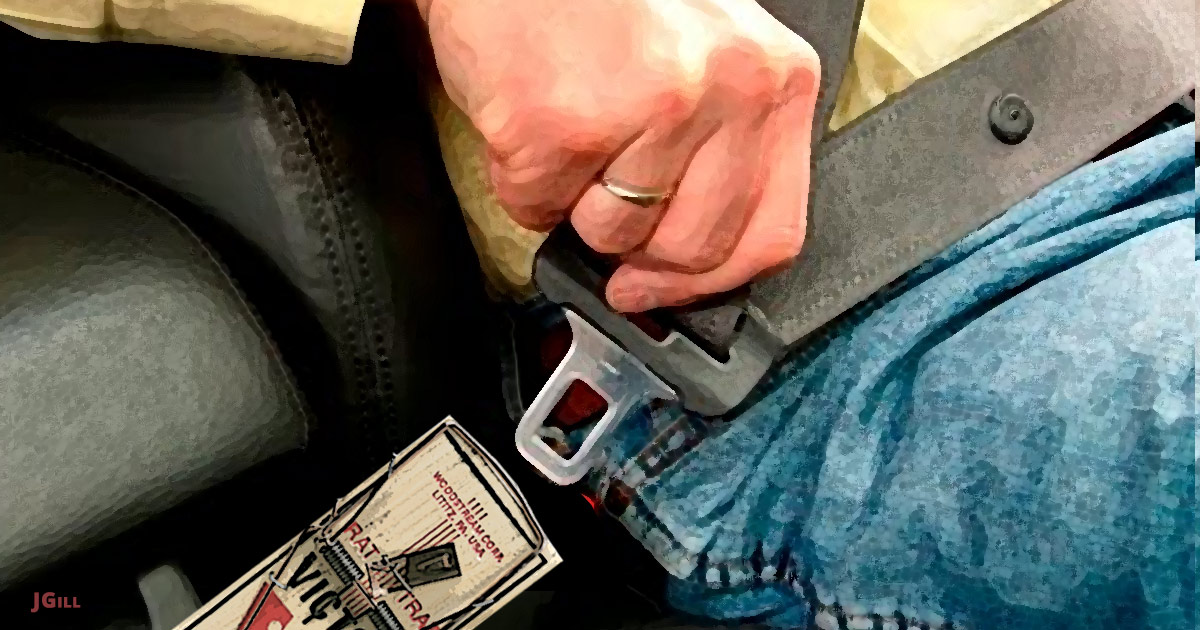
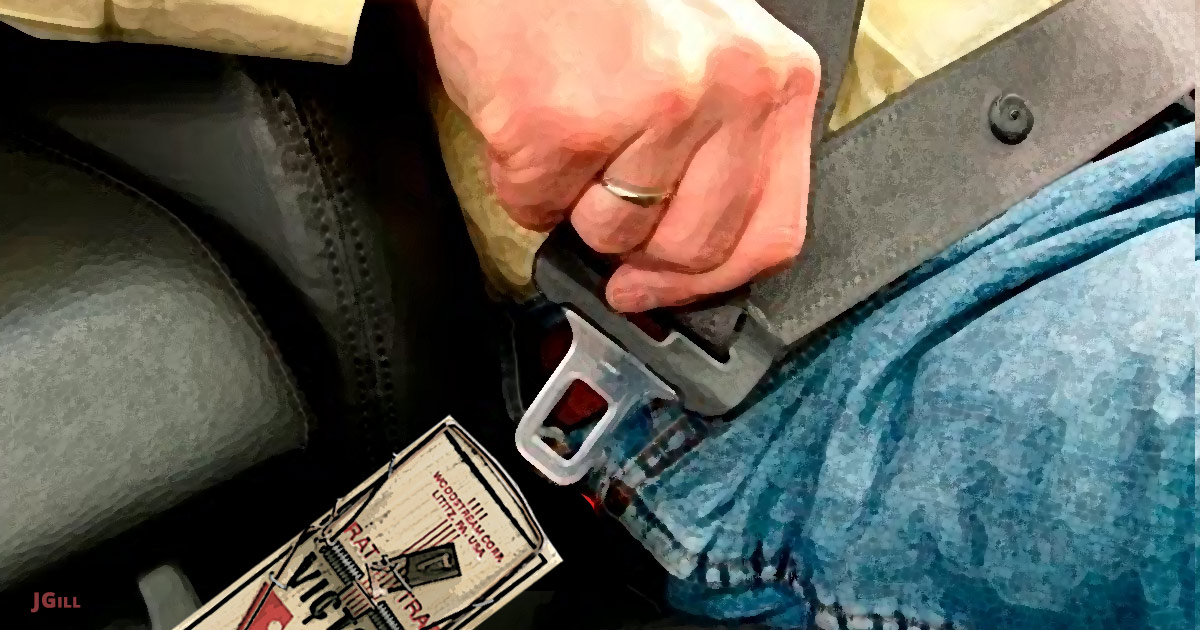
Mandatory seatbelt laws were enacted (sometimes by citizens initiative and referendum) to save people’s lives. But the reason many police and local jurisdictions like these laws is that it gives them a chance to engage in shakedowns, entrapping citizens into non-compliance, and then socking them with fines.

In Regina, Saskatchewan, a man pulled up to an intersection and saw a down-and-outer with a sign. He felt sorry for him, so, as he pulled up, he unbuckled his seat belt and pulled three bucks in change out of his pocket. And dropped the three dollars on the curb.

A few moments later, police stopped him, and handed him a ticket. The “homeless guy” with the sign turned out to have been an undercover cop, and the few moments without a seat belt was enough to charge our philanthropist $175 Canadian.

Though an obviously preposterous misuse of police time and attention, and an abuse of the citizenry, Regina’s police force remains adamantine, claiming that “this is nothing new. It’s part of a project that has police watching for traffic violations at intersections.”

Because this sort of thing only hits people almost at random, but the benefits are concentrated on police coffers, it’s hard to organize against such nonsense. Which is precisely why such nonsense goes on.

Still, we must prevent such abuse at the local level, if we’re ever to control the federal leviathan.

This is Common Sense. I’m Paul Jacob.

Printable PDF

seatbelt, trap, police, Regina, Saskatchewan, illustration


Categories
Accountability government transparency moral hazard national politics & policies

Secrecy, Conspiracy, and the Sauds

The U. S. cleaves to some bizarre security standards. That is, about secrecy. Critics have been complaining for years about how “liberal” the federal government is in classifying information as secret. Or, put another way, how stingy the government is in providing us with information.

Not liberal at all.

This problem inhabits every nook and cranny of official Washington. But it’s most obvious in the case of 2002’s 9/11 report, from which 28 pages were removed. For reasons of state secrets. And that, as the BBC related this weekend, is the likely cause of much suspicion against Saudi Arabia.

Saudi Arabia? Yes. The country whose sands were walked upon by Mohammad, the Prophet, is also the country that gave birth to 15 of the 18 terrorist skyjackers, as well as spreading the Wahabist spin on jihad throughout the Islamic world.

So, by withholding portions of the report from the public, the government fed the flame of conjecture. And with it, the belief in a Saud conspiracy and a Bush and Obama cover-up.

The withholding of information does not give us a univocal perspective. We don’t know what is being kept from our eyes and ears. So when I read the BBC report, which stated that the “probable publication” of the previously classified parts “will clear Saudi Arabia of any responsibility, CIA chief John Brennan has said,” I get suspicious.

Good, if true. But the timing of this Brennan opinion, on the weekend of the Orlando massacre?

Stinks of spin and deflection by the government, against us . . . who wonder, not without reason, about “conspiracies.”

Should we trust the newly de-classified segments?

This is Common Sense. I’m Paul Jacob.

Printable PDF

secrets, government, Saudi, 911, conspiracy, illustration


Categories
Accountability crime and punishment folly government transparency insider corruption national politics & policies

This Too Shall Pass

We are living in what I hope are the latter days of the Watergate Era.

I’m old enough to remember Watergate. The un-making of President Nixon, before our very eyes, informed Americans in a deep and profound way. It led, in part, to the election of Jimmy Carter, often referred to as one of the least effectual presidents. And the Carter presidency led to Ronald Reagan.

While living under Watergate’s dark shadow, not all of us took away the same lesson.

We outsiders learned, once again, that power corrupts.

Insiders, on the other hand, learned something different: never willingly play a part in your side’s unmasking and un-making.

We tend to forget, what with the economic rebound and end of the Cold War, that the Reagan Administration had significant scandals. At the time, Reagan was dubbed the “Teflon President,” because Reagan & Co. figured out how to react: shrug; stall; deny, deny, deny. For this reason, scandal flowed off him, not sticking, as water off a well-oiled duck’s back.

Reagan and the Republicans did not allow what Republicans had allowed in Nixon’s day: there was no turning on one’s own, no (or few) breaking of ranks.

Then, President Bill Clinton took the effrontery of denial and stonewalling to new heights. With great help from fellow Democrats.

And so it goes, even to the present day, with Hillary Clinton carrying on her husband’s tradition. She, the first candidate to run for the presidency while under official investigation by the FBI, just received the current president’s endorsement.

The back-room deal has been made, perhaps? Obama will not allow Hillary to be prosecuted. It would tarnish his legacy.

This is Common Sense. I’m Paul Jacob.


Printable PDF

teflon, white house, Hillary Clinton, Obama, corruption, illustration


Categories
Accountability crime and punishment general freedom moral hazard nannyism national politics & policies privacy property rights

A New Way to Steal

The fight against government theft of private property, through “civil forfeiture,” just got a little harder.

There’s a new technology available: ERAD card scanners.

And the Oklahoma City Police Department’s joint interdiction team has them, and can use the scanners to take money from you without your consent.

What money, in particular? The money you have stored in pre-paid debit cards.

ERAD stands for Electronic Recovery and Access to Data, and the ERAD Group, Inc., stands to make a lot of cash from the technology. Police around the country want to be able to take the funds secured in debit cards. It’s the latest thing in the war against the war against the War on Drugs.

Drug traffickers, we’re told, hide dozens of such cards in vehicles transporting drugs.

It’s not enough that police can, in the course of investigating a crime — without conviction, mind you; indeed, without charges being filed — confiscate the cards themselves.

The police also want to be able to siphon the money out of those cards.

Which leads to corruption. Which is already rife in civil forfeiture usage, as a recent Oklahoma state audit found — missing money, misused funds, that sort of thing.

The cavalier way in which government officials defend expropriation by ERAD scanners is chilling. In an Oklahoma Watch article, reporter Clifford Adcock relates the official explanation: “These cards are cash, not bank accounts. . . . Individuals do not have privacy rights with magnetic stripe cards.” Why not? Because the information on the strip “literally has no purpose other than to be provided to others to read.”

That’s so open to logical criticism you could drive a confiscated truck fleet through it.

This is Common Sense. I’m Paul Jacob.


Printable PDF

ERAD, gift card, civil asset, forfeiture, stealing, theft, drug war


Categories
Accountability national politics & policies political challengers

How Does “Unfair” Play?

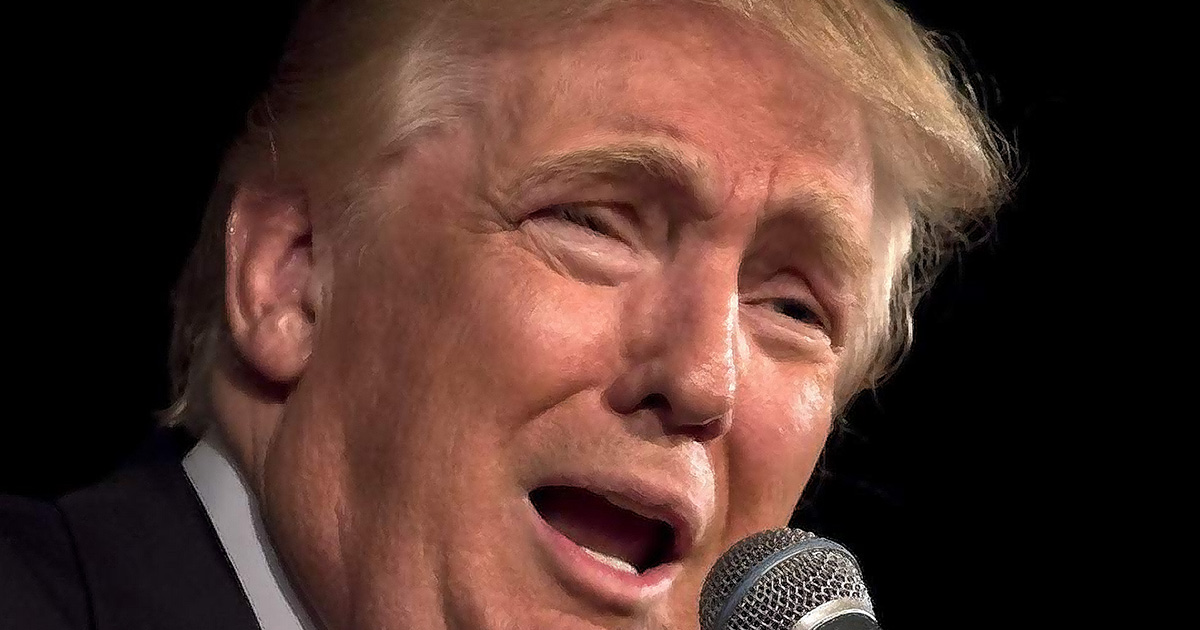
“We’re being treated very unfairly.”

I don’t know about you, but this constant complaint from Donald Trump is getting a bit old.

Even if true.

Maybe I lost some patience for this shtick because my side in the political arena — the 85 percent majority for term limits, for example — has constantly had to bear with undue weights from major candidates, public officials, and other political insiders. This week I’m in Arkansas to help put term limits back on the ballot, after politicians lied to the citizenry in a legislatively referred measure, successfully fooling them to substantially weaken the limits.

It turns out that honest people have always been at a disadvantage in politics, because our enemies often feel free to lie, cheat, steal, etc.

My impatience is that, well, coming from a billionaire, the complaint seems . . . hollow. To the extent that wealth and fame lead to an unfair advantage over others, Trump has indeed parlayed both into a shot at the White House.

So to talk about how being treated unfairly smacks of narcissism. It is like going to the funeral of a good friend and having to listen to some whiner take the limelight to complain of his lumbago.

It seems inappropriate, in context.

But mainly it reminds me of Bernie Sanders in particular, and the socialist left in general. “Life [or The System] has treated us unfairly — so give us free stuff!”

Trump is not asking for free stuff. He is merely expecting us to forgive his ugly tirades — as in the current mess about the judge sitting on his Trump University case — and nasty escalations of name-calling.

He expects a free pass. And has so far gotten one.

This is Common Sense. I’m Paul Jacob.

Printable PDF

Donald Trump, thin skinned, cry, 2016 Presidential, Hillary Clinton


Categories
Accountability ideological culture moral hazard national politics & policies political challengers too much government

Bernie’s Problem?

Sen. Bernie Sanders has a problem. With Hillary Clinton.

Asked about the Clinton Foundation, yesterday, by CNN’s Jake Tapper, host of State of the Union, Bernie re-questioned himself:

Do I have a problem when a sitting secretary of state and a foundation run by her husband collects many millions of dollars from foreign governments, governments which are dictatorships?

And Bernie answered, “Yeah, I do.”

How many roads must mainstream media reporters walk down before they investigate and report on the myriad of ethical cracks in the Clinton Foundation?

To the most obvious conflict of interest in the history of the human race, add the fact that even after promising President Obama that the Clinton Foundation would at least be totally transparent with an annual report of all donations . . . well, Hillary welched on the deal, not revealing the donors.

While Bernie’s condemnation of Hillary’s ethical shortcomings was big news, less reported were the senator’s comments regarding whether Mrs. Clinton is “too quick on the draw, too eager to use military force.”

Bernie again was clear: “I worry about that. Yeah, I do. Her support for the War in Iraq was not just an aberration.” Sanders went on to cite Secretary of State Clinton’s role in pushing President Obama to overthrow Gaddafi in Libya and to intervene in Syria.

Hillary’s judgment on issues of war and peace is questionable . . . especially when we don’t know whether or not a foreign leader or his cronies have written big checks to the Clinton Foundation.

This is Common Sense. I’m Paul Jacob.

Printable PDF

Hillary Clinton, Bernie Sanders, war, foreign policy, blood stained, death, military, illustration


Categories
Accountability national politics & policies too much government

Dangerous, Incoherent

Hillary Clinton came out swinging against Donald Trump yesterday. She said electing the man would be an “historic mistake.”

As opposed to her past career in politics, which I would call an historical mistake.

Mrs. Clinton focused in on Mr. Trump’s foreign policy pronouncements. “She ran through Mr Trump’s foreign policy points and rejected each one,” reported the BBC, “calling him thin-skinned, irrational and unprepared.”

Funny, though: I wouldn’t exactly call Mrs. Clinton the opposite: thick-skinned, rational, or prepared.

Take her main charges, then look at the obvious demerit of each:

“Mrs Clinton said a Trump presidency could start overseas wars and ruin the US economy.” Don’t vote Trump — starting wars and ruining the economy is Clinton’s job!

Trump’s “proposals were vague and often nonsensical.” Unlike Clinton’s, whose murky specifics speak of evasion from a to z — and whose policies in Libya and elsewhere made no sense whatsoever, breeding more conflict and opposition in place of the regimes she helped undermine and remove.

“Questioning his relationship with Russian president Vladmir Putin, she said: ‘I’ll leave it to a psychiatrist to explain his affection for tyrants.’” And speaking of perverse affection, her and her husband’s Clinton Foundation has been milking foreign tyrants for years. All very above-board, I’m sure.

“‘This isn’t reality television, this is actual reality,’ she said.” If you ask me, her reality is just as irreal as Trump’s.

We can do better, America.

This is Common Sense. I’m Paul Jacob.

Printable PDF

Hillary Clinton, incoherent, Donald Trump, foreign policy, presidential