Categories
deficits and debt election law tax policy

Slasher Needs Slashing

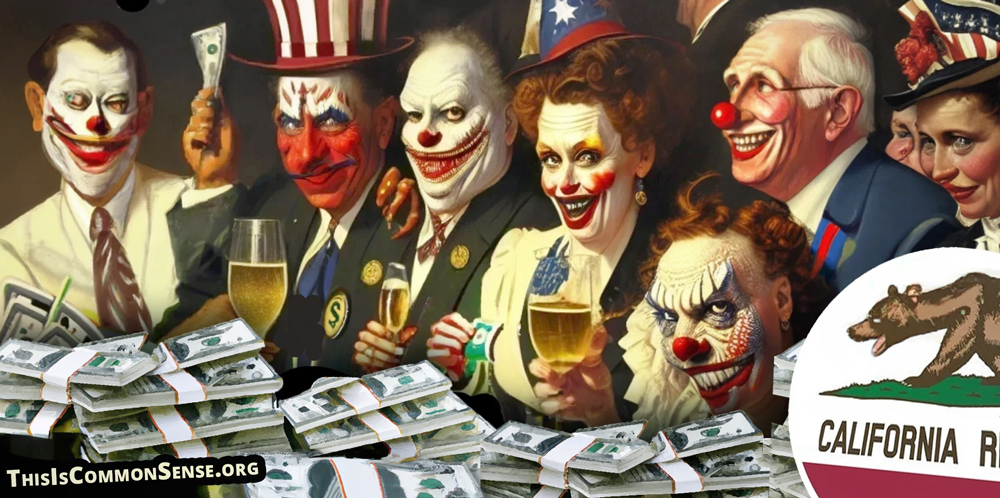
A perennial bill in the California Assembly, Constitutional Amendment 1, would make it harder for voters to block local tax increases in accordance with the provisions of Proposition 13, which voters passed in 1978.

ACA 1 would shrink the percentage of voters who must approve certain tax increases from two thirds to 55 percent in cases where the money would purportedly be used for infrastructure or public housing.

Passage would further erode the legacy of Prop 13, which in addition to cutting taxes, limiting tax increases, and requiring a two-​thirds legislative majority to increase state taxes, also imposed a two-​thirds threshold for voter approval for special local taxes.

In 2000, voters accepted a lower threshold for approval of school bonds — 55 percent instead of two thirds — enabling billions more in property taxes.

That’s bad enough, but things could easily get worse.

Jon Coupal of the Howard Jarvis Taxpayers Association observes that if enacted, ACA 1 would be used to raise taxes repeatedly in local elections by dint of dubbing all government spending “infrastructure.” 

The infrastructure exemption is an innovation of the 2023 version of the bill (the tricky tricksters never stop).

Moreover, if passed, the amendment would take effect immediately. “Billions of dollars in tax hikes will start that much faster.”

Coupal stresses that the new exactions would be added to property tax bills “above and beyond Prop 13’s one percent cap” on property taxes.

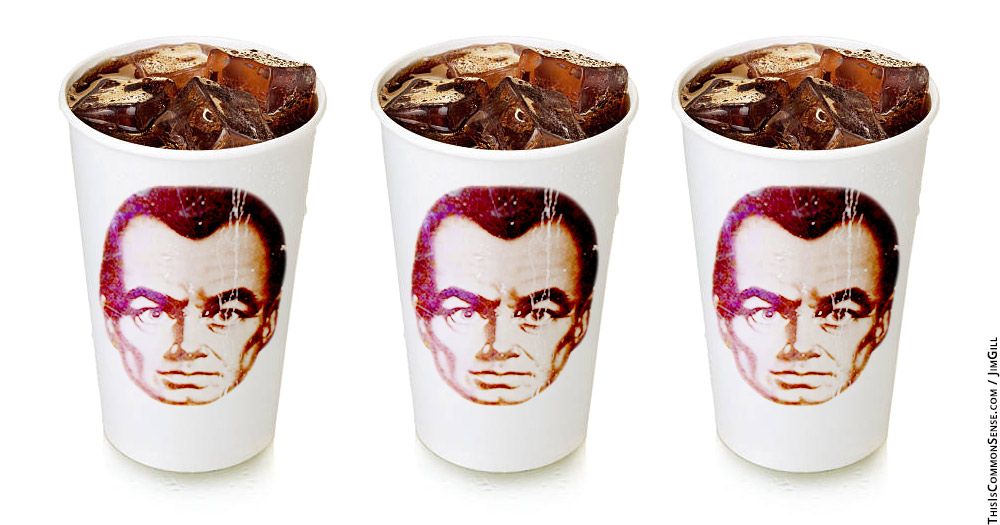
ACA 1 keeps getting reintroduced and, so far, keeps getting killed off, like the mad killer in a teen slasher movie. Only to be revived for the sequel.

Kill it again.

This is Common Sense. I’m Paul Jacob.


PDF for printing

Illustration created with PicFinder​.ai and DALL-E2

See all recent commentary
(simplified and organized)
See recent popular posts
Categories
folly Popular tax policy too much government

A Fake Mystery

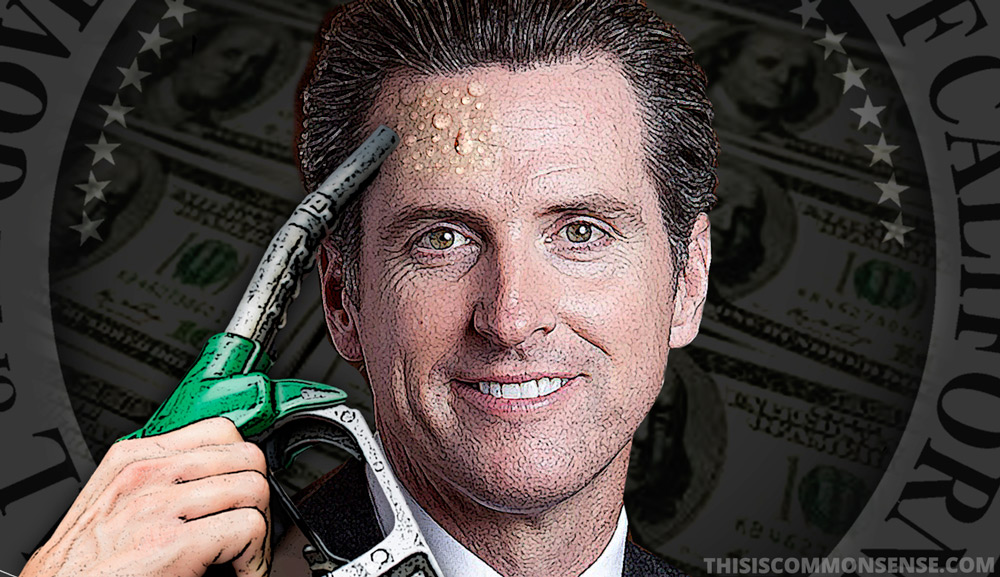
California’s new top banana is playing politics the old-​fashioned way: passing the buck.

Last week Governor Gavin Newsom directed the California Energy Commission (CEC) to look into the state’s higher-​than-​average gasoline prices.

“Independent analysis suggests that an unaccounted-​for price differential exists in California’s gas prices and that this price differential may stem in part from inappropriate industry practices,” he wrote in an official letter to the CEC.  “These are all important reasons for the Commission to help shed light on what’s going on in our gasoline market.”

Ah, shed light!

We are not talking about the bulb in your outbuilding.

Californians understandably grumble about having to pay higher taxes than elsewhere in the U.S. So Newsom pretends to suspect “inappropriate industry practices.” But what is inappropriate is Newsom’s directive to the CEC. As Christian Britschgi drolly informs us at Reason, Newsom, while lieutenant governor, had “supported a 2017 bill increasing the state’s gas taxes,” which looks like all we really need to know. Raise taxes, and businesses tend to increase prices rather than eat the extra cost. Higher gas prices are the result of higher taxes.

Duh.

But there’s more.

“When running for governor in 2018,” Britschgi explains, “he opposed a ballot initiative that would have repealed that same increase.”

So, is Newsom truly clueless of the obvious?

Hardly. And neither are “17 legislators who voted for the tax hike” who joined the governor in “wanting answers to this difficult headscratcher.” They are doing what pols usually do: deflect; misdirect; blame others … hoping that voters don’t pay close enough attention, or remember recent history. And busy people often do not.

Finding a bogeyman helps, too.

This is Common Sense. I’m Paul Jacob.


PDF for printing

Gavin Newsom, Governor, California, gas, tax, prices, folly,

See all recent commentary
(simplified and organized)
See recent popular posts
Categories
ideological culture tax policy

Class War in France

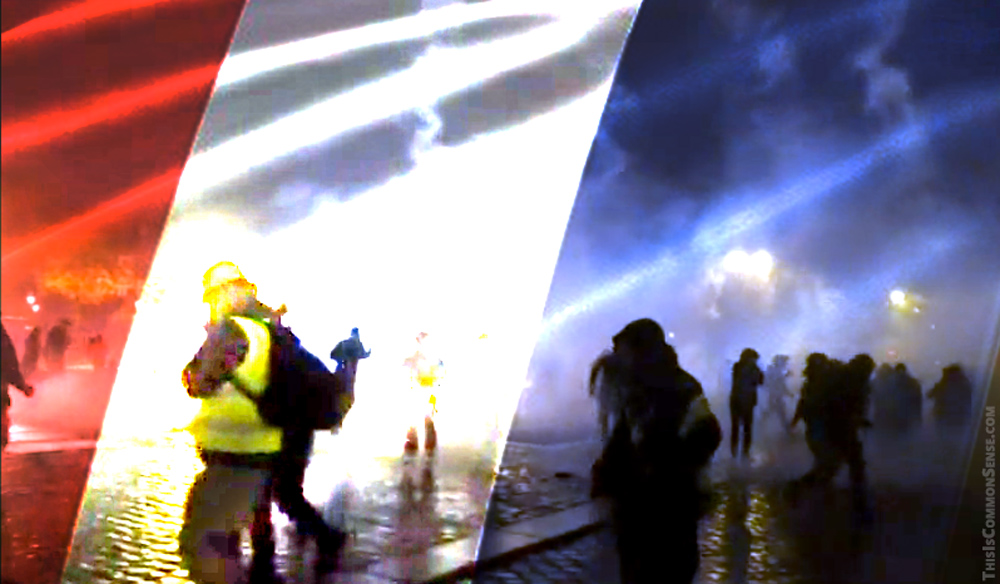
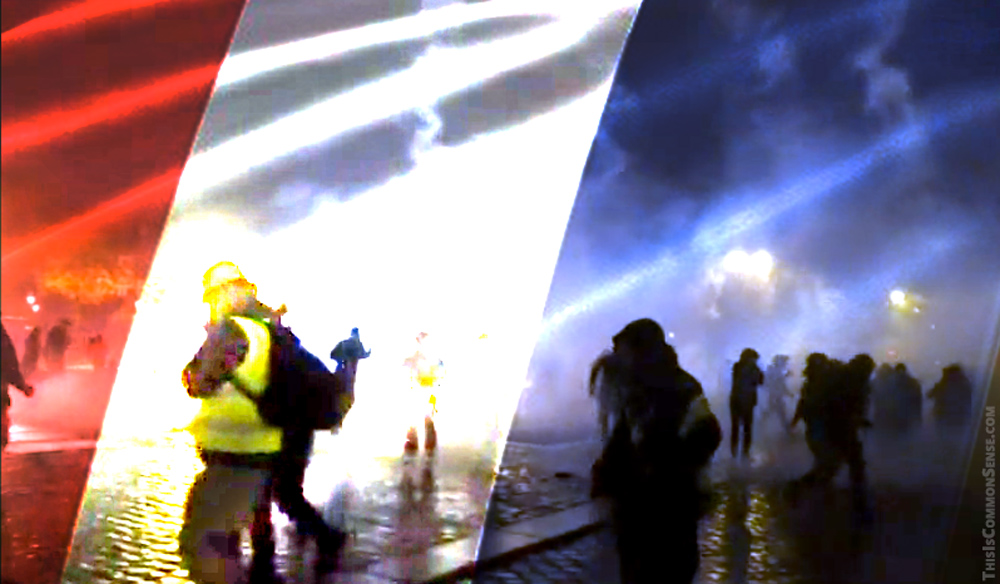
The French have a talent for riot, public protest, and street-​based insurrection.* The current mayhem in Paris has been escalating every weekend since starting in mid-November.

Why weekends? This is a working-person revolt.

“Rioters ran amok across central Paris on Saturday, torching cars and buildings, looting shops, smashing windows and clashing with police in the worst unrest in more than a decade, posing a dire challenge to Emmanuel Macron’s presidency,” Yahoo News informs us. “The authorities were caught off guard by the escalation in violence after two weeks of nationwide protests against fuel taxes and living costs…”

Yes, this is a tax revolt.

You see, the taxes are part of a carbon emissions reduction program — the kind of taxes that Democrats are eager to put into place in America. Leftists and environmentalists worldwide should pay special attention.

The gambit, of course, is this: cityfolk tend not to mind such taxes less because they do not take the hit immediately. People outside cities, on the other hand, drive everywhere, often for their jobs. In Paris, well, not so much. The city has even enacted an ordinance to outlaw all but electric automobiles by 2030.

It’s called the “yellow vests [jackets] movement” to symbolize the government’s anti-​driver mindset: “all motorists had been required by law — since 2008 — to have high-​visibility vests in their vehicles when driving.”

Sure, push around ordinary motorists.

The protest movement has been largely made up of these people, since many businesses and professionals get exemptions from the taxes.

It’s a class war thing. You might think Macron and other elitists in government would understand their own country.

But no.

So, why?

It’s a big government thing.

This is Common Sense. I’m Paul Jacob.


* Maybe that is why the street violence of “refugees” and children of Middle-​Eastern and North African migrants have been taken with as much tolerance as it has been: the rioters have seemed so very French.

PDF for printing


» See popular posts from Common Sense with Paul Jacob HERE.


Categories
initiative, referendum, and recall tax policy

The Green in the Evergreen State

We’re told of the scientific consensus on global warming. Whatever you may say about that consensus (I’ve expressed extreme skepticism), no such consensus exists for what steps would be best to take to deal with the identified problem — which is usually understood in terms of the “carbon footprint,” of carbon put into the atmosphere in excess of what is taken out.

Most proposals for curbing carbon emissions have been shown to be far more costly than efficacious.

Nevertheless, without such a consensus, activists in Washington State are pushing Initiative 1631, a measure to tax carbon.

They had pushed a very similar measure two years ago, as science writer Ronald Bailey notes at Reason. The measure failed, however, because environmental lobbies opposed it. You see, the collected funds were given back to taxpayers. Environmental groups didn’t get a cut of the action.

This time that defect has been alleviated, and those groups are on board.

Ah, money, money, money! 

The Evergreen State, indeed.

Would the tax be effective? The goal of the measure is “to reduce, by 2035, [the state’s] emissions by 25 percent below their levels in 1990,” Bailey explains. The state had “emitted about 88 million metric tons that year, so that implies a reduction of around 22 million tons by 2035. Assuming today’s emissions, that would mean that Washington State’s planned reductions would amount to 0.42 percent and 0.06 percent of U.S. and global emissions respectively.”

Not much bang.

Sure, the measure may win on hope … and bucks.

But will it do any appreciable good? I mean, other than creating a constituency with the green of dollars.

This is Common Sense. I’m Paul Jacob.


PDF for printing


Categories
Accountability local leaders moral hazard porkbarrel politics responsibility tax policy too much government

Panic in the Prairie State

When your state has the lowest credit rating in the union, the highest population decline rate, and spends nearly a quarter of its annual budget on an out-​of-​control government-​employee pension system, what do you do?

Raise taxes, of course!

That’s the advice of experts in Illinois, anyway.

You can see why they panic: The unfunded portion of Illinois’s public employee pension system amounts to $11,000 per person in the state. Something extraordinary must be done.

Yet, as Pat Hughes at the Illinois Opportunity Project insists, taxpayers need relief — not a statewide 1 percent property tax increase.

Besides, it is not as if tax hikes could solve the problem. “It was just last year that politicians raised the state income tax by 32 percent in a desperate attempt to balance the budget,” Hughes explains. “Despite over $5 billion in new taxes, the state was back in deficit spending in less than a year.” 

Hughes mentions a number of tax limitation measures in the works. More power to them. 

But what’s needed even more? Spending limitation measures.

No government can be trusted to offer anything but defined-​contribution pensions — and no government, at any level, should ever manage a pension system. Politicians can’t help themselves. They just cannot resist the temptation to buy off the government-​worker constituency by promising more in the future than financially feasible (or just plain old politically possible) to pay for now. 

Other people’s money is theirs to spend. And a future financial bind? Some other politician’s problem. 

This is Common Sense. I’m Paul Jacob.


N.B. Congratulations to the Illinois Policy Institute for its Liberty Center, which won its case against forced unionization, Janus v. American Federation, on June 27. Commentary about this Supreme Court case appeared on this site in early May, “Post Blindfold.”


PDF for printing


Categories
Accountability crime and punishment folly general freedom ideological culture media and media people moral hazard nannyism privacy property rights responsibility tax policy too much government U.S. Constitution

Brave New Paternalism

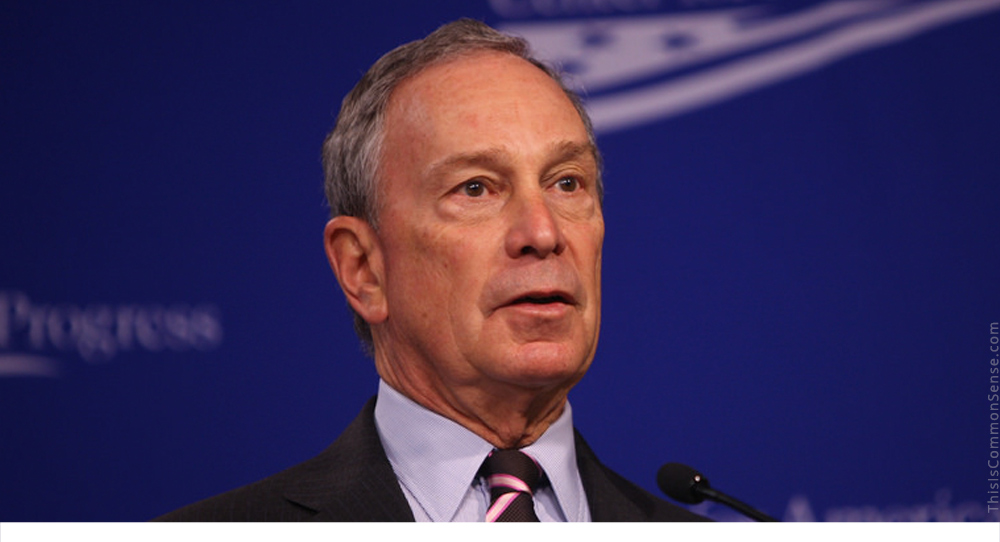
Michael Bloomberg is rich. He’s also in politics — a public health crusader.

And, for years, he “has personally funded and promoted all sorts of regressive taxes and regulations in an attempt to push people around,” the folks at Americans for Tax Reform tell us. “He uses the coercive power of the government to force people to live their lives as he sees fit.”

Onstage at a globalist event, One-​on-​One with Christine Lagarde — who is managing director of the International Monetary Fund — Bloomberg blurts out his approach to government policy regarding what he calls “those people.”

“If you raise taxes on full sugary drinks,” he says, “they will drink less and there’s just no question that full sugar drinks are one of the major contributors to obesity and obesity is one of the major contributors to heart disease and cancer and a variety of other things.”

Against the charge often made that such taxes fall heaviest upon the poor, he is forthright. Regressive? “That’s the good thing about them because the problem is in people that don’t have a lot of money.”

Notice that he is not talking about a public service campaign to help people learn how to drink (and eat) better. And he is not talking about removing all the government policies that have encouraged bad eating and drinking habits (as well as lethargy) — the government programs to encourage the overuse of high fructose corn syrup; the welfare state’s poverty trap that stifles life at the lower incomes; the subsidized consumption of food and drink — he wants to add another government program.

He can only see betterment by increased governmental bullying. 

This is Common Sense. I’m Paul Jacob.


PDF for printing

Michael Bloomberg, tax, policy, nanny state, vice, social engineering, statist, technocrat

Photo by Center for American Progress

Categories
Accountability folly free trade & free markets general freedom moral hazard national politics & policies responsibility tax policy too much government

Billionaire Theater

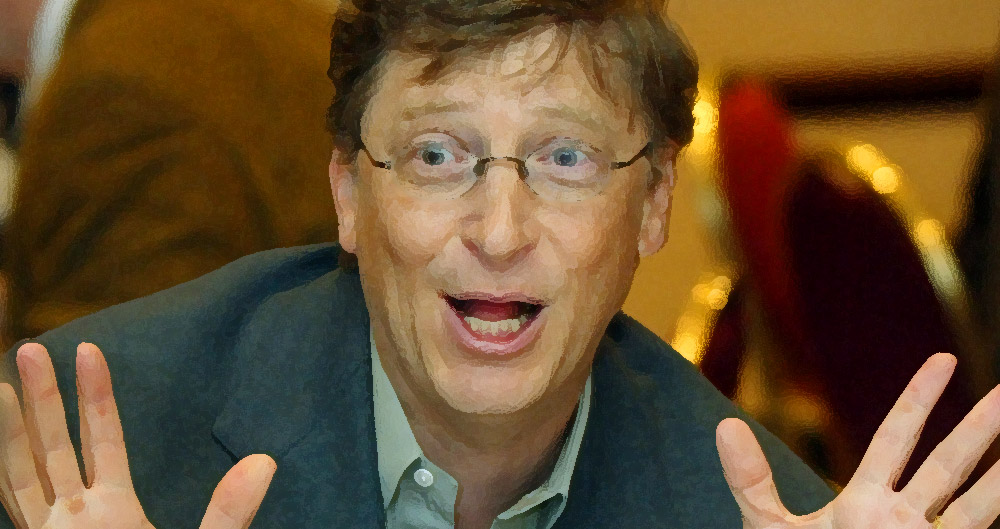
“I need to pay higher taxes,” Bill Gates told CNN’s Fareed Zakaria on Sunday.

He was making a case against Republican tax cuts, but his actual argument? Insignificant. It’s just another unlearned, narrow-​perspective “growing inequality” farrago. But his conclusion intrigues … as a man-​bites-​dog story, because people have this goofy idea that rich people are somehow against government and for reduced taxes. 

They aren’t. Not even most of the richest.

“I’ve paid more taxes, over $10 billion, than anyone else,” says the man worth $90 billion, “but the government should require the people in my position to pay significantly higher taxes.”

Why? To spend his money better than he could? 

Were all the wealth of America’s billionaires confiscated whole and that sum would actually pay off the federal debt (which I doubt), what do you think Washington politicians would do? Go on the straight and narrow and never over-​spend again?

No. Politicians would take the new influx of funds as a signal to go on an even bigger spending binge.

But what about his mere income tax increase notion? What then? As sure as the Blue Screen of Death it would be applied down to millionaires, too. And then rates for less-​than-​millionaires would likely go up. We have a history with this. And what would that do?

It would hit up-​and-​coming entrepreneurs the hardest. It would nip Bill Gates’s company’s competition in the bud. 

But surely Gates wouldn’t be mercenary in his theatrical play for media adoration, would he? 

Not Saint Bill!

This is Common Sense. I’m Paul Jacob.


PDF for printing


Categories
Accountability crime and punishment general freedom government transparency ideological culture moral hazard national politics & policies Regulating Protest tax policy too much government

Still at Large

Blogger Paul Caron, dean of Pepperdine Law School, still counts the days since we learned that the IRS was blocking applications for nonprofit status from right-​leaning groups at the behest of former IRS honcho Lois Lerner.

Now years later, the agency can still arbitrarily victimize any one of us. Nor have Lerner and other bad guys been brought to justice. Lerner collects a six-​figure pension, instead.

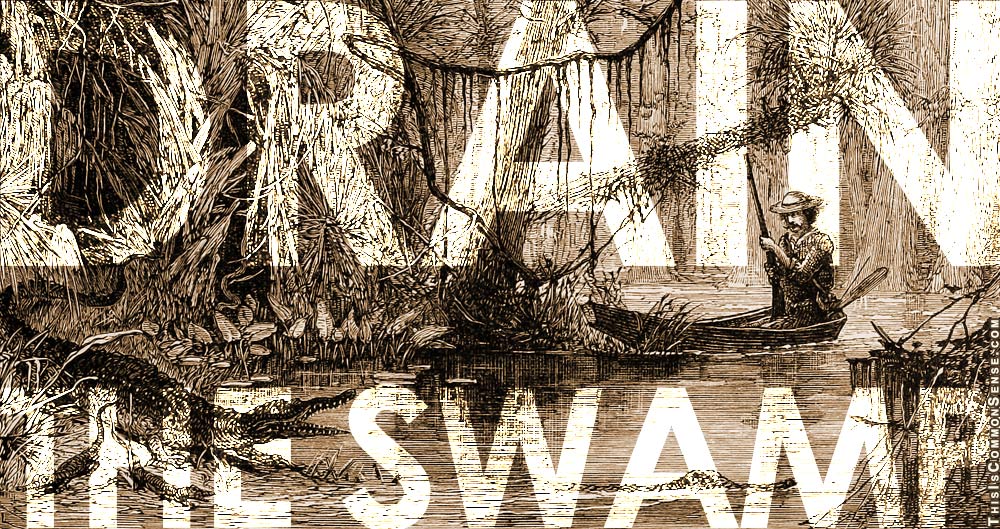
And so, on Day 1699, Caron highlighted Kimberly Strassel’s proposal that President Trump make 2018 “the year of civil-​service reform — a root-​and-​branch overhaul of the government itself. Call it Operation Drain the Swamp.” Exhibit A? The IRS and civil “servants” like “Lois Lerner, the IRS official who used her powers to silence conservative nonprofits.” 

And on Day 1709, Caron called our attention to Lerner’s attempt to suppress a deposition she gave in June “for a civil suit that victims [of IRS targeting] brought in 2013.” Lerner thinks we have no right to know why she felt justified in discriminating against applicants for tax-​exempt status based on their political viewpoint.

Unfortunately, not everyone cares about justice as much as Caron. 

Consider an obtuse Washington Post editorial pretending that the IRS didn’t really target conservative groups. Instead, “conservative groups, their allies in Congress and the IRS itself all bear responsibility” for the appearance otherwise.

And the aftermath.

Uh huh. If only victims of the abuse of power would stop being so indelicate as to object! 

This is Common Sense. I’m Paul Jacob.


PDF for printing


Categories
Accountability general freedom initiative, referendum, and recall local leaders political challengers Regulating Protest too much government

Know Your BS

“Help me get my B.S. in the voters pamphlet,” read the subject-​line of Tim Eyman’s email

Eyman is a practitioner of the art of the voter initiative, foremost in his state, Washington, and one of the most effective nationwide.*

This particular call to action concerns the voter pamphlet statements about a tax increase placed on Washington State’s November ballot by the mayor and city council in Tim’s hometown of Mukilteo.

“In the pro statement,” Eyman explained, “they wrote that the need for the tax increase was ‘indisputable.’” Which his rebuttal countered with: “Politicians always say the need for higher taxes is ‘indisputable.’ We call B.S. on that.”

It is rather to the point.

But soon he received word from the city that, “The Auditor feels the language is inappropriate and would like you to choose different wording.” Rather than “We call B.S. on that,” it was suggested that he might use: “We call foul.”

Eyman objected. He pointed out that B.S. is used ubiquitously; he sent the city examples.

“I called the ACLU,” his email noted, and “they thought it was B.S. for the government to say you can’t say B.S.”

Eyman’s own attorney, Stephen Pidgeon, sent the city a detailed letter pointing out that this is exactly the speech protected under the First Amendment.**

The City of Mukilteo has yet to announce a final decision. Tim Eyman invites all of us to send an email to encourage the city to Let Eyman Keep his B.S. in the Voters Pamphlet.

This is Common Sense. I’m Paul Jacob.


* He was once even dubbed “America’s No. 1 freedom fighter” — by me.

** Pidgeon also offered, “While the pious may construe the inference of these two alphabetic avatars as meaning something crude, my client may very well have been referencing an ancient Latin phrase ‘Bubulum Stercus’ which no average voter would ever find inappropriate.”


PDF for printing


Categories
crime and punishment free trade & free markets general freedom moral hazard nannyism too much government

Sin, Soda and Say

Government policy in Seattle, Washington, is being driven by an outright socialist on the city council. The mayor, apparently starving for attention, proposed a goofy new sin tax last year. 

Now, writes Reason’s Baylen Linnekin, “Seattle lawmakers are expected to vote early next week on a citywide soda tax that would add more than $2.50 to the cost of a twelve-​pack of soda.” 

The tax’s proponents’ rationale is too familiar: sugary sodas are bad for us, so we must be discouraged from drinking them. 

Besides, politicians want to spend our money. 

The problem, of course, is that the more successful they are at the first task, discouraging the ‘sin’ itself, the less revenue for them to throw at voters to prove their ‘caring’ nature … and buy votes.

But it is not as if those are the only competing factors involved. “The tax would undoubtedly drive consumers,” writes Linnekin, “to buy more groceries in the city’s suburbs.” Bellevue and Kirkland are nice towns. And nearby.

Arguing for a tax like this — as a social engineering mechanism — is not only crude, but flies in the face of the very best wisdom, that of Jean-​Baptiste Say:

A tax can never be favorable to the public welfare, except by the good use that is made of its proceeds.

But elitist nannyism corrupts politicians, who make it their job to steer our consumption.* And they tend to be resistant to the “best scheme of finance,” which is, as J.-B. Say put it, “to spend as little as possible; and the best tax is always the lightest.”

If the tax goes in, Seattleites, drive to out-​of-​town Costco or Walmart. 

Then drive your greedy nannies out of office.

This is Common Sense. I’m Paul Jacob.


* Considering the mayor’s push to include diet sodas in the sin tax, how competent at this are they? It’s the sugary drinks that are known killers, but the diet drinks are mainly imbibed by wealthier folks. The mayor wants to appease the socialist on the council, and pointedly not favor the “privileged.”


Printable PDF