
Categories
Common Sense folly general freedom ideological culture national politics & policies political challengers tax policy too much government

Weekend with Bernie: Fairy-Tale “Free”

Bernie Sanders is many a progressive’s fairy-tale candidate.

Well, yeah.

Not “once upon a time,” but today . . .  the federal government’s public debt is in the double-digit trillions. The total debt — consisting also of unfunded/underfunded welfare state “promises” — may be in the triple digits. Still, politicians pat themselves on their backs when they deliver annual deficits under half a trillion per year.

Meanwhile, Senator Sanders, former member of America’s Socialist Party and current caucuser with the Democrats, is running on the “freebie” platform: let’s spend more!

He serves as the pusher of a very old folly: thinking that good things come to us without cost.

But the costs have to be paid.

And will be.

That’s the essence of common-sense wisdom since ancient times. Usually I conjure up an accountant or an economist to explain this, but why not go back to folklore? Folk and fairy tales, along with myths both ancient and modern (remember Tolkien’s Lord of the Rings?), tell us that magic powers come at a price.

And those costs can be killer.

Far-left-of-center magic pretends that not only can Bernie provide “free” stuff for everyone (including those of us in his “hard-working middle class”), but also that the wherewithal for these goodies (college, medicine, food, shelter, meaningful work) can easily come from . . . three pot-of-gold sources: “the rich,” “print more money,” and that least plausible sprinkle of fairy dust, “government efficiency.”

We tell children fairy tales not to make them wish for magic solutions, but to illuminate the logic of responsibility.

Bernie didn’t get that lesson.

This is Common Sense. I’m Paul Jacob.


Printable PDF

Bernie Sanders, Free, Fairy Tale, promises, collage, photomontage, James Gill, Paul Jacob, Common Sense, illustration


Categories
Common Sense general freedom ideological culture moral hazard national politics & policies tax policy too much government

Weekend with Bernie: Hard Looker?

What is a “democratic socialist”?

According to leading presidential candidate and Senator Bernie Sanders, such a socialist “takes a hard look at countries around the world who [sic] have successful records fighting and implementing programs for the middle class and working families.”

I don’t believe him. He shows his cavalier attitude in his next few words: “When you do that you automatically go to countries like Denmark, Finland, Norway, Sweden . . .”

Competent comparative economics doesn’t simply focus on a few policies one happens to admire and then trumpet them for America. Other countries following Bernie-branded socialist policies are in or headed into the proverbial toilet, i.e. PIGS (Portugal, Italy, Greece and Spain).

The common-on-the-left meme runs like this: “No Other Advanced Country,” which Kevin D. Williamson handily demolishes in a recent article:

If we are to go around the world cherry-picking policies from happy countries, we might pass over French paid-leave laws in favor of the Swiss capital-gains tax (generally 0.00 percent) or the Swiss national minimum wage (there isn’t one), or Finland’s very liberal (in the good sense of that word) education system, or Sweden’s free-trade regime and its financial-regulatory system. We’d have to make radical improvements on our federal balance sheet to get our public debt down to Norwegian levels.

American success has never really been about copycatting Europe. We need to look hard at those who pretend otherwise — like nova Bernie, the rising star of the left, who’s now besting Hillary in polls in New Hampshire and Iowa.

And about “democratic socialism” — extreme redistributionism in a putative republic — Bernie needs to look hard at the worldwide experience . . . not hardly look.

This is Common Sense. I’m Paul Jacob.

Printable PDF

Weekend with Bernie Sanders


Categories
Common Sense general freedom ideological culture national politics & policies

Weekend with Bernie: Leftist Demagogue

Bernie Sanders, Hillary Clinton’s main opponent on the Democratic side of Campaign 2016, is a demagogue.

My Democratic friends balk at this, contending the term better applies to Donald Trump. But, no matter how different these men may be, their differences don’t mean that only one of them can be a demagogue.

Perhaps demagogues of very different stripes.

First, definitions.

A demagogue (from French “demagogue,” derived from the Greek “demos,” for “people”) is, my dictionary says, a political leader in a democracy who appeals to the emotions, fears, prejudices, and ignorance of the lower socioeconomic classes in order to gain power.

The charge makes sense because Sen. Sanders has made wealth and income inequality his main issue, and because he relentlessly attacks higher-income Americans as a source of America’s current woes — whose wealth Sanders targets as the cure (provided it goes through his hands, first).

True, he appeals mostly to college-educated middle-class folks and bohos. But he uses the code-phrase “everyday working Americans” as a wedge, and the poor as an innocent shield, to advance what are, in fact, elitist solutions.

Like most self-professed socialists the Senator is only faux-prole, workingman manqué. Intellectuals, collegians and government workers have long dominated the socialist movement.

Socialist Demagogue defined: Emotion, Fear, Prejudice and Ignorance - Bernie Sanders

Though Sanders rightly attacks the plutocracy, he never attacks the government half of the plutocrats’ power structure. Never admits that unions are plutocratic in nature, too.

Instead, he appeals to the emotions, fears, prejudice and ignorance of those who, against all evidence, see more government only as a solution and never as a problem.

Par for the socialist course. That, remember, is a word Sanders chose.

For its historic demagogic appeal.

This is Common Sense. I’m Paul Jacob.

Printable PDF

Weekend with Bernie Sanders


Categories
Common Sense general freedom ideological culture media and media people national politics & policies Popular

Are Democrats Socialists?

Does it matter that the chair of the Democratic National Committee doesn’t know if her party is socialist?

MSNBC’s Chris Matthews was grilling Debbie Wasserman-Schultz on the meaning of Sen. Bernie Sanders’s popularity within the Democratic Party. Mrs. Wasserman-Schultz responded by boasting that the Democrats “really are a Big Tent Party.” Then Matthews veered out her comfort zone of horse-race politics and self-congratulatory posturing.

“What is the difference between a Democrat and a Socialist?” he asked.

Mrs. W-S chuckled. Uncomfortably.

“I used to think there was a big difference,” Matthews went on. “What do you think it is?” Mrs. W-S evaded, blathering on how it is that the difference between Democrats and Republicans is what will really count in the upcoming election.

Karl Dickey, at the Examiner, holds that Democrats, today, are socialists: “one only needs to look at the Democratic Party’s platform to understand that it is a socialistic political party.”

Meanwhile, Juan Williams, discussing the issue on Fox News’s The Five, argues that there is a big difference between Democrats and socialists: Dems just like regulation and redistributing wealth; socialists want to nationalize industry and run everything through a central bureau.

And that is the definition that anti-socialist economists Yves Guyot and Ludwig von Mises settled on. Technically, Williams is right.

But the fact that the head of the Democratic Party waffled on the distinction says more about the party than a definitive answer would have.

This is Common Sense. I’m Paul Jacob.


Printable PDF

Deer in the Headlights


Categories
folly

Shocking Consequences

Five years into (the latest phase of) the Greek debt crisis, a former bureaucrat who was unable to withdraw her money from an ATM when the government declared a bank holiday had this to say: “How can something like this happen without prior warning?”

It’s always a surprise — to some people — when blatant causes lead to blatant effects.

In the case of Greece, or any socialistic welfare state, it’s a surprise when the money finally runs out. So accustomed to binge behavior, enthusiasts for “what’s thine’s mine” and “spend now/pay later” politics are nonplused when there’s nobody left to temporarily rescue them from the worst wealth-destroying effects of all the productivity-destroying causes.

The woman’s question has a short-term answer and a long-term answer.

The first is: what did you expect? The point of suspending access to bank accounts without warning is to stop holders draining banks of the last of the euro cash, supply of which the Greek government cannot expand unilaterally. Warning would have made the suspension pointless.

The second answer is: what did you expect? That is, haven’t you been paying attention for the last several decades?

By the time you read these words, Greece and the European governments may have come up with another patchwork deal for a loan with another series of deadlines. Or maybe Greece will have left the EU or at least the euro and returned to a (now massively inflated) drachma. Greek account-holders may or may not get another rickety, temporary reprieve.

But what can’t go on forever, won’t.

So it won’t.

Count on it, ma’am.

This is Common Sense. I’m Paul Jacob.


Printable PDF

Greece Surprised!


Categories
folly property rights too much government

Rare Earth Reserve

There are many places on this planet I would hardly dare visit, much less seek to live near.

One of those places is remote Baotou, in Inner Mongolia, a boom region where much of our planet’s rare earth industry is located.

It becomes obvious as you read Tim Maughan’s BBC report on the region, “The dystopian lake filled by the world’s tech lust,” that the reason China now “monopolizes” this industry is that un-democratic, illiberal China does not have a Not-In-My-Back-Yard “problem.”

NIMBY is for freer societies.

The devastation to the landscape, Maughan writes, is astounding in scope and horror. “Dozens of pipes line the shore, churning out a torrent of thick, black, chemical waste from the refineries that surround the lake,” he explains. “The smell of sulfur and the roar of the pipes invades my senses. It feels like hell on Earth.”

But NIMBYnomics aside, Maughan’s parting shot is interesting. “[O]nce we made watches with minerals mined from the Earth and treated them like precious heirlooms; now we use even rarer minerals and we’ll want to update them yearly. Technology companies continually urge us to upgrade; to buy the newest tablet or phone. But I cannot forget that it all begins in a place like Bautou, and a terrible toxic lake that stretches to the horizon.”

I hazard that Apple and its competitors will discover ways around rare earth reliance, in the future — if consumers raise a stink.

It is amazing how responsive free markets can be.

And as for outrageous pollution? Socialist command economies were notorious for their horrifying pollution standards back in the day. Corporatist, one-party (fascist) China carries on that tradition.

The cure for pollution is obvious.

This is Common Sense. I’m Paul Jacob.


Printable PDF

NIMBY


Categories
links too much government

Townhall: Want Milk?

This weekend’s contribution to Townhall.com by Yours Truly concerns another one of those automated congressional time bombs. You know, like the “fiscal cliff” but less cliffy and more bomby. Head on over, and then back here, for a few links:

  • Thomas Jefferson’s pithy contribution to the socialist calculation debate, here.
  • The Washington Post’s “dairy cliff” article, here.
  • What Jia Lynn Yang said, here.


Categories
too much government

Don’t French-Fry Les Riches

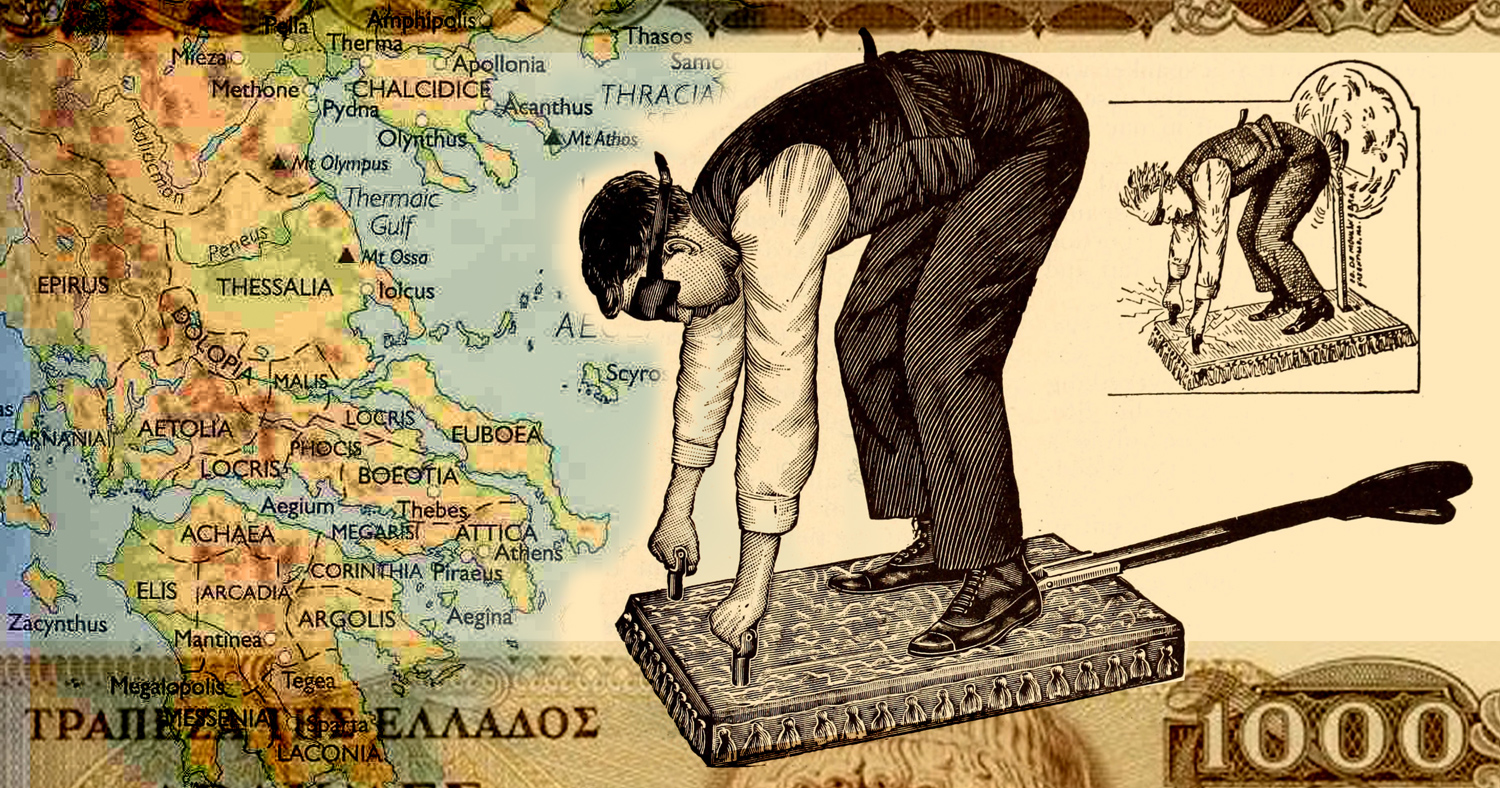
French voters were in a mood to eject the incumbent, often a good idea. But, alas, the president they picked to replace Nicolas Sarkozy is an ardent socialist. And socialism, sanctified or not by centuries-old fealty to notions of French Revolutionary egalité, is always a très mauvaise idée.

President François Hollande has vowed to impose a 75 percent tax on all income over a million euros, or about 1.25 million dollars. Such a steep levy is supposed to be moral because making lots of money is per se morally suspect — at least according to the egalitarianism in which Hollande is steeped.

The tax gouge is also supposed to be practical in that it will supposedly help cure France’s debt crisis. Sure, looting les riches will cover but a smidgen of France’s debt pileup. But because even not-rich Frenchmen are also likely to pay higher taxes to appease the EU, it’s best to pave the way by first flogging the envious not-rich man’s favorite target.

Meanwhile, more sensible measures — like freeing up the French economy and slashing the government’s social welfare programs — don’t seem to rank very high on Hollande’s to-do list.

In response to the danger, many of the wealthiest and most productive Frenchmen are doing the only moral and practical thing. They’re packing their bags, just in case their new leader fulfills his vow. If so, they’ll flee to lower-taxing places like Belgium and Switzerland, where jobseekers will be delighted to have them.

This is Common Sense. I’m Paul Jacob.
Categories
tax policy

French Rolls

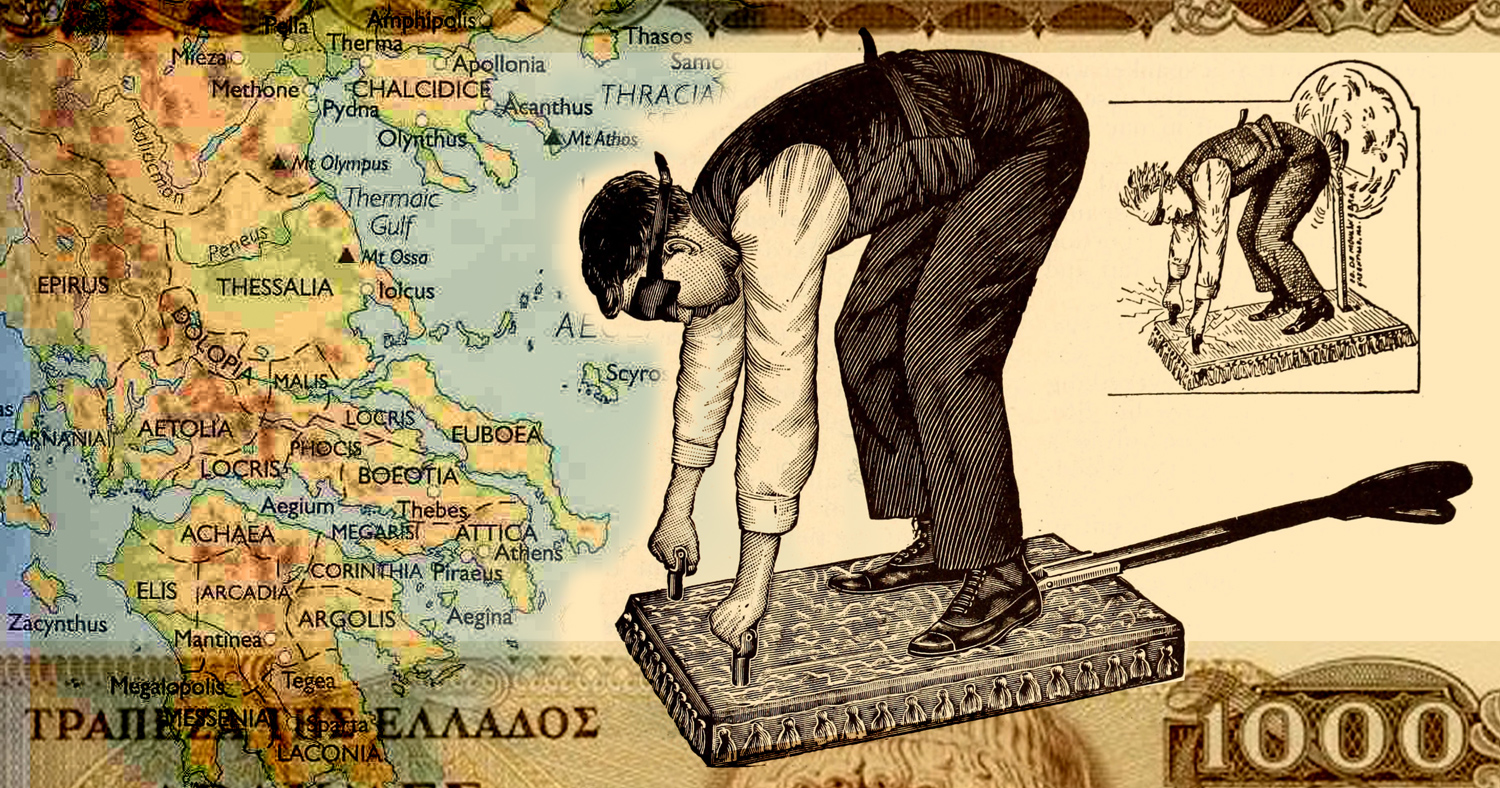
Jim Dixon, Kingsley Amis’s infamous Lucky Jim, put the logic of wealth redistribution in everyday terms: “If one man’s got ten buns and another’s got two, and a bun has got to be given up by one of them, then surely you take it from the man with ten buns.” Remarkably simple, leaving out, as it does,

  1. the making of buns;
  2. the effect of expropriating buns now on future bun production;
  3. trade in buns and
  4. consequent changes in ratios of bun ownership, sans expropriation;
  5. what effect the nabbing of buns has on the demand to take more buns in the future; and
  6. the necessity of taking buns in the first place (which Lucky Jim’s interlocutors noted).

Think about it longer than a minute, and it’s easy to see that the “soak-the-rich” plan quickly runs into trouble, one bit of difficulty neatly stated in the old adage often attributed to Margaret Thatcher: “The problem with socialism is that eventually you run out of other people’s money.”

Sometimes you even run out of other people. As France may show next.

Socialists there have won the recent elections. They promise to reinstate the old, ugly wealth tax, as well as up the income tax on “the rich.” And so of course some of the richer French folks contemplate exile — at least as far as the welcoming cantons of Switzerland.

There are problems with this option, though. Under Sarkozy, the French government had instituted a whopping exit tax. But, if Mathieu van Berchem is to be believed, even this will prove “unlikely to stop any ‘exodus.’ There are often more reasons to leave than to stay, while the Socialist government could turn on the wealthy even more.”

If so, expect future French buns to have Swiss crosses stamped upon them.

This is Common Sense. I’m Paul Jacob.
Categories
links

Townhall: Socialism by the Dose

Today at Townhall.com, an analysis of Jon Stewart’s defense of his “socialism.”

Links that may interest you, where all “big questions” get addressed. Well, a few big questions, anyway: