Categories
Accountability folly free trade & free markets general freedom ideological culture moral hazard nannyism national politics & policies property rights responsibility too much government

Fatherland, Socialism and Death!

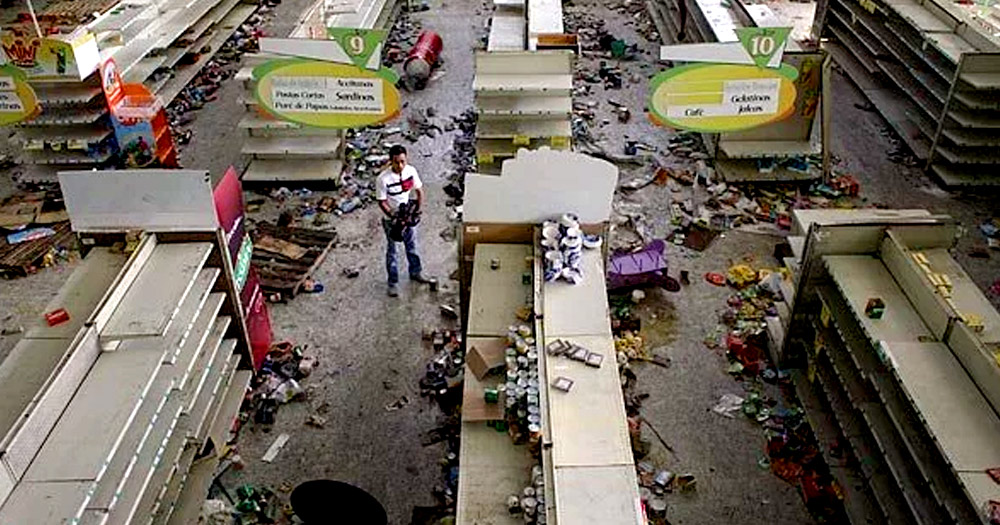
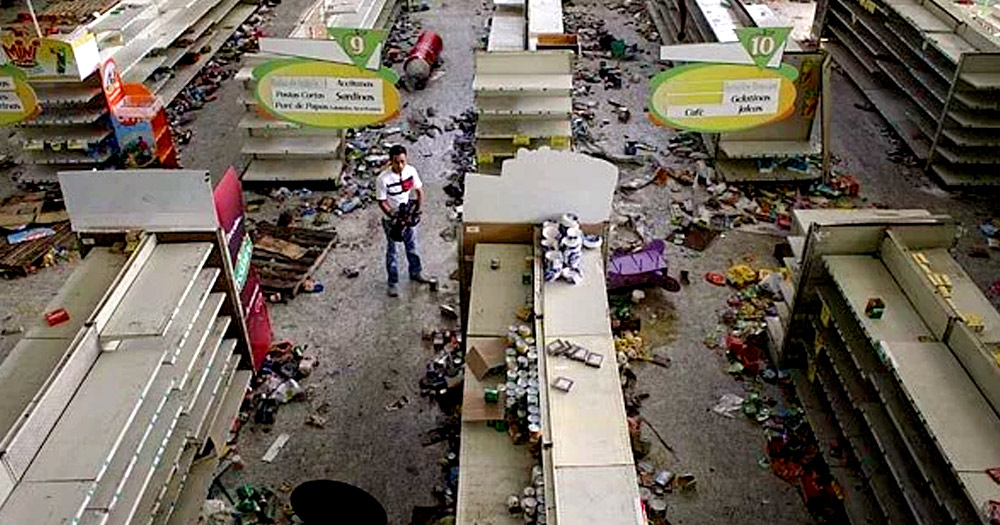
The fall of Venezuela is an atrocity.

The comic elements are clear enough — the further you remove yourself from the poverty, chaos, and collapse. We can wallow in a bit of Schadenfreude, taking glee as some American leftists squirm to explain why the socialist paradise they ballyhooed a mere three years ago now tail-spins to the grave.

The collapse of this socialist experiment offers an enormous level of tragedy. It’s not pretty.

The country’s leader, President Nicolas Maduro, makes his predictable desperation play. Rather than confront his own errors, and the futility of making socialism work in anything like a rigorous form, he boasts. “Venezuela Leader Says US ‘Dreams’ Of Dividing Loyal Military,” reads yesterday’s Reuters report. While no doubt true, this is one of those cases where whatever we dream to the north, our dreams are better than their current reality.

Of course the Venezuelan military should turn on Maduro, Hugo Chavez’s inheritor, protecting the right of recall, which Maduro is denying. By painting the U. S. as the bad guy, Maduro hopes to unite his people — especially his armed forces — around him. That’s what a desperate demagogic dynast does. Citizens and subjects traditionally abandon skepticism about their leaders when they feel threatened from the outside.

Which is one reason it would be a mistake for the U. S. to intervene.

Reuters poetically reports that the military is still united behind the socialist government, and resists the recall referendum, singing “Fatherland, Socialism, or Death!”

Wrong conjunction. Not “or” but “and” . . . if you insist on socialism.

The government, military pressure or no, should allow the recall vote, and soon.

This is Common Sense. I’m Paul Jacob.

Printable PDF

Venezuela, store, socialism, column


Categories
general freedom individual achievement responsibility tax policy

Plotting Progress

The prestige of the Nobel Peace Prize has been tarnished by some more-than-dubious awards, in our time . . . Henry Kissinger and Barack Obama, most obviously.

Same goes for the Bank of Sweden’s knock-off “Memorial” prize for economics.

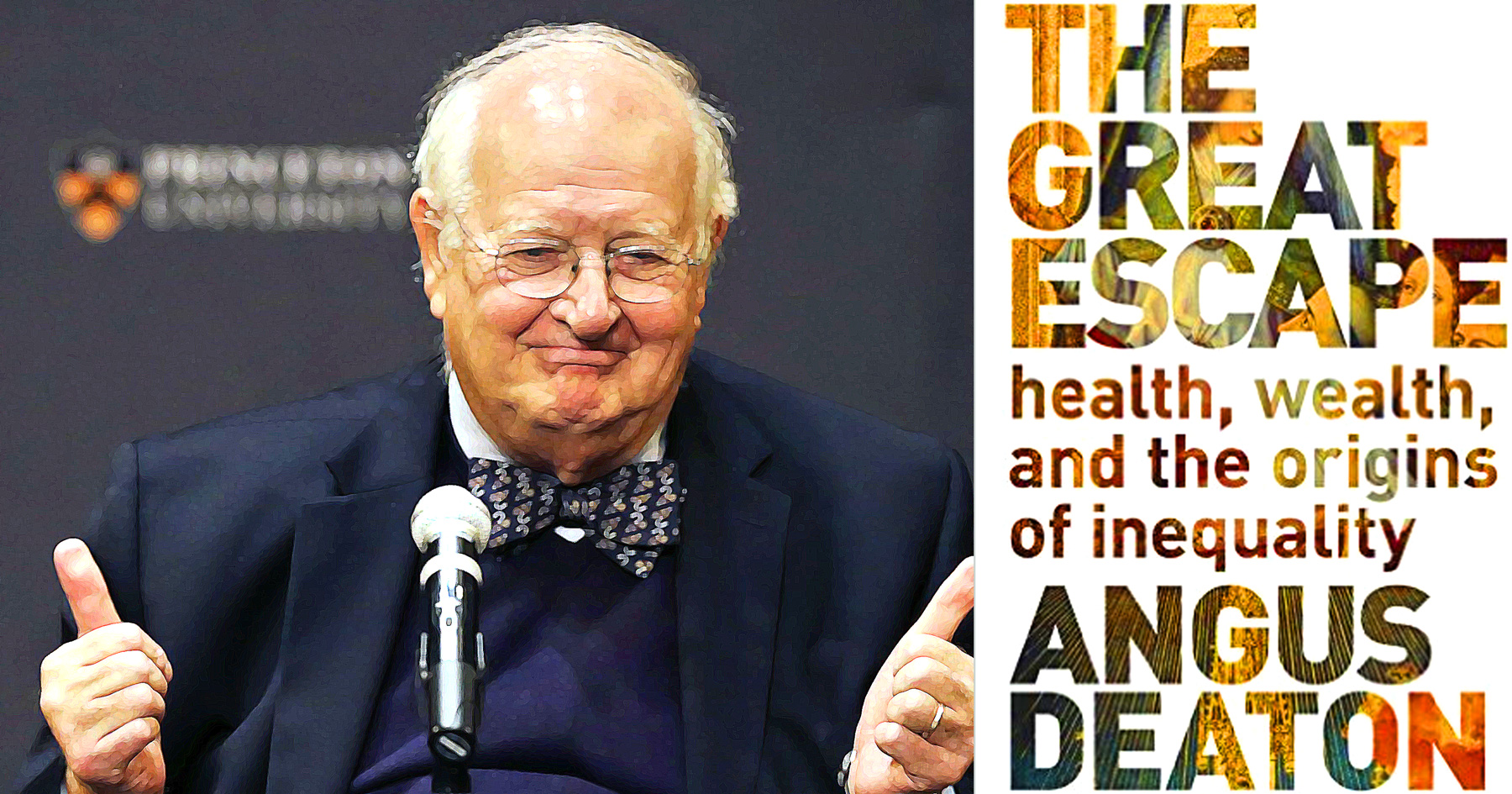
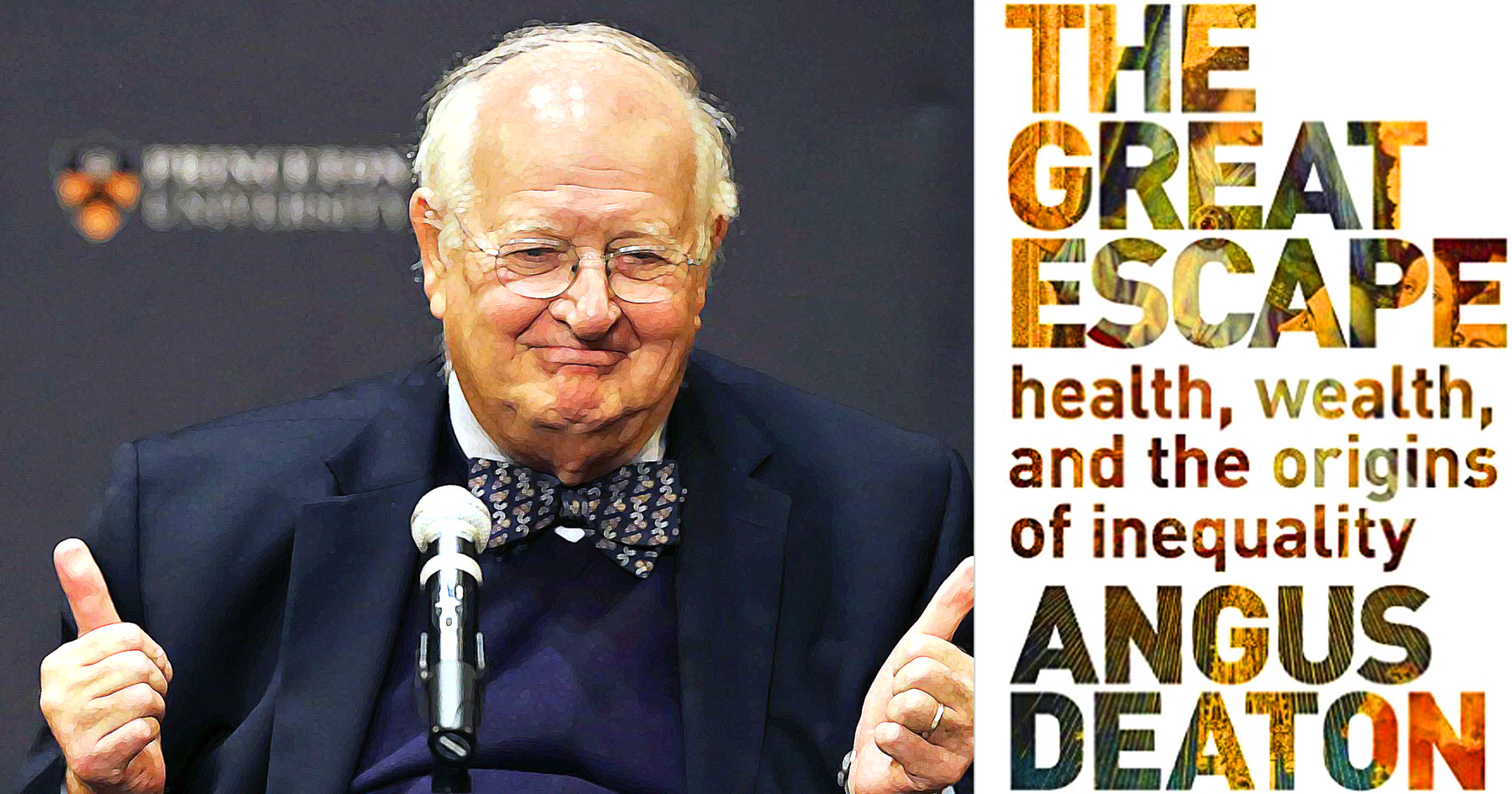
But, according to David R. Henderson, this week’s Nobel nod to Scottish-born Angus Deaton, for his “analysis of consumption, poverty and welfare,” is “a fine pick.”

Deaton is, writes Henderson, “an important chronicler of the market’s abilities to create wealth and improve society.”

While it is all the rage, these days, to complain about increasing inequality, Deaton has been instrumental in showing that wealth, health and welfare have increased as poverty, worldwide, has decreased.

And this has been largely the result of markets. Not big government programs.

Deaton, Henderson tells us, “believes that the approximately $5 trillion given by governments of rich countries to poor countries over the past 50 years has undercut good governance by making poor countries’ leaders less accountable to their own citizens.”

ABC News seconds Henderson’s account:

In his 2013 book, The Great Escape, Deaton expressed skepticism about the effectiveness of international aid programs in addressing poverty. . . . China and India have lifted tens of millions of people out of poverty despite receiving relatively little aid money. Yet at the same time, poverty has remained entrenched in many African countries that have received substantial sums.

Peter G. Klein, at mises.org, identifies a deeper insight by the latest Nobel economist: “aggregate measures of consumption and inequality conceal important differences among individuals.” This explains why Deaton came to his other (controversial) conclusions: he never took his eye off the real player in market life, the individual.

This is Common Sense. I’m Paul Jacob.

Printable PDF

Angus Deaton, Nobel Prize, Economics, The Great Escape, Inequality, collage, photomontage, JGill, Paul Jacob, Common Sense


Categories
free trade & free markets general freedom too much government

The Two Americas

Dear Reader: This “BEST of Common Sense” comment originally aired on July 4, 2007. A longer version published at Townhall.com was picked up by Rush Limbaugh and read on his radio show. —PJ

Could Democratic presidential candidate John Edwards actually be right about something? Not where to go to get a haircut, mind you, I mean about there being two Americas.

There is the vibrant America . . . and the stagnant one.

There is the America of ever-increasing wealth, innovation, creativity, new products and services. Choices galore.

And there is the politician’s America: The regulated America, the subsidized America, the earmarked America. The failing America.

In one America, it is what you produce that gets you ahead. In the other, it’s who you know.

In one America, to earmark some money means setting aside funds (into savings) for a purchase — a car, house, college.

In the other America, to earmark is to grab from taxpayers to give to cronies. It is the highest rite of career politicians: Buying their votes with other people’s money. Oh, there have been reforms, sure. But a recent bill in the House had 32,000 earmark requests.

In one America, we decide what we pay for. We choose constantly about little things and big. We call the shots. Or we walk down the street and associate with someone else. So we have some faith in those we work with.

In the other America, we vote. But we rarely get what we vote for.

Maybe that’s why the new Democratic Congress just registered the lowest approval rating in poll history.

It surely isn’t because folks love the Republicans.

This is Common Sense. I’m Paul Jacob.
Categories
tax policy too much government

Tax the Poor!

There is an argument for taxing the poor. Net beneficiaries of taxation can think about government in a different way than net payers. They might begin to think like children, not like adult supporters of a shared enterprise in defense of the basic institutional framework that in turn supports civilization.

If Americans still took seriously the old republican idea of “no taxation without representation,” some might scandalously invert the mantra as “no franchise without net tax payment,” thus excluding all net tax consumers (politicians, subsidized poor and subsidized business folk) from voting. But that does seem outrageous.

It’s also unworkable. At some point of complexity, calculating net winners and net losers becomes impossible.

Democrats have happily added to that complexity. One odd wrinkle? They’ve so indiscriminately increased the number of taxes in Obamacare (twenty-one!) that they have seemingly taken up the cause of taxing the poor. “Even the lowest income families (earning less than about $19,000 in 2012) will be on the hook,” writes Chris Connover in Forbes, “for nearly $7,000 in Obamacare taxes over the decade that started last year.”

Of course, the poor aren’t the only to pay more under Obamacare. Connover estimates that those in the “top 2 percent” will “end up paying $177,000 over the same decade.”

None of this suggests to me that the net effect of Obamacare will be positive. It’s basically just another hyper-intrusive, reality-distorting government program that will make services more expensive in toto, providing a huge drag on medicinal progress as well.

Impoverishing most of us, along with “the poor.”

This is Common Sense. I’m Paul Jacob.

Categories
general freedom too much government

I Gave at the IRS

A friend of mine shared something Desire Street Ministries had posted to Facebook:

We think sometimes that poverty is only being hungry, naked and homeless. The poverty of being unwanted, unloved and uncared for is the greatest poverty. We must start in our own homes to remedy this kind of poverty.

Mother Teresa said that. It’s not something you’re likely to hear from the “Occupy Wall Street” protestors. From what I’ve heard, they tend to say that people are in poverty because of big, greedy corporations . . . or government not taking care of them. Mother Teresa was closer to a better explanation. After all, those of us eating and sleeping well weren’t handed bread and a front door key by the government or a corporation.

A deeper poverty lurks behind persistent financial poverty. Sometimes the problem is neglect or abuse, drug addiction or alcoholism. Love can conquer all, but the Department of Social Services and the DEA don’t dispense love very effectively.

My Facebook friend commented, “Non-profits do so much better of a job of helping the poor than big government can/will do.”

Why is that? It isn’t because social workers don’t care. It’s that government bureaucracies are ill-equipped to address individual needs, which go far beyond a bowl of soup and a bed or even a monthly check.

More training, regulations and new laws are hardly the solution.

We are the solution. But we won’t be if we hand the task to government and declare “I gave at the IRS.”

This is Common Sense. I’m Paul Jacob.