Categories
First Amendment rights international affairs social media

Give Mr. Bean Another Hearing

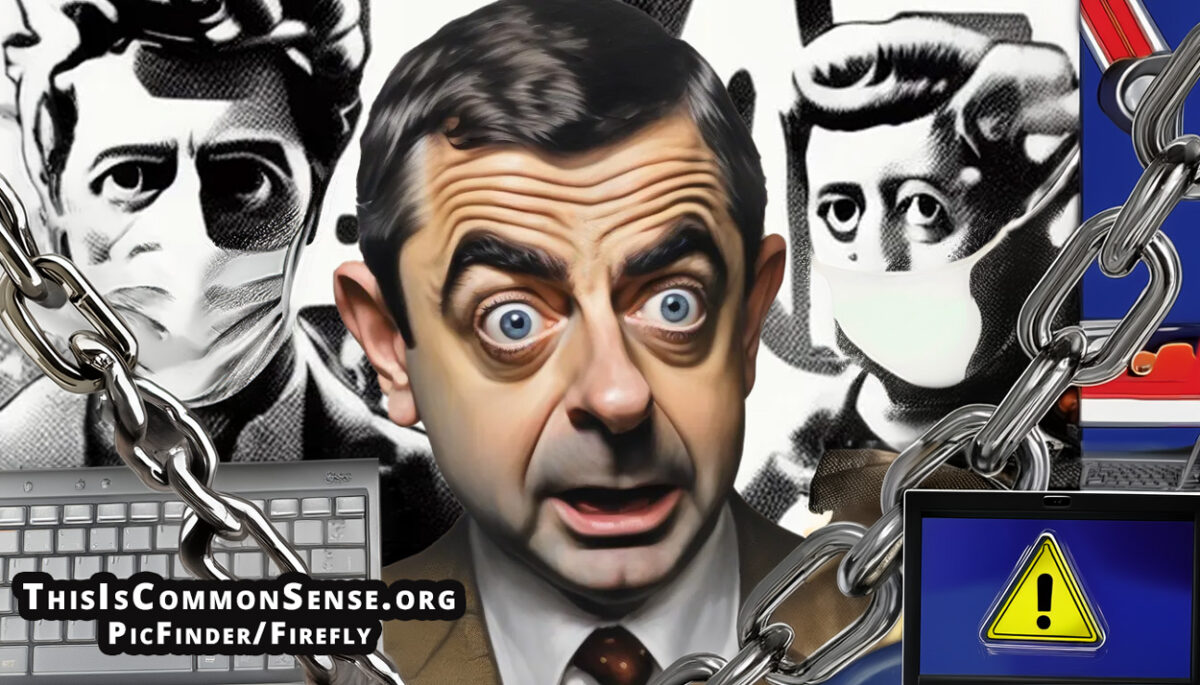
Twelve years ago, Rowan Atkinson of “Mr. Bean” fame took a stand against a law that criminalizes “insulting” speech. He was participating in a campaign to reform Section 5 of the Public Order Act of 1986.

In his remarks launching the campaign, recently resurrected on Twitter, Atkinson said that his concern was less for himself as a person with a high public profile than “for those more vulnerable because of their lower profile. Like the man arrested in Oxford for calling a police horse gay. Or the teenager arrested for calling the Church of Scientology a cult. Or the café owner arrested for displaying passages from the Bible on a TV screen.”

And what about the thousands of cases that “weren’t quite ludicrous enough to attract media attention? Even for those actions that were withdrawn, people were arrested, questioned, taken to court and then released. . . . That is censoriousness of the most intimidating kind. . . .”

And he said more than this. Luckily it’s recorded.

This effectively delivered argument, forceful and often funny, by a well-known personality, had its effect. The Reform Section 5 campaign succeeded. The law was amended.

But the victory, though important, was narrow. And, since that win, sweeping assaults on speech that offends somebody or other continue in Britain, the United States, and other Western countries where people should know better than to emulate the censorship of authoritarian governments to which we aspire to provide an alternative. We’re going to need a lot more funny speeches.

Because this threat to freedom is so serious.

This is Common Sense. I’m Paul Jacob.


PDF for printing

Illustration created with PicFinder and Firefly

See all recent commentary
(simplified and organized)
See recent popular posts
Categories
ideological culture

Upside Down and Inside Out

A YouGov poll of British voters asking who should lead Parliament, conducted a week after Britain’s European Union Parliamentary elections and in advance of Prime Minister Theresa May’s June 7 departure as Tory leader, provides some shocks.

In the poll, Labour and Conservatives trail behind the Liberal Democrats* and something called The Brexit Party. This is, says YouGov’s director of political research for Great Britain, the first time that two “third parties” have polled ahead of both Labour and the Tories.

“The Liberal Democrats held the support of 24 percent of voters, while the Labour and Conservative parties were tied at 19 percent each,” The Hill summarizes. “The far-right Brexit Party came in second place, with 22 percent of voters’ support.”

In the U.K.’s European elections of the week before, the Brexit Party came out in the lead.

This is the (British) world turned upside down.

What it means for Americans is unclear, but what it means for one American news outlet apparently is crystal: the single-issue Brexit Party is “far right.”

Really? 

While the traditionally left Labour and traditionally right Tory voters are split on Brexit, The Hill sees this as somehow a left/right issue. Not obvious.

Nevertheless, The Hill insists on having its American readers see the situation in a way designed to favor one position. Because “far right” is bad, and “far left” is never used** even to label Labour’s egregious, Castro/Chavez-loving, Cuba-Venezelua-apologetic leader Jeremy Corbyn.

With cues like that, insiders keep outsiders out

And perhaps that’s the way to think about Brexit: as literally a matter of Insider/Outsider, with the outsiders still wanting out.

This is Common Sense. I’m Paul Jacob.


* The year was 1922 when last a Prime Minister was not a Tory or Labour.

** I did not see it in my Google search of The Hill, anyway!

PDF for printing

Brexit, Great Britain, labour, right wing, left wing, ideology,

See all recent commentary
(simplified and organized)
See recent popular posts
Categories
crime and punishment general freedom media and media people moral hazard

Porn, Video Games and British Crime

British freedom is eroding. The attack comes from two directions.

First, there is the over-bearing police-state style, surveillance-everywhere government.

Second, there is the increasing violence.

Thing is, the justification for Britain’s mass surveillance, as well as for strict gun controls, was to prevent crime.

Oops.

So of course the Labour Party “shadow home secretary” Diane Abbott points an accusatory finger at porn and video games. These two influences may be “desensitising young people to vicious behaviour.”

Well, porn and video games are changing our cultures, on both sides of the pond. But in America, at least, the crime rate for the past two decades plumetted while video games and Internet porn have become ubiquitous, explicit and . . . admittedly, appalling.

Look elsewhere for the crime uptick.

The Brexit fiasco, with the Tory government messing up implementation of the 2016 referendum results, has surely increased, not decreased, tensions all around, as has immigration policy, the collapsing National Health system, and much more. But worst of all? The nanny state, treating citizens as childish subjects. The police arrest people for nothing more than saying mean or just edgy things online. 

If people cannot be free legally, they will take license — illegally. 

Previously, we heard about a rash of acid attacks: acid thrown in the faces of pedestrians. More recently, the headlines are about stabbings — after years of knife control, of government crackdowns on even kitchen knives.

Ms. Abbott places the primary blame for rising crime not on the above, however, but on poverty and malfunctioning education. Not mentioned? The possibility that taking away British citizens’ rights of self-defense may have the perverse (unintended?) consequence of increasing offensive violence.

This is Common Sense. I’m Paul Jacob.


PDF for printing

Great Britain, British, England, knives, violence, freedom, surveillance,

See all recent commentary
(simplified and organized)
See recent popular posts

Categories
Accountability crime and punishment folly general freedom media and media people moral hazard nannyism responsibility too much government

Another Push for Censorship

It’s almost as if politicians are hell-bent on expanding government at the expense of our freedoms . . . and grandstanding to ‘look like they are doing something.’

The two proclivities are not unrelated.

Take Theresa May, Great Britain’s Tory Prime Minister. After yet another terrorist attack in her country, this time on the London Bridge, she re-iterated her party’s intent to censor the Internet.

“We cannot allow this ideology the safe space it needs to breed,” May said on Sunday. But this “safe space,” she went on, “is precisely what the Internet, and the big companies that provide Internet-based services, provide.”

Now, blaming ISPs and social platforms is a crude form of business scapegoating—something I would expect from her opponent in the upcoming elections, Jeremy Corbyn, the much-loathed (but inching ahead in the polls) top banana of Labour.

As a conservative, May should understand markets and the limitations of government interventionism a bit better than a nearcommunist. She might recall that previous attempts to regulate the means of communication almost never to work, and, in those few cases when they do, never stay scaled to the original target issue.

They expand. To cover more than just terrorism, as in this case.

What’s more, Jim Killock of the Open Rights Group makes the case that such a move would likely “push these vile networks into even darker corners of the web, where they will be even harder to observe” — scuttling the alleged purpose of the Conservative Party’s longed-for censorship.

May knows this. But she is a politician. She has power, and she wants to keep it.

It’s almost as if power corrupts or something.

This is Common Sense. I’m Paul Jacob.


Printable PDF


Categories
folly ideological culture media and media people

It’s a Disgrace

State-powered Puritanism is alive and well in the west. And freedom of speech is in its death throes.

Or so it seems in Great Britain. And the U.S. isn’t far behind, suggests Brendan O’Neill.

O’Neill, editor of the London-based Spike, recounts recent absurd assaults on freedom of speech, so frequent now in Britain as to be routine.

Consider the case of the malevolent hashtag. A hashtag is a label with a pound sign that Twitter-folk use to flag and meta-comment on their tweets. A soccer fan named Stephen Dodds thumbed the hashtag “#DISGRACE” to bemoan how Muslims attending a game were conspicuously praying during halftime. His tweet provoked an Internet uproar. Good. But Dodds was also reported to the police, who investigated his open hashtaggery for two weeks (!!).

And how about the case of the svelte-model-adorned subway ad that dares ask British ladies if they’re “beach-body-ready”? Uh oh. A direct psychic assault on those who will never be “beach-body-ready” in the super-model sense of the word. After feminists vandalized the ads, something called Advertising Standards Authority lurched to investigate — not the vandals, no: the blatantly anti-blobby sentiment.

Few opinions or postures fail to offend somebody.

What offends me is that we should ever be subject to arbitrary, government-backed assaults on our rights launched to satisfy persons especially thin-skinned and/or especially eager to stomp on the rights of others.

As with all fake rights, foisting a fake right to not-be-offended can only violate genuine rights. #DISGRACE.

This is Common Sense. I’m Paul Jacob.


Printable PDF

Crying Children


Categories
First Amendment rights

Will Brits Outlaw Speech?

Actually, the proposal is not to outlaw speech. Just some speech.

Which? “Extreme.”

That is, speech that conveys ideas too fundamentally orthogonal to authorized ideas, or that too brusquely nettles sanctioned sensibilities.

Who’s the censor? Some minor shire functionary? No, it is Theresa May, Home Secretary, who is proposing the “extremism disruption orders.”

Ms. May complains that at present, British officials “will only go after you if you are an extremist that directly supports violence.” (It’s not a bug, it’s a feature, Madam Home Secretary.) Under her plan, if you’re an “extremist” served with an EDO (Extremist Disruption Order), you must obtain an official go-ahead, in advance, for anything you wish to publish in any public forum.

Would pen names also be banned? Then what?

Even the most strenuous society-wide efforts to regulate speech don’t stop people from speaking. They still shop, give directions, exhort children, argue about soccer. The most severely repressive regimes permit plenty of public communication along approved channels on approved topics. People learn what not to say or think to skip a trip to the gulag for re-education. But the freedom to say anything you want if only the censors let you means that you have no government-respected right to say anything.

The British proposal may go nowhere. Like comparable assaults on either side of the Atlantic, if enacted it may be only partially or briefly effective. But all such efforts are baleful in their immediate consequences.

And they pave the way to worse.

As illustrated by May’s gall in advancing her “anti-extremist” program.

This is Common Sense. I’m Paul Jacob.


Photo courtesy of Stephen Mcleod, under Creative Commons License; altered.

Categories
free trade & free markets general freedom ideological culture

The Uber Rebellion

Customers in Germany and elsewhere have flouted irrational attacks on the popular ride-sharing service Uber.

As I have explained before, Uber’s software lets passengers and drivers connect in a way that bypasses regularly regulated taxicabs. Cabbies don’t necessarily oppose the innovation. Many see Uber’s app as a nifty way to get customers. And, of course, many riders see it as a nifty way to get rides.

But taxi dispatchers? Well, that’s another story.

At least it is in Germany, where an organization for dispatchers called Taxi Deutschland has kvetched that the San Francisco company lacks the Necessary Permits to do electronic dispatching in Deutschland. Thanks to TD’s loud complaints, a German court issued a temporary injunction against Uber, prohibiting it from conjoining ride-seekers and ride-givers in happy synchrony.

Uber decided to keep operating in the country anyway, despite the threat of huge fines.

They’ve gotten lots of moral support. In response to the injunction, customers quietly but firmly told regulators “Laissez nous faire!” — a.k.a. “You’re not the boss of me!” — by doubling, tripling and even quintupling demand for Uber’s app. Matthew Feeney of Cato Institute points to jumps in signups in the days following the court’s order: in Frankfurt a 228 percent jump, Munich 329 percent, Hamburg 590 percent.

Last July, in the U.K., Brits surged their signups eight times over after protests against the company.

Keep up the good work, rebels.

This is Common Sense. I’m Paul Jacob.

Categories
education and schooling ideological culture

Progress in Talk About Schools

Since my days in the early grades of school, there’s been a lot of educational progress in America.

Not so much in the public schools, but in alternatives to them. When I was young, public schools were not only paid for by taxpayers, they were near-monopolies. Parochial schools and other religious-based programs were few. Home-schooling was uncommon, technically illegal in most states and locales.

How things have changed! Not enough, mind you. But the general political culture has improved enough that charter schools are often voted in, and there exist working voucher systems, if of a limited scope, in several areas of these United States.

In Britain, the situation is also opening up. The Labour Party is pitching its support for “parent-led academies in areas of educational need.” Party outreach spokesman Tristram Hunt, who had previously snarked that such projects were “vanity project[s] for yummy mummies,” takes it all back, now insisting that his (quasi-socialist) Labour Party now backs “enterprise and innovation.”

Britain is ruled by a Conservative-Liberal Democrat coalition, with Labour on the outs, so of course Labour could be said to be grasping at straws. It’s cheap to try freedom when you have little power. Conservative politicians insist that the latest statements are nothing but empty promises, and that Labour is still socialistically clinging to the old notion of schools “run by bureaucrats.”

But hey: notice that freer solutions are on the table.

This is Common Sense. I’m Paul Jacob.

Categories
national politics & policies

Acting Accordingly

Last week, the British Parliament declined to support Prime Minister David Cameron’s call for joining a military action against Syria — an effort to punish the regime for its alleged use of chemical weapons against its own citizens.

Afterwards, asked on the floor of the House of Commons to confirm that he would not use force against Syria under “royal prerogative,” Cameron assured his country that, despite his strong belief

in the need for a tough response to the use of chemical weapons . . . I also believe in respecting the will of this House of Commons. It is very clear tonight that . . . the British Parliament reflecting the views of the British people does not want to see British military action. I get that. And the government will act accordingly.

How refreshing for a national legislative body to actually reflect the interests of the people, and for the government to abide by the will of the people. Perhaps this positive example from the Brits helped convince President Obama to seek congressional approval for the military strike he urges.

Process is important and, though Congress doesn’t do much of a job of representing us, I applauded the president’s decision.

Why the past tense? Because Time magazine reports that “Obama’s aides made clear that the President’s search for affirmation from Congress would not be binding. He might still attack Syria even if Congress issues a rejection.”

Yesterday on CNN, Secretary of State John Kerry said President Obama “has the right to do this no matter what Congress does.”

The Brits have authentic citizen-controlled government. Is ours just for show?

This is Common Sense. I’m Paul Jacob.

Categories
responsibility too much government

Is Pregnancy a Lifestyle Disease?

Two stories courtesy of Reason’s Hit and Run startled me into thinking about the strange issues that come up when you put government in charge.

Peter Suderman covered another Supreme Court review of Obamacare, featuring Liberty University’s claim that Congress overstepped its authority in mandating employer coverage of specific insurance features, and that the contraception/abortion mandate violates religious freedom.

Then I scrolled down to read Rachel Moran on one conservative British MP’s daring call for “patients suffering from so-called ‘lifestyle diseases,’ such as type II diabetes, [to] pay for their own prescriptions rather than claim free or subsidized drugs.” The Tory MP has a point:

[W]e have got to have an affordable system that rewards individual responsibility. If you want to have doughnuts for breakfast, lunch and dinner, fine, but there’s a cost.

Trouble is, as we learned last Saturday, the whole point of the modern welfare state is to take away folks’ responsibility by removing negative consequences, the costs, from risky behavior.

Here in America, we’re headed that direction. The responsibility for one’s own contraceptive purchases is being shifted (by the Democrats’ healthcare reform law) from individuals and couples to employers, via government — putting the monetary burden onto all citizens, via higher insurance payments.

The religious freedom aspect of the constitutional challenge is a red herring. More basic? Individual freedom and personal responsibility. But those aren’t exactly guaranteed in the Constitution, and politicians haven’t found a way to get elected in enough numbers on the issue of returning responsibility back into the system.

So we’re left in a world where it makes perverted sense to call pregnancy a “lifestyle disease.” And subsidize its prevention.

This is Common Sense. I’m Paul Jacob.