Categories
general freedom

Two-thousand Somethings

Alex Ko is “exactly the kind of person China is worried about,” informs the BBC. 

Described as “soft-spoken” and “bespectacled,” the 23-year-old Ko lives in Taiwan, hundreds of ocean miles away from Hong Kong, where for months the streets have been consumed in protests demanding simple but difficult things: freedom, democracy, government accountability.

What can one person do — especially living far away and in a different country?

You might think: not much.

But Mr. Ko managed to do something. Two-thousand-plus somethings. With help. 

Ko launched “a donation drive for gas masks, air filters and helmets at his church,” and has been able to send Hong Kong protesters “more than 2,000 sets of such gear . . . to protect them against tear gas regularly fired by the police.”

It’s sad such gear is needed but . . . “[a] new Amnesty International field investigation has documented an alarming pattern of the Hong Kong Police Force deploying reckless and indiscriminate tactics, including while arresting people at protests, as well as exclusive evidence of torture and other ill-treatment in detention.”

“As a Christian,” Ko told the BBC, “when we see people hurt and attacked, I feel we have to help them.” And then he added, “As a Taiwanese, I’m worried we may be next.”

Today I’m flying to Hong Kong in route to Taiwan to address the 2019 Global Forum on Modern Direct Democracy. Because freedom and democracy must be protected and expanded the world over . . . so no one is “next.”  

This is Common Sense. I’m Paul Jacob.


gas mask, Hong Kong, protests,

See all recent commentary
(simplified and organized)
See recent popular posts

Categories
ideological culture partisanship

The False Binary

Characterizing herself as a “moderate with a brain,” Bridget Phetasy writes that things have gotten so bad that now “every vote is considered a statement on your personal identity and worth.” Her article in Spectator USA, “The battle cry of the politically homeless,” paints a bleak picture.

“Your value, who you are, what kind of world you want, whether or not you’re a good person or an evil person . . . it all boils down to which lever you pull. Damn your reasons. Vote for the ‘right’ person, or else you are a fascist, or a racist, or a globalist, or a communist.”

Ms. Phetasy expresses fatigue at “being afraid to voice my own opinions, of knowing how saying the wrong thing at a barbecue while someone is filming on their iPhone could result in a nationwide clarion call for my head on a pike.”

I, however, feel not one whit of a compulsion to cave to what Phetasy says is the “totalitarian-like” demand of the two parties for “devotion to their ideology.”

How did I become so blessed?

I know that Trumpians have almost no way to rationally defend their major positions — protectionism being the tippy-top of an Everest of an iceberg. Meanwhile, the far left is worse, flushing the old wine of socialism through the new-but-leaky bottles of racist (“anti-racist”) resentment.

Can we really fear such intellectual paper tigers?

There is a way out: Ranked choice voting. Witless partisanship rests on the A/not-A (=B/not-B) duality rut of the two-party system, into which I have never purchased admission. None of us are required to — and won’t be tempted to once our absurd electoral system is swapped for one not programmed to create false binaries.

This is Common Sense. I’m Paul Jacob.


PDF for printing

cards, playing cards, pick a card, politics,

Photo by Aaron Jacobs on flickr

See all recent commentary
(simplified and organized)
See recent popular posts


Categories
initiative, referendum, and recall tax policy

The Legislature That Couldn’t Tax Straight

“If you lost count of how many new and higher taxes state lawmakers passed this year,” begins Jerry Cornfield’s recent column in the Everett Herald, “it was 12.”

Cornfield doesn’t appear too distressed about the tax hikes, however, worrying instead that Evergreen State voters will be “awash in tax advisory measures this fall.”

That’s because for every tax increase the Washington State Legislature enacts without putting it to a vote of the people of Washington, an advisory vote is mandated by Initiative 960, passed by voters back in 2007.

So 12 tax increases = 12 tax advisory votes. 

“We wouldn’t be talking about advisory votes and providing Eyman a platform for politicial [sic] ministering,” Mr. Cornfield complains, “had Democratic lawmakers gotten rid of them by passing Senate Bill 5224.”

Seems odd somehow that a newspaper columnist would be berating politicians for not passing a law to silence voters regarding tax hikes. Democrats could have done so without a single Republican vote. SB-5224 did pass the Senate, but it was blocked in the House by the Democratic Speaker — “democratic,” thankfully, in more ways than one.

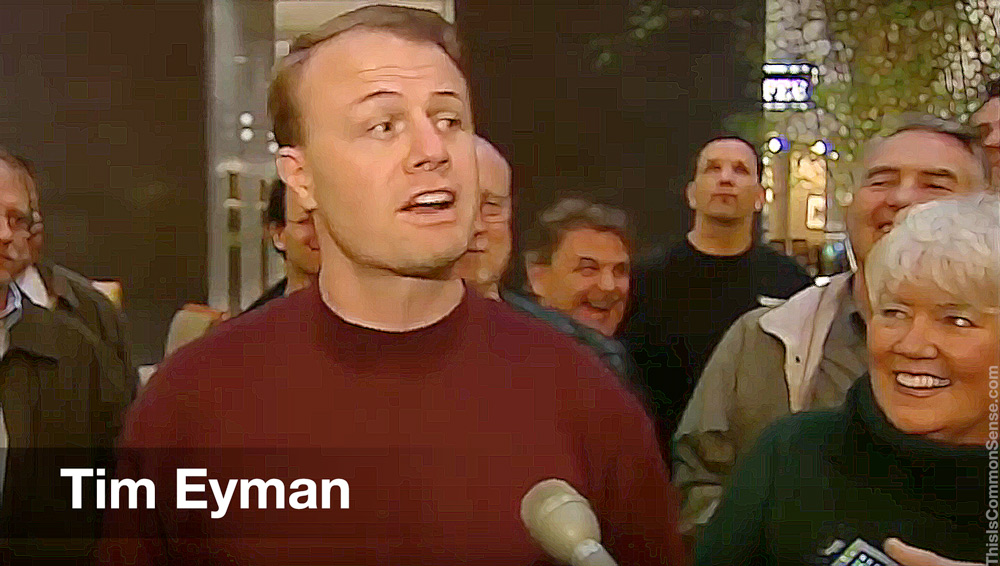
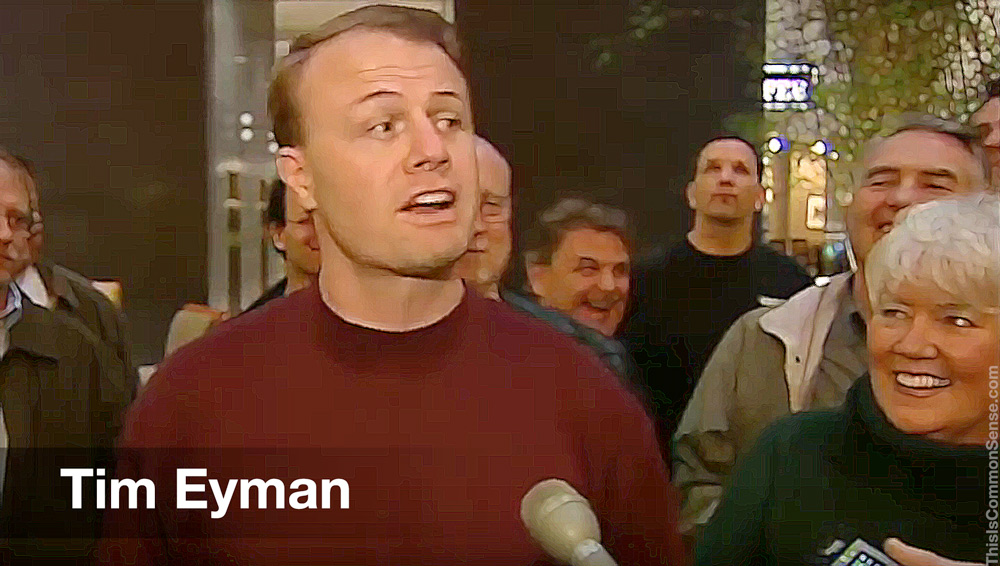
Eyman is Tim Eyman, the state’s anti-tax initiative leader. His group, Voters Want More Choices, spearheaded Initiative 960, which from 2008 to 2018 required 19 tax advisory votes. Voters have expressed opposition to 12 of the 19 tax increases passed by the legislature — 63 percent — and support for seven. 

“It’s a tax increase report card,” explains Eyman, “and the Legislature this year gets an F.” 

A grade that was certainly earned.

This is Common Sense. I’m Paul Jacob.


PDF for printing

Tim Eyman, Senate Bill 5224, taxes, vote, democracy,

See all recent commentary
(simplified and organized)
See recent popular posts

Categories
initiative, referendum, and recall

Democratic Dreams

On Wednesday, I said we should, to borrow the vernacular, “have a conversation” about a national referendum.

Billionaire investor, environmentalist, and Democratic presidential candidate Tom Steyer proposed the idea, which I’ve loved conceptually since my friend, former Alaska Sen. Mike Gravel (also a Democratic presidential candidate), first advocated it decades ago.

But that ol’ devil — he’s in the details. (Decidedly not the latest lingo.) What might a national initiative and/or referendum process look like?

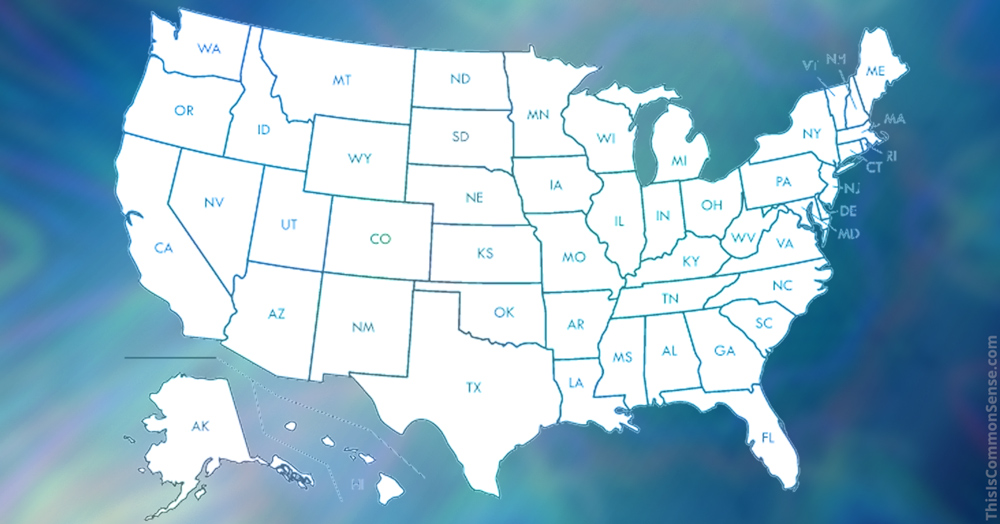
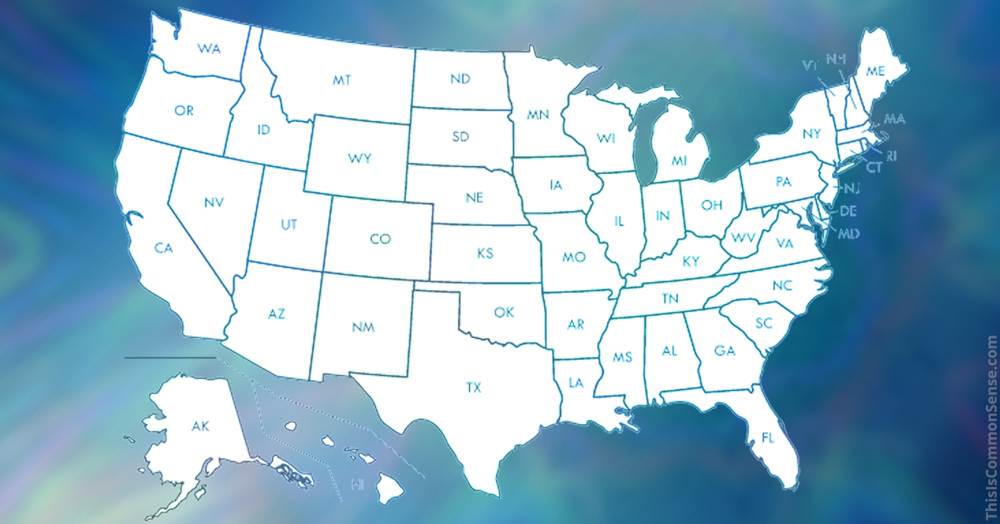
Given that it would require a constitutional amendment — meaning ratification by 38 of the 50 states — the process must win broad support to be enacted.

Here’s what I propose: Allow any statutory initiative measure to be petitioned onto a federal General Election ballot with signatures equaling 6 or 8 percent of the country’s population* and as verified by election officials in each state. Require a concurrent majority, whereby for a measure to pass it must garner not only a majority of the vote nationally, but also a majority vote in at least 20 states — or even in a majority of the states.

An initiative proposing a national constitutional amendment should do more. Require, say, a petition signature threshold of 10 or 15 percent and not merely a majority of the vote nationally to pass, but mirroring the current amendment process, mandate a majority in each of at least 38 states.

If U.S. Term Limits is successful in getting 34 states to call a convention to propose an amendment for congressional term limits, a national referendum process could follow in those footsteps. 

Talk about two ideas that will pop blood vessels in the heads of professional politicians and their special interest cronies!

Dare to dream.

This is Common Sense. I’m Paul Jacob.


 * This should simply follow the figures of the most recent census, of course.

PDF for printing

US, United States, national referendum, initiative, voting, democracy, elections,

See all recent commentary
(simplified and organized)
See recent popular posts
Categories
media and media people national politics & policies Popular

Birth of a Twitterstorm

“Kamala Harris is *not* an American Black. She is half Indian and half Jamaican,” tweeted Ali Alexander, a self-described black American activist, after the California Senator’s presidential debate performance. “I’m so sick of people robbing American Blacks (like myself) of our history.”*

On Friday, Donald Trump, Jr., retweeted Alexander’s tweet (before later deleting it). His traipsing into the details of Harris’s birth immediately sparked comparison to his father’s “birther attacks” suggesting that President Obama wasn’t born here.**

Seemingly, the entire Democratic presidential field was quick to condemn the tweet and Don Jr.’s retweet as “racist.” So did much of the media. Although months ago, CNN’s Don Lemon argued, “Jamaica is not America.”

The New York Times article identified Ali Alexander only as an “alt-right fringe figure” and “a member of a right-wing constellation of media personalities,” but nowhere informed readers he is African-American.

“This stuff about Harris, about her status, about her blackness,” Jason Johnson, politics editor of TheRoot.com, told Joy Reid on MSNBC, “that’s about black people.”

In fact, on Reid’s program back in February, Johnson was part of a discussion about the senator’s — gasp! — white husband. “She needs to find a strong black man advocate,” advised Tiffany Cross, co-founder and managing editor of The Beat DC. “Let’s just be candid,” Johnson remarked, “it’s not going to be her [white] husband.”

How important is the color of a person’s skin or their ancestry or the skin color of their spouse to that person’s fitness to be president?

It only matters to racists.

This is Common Sense. I’m Paul Jacob.


* “Kamala Harris,” Alexander also pointed out, “comes from Jamaican Slave Owners.” True enough, but how is she responsible for what her ancestors did? Would it matter if she supported . . . reparations?

** For the record, Sen. Harris was born in Oakland, California, which was then and is still part of the United States of America.

PDF for printing

Kamala Harris, race, debate, democratic, president, democracy,

See all recent commentary
(simplified and organized)
See recent popular posts
Categories
general freedom Popular Regulating Protest too much government

I Am Hong Kong

“I love my students so much,” a protesting teacher in Hong Kong told a BBC reporter, wiping tears from her eyes. “I worry about they cannot have the freedom we have before. They cannot speak what they want to speak like us. So, I don’t want . . . this.”

Her English grammar notwithstanding, she speaks a language we should all understand: Liberty.

“If there must be trouble,” Tom Paine wrote in The American Crisis, “let it be in my day, that my child may have peace.” As usual, it is the young, whose idealism and courage has not been worn down and compromised — and who have their own future children to fight for — who lead the effort, facing tear gas and truncheons. That is precisely what they’ve encountered in Hong Kong . . . along with pepper spray and rubber bullets . . . for now. 

It can get worse.

Nonetheless, millions of Hong Kong residents have taken to the streets against Hong Kong’s legislature considering a bill to allow Mainland China the power to extradite criminal suspects. People well understand that, if the bill passes, their civil rights will be extinguished in China’s crooked, totalitarian justice system.

What to do? Hope and pray for Hong Kong. 

But let’s draw some lessons. Freedom requires not merely bravery, but also unity. An attack on the rights of anyone is an attack on us all. And attacks on precious democratic checks on political power are attacks on everyone’s freedom. 

Instead of the United Nations, we need an organization of united citizens across the globe. People everywhere want to be free and democratic. We should work together . . . bypassing our governments.

This is Common Sense. I’m Paul Jacob.


PDF for printing

Hong Kong, protests, extradition, freedom, democracy,

See all recent commentary
(simplified and organized)
See recent popular posts
Categories
incumbents partisanship

AOC Right, DCCC Wrong

“AOC is right as rain here,” I re-tweeted Sunday.

And what was the usually all-wet U.S. Rep. Alexandria Ocasio-Cortez (D-N.Y.) right about?

“By stymieing primaries,” the freshman representative had tweeted at her own party’s congressional leaders and the Democratic Congressional Campaign Committee (DCCC), “you deny most voters their best chance at choosing their representative.”

On purpose. 

Ocasio-Cortez refers to the recent DCCC announcement, first reported by The Intercept, that “warned political strategists and vendors . . . that if they support candidates mounting primary challenges against incumbent House Democrats, the party will cut them off from business.”

Isn’t the goal of the DCCC to elect as many Democrats to Congress as possible? 

No. 

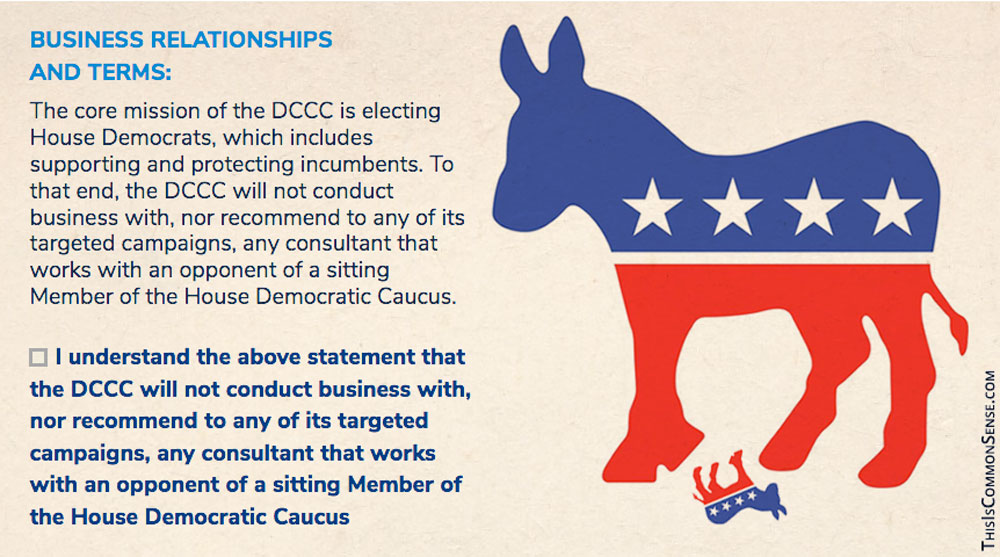
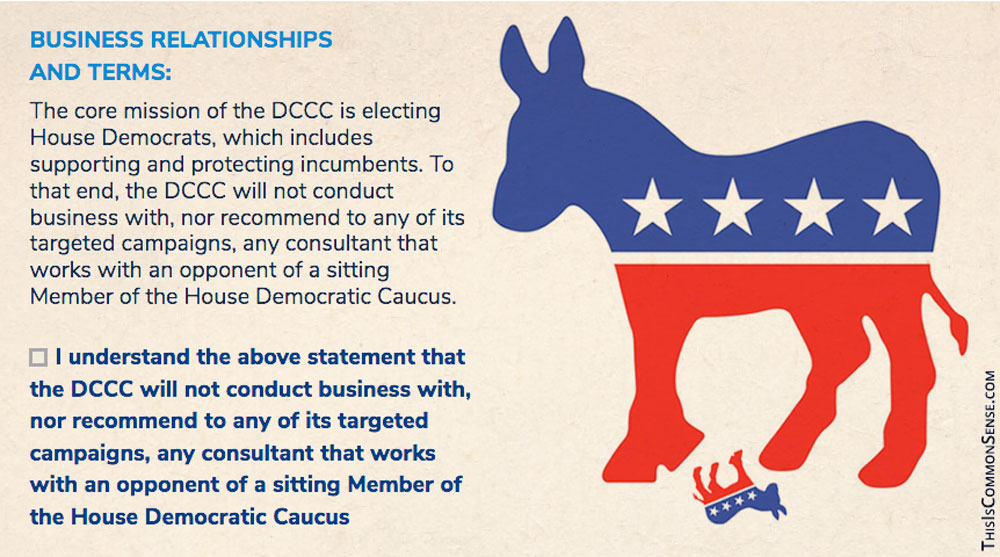
“The core mission of the DCCC is electing House Democrats, which includes supporting and protecting incumbents,” reads a new form for party political consultants. “To that end, the DCCC will not conduct business with, nor recommend to any of its targeted campaigns, any consultant that works with an opponent of a sitting Member of the House Democratic Caucus.”

In short, if you want to make money, and most political professionals do, don’t dare work for a Democratic challenger against a Democratic incumbent. 

“If the DCCC enacts this policy to blacklist vendors who work with challengers, we risk undermining an entire universe of potential candidates and vendors — especially women and people of color,” Rep. Ayanna Pressley of Massachusetts, another Democratic freshman who defeated an incumbent Democrat, tweeted on Saturday. 

The policy has been enacted and is in full effect.

Among Washington Democrats, incumbency trumps everything . . . even diversity. 

This is Common Sense. I’m Paul Jacob.


N.B. The National Republican Congressional Committee has long had this same total fixation — mutatis mutandis — on re-electing incumbents. In fact, the newsworthiness of this latest DCCC strong-arming of consultants seems to be only that the insider power-play is more “open” than ever before.

PDF for printing

Democrat, incumbent, fairness, AOC

See all recent commentary
(simplified and organized)
See recent popular posts


Categories
ballot access initiative, referendum, and recall

Holding All the Trumps

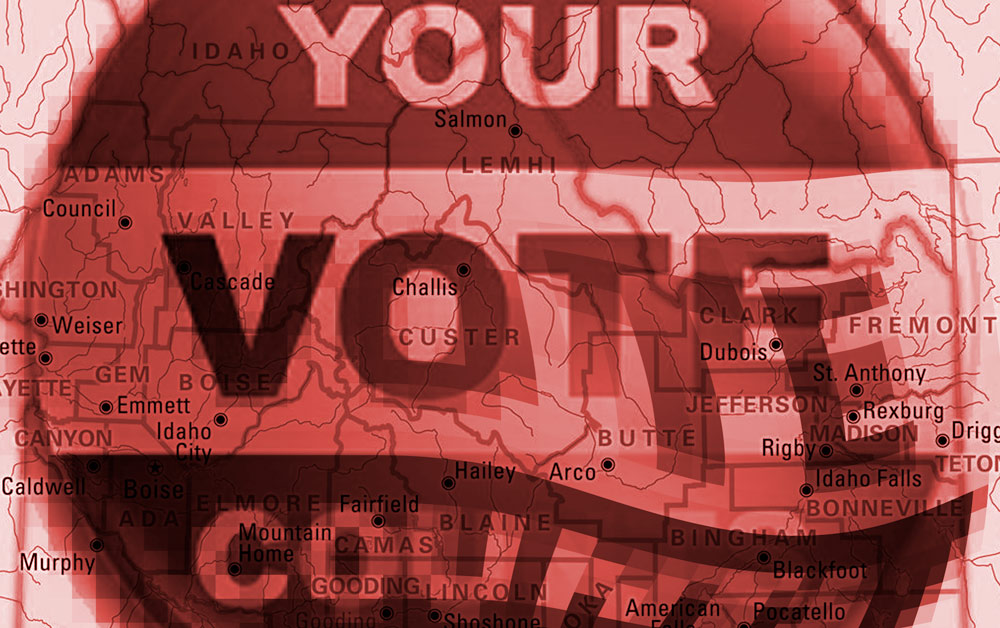
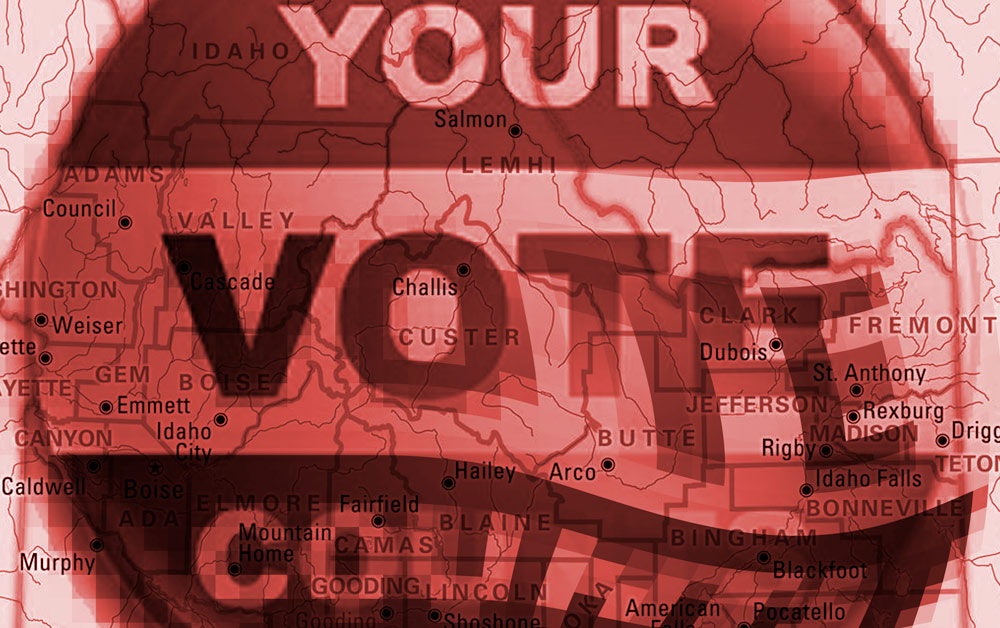
Last week, Idaho’s Senate Bill 1159 — “the bill to make it much harder to qualify a voter initiative or referendum for the Idaho ballot,” as the Idaho Press summarized it — passed the Senate on the narrowest 18–17 vote.

Now headed to the House, the legislation would 

  • nearly double the number of voter-signed petitions to place an initiative onto the ballot
  • reduce the time to gather those signatures by a whopping two-thirds 
  • throw up numerous additional hurdles

What’s the point?

The state already has one of the most arduous petition processes in the nation for qualifying a citizen initiative for the ballot. Moreover, without passing any new law, Idaho legislators currently have and have always had a 100 percent veto on any citizen-initiated measure enacted by voters. 

Idahoans cannot place constitutional amendments on the ballot through their citizen initiative, only statutes. And any statute voters pass can then immediately be repealed by a simple majority of legislators. Or amended any which way those solons so desire.

So, again, why the need for politicians to pull up the ladders? 

Senate Republicans claim — in a news release headlined, “Setting the record straight on initiative bill” — to be “concerned about the integrity, transparency and fairness of the initiative process.”

What does heightening all the hurdles to trip up citizens have to do with integrity, transparency or fairness?*

Voting on an issue is “unfair” to whom . . . legislators?

Holding all the trump cards, Idaho senators still didn’t want the people to have a say. The politicians are scared to death of democracy. 

Which is why we need more, not less. 

Certainly not none.

This is Common Sense. I’m Paul Jacob.


* I do acknowledge that the bill is transparently awful.

PDF for printing

Idaho, initiative, ballot, Senate Bill 1159, democracy, voting,

See all recent commentary
(simplified and organized)
See recent popular posts


Categories
Accountability ideological culture initiative, referendum, and recall

March Sanity

“A public debate on the merits of a measure can reveal its flaws,” the Bismarck Tribune calmly and reasonably editorialized yesterday, “and then we have to trust voters to do the right thing.”

“Why are some legislators so afraid to allow North Dakota voters to decide what is in their constitution?” an earlier Fargo Forum editorial asked. The Forum dubbed one bill — giving the legislature a partial veto on voter-enacted constitutional amendments — “The Voter Nullification Act.” 

On the voter initiative, North Dakota’s elected representatives are of a much different mind than these newspapers or the people of North Dakota.

The Flickertail State is hardly alone on this. 

Michigan’s legislature made their ballot initiative process more difficult in last December’s lame-duck session. Arkansas politicians have been stabbing at the initiative with rules and regulations for years, and they’re back at it this session. On a recent trip to the Missouri capitol, I heard elected officials privately argue that voters deciding issues directly — without going through the legislature — was a “bastardization” of our republic. 

Take Idaho’s Senate Bill 1159, which would hike up the signature requirement from 6 to 10 percent of voters, a 67 percent increase, while also reducing by two-thirds the time allowed for petitioning. The legislation’s stated purpose? “[T]o increase voter involvement.”

“It is odd,” wrote former state Supreme Court Justice Jim Jones in the Idaho State Journal, “that some in the Legislature now wish to drive a stake into the heart of that people-driven legislative process.”

It’s not really very odd. Legislators routinely put their political self-interest before the people — especially when it comes to voters having a democratic check on their power. 

This is Common Sense. I’m Paul Jacob.


PDF for printing

North Dakota, initiative, citizen initiative, ballot initiative, democracy, suppression

See all recent commentary
(simplified and organized)
See recent popular posts


Categories
initiative, referendum, and recall

Meet the Mob

North Dakota faces a serious problem: The Mob. 

“The point of being a republic is so that Mob doesn’t rule,” warned Chris Berg, host of Point of View on Fargo, North Dakota’s Valley News Live. “If you live in a true democracy that’s where Mob can rule.”

Berg called citizens petitioning issues onto the ballot for a vote “a mob-rule system . . . that allows us to change the actual constitution of our state.”

Not sure which constitution one might work to amend except for the “actual” constitution. But I do see a clearly articulated concern with mob rule. 

“A republic, my folks, is what we live in,” continued Berg, juxtaposing the ballot initiative process as “a pure democratic system.”

But ballot measures are no more pure democracy than are acts enacted by the legislature. Both can be challenged and overturned if they violate constitutional rights.

The focus of Berg’s anti-initiative worry is Measure 1, an ethics amendment passed last November and derided by Berg as “a bunch of Hollywood money to change North Dakota.” 

True, Measure 1 did receive support from folks outside North Dakota, including groups supported by Hollywood stars. 

Those financial backers were well known to North Dakotans, 54 percent of whom voted for the measure. 

And freedom means the right to associate with fellow Americans across state lines. 

Responding to Berg, Dustin Gawrylow, managing director of the North Dakota Watchdog Network, said the citizen initiative process was “the best way to keep legislators honest and in tune with the people.”

After all, without “a way for the people to actually set the rules for lawmakers,” the people would be ruled by . . . the capitol mob.

This is Common Sense. I’m Paul Jacob.


PDF for printing

citizen's initiative, democracy, mob, North Dakota, initiative

See all recent commentary
(simplified and organized)
See recent popular posts