Categories
political challengers

One of Us?

As the Democratic Party presidential campaign began heating up earlier this year, one of the stars faintly streaking across the sky was Washington State Governor Jay Inslee. In the over-populated ranks of presidential wannabes, he stood out not for being exceptionally nutty, but for so memorably presenting the new Nut Normal of America’s oldest political party.

In August he dropped out for lack of support, but that doesn’t mean his political career is over. He is back in his home state demonstrating the case for term limits. 

That is, he is running for a third gubernatorial term.

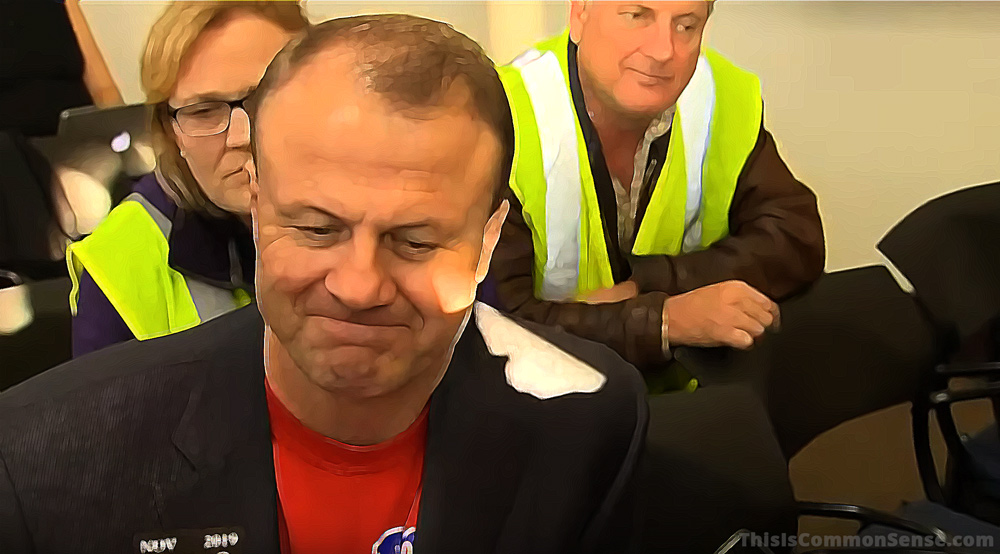
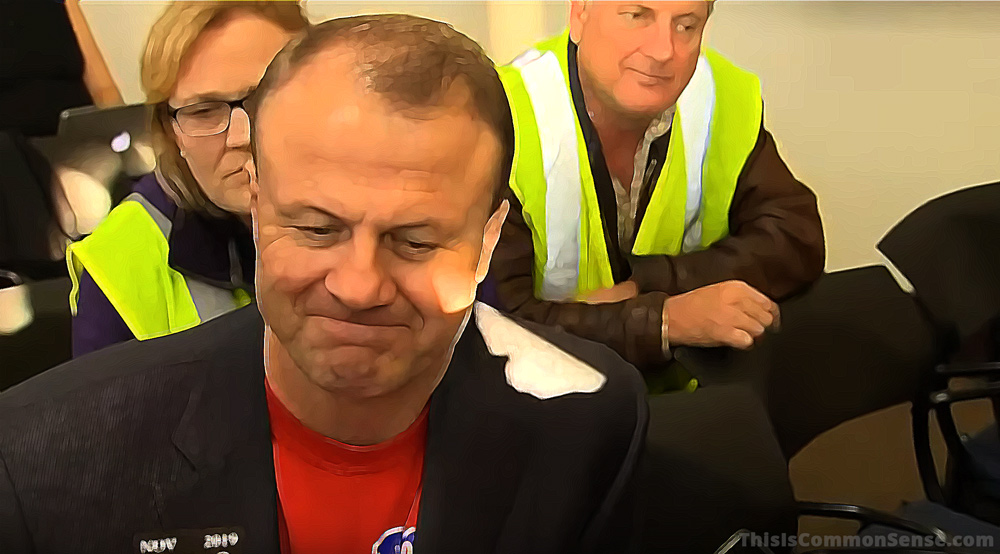
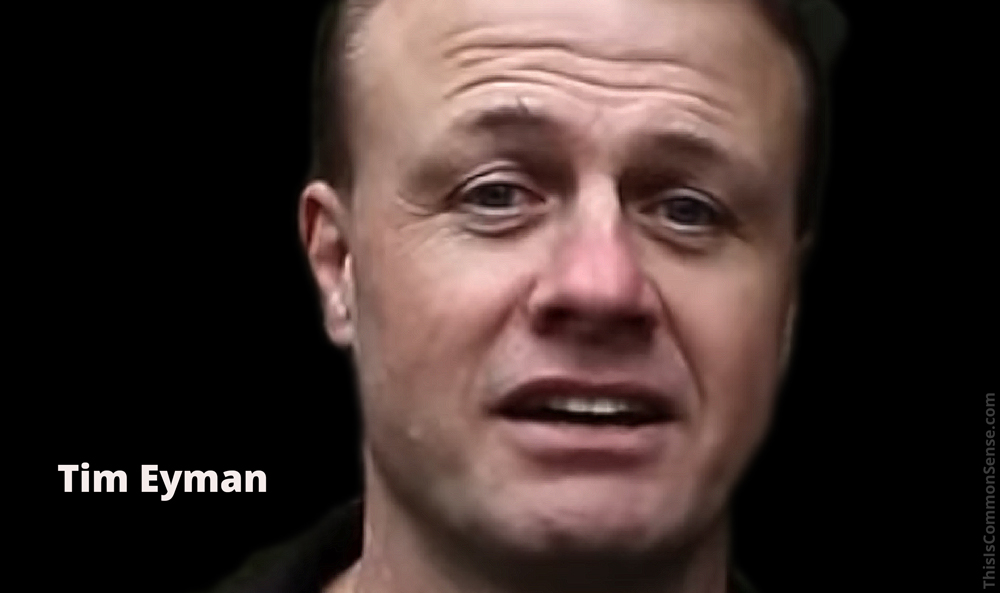
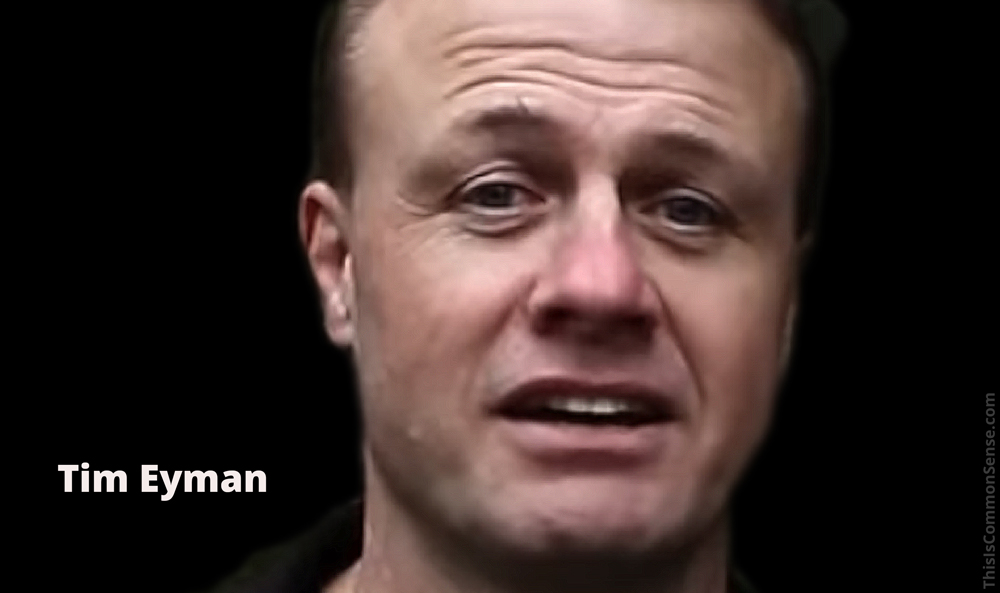
Fortunately for Evergreen State voters, there are alternatives. Indeed, one in particular: Tim Eyman.

I mention Eyman often enough that I could almost get away without introducing him now. He is arguably the most effective user of initiative and referendum in the country — offering common-sense issues a majority of voters favor, especially tax limitation and reduction measures.

On his campaign website he sports a sweatshirt emblazoned with “Let the Voters Decide,” which is so democratic it almost makes you wonder why the state’s Democratic Party isn’t embracing him.

But we know why — the very last thing Democratic political machines want is democracy!

Running as neither an R nor a D, Mr. Eyman’s campaign slogan is “One of us as Governor!”

And considering the popularity of his many initiative measures designed to combat their elected representatives’ love of raising taxes and “fees” — especially on automobiles — as well as the way politicians in Olympia (including that ultimate insider, Inslee) freak out over the very name “Eyman,” it promises to be a very interesting and entertaining race.

This is Common Sense. I’m Paul Jacob.


Tim Eyman, governor, Washington State, democracy,

See all recent commentary
(simplified and organized)
See recent popular posts


Categories
initiative, referendum, and recall tax policy

My Favorite Control Group

Tim Eyman strikes again. 

In deep blue Washington State, the ballot measure activist celebrated another Election Day victory last week with Initiative 976, limiting vehicle taxes. Not to mention Referendum 88, whereby voters kept a ban on government use of racial preferences, enacted via an initiative Eyman had co-authored two decades ago.

And still, there were a dozen more issues on last Tuesday’s statewide ballot thanks to Mr. Eyman’s 2007 initiative, I-960, which mandates “advisory votes on taxes enacted without voter approval.” (Also thanks to state legislators, I guess, for racking up 12 new tax increases this year without bothering to ask voters!)

Yet, perhaps it matters not at all. Nearly two million votes cast on each of these measures? Three supported by a majority? Nine rejected? Two esteemed Evergreen State newspaper columnists pooh-pooh them as “meaningless.”

“The Legislature has never taken the voters’ advice when they say a tax should be repealed,” writes Spokane Spokesman Review columnist Jim Camden. 

That’s a failing of the Legislature, Jim,* not these advisory measures . . . which you seem to acknowledge when you write that these votes at least “provide a good control group for any experiment on the voters’ knee jerk reaction to higher taxes.”

If legislators cared to know. 

While dumping on the dozen measures as “an empty remnant of an earlier initiative,” The Columbian’s Greg Jayne notices that “their presence on the ballot this year reminded voters, over and over again, of the Legislature’s spendthrift ways.”

Helping create an anti-tax mood that spurred support for I-976.

Not bad for being meaningless.

This is Common Sense. I’m Paul Jacob.


* I use his first name because I know Mr. Camden from decades ago when he was a reporter covering House Speaker Tom Foley, who after suing to overturn the 1992 citizen initiative for term limits became the only Speaker defeated for reelection since the Civil War. 

PDF for printing

Tim Eyman

See all recent commentary
(simplified and organized)
See recent popular posts
Categories
term limits

Term Limits Apply to Socialists,Too

We don’t see a lot of pro-term-limits writing in our major, “corporate” media outlets — but a New York magazine account of the ouster of Bolivian President Evo Morales is a welcome exception.

“The disgraceful and chaotic manner in which the once-beloved Morales is leaving office is an object lesson in why presidential term limits are important,” writes Jonah Schepp. “Running a country for more than a decade has a tendency to make people more susceptible to authoritarian impulses, whether or not they started their careers as dictators.”

The Atlantic also acknowledges term limits’ vital role. “Evo Morales Finally Went Too Far for Bolivia,” the “too far” being the “authoritarian powers” claimed “in the name of the popular will.” Yascha Mounk explains how Morales’ once-touted support for presidential term limits evaporated in 2016, when he placed before voters a binding referendum to allow him to stay in office indefinitely. Bolivians voted No, only to witness their supreme court set aside term limits using the bizarre rationale “that limits on the length of his tenure in office would violate Morales’s human rights.”

After irregularities in the October 20 presidential vote, Bolivians took to the streets. Morales resigned on Sunday. 

“For a socialist president who was until recently hailed as the great success story of the Latin American left,” New York’s Schepp explains, “this unseemly end serves as a cautionary tale of what happens when world leaders remain in office for too long.”

On a 2015 trip, President Obama remonstrated African leaders for their attempts to overturn popular term limits. “I’ll be honest with you,” he said before the African Union, “I’m looking forward to life after being president.”

Mr. Morales, Bolivia’s now-former president, is not so fortunate. Yesterday, he fled the country. 

This is Common Sense. I’m Paul Jacob.


PDF for printing

Bolivia, term limits, democracy, elections,

See all recent commentary
(simplified and organized)
See recent popular posts

Categories
national politics & policies political challengers

Billions Of, By and For Bloomberg

Might Gotham’s gun-and-Big-Gulp-grabber-in-chief catapult to Commander in Chief? 

Michael Bloomberg, the former New York City mayor, “is actively preparing to enter the Democratic presidential primary,” writes Alexander Burns in The New York Times.

Bloomberg’s estimated $53 billion could financially pummel even Democratic candidate Tom Steyer, working with a mere $1.6 billion. 

“More billionaires seeking more political power surely isn’t the change America needs,” chimed in Faiz Shakir, presidential campaign manager for Vermont socialist and Senator Bernard Sanders. 

Billionaires are the really evil ones. 

Millionaires? Not so bad anymore. 

In 2016, Bernie badmouthed both “millionaires and billionaires” . . . until found to be a millionaire himself — worth $2.5 million to be specific

Massachusetts Senator Elizabeth Warren, Mr. Sanders’ rail-against-the-rich presidential rival, offered Mayor Bloomberg her “Calculator for Billionaires” — showing how much those sorts of people would have to pay per her Wealth Tax. 

No mention of what her own family, worth $12 million would pay.

Bloomberg’s entrance into the race is expected to hurt former Vice-President and multimillionaire Joe Biden the most, both appealing to the more “moderate” wing of the Democratic Party.

Still, Bloomberg is no Democrat messiah, however. He’s not particularly popular. In fact, Bloomberg’s last political campaign for a third term as New York mayor ten years ago was “the most expensive campaign in municipal history.” After double-crossing voters on term limits by supporting a council change allowing him (and them) a third term, Bloomberg had to spend a whopping $183 per vote to win an “unexpectedly close race.”

To garner as many votes for president as Hillary Clinton’s 2016 effort, at that same cost, adds up to $12 billion!

Bloomberg’s good news? He has it.

Bloomberg’s bad news? Hillary lost.

This is Common Sense. I’m Paul Jacob.


PDF for printing

Michael Bloomberg, president, democracy,

See all recent commentary
(simplified and organized)
See recent popular posts


Categories
general freedom

Two-thousand Somethings

Alex Ko is “exactly the kind of person China is worried about,” informs the BBC. 

Described as “soft-spoken” and “bespectacled,” the 23-year-old Ko lives in Taiwan, hundreds of ocean miles away from Hong Kong, where for months the streets have been consumed in protests demanding simple but difficult things: freedom, democracy, government accountability.

What can one person do — especially living far away and in a different country?

You might think: not much.

But Mr. Ko managed to do something. Two-thousand-plus somethings. With help. 

Ko launched “a donation drive for gas masks, air filters and helmets at his church,” and has been able to send Hong Kong protesters “more than 2,000 sets of such gear . . . to protect them against tear gas regularly fired by the police.”

It’s sad such gear is needed but . . . “[a] new Amnesty International field investigation has documented an alarming pattern of the Hong Kong Police Force deploying reckless and indiscriminate tactics, including while arresting people at protests, as well as exclusive evidence of torture and other ill-treatment in detention.”

“As a Christian,” Ko told the BBC, “when we see people hurt and attacked, I feel we have to help them.” And then he added, “As a Taiwanese, I’m worried we may be next.”

Today I’m flying to Hong Kong in route to Taiwan to address the 2019 Global Forum on Modern Direct Democracy. Because freedom and democracy must be protected and expanded the world over . . . so no one is “next.”  

This is Common Sense. I’m Paul Jacob.


gas mask, Hong Kong, protests,

See all recent commentary
(simplified and organized)
See recent popular posts
Categories
ideological culture partisanship

The False Binary

Characterizing herself as a “moderate with a brain,” Bridget Phetasy writes that things have gotten so bad that now “every vote is considered a statement on your personal identity and worth.” Her article in Spectator USA, “The battle cry of the politically homeless,” paints a bleak picture.

“Your value, who you are, what kind of world you want, whether or not you’re a good person or an evil person . . . it all boils down to which lever you pull. Damn your reasons. Vote for the ‘right’ person, or else you are a fascist, or a racist, or a globalist, or a communist.”

Ms. Phetasy expresses fatigue at “being afraid to voice my own opinions, of knowing how saying the wrong thing at a barbecue while someone is filming on their iPhone could result in a nationwide clarion call for my head on a pike.”

I, however, feel not one whit of a compulsion to cave to what Phetasy says is the “totalitarian-like” demand of the two parties for “devotion to their ideology.”

How did I become so blessed?

I know that Trumpians have almost no way to rationally defend their major positions — protectionism being the tippy-top of an Everest of an iceberg. Meanwhile, the far left is worse, flushing the old wine of socialism through the new-but-leaky bottles of racist (“anti-racist”) resentment.

Can we really fear such intellectual paper tigers?

There is a way out: Ranked choice voting. Witless partisanship rests on the A/not-A (=B/not-B) duality rut of the two-party system, into which I have never purchased admission. None of us are required to — and won’t be tempted to once our absurd electoral system is swapped for one not programmed to create false binaries.

This is Common Sense. I’m Paul Jacob.


PDF for printing

cards, playing cards, pick a card, politics,

Photo by Aaron Jacobs on flickr

See all recent commentary
(simplified and organized)
See recent popular posts


Categories
initiative, referendum, and recall tax policy

The Legislature That Couldn’t Tax Straight

“If you lost count of how many new and higher taxes state lawmakers passed this year,” begins Jerry Cornfield’s recent column in the Everett Herald, “it was 12.”

Cornfield doesn’t appear too distressed about the tax hikes, however, worrying instead that Evergreen State voters will be “awash in tax advisory measures this fall.”

That’s because for every tax increase the Washington State Legislature enacts without putting it to a vote of the people of Washington, an advisory vote is mandated by Initiative 960, passed by voters back in 2007.

So 12 tax increases = 12 tax advisory votes. 

“We wouldn’t be talking about advisory votes and providing Eyman a platform for politicial [sic] ministering,” Mr. Cornfield complains, “had Democratic lawmakers gotten rid of them by passing Senate Bill 5224.”

Seems odd somehow that a newspaper columnist would be berating politicians for not passing a law to silence voters regarding tax hikes. Democrats could have done so without a single Republican vote. SB-5224 did pass the Senate, but it was blocked in the House by the Democratic Speaker — “democratic,” thankfully, in more ways than one.

Eyman is Tim Eyman, the state’s anti-tax initiative leader. His group, Voters Want More Choices, spearheaded Initiative 960, which from 2008 to 2018 required 19 tax advisory votes. Voters have expressed opposition to 12 of the 19 tax increases passed by the legislature — 63 percent — and support for seven. 

“It’s a tax increase report card,” explains Eyman, “and the Legislature this year gets an F.” 

A grade that was certainly earned.

This is Common Sense. I’m Paul Jacob.


PDF for printing

Tim Eyman, Senate Bill 5224, taxes, vote, democracy,

See all recent commentary
(simplified and organized)
See recent popular posts


Categories
initiative, referendum, and recall

Democratic Dreams

On Wednesday, I said we should, to borrow the vernacular, “have a conversation” about a national referendum.

Billionaire investor, environmentalist, and Democratic presidential candidate Tom Steyer proposed the idea, which I’ve loved conceptually since my friend, former Alaska Sen. Mike Gravel (also a Democratic presidential candidate), first advocated it decades ago.

But that ol’ devil — he’s in the details. (Decidedly not the latest lingo.) What might a national initiative and/or referendum process look like?

Given that it would require a constitutional amendment — meaning ratification by 38 of the 50 states — the process must win broad support to be enacted.

Here’s what I propose: Allow any statutory initiative measure to be petitioned onto a federal General Election ballot with signatures equaling 6 or 8 percent of the country’s population* and as verified by election officials in each state. Require a concurrent majority, whereby for a measure to pass it must garner not only a majority of the vote nationally, but also a majority vote in at least 20 states — or even in a majority of the states.

An initiative proposing a national constitutional amendment should do more. Require, say, a petition signature threshold of 10 or 15 percent and not merely a majority of the vote nationally to pass, but mirroring the current amendment process, mandate a majority in each of at least 38 states.

If U.S. Term Limits is successful in getting 34 states to call a convention to propose an amendment for congressional term limits, a national referendum process could follow in those footsteps. 

Talk about two ideas that will pop blood vessels in the heads of professional politicians and their special interest cronies!

Dare to dream.

This is Common Sense. I’m Paul Jacob.


 * This should simply follow the figures of the most recent census, of course.

PDF for printing

US, United States, national referendum, initiative, voting, democracy, elections,

See all recent commentary
(simplified and organized)
See recent popular posts

Categories
media and media people national politics & policies Popular

Birth of a Twitterstorm

“Kamala Harris is *not* an American Black. She is half Indian and half Jamaican,” tweeted Ali Alexander, a self-described black American activist, after the California Senator’s presidential debate performance. “I’m so sick of people robbing American Blacks (like myself) of our history.”*

On Friday, Donald Trump, Jr., retweeted Alexander’s tweet (before later deleting it). His traipsing into the details of Harris’s birth immediately sparked comparison to his father’s “birther attacks” suggesting that President Obama wasn’t born here.**

Seemingly, the entire Democratic presidential field was quick to condemn the tweet and Don Jr.’s retweet as “racist.” So did much of the media. Although months ago, CNN’s Don Lemon argued, “Jamaica is not America.”

The New York Times article identified Ali Alexander only as an “alt-right fringe figure” and “a member of a right-wing constellation of media personalities,” but nowhere informed readers he is African-American.

“This stuff about Harris, about her status, about her blackness,” Jason Johnson, politics editor of TheRoot.com, told Joy Reid on MSNBC, “that’s about black people.”

In fact, on Reid’s program back in February, Johnson was part of a discussion about the senator’s — gasp! — white husband. “She needs to find a strong black man advocate,” advised Tiffany Cross, co-founder and managing editor of The Beat DC. “Let’s just be candid,” Johnson remarked, “it’s not going to be her [white] husband.”

How important is the color of a person’s skin or their ancestry or the skin color of their spouse to that person’s fitness to be president?

It only matters to racists.

This is Common Sense. I’m Paul Jacob.


* “Kamala Harris,” Alexander also pointed out, “comes from Jamaican Slave Owners.” True enough, but how is she responsible for what her ancestors did? Would it matter if she supported . . . reparations?

** For the record, Sen. Harris was born in Oakland, California, which was then and is still part of the United States of America.

PDF for printing

Kamala Harris, race, debate, democratic, president, democracy,

See all recent commentary
(simplified and organized)
See recent popular posts

Categories
general freedom Popular Regulating Protest too much government

I Am Hong Kong

“I love my students so much,” a protesting teacher in Hong Kong told a BBC reporter, wiping tears from her eyes. “I worry about they cannot have the freedom we have before. They cannot speak what they want to speak like us. So, I don’t want . . . this.”

Her English grammar notwithstanding, she speaks a language we should all understand: Liberty.

“If there must be trouble,” Tom Paine wrote in The American Crisis, “let it be in my day, that my child may have peace.” As usual, it is the young, whose idealism and courage has not been worn down and compromised — and who have their own future children to fight for — who lead the effort, facing tear gas and truncheons. That is precisely what they’ve encountered in Hong Kong . . . along with pepper spray and rubber bullets . . . for now. 

It can get worse.

Nonetheless, millions of Hong Kong residents have taken to the streets against Hong Kong’s legislature considering a bill to allow Mainland China the power to extradite criminal suspects. People well understand that, if the bill passes, their civil rights will be extinguished in China’s crooked, totalitarian justice system.

What to do? Hope and pray for Hong Kong. 

But let’s draw some lessons. Freedom requires not merely bravery, but also unity. An attack on the rights of anyone is an attack on us all. And attacks on precious democratic checks on political power are attacks on everyone’s freedom. 

Instead of the United Nations, we need an organization of united citizens across the globe. People everywhere want to be free and democratic. We should work together . . . bypassing our governments.

This is Common Sense. I’m Paul Jacob.


PDF for printing

Hong Kong, protests, extradition, freedom, democracy,

See all recent commentary
(simplified and organized)
See recent popular posts