
Categories
ballot access national politics & policies Voting

Ballots, Barriers and Buncombe

“The right to vote is a sacred civil right that empowers naturalized citizens to participate in our democracy,” LaVita Tuff, policy director of Asian Americans Advancing Justice-Atlanta, informed the media.

Yet, that same news release declared, “Asian Americans Advancing Justice-Atlanta and the Asian American Advocacy Fund collectively condemn the statements made by Georgia’s Secretary of State this morning emphasizing that ‘only American citizens should vote in our elections in Georgia.’”

These groups specifically attach voting rights to “naturalized citizens,” that is, immigrants who go through the process to become American citizens . . . like millions before them. But then AAAJ-A and AAAF denounce Secretary of State Brad Raffensperger for asking the Georgia General Assembly, last month, to put a constitutional amendment on the ballot to clarify that only U.S. citizens can vote in all state and local elections. 

“[D]on’t disenfranchise the people of Georgia on this important issue,” Raffensperger urged. “Let’s put it on a ballot.”

No argument is offered by either AAPI (Asian American Pacific Islander) group opposing the substance of Sec. Raffensperger’s proposed amendment. Not a single word.

Instead, they contend that “preventing noncitizens from voting is unnecessary and misleading,” before mentioning a non-citizen voting “measure previously considered in Clarkston, Georgia” and the possibility of changes “that could expand the right to vote to include noncitizens in local elections.” Hmmm . . . thus providing a very real and recent justification for Georgia voters to weigh-in.  

The news release smears Republican Raffensperger for supposedly “using immigrants as a scapegoat to create additional barriers to the ballot.” 

But the measure is clearly designed to protect existing barriers, not prohibit any currently eligible citizen from voting. 

This is Common Sense. I’m Paul Jacob.


PDF for printing

See all recent commentary
(simplified and organized)
See recent popular posts
Categories
initiative, referendum, and recall

Recall Legal Scholars?

“For weeks, legal scholars have debated whether the recall election of [California] Gov. Gavin Newsom could be found unconstitutional,” The Los Angeles Times reports, “if Newsom failed to realize a ‘no recall’ majority of the ballots cast and was ousted by a candidate who received fewer votes than he did.”

By “failed to realize a ‘no recall’ majority,” writer Maura Dolan means — in normal lingo — that Newsom gets booted out of office by majority vote. But following that phrase with “ousted by a candidate who received fewer votes than he did” ignores precisely who just did the “ousting” or, if you prefer, “booting” — voters.

Her confusion was mightily assisted by University of California at Berkeley academics, Law School Dean Erwin Chemerinsky and Professor Aaron S. Edlin, economist, arguing in The New York Times that the recall is “nonsensical and undemocratic.” Oh, and “unconstitutional,” too, because more votes could be cast to keep the incumbent than for the incumbent’s replacement. 

“Every voter should have an equal ability to influence the outcome of the election,” they contend.

A Golden State recall petition results in two separate elections: (1) the voters’ up-or-down decision on keeping or recalling the official in question, and (2) a second election for voters to choose among candidates running to replace that official should the recall succeed. 

Every Californian casting a ballot on these two separate issues indeed has an equal vote. The recall is automatically decided by majority, while the replacement could win with a plurality.

The equal protection angle has been raised unsuccessfully before. In fact, Chemerinsky acknowledged, according to the LA Times, “that courts could decide that the recall proposal itself amounted to a separate election from the second question on the replacement candidates.”

No duh.

The authors should be glad that recalling academics isn’t a thing — even so, they’re not as awful as Governor Newsom.

This is Common Sense. I’m Paul Jacob.


Blast from the past: This column addressed opposition to the 2003 recall of California Gov. Gray Davis.

PDF for printing

Photo by Gage Skidmore

See all recent commentary
(simplified and organized)
See recent popular posts
Categories
ballot access partisanship

Fear & Its Peddlers

“We’re facing the most significant test of our democracy since the Civil War,” President Joe Biden hyperbolically orated on Tuesday at the National Constitution Center in Philadelphia.

“That’s not hyperbole,” he insisted, repeating, for emphasis, “Since the Civil War.”

Referring to state legislation passed or proposed by Republicans regarding various election procedures, Mr. Biden must remember the Jim Crow Era with its “literacy tests, poll taxes, elaborate registration systems, and eventually whites-only Democratic Party primaries to exclude black voters,” since he also smeared these current Republican polices as a “21st-century Jim Crow assault.”* 

President Joe painted a picture of “unprecedented voter suppression” and “raw and sustained election subversion” and more.

Somehow, the media chorus line just repeats this nonsense.

Ignore the years of prominent Democrats’ straight-faced berating of Republican support for voter ID laws as nothing more than a purposely racist suppression tactic . . . immediately followed the Democrats’ recent about-face claim that they had always supported voter ID.

Even as they continue to push federal legislation that would effectively obliterate such ID laws in 35 states.**

Then contrast the bill passed in Georgia or being considered in Texas with the process in Biden’s home state of Delaware, which “doesn’t allow 24-hour or no-excuse drive-through voting,” as Karl Rove explains in The Wall Street Journal

“It won’t begin early voting until 2022 and then for . . . fewer days than Texas,” which has had early voting for more than three decades.

Somehow, Mr. Biden has never denigrated Delaware for Jim Crow-ism. 

Yet he may be right that “bullies and merchants of fear and peddlers of lies are threatening the very foundation of our country.”

Peddler of lies, know thyself.

This is Common Sense. I’m Paul Jacob.


* Not to mention that a certain “Biden crime bill” passed decades ago may have led to more disenfranchisement of voters — especially voters of color — than any single piece of legislation since . . . the Civil War.

** This HR1 would also allow partisan control of the Federal Election Commission, for the first time ever — the most potentially speech-suppressing provision of any state or federal legislation.

PDF for printing

See all recent commentary
(simplified and organized)
See recent popular posts

Categories
ballot access initiative, referendum, and recall

Amazing Vanished Rights

Suppose you have the right to walk across a room.

Yet you’re legally chained to a chair. 

By your rights, you may get up and walk across the room. But you can’t, because of the chains. You could if only you could. Why, there’s even a document specifying your right to do so. You physically can’t exercise this right; that’s the only problem. 

But your right to walk across the room is enshrined and protected.

Or is it?

In fact, we have no right in the sense of a legal ability to do a certain thing if its exercise is, by law, thwarted. 

Recently, Idaho lawmakers passed and Governor Little signed a law making it almost impossible for citizens to place a question onto the ballot. Until now, Idaho required that 6 percent of registered voters in 18 of 35 legislative districts sign the petition to send a question to ballot. Gratuitously onerous, but at least possible to comply with.

That possibility was a big problem for opponents of citizen initiative rights, however. Hence the new law, requiring signatures from 6 percent of registered voters in each of 35 districts.

Reclaim Idaho challenged the law. The Idaho Supreme Court is currently hearing the case.

According to Reclaim Idaho co-founder Luke Mayville: “If you claim that the people ought to have a right to put something on the ballot [but] make it impossible to exercise that right, it’s not really much of a right at all.”

Do justice, justices.

This is Common Sense. I’m Paul Jacob.


PDF for printing

See all recent commentary
(simplified and organized)
See recent popular posts

Categories
ballot access national politics & policies

Hypocrisy ID’d

“Prominent Democrats have increasingly softened their opposition to voter identification requirements in recent days,” informs The Washington Post, “signaling a new openness to measures that activists have long vilified as an insidious method of keeping minorities from the ballot box.”

Yesterday, when Republicans backed the idea, it was racist and supposedly so were they for supporting it. Not anymore. Now, Democrats favor Voter ID.

What changed? 

Not racism. And certainly not racially exploitative demagoguery. 

The catalyst may be a new Monmouth University poll showing fully 80 percent of Americans favor a photo ID requirement for voting, with support “at 62% among Democrats, 87% among independents, and 91% among Republicans.”

These progressive mutations take place as Senate Bill 1, the companion to H.R. 1, the so-called “For the People Act,” failed to break the GOP filibuster yesterday, blocked 50 votes to 50 votes along strictly partisan lines.

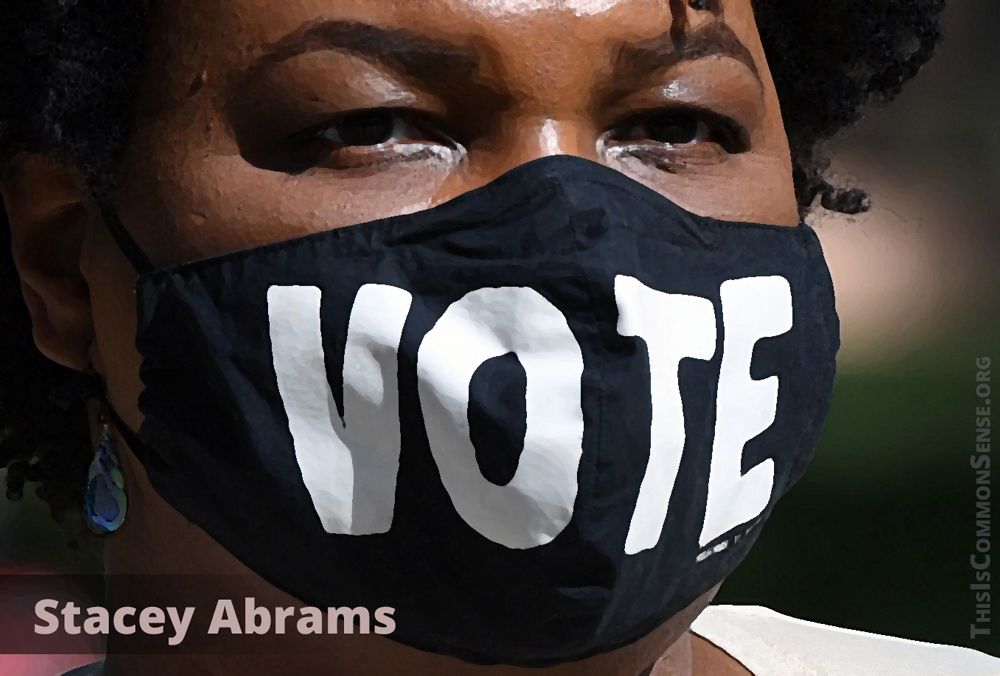
While Democrats scramble for a way out, some — Stacy Abrams, notably — suggest they have always been for voter ID. 

Funny, the Democrats’ legislation would have effectively gutted the 35 state voter ID laws now on the books. “But HR-1 does not ‘ban’ voter identification laws,” lectures Newsweek’s fact-checker. “Instead, it offers a workaround” — that does not require showing an ID.

Just the sort of requirement Democrats now insist upon? 

Hypocrisy notwithstanding, the real problem with Democrats dictating election policy from Washington is the rottenness of those policies, which include: 

  • Partisan capture of the Federal Election Commission by Democrats through 2027*
  • Taxpayer financing of congressional campaigns
  • Increased regulation of speech aimed at influencing congressmen (i.e. mobilizing citizens)

Congressional Democrats have plenty more bad policies where those came from.

And a legislative majority.

This is Common Sense. I’m Paul Jacob.


* If you can’t pack the Supreme Court, packing the FEC is the next best thing.

PDF for printing

See all recent commentary
(simplified and organized)
See recent popular posts

Categories
term limits

Senatorial Senility

“We have the oldest Senate in American history,” Roxanne Roberts writes in The Washington Post

Roberts rattles off the five octogenarians — Sen. Diane Feinstein (D-Calif.), age 88; Sen. Charles Grassley (R-Iowa), age 87; Richard Shelby (R-Ala.), age 87; Sen. James Inhofe (R-Okla.), age 86; and Sen. Pat Leahy (D-Vt.), age 81 — and tells us that “Twenty-three members of the Senate are in their 70s,” noting that “only one is under 40.”

That fledgling 34-year-old whippersnapper is newly elected Georgia Democrat Jon Ossoff. But being 30 years younger than the current Senate average doesn’t make him better, that’s for sure.

Age isn’t the problem. Not exactly.

My issue with octogenarian Senators Feinstein, Grassley, Shelby, Inhofe and Leahy is that they’ve been politicians in Washington for the last 28, 40, 43, 34, and 46 years, respectively.

That’s way too long. They stop being one of us, representing us. And, left, right or in-between, we know it.

“Senior senators often stay for decades,” Roberts argues, “because voters are reluctant to give up the perks of incumbency: Seniority, committee chairmanships and all the money poured into their states.”

Ha! The idea that actual voters are unwilling to “give up the perks of incumbency” is laughable. It’s the incumbents themselves who leverage their votes in Congress to dramatically out-fundraise their challengers. 

Voters rarely get much choice.

No wonder, then, that when people got a chance to vote to term-limit their own congressmen — they did so enthusiastically

President Truman once quipped that legislative term limits would help “cure senility, and seniority — both terrible legislative diseases.” He understood that the Senate’s age problem is not time on the planet. It is the time in office.

This is Common Sense. I’m Paul Jacob.


* Another example was the late Sen. Thad Cochran, who thankfully decided to step down in 2018 — at 80 years of age after 44 years in Congress — none too soon.

PDF for printing

See all recent commentary
(simplified and organized)
See recent popular posts

Categories
general freedom international affairs

June 4: Tiananmen 32

Will truth ever be bought-off or beaten-down enough to satisfy Chinese President Xi Jinping and the Butchers of Beijing?

The ‘Butchers’ nickname came 32 years ago today — from the clearing of Tiananmen Square by soldiers and tanks in the early morning hours of June 4th, and in opening fire on and murdering thousands of Chinese citizens outside the square. 

Someone may object that Xi, the General Secretary of the Chinese Communist Party (CCP) since 2012, can’t be blamed. He wasn’t in charge back in 1989.

Xi didn’t give the order for troops to kill the unarmed students and workers who filled Tiananmen Square for weeks with as many as a million people protesting for freedom and democracy. Nor did he have thousands more arrested and imprisoned after the massacre. In fact, Xi’s father “condemned the use of force against protesters during the 1989 Tiananmen Square protests,” informs U.S. News

But Xi cannot escape the taint of Tiananmen. Not only does Human Rights Watch charge that government repression under his unlimited rule is “at its worst level since the Tiananmen Square massacre,” Xi and today’s CCP are on a mission to memory-hole Tiananmen. 

How? 

By massacring any public memorial of the massacre.

While the truth about Tiananmen has always been verboten in China, freer folks in Hong Kong held massive memorials each year. “Last year’s vigil was banned for the first time because of the coronavirus,” Yahoo News explains, “but thousands defied police and rallied anyway.”

This year, however, the new national security law threatens five years in prison for attending an unauthorized rally. Chanting “Democracy for China!” could land a Hongkonger in prison for life.*

Thankfully, in America today we have the freedom to condemn the Chinazis

And remember June 4. 

This is Common Sense. I’m Paul Jacob.


* And it has already begun: “Hong Kong cracks down on Tiananmen commemorations, arrests vigil organiser.”

PDF for printing

See all recent commentary
(simplified and organized)
See recent popular posts

Categories
initiative, referendum, and recall term limits

You’re Sued!

Firing politicians is what democracy’s all about.

But politicians don’t like being fired. Even when “You’re fired!” is a signature line. It definitely explains why incumbents tend to oppose term limits. 

As shown in the long history of term limits in my home state, Arkansas. 

In 1992, an all-volunteer petition drive placed the initiative on the ballot and a grassroots campaign beat the Good Ole Boy network and their $500,000 in paid media warnings of “outsiders.” 

The victory sent shockwaves through the Arkansas political establishment; term limits received more YES votes than President-Elect Bill Clinton had garnered in his home state.

Arkansas pols have been at war with term limits ever since. The latest assault came in April, when legislators passed an “emergency” measure now known as Act 951. 

The Act bans people found guilty of minor misdemeanors (trespassing, vandalism, any violation of drug laws) at any time in their lives — even many decades ago — from working as paid petitioners. The new law also limits the pool of petitioners to state residents, something not done for any other political job, or for those carrying Arkansas’s candidate petitions.*

That’s why Arkansas Term Limits, Liberty Initiative Fund, U.S. Term Limits, et al., filed a complaint in the federal Eastern District of Arkansas alleging constitutional rights violations under the legislature’s Act 951. 

“I was never a supporter of term limits until this bunch got in office,” offered Arkansas Times editor Max Brantley in response to our lawsuit, “and gave themselves essentially unlimited terms and set about running roughshod over human rights.”

Cries of “You’re fired!” are coming soon. But first, to pry back petition rights in Arkansas, the catchphrase is, “You’re sued!”

This is Common Sense. I’m Paul Jacob. 


* In recent years, similar residency requirements have been unanimously struck down in rulings of the 4th, 6th, 7th, 9th and 10th federal Circuit Courts of Appeal. Earlier this year, a federal judge enjoined enforcement of Maine’s similar law.

PDF for printing

meter / JG

See all recent commentary
(simplified and organized)
See recent popular posts
Categories
initiative, referendum, and recall

Death Star Destroys Democracy

“I felt a great disturbance in the Force, as if millions of voices suddenly cried out in terror and were suddenly silenced.”

That’s Obi-Wan Kenobi’s line in the original Star Wars movie, sensing that the Empire’s Death Star had obliterated all the inhabitants of the Planet Alderaan. 

It popped into my mind on Friday, after learning of the ruling handed down by the Mississippi Supreme Court that not only strikes down a medical marijuana ballot initiative passed by voters last November but “judicially kills Mississippi’s citizen initiative process,” as Justice James Maxwell wrote in his fiery dissent.

The Magnolia State’s entire initiative process has been destroyed. 

When the direct citizen initiative process was enacted, in 1992, Mississippi sported five congressional representatives. The constitutional provision setting out how to qualify an initiative was worded to allow only “one-fifth” of the required petition signatures to come from any of the state’s five congressional districts (CDs). After the 2000 census, however, the state lost a congressional seat. Now with only four, simple math does not allow a way to get the prescribed balance of signatures.

Talk about a catch-22!

State officials just kept using their old maps with five CDs for ballot initiatives in order to comply with the letter of the law. But the court says that does not suffice. 

Only a constitutional amendment can restore this citizen check on politicians, and after the court’s ruling, only the legislature can place that amendment on the ballot. 

“Legislative leaders have not said clearly why they have not updated the initiative process in the 20 years since Mississippi lost a congressional district,” the Jackson Clarion Ledger reported Friday.

That’s simple: They don’t want citizens to have a check on them. 

Can citizens strike back?

This is Common Sense. I’m Paul Jacob.


Note: Mississippi voters first passed an initiative and referendum process in 1914 and the state supreme court upheld the validity of the process against a legal challenge in 1916. But after a 1922 initiative ruffled establishment feathers, the state supreme court reversed its earlier ruling and struck down the process in total. It was not until 70 years later, that the legislature would act to restore some measure of citizen initiative.

PDF for printing

starry sky /space ship / flag / JGill / 🎨

See all recent commentary
(simplified and organized)
See recent popular posts

Categories
general freedom international affairs

Two Strikes and You’re Out, MLB

Major League Baseball has renewed its contract with a Chinese telecommunications company with ties to the Chinese Communist Party.

Professional baseball thus avoids the fate of the National Basketball Association, ejected from Chinese airwaves for a year after Houston Rockets general manager Daryl Morey voiced support for pro-democracy protests in Hong Kong.

This doesn’t mean that the folks running MLB lack a moral compass.

It could be just a skewed one.

One day after Chinese state media confirmed that American baseball games would continue to be shown on Tencent’s streaming platform, MLB yanked its All-Star game from Atlanta, Georgia. The idea? To protest the state’s new election reform.

Baseball Commissioner Robert Manfred would have us believe that demonstrating “our values as a sport” requires 

  1. cutting deals with the tyrannical and murderous government of China while simultaneously 
  2. noisily punishing Georgia because friends of slack voting rules dislike the voter ID requirements and other provisions of Georgia’s new election law designed to limit the potential for fraud.

MLB’s press release does not bother to explain what is wrong with the law except to say that the league “opposes restrictions to the ballot box.” 

All restrictions?

MLB officials ignored the Epoch Times’s inquiry about “how continuing business with China demonstrates its values considering the recent U.S. recognition of a genocide being carried out by the CCP against the Uyghur Muslims.”

Hmm. Chinazi dictatorship or Georgia election reform: Which is worse? 

I guess for those with a skewed moral compass, that’s a tough one.

But for the rest of us the question answers itself.

This is Common Sense. I’m Paul Jacob.


PDF for printing

See all recent commentary
(simplified and organized)
See recent popular posts