Categories
First Amendment rights international affairs

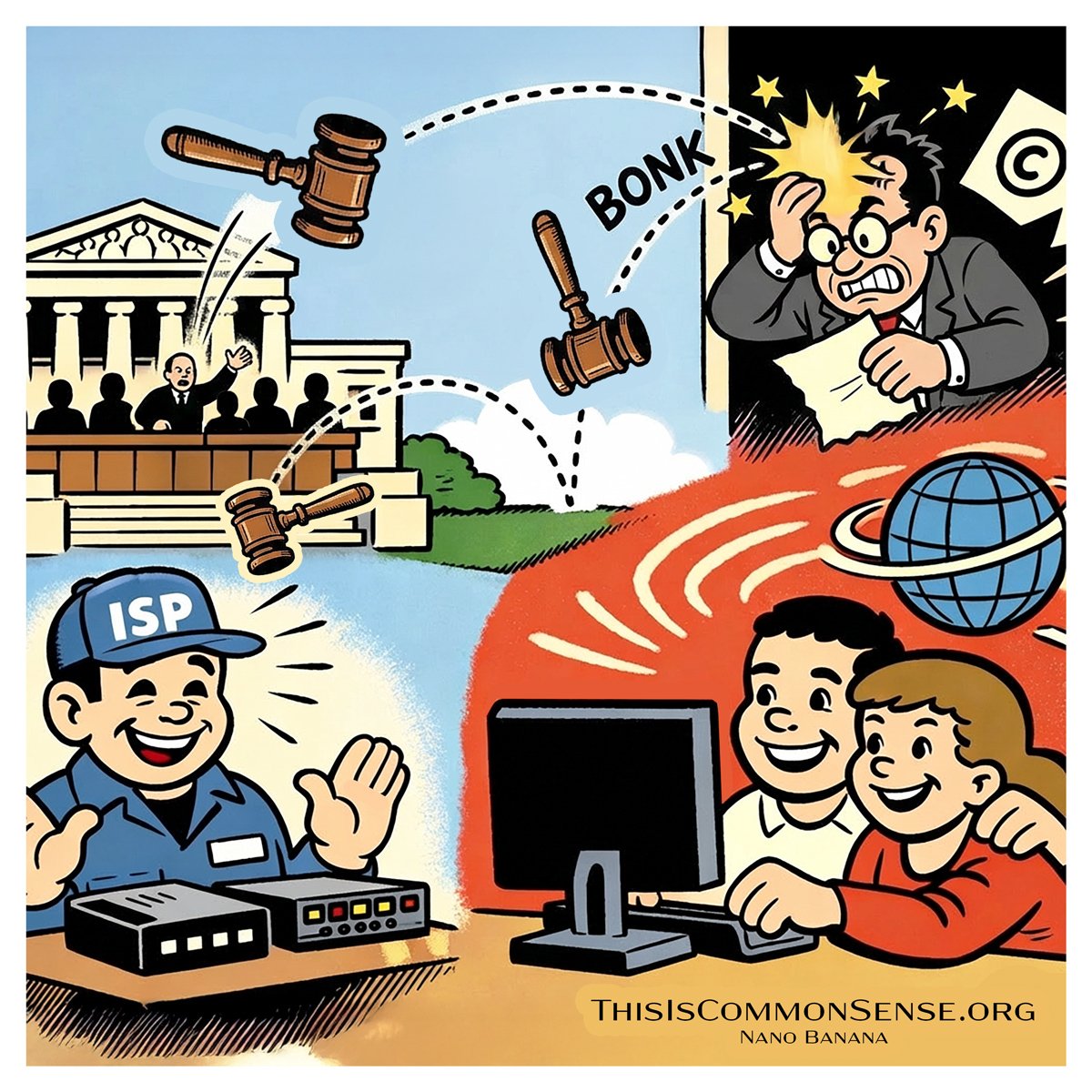
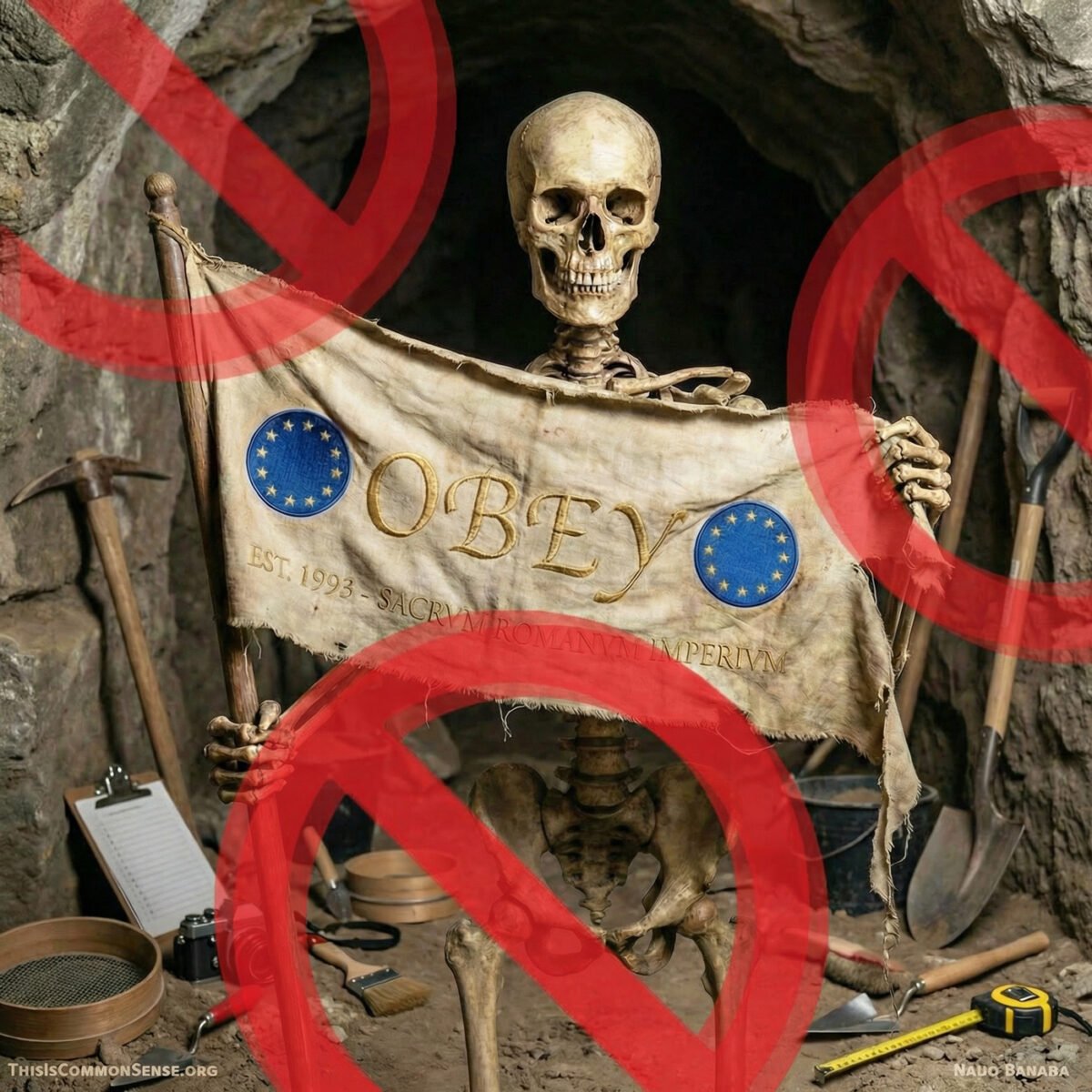
The Skeleton Haunting Europe

Give Emanuel Brünishol credit for pluck.

The man uttered opinions on social media with which some people disagreed. A Swiss court fined him 500 Swiss francs. He refused to pay — believing that one should not be fined or condescend to pay fines for merely uttering opinions, no matter how annoying they may be.

So the Swiss government sent Brünishol to prison for ten days.

His terrible views?

That skeletons can be only male or female. He also seemed to suggest that trans people are mentally ill.

The post: “If you excavate LGBTQI [lesbian, gay, bisexual, transgender, queer, intersex] people after 200 years, you will only find men and women among the skeletons; everything else is a mental illness that was fostered by the curriculum!”

Agree, disagree, in whole or in part — not the issue. The issue is why Brünisholz’s wading into issues of sex and gender caused the Swiss police to haul him in for questioning “on suspicion of incitement to hatred.”

If somebody’s gonna hate you because you disagree with them on a question, the only alternative to “inciting hatred” is staying mute or uttering opinions so empty that not even the most eager censor would think to call the cops about it. And then how can we ever discuss anything that is both controversial and important?

Of course, none of the sensitive Europeans forwarding Facebook posts to the police are being fined for their own hatred — of freedom of speech.

This is Common Sense. I’m Paul Jacob.


PDF for printing

Illustration created with Nano Banana

See all recent commentary
(simplified and organized)
See recent popular posts
Categories
First Amendment rights Internet controversy regulation

Hating X: The Naked Truth

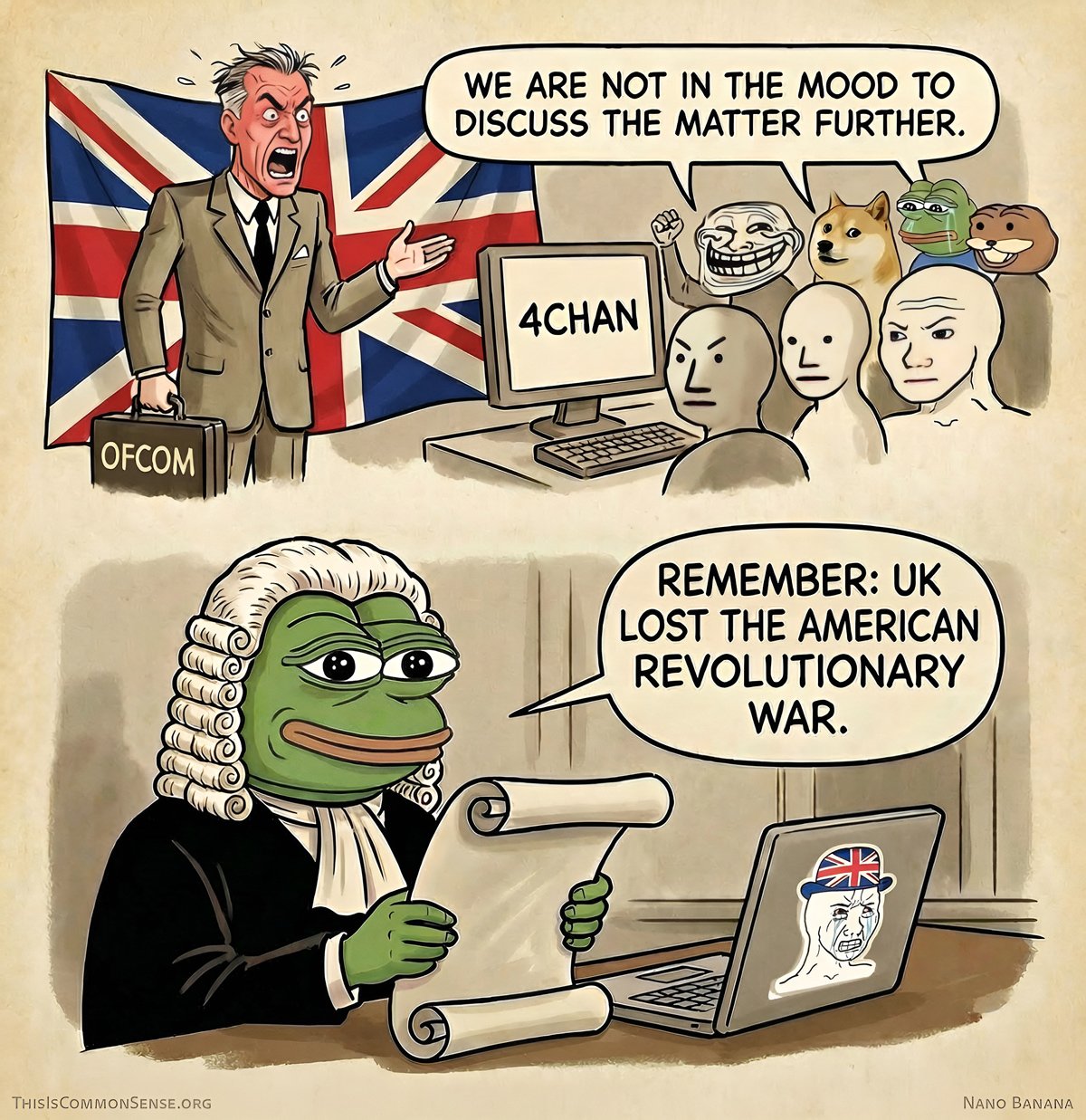
Why do so many U.S. Democrats, like some Europeans, want to outlaw X?

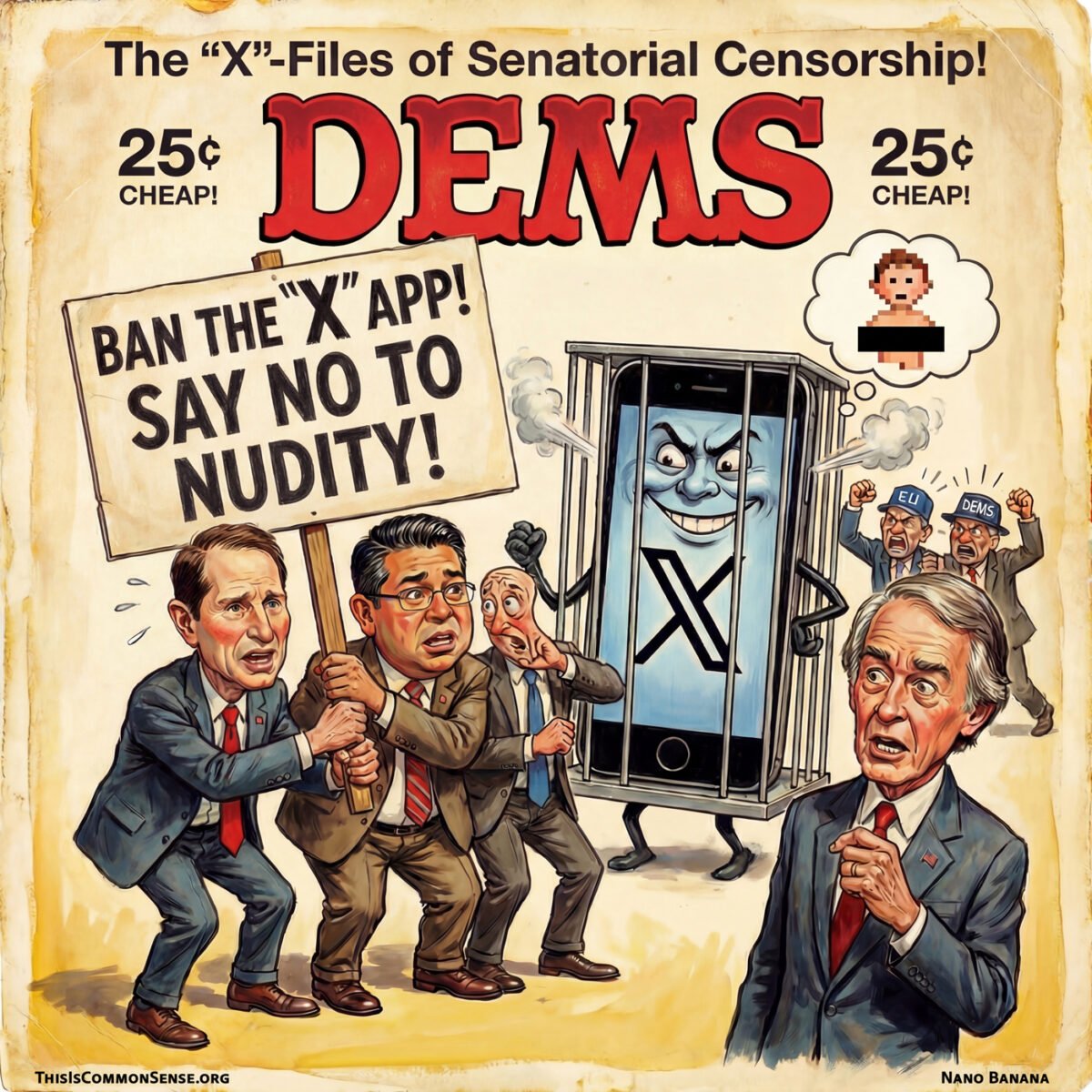
The current stage of the U.S. assault on the social media platform formerly known as Twitter takes the form of senatorial demands that X be removed from iOS and Android app stores.

Why the enmity? 

Well, under the ownership of Elon Musk, X lets people say and write stuff that Democrats dislike. Such as criticism of Democratic policies and politicians, just the kind of speech the First Amendment was drafted to protect. (Criticism of Republican, Libertarian, communist, and anarchist policies and politicians? Also protected.)

The rationalization for the proposed ban is that X’s AI software, Grok, can generate pictures of nude or nearly nude people.

The ability to generate such images is hardly unique to this particular chatbot. If X is to be banned from app stores because of the possibility that users may post generated nudes on the platform, many more social media platforms would, logically, also have to be snared by the censorship net.

Yet, reports Reclaim the Net, the letter sent to the CEOs of Apple and Google “by Senators Ron Wyden, Ben Ray Luján, and Ed Markey asked the tech giants only about X and demanded that the companies remove X from their app stores entirely.”

Unsurprisingly, X has announced that the nude-​ifying feature of Grok has been limited. I asked Grok, and it said that “there is now a taboo/​restriction on generating or editing nudes (or near-​nudes/​revealing attire) of real, existing people from photos. It will refuse prompts to digitally ‘undress’ or sexualize identifiable real individuals. Attempts often result in refusal, blurring, or error messages.”

Fixed?

This is Common Sense. I’m Paul Jacob.


PDF for printing

Illustration created with Nano Banana

See all recent commentary
(simplified and organized)
See recent popular posts
Categories
First Amendment rights general freedom ideological culture international affairs regulation social media

U.S. Bans EU Censors

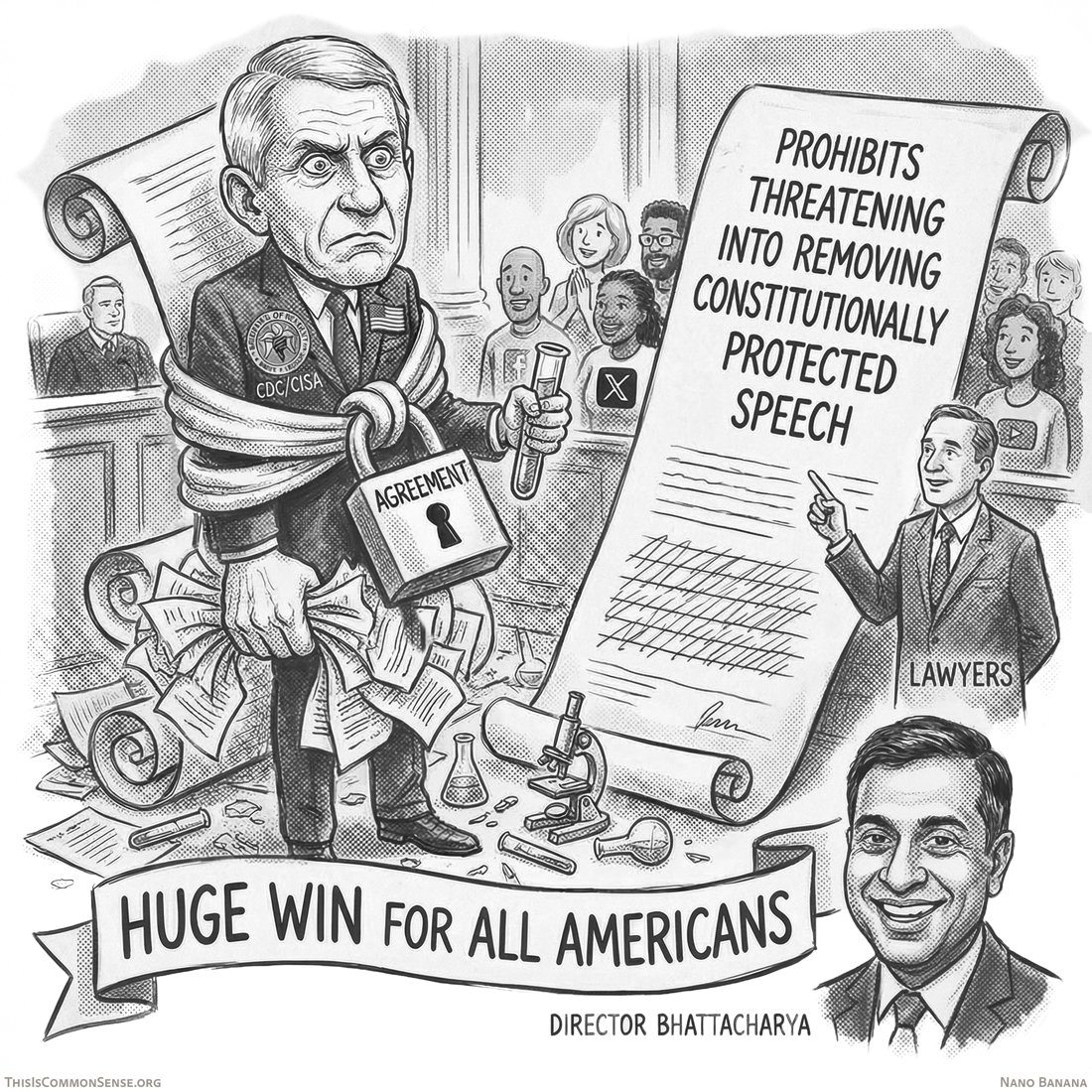
European leaders are condemning American use of visa bans to penalize European enemies of American freedom of speech.

Which is understandable, since the U.S. State Department more than merely condemned the European Union.

In the words of Marco Rubio, the five just-​sanctioned persons “have led organized efforts to coerce American platforms to censor, demonetize, and suppress American viewpoints they oppose.”

Thierry Breton. Former EU commissioner and top proponent of the Digital Services Act, which seeks to force U.S. tech giants to “police illegal content more aggressively” or face big fines. “Illegal” here doesn’t mean speech deployed to commit bank robberies; it’s speech EU censors dislike.

Josephine Ballon and Anna-​Lena von Hodenberg. Leaders of HateAid.

Clare Melford. Leader of Global Disinformation Index, which, the State Department observes, exhorts “censorship and blacklisting of American speech and press.”

Imran Ahmed. Leader of Center for Countering Digital Hate, described by Breitbart as the “deplatforming outfit which defined its central mission as ‘Kill Musk’s Twitter.’ ” CCDH also worked hard to get Breitbart and other sites blacklisted from social media.

Maybe none of these villains was planning a trip to the United States anytime soon.

And, doubtless, much more could be done to combat overseas attempts to censor Americans. But at least this much action against enemies of our First Amendment rights is warranted, even if mostly symbolic.

Just give us a little more time, European leaders. We’ll do more to oppose and thwart your obnoxious global censorship agenda. 

This is Common Sense. I’m Paul Jacob.


PDF for printing

Illustration created with Nano Banana

See all recent commentary
(simplified and organized)
See recent popular posts

Categories
First Amendment rights media and media people national politics & policies too much government

Governing the News

“The Fairness Doctrine was controversial and led to lawsuits throughout the 1960s and ’70s that argued it infringed upon the freedom of the press,” explained FCC commissioner Ajit Pai for the Wall Street Journal, in an op-​ed I quoted yesterday.

“The FCC finally stopped enforcing the policy in 1987, acknowledging that it did not serve the public interest. In 2011 the agency officially took it off the books. But the demise of the Fairness Doctrine has not deterred proponents of newsroom policing.…”

Thankfully, this is old news. The former FCC commissioner’spiece was actually published nearly twelve years ago. Mr. Pai has since moved on to the private sector, in April becoming President and CEO of CTIA, the wireless industry trade association.

We can breathe a sigh of relief. The FCC is not planning on regulating the news for biased content.

Well, supposedly, anyway. 

So why rehash an old issue — why revive something from the proverbial slush pile?

To compare and contrast. Bias is a continuing problem, but the biggest threat to news reporting and dissemination since that time has revealed itself in a very different form, not as “abridgments” to press freedoms but as secret government commands and direction.

Remember what we learned in the Trump-​and-​pandemic years?

During the recent pandemic, and the release of the Twitter Files, we learned of a massive effort of government and “ex-​government” personnel directing social media outlets to platform-​censor dissent, going so far as to squelch new sources … as happened regarding the New York Post Hunter Biden laptop story.

The FCC Fairness Doctrine was nothing compared to the meddling that has more recently occurred behind the scenes, but which we all experienced, on social media. It played a role in the election results favoring Biden in 2020, and in the dysfunctional, disastrous public health response to COVID-19. 

The FCC doesn’t handle that level of biased manipulation of news.

So who does?

This is Common Sense. I’m Paul Jacob.


PDF for printing

Illustration created with Nano Banana and ChatGPT

See all recent commentary
(simplified and organized)
See recent popular posts
Categories
First Amendment rights national politics & policies too much government

The FCC’s Press Bias Fix

You are operating a newsroom or, let’s say, a commentary room. Somebody accuses you of bias in how you decide what to publish.

You deflect: Of course different media organizations have different perspectives; each to its own. Sometimes, too, we choose what to run less rationally than the Platonic philosopher-​journalist would demand.

Bias is everywhere, inevitable.

Which makes the only cure maximal freedom of speech and openness of discourse. The answer to deficient speech is better speech, not either direct or indirect government censorship.

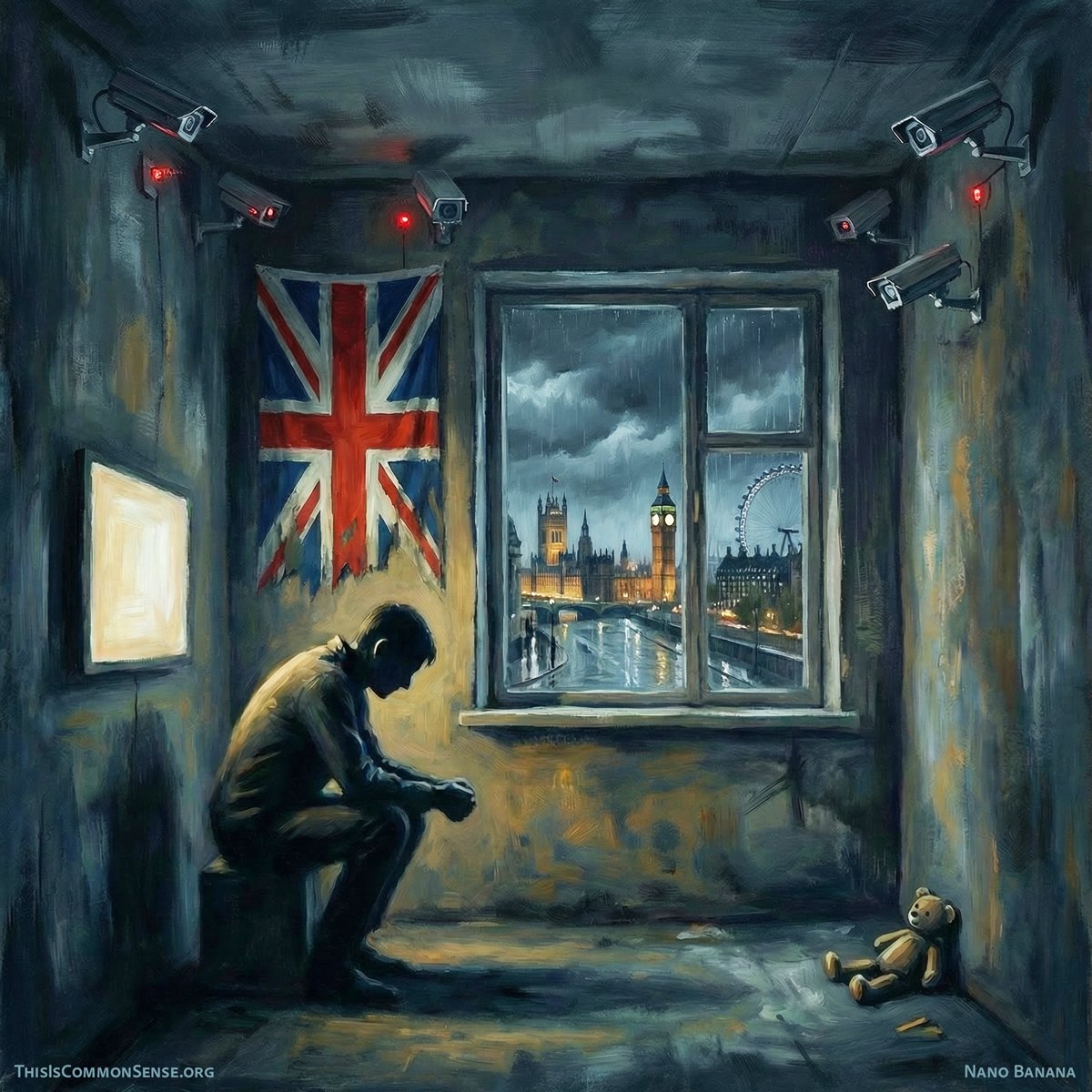
Nevertheless, the FCC has proposed to “investigate” the selection process of newsrooms.

Any such investigation is necessarily biased from the get-​go against freedom of speech and press. Even if it never gets to the regulation stage, the investigation itself constitutes interference. It is impossible for anyone being asked formal investigatory questions by the FCC to be unaware that the questioner has the power of government behind him.

How, for example, is a conscientious employee who respects the rights of his boss supposed to answer this loaded question: “Have you ever suggested coverage of what you consider a story with critical information for your customers that was rejected by management?”?

FCC commissioner Ajit Pai reports that this is one query being considered as part of a “Critical Information Needs” study to determine how stories are selected, “perceived bias,” and how responsive a newsroom is to “underserved populations.”

Pai, who opposes the project, says: “The government has no place pressuring media organizations into covering certain stories.”

Or not covering others.

This is Common Sense. I’m Paul Jacob.


PDF for printing

Illustration created with Nano Banana and Firefly

See all recent commentary
(simplified and organized)
See recent popular posts
Categories
First Amendment rights general freedom ideological culture international affairs Internet controversy

Constant Caved

Sometimes people suggest that the People’s Republic of China is no threat beyond its borders.

You can’t reach this doctrine based on a thorough canvass of the evidence. From China’s perspective, though, it is true insofar as the Chinese government treats its borders as encompassing the entire earth and perhaps even the moon.

What is also true, though, is that not every person or organization outside of China that advances China’s totalitarian agenda is being threatened by China.

For example: the company Constant, which operates the hosting service Vultr. Based in Florida (a U.S. state), Constant has willingly cooperated with Beijing’s censorship agenda as promoted by the China-​based conglomerate Tencent.

Tencent owns the social media platform WeChat. As the Chinese Communist Party demands of all such platforms within China, WeChat censors discussion of topics that the CCP dislikes, e.g., Tiananmen Square or Xi Jinping pictured as Winnie the Pooh. 

An organization called GreatFire produces a Chinese-​language website, freewechat​.com, which archives many of the posts on taboo subjects that get censored on WeChat.

Since 2015, FreeWeChat had been hosted by Constant’s Vultr — until several months ago, when Vultr started receiving harrumphing letters from Tencent, demanding that it stop hosting FreeWeChat. Vultr obeyed; dropped FreeWeChat.

Which, fortunately, managed to transfer its site to another hosting service.

Tencent’s letters offered an array of specious claims that GreatFire refuted in detail. GreatFire’s attempts to communicate with inconstant Constant about the matter have had no effect. Nevertheless, FreeWeChat and its noble mission survive.

This is Common Sense. I’m Paul Jacob.


PDF for printing

Illustration created with Nano Banana and Firefly

See all recent commentary
(simplified and organized)
See recent popular posts
Categories
First Amendment rights international affairs social media

Don’t Pay, Don’t Play

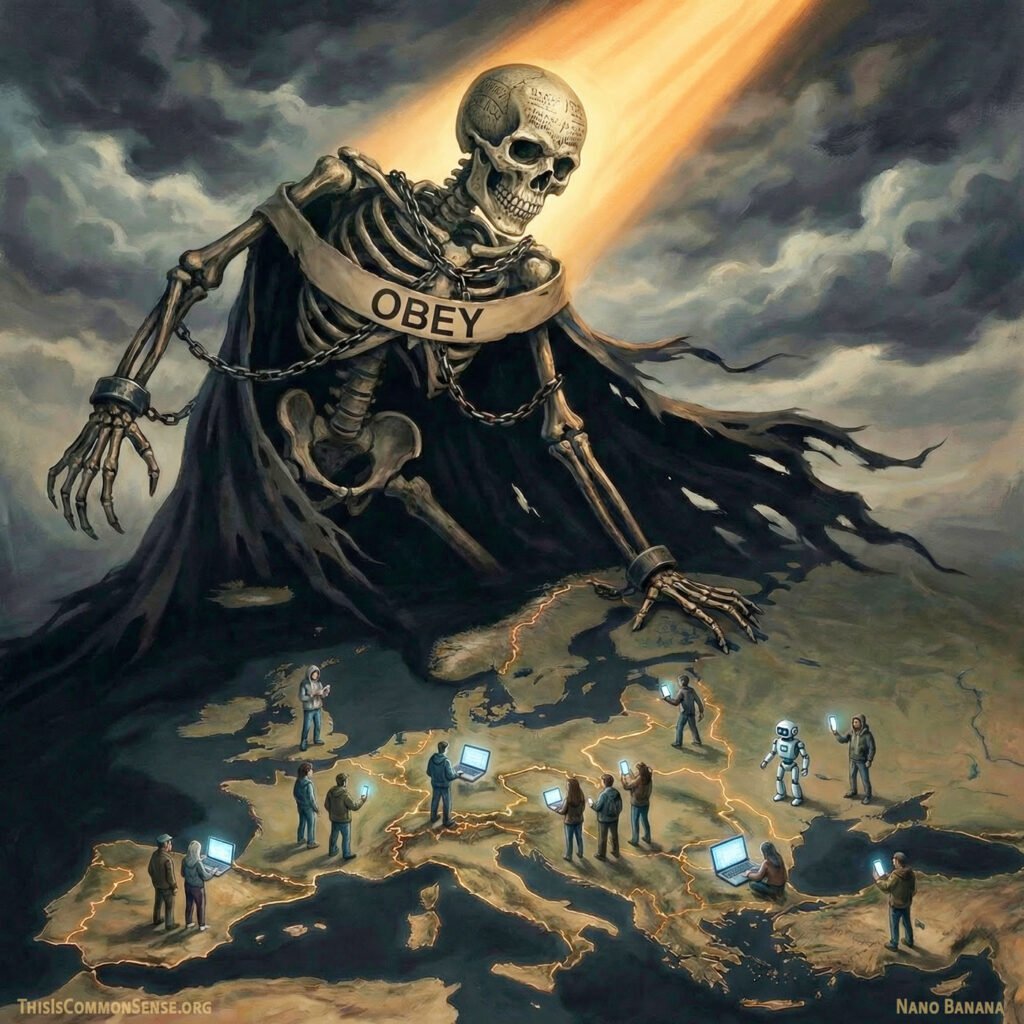
The European Commission is fining the X platform 120 million euros (140 million dollars), for “transparency failures”: not sharing advertising and user data with the EU and not making it easy to censor account holders.

As Reclaim the Net reports, the European Union wants platforms to open themselves to what it calls “independent research.” In practice, this means that “academics and NGOs, often with pro-​censorship political affiliations” get special access to the data, “exactly the kind of surveillance the [Digital Services Act] claims to prevent.… The EU is angry that X is not policing speech the way it wants.”

My advice to Elon Musk is to shut down X (formerly Twitter) throughout the EU. And refuse to pay the fine.

X’s departure from the EU wouldn’t need to be permanent. For the censors would then have not only X and its uncooperative CEO to contend with; suddenly, a pro‑X lobby of millions of Twitterers would be putting pressure on the censors.

The chances of unilateral surrender by the EU? Pretty high. And that’s the only kind of surrender Musk should accept.

If he agrees to even a little EU repression in return for lifting of the fine, that could lead to a total loss for the freedom-​of-​speech side; the bureaucrats, spies, and busybodies would likely take that seemingly marginal concession and relentlessly work to enlarge it.

Accept only total victory. And be ready to again leave the EU the instant the EU-​crats resume their attacks.

This is Common Sense. I’m Paul Jacob.


PDF for printing

Illustration created with NanoBanana and Firefly 

See all recent commentary
(simplified and organized)
See recent popular posts
Categories
defense & war international affairs Internet controversy

Outernet Integrity

The Internet is a global network. Update a website or type an email over here, in a jiffy it ends up over there, even if “there” is thousands of miles away.

Now, in cases where the connections of the interconnection get disrupted, the electrons (well, “packets”) are routinely diverted to a more stable path. This inherent path redundancy gives the Internet high fault tolerance — an impressive resilience against localized failures.

But not always. Certainly not if we’re talking about a major undersea data cable. Were such a cable accidentally severed — or deliberately severed, by a hostile power practicing for war, say, the People’s Republic of China — transmission of data between affected countries may stop dead until the cable can be fixed.

Declan Ganley wants to cure this particular vulnerability by building an alternative he calls the Outernet, a space-​based version of the Internet that bypasses the earthbound network entirely. (Currently, even the satellite-​ferried data of Starlink must pass through the terrestrial network.)

To kill Ganley’s vision, the Chinese Communist Party first tried to bribe him with a $7.5 billion offer of partnership; i.e., de facto control of the Outernet by the CCP. The Party’s emissary hinted that if Ganley declined, his company Rivada Networks would be plagued by lawfare.

Ganley declined, and Rivada got hit by the lawfare: “160 legal exchanges” and $36 million in legal fees over three years. Nevertheless, Rivada is on course to launch six hundred satellites in 2026.

Was Declan Ganley ever tempted?

No. “I have a soul to be accountable for,” he explains.

This is Common Sense. I’m Paul Jacob.


PDF for printing

Illustration created with Krea and Firefly

See all recent commentary
(simplified and organized)
See recent popular posts

Categories
crime and punishment First Amendment rights international affairs social media

Quit Banging on Brits

We hear so much bad news about censorship coming out of the United Kingdom that it’s almost shocking when something good happens instead.

That good news is a retreat from harassing innocent people for posting online too freely for the taste of British police enforcers.

In the big picture, the change in policy by the Metropolitan Police Service is but a minor tactical withdrawal in the pursuit of a censorship agenda that is otherwise proceeding on all fronts. It’s not so minor for people like, say, comedy writer Graham Linehan.

Several weeks ago, Linehan was arrested at Heathrow Airport by five armed officers.

“I was arrested at an airport like a terrorist, locked in a cell like a criminal, taken to hospital because the stress nearly killed me, and banned from speaking online.” His sin was posting a few tweets critical of transgender activists.

The charges against Linehan have been dropped. 

And from now on, says the Met, it will stop investigating “non-​crime hate incidents.” A spokesperson explains that the commissioner “doesn’t believe officers should be policing toxic culture war debates.…” 

The “non-​crime hate incidents” will still be logged, though.

The policy of harassing Britons for cranky words has been softened before, by the Tories. When Labour came in, the new government promptly hardened things again.

And further caution: Met policy is not government policy. 

So this particular hammer for banging upon speakers daring to offend the easily offendable could come swinging down again at any moment.

This is Common Sense. I’m Paul Jacob.


PDF for printing

Illustration created with Krea and Firefly

See all recent commentary
(simplified and organized)
See recent popular posts

Categories
First Amendment rights general freedom ideological culture

Two Ways of Walking Away

“The First Amendment prohibits the government from restricting free speech,” explained Michael J. Reitz in The Detroit News. But what about individuals and non-​government groups? 

“Free speech doesn’t compel you to listen. You can walk away,” Mr. Reitz goes on to say.

In the piece, reprinted by the Mackinac Center for Public Policy, Reitz wonders, however, whether this “agree to disagree” attitude is enough to keep free speech alive. He believes that “as a society, we show our commitment to free speech through our willingness to listen, discuss and debate. It’s not consistent to say I value another person’s right to speak if I refuse to engage.”

A liberal attitude — in a social, perhaps non-​political sense — is what Reitz advises: tolerant of differences; not prone to anger at hearing an opposing view; engaging logically and fairly with differing opinions; but free to take it or leave it without fearing recrimination, retribution or retaliation.

This right to walk away may define free speech, but Reitz argues that we mustn’t all walk to our bubbles in anger.

An old saw, recently popularized, insists that “we have freedom of speech, but we don’t have freedom from the consequences of speech.” In a free society, you may say what you like on your property, on your dime, but some people may shun you. Or fire you. And that’s OK.

What’s not an acceptable “consequence” of freedom of speech? Being silenced by the government, or the mob, either with petty violence or maximum force. Too many people use the “no freedom from consequences” cliché as an excuse to harass people at their work. Or bank. This is where it gets difficult. 

Since one neither has a right to a specific job nor to force a bank to accept one’s money on account, purely social pressure to de-​bank, de-​platform, or get someone fired, fits in a free society. But is Reitz correct that, legality aside, when such social pressure is common, and one-​sided, free speech is doomed?

Perhaps society is doomed, in multi-​lateral wars of us vs. them. 

This is Common Sense. I’m Paul Jacob.


PDF for printing

Illustration created with Midjourney and Firefly

See all recent commentary
(simplified and organized)
See recent popular posts