Categories
ballot access incumbents initiative, referendum, and recall term limits

Intentionally Confounding Incumbents

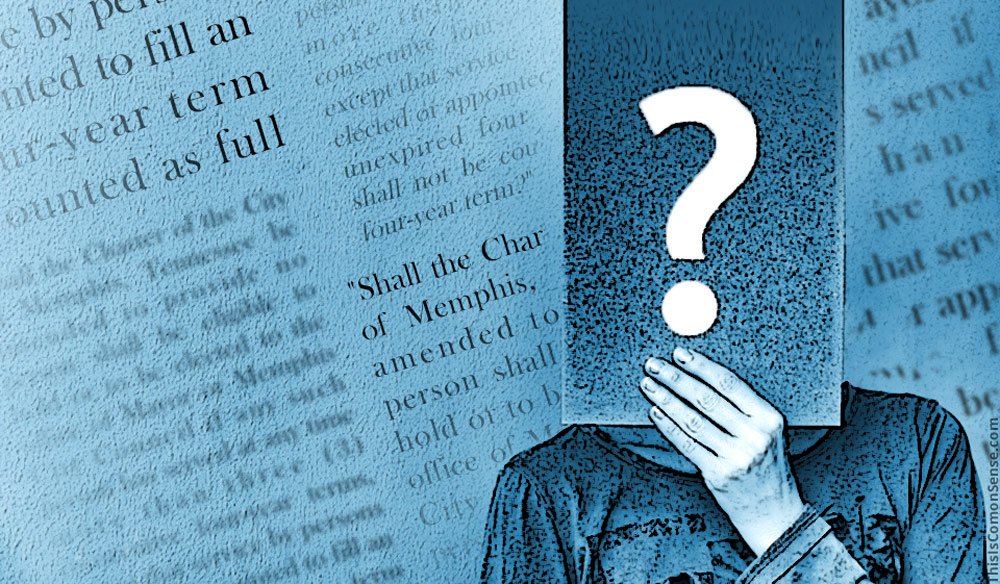
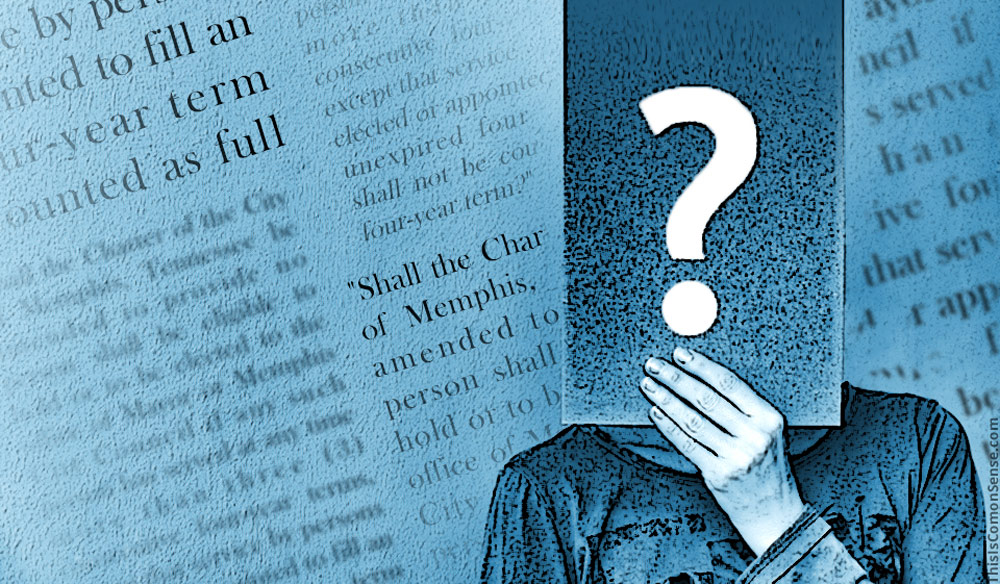
The three issues on the ballot in Memphis this November are “not complicated,” writes Commercial Appeal columnist David Waters, “unless you read the actual ballot questions.”

Which is all most voters will see.

All three directly affect the self-interest of members of the Memphis City Council, which placed them on the ballot and determined the language voters will attempt to decipher. 

Waters called that ballot wording “incomprehensible” and “intentionally confounding.” His newspaper colleague, Ryan Poe, accused the council of “trying to stack the deck.”

The first measure would weaken the council’s term limits, passed in 2011 with a 78 percent vote and just about to kick in. The ballot language, Mr. Poe explains, “reads like voters are being asked to place limits on council members . . . rather than extend them.” By an extra term.

The second issue would repeal Instant Runoff Voting (IRV), which was brought forth by citizen petition and enacted via a 71 percent yes vote. The confusing ballot wording brings up a 1991 federal court decision without providing voters any context or explanation.

Though IRV has not yet been used, council incumbents fear it.* This becomes especially clear when you discover that the third ballot question is actually a sneakier, second attempt to repeal IRV.

“Instant runoffs, and run-off elections in general, tend to make it easier for challengers to unseat incumbents in multi-candidate district races,” argues Waters. He adds, “Incumbents generally become stronger the longer they are in office.”

To incumbent politicians, reform is a dirty word. 

This is Common Sense. I’m Paul Jacob.


* Back in February, the council was caught paying a lobbyist to convince state legislators to restrict their city’s ability to implement Instant Runoff Voting. 
PDF for printing


Categories
Accountability ballot access general freedom government transparency initiative, referendum, and recall local leaders moral hazard

Fear of Voters

You are a state legislator, say. And an issue could be placed on the ballot on which a majority of your state’s citizens might not vote according to your preference. What would you do?

  1. Educate your fellow citizens on the merits of your position; or
  2. Dawdle while calling a lobbyist for advice; or
  3. Change the constitution to make it impossible for such a vote to ever be held?

State Rep. John Enns chose option C — perhaps after exhausting B. Stamping out Oklahoma’s ballot initiative process, freeing Enns and other legislators from this citizen check at the ballot box, is the essence of his House Bill 1603.

The Sooner State already possessed the toughest petition requirements in the country.  Supporters must gain the country’s highest percentage of voter support (15 percent) while limited to the second shortest time period (90 days) to circulate petitions.

On top of this current statewide slog, Enns’ constitutional amendment would require also qualifying in every single county. Oklahoma has 77 counties.

As the Tulsa World editorialized, “he wants to make it impossible.”

What lousy rationale lies behind Enns’ desire to destroy democratic governance?

In response to another legislator’s query about his “fear that some marijuana bill will . . . become a state [ballot] question,” Enns claimed his effort was “not pre-emptive.” But he acknowledged his strong opposition to legalizing recreational marijuana, which he pointed out “had been done through initiative petition” in other states.

Enns is afraid of Oklahoma voters having their say. He should be.*

This is Common Sense. I’m Paul Jacob.


* I mean, of course, that Rep. Enns should fear being booted out of office on his keister. He should not have to fear physical reprisal. The Tulsa World reports that the Oklahoma Highway Patrol is now providing security to Enns, after a death threat was received related to his HB 1603.


PDF for printing


Categories
general freedom initiative, referendum, and recall local leaders nannyism political challengers Regulating Protest

Delivering a Double Standard

Former State Representative Matt Lynch got right to the point in his Cleveland Plain Dealer op-ed: “The people’s right to amend the Ohio Constitution through the ballot initiative is under attack.”

Created by the Ohio Legislature to consider constitutional amendments, the Ohio Constitutional Modernization Commission (OCMC) has a hidden purpose: provide cover for that same legislative body. As Lynch aptly notes, the OCMC “is filled with politicians and lobbyists. Thus, commission recommendations must be scrutinized for fidelity to the public good versus the special interests of political insiders.”

This Thursday at the capitol in Columbus, OCMC will consider whether to recommend that state legislators propose an amendment to the state constitution to make future amendments more difficult. That’s an awfully bad idea in itself. But, bizarrely, the greater difficulty would depend entirely on who proposes the amendment.

The working OCMC recommendation makes no change to the legislature’s ability to propose and pass constitutional amendments. What it would do is make it tougher for citizen-initiated amendments. Most unhelpfully, the recommendation would require only citizen-proposed amendments to garner a supermajority of 55 percent of the vote.

Consequence? Suppose a measure proposed by citizens — term limits, ethics reform, government transparency — was massively outspent by powerful interests, and yet still won 54.9 percent of the vote. It would lose.

Yes, the 45.1 percent of voters would defeat the 54.9 percent of voters.

Call it “New Math.”

The very same issue proposed by legislators would win . . . and be added to the state constitution.

The double standards are breathtaking,” writes Lynch,* adding, “and no other state has such unfair rules.”

This is Common Sense. I’m Paul Jacob.


* Sunday at Townhall, I also discussed this double standard. And the word may be getting out. Townhall always adorns my column with a photograph — this time featuring Ohio Attorney General Mike DeWine, also a Republican candidate for governor in 2018. DeWine’s campaign objected to being pictured, arguing they have no involvement with the OCMC. DeWine’s picture has been removed.


Printable PDF


Categories
general freedom ideological culture initiative, referendum, and recall local leaders national politics & policies political challengers

Not a Joke

Yesterday, the chief sponsor of a Washington State legislative bill withdrew it. He said it was “a joke.” His co-sponsor wasn’t laughing, however . . . even proclaimed an intent to introduce the bill again next year.

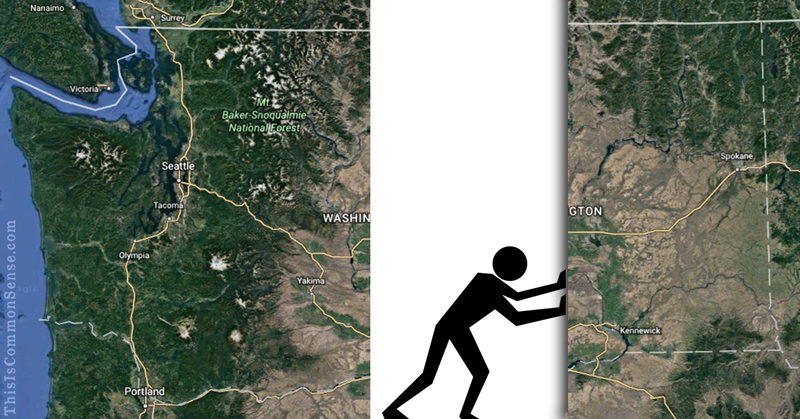
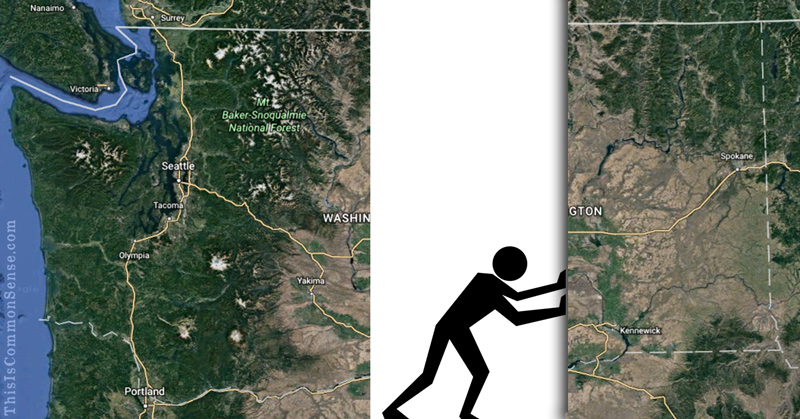
The legislation’s purpose? Split the state into two.

The eastern, drier half of the State is much less populated, and the wet, western half gets its way almost all the time. The bill’s sponsor mentioned his intent: to call attention to the persistent lack of effective representation.

It was not a funny* joke. What he meant, surely, was “a stunt.”

This is just one of many ongoing secessionist movements in the United States. Most represent the eternal struggle between more self-reliant, community-centered and less statist country folk and the more atomized, fearful statists of the cities. But also present is the problem of representation. There is not enough of it. Many people do not have a voice. Hence the desire for exit.

“Voice” vs. “exit” are two crucial aspects of constitutional politics, particularly relating to different kinds of “freedom.”

Many states could use splitting, California, especially.

But exit is not the only option. Representation itself could increase in sheer numbers; California, anyway, has (astoundingly!) too few politicians, er, representatives . . . per residents.

Another key constitutional change would be to set the bar higher to passing new legislation, especially regarding adding tax burdens.

But not for the people. We are best represented by our own votes, which means initiative and referendum rights extended to all states. Citizens of Washington State (still intact) lack the ability to change their constitution by initiative — an important process for future state shape shifts.

This is Common Sense. I’m Paul Jacob.


* Originally, the new state’s name was to be Liberty, much better than the states of Tyranny, Servitude and Denial. Now I read that the proposed name is Lincoln, awkwardly tied to our union’s most determined anti-secessionist. That is a bit funny.


Printable PDF