Categories
budgets & spending cuts ideological culture national politics & policies

Pleistocene Politics

Back in the Eocene — I mean the 1990s — Senator Chuck Schumer and President Bill Clinton and most other Democrats insisted that “healthcare” benefits not be distributed to “those who’ve entered the country illegally.” Now, the party is united behind the opposite notion, in which benefits — paid for by resident taxpayers — must be delivered generously to all comers. 

This was most clearly demonstrated in 2019, during one of those huge panels of presidential hopefuls on the Democratic side, all raising their hands on whether they supported giving tax-​funded medical assistance to illegal aliens. 

Yesterdayquoted Rep. Maxine Waters (D‑Calif.) on how Democrats want to “save people.” 

What I didn’t quote was the question she was asked — “Do Democrats want to prioritize the healthcare for illegal aliens over a government shutdown?” — or how she initially responded: “Excuse me; stop it right there. We’re not prioritizing; what we’re doing is saying, simply, we wanna keep the government open and we wanna work with the Republicans and have a bipartisan agreement to keep this government open and healthcare is at the top of our agenda.”

Whew. While denying she’s prioritizing what’s at “the top” of her “agenda” — what prioritization means — her desire for a “bipartisan agreement” is just as fake, for what she and her fellow Democrats demand is that the Republicans completely agree with their most extreme agendum: subsidized medical assistance for all comers.

 That’s not “bipartisan.” There’s no compromise. It’s a tactic of intransigence.

Nassim Nicholas Taleb wrote about this in terms of an “intransigent minority rule,” positing that in complex systems — such as societies, markets, or Congress — a small, highly committed minority (as little as 3 – 4 percent) can impose its preferences on a flexible majority due to an asymmetry of choice.

Meaning that the opponents of “limitless” subsidies (socialism) must become intransigent themselves to win.

This is Common Sense. I’m Paul Jacob.


PDF for printing

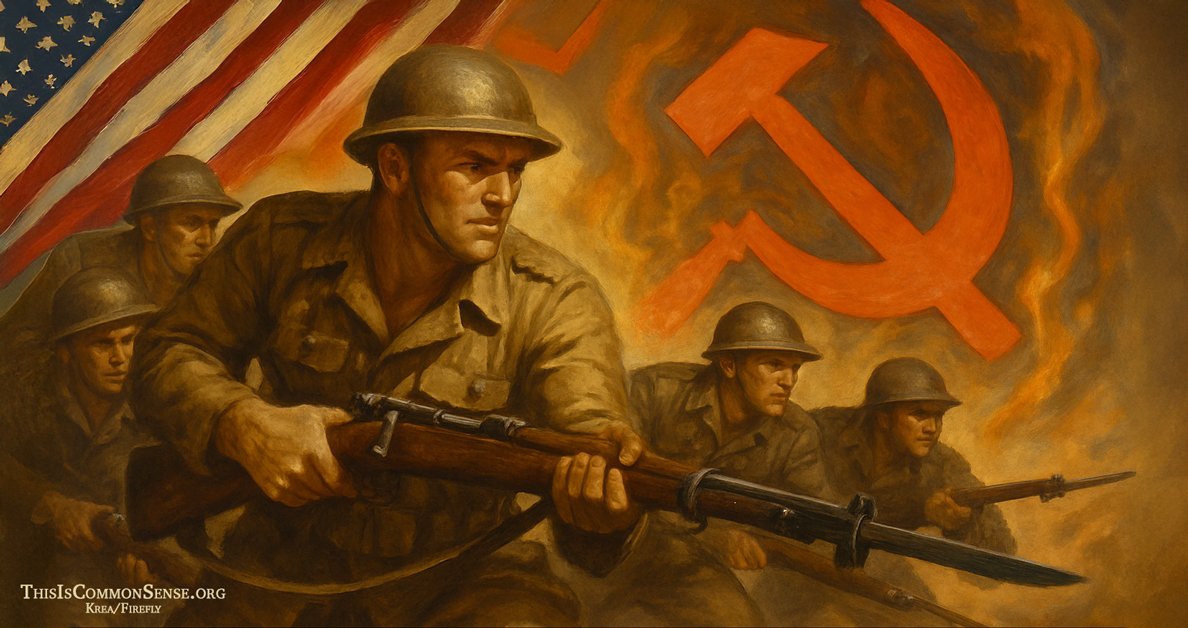
Illustration created with Krea and Firefly

See all recent commentary
(simplified and organized)

See recent popular posts

Categories
general freedom ideological culture

American History Month

When we think of Black History Month, whom do we tend to think of?

One person I think of is Morgan Freeman, who “detests” this commemoration, “the mere idea of it.… You are going to celebrate ‘my’ history?! The whole idea makes my teeth itch.… My history is American history.”

He also dislikes the term “African-​American,” calling it a misnomer.

“Most black people in this part of the world are mongrels. And you say Africa as if it’s a country when it’s a continent, like Europe.”*Freeman regards his skin color as only one attribute, and not one that goes very far to distinguish him as an individual.

What events and which achievers might we ponder in addition to Harriet Tubman, Frederick Douglas, Martin Luther King, other champions of civil rights, great inventors, scientists, educators, business, artists, even actors like Freeman and Denzel Washington? The list of celebration-​worthy black Americans is endless.

In a proclamation about Black History Month, the new White House mentions a name that doesn’t always make the list: scholar Thomas Sowell.

Highlighting Sowell may make the teeth of many progressives itch, for he advances unconventional perspectives and reasoning about race and the real impact of racism on economic as well as other features of American life and our global civilization. He has done this for decades, especially in books featuring provocative titles, including Civil Rights: Rhetoric or Reality? (1984), The Vision of the Anointed (1995), Black Rednecks and White Liberals (2005), and Discriminations and Disparities (2018), often criticizing policies such as “affirmative action.”

Black history is American history — and vice versa — every month of the year.

This is Common Sense. I’m Paul Jacob.


* Of course, in this part of the world, most of us are “mongrels.”

PDF for printing

Illustration created with Flux and Firefly

See all recent commentary
(simplified and organized)

See recent popular posts

Categories
Common Sense general freedom

Happy New Year — 2025

“We have it in our power to begin the world over again. A situation, similar to the present, hath not happened since the days of Noah until now. The birthday of a new world is at hand, and a race of men, perhaps as numerous as all Europe contains, are to receive their portion of freedom from the events of a few months. The reflection is awful, and in this point of view, how trifling, how ridiculous, do the little paltry cavilings of a few weak or interested men appear, when weighed against the business of a world.”

—Thomas Paine

Categories
Common Sense general freedom ideological culture

Precious Gifts … 2019 and Beyond

There’s a quiet on Christmas morning … after Santa has come and gone … and the kids are still sound asleep … sugar plum fairies dancing to their gentle snoring.

A moment to stop and think.

I hope they’ll like their presents; they always do. There’s so much love my wife and I want to share, to give to them.

Of course, the biggest gifts are never under the tree. The most important being a staple home, with love, and the freedom for children to grow into themselves.

My parents gave me that … along with the bicycles and baseball gloves and some really good books. I’ve tried to be the same kind of parent.

Another incredible endowment I’ve enjoyed is to be born in a country “conceived in liberty.” A place where individual citizens are the sovereigns, creating government to be a servant and not a master. Land of the free.

What a gift!

But Tom Paine told us that, “What we obtain too cheap, we esteem too lightly, ’tis dearness only that gives everything its value. Heaven knows how to put a proper price upon its goods; and it would be strange indeed if so celestial an article as FREEDOM should not be highly rated.”

Freedom is under siege. And, therefore, we who love freedom, grateful for our historic luck, must come together to protect our “expensive” gift.

Some may get discouraged after setbacks, recent and not-​so-​recent, but none of us got involved in politics because we like “the game” and figured we’d pile up a shelf of trophies. We’re engaged because we must be and we seek victories because, as Churchill once put it, “without victory, there is no survival.”

In 1776, on this very day, General George Washington and his soldiers of the American Revolution crossed the Delaware River to score a surprise military victory against the British at Trenton, New Jersey.

Thank goodness, for these brave patriots and their muskets. Three Americans gave their lives in the battle. To secure our liberty.

Today, the Gift has been handed to us. Not to play with on Christmas morning and forget about, not to let get broken without our fixing it, but to protect and defend and cherish.

My commentary strives to illuminate, to amuse and to motivate toward action, bringing citizens together. Citizens in Charge protects the initiative process — the best weapon citizens have to cut taxes, term-​limit politicians, stop the drug war, protect property rights, and place limits on government. The Liberty Initiative Fund partners with leaders across the nation putting measures  on the ballot to protect freedom and hold government accountable.

Thanks for your gifts to these efforts and to the many other important ones. We aim to protect the precious gift of freedom.

This is Common Sense. I’m Paul Jacob. Merry Christmas! Happy Holidays!


PDF for printing

Christmas 2019

See all recent commentary
(simplified and organized)

See recent popular posts
Categories
folly ideological culture too much government

Not So Great … Again

“We’re not going to make America great again,” New York Gov. Andrew Cuomo proclaimed at a bill-​signing ceremony this week. And then, further poking the president, the governor added, to gasps from the audience: “It was never that great.”

America — for all its faults, failings, and wrongdoings — has been a tremendous force for good, for freedom. At the same time, talking about how great we are really seems … what’s the word? Boastful.

“We have not reached greatness,” Cuomo went on to clarify. “We will reach greatness when every American is fully engaged. We will reach greatness when discrimination and stereotyping against women, 51 percent of our population, is gone and every woman’s full potential is realized and unleashed and every woman is making her full contribution.”

This is pie-​in-​the-​sky stuff. Utopianism. The state government of New York is not going to succeed — or even actually try — to “engage” every citizen “fully.” Neither will the Empire State help “every” female New Yorker to self-​actualize … while magically wiping out “stereotyping.”

When very real governments fixate on fantasy, they can only fail. Achievable responsibilities — like fixing roads, improving schools, enforcing laws — fall by the wayside. 

Both President Trump and Governor Cuomo would do well to concern themselves with running the government. Leave the greatness to the rest of us.

Oh, and the rest of the story? 

“I’m Andrew Cuomo, and I work for you,” the governor said in a 2010 video announcing his entry into the gubernatorial race. 

“Together,” he went on to declare, “we can make New York great again.”

This is Common Sense. I’m Paul Jacob.


PDF for printing


Categories
general freedom U.S. Constitution

Why We Fought

When I was young, we were instructed to revere the men dubbed by President Warren Harding as “the Founding Fathers.” Reverence has since gone out of fashion.

Even today’s freedom-​minded often express a general iffiness about America’s separation from England.

Now, I’m so deep-​seatedly anti-​monarchical, so resolutely anti-​royal that I tend to shake my head at this sort of stuff. Yet people I very much admire might be called Revolution Liberty Skeptics.

“Can anyone tell me why American independence was worth fighting for?” asks economist Bryan Caplan. He says “it’s hard to get a decent answer” on specific policies improved by the secession from the Empire, at least liberty-wise. 

He speculates, for example, that separation “allowed American slavery to avoid earlier — and peaceful — abolition.”

Historian Jeffrey Rogers Hummel ably answers him, noting that before “the American Revolution, every New World colony, British or otherwise, legally sanctioned slavery, and nearly every colony counted enslaved people among its population. As late as 1770, nearly twice as many Africans were in bondage throughout the colony of New York as within Georgia, although slaves were a much larger percentage of Georgia’s population.” Vermont, which did not join the union until 1791, abolished slavery in 1777. By 1804, gradual emancipation had begun in all the remaining northern states that had not abolished slavery outright.*

Do we really think all this would’ve happened under British rule?

As Hummel reminds us, “emancipation had to start somewhere.”

It started in the country that put liberty up front.**

Scoffing at the Revolution now won’t put liberty further forward.

This is Common Sense. I’m Paul Jacob.


* New York’s gradualist plan declared all children of slaves born after July 4, 1799, to be free after ages 25 and 28 years, female and male, respectively. 

** Hummel makes good points on other freedoms, too.