Categories
Fourth Amendment rights media and media people property rights

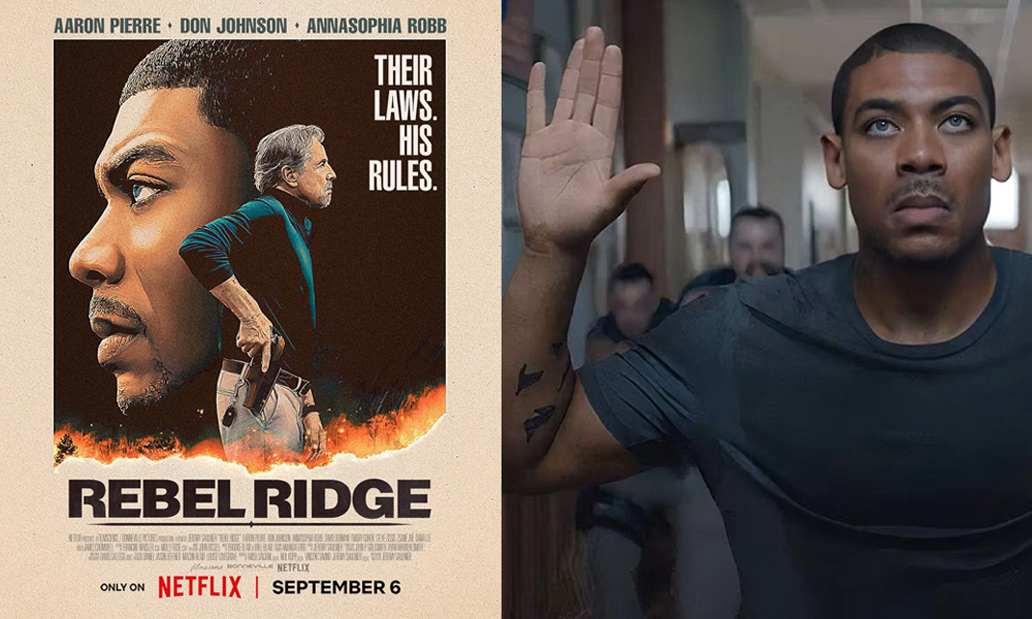
The Realism of ‘Rebel Ridge’

Some viewers of the popular Netflix film Rebel Ridge say that it’s unrealistic. But a certain crucial assumption of the story is very realistic indeed.

The movie assumes that some cops are bad cops. More specifically, it assumes that bad cops often have arbitrary legal authority to do bad things. In the movie, what gets the ball rolling is the arbitrary authority conferred by America’s civil forfeiture laws.

These laws permit officers to confiscate cash on your person if they merely have a suspicion, or pretend to, that the cash is ill-​gotten. They needn’t have evidence that it’s drug money or bank-​robbery proceeds. 

The suspicion is enough.

And even if you can show that the money was acquired by your own hard work and withdrawn from your bank account in pursuit of a legitimate end — buying a truck, bailing a cousin out of jail (the reason that the protagonist carries cash in Rebel Ridge) — that’s typically not the end of it. It’s rare that the law-​empowered thugs who violated your property rights just say “Oops!” and hand your property right back.

J. Justin Wilson of the Institute for Justice observes another realistic portrayal of injustice in the movie, “over-​detaining defendants to keep them quiet.” In real life, though, such over-​detention may have as much to do with bureaucratic sloth as with malice directed toward a particular prisoner.

The solution, says Wilson, is not revenge, but the kinds of legal reform IJ fights for. The movie, on the other hand, leaned more on revenge.

This is Common Sense. I’m Paul Jacob.


PDF for printing

Illustration created with PicFinder and Firefly

See all recent commentary
(simplified and organized)
See recent popular posts

Categories
crime and punishment general freedom insider corruption

Puppycide

The cost of the War on Drugs is not to be reckoned just in dollars. Or in that more serious accounting index: lost lives. The hit to our civil liberties has been enormous, too, and instrumental in setting up the modern Surveillance State.

But beyond these, there is a stranger result: the War on Drugs is also, de facto, a War on Dogs.

“Detroit police officers shot 54 dogs last year, according to public records obtained by Reason,” writes C.J. Ciaramella. “That’s a marked increase over the number reported by the department in 2016 and 2015, and more than twice as many as Chicago, a city with roughly 2 million more people.”

Reason magazine has been covering the War on Dogs by police forces across the country — identified in Ciaramella’s article as “puppycide” — for years, and I’ve mentioned it here on Common Sense, too. The problem is not dogs shot because they are wild, or have rabies, or the like. One expects that sort of thing.

What is problematic is that a third of the Detroit shootings took place in the course of no-​knock raids and other common police actions entailed by contraband interdiction. The Detroit number turns out to be “more animal shootings than the entire Los Angeles Police Department performed — 14 total — in 2016,” Ciaramella relates.

Excessive shooting of dogs is costly to cities, of course — to taxpayers, to be precise — in terms of civil lawsuits filed and settled. And to families, some of them quite innocent of any crime, who lose their pets. 

It is a sign of a police culture corrupted by … the War on Drugs.

This is Common Sense. I’m Paul Jacob.


PDF for printing


Categories
Accountability crime and punishment government transparency moral hazard responsibility too much government

Half a Win Is Better than None

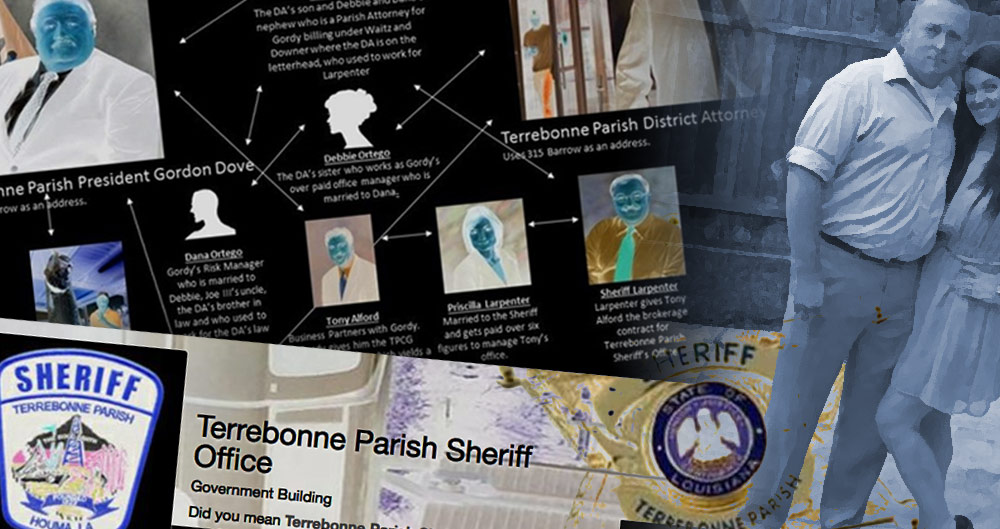
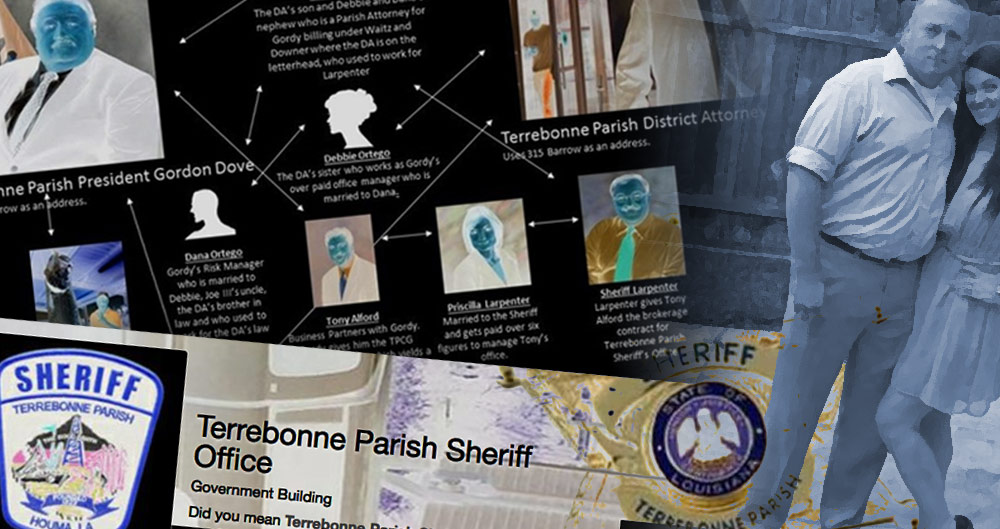
Jennifer Anderson criticized her local sheriff. Her family’s home was raided in 2016 by the sheriff as a result.

Terrebonne Parish Sheriff Jerry Larpenter’s reaction to criticism was ugly and unconscionable, but it hasn’t been allowed to stand. On the other hand, the sheriff hasn’t been adequately punished, either. 

Jennifer Anderson’s pseudonymous blog ExposeDAT criticized various public figures in Terrebonne Parish, Louisiana, including with respect to the business relationships between Larpenter and others. Bridling at the criticism — which had to do with assessment of publicly available facts — the sheriff submitted warrants to Facebook and AT&T to track down the identity of the blogger. Then he sent men to raid the Andersons’ home and grab computers and cell phones. 

The Andersons fought back, suing in federal court. They wanted the raid and seizure and search of their private stuff to be declared unconstitutional.

Finally, this September, the Andersons reached an undisclosed settlement with Larpenter out of court. According to its terms, the Andersons aren’t allowed to discuss it any detail. But their attorney says the settlement is “a victory for citizens’ right to be critical of their elected officials without fear of retribution.” U.S. District Court Judge Lance Africk has said that “Jennifer Anderson’s speech [in her blog] falls squarely within the four corners of the First Amendment.”

All that’s fine, but why hasn’t this sheriff also at least been kicked out of his job for his blatant abuse of power? 

This is Common Sense. I’m Paul Jacob.


PDF for printing


Categories
Accountability crime and punishment folly general freedom government transparency moral hazard national politics & policies too much government U.S. Constitution

Public Record

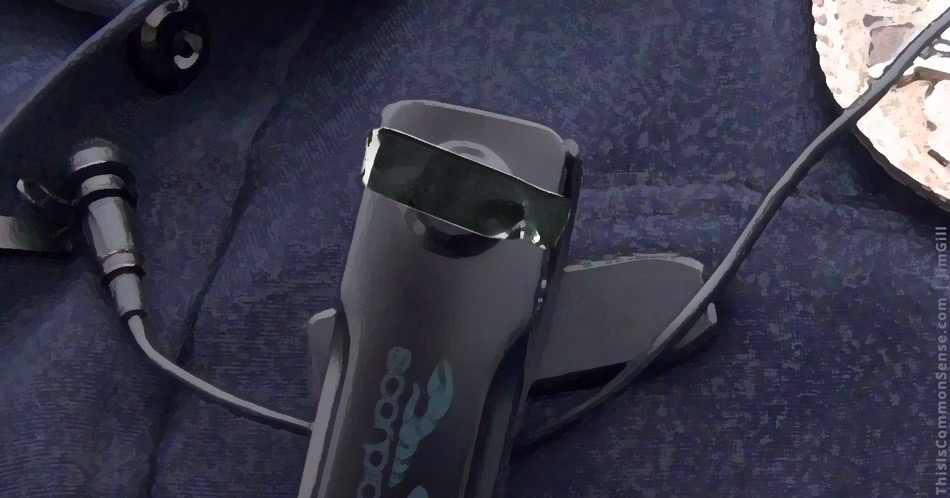
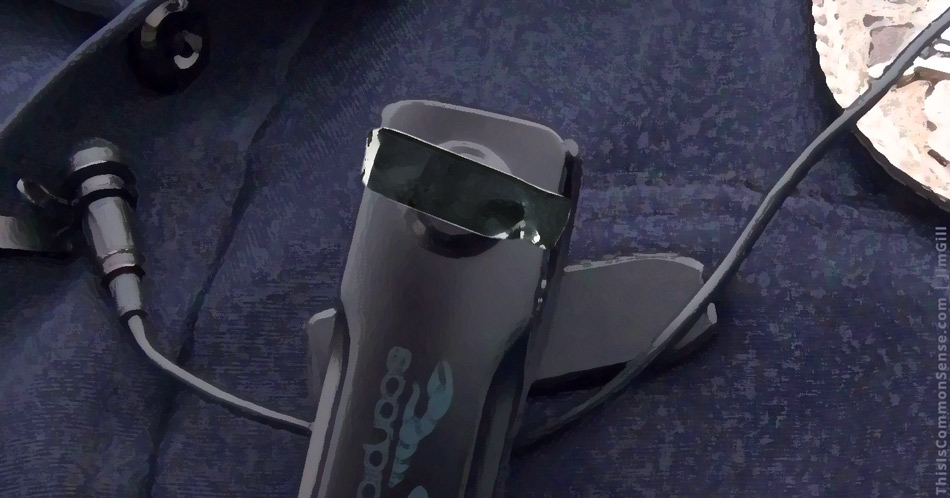
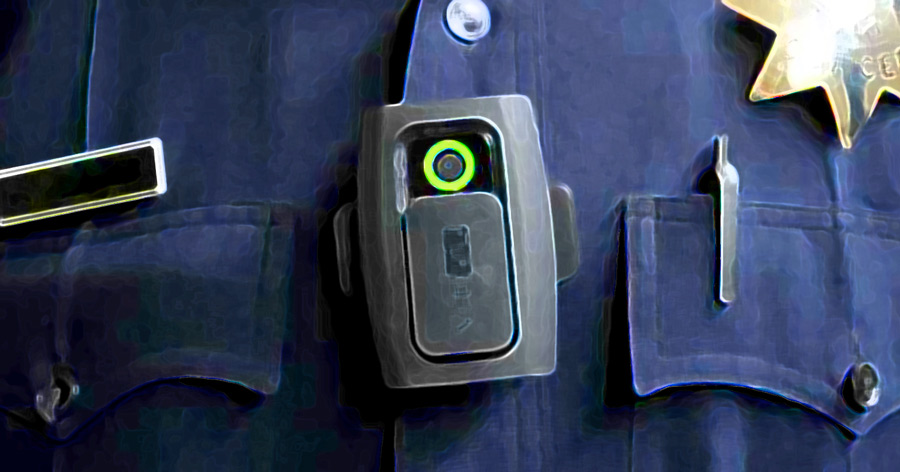
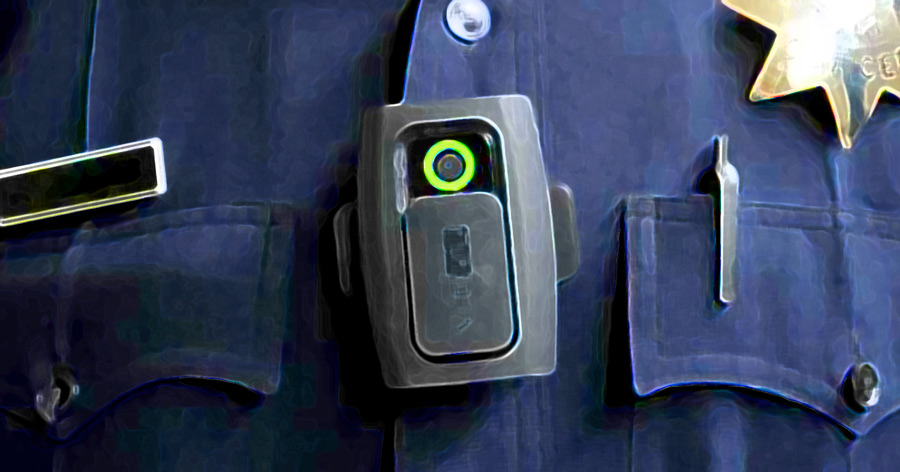
Police departments nationwide have begun to outfit their on-​duty officers with body cameras. These small recording devices make great sense, so we can better judge police encounters.

And it turns out that not only do police behave better when wearing body cameras, so do the citizens with whom they interact.*

Yet, cameras aren’t magic. They do not work when turned off. And video recorded by police offers little value when tampered with or deleted.

On Monday, the Washington Post ran an in-​depth feature about the 2014 fatal shooting of 19-​year-​old Mary Hawkes by Albuquerque, New Mexico, police, who pursued her for allegedly stealing a truck.

The Post explained that her case “has become a cautionary tale about the potential of new technology to obscure rather than illuminate, especially in situations when police control what is recorded and shown to the public,” raising concern “about whether a nationwide rollout of body cameras is fulfilling promises of greater accountability.”

Six police officers huddled in close proximity to the deadly incident — all wearing body cameras. The officer who shot Ms. Hawkes, however, had his turned off. Footage from three others “showed signs of alterations and a deletion.”

A federal investigation is underway.**

It is now obvious that cameras alone won’t suffice. Rules must require that the cameras be turned on — with consequences for non-​compliance. The public needs access to the footage, too.

The Police Cameras for Ferguson initiative*** on the ballot April 4th does exactly that. We need similar legislation in Albuquerque and everywhere else.

This is Common Sense. I’m Paul Jacob.


* See Barak Ariel, William A. Farrar, Alex Sutherland, “The Effect of Police Body-​Worn Cameras on Use of Force and Citizens’ Complaints Against the Police: A Randomized Controlled Trial,” Journal of Quantitative Criminology (September 2015, Volume 31, Issue 3), pp 509 – 535; reportage on this study can be found here.

** The probe has already revealed that a former Albuquerque police employee has declared, in an affidavit, “it was routine for officials to delete, alter or refuse to release footage because of ‘political calculations.’”

*** Your support is still desperately needed to educate voters in Ferguson, Missouri, about the Police Camera ballot measure. Please help today.


Printable PDF


Categories
Accountability crime and punishment government transparency Popular responsibility

Five for Ferguson

Michael Brown is dead. No video can bring him back.

As the world remembers, Brown was the unarmed 18-​year-​old black man killed in a violent 2014 altercation with Officer Darren Wilson, who is white — making Ferguson, Missouri, famous.

Or rather, infamous.

With little information, folks quickly picked sides. Some claimed Brown was gunned down in cold blood with his hands up, yelling, “Don’t shoot.” After seeing footage from a convenience store surveillance camera, which showed Brown seeming to strong-​arm an employee and steal cigarillos* mere minutes before the fatal police encounter, others placed the blame on Brown.

Subsequent rioting left dozens injured, seventeen businesses torched and millions in property damage. Meanwhile, President Obama’s Department of Justice found Officer Wilson’s actions justified.

However, had Wilson been equipped with a lapel camera, that footage would have enhanced finding justice. Moreover, the knowledge that the public could see the truth of what happened might have prevented the riots and recriminations.

More information is better.

That’s why the best news of all is this: on April 4, three weeks from today, the people of Ferguson will vote on The Public Video Recording Accountability Amendment to Ferguson’s City Charter. The charter amendment mandates that officers wear lapel cameras while on duty and sets sensible rules for allowing maximum public access.

The campaign needs your help to alert Ferguson voters about the election by mailing information on the ballot measure. For instance, studies demonstrate that not only do police behave better when wearing cameras, but so do the citizens with whom they interact.

Would you give five dollars for Ferguson?

Please help bring a better day for justice and transparency.

It’s Common Sense. I’m Paul Jacob.

* Over the weekend, more video surfaced from the convenience store as part of a documentary entitled, “Stranger Fruit,” which suggested Michael Brown had made a drug deal at the store, and not stolen anything. A St. Louis County prosecutor disputed the filmmaker’s interpretation, and released more footage.


Printable PDF


Categories
Accountability crime and punishment moral hazard nannyism national politics & policies property rights too much government U.S. Constitution

Watcha Gonna Do?

At a White House meeting last week between President Trump and law enforcement officials, a Texas sheriff raised a concern about legislation introduced by a state senator to require a conviction before police could take someone’s property.

Mr. Trump asked for that senator’s name, adding, “We’ll destroy his career.” The room erupted with laughter.

“That joke by President Trump,” Fox News’s Rick Schmitt said on Monday, “has the libertarian wing of the Republican Party raising their eyebrows, instead of laughing.”

Not to mention the civil libertarians in the Democratic Party and the Libertarian Party itself.

Civil asset forfeiture, as we’ve discussed, allows police to take people’s cash, cars, houses and other stuff without ever convicting anyone of a crime — or even bringing charges. The person must sue to regain their property.

Lawyers aren’t free.

Two bedrock principles are at stake:

  1. that innocent-​until-​proven-​guilty thing, and
  2. Our right to property.

Since police departments can keep the proceeds of their seizures, they’re incentivized to take a break from protecting us — to, instead, rob us.

“Our country is founded on liberties,” offered Jeanne Zaino, a professor at Ionia College. “[G]overnmental overreach is not something that is natural for Republicans to embrace.”

Schmitt acknowledged that “Libertarians would hate this. They don’t want big government. But they don’t have a lot of pull.”

Libertarian-​leaning Republicans like Sen. Rand Paul and Rep. Justin Amash are trying to end civil forfeiture, but the president will likely veto their legislation.*

Let’s not wait. Activists in three Michigan cities put the issue on last November’s ballot and won. You can, too.

This is Common Sense. I’m Paul Jacob.


* FoxNews​.com reported that, “Trump signaled he would fight reforms in Congress, saying politicians could ‘get beat up really badly by the voters’ if they pursue laws to limit police authority.”


Printable PDF


Categories
general freedom meme nannyism too much government

Government

You can’t feed a part of it without feeding the whole damn thing.


Click below for a high resolution version of this image:

big government, abuse, war, drug war, bureaucracy, libertarian, libertarianism, liberty, statism, statists, meme, illustration, Common Sense, James Gill, Paul Jacob


Categories
Accountability crime and punishment general freedom moral hazard nannyism national politics & policies privacy property rights

A New Way to Steal

The fight against government theft of private property, through “civil forfeiture,” just got a little harder.

There’s a new technology available: ERAD card scanners.

And the Oklahoma City Police Department’s joint interdiction team has them, and can use the scanners to take money from you without your consent.

What money, in particular? The money you have stored in pre-​paid debit cards.

ERAD stands for Electronic Recovery and Access to Data, and the ERAD Group, Inc., stands to make a lot of cash from the technology. Police around the country want to be able to take the funds secured in debit cards. It’s the latest thing in the war against the war against the War on Drugs.

Drug traffickers, we’re told, hide dozens of such cards in vehicles transporting drugs.

It’s not enough that police can, in the course of investigating a crime — without conviction, mind you; indeed, without charges being filed — confiscate the cards themselves.

The police also want to be able to siphon the money out of those cards.

Which leads to corruption. Which is already rife in civil forfeiture usage, as a recent Oklahoma state audit found — missing money, misused funds, that sort of thing.

The cavalier way in which government officials defend expropriation by ERAD scanners is chilling. In an Oklahoma Watch article, reporter Clifford Adcock relates the official explanation: “These cards are cash, not bank accounts.… Individuals do not have privacy rights with magnetic stripe cards.” Why not? Because the information on the strip “literally has no purpose other than to be provided to others to read.”

That’s so open to logical criticism you could drive a confiscated truck fleet through it.

This is Common Sense. I’m Paul Jacob.


Printable PDF

ERAD, gift card, civil asset, forfeiture, stealing, theft, drug war


Categories
Accountability crime and punishment general freedom judiciary moral hazard national politics & policies property rights

Our Innocent Stuff

The Institute for Justice’s new report, Policing for Profit: The Abuse of Civil Asset Forfeiture, details a “big and growing problem” that “threatens basic rights to property and due process.”

Through both criminal and civil forfeiture laws, governments can seize property used in — or the proceeds of — a crime. Criminal forfeiture requires that a person be charged and convicted of a crime to transfer title to government. Civil forfeiture, on the other hand, allows governments to take people’s stuff without being convicted — or even charged — with a crime.

No surprise that 87 percent of asset forfeiture is now civil, only 13 percent criminal. And governments are grabbing more and more. The federal financial take has grown ten-​fold since 2001.

“Every year,” IJ’s researchers document, “police and prosecutors across the United States take hundreds of millions of dollars in cash, cars, homes and other property — regardless of the owners’ guilt or innocence.” Then, the innocent victim must sue the government to have his or her stuff returned.

Incentive to steal? “In most places, cash and property taken boost the budgets of the very police agencies and prosecutor’s offices that took it,” an accompanying IJ video explains.

IJ’s report concludes that, “Short of ending civil forfeiture altogether, at least five reforms can increase protections for property owners and improve transparency.” Those five reforms are improvements, sure, but let’s end civil forfeiture completely.

It’s the principle!

Two principles, actually.

Civil forfeiture laws pretend law enforcement is taking action against our property, and that our property has no rights. But what about our property rights!

We’re innocent until proven guilty, too … and so is our stuff.

This is Common Sense. I’m Paul Jacob.


Printable PDF

civil forfeiture, civil asset forfeiture, crime, theft, police, abuse, property rights, Common Sense


Categories
crime and punishment folly general freedom nannyism too much government

America’s Twilight Zones

On Friday I lamented the picking up, by local police, of two children, 10 and 6, for walking home from a local park …

and the subsequent two-​month Montgomery County (Maryland) Child Protective Services investigation, which found the parents “responsible” for “unsubstantiated child neglect.”

Left unanswered? Whether parents “may” let their kids walk somewhere without supervision.

There’s no law, of course, against children walking in public without parents. But the “swarms of Officers” employed “to harass our people” aren’t limited by trifling things like laws.

This Kafkaesque episode reminds me of my experiences with campaign finance agencies.

In both cases, agencies rely upon meritless complaints to investigate, intimidate and impoverish people without any law being broken. All that’s required? An unelected bureaucrat’s arbitrary decision.

Take Lois Lerner. She ran the IRS division targeting conservative groups. Remember her allegedly lost emails? Irretrievable! Until someone actually looked for them.

Before violating people’s rights at the IRS, Lerner did so heading the Enforcement Division of the Federal Election Commission (FEC). A recent George Will column detailed her threats and very public and politically damaging harassment of Al Salvi, the Illinois Republican candidate for the U.S. Senate. Sure, he was fully acquitted in federal court … after his defeat.

Using a spurious complaint by former Rep. Mike Synar (D‑Okla.), Lerner launched a political persecution against U.S. Term Limits, costing us nearly $100,000 in legal fees and much more in dislocated time and manpower.

Finding no evidence — there was none to find — the FEC finally closed the matter. But agency officials still issued a news release proclaiming that they believed we had violated the law.

An Oklahoma newspaper headline read, roughly, “National Term Limits Group Broke Law, Says FEC.”

Talk about “unsubstantiated.”

This is Common Sense. I’m Paul Jacob.


Printable PDF