Categories
general freedom ideological culture initiative, referendum, and recall local leaders national politics & policies political challengers

Not a Joke

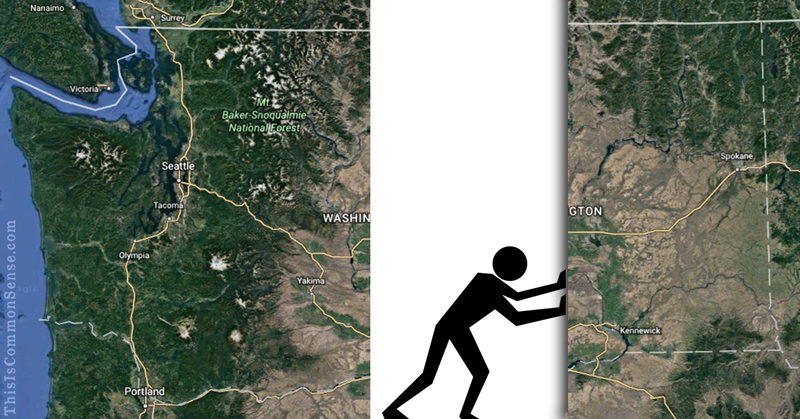
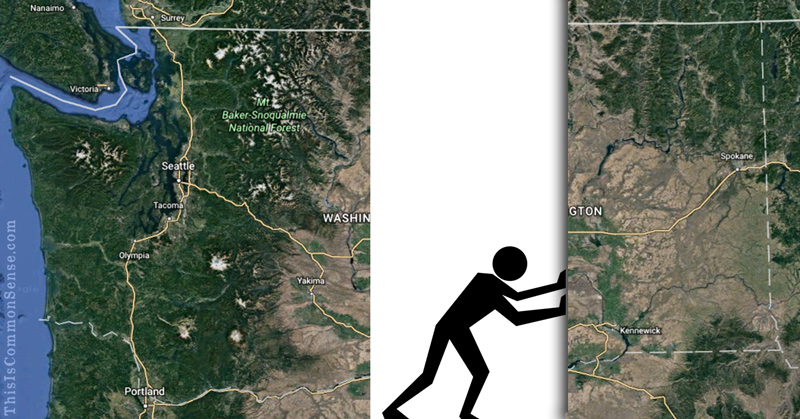
Yesterday, the chief sponsor of a Washington State legislative bill withdrew it. He said it was “a joke.” His co-sponsor wasn’t laughing, however . . . even proclaimed an intent to introduce the bill again next year.

The legislation’s purpose? Split the state into two.

The eastern, drier half of the State is much less populated, and the wet, western half gets its way almost all the time. The bill’s sponsor mentioned his intent: to call attention to the persistent lack of effective representation.

It was not a funny* joke. What he meant, surely, was “a stunt.”

This is just one of many ongoing secessionist movements in the United States. Most represent the eternal struggle between more self-reliant, community-centered and less statist country folk and the more atomized, fearful statists of the cities. But also present is the problem of representation. There is not enough of it. Many people do not have a voice. Hence the desire for exit.

“Voice” vs. “exit” are two crucial aspects of constitutional politics, particularly relating to different kinds of “freedom.”

Many states could use splitting, California, especially.

But exit is not the only option. Representation itself could increase in sheer numbers; California, anyway, has (astoundingly!) too few politicians, er, representatives . . . per residents.

Another key constitutional change would be to set the bar higher to passing new legislation, especially regarding adding tax burdens.

But not for the people. We are best represented by our own votes, which means initiative and referendum rights extended to all states. Citizens of Washington State (still intact) lack the ability to change their constitution by initiative — an important process for future state shape shifts.

This is Common Sense. I’m Paul Jacob.


* Originally, the new state’s name was to be Liberty, much better than the states of Tyranny, Servitude and Denial. Now I read that the proposed name is Lincoln, awkwardly tied to our union’s most determined anti-secessionist. That is a bit funny.


Printable PDF


Categories
Accountability folly general freedom ideological culture media and media people moral hazard nannyism political challengers responsibility too much government

French Beacon

“Since the French Revolution,” the New York Times pontificated online, “the nation has often been viewed as a beacon of democratic ideals.”

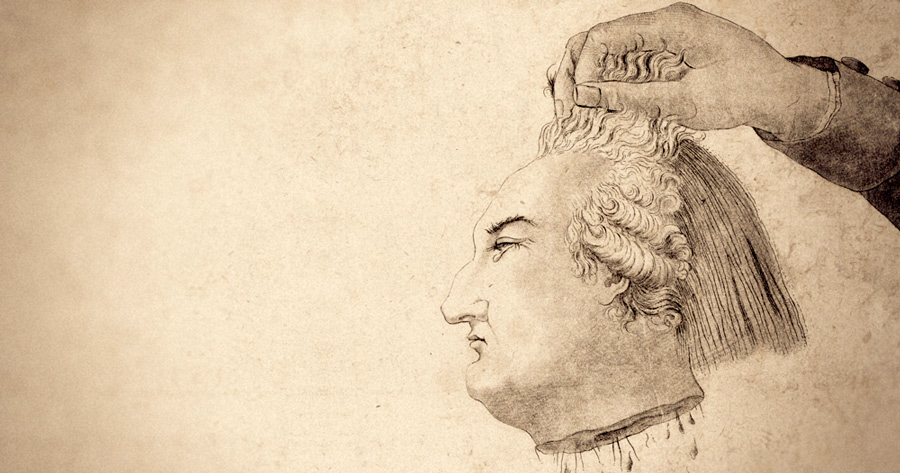
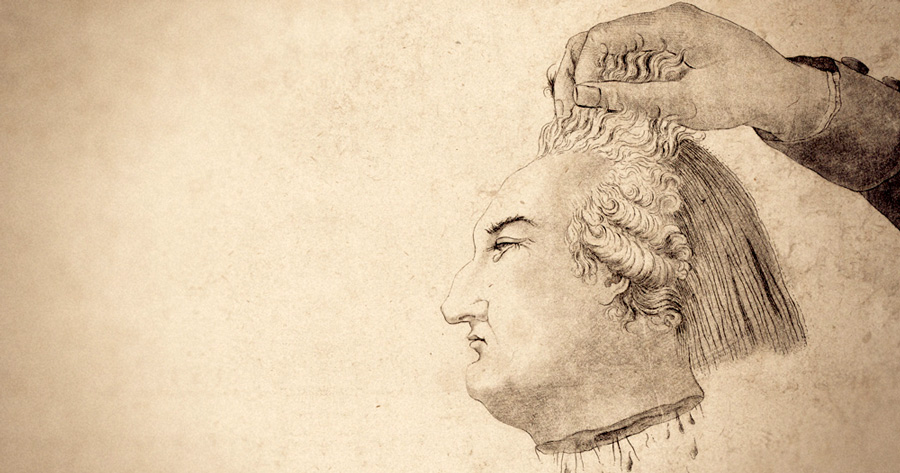
Really? Can a nation of constitutional turnovers — kings and republics and revolutions and foreign occupation — be a beacon? Most often we in America compare our Revolution to France’s, focusing on The Terror: mob rule and proto-totalitarianism.

On Friday, “the staff of the centrist candidate Emmanuel Macron said… that the campaign had been targeted by a ‘massive and coordinated’ hacking operation, one with the potential to destabilize the nation’s democracy before voters go to the polls on Sunday.” A few minutes later, the campaigns fell under the country’s election gag rule, unable to debate immediately prior to the voting. The government told the media not to look at what was dug up in the “hack” (which everybody said was by Russians). Though Macron’s putative Islamization plan is worth looking at, surely.

Much talk (at the Times and elsewhere) of how the hack destabilized democracy. No talk, for some reason, about how the election regulation gag rule did.

The idea that information might destabilize democracy? Awkward.

Still, we can see how an info-dump’s timing might destabilize an election.

But since Macron won by a large margin, the Late Exposure Strategy may have backfired, Russians or no.

The most obvious oddity in reportage? The continued reference to former Socialist Party hack Macron as “centrist” while Le Pen is called “far right” ad nauseam. Macron is pro-EU; Le Pen is nationalist. Neither are reliably for freedom. The fact that Macron packaged his En Marche ! Party as centrist doesn’t make it so.

This is Common Sense. I’m Paul Jacob.


Printable PDF


Categories
folly ideological culture media and media people national politics & policies political challengers responsibility

The Women-Haters

“You’ve just spoken eloquently about the sexism, the misogyny and inequity around the world,” CNN anchor Christiane Amanpour said* to defeated presidential candidate Hillary Clinton, “but do you believe it exists here still?”

The audience at Tuesday’s Women for Women International luncheon in New York City erupted in laughter, cutting Amanpour off. A second round of chortles ensued when Hillary Clinton touched the side of her face in wonderment, uttering, “Hmmm?”

“Were you a victim of misogyny?” Amanpour continued. “And why do you think you lost the majority of the white female vote. . . ?”

“Well, the book is coming out in the fall,” Hillary joked. “Yes,” she went on, turning serious, “I do think it played a role.”

Noting that “other things did, as well,” Mrs. Clinton decried Russian interference. Back to misogyny, however, she added: “It is real. It is very much a part of the landscape politically, socially and economically.”

Hmmm, indeed. So, most white women didn’t vote for Hillary Clinton because they hate women . . . per se?

All women?

Simply because they’re women?

“An example that has nothing to do with me, personally,” explained Mrs. Clinton, “is this whole question of equal pay. We just had Equal Pay Day in April, which is how long women have to work past the first of the year to make the equivalent of what men make the prior year in comparable professions.”

Hillary is mistaken about the Gender Pay Gap, which compares completely dissimilar professions (and hours worked, qualifications, etc.). Plus, this same gender pay gap was found at the Clinton Foundation, her U.S. Senate staff, her State Department and among her campaign staff.

Hillary Clinton — misogynist?

This is Common Sense. I’m Paul Jacob.


* The full interview is here. But you can cut to the chase here.


PDF for printing


Categories
ideological culture political challengers too much government

Forwards ! Backwards ?

France held an election over the weekend. Emmanuel Macron and Marine Le Pen came out on top, and will face each other in a runoff on May 7th.

Current polling puts Macron over Le Pen, 62-38. But a SkyNews reporter cautions: there is no certainty.

We in America have reason to respect that cautionary note. Our last election was an upset against the establishment candidate in favor of a wild card often dubbed “far right” and even “fascist” — which is precisely what Ms. Le Pen is being called.

Indeed, pitting a Big Government “centrist” (Macron) against an anti-immigrant protectionist (Le Pen) in the context of an economic slump and rising terrorism, and with neither candidate having much contact with limited-government principle, eerily echoes the 2016 U.S. presidential race.

But, on closer inspection, the parallels between the American and French contests appear inexact. Macron’s En Marche ! party* was created just over a year ago, while Le Pen’s National Front has continually found itself on the margins of power, despite its rise in popularity.**

Still, it is hard not to suspect that Ms. Le Pen could come from behind to upset the status quo. Macron is not invulnerable. The man worked, after all, in Hollande’s government, and Le Pen has characterized him as a socialist in a snazzy suit.

Macron is way ahead in the polls. And TV experts talk about how reliable modern polling is, while we in America . . . snicker.

But, since France lacks an Electoral College, can Le Pen really “Trump” the odds?

France will be in for a bumpy fortnight.

This is Common Sense. I’m Paul Jacob.


* Amusingly, the party’s initials are identical to those of its founder, Emmanuel Macron. “En Marche !” (the extra space is there in party material) translates into English as “Forward!” or “On the Move!” and is formally designated as the Association pour le renouvellement de la vie politique (the Association for the Renewal of Politics).

** All the established, formerly governing parties are on the outs.


Printable PDF


Categories
general freedom local leaders national politics & policies political challengers U.S. Constitution

Wag that Tail, Dog

Last November, Maine voters passed a ballot measure, Question 5, to begin electing their federal representatives to Congress, and their governor and state legislators, using Ranked Choice Voting. This selection mechanism allows voters to rank their choices, thereby removing the “spoiler effect” that often pushes citizens to support the lesser of two popular evils.*

Last month, Maine’s State Senate submitted advisory questions to the Maine Supreme Court about the new law’s constitutionality.

It is indeed constitutional. “Those who argue that ranked-choice voting conflicts with the Constitution,” explained Marshall Tinkle** in the Bangor News, “seem to be reading things into it that simply are not in the text.”

Last week, the Maine Supreme Court heard oral arguments. Justices Donald Alexander and Joseph Jabar seemed concerned about ranked-choice voting making it easier to vote for the person and not the party.

That’s not unconstitutional. But is it somehow bad?

“We are going to have a lot of people abandoning the political parties if ranked-choice voting remains,” argued Alexander. Or perhaps the parties might better serve voters?

The attorney representing the Committee for Ranked Choice Voting, James Kilbreth, reminded the justices that the voters have spoken, and as to the resistance by legislators in implementing their will, he remarked, “This is the tail-wagging-the-dog kind of problem.”

The courtroom broke out in laughter when Chief Justice Leigh Saufley responded, “Mr. Kilbreth, it’s a fairly large tail.”

I’m a big fan of ranked choice voting***, but the court’s decision is not about the policy. It’s about whether the dog (the people) will wag the tail (the legislators) or vice-versa.

This is Common Sense. I’m Paul Jacob.


* Portland, the state’s largest city, has used ranked choice voting since 2011.

** And Tinkle should know, since he “wrote the book” on the subject — the reference book, The Maine Constitution.

*** I serve on the Board of Directors of FairVote, an organization that promotes ranked choice voting and other methods to make every person’s vote count.


Printable PDF


Categories
Accountability government transparency ideological culture moral hazard nannyism national politics & policies political challengers porkbarrel politics responsibility too much government

Legislating in the Real World

Rolling back Big Government is not easy, especially when you are not that into it.

Robert Draper, profiling Steve Bannon in the New York Times, gives us a view into the mind of Trump’s right-hand man, who appears to think GOP insiders are obsessed with principles. “[I]t’s all this theoretical Cato Institute, Austrian economics, limited government — which just doesn’t have any depth to it. They’re not living in the real world.”

At best, this only fits the Freedom Caucus members, who killed RyanCare. But who is avoiding reality, here?

“Bannon clearly is not as familiar with the mindset of congressional Republicans as he imagines,” counters Jeff Deist, head of the “Austrian” Mises Institute. “They are primarily concerned with how the whole ‘repeal and replace’ debacle plays back home.”

Like Deist, I see the spectacular fizzle of RyanCare as evidence of the increasing irrelevance of Republican compromising. “The GOP is the party of trillion dollar military budgets,” Deist insists, noting that it “won’t even kill an openly cronyist program like the Export-Import Bank.”

If keeping Big Government secure is all Republicans can do, what use are they?

“All around us are the almost unimaginable benefits of markets, cooperation, and technology,” Deist explains, “yet somehow we’re naïve if we don’t want to funnel human activity through government cattle chutes.”

Bannon will not secure solid GOP support if he keeps pushing the usual establishment compromises while pretending they are either realistic or revolutionary. Freedom Caucus Republicans seem bent on doing something Republicans usually avoid: change “the real world” for the better by practically limiting government.

Not just in theory.

Bannon seems to have other goals.

This is Common Sense. I’m Paul Jacob.


Printable PDF


Categories
Accountability free trade & free markets moral hazard national politics & policies political challengers porkbarrel politics responsibility subsidy too much government

Trump Proposes a Budget

Will Donald Trump, infamously successful businessman, actually do something about the federal government’s out-of-control deficits and mounting debt?

Economist Pierre Lemieux, writing in the Financial Post, finds some reason for hope in President Trump’s “America First: A Budget Blueprint to Make America Great Again”:

The proposal to eliminate funding for agencies like the Corporation for Public Broadcasting, the National Endowment for the Arts, and the National Endowment for the Humanities is welcome. Artists should be able to stand on their own two feet with the support of private sponsors and organizations, of which there are many in America. Lovers of concerts should finance their own passion.

Though Lemieux gives good reason to want to cut “official arts and humanities” subsidies even sans their budgetary implications, imagine the backlash from Democrats, the media and the whole collegiate sector!

Actually, the backlash has already begun.

Can united government under the GOP cut even these most obviously least necessary aspects of government subsidy?

I’m not holding any pockets of air in my two lungs.

“Many monstrous bureaucracies would be reined in,” Lemieux goes on, listing proposed cuts to the Environmental Protection Agency (-31 percent), Department of Labor (-21 percent), and other departments of the so-called “discretionary” budget. But this is all small potatoes. “Really cutting federal expenditures would require reducing the welfare state — which Trump has no intention of doing.”

And the fortunes Trump wishes to throw at the military? No knack for parsimony there.

Though we can expect a little exceptional hack-and-slashery from Trump, Lemieux remains skeptical of any overall major effect.

Get used to ballooning debt.

Like you haven’t already.

This is Common Sense. I’m Paul Jacob.


Printable PDF


Categories
folly general freedom ideological culture media and media people moral hazard nannyism political challengers responsibility too much government

Dutch Election Oddities

There were many strange forces at play in the Netherlands’ elections on Wednesday. In my report, I concentrated on the biggest story, the possibility that Geert Wilders’s Freedom Party might take a huge number of parliamentary seats — though I quoted The Atlantic’s coverage predicting a narrow loss to Mark Rutte’s Liberal Party.

What I did not mention were some of the . . . oddities.

Did you know that Geert Wilders is the only official member of the Freedom Party?

Did you know that there is a 50+ Party in Holland — to represent folks . . . in my age bracket?

Irksome. A party organized just for an age group bugs me almost as much as the most extreme elements of Wilders’s anti-Islamism. But then, all parties bug me a bit, for the same reason the founding fathers desperately feared “factions” . . . that is, political parties. Factionalism turns government into tribal warfare, with legislation counting as . . . counting coup.

But no one in the Netherlands is asking how “bugged” I may or may not be.

The outcome of the March 15 elections? Labour lost the most, and the Freedom Party did not do as well as predicted . . . or feared. Instead of over 20 seats, it won 16, according to Bloomberg (quoting i & o research).

Here’s a not-so-odd oddity: I had to wade through quite a few reports on the election before I found any actual numerical results. The papers all seemed too busy gloating that the Freedom Party failed. I guess that counts as enough reporting. For them.

More evidence that we live in a post-fact society?

This is Common Sense. I’m Paul Jacob.


Printable PDF


Pictured: Ledger drawing of a mounted Cheyenne warrior counting coup with lance on a dismounted Crow warrior, 1880s.


Categories
Accountability folly ideological culture media and media people national politics & policies political challengers

Bigly Truthiness

“Journalists should be tough when powerful people say untrue things,” writes the Books and Arts columnist for The Economist.

I’m with “Johnson,” that pseudonymous author, except for one thing. In calling President Trump a Big League liar, he himself seems to miss the whole truth, nothing but the truth.

At the very least, The Economist scrivener proves himself rather obtuse . . . especially for a column de plume tipping the hat to the great Samuel Johnson. Many of the Trumpian falsehoods he mentions are indeed whoppers. No doubt. But a few cry out for a more subtle reading.

After distinguishing between falsity, lying, and fantasizing, “Johnson” speculates that Trump may actually believe “his own guff.”

But then, about Trump’s murder rate statements, Johnson quickly runs off the rails: “Mr. Trump said something wildly wrong about something easily checkable, leaving an adviser, Kellyanne Conway, flailing to cover for him. . . .” But Conway did suggest that Trump may have been speaking about certain cities wherein the murder rate has gone up.

Trump often speaks as hyperbolist: murder has gone up in a few major cities; he relates the fact as if murder had gone up generally. This annoys sticklers. Me, included. But Trump’s been using the rhetoric of exaggeration.

You could call it the rhetoric of inexactitude.

It’s how he trolls.

Trump could also be charged with “truthiness,” comedian Stephen Colbert’s signature 2005 coinage about confidence in factoids for intuitive reasons, sans evidence.

But so might this “Johnson.” When subtle men miss homespun subtleties, one has to wonder whether they might miss it for . . . intuitive reasons.

This is Common Sense. I’m Paul Jacob.


Printable PDF


Categories
Accountability media and media people national politics & policies political challengers

Remember the Rigged Election?

Remember the 2016 presidential election?

You know, the contest that still bedevils us? The one allegedly rigged by the Russians and fake news? The one the outcome of which Michael Moore (and others) suggested, even this week, should be overturned by “the courts” simply by installing Hillary Clinton as president?

Turns out one major element of the election process was rigged: the debates run by the Commission on Presidential Debates.*

At least, U.S. District Judge Tanya Chutkan has ruled** that, “In sum, with respect to Plaintiffs’ allegation that the FEC acted arbitrarily and capriciously and contrary to law when it dismissed their two administrative complaints, this court agrees. . . .”

The plaintiffs*** are Level the Playing Field (LPF), the Green Party, the Libertarian National Committee, and Dr. Peter Ackerman. They sued the Federal Election Commission because the FEC, as the judge wrote, “stuck its head in the sand and ignored the evidence.” Prior to the lawsuit, LPF and others had filed complaints and asked the FEC to establish fair rules. They were told to go play in — er, far away from — traffic.

“The FEC was the defendant in the case,” explained IVN News, “but the real villain in the story is the Commission on Presidential Debates (CPD), a private organization . . . dominated by Democratic and Republican party stalwarts.”

Under federal law, the FEC, itself organized along bipartisan lines, is charged with ensuring that the CPD is using “objective” criteria, which doesn’t arbitrarily exclude independent and minor party candidates.

Now, thankfully, the court has ordered the FEC to come back, by April 3, with new thinking on how to ensure fair and open presidential debates.

This is Common Sense. I’m Paul Jacob.


* The problems with the presidential debate rules and the CPD itself were covered extensively last year in these four commentaries: “Smash the Duopoly,” “The Media’s Job,” “The Stupidity of 15,” and “The Two-Product Economic System.”

** Tellingly, there’s been scant news coverage of the court decision except by IVN News, the Independent Voter Network website, and . . . RT, the Russian government’s TV channel.

*** The case is Level the Playing Field, et al v. Federal Election Commission.


Printable PDF