Categories
Accountability ballot access folly media and media people moral hazard national politics & policies political challengers term limits

If This Be Blackmail. . .

The Republican Party now boasts of more positions of power than . . . ever? And yet the GOP is in danger of falling apart.

The Democrats, now forced to endure Hillary Clinton’s new absurdity, What Happened, appear at wits’ end. They just do not “get it.”

Alas, “not getting it” is not limited to the major parties. The Libertarian Party (which is my subject this week) has been around since 1972 . . . doing the same things over and over . . . with spectacular lack of electoral success.*

Sure, the party has had no small subtle influence — perhaps most notably the change in marijuana policies. Yet it could have even more. Without electing anybody, as I argued yesterday.

But that’s just the tip of the Titanic-killer.

Not only could party organizers threaten the major parties with running — and taking away votes — based on their candidates’ positions, Libertarian organizers could also threaten to run against candidates who will not publicly take up the cause of electoral reform.

Particularly, ranked choice voting.

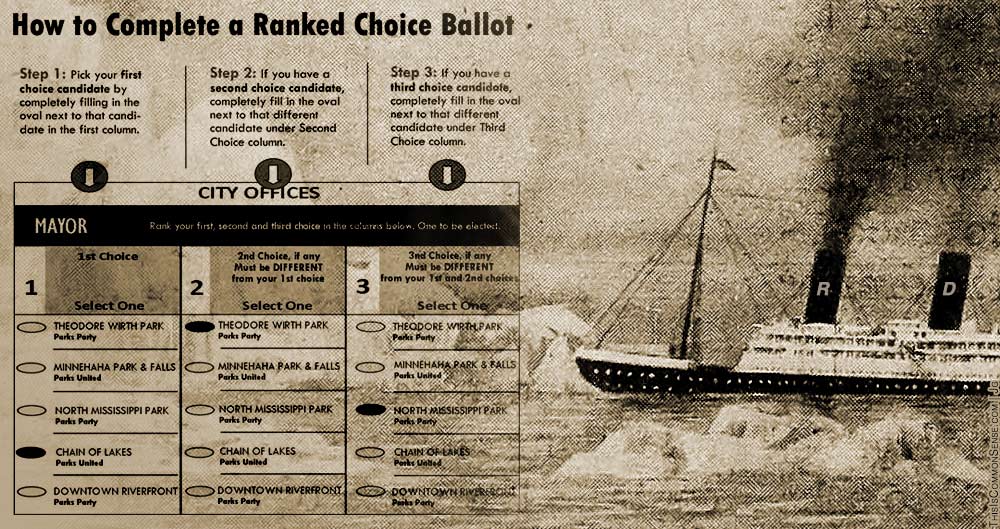
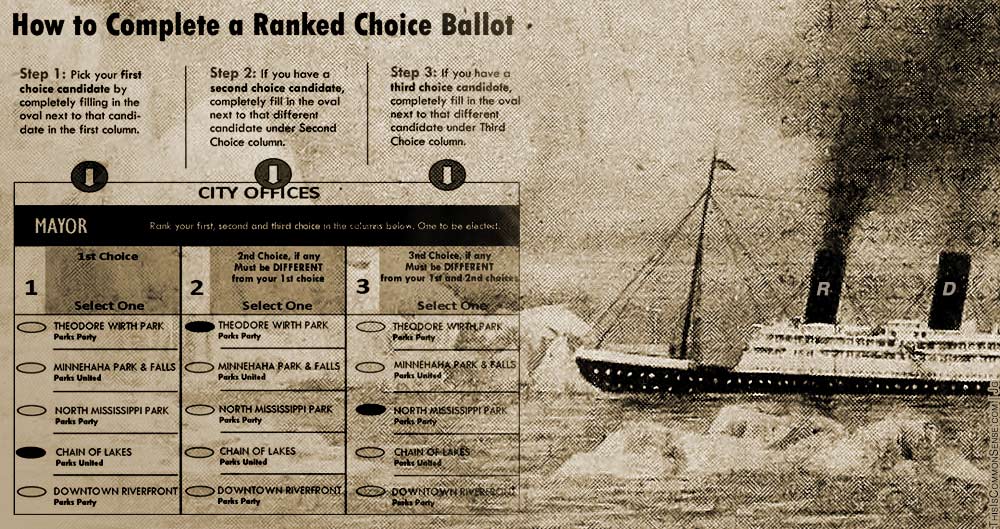
Because of our first-past-the-post elections, Libertarians tend to take away votes from those most similar to themselves. With ranked choice voting (see a sample ballot), a voter whose favorite is a Libertarian will have his second-favorite choice count** towards that candidate; minor party candidates would no longer work as spoilers.

And that would allow voters to embrace their real preferences, not pretend to like candidates they actually distrust.

Since major party candidates would, in most circumstances, be hurt less by those closest to them, they should be willing to be “blackmailed” on this.

Jumping into the briar patch of supporting fresh reform to stop the spoilers.

This is Common Sense. I’m Paul Jacob.


*  The 3 million odd votes for the Johnson/Weld presidential ticket, though a leap ahead from previous outings, was seen by many as a disappointment: that’s all the dynamic duo of former governors could do in a year with the unpopular duo of Trump and Clinton as R and D standard-bearers?

** That is, in cases where only a small percentage of the vote favors the Libertarian most.


PDF for printing


Categories
general freedom incumbents local leaders national politics & policies political challengers

The Reverse of the “Spoiler Effect”

“Voter surveys have found the GOP-controlled Congress,” I wrote last weekend at Townhall, “to be more popular among self-described Democrats than self-described Republicans.”

Why? Because Republican politicians are proving themselves unable — even unwilling — to legislate as they have promised. One word: Obamacare. And few dare actually cut spending on anything . . . though they campaign on something (mythical?) called “fiscal responsibility.”

This leaves the GOP open to challenge. By the party I mentioned yesterday on this page.

And that can prove disastrous for the Republicans, for our elections in these United States are not run, on the whole, on reasonable grounds. They are “first past the post” elections, where, if enough people vote for their most favorite candidate it ensures that their least favorite candidate wins.

In those races where allegedly “small government”/“fiscally responsible” Republicans are challenged by serious budget-slashing Libertarians, the Libertarian candidacy can have the effect of electing a Big Government/Pro-Debt Democrat.*

Yet the actual political outcome of these challenges could be positive — yes, for the GOP. As I wrote yesterday, the Virginia Libertarian gubernatorial candidate seems to be influencing the Republican to be less of a “jail ’em all” Drug Warrior.

When Republicans adopt pro-freedom positions they’ll win more votes.

Moreover, this influence need not be ad hoc.

State Libertarian Party officials could identify the most critical issues and negotiate directly with state GOP officials: “These are our issues — if your incumbents vote correctly on these issues, we will not challenge them. But if not, we will take them out.

“And if we help elect Democrats, that’s on your head.”

This is Common Sense. I’m Paul Jacob.


* There may be cases where the Libertarians — when focusing on issues such as drug legalization and peace — have cost Democrats elections. If so, Libertarians ought similarly leverage Democrats in those areas to improve their positions on those issues.


PDF for printing


Categories
general freedom local leaders national politics & policies political challengers

Virginia Déjà Vu?

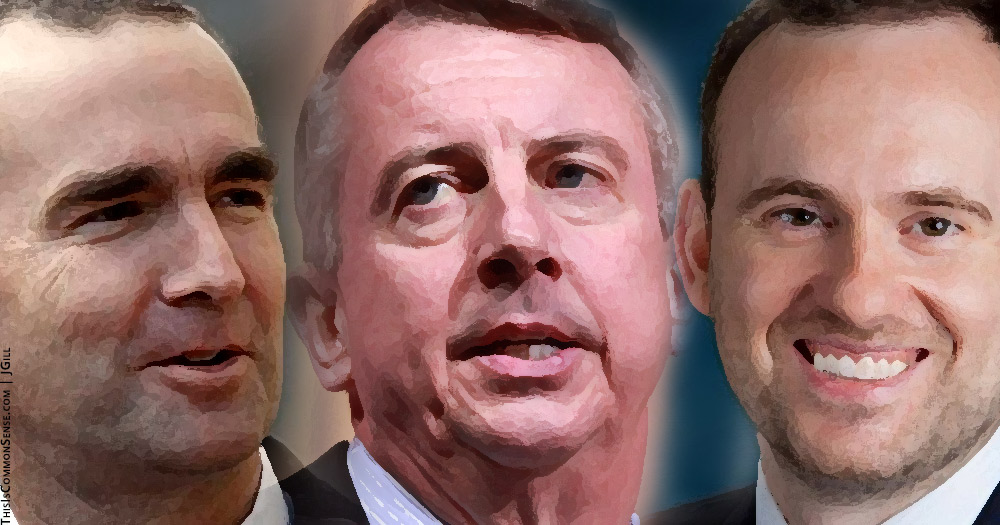
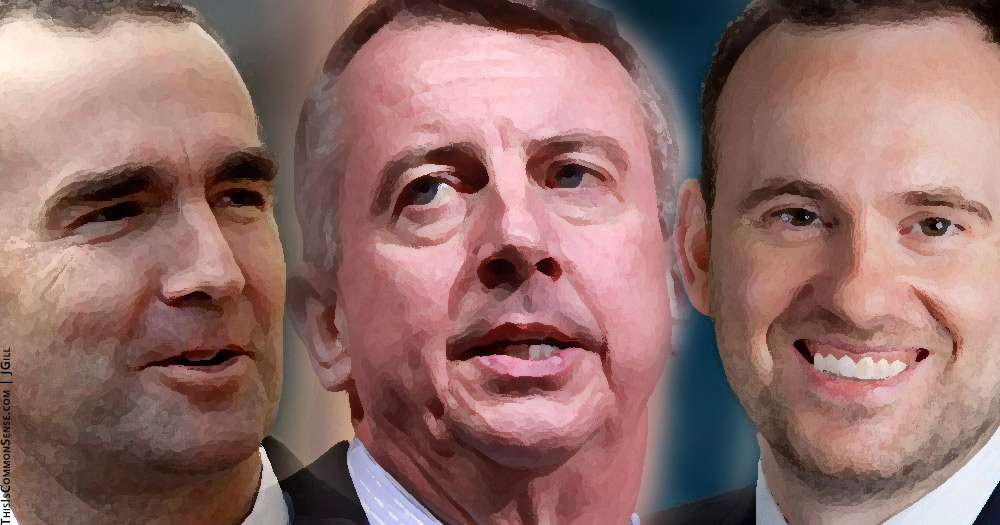
Virginia’s odd-year elections this November 7th offer the nation’s premier race for governor, pitting Republican Ed Gillespie against Democrat Ralph Northam . . .

. . . oh, and also Libertarian Cliff Hyra.

Could it be a repeat of four years ago?

In 2013, notable Friend-of-Bill and Democratic Party nominee for governor Terry McAuliffe defeated Ken Cuccinelli, the state attorney general and Republican nominee, by a mere 2.6 percent. McAuliffe garnered 48 percent of the vote to Cuccinelli’s 45 percent . . .

. . . to Libertarian Robert Sarvis’s impressive 7 percent. In fact, the Sarvis vote more than doubled the margin between McAuliffe and Cuccinelli.

Last month, a Virginia Commonwealth University (VCU) poll showed a close gubernatorial race with Northam at 42 percent leading Gillespie at 37 percent . . .

. . . oh, and Hyra at 6 percent among likely voters. Once again, the Libertarian’s support proved greater than the margin between Democrat and Republican.

Back in 2014, Mr. Gillespie challenged incumbent U.S. Senator Mark Warner, nearly pulling a stunning upset, falling just 0.8 percent short. Libertarian Robert Sarvis was also in that race, receiving 2.4 percent.

Lt. Governor Northam, a former U.S. Army doctor, was twice elected to the state Senate.

Former Republican National Committee a Chairman Gillespie, a counselor to President George W. Bush and a lobbyist and political consultant, won the GOP primary by only one percentage point.

Hyra, a patent attorney with no experience in public office, is pushing a tax cut that dwarfs what Republican Gillespie advocates. The Libertarian is also campaigning on criminal justice reform and legalizing recreational use of marijuana.

Surprisingly, or maybe not, Gillespie seems mobile on the pot issue. He has announced his support for legalizing medical marijuana and wants to criminalize recreational use only after two offenses.

A Libertarian influence?

This is Common Sense. I’m Paul Jacob.


PDF for printing


Categories
ideological culture local leaders media and media people national politics & policies political challengers

Strange Money

Senate Majority Leader Mitch McConnell sure is popular . . . in Washington.

Elsewhere? Well . . .

In Alabama, a Republican runoff on the 26th pits controversial Judge Roy Moore, who gained national attention fighting to keep a Ten Commandments monument on court grounds, against U.S. Senator Luther Strange, appointed to the office by Governor Robert Bentley.*

The third place finisher was U.S. Rep. Mo Brooks, who, while complimenting Judge Moore for running “a very honest campaign,” has declined to endorse either candidate. As for Strange, Brooks offered: “I want to congratulate the people who were behind him: Mitch McConnell, the Washington establishment, the K street lobbyists. They put together some very tough ads . . .”

McConnell has poured nearly $7 million from the Senate Leadership Fund into Strange’s campaign, giving the incumbent what the Birmingham News called “a staggering financial edge over Moore.”

And yet the paper’s report also noted that this “money advantage has not translated so far into votes.” A recent poll shows Judge Moore with a double-digit lead over Sen. Strange — 52 to 36 percent.

President Trump has also endorsed Strange, which with Trump’s popularity there is likely to help. Meanwhile, House Freedom Caucus Chairman Mark Meadows endorsed Moore, warning that McConnell, a fellow Republican, would flood the state with “millions of dollars in false advertising.”

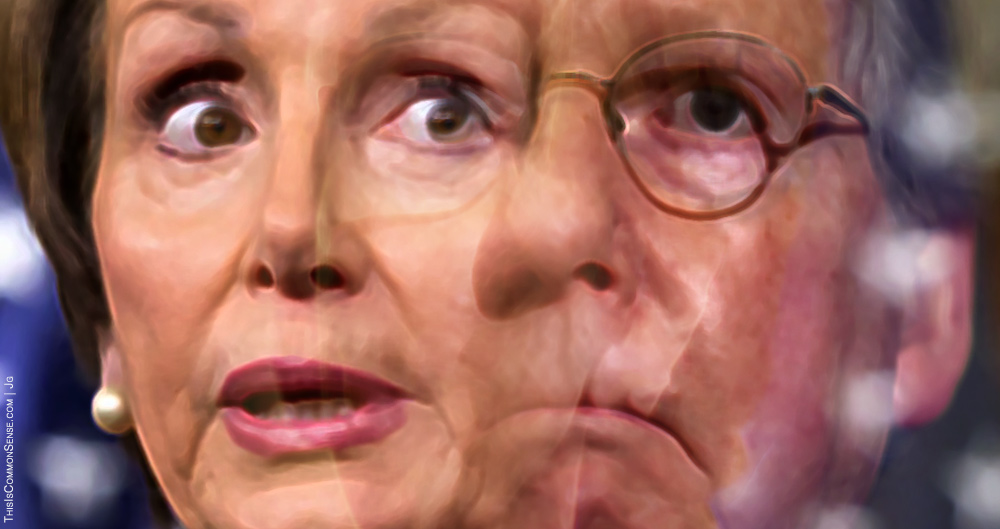
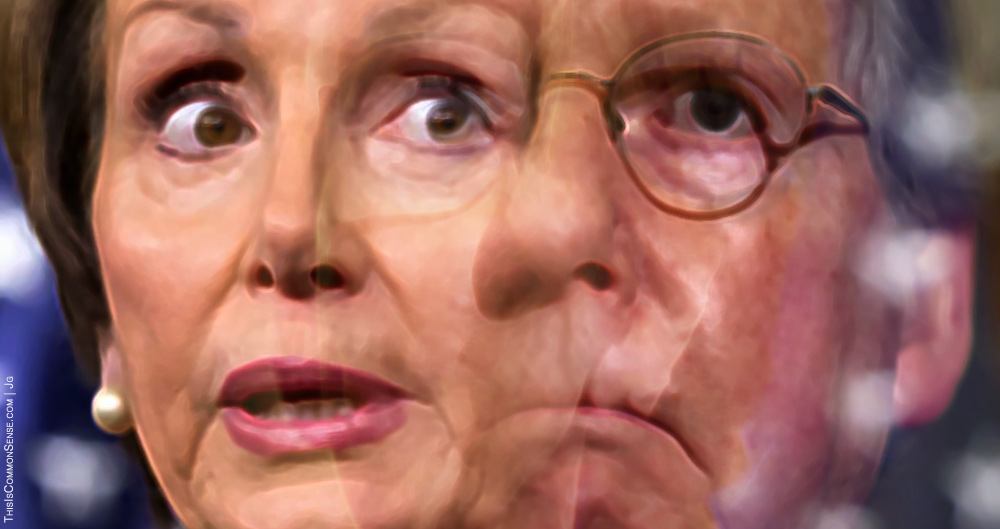
GOP advertising in Georgia’s June special election bypassed the Democrat running to instead make Democrat House Minority Leader Nancy Pelosi the face of opposition Democrats. It seemed to work.

Similarly, Roy Moore’s campaign may very well ignore Strange to make Sen. Mitch McConnell the face of the opposition Washington establishment.

Possible slogan: “The Washington establishment’s choice is Strange.”

This is Common Sense. I’m Paul Jacob.


* The governor was, at the time of the appointment, under investigation by Strange, then Alabama’s Attorney General.


PDF for printing


Categories
Accountability crime and punishment folly general freedom ideological culture local leaders media and media people moral hazard national politics & policies political challengers property rights Regulating Protest responsibility

Alt-Comparisons

“There is no comparison,” concluded Washington Post columnist Margaret Sullivan, after spending her entire column doing just that, i.e. comparing Antifa, the so-called “alt-left,” with Nazis and white supremacists, the so-called “alt-right.” 

When Trump spoke about Charlottesville violence on both sides, Sullivan argued, “He was comparing things that aren’t the least bit equal, neither in scale nor in intent.”

Sullivan trumpeted statistics compiled by the Anti-Defamation League. The U.S. had 372 politically motivated murders between 2007 and 2016, with 74 percent committed by right-wing extremists and only 2 percent by left-wing extremists.*

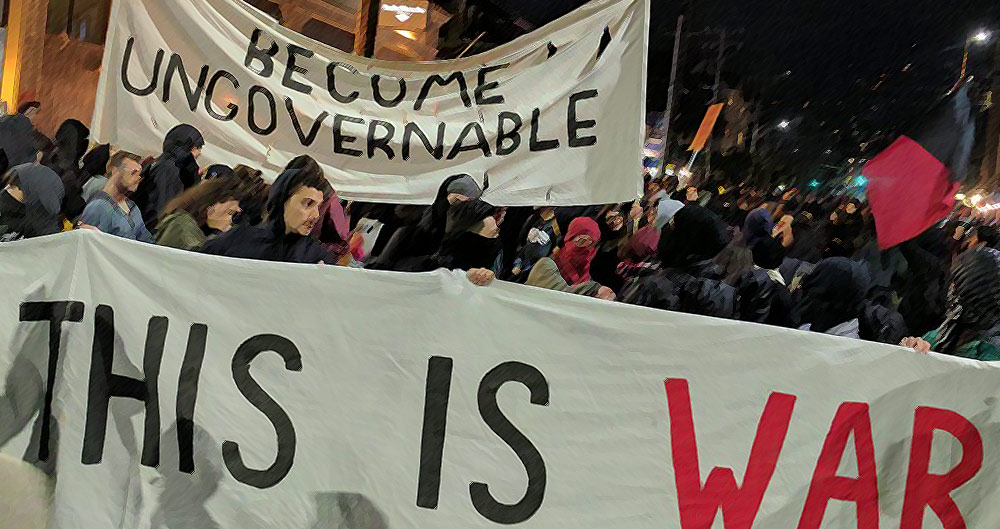
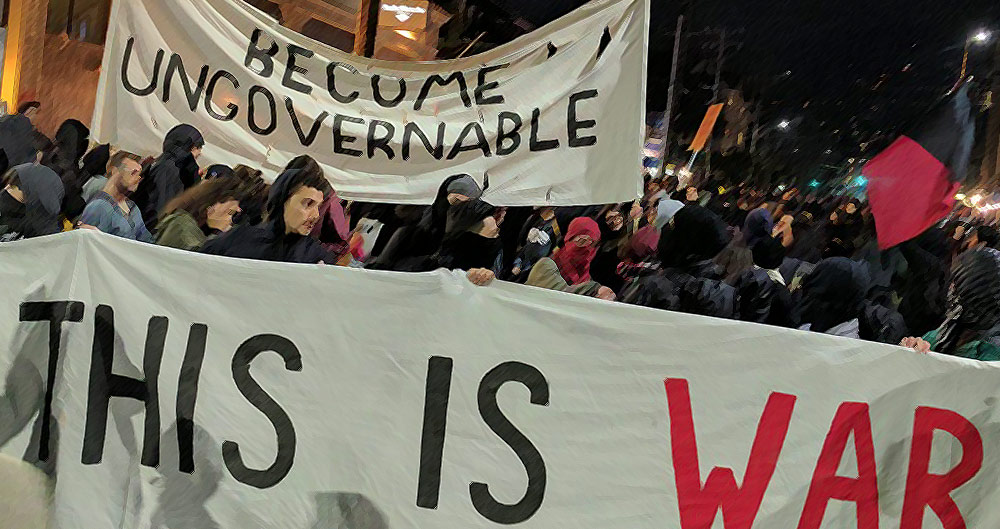
Yet, those perpetrating 2 percent of such slayings can legitimately be compared to those perpetrating 74 percent — and also likened to thugs who beat down opponents in the street (thankfully without murdering them).  

All of the above use violence to achieve political goals.** Some are more deadly than others, but the violent actions of all should be condemned. 

Sullivan acknowledged that “it’s safe to say that most news consumers, if they know anything about antifa, know what the president has told them, and what they’ve gleaned from the club-wielding protesters shown endlessly on TV . . .”

Are citizens not supposed to take note of the violence in living color right before their eyes?

And why are folks uninformed? Could the mainstream media’s failure adequately to cover, say, previous Antifa rioting at Berkeley and elsewhere have something to do with it?

Lastly, Sullivan called on the media “to resist conflating [Antifa] with liberal groups.” Agreed. And let’s have the same fairness in not conflating Nazis and the KKK with conservatives.   

This is Common Sense. I’m Paul Jacob. 


*  By the process of elimination, “moderate extremists” are apparently committing close to a quarter of all political killings.

** I’ve not drilled down into these stats, or figured out what, precisely, qualifies as “political.”


PDF for printing


Categories
Accountability general freedom initiative, referendum, and recall local leaders political challengers Regulating Protest too much government

Know Your BS

“Help me get my B.S. in the voters pamphlet,” read the subject-line of Tim Eyman’s email

Eyman is a practitioner of the art of the voter initiative, foremost in his state, Washington, and one of the most effective nationwide.*

This particular call to action concerns the voter pamphlet statements about a tax increase placed on Washington State’s November ballot by the mayor and city council in Tim’s hometown of Mukilteo.

“In the pro statement,” Eyman explained, “they wrote that the need for the tax increase was ‘indisputable.’” Which his rebuttal countered with: “Politicians always say the need for higher taxes is ‘indisputable.’ We call B.S. on that.”

It is rather to the point.

But soon he received word from the city that, “The Auditor feels the language is inappropriate and would like you to choose different wording.” Rather than “We call B.S. on that,” it was suggested that he might use: “We call foul.”

Eyman objected. He pointed out that B.S. is used ubiquitously; he sent the city examples.

“I called the ACLU,” his email noted, and “they thought it was B.S. for the government to say you can’t say B.S.”

Eyman’s own attorney, Stephen Pidgeon, sent the city a detailed letter pointing out that this is exactly the speech protected under the First Amendment.**

The City of Mukilteo has yet to announce a final decision. Tim Eyman invites all of us to send an email to encourage the city to Let Eyman Keep his B.S. in the Voters Pamphlet.

This is Common Sense. I’m Paul Jacob.


* He was once even dubbed “America’s No. 1 freedom fighter” — by me.

** Pidgeon also offered, “While the pious may construe the inference of these two alphabetic avatars as meaning something crude, my client may very well have been referencing an ancient Latin phrase ‘Bubulum Stercus’ which no average voter would ever find inappropriate.”


PDF for printing


Categories
Accountability ideological culture media and media people national politics & policies political challengers Popular responsibility

The Law of Unintended Trump Support

Last week, when President Donald Trump abandoned his previous policy position on getting U.S. troops out of Afghanistan in favor of continuing the establishment-supported policy of keeping those troops there, he was very well-received in our nation’s capital.

NeverTrumper/neo-con Sen. Lindsay Graham (R-S.C.) spoke of Mr. Trump’s “smarts” and “moral courage.”

The #NeverPraiseTrump Washington Post applauded the president’s valiant “self-correction.”

Yet when Trump holds a view contrary to the Washington consensus his wisdom and moral bravery elicit less celebration.

Instead, we hear that The Donald is unfit to command.

“I really question his ability to be — his fitness to be — in this office,” says James Clapper, the former Director of National Intelligence.

“The president has not yet been able to demonstrate the stability,” Sen. Bob Corker (R-Tenn.) concurred, “that he needs to demonstrate in order to be successful.”

And from the usual suspect list of television talking heads we get clinical diagnoses, talk of “erratic behavior and mental instability that place the country in grave danger.”

Mr. Trump combines every bad personality trait imaginable, the litany runs.

But all this is for nought.

Donald Trump has been able to withstand media negativity as well as the lack of support from his own party’s insiders for one simple reason: it validates him.

Every insider attack, every media-fueled outrage campaign, just proves him as the ultimate outsider to a system that the long-frustrated, increasingly angered electorate wants turned upside down.*

This is Common Sense. I’m Paul Jacob.

*This episode of Common Sense condenses my regular weekend remarks at Townhall.


PDF for printing


Categories
Accountability ballot access initiative, referendum, and recall local leaders national politics & policies political challengers U.S. Constitution

Free to Choose

“I think that the most effective way one could possibly move toward greater freedom in the United States, toward a smaller role of government, would be if we could only have a more democratic society.”

Who said that? A Democrat?

No.

The speaker quickly added, “I don’t mean a capital-D, I mean a small-d.”

“That is, I mean if we could have referenda,” the late Milton Friedman explained back in 1987.

The Nobel Prize winning economist — and co-author with wife Rose of the bestselling Free to Choose* — was referring to the initiative and referendum process, whereby citizens vote on laws, and in the case of initiatives directly place measures onto the ballot.

Citizens enjoy initiative and referendum rights in twenty-four states and roughly 60 percent of cities throughout the country.

“The public at large has always shown itself,” Dr. Friedman observed, correcting himself, “has almost always shown itself to be more libertarian in its views than have their elected representatives.”**

Friedman was not suggesting that a bad law becomes good because it was passed at the ballot box. He simply weighed the odds between two distinct sets of voters. Legislators are a small group, the personal power of each one so closely tied to government that politicians’ personal interests often compete against the public’s. Conversely, the much larger group of voting citizens almost defines the public interest.

Perhaps I was channeling the great doctor of economics when I was once asked, “Do you trust the people?”

My reply?

“No. But I trust the people a whole lot more than I trust the politicians.”

This is Common Sense. I’m Paul of Jacob.


* The book was first published in January 1980, in tandem with PBS’s airing of the popular “Free to Choose” series.

** He spoke this at a California Libertarian Party conference. Tough crowd.


PDF for printing


Categories
free trade & free markets general freedom local leaders national politics & policies political challengers property rights responsibility too much government

The Real ObamaCare Opposition

Senate Majority Leader Mitch McConnell (R-Ky) has introduced a bill to compromise between the House’s recent Affordable Health Care Act and the current “ObamaCare” Affordable Care Act. Though there seems to be some “what the heck, go with it” enthusiasm for it on Capitol Hill, it’s not coming from Senators Rand Paul of Kentucky, Ted Cruz of Texas, Ron Johnson of Wisconsin and Mike Lee of Utah.

‘‘Currently, for a variety of reasons, we are not ready to vote for this bill,” their joint statement from yesterday reads.

Their objections? Well, they agree that there are “provisions in this draft that represent an improvement to our current healthcare system but. . .”

— and this is a big but

“it does not appear this draft as written will accomplish the most important promise that we made to Americans: to repeal Obamacare and lower their healthcare costs.’’ Their opposition, the Boston Globe tells us, puts the TrumpCare wannabe in jeopardy.

Dr. Rand Paul is the key figure in the opposition. One of Capitol Hill’s ongoing amusements has been to watch the junior Kentucky senator repeatedly pit himself against his state’s senior member — who, the Globe tells us, now threatens “to bring the bill to a vote next week even if he doesn’t have the necessary votes.”

Pressure tactics.

Which you need to put an obviously bad bill through Congress.

Too many mainstream Republican congressmen lack the courage of their constituents’ convictions. They apparently do not really believe that a freed-up health care system and insurance market can work to the general good.

At least, not in time for the next election.

This is Common Sense. I’m Paul Jacob.


Printable PDF


Categories
general freedom initiative, referendum, and recall local leaders nannyism political challengers Regulating Protest

Delivering a Double Standard

Former State Representative Matt Lynch got right to the point in his Cleveland Plain Dealer op-ed: “The people’s right to amend the Ohio Constitution through the ballot initiative is under attack.”

Created by the Ohio Legislature to consider constitutional amendments, the Ohio Constitutional Modernization Commission (OCMC) has a hidden purpose: provide cover for that same legislative body. As Lynch aptly notes, the OCMC “is filled with politicians and lobbyists. Thus, commission recommendations must be scrutinized for fidelity to the public good versus the special interests of political insiders.”

This Thursday at the capitol in Columbus, OCMC will consider whether to recommend that state legislators propose an amendment to the state constitution to make future amendments more difficult. That’s an awfully bad idea in itself. But, bizarrely, the greater difficulty would depend entirely on who proposes the amendment.

The working OCMC recommendation makes no change to the legislature’s ability to propose and pass constitutional amendments. What it would do is make it tougher for citizen-initiated amendments. Most unhelpfully, the recommendation would require only citizen-proposed amendments to garner a supermajority of 55 percent of the vote.

Consequence? Suppose a measure proposed by citizens — term limits, ethics reform, government transparency — was massively outspent by powerful interests, and yet still won 54.9 percent of the vote. It would lose.

Yes, the 45.1 percent of voters would defeat the 54.9 percent of voters.

Call it “New Math.”

The very same issue proposed by legislators would win . . . and be added to the state constitution.

The double standards are breathtaking,” writes Lynch,* adding, “and no other state has such unfair rules.”

This is Common Sense. I’m Paul Jacob.


* Sunday at Townhall, I also discussed this double standard. And the word may be getting out. Townhall always adorns my column with a photograph — this time featuring Ohio Attorney General Mike DeWine, also a Republican candidate for governor in 2018. DeWine’s campaign objected to being pictured, arguing they have no involvement with the OCMC. DeWine’s picture has been removed.


Printable PDF