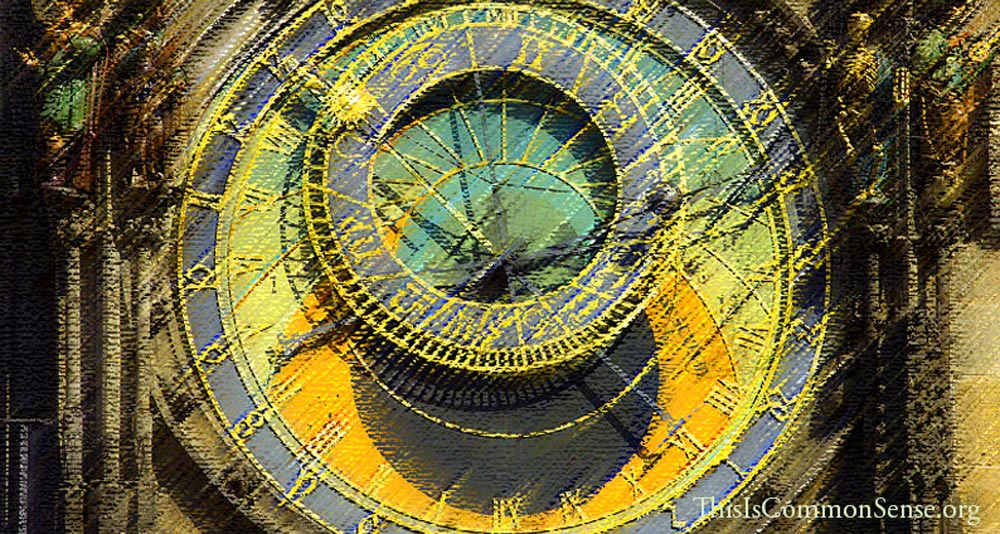
Daylight Saving Time was designed to trick us into spending more free time in daylight during summer. The trick? Set our clocks forward in the spring, meaning — if we keep to our old-clocked schedules — waking up and going to work earlier, leaving more recreational and home life (and shopping time) in sunnier late afternoons and evenings.
Kind of cheating.
Most folks find it a bother.* Switching one’s clocks back and forth means upsetting sleep rhythms, which can trigger negative health outcomes.
Commonsensical people prefer to chuck the program — and several states have opted out, having no Daylight Saving Time at all. The program’s benefits — and negatives — often prove hard to find in actual statistics.
Enter Senators Patty Murray (D-Wash.) and Marco Rubio (R-Fla.). They want to get rid of all the Spring-Forward/Fall-Back nonsense.
And there’s a bill in the House to push the policy forward.
But they want to do it the Nixonian way, making Daylight Savings Time universal and year-long. This effectively shifts time zones permanently east by one hour. And ensures that no one will experience 12:00 at solar noon, with the Sun directly above.
Surely we can change our schedules to fit whatever sunlight we want and we don’t need Washington to tell us when to get up . . . even as they manipulate time.
Regardless, you can check out Murray’s and Rubio’s arguments in USA Today.
The switching has got to go. But the permanent evasion of astronomical timekeeping sure smacks of . . .
Common Sense. I’m Paul Jacob.
* Daylight Saving Time was first instituted in wartime by Woodrow Wilson, but repealed by popular demand during peacetime; this was repeated under FDR for WWII. Richard M. Nixon pushed it in during the Seventies as an energy conservation program. It still exists federally, with 16 state exceptions.
Note: corrections made in the text after initial publication, with thanks to Thomas Knapp, below.
See all recent commentary
(simplified and organized)
See recent popular posts