Categories
budgets & spending cuts ideological culture national politics & policies

Pleistocene Politics

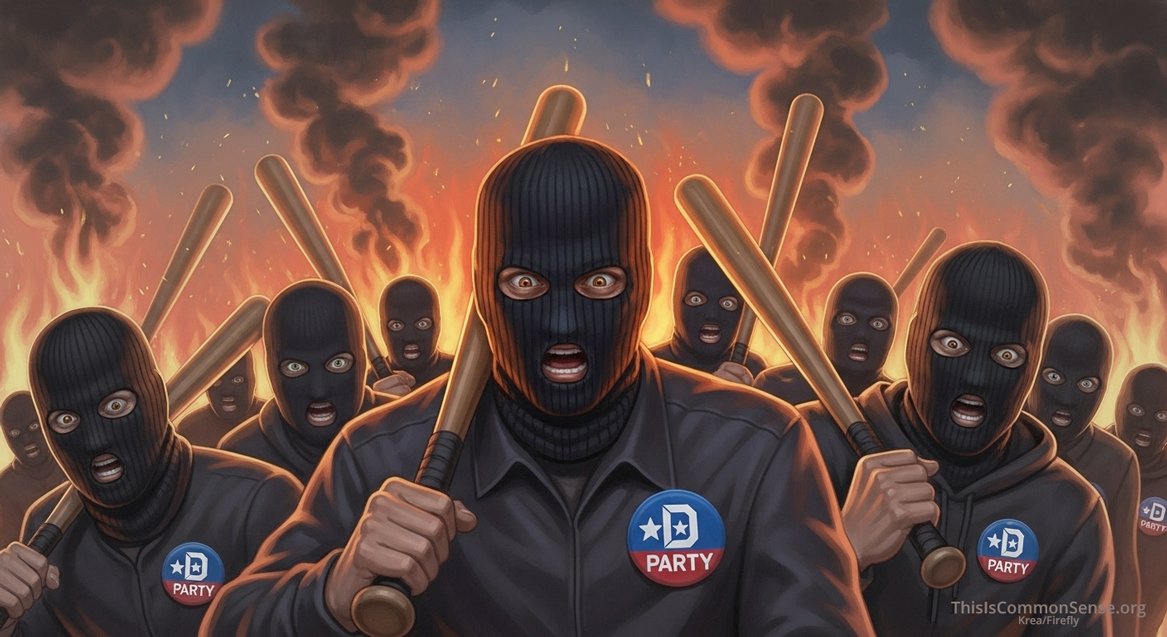
Back in the Eocene — I mean the 1990s — Senator Chuck Schumer and President Bill Clinton and most other Democrats insisted that “healthcare” benefits not be distributed to “those who’ve entered the country illegally.” Now, the party is united behind the opposite notion, in which benefits — paid for by resident taxpayers — must be delivered generously to all comers. 

This was most clearly demonstrated in 2019, during one of those huge panels of presidential hopefuls on the Democratic side, all raising their hands on whether they supported giving tax-funded medical assistance to illegal aliens. 

Yesterday I quoted Rep. Maxine Waters (D-Calif.) on how Democrats want to “save people.” 

What I didn’t quote was the question she was asked — “Do Democrats want to prioritize the healthcare for illegal aliens over a government shutdown?” — or how she initially responded: “Excuse me; stop it right there. We’re not prioritizing; what we’re doing is saying, simply, we wanna keep the government open and we wanna work with the Republicans and have a bipartisan agreement to keep this government open and healthcare is at the top of our agenda.”

Whew. While denying she’s prioritizing what’s at “the top” of her “agenda” — what prioritization means — her desire for a “bipartisan agreement” is just as fake, for what she and her fellow Democrats demand is that the Republicans completely agree with their most extreme agendum: subsidized medical assistance for all comers.

 That’s not “bipartisan.” There’s no compromise. It’s a tactic of intransigence.

Nassim Nicholas Taleb wrote about this in terms of an “intransigent minority rule,” positing that in complex systems — such as societies, markets, or Congress — a small, highly committed minority (as little as 3-4 percent) can impose its preferences on a flexible majority due to an asymmetry of choice.

Meaning that the opponents of “limitless” subsidies (socialism) must become intransigent themselves to win.

This is Common Sense. I’m Paul Jacob.


PDF for printing

Illustration created with Krea and Firefly

See all recent commentary
(simplified and organized)
See recent popular posts
Categories
budgets & spending cuts national politics & policies too much government

Shutdown Rite

It’s like a fight between siblings: “It’s his fault!” “No, it’s her fault!” 

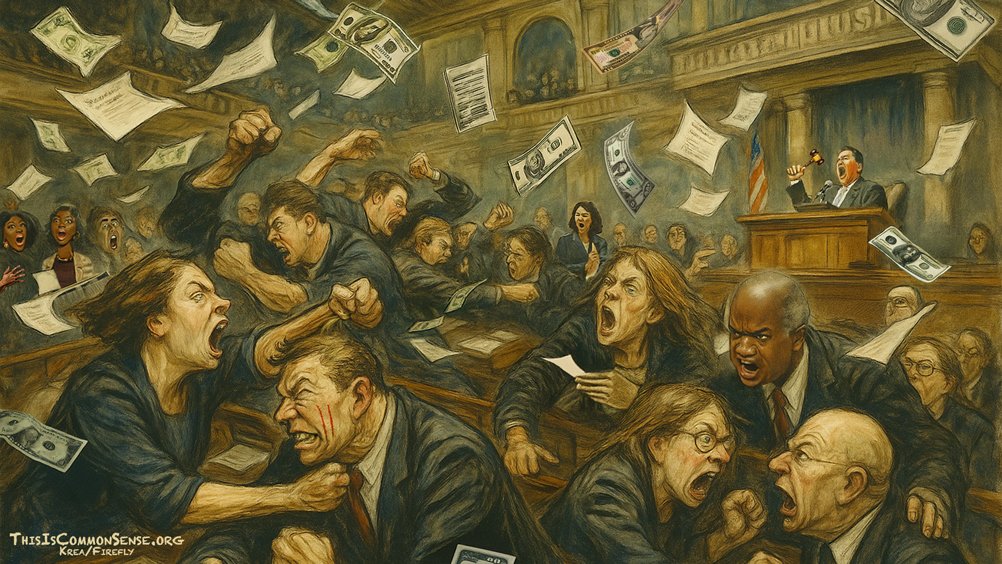
But it is Congress and its two political parties squabbling, and it’s the American voter playing the part of parent. Whose fault is it? Both make plausible cases, sort of, but neither sounds believable. Why can’t these two get along? And where’s my coffee? Where’s my gin?

The subject is the budget.

Not the actual voted-on budget, which though prescribed by the U.S. Constitution hasn’t been seen in quite a while. Congress offers up these makeshifts instead.

“Hours into a government shutdown, the Senate again blocked a pair of rival stopgap bills to fund the government, amid a partisan standoff that shows no signs of easing,” writes Jackson Richman at The Epoch Times. “The federal government shut down Wednesday morning after Congress failed to pass a Republican plan to fund operations through Nov. 21.”

Welcome to Fiscal Year 2026. 

Republicans call the failure a “Democrat Shutdown”; Democrats counter with “Trump Shutdown.”

The key concept here is CR — Continuing Resolution, the now-standard budget machinery. Congress must approve funding for federal agencies either through twelve individual appropriations bills or a temporary CR to bridge gaps while negotiating those bills. No full FY2026 appropriations have so far been enacted, and competing CR proposals from Republicans and Democrats both failed in the Senate on September 30, 2025, triggering the lapse under the Antideficiency Act, which prohibits spending without authorization.

Democrats insist on re-authorizing Obamacare subsidies, including healthcare for those in the country illegally — which Rep. Maxine Water (D-Ca.) nearly admits to, insisting upon “healthcare for everybody; we want to save lives.”

Republicans balk at that, their compromise being to regurgitate past CR specs. Which annoys Rep. Thomas Massie (R-Ky). “Republicans passed a line-by-line continuation of Biden’s last budget, including Doge-identified waste. BUT Democrats refused to vote for Biden’s last budget, thereby shutting down the government.”

Happy New Year!

This is Common Sense. I’m Paul Jacob.


PDF for printing

Illustration created with Krea and Firefly

See all recent commentary
(simplified and organized)
See recent popular posts

Categories
First Amendment rights national politics & policies partisanship

Who Is the Lawfare King?

Last Sunday on Meet the Press, Sen. Rand Paul (R-Ky) addressed two areas where President Trump has stumbled in recent days, losing many conservatives and civil libertarians: censorship and lawfare. 

“Senator,” Kristen Welker asked, “do you believe that President Trump is sending the message that he only supports free speech when it’s speech that he agrees with?”

“Well, I can’t control everything the president says. And I don’t think that having the FCC weigh in on licenses is right. I will fight that,” the junior senator from Kentucky declared. “But I can tell you that throughout government, the censorship apparatus that Biden had put in place is gone.”

Under President Biden, the senator explained, employees and ex-employees of both the FBI and Department of Homeland Security set up offices inside Twitter, while “Facebook was told to take down information concerning the origins of the Covid virus” under threat of “being broken up by antitrust. So we have had official censorship going on for many years now, and everybody on the left just looked the other way. 

“They actually had an office, an office of censorship.”

Welker then inquired if he thought it was “appropriate for the president to direct the attorney general to go after his political opponents”?

“I think lawfare in all forms is bad,” Rand Paul replied. “What they did to Donald Trump was an abomination. But yes, it is not right for the Trump administration to do the same thing.

“We need to get politics out of the judicial system as much as we can. But we can’t do it without acknowledging that the king of lawfare was Biden.”

True enough, with the full title: Marionette Censor Joe, King of Lawfare, First of His Name If Not of His Kind.

This is Common Sense. I’m Paul Jacob.


PDF for printing

Illustration created with Krea and Firefly

See all recent commentary
(simplified and organized)
See recent popular posts

Categories
First Amendment rights national politics & policies too much government

Free Jimmy

Last Friday (and Saturday), we supported the right of ABC’s corporate leaders to ignore bullying comments by Federal Communications Commission (FCC) Chairman Brendan Carr and produce the late-night show, “Jimmy Kimmel Love!” to their heart’s content.  

I’m happy to hear that ABC will bring Kimmel back tonight.

Not glad because I like him or will watch his show. I don’t. I won’t. I’d cancel him were it up to me. But freedom’s tops, so I get especially jazzed when people stand up to demand it. 

And concerned when those in power attempt to take it away.

The very potent public backlash against the idea that ABC was muscled by the Trump administration into suspending Kimmel’s show is why it has returned. That’s a healthy sign of our political culture. Plus, take note that this pushback against the FCC chairman and President Trump hasn’t come just from the Left but also, as The Wrap reports, from many prominent conservatives including “Tucker Carlson, Ben Shapiro and Ted Cruz.”

What Kimmel alleged — that the murderer of Charlie Kirk was somehow MAGA — was not only “without evidence” but clearly contradicted by the evidence. As well as being asinine on its face. And more than a bit callous.

Still, freedom of speech means the freedom to say what you think, no matter how boneheaded, whether those in power like it or not. 

Sinclair Broadcast Group, owner of the largest chain of ABC affiliates, has already announced that its stations will not be airing Kimmel’s program. As is their right.

Stick with freedom of speech, Mr. President. For all.

This is Common Sense. I’m Paul Jacob. 


PDF for printing

Illustration created with Krea and Firefly

See all recent commentary
(simplified and organized)
See recent popular posts

Categories
ideological culture national politics & policies

Timothy Tendentious

Democratic Senator Tim Kaine — most noted, till now, for being the first Timothy to run for the U.S. vice presidency — said something interesting last week.

And that may indeed be a significant first.

Sen. Kaine expressed his shock at something said by Riley Barnes, nominated to serve as Assistant Secretary of State for Democracy, Human Rights, and Labor. Mr. Barnes had confessed to the belief that “all men are created equal because our rights come from God, our Creator; not from our laws, not from our governments.”

Horrifying!

“The notion that rights don’t come from laws and don’t come from the government, but come from the Creator,” said the Virginia senator, aghast, “that’s what the Iranian government believes. It’s a theocratic regime that bases its rule on Shi’a law and targets Sunnis, Bahá’ís, Jews, Christians and other religious minorities. . . .”

Our First Failed Tim* is trying to advance an argument: the Iranians, believing “that they understand what natural rights are from their Creator” do bad things, so the idea must be wrong.

Presumably, however, Tim Kaine would not argue that Thomas Jefferson, when he wrote the famous words “We hold these truths to be self‑evident, that all Men are . . . endowed by their Creator with certain unalienable Rights,” was hell-bent on persecuting religious minorities. The senator surely knows that Jefferson was a daring proponent of religious freedom. 

Generally, the idea of natural rights was used in the West to extend religious freedom.

Kaine must also know that folks like him who hold to legal positivism — thinking that rights only come from governments — include some of the worst persecutors of religious people in human history.

This is Common Sense. I’m Paul Jacob.


* Our Second Failed Tim is of course Minnesota Governor Tim Walz, who unsuccessfully ran alongside Vice President Kamala Harris in the 2024 election. 

PDF for printing

Illustration created with Krea and Firefly

See all recent commentary
(simplified and organized)
See recent popular posts
Categories
free trade & free markets insider corruption national politics & policies

Protection from Us?

On Labor Day, National Review pointed out that less than 10 percent of all U.S. workers currently belong to unions.

This percentage has been declining for decades. Even during the Biden administration, when the president and his puppeteers did their best to pump up unions, the percentage declined.

In the private sector, only 5.9 percent of workers are union members.

This is great news because unions are typically bad news. By using government-sanctioned force to compel membership and extract wage rates above the market rate, collective bargaining reduces the number of workers who can be employed in a company or industry — thereby distributing wealth from the many to the fewer — and makes firms less efficient.

Only long-run increases in economic productivity enable wage rates to be permanently and generally increased in real terms.

Now, a union devoting itself only to helping workers cope with problems in the workplace problems like an abusive supervisor or gratuitously dangerous working conditions would be fine. But unions as we know them don’t confine themselves to such support and often don’t even offer it. Union bosses prefer to secure above-market wages perhaps because they can then siphon off some of those “rents” (as economists put it).

Meanwhile, unionism is still going strong among public employees. Although government workers constitute only about 15 percent of U.S. workers, these workers “make up about half of the population of union members,”National Review reports.

Who are these government workers protecting themselves from? 

Well, from you and me, basically. 

We might pay them less and we might fire them more often — if we could.

This is Common Sense. I’m Paul Jacob.


PDF for printing

Illustration created with Krea and Firefly

See all recent commentary
(simplified and organized)
See recent popular posts

Categories
ideological culture national politics & policies

Too Virtuous to Win?

The Democrats lost a presidential election where the biggest issue, shared by both contenders, was The Other Side Is Off-putting, Icky and Crazy. 

Third Way, a think tank pushing for “moderate” policy, almost acknowledged this in a widely-shared memo: “For a party that spends billions of dollars trying to find the perfect language to connect to voters, Democrats and their allies use an awful lot of words and phrases no ordinary person would ever dream of saying.”

So it’s not without reason that Third Way suggests Democrats drop the “therapy-speak,” for example — words like privilege, violence (“as in ‘environmental violence’”), othering, etc. Also to be nixed? “Seminar room language,” featuring jargon like subverting norms, systems of oppression, heuristic, etc.

Then there’s the far-out lefty nonsense, like chest-feeding and Latinx, along with the “criminal-excusing phraseology” — elaborate euphemisms like incarcerated people.

The upshot? “Communicating in authentic ways that welcome rather than drive voters away would be a good start.”

Meanwhile, Democratic National Committee Chair Ken Martin seems to think his party failed by trying too hard to persuade. 

“After six months as chair, I’ve learned that a lot of people, especially folks in DC, think they can change things by winning arguments,” Martin explained. “You know what winning the argument gets you? Maybe a nice round of applause and a few likes on Instagram. But the reality is, it doesn’t make life any better for any person. We have to stop settling on winning arguments with each other. We have to win elections.”

This is covered in an Epoch Times article that also shows the Democrat leader pressing the Too Virtuous to Win meme: “We cannot be the only party that plays by the rules anymore. We’ve gotta stand up and fight. We’re not gonna have a hand tied behind our backs anymore.”

This pose, that “our side” is too good and noble and rule-following is, of course, echoed among Republicans.

This is Common Sense. I’m Paul Jacob.


PDF for printing

Illustration created with Krea and Firefly

See all recent commentary
(simplified and organized)
See recent popular posts

Categories
national politics & policies representation

Must the War Go On?

“There is an easy way to end the gerrymandering wars,” a new video by The Recount asserts,and no one is talking about it.”

Except them. And us. And others

“We need more members of Congress,” the anonymous male narrator continues. “This might sound weird, especially since most of us don’t exactly love the ones we have now. But the reality here is simple: the U.S. has the worst ratio of citizens to elected representatives of every developed democracy in the world.”

It’s true. Congressional districts have been capped at 435 since 1929’s Permanent Apportionment Act. That year, the average congressperson represented 243,000 people. That’s too many. But today, the average congressperson represents 761,000 people.

“So uncap the house,” Jeff Mayhugh and A.D. Tippet argue in The Hill, “and rein in gerrymandering at least a bit.

“Our founders believed that smaller congressional districts would lead to a better relationship between citizens and their government,” the authors contend. “Gerrymandering undermines this idea by splitting neighbors from each other or packing them in districts with others from the same party to secure a seat for the political party in control.”

And then there’s this: “Smaller districts are more representative and also harder to manipulate.”

“With more seats, districts can be smaller and more representative of smaller enclaves and communities,” explains the video presentation, “and when that happens, the chances of Republicans winning seats in Massachusetts or Democrats winning seats in South Dakota goes up.”

Entitled “Why Expanding Congress Would End Gerrymandering,” The Recount’s video also correctly points out that creating a smaller representative-to-voter ratio by increasing the size of the House is “fully within Congress’s power” and “doesn’t take a constitutional amendment.”

But it would take a great deal of citizen . . . push.

This is Common Sense. I’m Paul Jacob.


PDF for printing

Illustration created with Krea and Firefly

See all recent commentary
(simplified and organized)
See recent popular posts

Categories
election law national politics & policies Voting

Lost Their Bearings

“Washington, D.C. should have every right to set its own rules and policies, just as Vermont does,” argues Sen. Peter Welch (D-VT). “The micromanagement by congressional Republicans and Trump must end.”

First, the District of Columbia is not a state. Vermont is, if you’re playing at home. 

Second, Congress and the President have constitutional authority and responsibility for our nation’s capital. Article 1, Section 8, Clause 17 of the U.S. Constitution specifically empowers Congress “To exercise exclusive Legislation in all Cases whatsoever, over such District (not exceeding ten Miles square) as may, by Cession of particular States, and the Acceptance of Congress, become the Seat of Government of the United States . . .”

Sen. Welch’s comments above, from last week’s Washingtonian magazine article, were in defense of the noncitizen voting law passed by the D.C. City Council, which every Republican in the U.S. House — joined by 56 Democrats — voted to repeal. (Senate action awaits.) The Vermont senator was featured because three Vermont cities also allow noncitizens to vote.

I oppose the laws in those three Vermont cities as well as in our nation’s capital. But Washington, D.C.’s law is the worst. 

Why? It allows noncitizens in the country illegally to vote. It offers the vote even to foreign nationals working in the embassies of hostile powers. For instance, China’s and Russia’s ambassadors could decide who the next mayor is . . . or pass or defeat ballot measures. 

Make any sense? Not a lick.

One new local D.C. officeholder is Mónica López. She is not really a “noncitizen,” just a citizen of Mexico. And one of three non-U.S. citizens who were elected to Washington’s powerless neighborhood advisory council.

“It’s incredibly local,” López offers. “It has no bearing over anything federal.”

Really? None? She’s in a federal enclave, where the feds do their million-billion things, and what she’s up to has no bearing on it?

This is Common Sense. I’m Paul Jacob.


PDF for printing

Illustration created with Krea and Firefly

See all recent commentary
(simplified and organized)
See recent popular posts

Categories
First Amendment rights free trade & free markets national politics & policies regulation

Banks Not the Only Debankers

A recent executive order that President Trump issued to stop regulators from abetting and even compelling the “debanking” of bank customers for their political views is clear and on-target.  

On-target as far as debanking by banks goes.

But Reclaim the Net notes a glaring omission. The order’s identifies financial institutions willing to blacklist customers for possessing the “wrong” political opinions or missions. (“Wrong” here means not too pro-criminal or pro-terrorist but too constitutionalist, too much in favor of individual rights of the First or Second Amendment variety.)

The problem is that the order says nothing about major payment processors like Visa and PayPal.

Now, perhaps a penumbra of the new regulatory marching orders would influence the policies of the credit-card companies, whose cards are after all typically issued in cooperation with banks. But this is highly uncertain.

And Reclaim the Net thinks that Visa and Mastercard, “the twin tollbooth operators of the global payments highway,” are, like PayPal and Stripe, untouched by Trump’s order. Yet all of these payment processors have in recent years been blacklisting individuals and organizations that the processors happen to disagree with.

The practice goes back at least to the Obama administration, which instructed regulators that it could regard something called “negative public opinion” as a legitimate risk factor. 

This doctrine “quickly turned into a permission slip for politically driven account closures.” 

The government shouldn’t be issuing such “permission slips” — or implicit instructions — to banks, payment processors, or anybody.

This is Common Sense. I’m Paul Jacob.


PDF for printing

Illustration created with Krea and Firefly

See all recent commentary
(simplified and organized)
See recent popular posts