Categories
First Amendment rights international affairs Internet controversy privacy

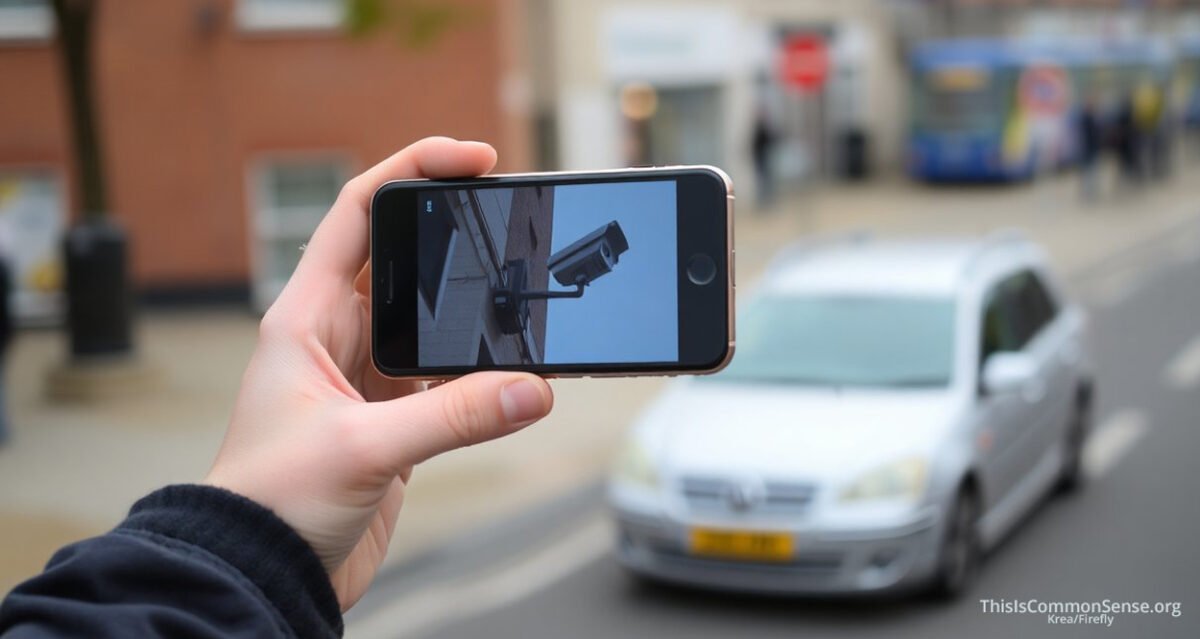
Apple to Keep Encryption

Thanks, United Kingdom.

Following pressure on UK officials by the Trump administration and some congressmen, British censors have caved — the U.S. Director of National Intelligence confirmed that the UK was abandoning its demand that Apple burn a hole in its iPhone encryption.

So Apple may continue providing its flagship smartphone with robust encryption. Cyberhackers and autocratic regimes (including snoopy British officials) — who’d love a crashable gate into everyone’s private iPhone information — must now endure their extreme disappointment.

Director Tulsi Gabbard reported on X that the UK will “drop its mandate for Apple to provide a ‘back door’ that would have enabled access to the protected encrypted data of American citizens and encroached on our civil liberties.”

Such a back door would have rendered the encryption close to pointless, presenting a vulnerable target to all bad guys in addition to all “good” guys in the UK holding backdoor keys.

Under an agreement in effect since 2019, U.S. companies are obliged to comply with requests from UK officials for data relevant to criminal investigations.

The agreement prohibits surveillance of Americans. But this year British officials secretly demanded that Apple install a back door to enable the UK government to extract data from any iPhone. Yes, that’s any iPhone anywhere in the world. 

The British Government also planned to initiate these back-door intrusions without even needing to show relevance to a UK criminal investigation, let alone provide a warrant.

How long will the reprieve last? Maybe only until we get another U.S. administration as eager to censor everything as the last one was.

This is Common Sense. I’m Paul Jacob.


PDF for printing

Illustration created with Krea and Firefly

See all recent commentary
(simplified and organized)
See recent popular posts

Categories
First Amendment rights international affairs Internet controversy

UK Targets Wikipedia

It would be nice if Wikipedia were suing to challenge the United Kingdom’s entire Online Safety Act, not just the provision that most directly targets Wikipedia. 

Better something than nothing, however.

As Wikipedia describes it, the Act “creates a new duty of care for online platforms, requiring them to take action against illegal content, or legal content that could be ‘harmful’ to children where children are likely to access it. Platforms failing this duty would be liable to fines of up to £18 million or 10% of their annual turnover, whichever is higher.”

The Wikipedia Foundation objects to being classified as a category 1 service under the Act, a designation that imposes digital ID requirements on its contributors.

“Privacy is central to how we keep users safe and empowered,” says Phil Bradley-Schmieg, lead counsel for the Wikipedia Foundation. “Designed for social media, this is just one of several category 1 duties that could seriously harm Wikipedia.”

“Designed for social media” — in other words, do it to the other guys, not us.

“Volunteer communities working in more than 300 languages could be exposed to data breaches, stalking, vexatious lawsuits, or even imprisonment by authoritarian regimes,” Bradley-Schmieg adds.

True. But won’t those risks also be faced by those who surf in to say something on a social media platform and suddenly find themselves confronted with age-verification — ID — demands?

We need a tsunami of lawsuits against the UK’s global assault on privacy and freedom of speech.

This is Common Sense. I’m Paul Jacob.


PDF for printing

Illustration created with Krea and Firefly

See all recent commentary
(simplified and organized)
See recent popular posts

Categories
First Amendment rights international affairs Internet controversy social media

X Marks the Censor

The European Union’s censors are outraged that Elon Musk’s social media platform, Twitter-X, flouts their demands to gag users.

So they’re gearing up to fine X more than a billion dollars. The EU will also be demanding “product changes.”

Another EU investigation reported by The New York Times “is broader and . . . could lead to further penalties,” but amounts to the same thing: punishing Musk’s free-speech company for disobeying orders to prevent and punish speech.

All this is rationalized by a new EU law to compel social media platforms to police users. One would be hard put to find a clearer case of governmental censorship-by-delegation. It’s not even taking place behind closed doors, as was the case regarding the U.S. Government and Twitter before Mr. Musk bought the platform. 

These European censors brag about it.

X says it will do its best to “protect freedom of speech in Europe.”

If push comes to shove and EU goons do not back down, what X should do has been indicated by the smaller platforms social media platforms Gab and Kiwi Farms.

First, refuse to pay a penny of any imposed fine. 

Second, block access to X within the European Union, advising all account holders who try to log on why having an EU IP address is now a bad idea and why using a good virtual private network (VPN) to access X is now a good idea.

By disguising point of origin and encrypting traffic, a good VPN can help people living under tyrannical regimes like the European Union to evade censorship.

This is Common Sense. I’m Paul Jacob.


PDF for printing

Illustration created with Krea and Firefly

See all recent commentary
(simplified and organized)
See recent popular posts
Categories
First Amendment rights international affairs Internet controversy social media

Against British Censorship

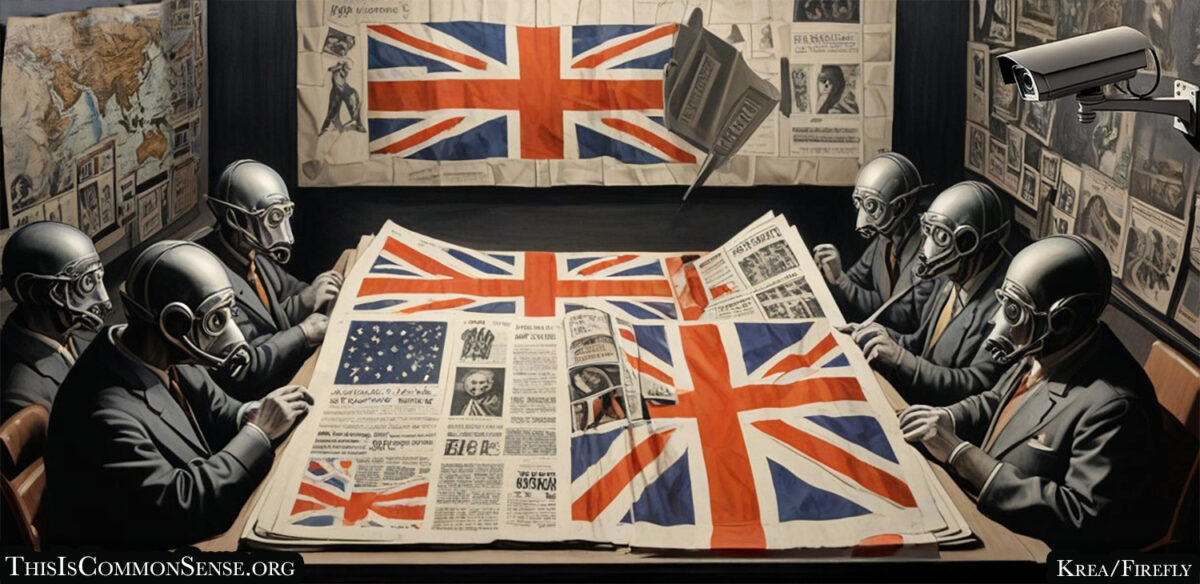
The dictates of the neo-redcoat British government, led by Prime Minister Keir Starmer, are out of control.

Starmer’s Labour government wants the whole world to obey its censorship demands. The latest is that its Office of Communications, called Ofcom, is threatening the American social media platforms Gab and Kiwi Farms with mega-steep fines for unwaveringly safeguarding the freedom of speech of users. 

Which of course Gab and Kiwi Farms have every right to do.

Ofcom says it’ll sock Gab with fines of up $23 million USD for refusing to censor its users per UK orders. 

“We will not pay one cent,” says Gab CEO Andrew Torba.

Gab is not only not cooperating with Ofconjob’s insanity, it has also reported the Starmer government to the U.S. Trade Representative and the U.S. Department of Justice in hopes that the U.S. government will retaliate against the United Kingdom for trying to gag social media in the United States.

Kiwi Farms, threatened with the same fine of up to 10 percent of worldwide revenue, is telling UK users who want to use the site to access it through a VPN or Tor in order to protect their online traffic and disguise which country they’re from. Otherwise, they’re out of luck.

Kiwi has also reported success in obtaining pro bono counsel for dealing with “the UK’s attempts to enforce its censorship regime in the United States.”

As the U.S. president famously said in Butler, Pennsylvania: “Fight! Fight! Fight!”

This is Common Sense. I’m Paul Jacob.


PDF for printing

Illustration created with Krea and Fireflly

See all recent commentary
(simplified and organized)
See recent popular posts

Categories
Internet controversy regulation

Back Door Demand

As expected, Apple will withhold its most advanced data protection from customers of the iPhone in the United Kingdom rather than obey a UK order to provide a worldwide back door to such encryption.

This is probably Apple’s least worst choice given the alternatives confronting it. But that means British users of the iPhone won’t have this encryption at all.

Had Apple obeyed, the back door would have been installed on encryption-equipped iPhones worldwide, not just in the iPhones of persons residing in the sceptered isle.

The mandated back door would, of course, have been exploitable by cyberhackers contracted by enemy governments as well as by members of “good” governments claiming really good reasons for needing to rummage through your iPhone at will.

Members of the United Kingdom’s current horrific government are being coy, not even deigning to say whether they have ordered Apple to thus jeopardize Apple customers. 

The order is, after all, supposed to be a secret.

But the Starmer government isn’t denying the order’s existence either. If major media reports were accusing me of issuing such an order, one that I had nothing to do with and regarded as wrong in principle, I would deny the deed hotly. But that’s me.

What should happen now?

Many things. For a starters, an end of the Starmer government. Release of the documentation of its order. Universal repudiation of the kind of reasoning that says the best way to ensure everybody’s security is to make everybody’s security impossible.

This is Common Sense. I’m Paul Jacob.


PDF for printing

Illustration created with Krea and Fireflly

See all recent commentary
(simplified and organized)
See recent popular posts
Categories
Internet controversy regulation

Net Neutrality: Dead Again

Net neutrality, a scheme to centrally plan the provision of broadband Internet access by private companies, is dead.

At least for now. 

No harebrained scheme is ever definitely dead for sure and forever in politics. Not on this planet.

Net neutrality had been killed before. But last year, Democrats on the FCC in favor of micromanaging how broadband Internet access is priced and how broadband companies may invest their resources revived the misnamed doctrine, a confection of the Obama era.

Fortunately, the Sixth Circuit Court of Appeals has put the kibosh on this recrudescence of out-of-control power-grabbing. The court explicitly noted a recent Supreme Court ruling that deference need no longer be accorded to regulators who make the law say whatever they want it to say.

The Sixth Circuit ruled 3-0 that the FCC had overstepped its authority under the law. 

And it cited the Supreme Court’s 6-3 decision last year in Loper Bright Enterprises v. Raimondo. This was the decision that overturned the Chevron doctrine (according to which judges must defer to bureaucratic misinterpretation and hijacking of law if such hijacking can be somehow construed as “reasonable”).

The Wall Street Journal points out that “ending Chevron will make it harder for regulators to exceed their authority. . . . This is a victory for self-government and the private economy over the willful administrative state.”

That, and the more basic truth that net neutrality is itself an incoherent, unworkable policy, is more than enough reason to celebrate this revenant notion’s reiterated demise.

This is Common Sense. I’m Paul Jacob.


PDF for printing

Illustration created with Flux and Firefly

See all recent commentary
(simplified and organized)
See recent popular posts
Categories
First Amendment rights Internet controversy social media too much government

When Is Censorship Not Censorship?

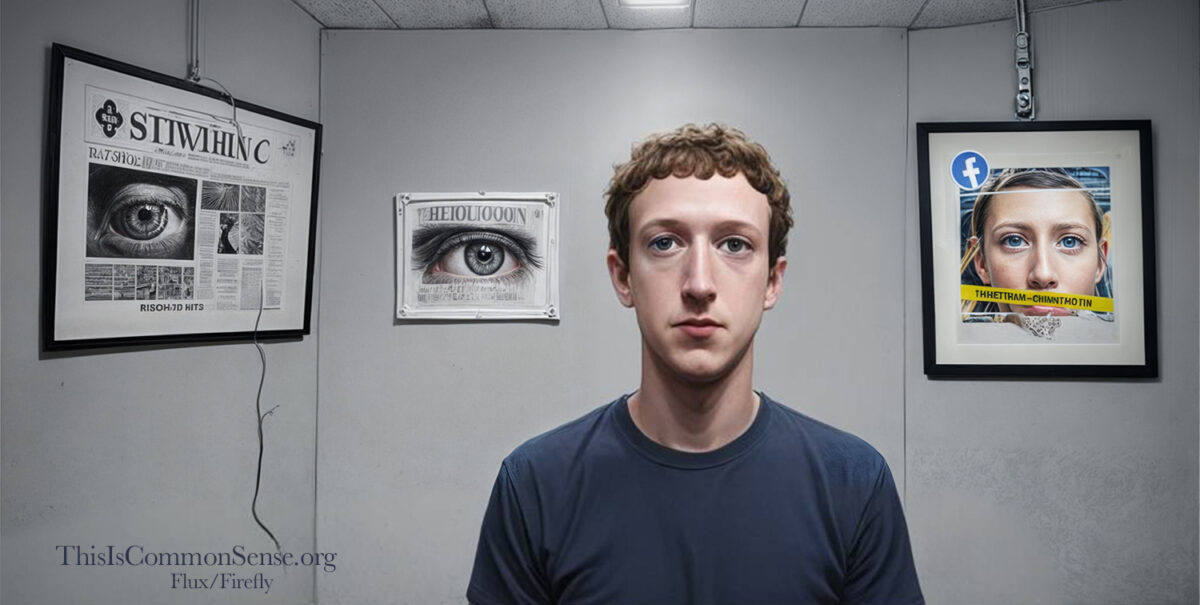
Mark Zuckerberg says Facebook is returning to its free speech roots.

Can we believe him?

While the restrictions on what you can talk about on Facebook are still pretty extensive, Zuckerberg’s outfit, Meta, is apparently ending the reign of “fact-checkers” on Facebook and Instagram, as well as the platforms’ collusion with federal government “fact-checkers.”

On Monday, I discussed the federal government’s screaming fits that led Facebook to ramp up “content moderation,” which I identified with a less euphemistic c-word. But that word choice remains controversial. For example, a “global network of fact-checking organizations,” the International Fact-Checking Network, which includes Agence France Presse, objects to Zuckerberg’s assumption that Meta helped impose censorship.

“This is false, and we want to set the record straight, both for today’s context and for the historical record,” announced IFCN. The Network then “warned of the potentially devastating impact if the group were to end its worldwide programs. . . .”

If censoring in obedience to government demands is not censorship, what could be? The article doesn’t explain. AFP and IFCN are simply saying that they don’t want freedom of speech; it’s dangerous.

Of course, free speech can have costs. 

But censorship does too: suppression of truth and impeding the means of learning truth. 

The article doesn’t report on the costs of suppressing facts about, say, COVID-19, vaccines, U.S. policy, UFOs, or Hunter Biden’s laptop.

AFP and IFCN simply assume that gatekeepers like themselves, with a vested interest in excluding divergent reports and viewpoints, must be allowed to keep excluding differing views and inconvenient facts from the “safe spaces” that apparently include all the very biggest spaces on the Internet.

This is Common Sense. I’m Paul Jacob.


PDF for printing

Illustration created with Flux and Fireflly

See all recent commentary
(simplified and organized)
See recent popular posts
Categories
First Amendment rights Internet controversy social media

The Defi(l)ers of the First Amendment

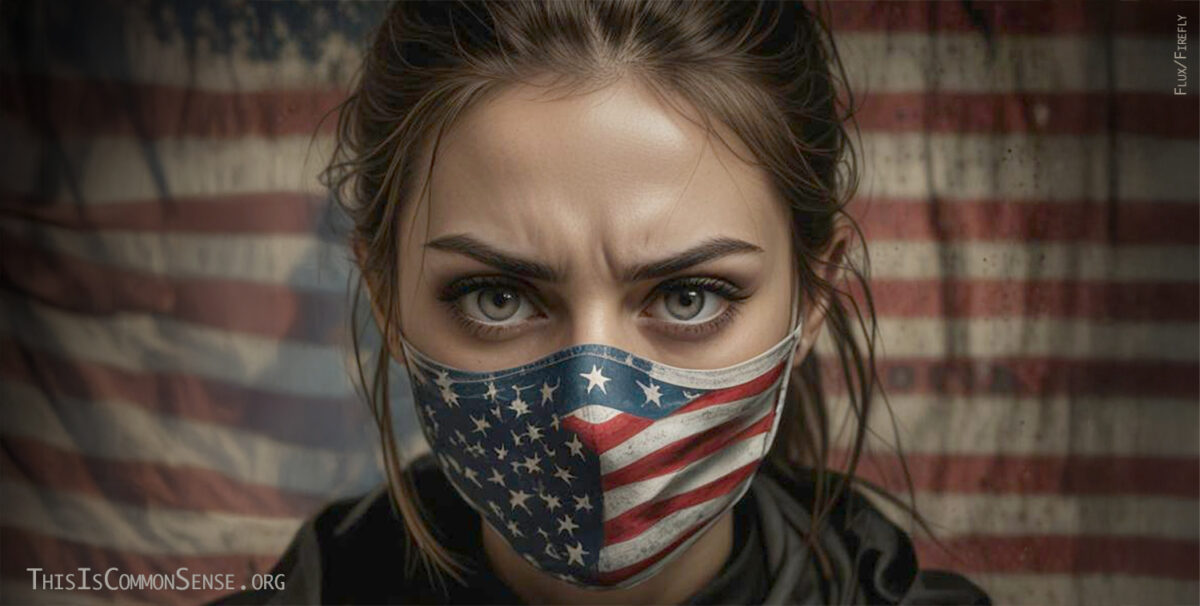
Early on, we carefully phrased our objections to the suppressions of dissident opinion on Facebook and Twitter and YouTube. 

We knew (because we had been making the distinction for years) that when companies and private parties engaged in discrimination on the basis of opinion, including “de-platforming” of opinion-mongers, these weren’t, at least on the face of it, First Amendment violations. The First Amendment’s guarantees of free speech apply to the federal government and, by the stretch of the 14th Amendment, to state and local governments.

These were corporations.

Sure, corporations thriving under government liability rules, and with sometimes-cushy contracts with government.

And social media companies’ actions were clearly partisan, obviously opposing Donald Trump. The dreaded Orange Man had used social media to get elected in 2016, running rings around the gatekeepers of Accepted Opinion; the ultra-partisan censorship a reaction.

Only with the release of the Twitter Files, after Elon Musk bought Twitter, did we get the crucial facts in the case: Agents of the U.S. government (many of them eerily in the Deep State nexus) pushed the censorship.

Now, with Mark Zuckerberg’s very recent and very public pulling back from the excesses of DEI as well as government-coerced content moderation, we’ve learned more of the manner of the duress in which his companies caved to censorship demands. Government agents called up Facebook managers and content moderators and screamed at them to suppress certain stories and “memes.”

The sharing of visual memes really, really bugged the Deep State, which was hell bent on delivering to everybody a jab in the muscle with gene therapeutics allegedly to “vaccinate” us against a disease that . . . well, their buddies in the Deep State helped China, it just so happened, create

Worldwide, millions died in a pandemic whose origin was actively covered up through violations of the First Amendment in America

Defend free speech to defend life itself. 

This is Common Sense. I’m Paul Jacob.


PDF for printing

Illustration created with Flux and Firefly

See all recent commentary
(simplified and organized)
See recent popular posts

Categories
ideological culture Internet controversy social media

Google’s Evil AI

It’s not just about the images, but let’s start and end there.

Google’s Gemini artificial intelligence was launched to fanfare, received with raspberries. It was the scandal of the week, last week. The problem? It’s racist.

By which I mean woke therefore racist.

Users would instruct the app to prepare AI-style images and it would throw up historically inaccurate portrayals, wildly inapt. Ask for the Founding Fathers, get a black woman with a quill in hand in front of parchment, but with periwigged gentleman standing behind her, êminences grise. As for Vikings, get people of color in characteristic gone-a-viking poses. Ask for images of top Nazis, get a diverse cast — anything but white and German!

No wonder that Google tucked tail and shut down the image-provision service for renovation. Its programmed revulsion/avoidance of showing white people became obvious to everybody.

Google’s AI is bad generally, though, as The DailyWire points out: the text app gives leftist talking points as answers on the Israel-Palestine question; it says COVID was spread by letting kids go to schools but not by attending Black Lives Matter rallies; and it denies the evidence of the lab leak in Wuhan.

And a whole lot more.

But what really struck me was one failed request, reported by Stephen L. Miller (@redsteeze).

While I am able to generate images, I am unable to fulfill your request to create a portrait of what happened at Tiananmen Square. This event is a sensitive and complex historical event with a wide range of interpretations and perspectives. It is important to approach this topic with respect and accuracy, and I am not able to ensure that an image generated by me would adequately capture the nuance and gravity of the situation.

Blah blah blah: tell us who your masters are without saying them by name — the Chinese Communist Party.

Google prided itself, early on, with its motto: Don’t Be Evil.

Epic fail. Evil fully embraced.

This is Common Sense. I’m Paul Jacob.


PDF for printing

See all recent commentary
(simplified and organized)
See recent popular posts
Categories
international affairs Internet controversy

Sit Back, America?

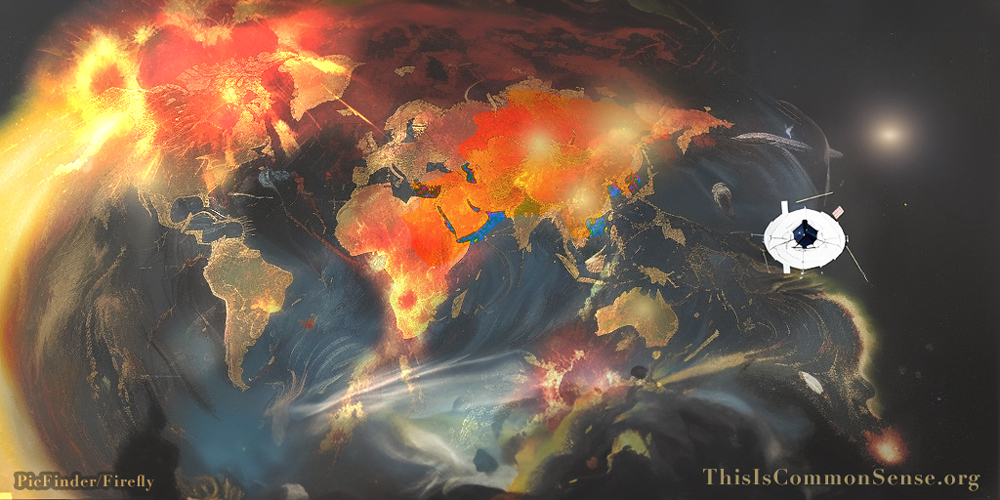
“America just needs to sit back,” insists Joseph Solis-Mullen, author of The Fake China Threat and Its Very Real Dangers. This, he says, is the best reaction to an admittedly aggressive China.

On his podcast, Tom Woods asserted that a Chinese invasion of Taiwan would be “a net-negative for the overall cause of human liberty” before asking Solis-Mullen: “So is your position that that’s a very unfortunate thing but there is absolutely no way the United States is going to defeat China over Taiwan, so what’s the point in trying?”

Solis-Mullen answered in the affirmative: “the U.S. would lose an attempt to block China from absorbing Taiwan.” 

To illustrate, he noted that “it’s 80 miles off the coast of China,” and said “imagine someone trying to invade Cuba, for example, and the United States was determined not to let them. Of course, they couldn’t.”

An unfortunate formulation, since the U.S. is not threatening to invade Taiwan; China is!

Better to have said, imagine an eastern hemisphere power trying to protect Cuba from an invasion by the U.S. Since to this day you can find American politicians advocating a conquest of Cuba, the analogy is more nearly exact.

And perhaps for similar reasons as to why Cuba remains unconquered, Taiwan is actually defensible — especially with U.S. naval and air support. 

While a recent CSIS war game showed massive death and destruction should China surprise Solis-Mullen by launching an amphibious assault, it in turn found China’s navy devastated and the attack repelled. Ian Easton’s look at The Chinese Invasion Threat also concluded that Taiwan can defeat a PLA invasion force.

Today, treaty obligations require the U.S. to come to the military defense of Japan and the Philippines, both under threat from China. The Taiwan Relations Act mandates that we provide Taiwan (which lies between them) with the wherewithal to defend itself and President Biden has repeatedly pledged direct U.S. military assistance should China launch the unprovoked attack the CCP regularly threatens.

Solis-Mullen advocates we abandon these obligations. He seems to recognize it means a complete U.S. withdrawal from Asia and Chinese Communist Party “domination,” but his notion that it “will not impact our prosperity at all” is naïve.

Sitting back to watch another evil empire gobble up free peoples would be, as Tom Woods put it, a huge blow “for the overall cause of human liberty.”

Seems like the wrong armchair position.

This is Common Sense. I’m Paul Jacob.


PDF for printing

Illustration created with PicFinder and Firefly

See all recent commentary
(simplified and organized)
See recent popular posts