Categories
First Amendment rights international affairs

Leave Our Speech Alone

Secretary of State Marco Rubio has announced that foreign officials who act to censor U.S. speech on U.S. soil won’t get visas.

They shouldn’t “issue or threaten arrest warrants on U.S. citizens or U.S. residents for social media posts on American platforms while physically present on U.S. soil. . . . [Or] demand that American tech platforms . . . engage in censorship activity that reaches beyond their authority and into the United States. We will not tolerate encroachments upon American sovereignty, especially when such encroachments undermine the exercise of our fundamental right to free speech.”

The policy is the least the U.S. can do to combat despots of even “friendly” countries who target speech in the U.S. or demand that U.S. firms abet local repression.

It would also be reasonable to tie trade agreements to willingness to abstain from censoring U.S. speech and bullying U.S. companies that protect speech and privacy. But a White House report on a recent agreement with the UK says nothing about these matters.

American companies have sometimes withdrawn from foreign markets or offered truncated products rather than cooperate with censorship or surveillance. When Britain demanded a global back door to iPhone encryption, Apple removed an encryption feature from iPhones for users in the UK. Better than rendering the feature useless everywhere in the world.

But it would be better still if a country like the United Kingdom simply agreed to leave us alone. Pretend we’re allies and so forth; pretend that they, too, think freedom is a good thing.

This is Common Sense. I’m Paul Jacob.


PDF for printing

Illustration created with Krea and Firefly

See all recent commentary
(simplified and organized)
See recent popular posts

Categories
ideological culture international affairs

Triumph & Failure

“Shen Yun Performing Arts completed its 18th global tour earlier this month,” a May 24th press release informs, “a historic run of 799 shows in 199 cities in 26 countries in front of over a million people.

This notice, entitled “Triumphant 2025 Shen Yun Season Concludes,” may look like the usual glowing corporate self-congratulatory exercise in unwarranted hype. But it isn’t. “Shen Yun’s eight touring groups and hundreds of performers overcame tornadoes and fires as well as sabotage attempts from the Chinese Communist Party (CCP) and its allies. And yet, not a single performance was missed.”

That is an accomplishment, indeed, for the theater troupe did face back-room political pressure from that great foe of freedom, the CCP.

I had seen several news reports of their troubles. It took a court order, for example, to enforce a venue contract with South Korea’s Kangwon National University. University officials had “greenlit the New York classical Chinese dance company’s application to perform at its Baekryeong Art Center on April 1,” explains The Epoch Times, “only to walk back on the agreement after the Chinese embassy voiced a complaint.” 

The university “stated that its decision to cancel the show had to do with the public interests of the school,” of course. But while“escalating the matter into a ‘diplomatic issue’” obviously loomed large, the center also mentioned the danger from “the roughly 500 Chinese-national students studying at the center who it claimed could stage protests, potentially leading to clashes, should the performance go on as scheduled.”

The Shen Yun Performing Arts organization is made up of many artists who have fled communist China. The communists in China do not like defectors, and their reach is alarming.

Thankfully, in this case, the CCP failed.

This is Common Sense. I’m Paul Jacob.


PDF for printing

See all recent commentary
(simplified and organized)
See recent popular posts

Categories
government transparency international affairs media and media people national politics & policies

Lying About Killing for Votes

Some foreign policy issues, such as regarding Israel and Palestine, are confusing enough that many of us tend to be wary of sharing our opinions. 

But no matter how reticent we may be, we can agree on this: there should be no outright lying about our positions. 

Mitchell Plitnick is a progressive who is willing to confront this prevarication problem forthrightly. Of the many “disheartening moments” during the last presidential campaign, “few,” he admits, “were quite as deflating as that moment when the ostensibly progressive, leading member of The Squad, Alexandria Ocasio-Cortez stood at the podium at the Democratic National Convention and told the audience that then-Vice President Kamala Harris was ‘working tirelessly to secure a ceasefire in Gaza and bring the hostages home.’

“We knew she was lying,” Plitnick confesses. “AOC herself knew she was lying. But it was just the message that the crowd — who were more than eager to show their support for the Democrats despite the party’s utter refusal to allow even the most conciliatory and moderate Palestinian voice to be heard — wanted to hear, and they ate it up.”

This willingness of the few to promote a blatant lie, and of the masses to believe it, might be the most disheartening thing about modern politics.

And as for the truth, how do we know Plitnick is right about the prevarications? “The utterly shameless nature of the lie has now been confirmed by no less than nine officials from Joe Biden’s administration and reported on by Israel’s own Channel 13 news program, Hamakor. . . .”

We, the people — pro-Israel and pro-Palestinian and otherwise — may all wish for a ceasefire.

But it’s clear that the last administration wanted nothing to do with it.

And lied about it. For votes.

This is Common Sense. I’m Paul Jacob.


PDF for printing

Illustration created with Krea and Firefly

See all recent commentary
(simplified and organized)
See recent popular posts

Categories
First Amendment rights international affairs

Like a Bad Jankowicz

Nina Jankowicz is back.

During the Biden administration, Jankowicz, scourge of “disinformation,” lost her perch as head of an incipient Disinformation Governance Board. 

People learned that the Board existed; were aghast; got it closed.

If only government censorship were always so easy to kill.

Now this nag, with no prospect of getting a job muzzling people she disagrees with from the Trump administration, is making a nuisance of herself internationally.

She’s preaching to the European Union, which Jonathan Turley calls “the global hub for censorship efforts,”warning that the Trump administration wants “to force EU institutions to roll back regulation like the DSA [Digital Services Act],” which seeks to impose a regime of online censorship.

We want the right to say false things if we’re not trying to defraud anyone. Why? For several reasons, but we often inadvertently say untruths.

We also want the right to say true things. 

When people disagree with each other, both can’t be 100 percent right, but they can both be trying to find the truth. And discourse is often crucial to finding it. Truth doesn’t arrive readymade in the form of secure and impenetrable revelation.

Neglecting all this, censors like Jankowicz and the EU’s mandarins prefer to enforce current government viewpoints and punish contradictions of them that exceed a certain threshold of annoyingness.

They seem unaware of the great fact that even governments (!) can be mistaken.

By the way, if you haven’t listened to Jankowicz warble her censorship rap to the tune of “Supercalifragilisticexpialidocious,” you really should do so in expiation of whatever sins you may have committed in this life.

This is Common Sense. I’m Paul Jacob.


PDF for printing

Illustration created with Krea and Firefly

See all recent commentary
(simplified and organized)
See recent popular posts

Categories
international affairs public opinion

An Independent Nation

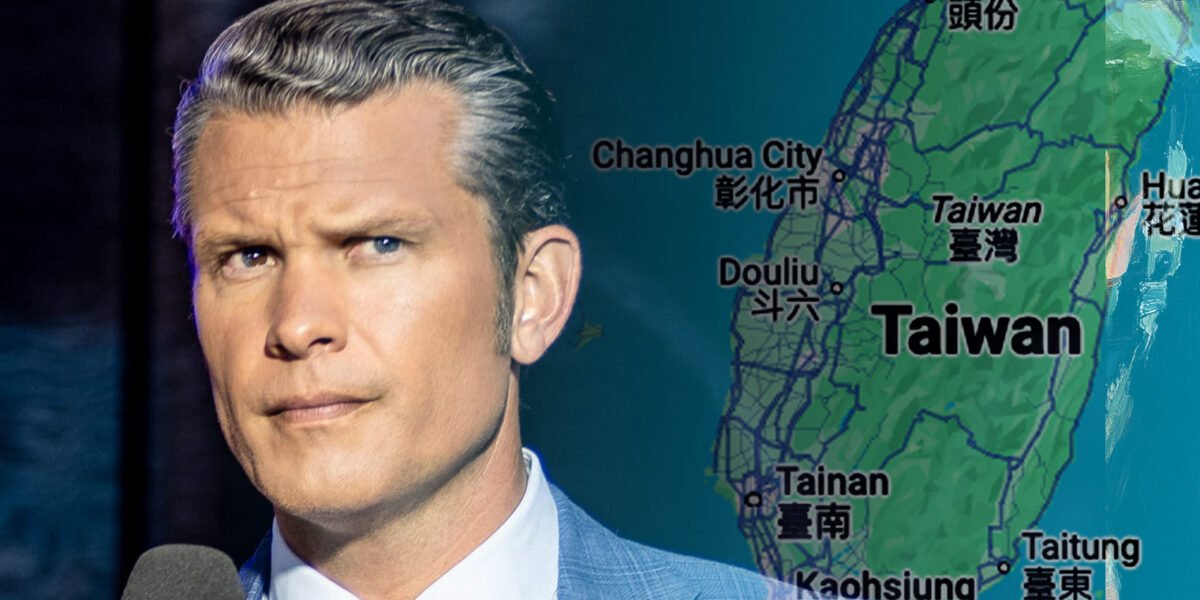
Our leaders have been surprisingly expressive in signaling U.S. military support for the defense of Taiwan. 

Ironic, considering that official U.S. policy is dubbed “strategic ambiguity,” meaning we don’t say one way or the other about our defensive intentions for helping the island nation against a regularly threatened and rehearsed-for Chinese invasion or naval blockade. 

Four separate times during his term, however, former President Joe Biden publicly pledged American military help to counter a People’s Republic of China assault on Taiwan. As for the Trump 2.0 Pentagon, weeks ago it leaked (or suffered a leak of) a global defense strategy memo that said preventing a PRC takeover of Taiwan was the “sole pacing scenario” engaging our armed forces. 

Surprising unanimity for the two parties in Washington. But has anyone asked what the American people think?

Well, Humanity for Freedom Foundation conducted a poll, released yesterday.*

Informed that “China claims Taiwan as its own territory,” 82 percent of respondents agreed that “Taiwan is an independent country.” Only 3 percent felt “Taiwan is part of China.”

A 58 percent majority favored full U.S. diplomatic recognition for Taiwan. When it comes to American military defense, a plurality of 39 percent wanted to continue the status quo of not saying (“strategic ambiguity”), while 32 percent of Americans preferred their government make a clear commitment to Taiwan. Only 2 percent supported ending arm sales and adopting a neutral stance.

The above results are thoroughly — and surprisingly — non-partisan, with arch conservatives and far-out progressives finding common ground to defend Asia’s freest society against the world’s most maniacal totalitarian state. 

Could the specter of a future dictated by the Chinese Communist Party be bringing the world closer together?

This is Common Sense. I’m Paul Jacob. 


* In full disclosure, I’m on HFF’s board of directors. As for the national poll, it had 800 respondents, giving the results a 3.5 percent margin of error with a 95 percent confidence level. Full results are here.

PDF for printing

Illustration created with Krea and Firefly

See all recent commentary
(simplified and organized)
See recent popular posts

Categories
ideological culture international affairs

The Great Implosion

Is watching North Korean dictator Kim Jong Un shed earnest tears of sadness a cause for, well, if not jubilation, at least some schadenfreude?

Maybe not in this case: he was listening to a lecture on his country’s population collapse. He was pleading with young women to have more children. North Korea is experiencing negative population growth: well below the “replacement rate.”

An inevitable result of horrific North Korean tyranny?

Well, population decline is almost a universal phenomenon. North Korea’s population rate is alarming, but so is South Korea’s — which is much, much freer. 

And Japan’s, for that matter; and Europe’s.

So what do we make of the population growth alarmists from the 1960s and ’70s? I refer to folks like Paul Erlich, who wrote The Population Bomb, and the “experts” who made up The Club of Rome, with its infamous 1972 report, The Limits of Growth

Magnificently bad prophets.

But they had a huge impact — at least on Communist China, which instituted the One Child policy in 1979. Now, that country’s population trend has reversed, with an increasing rate of decline. 

Moreover, there may be a lot less people in China than was boasted of — official government stats admit a 2.08 million person drop from 2022 to 2023, following the previous (and first official) drop of 850,000. We can only guess the actual population, because communists lie. Yi Fuxian, a demographer at the University of Wisconsin-Madison, estimates that China’s population was less than 1.28 billion in 2022, not 1.41 billion, with the decline starting in 2018, not 2022.

Ask yourself: how many civilizations have survived a population implosion? 

And for peoples with ponzi-like pension systems, this is even more devastating.

The Chinese are cursed, but so are we — for we all live in interesting times.

This is Common Sense. I’m Paul Jacob.


Population Trends

  • Canada: 1.33 births per woman (2023).
  • China: 1.0–1.16 births per woman (2023).
  • France: 1.68 births per woman (2024).
  • Germany: 1.46 births per woman (2024).
  • Great Britain: 1.45 births per woman (2023).
  • Japan: 1.26 births per woman (2024).
  • Mexico: 1.80 births per woman (2023).
  • North Korea: Estimates suggest a fertility rate of around 1.8–2.0 (2021), below replacement.
  • South Korea: 0.72 births per woman (2023), the lowest globally.
  • Taiwan: 0.87 births per woman (2023).
  • United States: 1.64 births per woman (2023).

PDF for printing

Illustration created with Krea and Firefly

See all recent commentary
(simplified and organized)
See recent popular posts
Categories
defense & war international affairs

To Halve and Halve Not

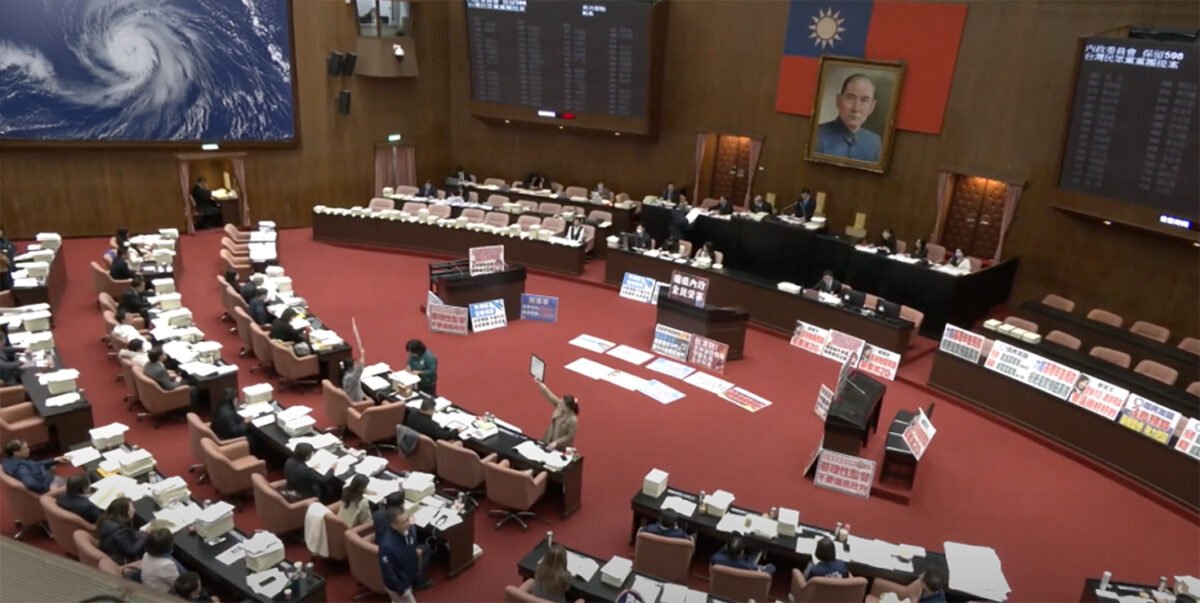
“Why is Taiwan such a hot flash point?” 

That’s what U.S. Senator Tom Cotton (R-Ark.) asked Admiral Samuel Paparo, head of the United States Indo-Pacific Command. “Why could it lead not only to a catastrophic war, but also global Great Depression? Why should Americans care about an island on the other side of the world?”

The admiral told the Senate Armed Services Committee that the senator’s “last point [was] quite salient. Many a research organization postulate that conflict in the western Pacific over the Taiwan question would result in a 25 percent GDP contraction in Asia and a knock-on effect of 10 to 12 percent GDP reduction in the United States of America, with unemployment spiking seven to 10 points above base and likely 500,000 excess deaths of despair above base as well.

“This is just the importance of the regional stability to the world economy and its effect on people’s lives,” added Paparo. “And this is a function of freedom of navigation; it’s a function of the world dependency on semiconductors.”

“And to be clear,” offered Sen. Cotton, “simply having the conflict over Taiwan which is such a center of gravity in the modern economy could lead to many of the consequences you just outlined.”

Paparo explained that “most of the things” he has “studied indicate that American intervention would halve that impact,” adding “a successful American intervention would. 

“Still a grave result,” Admiral Paparo acknowledged, “but half as grave, with savings of a lot of human misery.”

Let’s hope and pray and prepare militarily to deter Chinese aggression.

This is Common Sense. I’m Paul Jacob.


PDF for printing

Illustration created with Krea and Firefly

See all recent commentary
(simplified and organized)
See recent popular posts
Categories
international affairs political economy

Out of Poverty

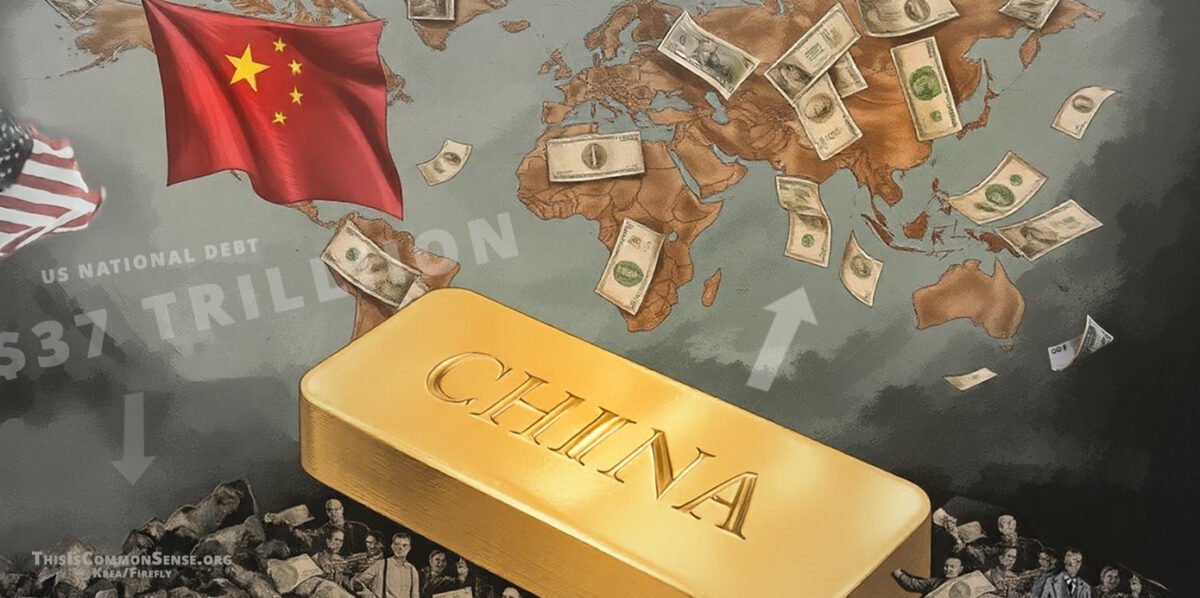
“So, who brought who out of poverty?” asks Frank Dikötter about China’s economic rise.

The Dutch historian and author of four excellent books on Chinese history — Mao’s Great Famine; The Tragedy of Liberation; The Cultural Revolution; and China After Mao — Dikötter recently spoke at length with Peter Robinson, host of the Hoover Institution’s “Uncommon Knowledge” podcast.

Calling it “conventional wisdom,” Robinson offers that “the number that I found over and over again was eight to 900 million people lifted out of poverty since Deng Xiaoping announce[d] his reforms in ’78.”

“That’s all propaganda,” declares Dr. Dikötter. “The people in the countryside have lifted themselves out of poverty.”

Even before Mao’s death in 1976, the Cultural Revolution ended and the “army, which was deployed in every farm, every factory, every office from 1968 onwards, that army goes back to the barracks and is purged in turn,” he explains. “People in the countryside realize there’s nobody there to supervise them. There’s nobody there to tell them, go and work in the collective fields.”

Mr. Robinson chimes in: “The boot is off their neck.”

“So,” Dikötter expounds “they start operating underground factories; they open black markets; they trade among themselves.”

Deng “merely [put] the stamp of approval on something that escapes them altogether, namely the drive of ordinary villagers to claim back the freedoms they had before 1949.

“Allow ordinary people to get on with it,” he says, “they will!

“But this is not a party,” concludes Dikötter, “that will allow ordinary people to get on with it.”

This is Common Sense. I’m Paul Jacob. 


PDF for printing

Illustration created with Krea and Firefly

See all recent commentary
(simplified and organized)
See recent popular posts

Categories
general freedom international affairs media and media people

Europe, Land of the Free?

The Economist has declared Europe the Land of the Free.

One proof is that in Europe, no tech oligarchs are “spending their weekends feeding bits of the state ‘into the wood chipper.’”

This is an ill-considered allusion to the efforts of Elon Musk and the Department of Government Efficiency to reduce the bloat and fraud in U.S. government spending. And the trillions in U.S. federal debt. Which are unsustainable. Because magic doesn’t work.

“Europeans can say almost anything they want, both in theory and in practice.” 

In Britain you can be arrested or jailed for praying, tweeting a wrong-thinking tweet, reading from the Bible, holding up street signs.

Nor is freedom of speech safe in Germany. To prove the continent’s theoretical and practical freedom of speech, The Economist piles up carefully unelucidated half-truths but declines to cite, for example, the conviction of German journalist David Bendels.

In February, Bendels, the editor in chief of Deutschland-Kurier, published a satirical post slamming a German minister, Nancy Faeser, for opposing freedom of speech. An obviously doctored photo showed Faeser with a sign saying “I hate freedom of speech.” Faeser, who loves freedom of speech, filed a criminal complaint after being alerted by German police, who also love freedom of speech.

Bendels has been fined 1,500 pounds, given a suspended prison sentence of seven months, and ordered to apologize. 

He is appealing the verdict, and others are fighting the law under which he was prosecuted.

This is Common Sense. I’m Paul Jacob.


PDF for printing

Illustration created with Krea and Firefly

See all recent commentary
(simplified and organized)
See recent popular posts
Categories
free trade & free markets international affairs

Sabotage or Neglect?

“It might not be sabotage,” says Member of Parliament Jonathan Reynolds. “It might be neglect.”

Reynolds serves as the United Kingdom’s Business Secretary. He’s talking about the behavior of Jungye, the Chinese owner of troubled British Steel. 

“The conscious decision not just to not order raw materials but to sell existing supplies of raw materials . . .” Reynolds fulminated, leading him to tell the BBC that “he doesn’t want any future Chinese involvement in British steel making.”

Over the weekend, the UK Government seized British Steel, with Reynolds explaining that “he was forced to seek emergency powers to prevent owners Jingye” from “shutting down its two blast furnaces, which would have ended primary steel production in the UK.”

“They wanted to close down steel production in Britain,” argues Nigel Farage, an MP and leader of Reform UK, “This is a big strategic decision by the CCP.”

Asked if he was accusing the Chinese owners of “lying about the numbers,” the fiery Farage replied, “Yes, absolutely,” adding, “Lying about everything.”

In a single day, Saturday, Parliament passed emergency legislation to facilitate the Business Secretary’s request. 

One opposition MP called it a “botched nationalization,” as the company is still in Chinese hands. It seems more a rescue attempt for Chinese owners who don’t want to be rescued. 

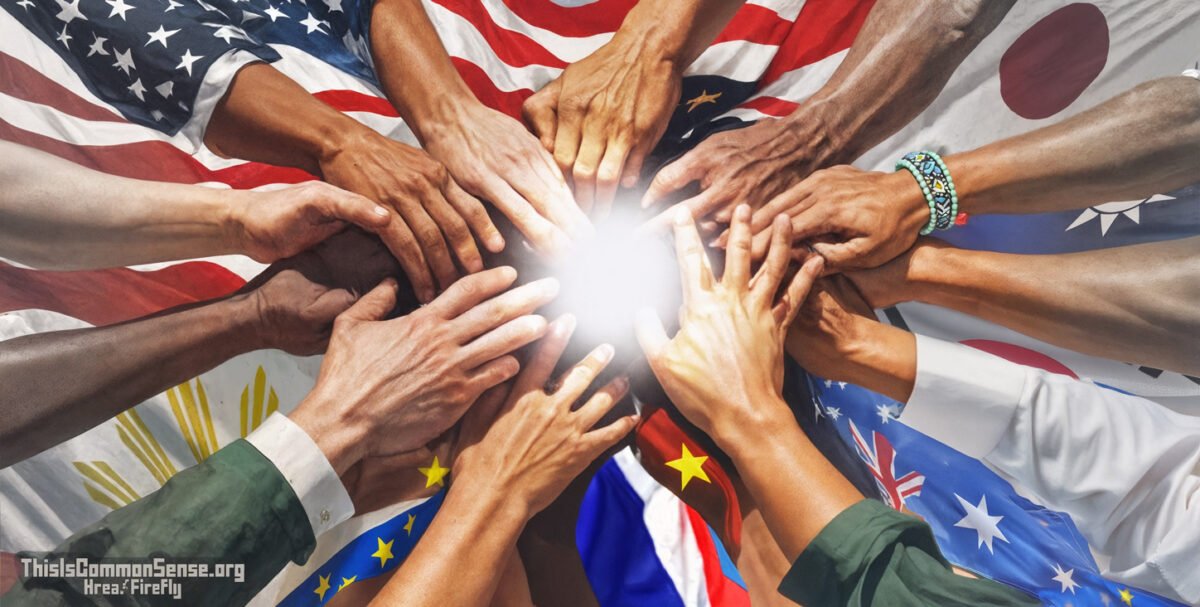
Takeaway? Maybe China isn’t such a great economic partner after all. 

Free countries are reluctantly rediscovering that we still live in a dangerous world, in which we better be able to protect ourselves and not depend on the sworn enemies of freedom. 

This is Common Sense. I’m Paul Jacob. 


PDF for printing

Illustration created with Krea and Firefly

See all recent commentary
(simplified and organized)
See recent popular posts