Categories
Accountability folly general freedom media and media people Second Amendment rights too much government

Simplistically Wrong

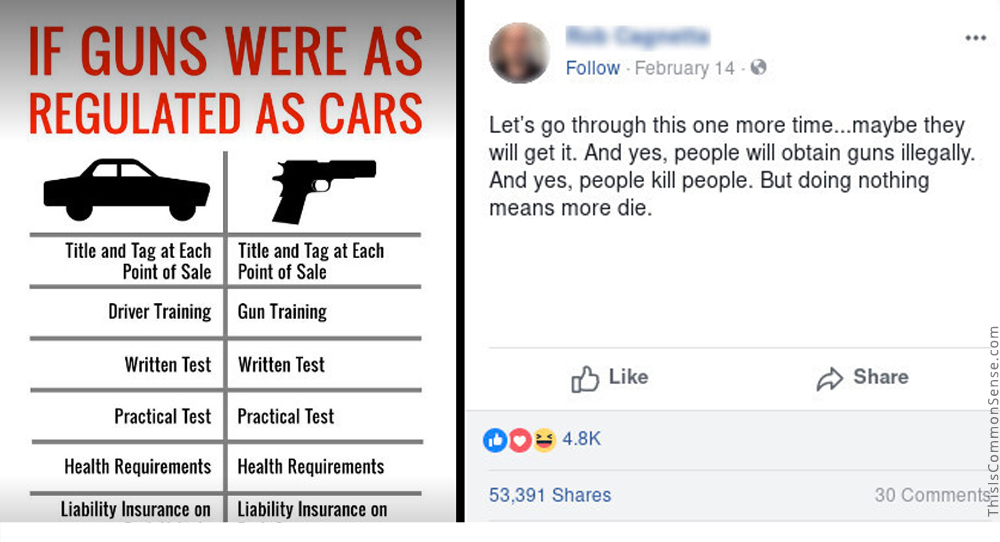
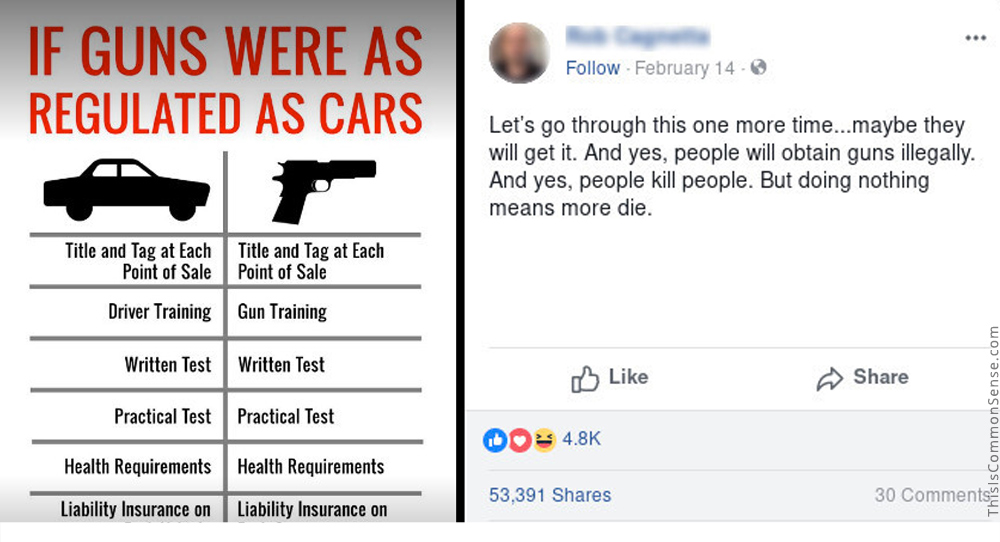
A clever “meme” made the rounds earlier this year showing, in two columns, what it would be like were guns regulated like cars.

How reasonable that would be!

“Title and tag at each point of sale”; “Driver training”/“Gun training”; Liability insurance on each vehicle/gun”; etc. It seems sound, no?

No.

The memester failed to address a context: our car and driver regulations apply to vehicles and drivers on government-run roads. On your own property you can drive all sorts of vehicles, unregulated. And it is on their own property that most gun owners’ firearms stay most of the time.

So, treating “guns like cars” would put government deeper into our private affairs.*

The meme came into an economist’s view packaged under the slogan “doing nothing means more people die.” He saw problems. For example, “someone might propose that each person above the age of 10 years old be interned in a mental-health camp, until and unless experts appointed by the state certified that he or she was not a danger to society.”

Same logic — we cannot do nothing, can we?

Another economist dubbed the problem we have identified here as “a simplistic model of public policy.” Policy advocates tend to assume that if you change a policy we get only one effect. Not true.  

A third economist (I’m going for a trifecta!) discovered that even adding safety features to cars comes at a cost in human life: feeling safer, drivers compensate . . . and it is non-drivers who suffer. More drivers hit more pedestrians.

Be cautious when you drive, sure. Be cautious when you shoot, of course.

But be cautious, especially, when you prescribe new laws.

This is Common Sense. I’m Paul Jacob.



* Not to mention that gun rights are specifically enshrined in the Constitution and vehicle rights . . . not so much.

PDF for printing


Categories
education and schooling general freedom ideological culture moral hazard nannyism national politics & policies too much government

Grading Democracy on the Curve

Voters, we are told, are amazingly ignorant. So, what to do?

“Ultimately, the ideal democracy is one in which as many citizens as possible vote,” writes Dambisa Moyo at The Guardian, “and the voters are armed with the most objective information. Yet today only a fraction of the electorate are voting, and many are armed with a diet of hyped-up statistics and social media propaganda.” Among her proposals is a voting booth access test: “why not give all voters a test of their knowledge?”

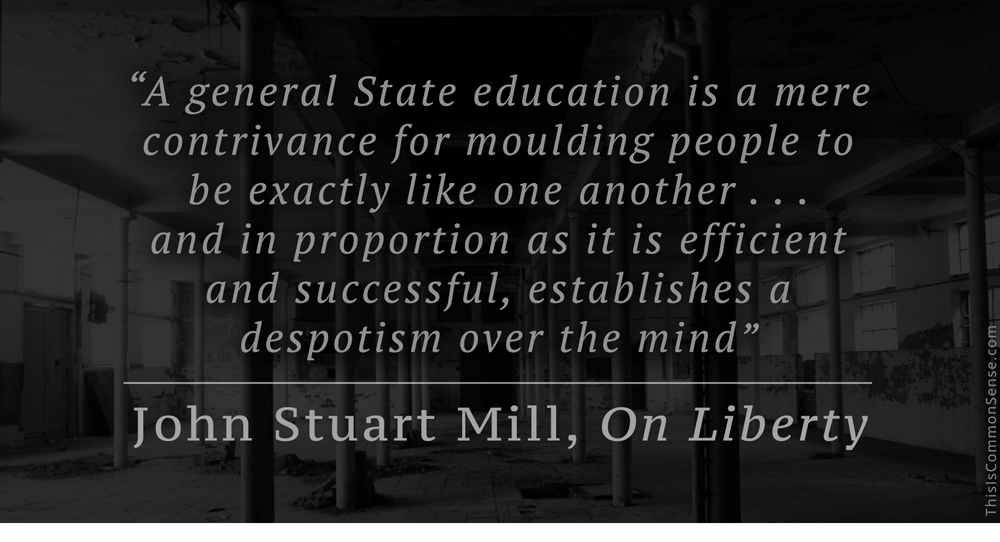
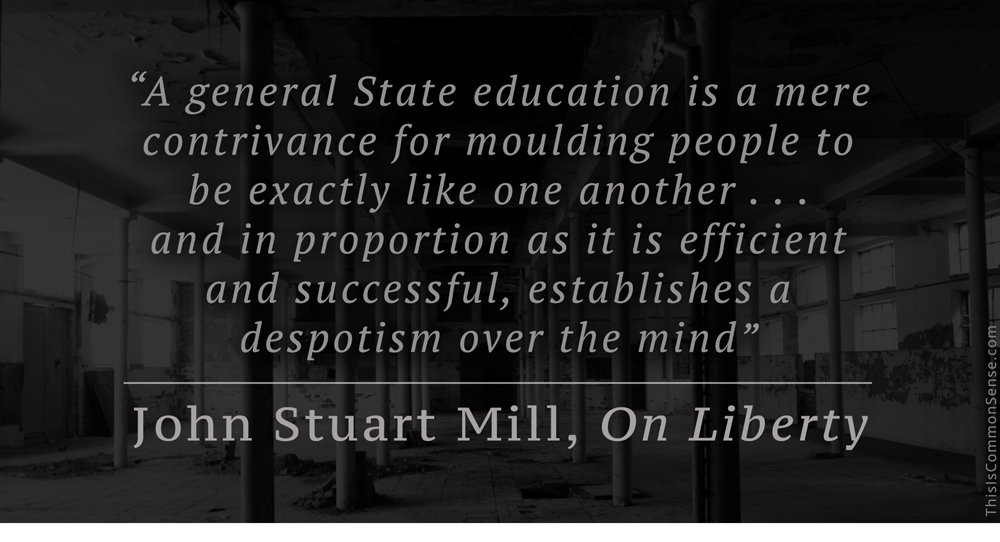
I can think of a whole bunch of reasons, as can Ilya Somin, over at Volokh Conspiracy, who considers just a few. One of the more interesting is this: whereas Moyo has no wish to shove poor people out of the voting booth, and so envisions public schools to teach to the test — “the knowledge needed should be part of the core curriculum” — Somin quotes John Stuart Mill about the very political dangers of the very idea of public schooling: “A general State education,” wrote Mill in On Liberty, would inevitably be devised to please and serve “the dominant power in the government, whether this be a monarch, an aristocracy, or a majority of the existing generation” and must constitute “a despotism over the mind.”

Though Moyo does observe incumbency and political careerism as big problems, she is innocent of the more fundamental issues.

Indeed, she does not consider the obvious: today’s voter ignorance of politics and government is in no small part the result of government schools.

For politicians, general ignorance is not a bug, it’s a feature.

Let’s look for solutions to political problems that do not give politicians more power.

This is Common Sense. I’m Paul Jacob.



PDF for printing


Categories
crime and punishment general freedom ideological culture initiative, referendum, and recall local leaders national politics & policies political challengers property rights Regulating Protest too much government

A Sanctuary from Centralization

Defiance . . . nullification. It is a trend.

I take it as a sign of our contentious times that we now witness states in open rebellion against centralized control from the Imperial City of Washington, D.C., while cities and counties are also rattling the chains set by their respective state capitals.

The sweep of marijuana decriminalization and legalization is only the most obvious. The rise of “sanctuary cities” defying federal government immigration laws — often backed up by state legislatures — has been a contentious issue, with progressives supporting this sort of nullification and conservatives opposing it.

But the latest development does not hail from the left.

In Illinois, a number of rural governments have taken a cue from the immigration debate by “declaring themselves sanctuary counties for gun owners,” we learn from the AP’s Don Babwin, writing in the Chicago Tribune. “The resolutions are meant to put the Democratic-controlled Legislature on notice that if it passes a host of gun bills . . . the counties might bar their employees from enforcing the new laws.”

An Effingham County Board Member calls “sanctuary” an attention-getting “buzzword,” reporting that “at least 20 Illinois counties and local officials in Oregon and Washington have asked for copies of Effingham County’s resolution.”

Now, cities and counties do not have an analogous relationship to their state governments as do states to the federal government: the states created the “United States of America,” while cities and counties are also state creations.

Yet this move is important. It shows a growing recognition of the tyrannical nature of centralized power.

And the usefulness of decentralization.

This is Common Sense. I’m Paul Jacob.

 

PDF for printing


Categories
Accountability general freedom media and media people moral hazard national politics & policies responsibility too much government U.S. Constitution

Matter-of-After-the-Fact

“For some time now,” writes Sen. Rand Paul for The American Conservative, “Congress has abdicated its responsibility to declare war.”

Kentucky’s junior senator knows how unconstitutional this is. “The Founders left the power to make war in the legislature on purpose and with good reason,” Rand Paul explains — correctly. “They recognized that the executive branch is most prone to war.”

So, Washington Senators Bob Corker and Tim Kaine are here to help?

This bipartisan pair has retrieved — from deep within the bowels of congressional R & D — a new Authorization for Use of Military Force (AUMF). This would, explains Paul, give “nearly unlimited power to this or any other president to be at war whenever he or she wants, with minimal justification and no prior specific authority.”

The wording of the new AUMF “would forever allow the executive unlimited latitude in determining war, and would leave Congress debating such action after forces have already been committed” — allowing Congress only carping rights.

Shades of the Roman Republic, in which the Senate appointed dictators in tough times.*

These days, all times are tough times.

Meanwhile, Bob Corker is in the news for having just received the “George Washington University Institute for Public Diplomacy and Global Communication’s first annual Walter Roberts Award for Congressional Leadership in Public Diplomacy.”

And Kaine just a few weeks ago made a big deal about his no vote for Trump’s Secretary of State nominee: “We have a president who is anti-diplomacy and I worry that Mike Pompeo has shown the same tendency to oppose diplomacy.”

How does making a foreign policy dictator out of Trump (or any future president) advance diplomacy?

This is Common Sense. I’m Paul Jacob.
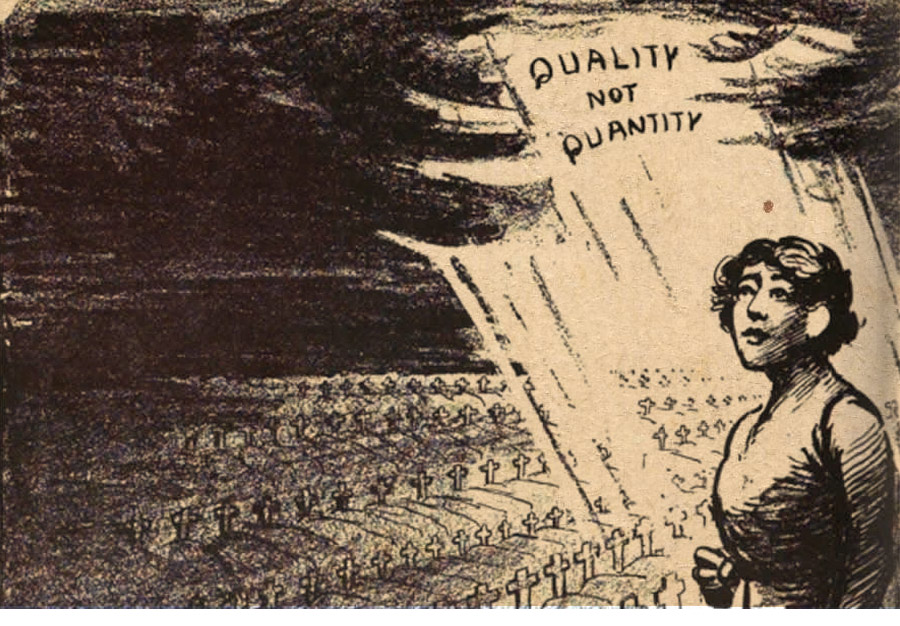


* Arguably Congress’s open-ended AUMF’s are much worse than ancient Roman practice, since today’s crises are not specified and the dictator is not forced to step down after the problem is solved — or a term limit of six months reached.


PDF for printing


Categories
crime and punishment free trade & free markets general freedom media and media people moral hazard nannyism national politics & policies property rights too much government U.S. Constitution

The Studio System: The Sequel

Evermore virtue signaling, everless virtue — that pretty much encapsulates Oscars’ night. The industry that brought us Harvey Weinstein and the occasion for #MeToo made the 90th Academy Awards two months ago unwatchable for most of us.

Now, as the Academy of Motion Pictures Arts and Sciences loses touch with audiences around the country, Netflix appears to have decided to horn its way into the Oscars. “Netflix will reportedly begin purchasing movie theatres,” informs The Independent, “to help it get ahead in the race for Academy Awards.

The streaming giant has aimed to land an Oscar nod since the release of its first original feature in 2015, Beasts of No Nation

I have not seen that film, but I have made time for some entertainment (and a few documentaries) on Netflix. After Stranger Things and Wormwood, I think I can safely repeat a point I’ve made before: this is the new Golden Age of Television.

But Netflix wants more prestige than the TV industry’s “Emmys.”

Whether the company succeeds with the Oscars, notice: Netflix is becoming a major studio — complete with “vertical integration.” Just what the Supreme Court tried to kill in 1948 when it ruled against the studio system’s “monopoly” status.

That decision, plus the rise of broadcast television, dealt a death blow to the studios — and arguably movie quality.

Maybe a new studio system (also courtesy of Amazon Prime, Apple, and other players) will make for a renaissance.

For feature-length films.

If we can just keep government out of it.

This is Common Sense. I’m Paul Jacob.

PDF for printing


Categories
Accountability crime and punishment general freedom moral hazard national politics & policies privacy property rights too much government U.S. Constitution

Guilty of Innocence

If you are innocent of a crime, should you be punished as if guilty? Despite no arrest, no trial, no conviction?

If you say “Yes,” raise your hand.

I see no raised hands among my regular readers. But my readers don’t include the wicked Chicago officials who impounded the automobile of Spencer Byrd.

Byrd’s case is reported in a Reason article by C.J. Ciaramella. The author relates how Chicago extracts money by grabbing the vehicles of innocent people. The drug war and asset forfeiture laws help make it possible.

Byrd is a carpenter and auto mechanic who sometimes gives rides to clients stuck without their cars. One night, when he was stopped on the road for an allegedly broken turn signal, police discovered that a new client riding with him was carrying heroin. Byrd was questioned but quickly released. He was never charged with a crime.

But his car was impounded; it’s been impounded for years. This has hurt his business. For one thing, he has $3,500 worth of tools in the trunk.

Byrd persuaded a judge to order that his car be returned to him. But the city still wouldn’t release it unless Byrd paid $8,790 in fees and fines (later reduced to $2,000). He is still struggling to retrieve his car, within a labyrinth the injustices of which I’ve barely touched on.

May I suggest . . . ? If you do ever recover your Cadillac, Mr. Byrd, put pedal to the floor and get the heck out of Dodge.

I mean, Chicago.

This is Common Sense. I’m Paul Jacob.

PDF for printing


Categories
folly general freedom ideological culture moral hazard national politics & policies

Include/Exclude

The right of free assembly is central to a free society. Not everyone understands this.

Last week, conservative/“cultural libertarian” provocateur Milo Yiannopoulis went into the Churchill Tavern in New York to dine with fellow gay journalist Chadwick Moore.

Also in the establishment? The New York City chapter of the Democratic Socialists of America. When the socialists noticed Milo they stood up, faced him, and shouted at him, chantingNazi scum, get out!

Milo is not a Nazi, but his past gentle treatment of the alt-right counts as “Nazi” on the left.*

The left has been pushing for an inclusivist** reading of the right of free assembly for decades. You see, state laws in the South, prior to 1964’s Civil Rights Act, allowed and enforced white business discrimination against African-Americans, such as refusing service and accommodations. Leftists argue that there is no right to refuse service or exclude customers; they strenuously criticize those libertarians and conservatives who argue that a right to associate implies a right not to associate . . . giving them no credit for long opposing laws requiring discrimination.

Yet now we see many on the left banding together to deny others their free association rights by exclusionary tactics.

This was a group of customers, of course, so this is more similar to antifa violence than business discrimination. But Brooklyn politicians echo the logic, now proudly denying free assembly rights to NRA members — on ideological grounds.

Mob action for exclusion? Politicians siding with the mob?

There’s a word for this — fascismo.

Or, in the vulgar tongue, “Nazi scum.”

This is Common Sense. I’m Paul Jacob.


* Cenk Uygur of The Young Turks articulates this point — Milo’s insistence that he is not alt-right carrying no weight, apparently.

** Rather than rule-of-law liberal, or libertarian.


PDF for printing


Categories
Accountability general freedom nannyism national politics & policies political challengers porkbarrel politics responsibility too much government U.S. Constitution

How Bernie’s Like Trump

Yesterday I made fun of Bernie Sanders’ jobs guarantee idea. Today, let’s take it seriously.

Not as policy, mind you. As propaganda.

It’s not worth talking about as a policy because there is no policy yet. “It is not clear when Sanders will announce the plan,” Fox News relates, “and a Sanders spokesperson told the Post that it was still being crafted.”

It is mere advocacy. A press release. Vaporware.

But that’s the key to it, really. The jobs guarantee isn’t policy.

It’s a ploy.

Bernie Sanders knows there is hardly a hope of passing such a bill. He probably understands that the current fiscal mess precludes it. He might even understand that it is literally a horrible notion, the worst policy idea in the world, and he would still have reason to pitch for it relentlessly.

Because what he is really after is the hiking of the national minimum wage to $15/hr. That is the next Democratic ratcheting up of government. And by insisting that the government guarantee $15/hr jobs, he is readying everyone to accept, as a compromise, the hiking of the minimum wage to that very figure.

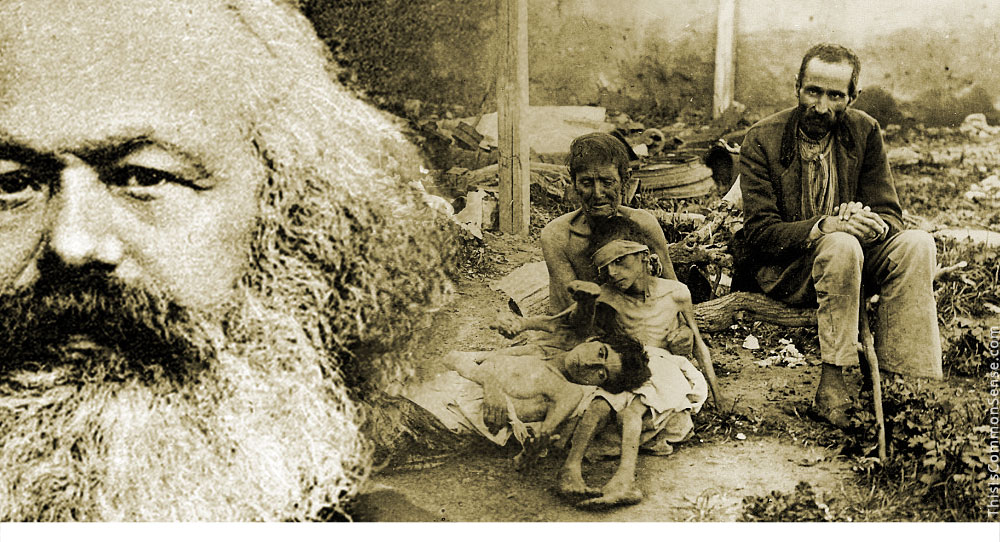
Yesterday I noted a link between socialism and slavery. But minimum wages link up not with slavery but unemployment.

Which Bernie knows all too well. Before he got in politics, he was a layabout, a bum.

Not like President Trump at all, that way.

But by fixing on one key, “anchor” concept ($15/hr) and demanding the Moon, he might just get his mere lunacy, er, minimum wage hike.

And that is a Trumpian* ploy.

This is Common Sense. I’m Paul Jacob.



* Though Trump’s better. His “linguistic killshots” are far more memorable . . . because funny and (usually) visual.


PDF for printing


Categories
Accountability folly general freedom incumbents media and media people moral hazard nannyism national politics & policies political challengers porkbarrel politics responsibility too much government

Twirling Towards Freedom?

Does Bernie Sanders remind you of “Citizen Kang”?

Vermont’s [S]ocialist Senator is whipping up a new plan for America: to “guarantee a job with at least a $15-per-hour wage and health benefits to every adult American ‘who wants or needs one,’” we are told.

What was it that the slavering alien Kang promised* in The Simpsonseighth season opening episode? Well, we know how that episode ended, with Homer Simpson revealing the ’90s’-era presidential candidates to be aliens in disguise, Kang being elected, humanity enslaved, and Homer uttering the immortal words “Don’t blame me, I voted for Kodos.”

And then Kodos, in cahoots with Kang, cracking the whip on Homer.

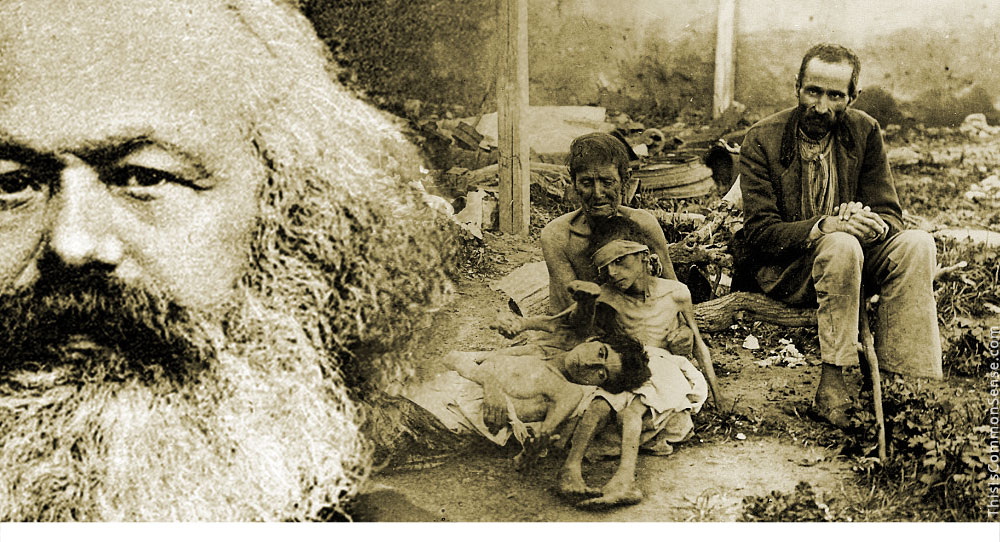
One shouldn’t have to read George Fitzhugh, the antebellum sociologist who attacked the very idea of free markets and free labor, insisting that slavery is a good thing and the very best form of socialism, to know that socialism and slavery go together hand in glove, whip in hand.

In an age of handouts for nothing, at least Sanders’ socialist proposal suggests productivity. But paying for it by nixing corporate “tax breaks”** is absurd. “Republicans have long opposed a federal jobs guarantee,” Fox News tells us, “saying such a plan would be too expensive and impractical.” And it’s productive people who would pay for it, making them de facto slaves to the system . . . even more than they are now.

But when socialists talk about “jobs,” worry about a more direct form of slavery.

And yes, I can imagine Bernie, with his four houses, flicking the whip.

I won’t be voting for him, if he runs.

Or for Kodos.

This is Common Sense. I’m Paul Jacob.

 

* Actually, Kang was known not for a promise but for his campaign speech (as Bill Clinton), saying, “[W]e must move forward, not backward; upward, not forward; and always twirling, twirling, twirling towards freedom!”

** The only funding source mentioned in the reports I read.


PDF for printing


Categories
general freedom ideological culture media and media people moral hazard

The Cuban Slavery-and-Freedom Sandwich

How easy is it to mix freedom with just the right amount of slavery?

New York Times reporter Azam Ahmed regards the attempt to mingle political opposites as noble or at least understandable. He doesn’t call Cuban Communism and its destructive effects “bad” — it’s a “unique tapestry.”

He wonders, instead, to what extent the Cuban government can fine-tune the contradiction.

According to the article, Cuba’s newest Dear Leader “will have to foster the growing private sector . . . while guarding against the income inequality it often brings. . . . Move too slowly and it risks economic collapse and widespread discontent. . . . Move too fast, and it risks unstitching the unique tapestry of Cuba’s social project.”

“Unique”? With or without cigars and salsa, the “social project” of repressing a hapless populace is as old as civilization. And as a “tapestry,” we’ve seen this warp and weft before.

Under freedom, inequalities are unavoidable.* On the other hand, nothing is wrong with inequality per se. Nature, human beings and economic outcomes are inherently unequal. Equality arrives only with the grave.

A government working to phase out slavery and phase in freedom may have legitimate problems in transition. But it is wrongheaded to seek just the right “balance” of both. How can any degree of freedom and markets fail to threaten a revolution, the purpose of which is a thoroughgoing assault on freedom and markets?

My advice to Cuban social engineers? Abandon Communism altogether and embrace prosperity and freedom instead.

This is Common Sense. I’m Paul Jacob.

 

* Speaking of inequality, Cuba’s head commies certainly have not lived like the masses they’ve kept down.


PDF for printing