Categories
Accountability free trade & free markets general freedom local leaders moral hazard Regulating Protest responsibility

Less Bullying, S’il Vous Plaît

I oppose unions. Or, to speak more precisely, I oppose those tactics too often used by unions intended to render societies hostage to their demands — as we’re seeing in France.

For the last few months, a series of strikes has been conducted by various unionized workers in protest of reforms proposed by President Emmanuel Macron. Rail workers are a major focus of the fracas.

Ultimately SNCF, France’s state-owned railway company, should be privatized. But reducing too-generous pay and benefits, including automatic annual pay raises, is a step in the right direction. The Macron administration hopes to begin opening up the state railways to competition by 2023. The unions and their allies are willing to cripple the French economy to prevent any reforms.

It’s fine for employees to voluntarily get together to ask for better working conditions, or even to go on strike to protest terms of employment they regard as unfair. It’s fine, that is, if they also understand that employers have an equal right to replace them if willing and able to do so.

Workers should only peacefully petition employers. Nobody has an inalienable right to a particular job or to a particular wage higher than they can voluntarily negotiate.

According to the BBC, “Just over 11% of the French workforce is unionised,” one of the lowest levels in the EU. May the decline there and everywhere accelerate until unions cease bullying the entire French society, or any society.

This is Common Sense. I’m Paul Jacob.

PDF for printing


Categories
Accountability crime and punishment folly free trade & free markets general freedom media and media people moral hazard nannyism national politics & policies property rights Regulating Protest too much government U.S. Constitution

That Something You Do

Congress grilled Facebook CEO Mark Zuckerberg, last week, and as usual ended up roasting itself.

“Zuckerberg has already experienced the worst punishment of all,” quipped comedian Trevor Noah on The Daily Show. “He had to spend four hours explaining Facebook to senior citizens.”

Utah Sen. Orrin Hatch, retiring after his 42nd consecutive year in Washington, asked, “How do you sustain a business model in which users don’t pay for your service?”

“Senator,” Zuckerberg incredulously replied, “we run ads.”

Inc. magazine reported the obvious: “several of our elected leaders asked questions that were highly uninformed, or in some cases just plain weird.”

Uninformed. Weird. That’s them, alright.*

Still, the Washington establishment seems to seriously think these same congressmen ought to be re-writing privacy rules.

“Elected officials know the public wants them to do something to protect their privacy,” announced Chuck Todd, host of NBC’s Meet the Press. “The question now turns to what is that something?”

“Americans are largely together on this issue,” Todd said, citing a recent poll where a similar “66 percent of Democrats and 68 percent of Republicans say they want more control over the information companies have about them.”

But Democrats and Republicans are together on something else: Only 21 percent of Democrats and a tiny 14 percent of Republicans “trust the federal government” to act on the issue.

The senators, though obviously “confused about basic topics,” Emily Stewart wrote at Vox,  “seem to agree they want to fix something about Facebook. They just have no idea what.”

Please Congress: DON’T “do something.” Don’t do that thing you do.

This is Common Sense. I’m Paul Jacob.

 

* Reason TV has a very funny video on the Zuckerberg hearing.


PDF for printing


Categories
Accountability folly general freedom government transparency moral hazard national politics & policies porkbarrel politics responsibility too much government

While the Clock Ticks

Pushing annual federal spending over a trillion bucks into the red?

It has consequences.  

“Our debt is growing, and it’s growing fast,” writes Veronique de Rugy at Reason. “Though it’s a shame that lawmakers passed tax cuts without cutting spending to offset short-term losses in revenue, there’s no doubt that Social Security and Medicare deficits are almost entirely to blame for our impending debt crisis.”

Ms. de Rugy, a senior research fellow at the Mercatus Center, has a typo in the version of her article that I read (it has probably since been corrected): “Based on current trends, the debt held by the public is set to reach $15.7 trillion by the end of this year and continue rising to $28.7 trillion by 2028.” She surely meant “$25.7 trillion,” since the current debt clock figure shows the U.S. public debt at over $21 trillion. Still, $25.7 seems a bit high . . . but at this point we can leave the exact numbers to the professionals.

We just know that the debt’s too damn high.

As de Rugy explains, it has present as well as future cost. And, yes, entitlements are the biggest problem — but even more than Ms. de Rugy suggests. Congress owes the Social Security “trust fund” (in Al Gore’s infamous and non-existent “lock box”) nearly $3 trillion.

Our solons would have to (painfully) switch from revenue deficits to revenue surpluses just to pay off its debt to a much-relied upon institution.

What will happen, though, is surely this: Congress will borrow more from elsewhere to pay what Social Security needs — which all too soon will be a lot more than $3 trillion.

That’s not Common Sense. (But I am Paul Jacob.)


PDF for printing


Categories
Accountability general freedom government transparency media and media people moral hazard national politics & policies U.S. Constitution

Wag the Wolf

Once upon a time, President Donald Trump was against attacking Syria merely on grounds that its dictator is a murderously bad guy — despite numerous chemical attacks on civilians in opposition-occupied and -contested areas that had been blamed on Syrian dictator Bashar Hafez al-Assad.

Almost exactly a year ago, a sarin gas attack spurred President Trump to order a cruise missile strike on the Syrian airstrip where it was alleged the Assad regime sent those planes to drop weaponized chemicals on innocent populations. The strike was widely characterized as “Donald Trump’s most dramatic military order since becoming president.”

Since then, after another reported gassing — this time “chlorine”; this time a hospital as target — the drumbeat for war has gotten louder, despite Russia’s stern warning that there would be “grave repercussions” were the U.S. to attack its ally again.

Whoops and war cries even from the anti-Trump media.

But as Tucker Carlson argues, there are still legitimate disputes about previous gas attacks — about who really perpetrated them, and the uncertainty of proclaiming Assad the malefactor in the most recent one.*

Meanwhile, the FBI raided Trump’s personal attorney Michael Cohen’s offices. The rationale? Apparently unrelated to the “Russia investigation.” Instead, it is about “campaign finance law” — that is, the paid-off pornstar issue.

In the 1990s, we called Bill Clinton’s bombing of a “chemical weapons” factory in Africa — on the very same day that Monica Lewinsky testified before a grand jury about her affair with the president — “wag the dog.”

Trump cries “witch hunt!” but I wonder if the Deep State may not be trying to wag the wolf this time around.

This is Common Sense. I’m Paul Jacob.

 

* News stories about atrocities have been faked before in the Middle East — remember the hospital baby-murder story in Kuwait? “Both” sides in Syria are known to possess chemical weapons.


PDF for printing


Categories
Accountability crime and punishment general freedom ideological culture media and media people moral hazard nannyism national politics & policies privacy property rights responsibility Second Amendment rights too much government U.S. Constitution

The Myth of the Monoliths

According to organizers of the “March for Our lives,” the National Rifle Association is wholly evil, a corrupter of democracy, a malign presence straight out of Mordor, bent upon murder — a monolithic influence responsible for every mass shooting event.

The clearest expression of this is by young David Hogg, who figured that the NRA’s sum of contributions to Sen. Marco Rubio, when divided not by the number slain in the recent Parkland shooting but instead by the total number of students throughout Florida, came out to $1.05 per student.

Forget the computation — think nasty imputation.

What Hogg and his friends in the media elide is a simple little fact: the NRA is a membership organization. When critics of the Second Amendment point at the NRA and shout “evil!” they are really pointing at the organization’s millions of members.

People, not malign institutions.

Also neglected? The fact that, as near as I can make out, not one NRA member has mown down students in any school or church in America. Instead, at least one civilian NRA member took out his AR-15 to bring down one such mass-murdering shooter.

“Evil NRA” talk is misdirection and slander.

Also not a monolith? Students. Christian Britschgi, writing at Reason, notes that teenagers made up only 10 percent of marchers at the recent rally, and, catching a whiff of astroturf, cites a poll that found less than a majority of Millenials favoring an “assault rifle” ban.

Citizens of all ages disagree. Pretending that all kids are against guns, or that the NRA is anything other than a citizen advocacy group, distorts reality.

This is Common Sense. I’m Paul Jacob.


PDF for printing


Categories
Accountability free trade & free markets general freedom national politics & policies privacy subsidy too much government

The Post Office Scam

The President of the United States says that the U.S. Postal Service is scamming us by offering shipping discounts to Amazon, the mail-order giant. “Post Office scam must stop.”

President Trump is hovering in the vicinity of the right idea. But what about government-required discounts for shippers? Are these scams too?

Congress has long required lower postal rates “for religious, educational, charitable, political and other non-profit organizations. . . .”  Robert Shapiro estimates that such mandates cost the agency over a billion dollars a year. The government forces USPS to do a great many things that lose money — things that companies functioning in a free market cannot profitably do.

And American taxpayers must perennially fork over billions to sustain its lumbering operations.

It is true that, in markets, buyers of large quantities of a good or service routinely pay less per unit than buyers of small quantities; such discounts can enhance the seller’s bottom line. The fact that USPS offers discounts to a mega-shipper like Amazon does not in itself show that charging more per parcel would generate more revenue.

The question is, then, which transactions would flourish if the agency were just another market player instead of a government-protected, government-hobbled, government-subsidized bureaucracy?

Like any government-run “business,” the Post Office is itself a “scam.” This scam must stop. Phase out USPS as a government agency and let any company deliver first-class mail to our mailboxes on any honest terms that might attract customers.

This is Common Sense. I’m Paul Jacob.


PDF for printing


Categories
crime and punishment education and schooling folly general freedom moral hazard privacy responsibility too much government U.S. Constitution

Ecstatic with Independence

Utah’s legislature unanimously passed it; the governor signed it — the nation’s first measure protecting what’s become known as “free-range parenting.”

It was once known simply as “parenting.”

Certain activities are now exempt from a state law criminalizing child neglect. Children may legally “walk, run or bike to and from school, travel to commercial or recreational facilities, play outside and remain at home unattended” — thereby allowing “a child, whose basic needs are met and who is of sufficient age and maturity to avoid harm or unreasonable risk of harm, to engage in independent activities . . .”

Back in the day, we apparently played outside in a sort of statutory limbo.

Do we really need a law saying kids can walk on a public street?

Sadly, yes: government agencies across the country are grossly violating the most basic rights of parents to rear independent children.

Regular readers may recall my 2015 defenses* of the Meitiv parents against the absurd charge of “unsubstantiated neglect” leveled against them by Montgomery County (Maryland) Child Protective Services. Ultimately, Maryland authorities acknowledged that permitting one’s kids (in the Meitivs’ case, a 10- and a 6-year-old) to walk on a public sidewalk (from a local park) wasn’t prima facie evidence of a crime. 

The current free-range parenting movement was launched in 2008 when Lenore Skenazy publicly admitted — to mass shock and condemnation — to allowing her 9-year-old son to take a trip alone on New York City’s subway.

“My son got home,” she wrote in the New York Sun, “ecstatic with independence.”

Notice how rare it is to find anyone ecstatic with dependence.

Lesson? An old one: Happiness must be pursued with freedom.

This is Common Sense. I’m Paul Jacob.
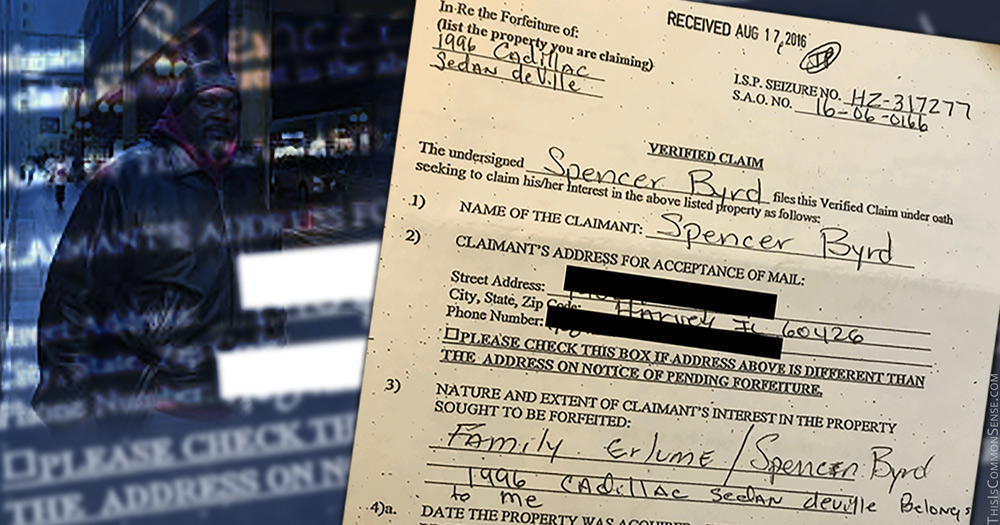
 

* My writings on the Meitivs’ battle to keep their kids:


PDF for printing


Categories
Accountability general freedom ideological culture media and media people moral hazard nannyism responsibility too much government U.S. Constitution

The Abortionists’ Cartoon Advice

Let it not be said that Planned Parenthood lacks for principles.

When Donald Trump offered a deal, last year, to fund Planned Parenthood only if the organization would stop doing abortions, the company immediately clarified the situation. “Offering money to Planned Parenthood to abandon our patients and our values is not a deal that we will ever accept,” said the outfit’s executive vice president. “Providing critical health care services for millions of American women is nonnegotiable.”

And, for Planned Parenthood, abortion is indeed critical. “The Trump administration needs to stop playing political games that would put access to the full range of safe reproductive care at risk,” said Senator Kirsten E. Gillibrand (D-NY), “or they will get the fight of their lives.”

Well, that fight was won by Planned Parenthood. The politician who once said he would “shut down the government” over the abortionist enterprise has caved after various roadblocks. Trump signed a stopgap omnibus spending bill, last week, which continues to funnel $500 million towards the outfit.

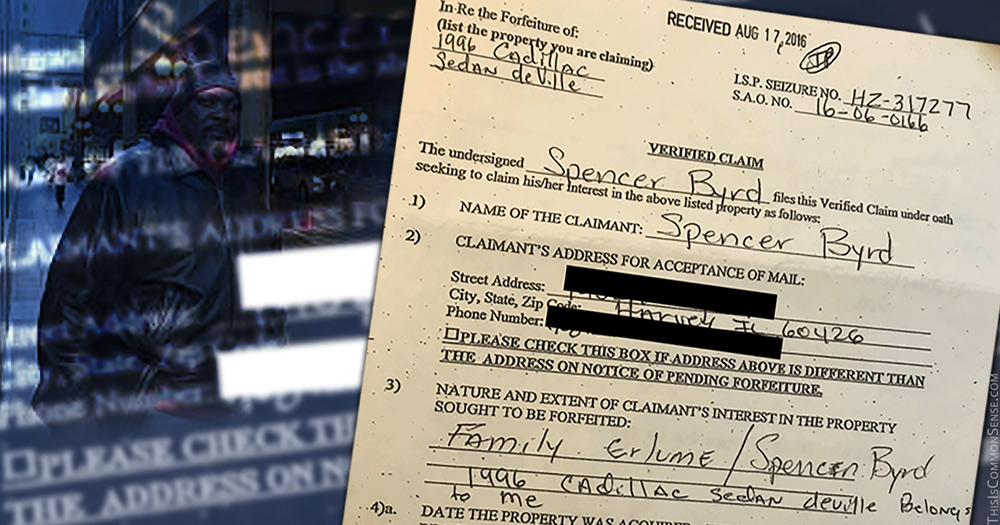
So, as if to celebrate, a Pennsylvania branch of the abortion mill — er, “reproductive care” service — engaged in a bit of ebullience, a “light-hearted” tweet:

We need a disney princess who’s had an abortion

We need a disney princess who’s pro-choice

We need a disney princess who’s an undocumented immigrant

We need a disney princess who’s actually a union worker

We need a disney princess who’s trans

This caused a firestorm.* And not because its Disney obsession was silly. The problem? The tweet showed that Planned Parenthood is really, really committed to valorizing the killing of fetuses. And that its agenda is far, far left.

The outfit should be left without taxpayer funds.

This is Common Sense. I’m Paul Jacob.
 

* The Tweet was quickly removed.


Printable PDF


Categories
crime and punishment free trade & free markets general freedom moral hazard national politics & policies too much government U.S. Constitution

High on Hemp?

Hemp is not marijuana.

And yet it is.

Earlier this week, Senate Majority Leader Mitch McConnell announced he will introduce legislation to legalize industrial hemp.

He is not concerning himself with marijuana, which is what we call the plant Cannabis sativa when cultivated for its Tetrahydrocannabinol (THC) content, the principal chemical in the plant that makes it ideal for “recreational” uses. Industrial hemp is Cannabis sativa, too, just with minuscule THC.

Hemp products are actually legal to buy and sell in the United States.

Sort of.

But growing it is murky, considering that ingestible hemp is a Schedule 1 drug no matter how little THC it has — despite the fact that Congress has allowed states to regulate the growth of low-THC hemp for “industrial” purposes.  

A complicating factor is that industrial hemp contains an oil, Cannabidiol (CBD), which is neither an ecstatic nor a hallucinogenic drug, but is widely believed to have many therapeutic powers. And is widely sold all over the country, wherever states have allowed for medical marijuana.

Nevertheless the DEA objects to it as much as to THC, saying that all ingestible forms of hemp are illegal.

Because of all this murkiness, McConnell’s bill might seem to be welcome step towards clarity.

Trouble is, since industrial hemp is indistinguishable from cannabis with THC — to look at; to smell; to touch — officials hoping to crack down on marijuana-as-a-psychoactive-drug would be much hampered were industrial hemp commonly and legally grown.

What a mess. The only real solution is to de-list all forms of Cannabis sativa from the War on Drug’s Schedule of Drugs It Unconstitutionally Proscribes.

This is Common Sense. I’m Paul Jacob.


PDF for printing


Categories
Accountability folly free trade & free markets general freedom government transparency local leaders moral hazard nannyism porkbarrel politics responsibility too much government

Bailing on Mass Transit

Around the country, our major metropolitan transit systems have hit the skids. “Between 2016 and 2017, ridership fell in each of the seven largest transit markets,” the Washington Post informs.

You might guess that the reason for declines in ridership might have something to do with bad planning and poor service. Washington, D.C.’s Metro system, with which I am all-too familiar, is a horror . . . run by people I wouldn’t trust to sweep your driveway much less mine, and certainly not to manage how I get between those (or any other) two locations.

But the Post quotes an urban planning scholar who attributes the decline (in part) “to increased car ownership, particularly among low-income and immigrant populations, who were in a better position to afford cars following the Great Recession.”

This puts planners in a pickle since, he explains, if “low-income people are doing better, getting the ability to move around like everyone else, it’s hard to say that what we should do is get them to remove themselves from their cars and back on trains and buses.”

Shockingly sensible — especially coming from a planning specialist. “Transit systems should deliver quality service to low-income people,” he insists. “But low-income people do not owe us a transit system.”

Well, maybe that’s the problem, this notion that governments “owe” this service to “low-income people.”

After all, web-based services like Uber and Lyft have shown how market innovations provide the best ways to move millions.

This is Common Sense. I’m Paul Jacob.


PDF for printing