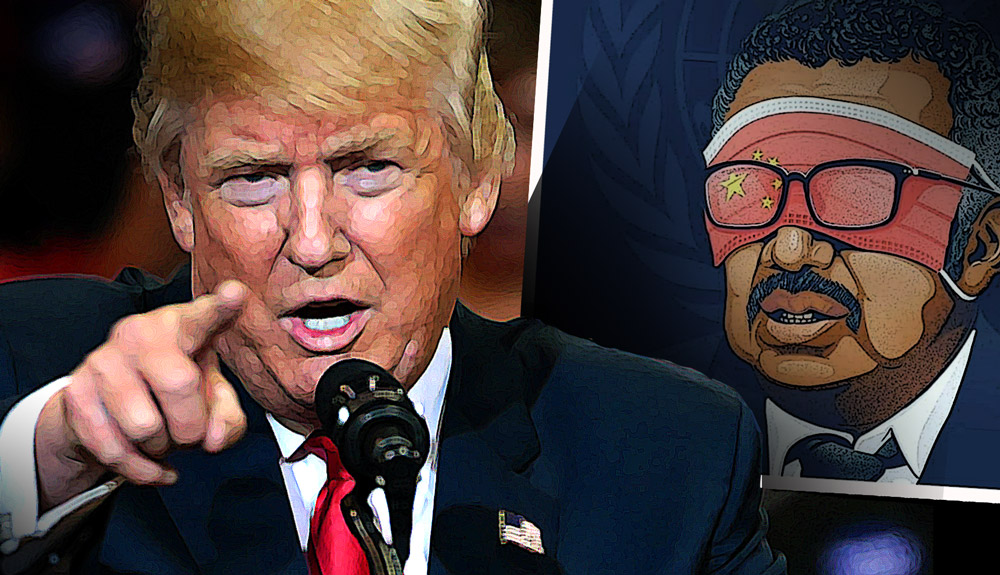
China and itslapdog, the World Health Organization (WHO), face increasing global anger over having initially hid the person-to-person spreadof coronavirus, which has killed a staggering 126,000 people worldwide. So far.
Still unrepentant, Beijing and the WHO have continued to butcher the truth — even in petty ways.
Late last month, a Hong Kong reporter asked a WHO official to comment on how successfully Taiwan had responded to the pandemic. The official pretended he couldn’t hear the question. Then, when the reporter offered to repeat it, he insisted they move on.
WHO could provide such a cocktail of cowardice and disingenuousness?
Yes!
Of course, the last refuge of such scoundrels is to hurl utterly bogus allegations — to play the victim and change the subject. Enter WHO Director-General Tedros Adhanom Ghebreyesus, who last week made the ridiculous and completely unsubstantiated charge that the Taiwanese government was instigating racist attacks against him on social media.
Discriminated against by the United Nations and WHO for years, upon China’s insistence, the Taiwanese reacted on social media with their usual grace, sense of humor and a smart promotion of their island’s great food and beautiful scenery, using the hashtag: #ThisAttackComesFromTaiwan.
As explained yesterday, Taiwan is a friend. China and the WHO? Not on your life.
That’s why Americans of all political persuasions (and so many others across the globe) cheered President Trump’s announcement yesterday that the U.S., the largest donor to the World Health Organization, would suspend its financial support.
“So much death has been caused by their mistakes,” Mr. Trump said.
Sadly, I fear Trump is wrong about one small part: “mistakes” seems far too generous a word for what WHO and its dastardly daddy, China, have done.
When times get tough, you learn who your friends are.
Take the United States’ relationships with Taiwan and the People’s Republic of China. The island nation sports a population roughly the size of Australia’s, about 24 million; just across the Taiwan Strait, what we used to call “Red China” holds the world’s largest number of people.
Like the United States, Taiwan has a democratically elected government that recognizes basic human rights such as freedom of speech. What do the Taiwanese want from us? They’re hoping for a military ally, one capable of deterring the free-speech-squelching, democracy-detesting Chinese communist state from making war on them.
In this pandemic, already nearly 24,000 Americans have died from COVID-19 and over half a million have tested positive for the virus that appears to have originated in Wuhan, China. Worldwide, nearly 2 million souls have contracted it and, by the time you read this, more than 120,000 of them will have perished.
Excluded from the World Health Organization (WHO) at China’s insistence, Taiwanese medical professionals nevertheless managed to warn the international community on December 31, reports the Financial Times, that “its doctors had heard from mainland [Chinese] colleagues that medical staff were getting ill — a sign of human-to-human transmission.”
Yet, on January 14, the WHO tweetedthat “Chinese authorities have found no clear evidence of human-to-human transmission.” Six days later China publicly informed the world that this virus could be spread from human contact.
“A study published in March indicated that if Chinese authorities had acted three weeks earlier than they did,” notesAxios, “the number of coronavirus cases could have been reduced by 95% and its geographic spread limited.”
Thanks for the warning, Taiwan. Thanks for nothing, China.*
This is Common Sense. I’m Paul Jacob.
* Taiwan has also generously provided N95 face masks to the U.S., Europe and elsewhere, even while facingcontinued military provocations from China.
Right after 9/11, much overkill was directed at the unsuspecting.
Friends of the Dumb Joke Brigade told dumb jokes when everybody was On Edge. It soon became clear that tasteless jocularity had morphed into an actionable offense.
And should anyone on September 12 have had the temerity to sit in a theater studying credits when all others had filed out? Heaven forfend! What schemes might the nonconforming cinephile be plotting alone in the dark?
Twenty years later, we’re at it again.
We can argue (we do) about which social-distancing strictures are properly enforceable in our efforts to slow the pandemic.
But surely some lines inarguably should not be crossed.
I don’t refer to the lone paddle-boarder or to the man who played catch with his kid in a park. I refer to parishioners who attended worship services at King James Bible Baptist Church in Greenville, Mississippi in their cars. Listened to the sermon on the radio in their cars. If the metal-and-glass shells in which attendees were encased couldn’t block the corona-fumes, what the heck could?
Nonetheless, eight Greenville police officers showed up to distribute $500 fines.
The state’s governor discourages but has not banned drive-in church services. It was Greenville Mayor Errick Simmons who has banned them.
The church is suing. Its lawyer, Jeremy Dys, says, “Americans can tolerate a lot if it means demonstrating love for their fellow man, but they will not . . . tolerate churchgoers being ticketed by the police for following CDC guidelines at church. This has to stop now.”
Beyond violating fundamental human rights, the city’s position also makes no sense.
Unfortunately, nonsense is, in these days of panic, not uncommon.
“The biggest piece of opposition” to extending draft registration to women, former Nevada Congressman Joe Heck toldThe New York Times, “was, we are not going to draft our mother and daughters, our sisters and aunts to fight in hand-to-hand combat.”
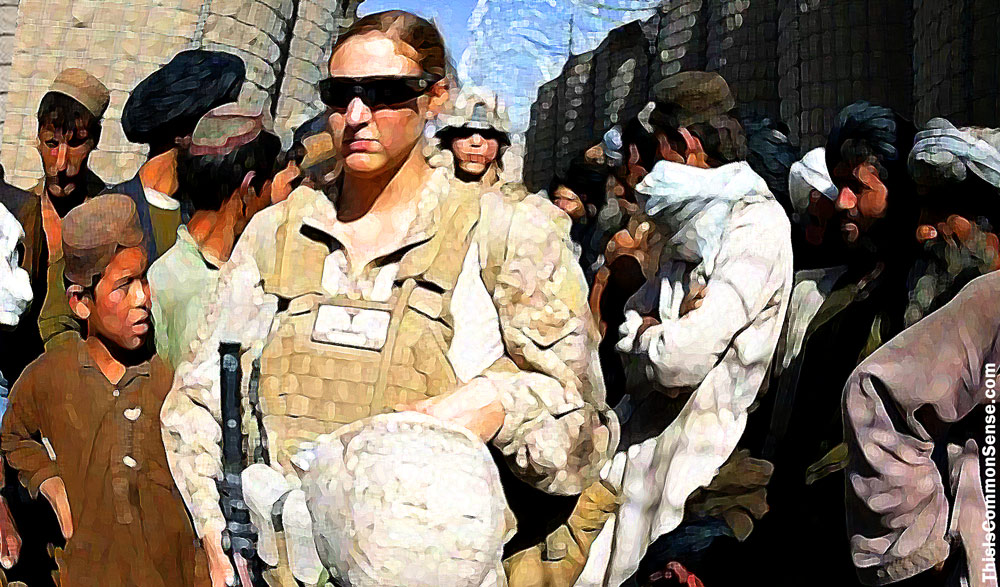
Yet, that seems precisely what the National Commission on Military, National and Public Service, chaired by Heck, called for in its just released report, urging Congress to make our daughters sign up for the military draft and to be equally conscripted in any call-up.
Or in a new compulsory military will draftees be able to say, “No thanks, I don’t feel like engaging in hand-to-hand combat”?
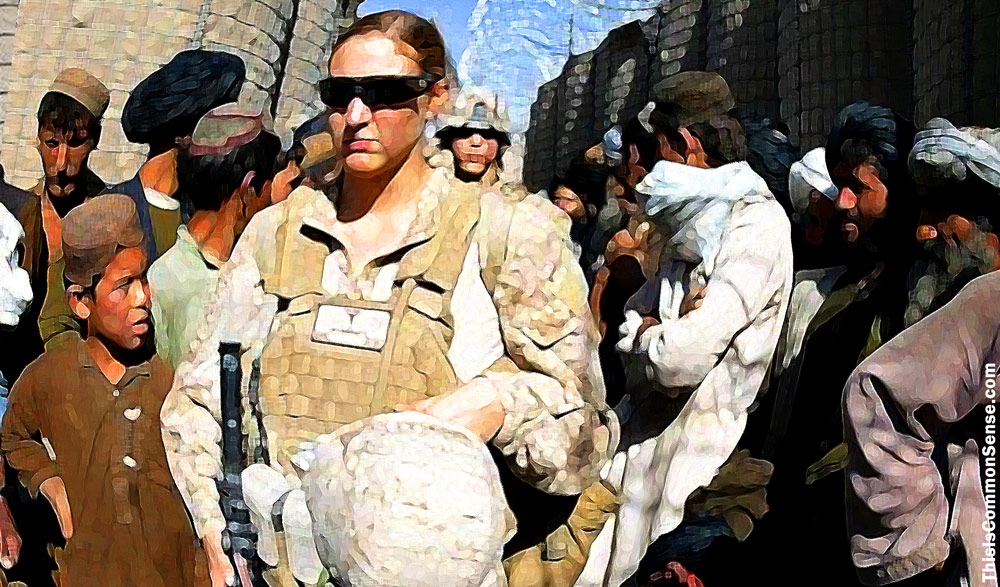
Today, women comprise nearly 19 percent of 1.2 million active-duty soldiers. They rightly have all combat jobs open to them — the very positions a draft has traditionally been used to fill.
So, in the name of equal rights are we forcing mom into a foxhole or not?
It seems . . . complicated.
“Women bring a whole host of different perspectives, different experiences,” offered Debra Wada, a commission member and former assistant secretary for the Army.
Since when does the military conscript people for their “perspective”?
“[B]eing drafted does not necessarily mean serving in combat,” The Times paraphrased Wada. “In a time of national crisis, the government could draft people to a variety of positions, from clerical work to cybersecurity.”
This doesn’t seem to be about actual equality of service —or equality of risk — at all, but instead about a bigger pool of possible forced labor.
“If the threat is to our very existence,” Wada rhetorically inquired, “wouldn’t you want women as part of that group?”
Yes! Certainly.
Of course.
But as volunteers, not as conscripts — and the same for men.
The National Commission on Military, National and Public Service released its report today, advocating that Congress should force our daughters to register for the military draft.
“The commission recommended that the United States keep a draft option in place,” explainsThe New York Times. Commission chair and former Nevada Congressman Joe Heck called it a “low-cost insurance policy against an existential national security threat.”
But that flies in the face of former Selective Service Commissioner Bernard Rostker’s testimony: “there is no need to continue to register people for a draft that will not come; no need to fight the battle over registering women, and no military need to retain the MSSA [Military Selective Service Act].”
And speaking of “an existential national security threat,” the scenario Heck put forth at one hearing was a simultaneous invasion from both Canada and Mexico.
Puh-leeze.
“This is a necessary and fair step,” states the 255-page report, according to Politico, “making it possible to draw on the talent of a unified Nation in a time of national emergency.”
It has always been possible to draw on the talents of the American people — both men and women. Just not to draft folks against their will.
Legitimate arguments for fairness and equality* must not obscure what we are talking about: A step closer to using force to fill the military’s ranks.
There is only one reason for a military draft: the inability of a nation to persuade citizens to voluntarily defend their country. Yet, as I told the commission last year, never have Americans failed to rise to their country’s defense.
Conversely, too often our “leaders” have substituted foreign misadventures for actual national defense.
This is Common Sense. I’m Paul Jacob.
* More soon on the sort of “equality” being envisioned in the next military draft.
Last week, I ventured into Washington for an important event, hoping not to get sick from the coronavirus swirling around the globe.
Nearly 200,000 people in 142 countries have been infected with COVID-19 and 7,866 have already died.
“Both SARS and COVID-19 . . . appear to have emerged from animals in China’s notorious wildlife markets,” explains a Vox video. “Experts had long predicted that these markets, known to be potential sources of disease, would enable another outbreak.”
In fact, I did become ill in our nation’s capital — sick to my stomach.
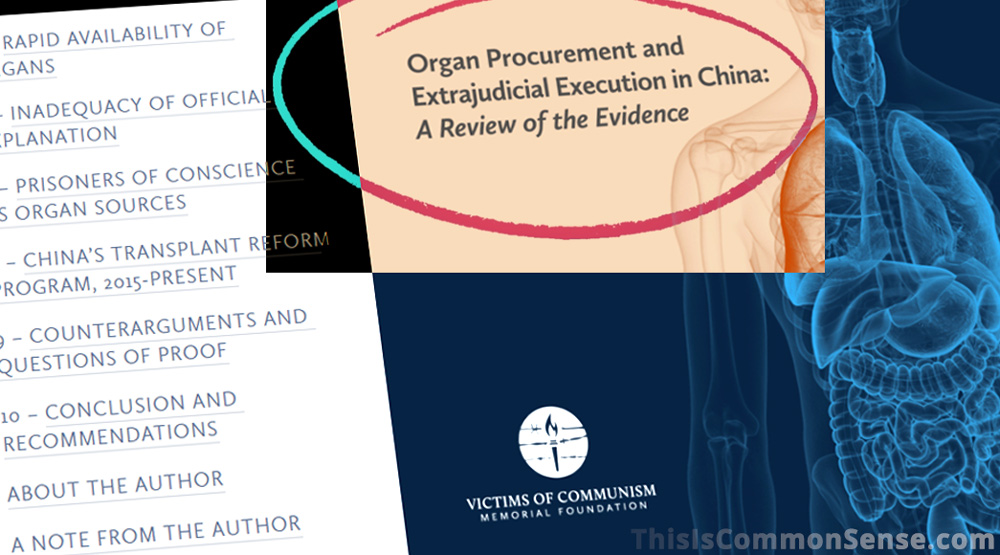
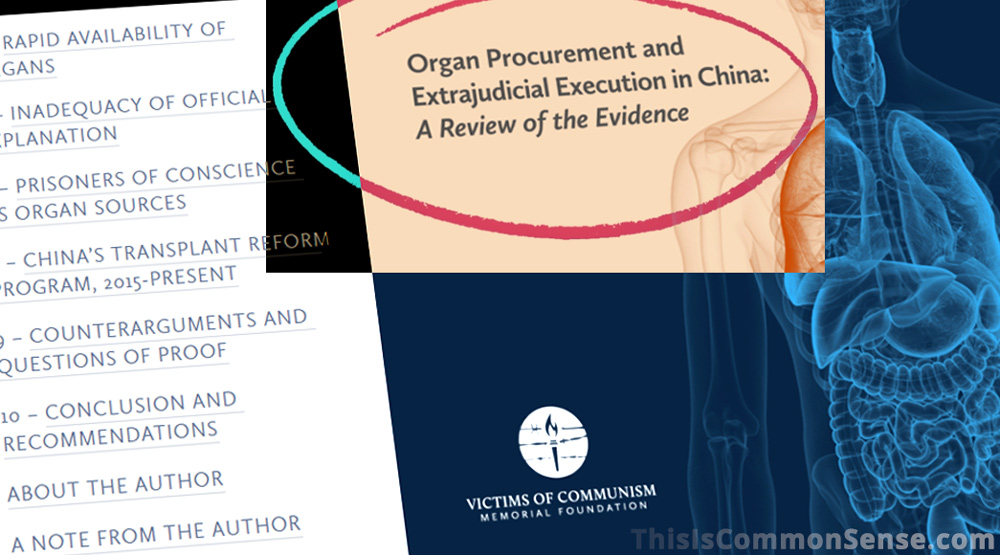
Not from the virus, but from a new report by the Victims of Communism Memorial Foundation “address[ing] the failure of institutions and governments to come to terms with 14-year-old allegations of forced organ harvesting from prisoners of conscience in China.”
With the Chinese Communist Party (CCP) waging genocides against Falun Gong practitioners and now Uighurs, they are abundantly rich in such lucrative national resources.
Susie Hughes, initiator of the China Tribunal, announced its unanimous conclusion that “forced organ harvesting has been committed for years throughout China on a significant scale.”
And continues to this day.
“The source of the organs for transplant are a living population,” Rep. Chris Smith (R-NJ) emphasized, “kept alive like some form of livestock until their organs are needed.”
Recently, in “All the Tyranny in China,” I tried to detail the myriad ‘crimes against humanity’ committed by the Chinese Communist Party. Sadly, I just couldn’t get to them all.
I forgot to mention that the CCP will also gladly sell you the fresh organ of some currently incarcerated prisoner of conscience. At a bargain price.
Last weekend, riot police broke up a candlelight vigil for Chow Tsz-lok, the Hong Kong University of Science and Technology student, who died back in November. He had fallen a story from a parking garage as Hong Kong police were “clearing a group of anti-government protesters.”
“Police said they seized petrol bombs, bricks and other protest items from the car park where the memorial was held,” reports the South China Morning Post. “Officers then stopped rally-goers from leaving and checked their identity cards and bags, arresting more than 40 people for unlawful assembly.”
If the police can be believed.
They can’t.
As Tom Grundy, editor-in-chief of Hong Kong Free Press, puts it: “[P]eople just don’t trust the Government.”
While people were violently arrested, it wasn’t for violence or weapons. It was for daring to use what we call “freedom of assembly.”
Now with the spread of the COVID-19 virus, protesters have been reluctant to call for mass gatherings. Nicholas Bequelin, a Hong Kong-based regional director of Amnesty International, told the Australian Broadcasting Corporation, “The authorities may be counting on the coronavirus epidemic to extinguish the unrest.”*
On Friday, authorities used the lull to charge three prominent pro-democracy leaders — Jimmy Lai, owner of media highly critical of China; Yeung Sum, the former Democratic Party chairman; and the Labour Party vice-chairman, Lee Cheuk-yan — for taking part in a protest march last year.
They join more than 7,000 demonstrators arrested since the protest movement began last June.
Young people — and some not-so-young — are risking their very lives for freedom, for the right to choose their leaders . . . knowing that without such basic mechanisms, they have no defense against the Butchers of Beijing.
This is Common Sense. I’m Paul Jacob.
* Amnesty International has called for an “independent investigation into police violence.”
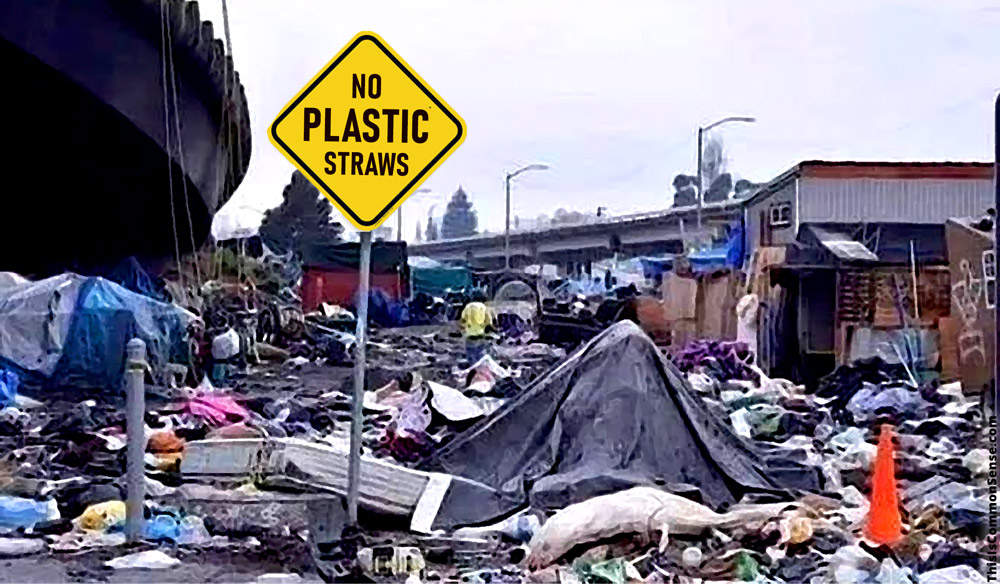
In The Graduate (1967), the young man played by Dustin Hoffman gets advice from an elder. “Just one word: plastics.” “Exactly how do you mean, sir?” “There’s a great future in plastics.”
When the world bans all plastic in 2021, that will be the end of that market opportunity. Other components of civilization will be discontinued in 2022.
Maybe I’m being too pessimistic. After all, there’s always the black market.
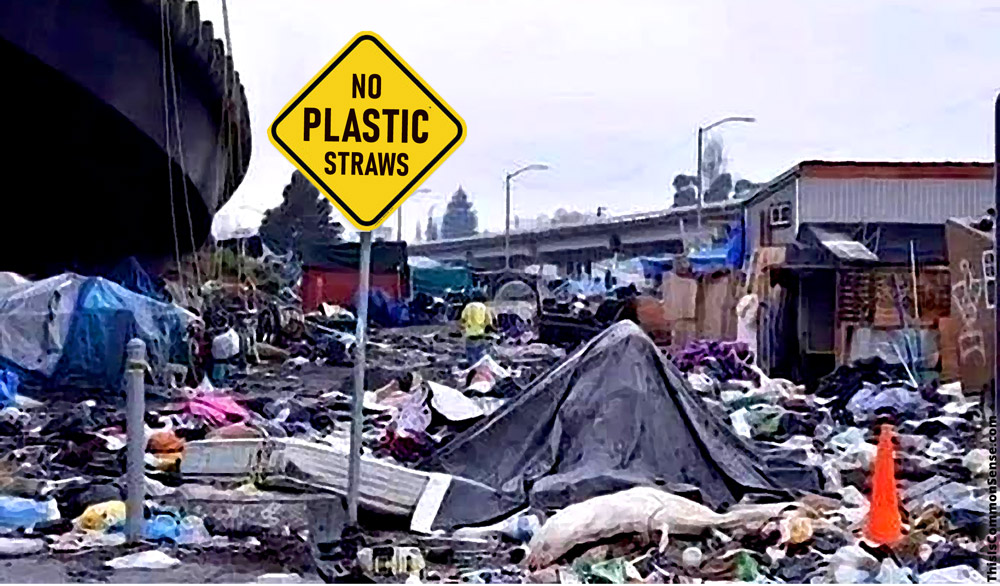
A plastic-bag ban is underway in New York City. Four states and five territories have already banned disposable plastic bags, as have countries around the world. New Yorkers are reportedly two-to-one in favor. A friend who lives there confirms this widespread resignation.
“I’m not happy about what it [plastic] does to the environment,” says one New Yorker. “But . . . what it does to my environment if I don’t have them is a nightmare.”
“This is a good thing because it’s helping the environment,” says another.
The problem of trash disposal has been solved. We use garbage cans, pickups, landfills. It’s a problem that must be continuously re-solved. Like many other problems . . . such as how to carry groceries.
We adopted plastic bags because they are much more convenient than paper. Convenience, efficiency, effectiveness: many man-made components of civilization serve these goals.
Reduction to absurdity can persuade only if the listener rejects the absurd. In 1967, the idea of banning plastic bags and plastic straws seemed, to most, absurd. Today, maybe two thirds of New Yorkers lament the inconvenience but add whaddyagonnado . . . when you gotta protect the environment?
That this measure will not protect much of anything, but merely allow activists to think well of themselves is, itself, absurd.
Today is my birthday. I am 60, and thus begin my 61st year on this planet.
For the last four decades — my entire adult life — I’ve worked in politics. That might not seem like much fun. Politics is a constant struggle, a slog. But working for freedom — in one crusade or another — has been both fulfilling and fun.
Maybe it’s because, as a friend once accused, I’m a pathological optimist. Maybe it’s a whole lot more than that.
I’ve worked through nights, bleary-eyed, peering at voter registration lists. I’ve circulated petitions in 100-degree heat and freezing temperatures. I’ve been vilified in the press — oh, and lionized, too. I’ve been both hounded and praised. I’ve been imprisoned — and threatened with more of the same.
What was I thinking?
I guess I thought, and indeed still think, that we are called upon to do what we believe is right — come what may. Freedom isn’t free.
It’s been hard sometimes. I was in prison for five and a half months when my oldest was only a year old. I was there for refusing to register for the draft.
What was I thinking?
In the words of then-presidential candidate Ronald Reagan, I thought: “The draft or draft registration destroys the very values our society is committed to defending.” I could not stand idly by while those cherished values were destroyed, nor certainly be any party to it.
My re-education in federal custody fortunately didn’t take. And the road I took has made all the difference.
For instance, I met Ron Paul when, as a slightly younger congressman, he testified at my trial. Three years later, in 1988, I nominated him to run for president on the Libertarian Party ticket.
At a meeting in April of that year, the task of putting Congressman Paul on the ballot for president was handed to me. The next morning I was awakened by a phone call on the home line — at 6:00 am! And for the next six months the phone never stopped ringing.
I remember my wife calling me at the office to tell me our new home phone number — and urging me not to give it out to people! She’s a lot smarter than I am.
Working with wonderful people across the country, we successfully placed Ron on the ballot in 47 states and the District of Columbia. And Guam. Believe me, it took a lot of hours, daylight and late night.
What was I thinking?
I was thinking that given a choice, people would choose greater freedom, limited government and personal responsibility. We didn’t win, of course. But we weren’t through trying.
Howie Rich and Eric O’Keefe noticed my work on the petition drives and offered me a job running the Tax Accountability Amendment in Illinois. Half a million voters signed petitions to put the measure on the ballot. Then, at 77 percent in the polls, the Illinois Supreme Court took it off the ballot. (The same thing happened again four years later with a term limits petition.)
But, suddenly, freedom was breaking out around the world. The Berlin Wall came down. Czechs poured into the streets. Estonians were singing. We watched with inspiration and then horror as students rallied for weeks in Tiananmen Square only for the Butchers of Beijing to crush the peaceful protest with deadly force. The Chinese people’s dream was our dream; the desire for freedom — and the citizen control of government needed to preserve it —was universal.
The end of the Cold War allowed Americans to finally cast a full glance at city hall, at the state capitol, at Washington, D.C. We did not like what we saw.
In 1992, I was hired to run U.S. Term Limits. We were able to help activists in 14 states get on the ballot — the most states to ever vote on a single issue on a single day. All 14 states passed term limits, including my home state of Arkansas.
The issue continued to win at the ballot box in the states and in hundreds of cities and counties — from Wyoming to New York City. Politicians sued. Speaker of the House Tom Foley was one.
In 1994, Republicans swept to a majority in the U.S. House for the first time in 40 years, in no small part as a result of their embrace of term limitation. One of the biggest upsets was Foley, the only Speaker defeated for re-election since the Civil War, a victim of his own lawsuit to overturn his state’s voters.
And term limits — a case from Arkansas, not Foley’s — went to the Supreme Court. Unfortunately, in a narrow 5 to 4 decision, the court struck down Arkansas’s term limits law, and by implication laws enacted in 22 other states.
What was I thinking?
On the steps of the Supreme Court, I told reporters:
All over Washington today, the politicians and the power brokers are happy. You can hear the sound of champagne corks popping. I have a simple message to them. Drink up; you’re outnumbered.
Term limits went nowhere in Congress, of course. There were a few principled supporters, but most wanted a career of perks and power. It’s very seductive.
I was on the wrong side of an 80/20 issue. I was with the 80 percent of Americans for term limits.
What an amazing situation: Our representatives refuse to do what 80 percent of the people want. In essence, they refuse to give back the power we’ve loaned to them.
The issue won’t go away. A decade ago, if you went to a Tea Party event, you would see the homemade two-word signs: Term Limits! And then-President Barack Obama insisted on the importance of term limits for Congress and for executives in foreign countries, and he regarded it as a matter of course: it’s tyranny without them.
Now, a very different president, Donald Trump, has repeated the importance of legislative term limits. It was one reason many people voted for him. And best for republican governance.
Though,a lot of people in power sure pretend to think the opposite.
The battle has not been lost or abandoned. I still sit on the board of directors of U.S. Term Limits and help out where I can in a very aggressive national campaign to bypass Congress by garnering 34 states to call a convention (under Article V of the Constitution) to propose a constitutional amendment for ratification by the states.
Frankly, the only negative result of term limits sweeping those states with initiative and referendum has been the backlash. Legislators and their favored special interests have launched concerted attacks on the initiative process for enabling the people to do such a thing in the first place.
What was I thinking?
The initiative process is the most effective protection we citizens have from government gone wild.
Regular readers of Common Sense know my more recent work in helping citizens across the country petition to put initiatives on the ballot to protect homes and small businesses from being taken through eminent domain abuse, enact state spending limits, defeat ever-increasing gas taxes, protect citizen-only voting and enact criminal justice reform in places like Ferguson, Missouri.
A decade ago, in the spirit of “no good deed goes unpunished” and in the cesspool that has become our politics, Oklahoma Attorney General Drew Edmondson indicted three of us, The Oklahoma Three, for “conspiracy to defraud the state” over a 2006 initiative there.
What was I thinking?
The Oklahoma powers-that-be were scared. And they did not want us takinga limit on government spending to a public vote.
And perhaps, for a moment or two, I may have thought “I’m getting too old for this.”
We were innocent of the charge and we fought back. After more than a year and a half with a possible ten-year prison term hanging over our heads, the charges were dismissed. The AG had campaigned in the press that we were guilty, but he had repeatedly blocked our case from going before a judge for a preliminary hearing to determine if there was enough evidence to even go to a trial.
No such hearing was ever completed. Meanwhile, the state’s petition law was struck down as unconstitutional in federal court.
The AG thought he could threaten us into submission. He had offered my co-defendant Susan Johnson a deal: plead guilty and all she’d get would be a small slap on the wrist.
Like so many unsung patriots in this country, she told him to stuff it.
What was she thinking?
All that is necessary for the triumph of good is for the majority of people — who are indeed good at heart — to stand up and be counted. The people are not the problem. They are the solution to the problem.
When government becomes Goliath, the initiative is the people’s slingshot.
In my recent travels around the world in support of freedom-centered democracy — citizen-controlled government — I’ve encountered truly courageous people in Hong Kong, Taiwan, and elsewhere. Everywhere the message is becoming clearer, at least to folks like you, advancing the cause.
Times are strange. Even scary. But I’ve never had more hope for the future. Together, I’m convinced we can leave our kids and grandkids an insurance policy. Not one that pays outmoney when we’re gone, but something they’ll need even more:
Freedom.
The key to restoring and protecting freedom? Give the intrinsic decency and the common sense of the American people a chance to prevail.
That’s what the initiative and referendum process is all about: an opportunity to place some measure of common sense on the public agenda, and when needed, to check the power of the high and mighty.
As I look back on my five decades, I’m thinking how proud and how lucky I am to serve as president of Citizens in Charge and Citizens in Charge Foundation, the only national organizations committed to protecting the right of citizens to initiative and referendum, and to lead the Liberty Initiative Fund, an organization that helps liberty-minded people advance ballot measures that expand liberty and constrain government.
Many times through the years I’ve asked you to make a sacrifice to support our mutual cause. Your generosity has made the difference. Again today, I ask for your help.
For 20 years, this daily Common Sense commentary hasn’t skipped a weekday, and now our brand spanking new, This Week in Common Sense video/audio podcast is also at thisiscommonsense.com. This has been the hub of my political activism since 1999. Here I keep the lines of communication open with freedom-minded folk everywhere, and when I notice an opportunity, from where I explain how we can best advance our cause.
But a website and daily commentary — and now a weekly podcast — take not only time, but money. To keep it going, and even expand our reach on social media, your help now would be just that: Help. Now. For the future.
Don’t donate $60 to This Is Common Sense just because I’m turning 60. If that were the only motivation, I’d want you to give $59 or $33 or $21. I’d feel younger.
Give whatever you can afford — $60 or $6 or $600 — because your liberty and mine, as well as freedom for our loved ones, is worth every penny.
And right now I can help increase the bang of your bucks. A generous donor has promised to match, dollar for dollar, your donation — up to $15,000. So whether your donation is a 6 followed by one zero, two, or three, you’ll know that the effect will be doubled.
What a deal!
I urge you to not put this aside. No matter what you contribute, please do it right now. After all, we’re not getting any younger.
As a lover of freedom and not omnipotent government, you are already way ahead of the crowd! What are you thinking?
I hope you’re thinking that you will join me by supporting Common Sense, to restore liberty, to put freedom first.
This is Common Sense. And I’m seventh-decade-advancing* Paul Jacob.
P.S. When you make a financial gift, your spouse, your friends, your neighbors and co-workers may ask you: What were you thinking?
So tell them. Freedom needs not only your support, but theirs.
* If my seventh-decade (!) reality inspires you to increase your donation from $60 to $70 — or from $600 to $700 — the whole idea of moving forward would add just an extra bit of pizazz.
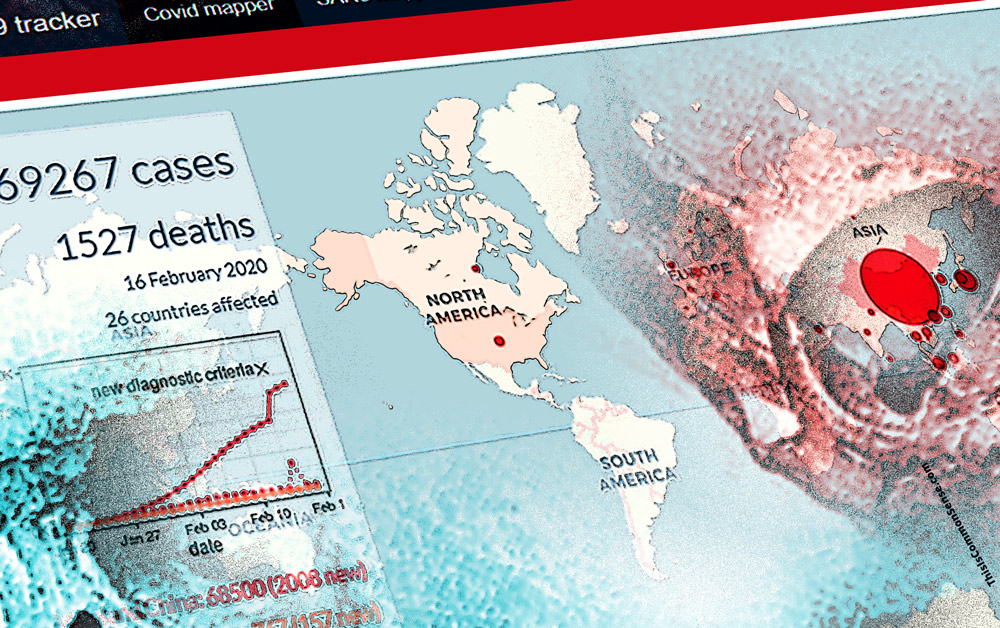
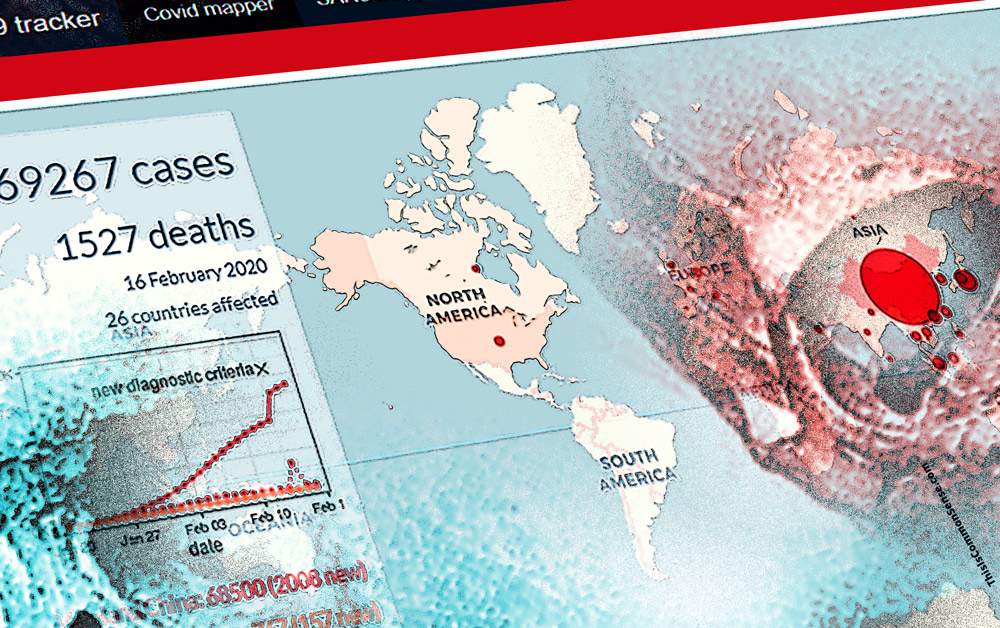
Anyone knowledgeable about medicine — or history, for that matter— is taking very, very seriously the coronavirus outbreak in China, and its subsequent spread across the globe, including to the U.S.
More than 70,000 Chinese have been diagnosed and over 1,700 have died, along with one death in each of France, Japan, Hong Kong and the Philippines.
Over the weekend, Taiwan — the independent island nation a hundred miles off the coast of a hostile, threatening People’s Republic of China (PRC) — announced its first fatality. The deceased Taiwanese taxi driver, whose health was already compromised by diabetes and hepatitis B, likely caught the virus from customers traveling from China.
Last week, China finally allowed the World Health Organization to allow Taiwanese experts to participate in discussions about containing the virus. Unlike China, Taiwan boasts one of the best medical systems in the world.
Also over the weekend, news broke that Chinese President Xi Jinping had mentioned the coronavirus in a speech given many weeks before officials first alerted the public.
That’s how the totalitarian PRC rolls. At all levels. One victim of the virus is Dr. Li Wenliang, who warned back in December that the disease was spreading. First, he was reprimanded and then “apprehended by Wuhan police for spreading ‘rumours,’” reportedAljazeera.
“As more information leaks out from Wuhan, the epicenter of the outbreak,” a recent Taipei Times editorial argues, “it is clear that Beijing was unable to prevent the virus from spreading out of control precisely because it lacks the accountability, freedom of speech and free flow of information that form the bedrock of democracies.”
Yet another way that freedom affirms life and totalitarian tyranny kills.