Categories
free trade & free markets general freedom too much government

Bank on It?

It took me a moment. And I assure you, I wasn’t high.

When I read that California State Treasurer John Chiang was considering a “marijuana bank,” my first thought was that he was talking about warehousing bud and leaf.

Well, no. That would be stupid.

So, maybe reporters and bloggers shouldn’t call it a “marijuana bank.” What these government officials are doing is trying to determine “the potential of a public bank to service the cannabis industry in California.”

A state bank, in other words. Not unheard of.

But would it be stupid?

Not according to Treasurer Chiang.* But his notion is not just about serving an industry that the federal government still tries to suppress — and continues to use its regulatory powers over banks to monkey-wrench.

Chiang defends his move in part on anti-capitalist grounds: “We see deepening public dissatisfaction and cynicism over the private banking system — a dissatisfaction that can be traced to the financial excesses of Wall Street, which triggered the worst recession since the Great Depression.”

Was the financial crisis the result of “bad actors” in the industry alone? No. The American banking industry is heavily regulated, the government-created Federal Reserve is very hands-on in its control of money and banking, and federal regulatory and financial bodies have exerted similar influence over housing industry financing for scores of years.

So of course a Californian politician wants to solve a government-induced problem by creating more government.

That’s what’s stupid, if you ask me.

This is Common Sense. I’m Paul Jacob.

 

* He’s going forward with a big study to “answer questions about costs, benefits, risks, and legal and regulatory issues, including the needs for capitalization, deposit insurance, and access to interbank transfers of funds.”


PDF for printing


Categories
Accountability crime and punishment folly free trade & free markets general freedom moral hazard nannyism national politics & policies too much government U.S. Constitution

The Ninth and the Tenth of It

When Attorney General Jeff Sessions rescinded the Obama Administration enforcement guidelines regarding the states that have legalized (in their 29 different ways) marijuana, last week, supporters of freedom expressed some worry.

But we had to admit, one excuse for Sessions’s nixing of the mostly hands-off policy seemed to make sense on purely legal grounds. If we want to liberalize drug laws, then our Cowardly Congress should do it.

Definitely not the Executive Branch.

And yet, over at the Volokh Conspiracy, Will Baude argues that “the rule of law” does not require “renewed enforcement of the Controlled Substances Act.”

If anything, he argues, it “requires the opposite.”

Baude mostly rests his case on the Constitution’s Commerce Clause, which does not authorize regulation of intra-state trade. An issue on which the AG does possess a duty to weigh in.*

This rubs against FDR-Era constitutional theory, of course, which treats all commerce as regulate-able interstate trade. But this makes no sense. The Tenth Amendment declares that states possess powers not given to the federal government. An interpretation of the Constitution cannot be justified if it effectively nullifies other parts of the Constitution. (If all trade is “inter” state, what’s left for the states? Powers to do what? And how could there be any constraints on federal power?)

And then there is the Ninth Amendment, which states that the people retain rights not listed in the Constitution.

When citizens assert rights — such as the option to cultivate, sell, buy or ingest a common and quite hardy plant — in their states (largely through ballot initiatives), the federal government should butt out.

This is Common Sense. I’m Paul Jacob.
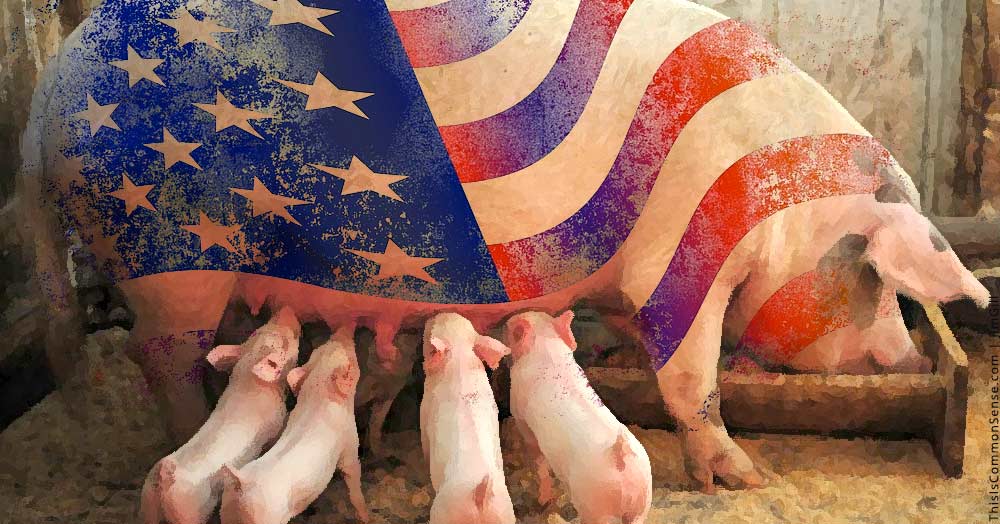
 

* “Members of the executive branch have their own obligation to interpret the Constitution,” Baude writes, “and if a federal law is unconstitutional in part then the executive branch, no less than the courts, should say so. It is the Constitution, not the Court, that is the ultimate rule of law in our system.”


PDF for printing


Categories
crime and punishment folly free trade & free markets general freedom nannyism too much government

Beaver State Bliss

The Great State of Oregon is not at DEFCON 1. Nor are Beaver State residents gnashing their teeth over a new law that went into effect earlier this week.

News reports proclaimed: “People in Oregon are freaking out about the thought of pumping their own gas under a new law.” But don’t believe everything you read.

For starters, Oregon’s new law doesn’t actually force anyone to do anything. It merely allows “retailers in counties with a population of less than 40,000 . . . to have self-service gas pumps.”

But a Facebook post by KTVL CBS 10 News in Medford took it an apparently frightening step further, asking, “Do you think Oregon should allow self-serve gas stations statewide?” The post went viral nationwide because of responses such as this:

I’ve lived in this state all my life and I REFUSE to pump my own gas . . .

This [is] a service only qualified people should perform. I will literally park at the pump and wait until someone pumps my gas.

Oregon is one of only two states — New Jersey, the other — where gas stations are banned from permitting customers to put gas in their own cars. Folks in the other 48 states have managed, as one Facebooker explained, “to pump gas without spilling the whole tank and triggering a Star Wars-style explosion.”

Still, if Oregonians so revere their regulatory regime, protecting them from the indignity of pumping gas, why change the law even partially?

Well, for economic reasons. As you might expect, gas stations across rural Oregon were closing at night, stranding many motorists.

Freer markets offer greater protection for real people . . . those not too perplexed by the prospect of pumping their own petrol.

This is Common Sense. I’m Paul Jacob.

PDF for printing


Categories
folly free trade & free markets general freedom moral hazard nannyism national politics & policies property rights responsibility too much government

What’s the Big Deal?

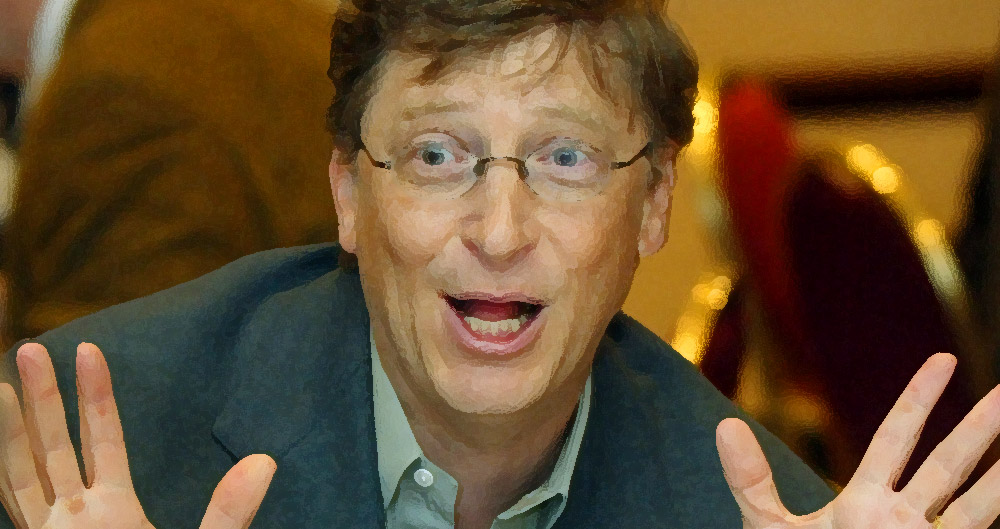
Big news: in a $69 billion deal, CVS Health Corp. plans to buy Aetna Inc. The AP story by James F. Peltz says the move “would shake up healthcare industry.”

Should we worry?

Because corporations aren’t cancerous, growth and consolidation are not to be feared as such.

But speaking of cancerous growths . . . the federal government will not likely take the news of the merger with the tranquility of a Taoist sage.

Over at Forbes, last month, Bruce Japsen predicted that the deal wouldn’t go through, arguing that “a full-blown merger of the healthcare giants would be complicated and unlikely given recent antitrust scrutiny in the sector and given that the drugstore chain is already going into business with an Aetna rival, Anthem.”

Government antitrust to the rescue?

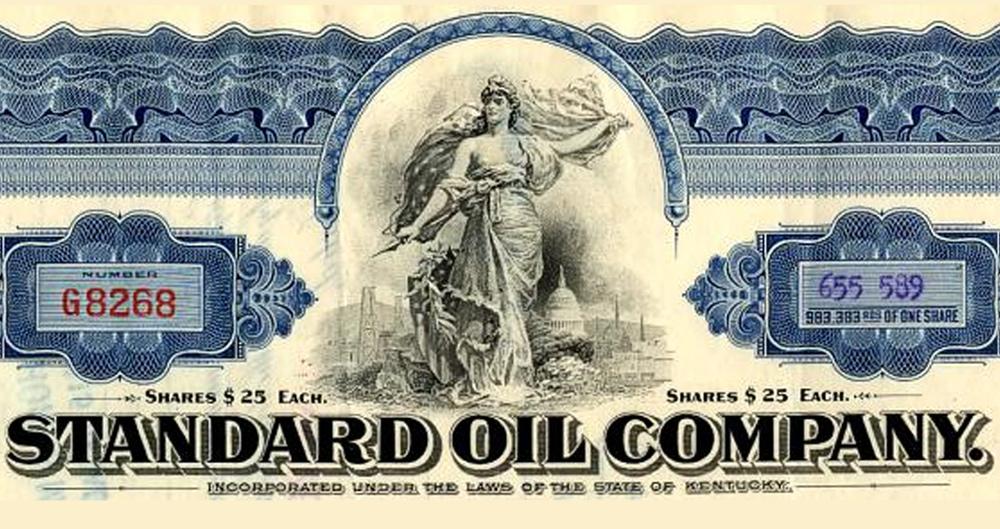
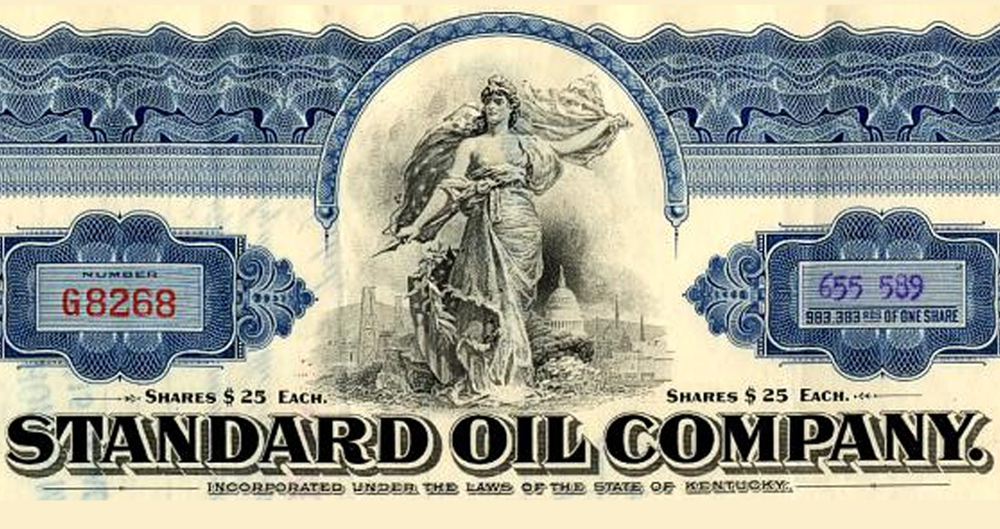
No. We may have been schooled to believe that antitrust “protects competition,” but it has always limited competition, instead. Antitrust was always about fear — of bigness. It was definitely not designed to help consumers. The classic case is the infamous break-up of Standard Oil, which produced more fuel while lowering prices — even as it grew humongous.* Standard Oil grew because it satisfied consumer demand. Which is what businesses are for.

And yet government broke it to pieces, using antitrust rationales, for the benefit of some producers, some businesses.

Think of it as crony capitalism in action.

So, my remaining question runs like this: is the CVS/Aetna merger a response to pure market demand, or as a way to wiggle around insane state and federal regulations?

Health care in America is sick. The merger is not likely the cure. But it would not kill the patient.

We have government for that.

This is Common Sense. I’m Paul Jacob.
 

* For background, consult the studies of economist Dominick T. Armentano.


PDF for printing


Categories
Accountability free trade & free markets insider corruption moral hazard national politics & policies porkbarrel politics responsibility too much government

Cry Me an Amazon

My idea of a “free market” is not our politicians’. Their idea is to give away free stuff to their new and old business buddies . . . at everyone else’s expense.

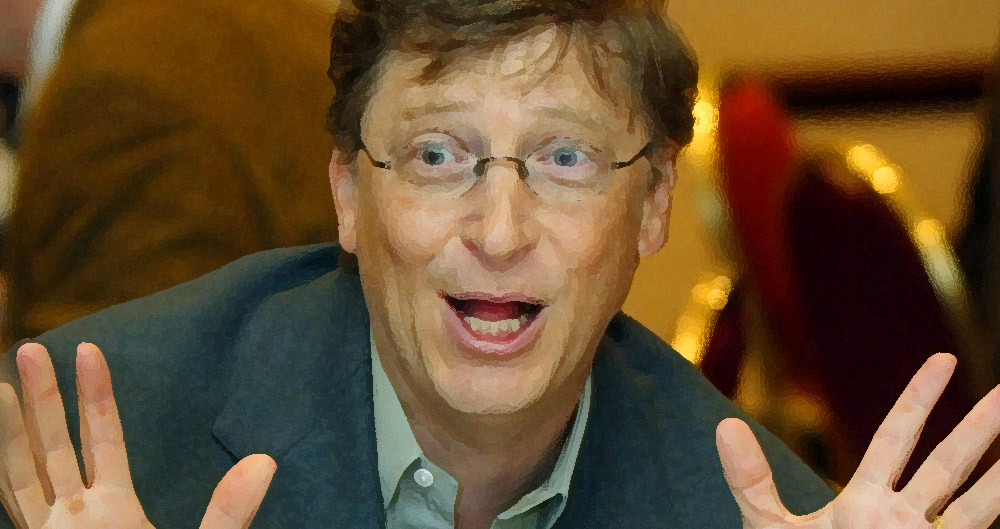
That sort of “crony capitalism” has been writ large per Amazon’s search for a location for a second headquarters (HQ2). The world’s biggest retailer — valued higher on the market than all other major retailers combined — announced it would spend $5 billion and bestow 50,000 new jobs on HQ2’s locale. Subsequently, 238 cities, states and provinces in the U.S., Canada, and Mexico offered to take from their current citizenry to give unfairly to Amazon.

Chicago’s proposal would allow Amazon to keep the income taxes their employees pay. Seriously. This “personal income-tax diversion” would add up to over a billion dollars for the company.

New Jersey state government offered a cool $7 billion in subsidies should Amazon choose to locate in Newark.

Seattle Times columnist Danny Westneat described this sorry spectacle of subsidy as not so much a corporate “takeover” as a government “surrender.”

The most egregious example, though, has to be Fresno, California, where the city “promises to funnel 85 percent of all taxes and fees generated by Amazon into a special fund. . . . overseen by a board, half made up of Amazon officers . . . supposed to spend the money on housing, roads and parks in and around Amazon.”

“Rather than the money disappearing into a civic black hole,” explained Larry Westurland, Fresno’s economic development director, “Amazon would have a say on where it would go.”

Selling out the taxpayers? Moolah in the millions. Referring to a normal city budget as a “black hole”? Priceless.

This is Common Sense. I’m Paul Jacob.

PDF for printing


Categories
Accountability folly free trade & free markets general freedom ideological culture media and media people moral hazard nannyism national politics & policies Popular responsibility

Don’t Think Different

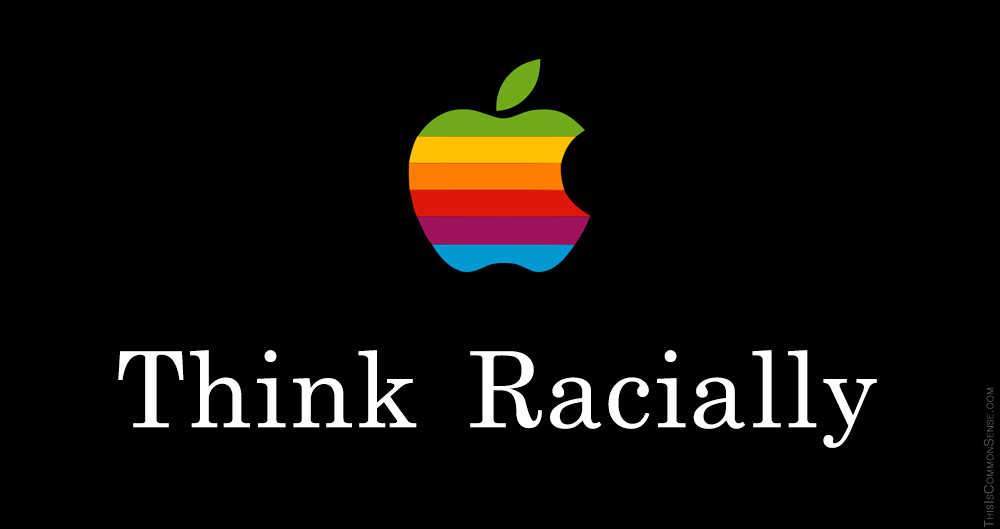
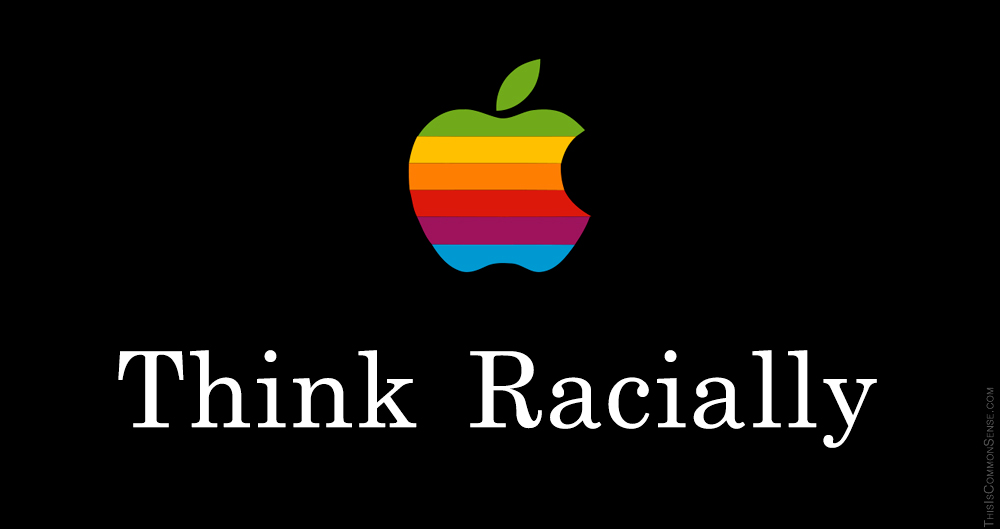
What do we know for sure about the resignation of Apple’s “vice president of diversity and inclusion,” Denise Smith?

  1. She is a black woman who landed in hot water for saying that a group of blue-eyed blond men can also be “diverse,” because “they’re going to bring a different life experience and life perspective to the conversation. Diversity is the human experience. I get a little bit frustrated when diversity . . . is tagged to the people of color, or the women, or the LGBT.”
  2. An uproar ensued among persons who favor making characteristics like sex and skin color — as opposed to talent, perseverance, intellect — a top priority in hiring.
  3. Smith then apologized, seeming to disparage her own correct and much-needed statement defending genuinely relevant diversity.
  4. She has left Apple.

What outsiders don’t know for sure is whether Apple asked Smith to leave because of what she said. We can be merely 99.99 percent sure that Apple requested her departure for making her excessively un-same and sane observation.

Not good, Apple.

Excellence and common sense should never be sacrificed to “diversity.” Sub-perfect “diversity” has not impaired Apple’s ability to make popular and effective smartphones bought by persons of every description.

Indeed, no company should be in the least concerned with promoting “diversity” if this means trying to increase the proportions of employees of a certain race, sex, weight, height, blood type, timbre, etc. even when such traits are blatantly irrelevant to prospective job performance.

This is Common Sense. I’m Paul Jacob.

PDF for printing


Categories
Accountability folly free trade & free markets general freedom ideological culture media and media people national politics & policies responsibility

Coffee in the Age of Covfefe

You might think that that coffee could not be spoiled by today’s politics, but, well, consider the Keurig line of coffee-related products. I’m a Starbucks man, myself, but one of the great things about capitalism is that I can have my tall (or grande) latte and you can have your home-brewed Keurig cup of java.

Enter Media Matters.

You might think of the outfit as the subject of President Trump’s enigmatic tweet of several months back . . .

. . . which is all he wrote.

He obviously meant “negative press coverage,” but got distracted. And the typo took on a life of its own.

But Media Matters, a dirty player in the politico-cultural wars (pretending to be a watch dog outfit), stepped in. One of Media Matter’s negative employees tweeted

Good afternoon @Keurig. You are currently sponsoring Sean Hannity’s show. He defends child molester Roy Moore and attacks women who speak out against sexual harassment. Please reconsider.

And Keurig capitulated, pulling their ads from Hannity’s show.

Now, as far as I can tell*, Sean Hannity did not defend “child molester Roy Moore.” Understandably, Hannity’s fans struck back, not only initiating a public boycott, but made the whole thing viral by trashing the Keurig coffee makers in online videos.

This is the result of going full Alinsky.**

And there appears to be a clear bad guy here, clearer even than Roy Moore’s alleged crimes: Media Matters lied to squash Hannity for reasons having nothing to do with the Alabama Senatorial race.

Media Matters embodies “covfefe.” And the negativity has spilled out of politics and into the beauty of everyday life. Coffee.

This is Common Sense. I’m Paul Jacob.
 

* The YouTube recording of Hannity’s interview of Judge Moore that I listened to has been pulled, so there’s no point in linking to it. Instead, consider Ben Shapiro’s take and other non-covfefe at The Daily Wire.

** Never go full Alinsky.


PDF for printing


Categories
Accountability crime and punishment free trade & free markets general freedom ideological culture moral hazard nannyism national politics & policies property rights responsibility too much government

The Owners of Twitter Have Rights

Roger Stone is suing Twitter for kicking him out.

Without saying exactly why they booted him, Twitter implies that the reason is abusive language. For his part, Stone accuses the social media giant of targeting right-wing tweeters while letting left-wing tweeters off the hook for the same or worse alleged wrongdoing.

I’ll stipulate that Stone is justified in accusing Twitter of rank, ideologically motivated hypocrisy in applying its micro-blog policies. But he’s wrong to sue.

As I have argued before — indeed, just yesterday — government should not regulate Internet forums and should not compel Twitter or other firms to provide a soapbox for anybody else. The only relevant legal issue here is whether Twitter has violated a contract. But Twitter does not agree to let anyone use its services unconditionally. And I don’t think that Stone is alleging any violation of contract.

Our right to freedom of speech does not include the right to force others to give us access to their property in order to exercise that freedom. Nor do the rights of any individuals to use and dispose of their own property disappear if they happen to create a very big and successful enterprise. There are many ways to try to make Twitter pay for bad policies without using force against the company, including boycott and direct competition.

I agree with the guy who said that one’s right to freedom is not contingent upon a guarantee “that one will always do the right thing as others see it.”

This is Common Sense. I’m Paul Jacob.

PDF for printing


Photo by Nigel on Flickr


Categories
Accountability folly free trade & free markets too much government

Jonesing for Disaster

First, do no harm. Second, stop harming.

You might think that these would be the Two Commandments of Government.

But no.

Politicians make a good show of saving us, sure. Sadly, appearance alone suffices. For them. Much easier to announce a new program than get rid of a harmful old one.

Latest case? Courtesy of a storm and a new president, we now get to witness hurricane recovery mismanagement all over again, but this time outside the continental United States.

“The administration announced some bad news for Puerto Rico,” writes Scott Shackford at Reason. It will not, Mr. Shackford explains, “be waiving the Jones Act, which significantly restricts the ability of foreign or foreign-owned ships from bringing goods to Puerto Rico.”

The “unincorporated U.S. territory” that is the island must take its lumps.

The Jones Act* limits foreign ships port access . . . down to one. The mandate allowing port-to-port commerce only to American-manned ships is designed to save a few jobs and grease a few union wheels in the mainland.

And now, especially, that old, ongoing “centralized government planning for the benefit of a small group of powerful U.S. shipping interests” amounts to a real kick to a people already devastated by Hurricane Maria.

Closing ports to much needed help doesn’t help. An emergency order could suspend the ongoing harm of throwing roadblocks in the way of a swift recovery and rebuilding.

Or Congress could repeal the Jones Act entirely.

Neither is likely.

So the wounded Puerto Ricans — prior to the storm hobbled by years of territorial misgovernance — can expect more fake government help.

This is Common sense. I’m Paul Jacob.


* Not to be confused with the Jones-Shafroth Act of 1917, which set up territorial  governance of the island.


PDF for printing


Categories
Common Sense folly free trade & free markets general freedom ideological culture media and media people moral hazard nannyism national politics & policies

Evil Capitalists Hook Brazil On Eating

Have you heard the latest?

More and more peoples around the world these days have the unfortunate misfortune of having adequate food — not merely vegetables either!! — thanks to the ruthlessly profit-seeking food producers and their unconscionable engagement in the division of labor, capital accumulation, and international trade.

It’s right there in The New York Times, which is, as you know, the paper of record.

“DealBook: How Big Business Got Brazil Hooked on Junk Food.”

Dastardly! Those Big American Businessmen must have kidnapped the Brazilians, strapped them into chairs, and pumped Doritos into those poor souls with a syringe. Heaven knows, the fecklessly irresponsible Brazilians can’t be held responsible for their own diets.

How bad is it?

This bad: “As growth slows in wealthy countries, Western food companies are aggressively expanding in developing nations, contributing to obesity and health problems.”

One expert quoted in the story (no hungry people consulted) says, “Part of the problem . . . is a natural tendency for people to overeat as they can afford more food.”

Worse than Hurricane Irma!

Thanks to the Times’s aggressive investigative journalism, we know that these brazenly food-selling companies do not even nag their international customers to be careful about their diets. Ergo, it’s chips and other indiscriminately convenient snacks for everybody, no strings attached.

It’s become all too easy to be well-fed and overfed and mis-fed.

Thanks a lot, capitalism.

Oh for the good old hunting-and-gathering days when human beings spent much of their time starving, and the world had the human population of Binghamton. No problem with anyone gorging on Twinkies and Doritos back then. No problem of epidemics of corpulence.

We’ve lost that swell paradise . . . perhaps forever.

This is Common Sense. I’m Paul Jacob.

PDF for printing


Illustration based on original photo by David Goehring on Flickr.