Categories
crime and punishment free trade & free markets general freedom media and media people moral hazard nannyism national politics & policies property rights too much government U.S. Constitution

The Studio System: The Sequel

Evermore virtue signaling, everless virtue — that pretty much encapsulates Oscars’ night. The industry that brought us Harvey Weinstein and the occasion for #MeToo made the 90th Academy Awards two months ago unwatchable for most of us.

Now, as the Academy of Motion Pictures Arts and Sciences loses touch with audiences around the country, Netflix appears to have decided to horn its way into the Oscars. “Netflix will reportedly begin purchasing movie theatres,” informs The Independent, “to help it get ahead in the race for Academy Awards.

The streaming giant has aimed to land an Oscar nod since the release of its first original feature in 2015, Beasts of No Nation

I have not seen that film, but I have made time for some entertainment (and a few documentaries) on Netflix. After Stranger Things and Wormwood, I think I can safely repeat a point I’ve made before: this is the new Golden Age of Television.

But Netflix wants more prestige than the TV industry’s “Emmys.”

Whether the company succeeds with the Oscars, notice: Netflix is becoming a major studio — complete with “vertical integration.” Just what the Supreme Court tried to kill in 1948 when it ruled against the studio system’s “monopoly” status.

That decision, plus the rise of broadcast television, dealt a death blow to the studios — and arguably movie quality.

Maybe a new studio system (also courtesy of Amazon Prime, Apple, and other players) will make for a renaissance.

For feature-length films.

If we can just keep government out of it.

This is Common Sense. I’m Paul Jacob.


PDF for printing


Categories
Accountability free trade & free markets general freedom local leaders moral hazard Regulating Protest responsibility

Less Bullying, S’il Vous Plaît

I oppose unions. Or, to speak more precisely, I oppose those tactics too often used by unions intended to render societies hostage to their demands — as we’re seeing in France.

For the last few months, a series of strikes has been conducted by various unionized workers in protest of reforms proposed by President Emmanuel Macron. Rail workers are a major focus of the fracas.

Ultimately SNCF, France’s state-owned railway company, should be privatized. But reducing too-generous pay and benefits, including automatic annual pay raises, is a step in the right direction. The Macron administration hopes to begin opening up the state railways to competition by 2023. The unions and their allies are willing to cripple the French economy to prevent any reforms.

It’s fine for employees to voluntarily get together to ask for better working conditions, or even to go on strike to protest terms of employment they regard as unfair. It’s fine, that is, if they also understand that employers have an equal right to replace them if willing and able to do so.

Workers should only peacefully petition employers. Nobody has an inalienable right to a particular job or to a particular wage higher than they can voluntarily negotiate.

According to the BBC, “Just over 11% of the French workforce is unionised,” one of the lowest levels in the EU. May the decline there and everywhere accelerate until unions cease bullying the entire French society, or any society.

This is Common Sense. I’m Paul Jacob.


PDF for printing


Categories
Accountability crime and punishment folly free trade & free markets general freedom media and media people moral hazard nannyism national politics & policies property rights Regulating Protest too much government U.S. Constitution

That Something You Do

Congress grilled Facebook CEO Mark Zuckerberg, last week, and as usual ended up roasting itself.

“Zuckerberg has already experienced the worst punishment of all,” quipped comedian Trevor Noah on The Daily Show. “He had to spend four hours explaining Facebook to senior citizens.”

Utah Sen. Orrin Hatch, retiring after his 42nd consecutive year in Washington, asked, “How do you sustain a business model in which users don’t pay for your service?”

“Senator,” Zuckerberg incredulously replied, “we run ads.”

Inc. magazine reported the obvious: “several of our elected leaders asked questions that were highly uninformed, or in some cases just plain weird.”

Uninformed. Weird. That’s them, alright.*

Still, the Washington establishment seems to seriously think these same congressmen ought to be re-writing privacy rules.

“Elected officials know the public wants them to do something to protect their privacy,” announced Chuck Todd, host of NBC’s Meet the Press. “The question now turns to what is that something?”

“Americans are largely together on this issue,” Todd said, citing a recent poll where a similar “66 percent of Democrats and 68 percent of Republicans say they want more control over the information companies have about them.”

But Democrats and Republicans are together on something else: Only 21 percent of Democrats and a tiny 14 percent of Republicans “trust the federal government” to act on the issue.

The senators, though obviously “confused about basic topics,” Emily Stewart wrote at Vox,  “seem to agree they want to fix something about Facebook. They just have no idea what.”

Please Congress: DON’T “do something.” Don’t do that thing you do.

This is Common Sense. I’m Paul Jacob.

 

* Reason TV has a very funny video on the Zuckerberg hearing.


PDF for printing


Categories
Accountability free trade & free markets local leaders porkbarrel politics tax policy too much government

Selling Us Out

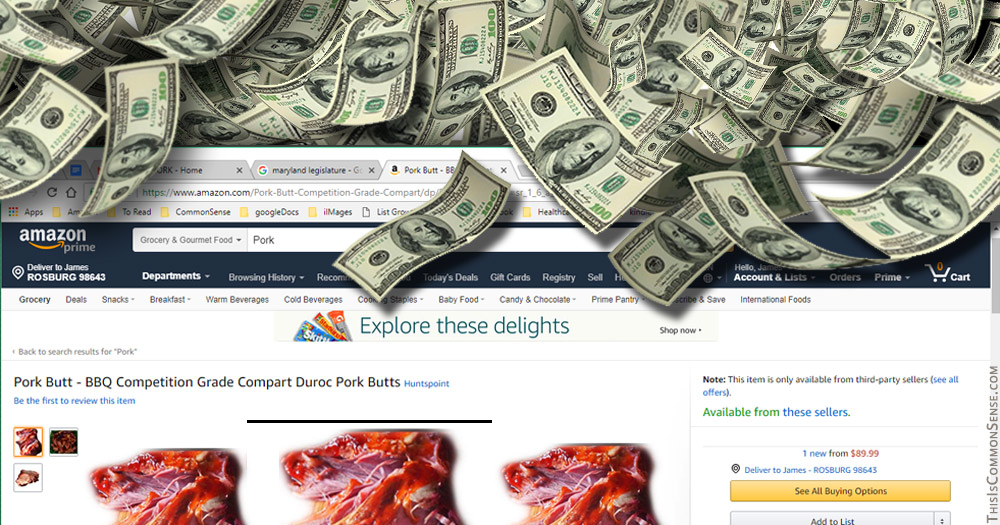
Last week, Maryland’s Legislature enacted an $8.5 billion package of tax breaks and infrastructure improvements to lure Amazon into building its second corporate headquarters in Montgomery County, Maryland, bordering Washington, D.C.

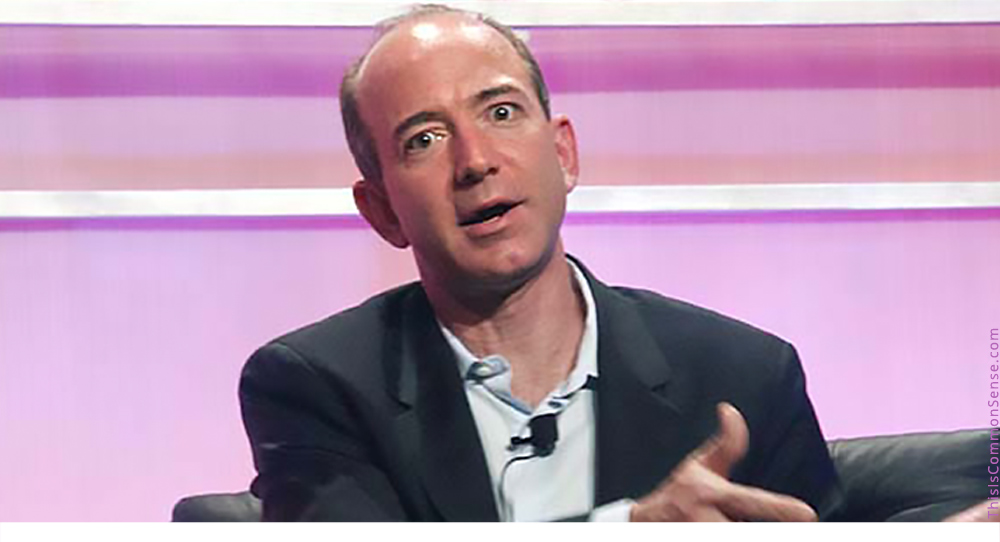
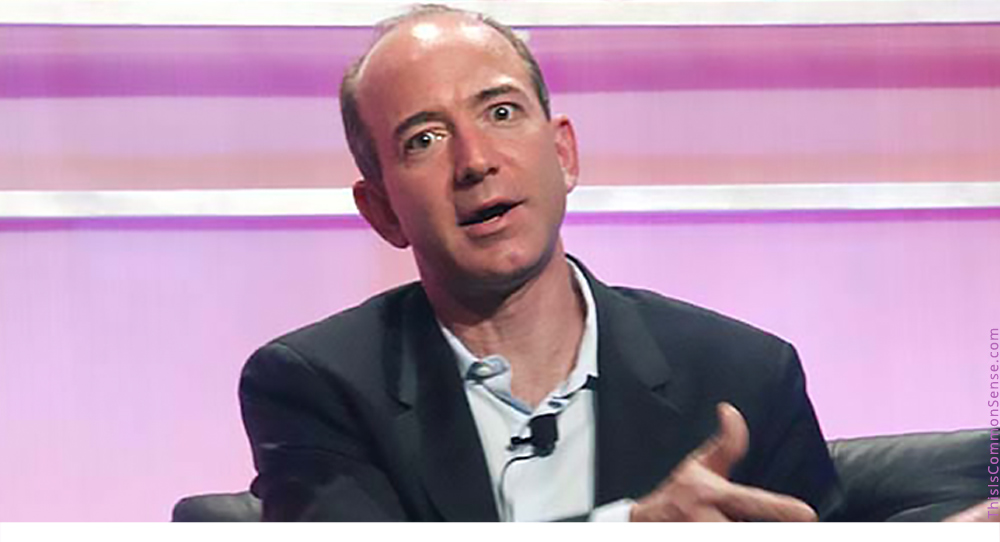
State Senator Roger Manno, the only legislator from the county to vote against the subsidy, dubbed it “a $5 billion tax break for the richest man in the world. . . .”*

Today, the Montgomery County Council will consider a further proposal to streamline its zoning process, cutting in half the time the county takes to review a proposed development.

“We are trying to make sure our processes are consistent with everybody else,” County Executive Ike Leggett explained, adding that the county now “sometimes takes 100 to 120 days, while many other jurisdictions are much less than that.”

Did Leggett say “consistent with everybody else”? Well, the new zoning rules won’t apply to every business, just those planning to hire 25,000 workers. Or more.

“It’s neutral to the employer,” County Council President Hans Riemer slyly suggested. “It’s a proposal that would allow any really large employer to come in and build under certain terms.”

But only Amazon would be large enough.

“Really what it does is it creates predictability, reliability,” offered Riemer. But wouldn’t every other business also benefit from “predictability” and “reliability”?

“I think the Amazon proposal made the county realize . . . that it needed to look at some of its practices and where it has been criticized,” noted Bob Buchanan, chairman of the Montgomery County Economic Development Corporation. “We were more process versus results.”

And the county intends to remain that way . . . for “every” current business.

This is Common Sense. I’m Paul Jacob.

 

* He was referring, of course, to Amazon founder and owner of the Washington Post, Jeff Bezos.


PDF for printing


Categories
Accountability free trade & free markets general freedom national politics & policies privacy subsidy too much government

The Post Office Scam

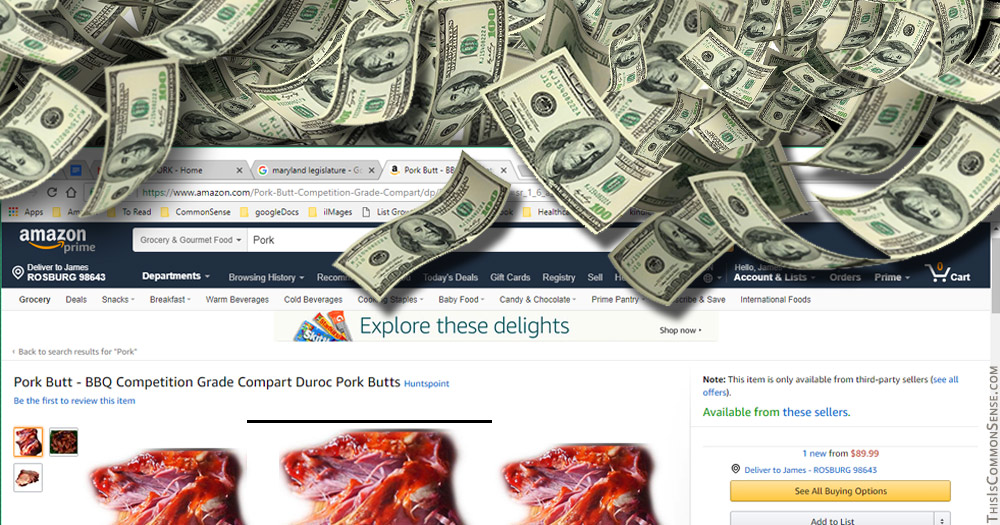
The President of the United States says that the U.S. Postal Service is scamming us by offering shipping discounts to Amazon, the mail-order giant. “Post Office scam must stop.”

President Trump is hovering in the vicinity of the right idea. But what about government-required discounts for shippers? Are these scams too?

Congress has long required lower postal rates “for religious, educational, charitable, political and other non-profit organizations. . . .”  Robert Shapiro estimates that such mandates cost the agency over a billion dollars a year. The government forces USPS to do a great many things that lose money — things that companies functioning in a free market cannot profitably do.

And American taxpayers must perennially fork over billions to sustain its lumbering operations.

It is true that, in markets, buyers of large quantities of a good or service routinely pay less per unit than buyers of small quantities; such discounts can enhance the seller’s bottom line. The fact that USPS offers discounts to a mega-shipper like Amazon does not in itself show that charging more per parcel would generate more revenue.

The question is, then, which transactions would flourish if the agency were just another market player instead of a government-protected, government-hobbled, government-subsidized bureaucracy?

Like any government-run “business,” the Post Office is itself a “scam.” This scam must stop. Phase out USPS as a government agency and let any company deliver first-class mail to our mailboxes on any honest terms that might attract customers.

This is Common Sense. I’m Paul Jacob.


PDF for printing


Categories
crime and punishment free trade & free markets general freedom moral hazard national politics & policies too much government U.S. Constitution

High on Hemp?

Hemp is not marijuana.

And yet it is.

Earlier this week, Senate Majority Leader Mitch McConnell announced he will introduce legislation to legalize industrial hemp.

He is not concerning himself with marijuana, which is what we call the plant Cannabis sativa when cultivated for its Tetrahydrocannabinol (THC) content, the principal chemical in the plant that makes it ideal for “recreational” uses. Industrial hemp is Cannabis sativa, too, just with minuscule THC.

Hemp products are actually legal to buy and sell in the United States.

Sort of.

But growing it is murky, considering that ingestible hemp is a Schedule 1 drug no matter how little THC it has — despite the fact that Congress has allowed states to regulate the growth of low-THC hemp for “industrial” purposes.  

A complicating factor is that industrial hemp contains an oil, Cannabidiol (CBD), which is neither an ecstatic nor a hallucinogenic drug, but is widely believed to have many therapeutic powers. And is widely sold all over the country, wherever states have allowed for medical marijuana.

Nevertheless the DEA objects to it as much as to THC, saying that all ingestible forms of hemp are illegal.

Because of all this murkiness, McConnell’s bill might seem to be welcome step towards clarity.

Trouble is, since industrial hemp is indistinguishable from cannabis with THC — to look at; to smell; to touch — officials hoping to crack down on marijuana-as-a-psychoactive-drug would be much hampered were industrial hemp commonly and legally grown.

What a mess. The only real solution is to de-list all forms of Cannabis sativa from the War on Drug’s Schedule of Drugs It Unconstitutionally Proscribes.

This is Common Sense. I’m Paul Jacob.

PDF for printing


Categories
Accountability folly free trade & free markets general freedom government transparency local leaders moral hazard nannyism porkbarrel politics responsibility too much government

Bailing on Mass Transit

Around the country, our major metropolitan transit systems have hit the skids. “Between 2016 and 2017, ridership fell in each of the seven largest transit markets,” the Washington Post informs.

You might guess that the reason for declines in ridership might have something to do with bad planning and poor service. Washington, D.C.’s Metro system, with which I am all-too familiar, is a horror . . . run by people I wouldn’t trust to sweep your driveway much less mine, and certainly not to manage how I get between those (or any other) two locations.

But the Post quotes an urban planning scholar who attributes the decline (in part) “to increased car ownership, particularly among low-income and immigrant populations, who were in a better position to afford cars following the Great Recession.”

This puts planners in a pickle since, he explains, if “low-income people are doing better, getting the ability to move around like everyone else, it’s hard to say that what we should do is get them to remove themselves from their cars and back on trains and buses.”

Shockingly sensible — especially coming from a planning specialist. “Transit systems should deliver quality service to low-income people,” he insists. “But low-income people do not owe us a transit system.”

Well, maybe that’s the problem, this notion that governments “owe” this service to “low-income people.”

After all, web-based services like Uber and Lyft have shown how market innovations provide the best ways to move millions.

This is Common Sense. I’m Paul Jacob.

PDF for printing


Categories
Accountability free trade & free markets general freedom government transparency moral hazard national politics & policies porkbarrel politics too much government

Georgia on My Dime

After the recent school shooting in Parkland, Florida, followed by pressure from gun control advocates, Delta Airlines announced it would end its corporate relationship with the National Rifle Association, whereby NRA members were given discounts on travel.*

Meanwhile, Georgia legislators were in the process of passing legislation to give Delta a state sales tax break on their fuel purchases. That special legislative deal was worth a whopping $40 million to the Atlanta-based company.

Yet, when Lt. Gov. Casey Cagle heard about Delta dissing the NRA, he tweeted, “I will kill any tax legislation that benefits @Delta unless the company changes its position and fully reinstates its relationship with @NRA.”

The Lt. Gov. added, “Corporations cannot attack conservatives and expect us not to fight back.”

Everyone is familiar with the story. Those who favor gun rights were angry with Delta Airlines and ecstatic with the pushback from Georgia legislators. Those favoring new legislation to restrict gun ownership were thrilled by Delta’s break with the NRA and livid with those legislators.

But while cheering and jeering one side or the other, too many folks missed the 800-lb problem in the room. A letter writer to the Washington Post illuminated it: “The government can’t punish people or businesses for their political views. They can be punished only by the free market, in the form of lost business.”

True enough in the free market.

But when crony capitalism replaces free markets, the government certainly will punish or reward people and businesses — with millions and billions of our tax dollars — on purely political grounds.

Georgia government just did it to Delta Airlines.

This is Common Sense. I’m Paul Jacob.

 

* To be precise, reports claim a grand total of 13 NRA members availed themselves to the special rates once offered by Delta.


PDF for printing


Categories
Accountability folly free trade & free markets general freedom moral hazard national politics & policies responsibility tax policy too much government

Billionaire Theater

“I need to pay higher taxes,” Bill Gates told CNN’s Fareed Zakaria on Sunday.

He was making a case against Republican tax cuts, but his actual argument? Insignificant. It’s just another unlearned, narrow-perspective “growing inequality” farrago. But his conclusion intrigues . . . as a man-bites-dog story, because people have this goofy idea that rich people are somehow against government and for reduced taxes.

They aren’t. Not even most of the richest.

“I’ve paid more taxes, over $10 billion, than anyone else,” says the man worth $90 billion, “but the government should require the people in my position to pay significantly higher taxes.”

Why? To spend his money better than he could?

Were all the wealth of America’s billionaires confiscated whole and that sum would actually pay off the federal debt (which I doubt), what do you think Washington politicians would do? Go on the straight and narrow and never over-spend again?

No. Politicians would take the new influx of funds as a signal to go on an even bigger spending binge.

But what about his mere income tax increase notion? What then? As sure as the Blue Screen of Death it would be applied down to millionaires, too. And then rates for less-than-millionaires would likely go up. We have a history with this. And what would that do?

It would hit up-and-coming entrepreneurs the hardest. It would nip Bill Gates’s company’s competition in the bud.

But surely Gates wouldn’t be mercenary in his theatrical play for media adoration, would he? 

Not Saint Bill!

This is Common Sense. I’m Paul Jacob.


PDF for printing


Categories
First Amendment rights free trade & free markets general freedom initiative, referendum, and recall nannyism national politics & policies privacy property rights Second Amendment rights Tenth Amendment federalism too much government U.S. Constitution

Winning Too Much?

“We’re Number 17!!!”

This lacks a certain triumphant note.

It is nothing like the “We’re Number 1!” the Swiss are now hollering as they pump their arms into the air, waving giant #1 foam fingers against the backdrop of snow-covered Alps.

Actually, knowing the Swiss, they are probably a bit more restrained. Still, you get the point.

Number 1 in what, you ask? Creamy, delicious chocolate, perhaps? Banking? Skiing?

Freedom.

The Human Freedom Index 2017, jointly published by the institutes Cato, Fraser, and Liberales, is hot off the presses. The report ranks the countries of the world on “personal, civil, and economic freedom.”

This year, Switzerland switched places with Hong Kong, which had come in first the year before. The U.S. moved up from 23rd place in 2016, but down from 2008, when we were challenging Top 10 status at Number 11.

“Weak areas [for the U.S.] include rule of law, size of government, the legal system and property rights,” according to a Cato video.

Let’s compare Switzerland to the United States. The 1848 Swiss Constitution creates 26 sovereign cantons (states), greatly influenced by our system of federalism. In the 20th century, Americans in 26 states and most localities borrowed from the Swiss, establishing a system of direct democratic checks on government — what we call ballot initiatives and referendums.

Both countries have constitutional limits on government, protecting individual rights — even from fully democratic tyranny. But in the freest nation in the world, Switzerland, citizens possess a powerful direct democratic check on their government at all levels . . . while we do not.

After all, we’re Number 17.

This is Common Sense. I’m Paul Jacob.


PDF for printing