Categories
free trade & free markets general freedom too much government

Don’t Follow the Feds

“Federal agents never wear body cameras,” The Washington Post reports, “and they prohibit local officers from wearing them on their joint operations.”

That’s why a growing number of local law enforcement agencies are doing what Atlanta’s police chief and mayor “decided late last month,” pulling “out of joint task forces with the Drug Enforcement Administration, the FBI and the U.S. Marshals Service.”

The Justice Department supplies the usual excuses for their lack of transparency: they are “protecting sensitive or tactical methods” and “concerned about privacy interests of third parties.” But as Houston Police Chief Art Acevedo reminds, “if there’s a legitimate need to redact any [footage], there’s a process available for that through the courts.”

It is the height of hypocrisy, for the use of body cams has been “what they’ve been preaching,” St. Paul (Minn.) Police Chief Todd Axtell argues, referring to the Justice Department’s funding and training of local police forces in body-camera usage. “It’s ironic they aren’t complying with what they preach to be so important in policing.”

Ironic? Sure. 

Par for the course? Indeed.

The bad example federal police agencies set is hardly limited to body-camera use. In states where legislation has reduced or ended the outrageous practice of civil asset forfeiture — whereby police can take and keep cash and property from people never accused or convicted of any crime — the Feds are there again to facilitate the thievery known as “equitable sharing.”  

“Federal forfeiture policies are more permissive than many state policies,” a 2016 Post report explains, “allowing police to keep up to 80 percent of assets they seize.”

Make sure your local and state police don’t follow the Feds.

This is Common Sense. I’m Paul Jacob.


PDF for printing

body cam, camera, police, feds, federal, crime, law,

Photo credit: North Charleston

See all recent commentary
(simplified and organized)
See recent popular posts

Categories
free trade & free markets national politics & policies

Why Lie?

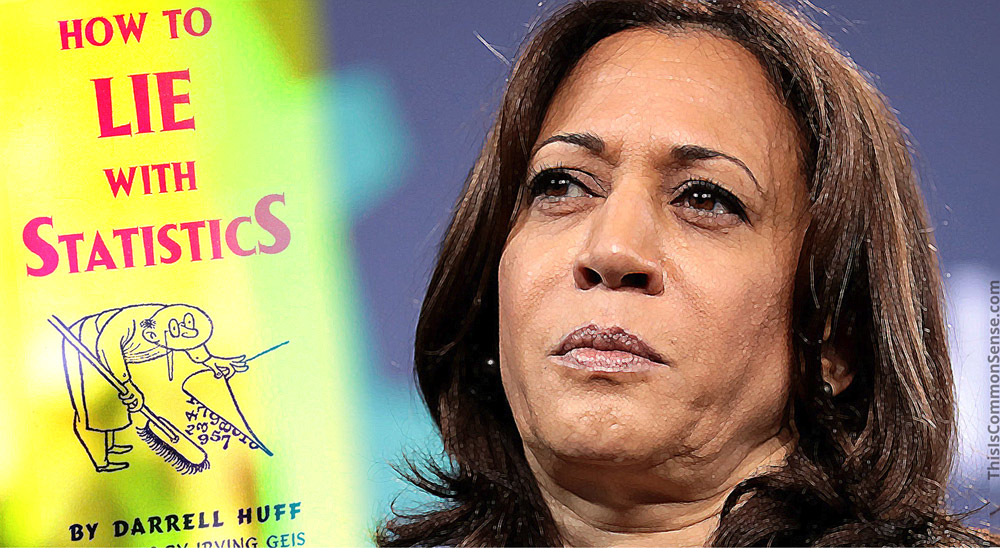
Democratic presidential contender and U.S. Senator from California Kamala Harris leaned in to the big lie.

Debuting a new proposal to “close the gender pay gap,” she declared that, “In America today, women for the same work, for the equal work, on average make 80 cents on the dollar, black women make 61 cents on the dollar, Latinas make 53 cents on the dollar — and this has got to end.”

In fact, Harris emphasized the untruthy part of her statement; her numbers do not represent the “on average” difference in remuneration between the sexes (or races) for the “same” or “equal” work at all. Such a gap has been illegal since the Equal Pay Act of 1963. Harris’s figures are, instead, an average of salaries and wages for all the millions of diverse jobs held by women compared to that same average for all the millions of diverse jobs held by men. 

Men and women tend to make different choices. More women spend time outside the labor market, often laboring in family households without salaries as such. And they tend to choose less remunerative careers: different work.

Why pretend otherwise? Well, such grievance against perceived injustice can sure serve as a motivator . . . for voters that presidential candidate Harris desperately needs to attract. 

And what about her new policy? 

“Harris’s plan puts the responsibility on companies,” MSNBC talking head Stephanie Ruhle explained. “Any company who cannot prove that they pay women at the same rate as men is going to have to pay a fine.”

Is that how the system should work: if you cannot prove your innocence, you are guilty?

This is Common Sense. I’m Paul Jacob.


PDF for printing

Kamala Harris, statistics, pay gap, sexism,

Photo credit: Gage Skidmore

See all recent commentary
(simplified and organized)
See recent popular posts

Categories
free trade & free markets ideological culture national politics & policies

Pick a Number

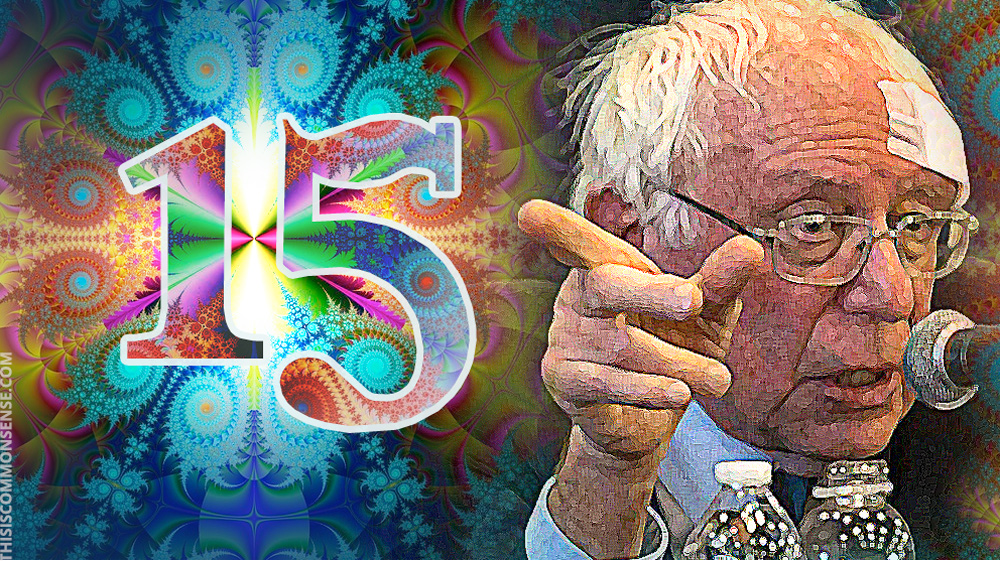
Is the number 15 “magical”?

The “democratic socialists” now dominating the Democratic Party first went for the $15 national minimum wage notion. Now it’s a cap on consumer credit interest rates, at 15 percent.

What’s next, 15 mph speed limits? Age 15 allowed to vote? 

Fifteen men on a dead man’s chest?

At Reason, Peter Suderman explains why “Bernie Sanders’ New Plan Will Make It Tougher for Poor People to Get Credit Cards.” The arguments proffered by Senator Sanders and his House co-sponsor, Rep. Alexandria Ocasio-Cortez, more than “suggest that people who choose to use payday loans don’t, and perhaps can’t, understand the choices they are making. . . . It is a form of benevolent condescension built on the belief that poor people can’t count.”

Now, it may be that, generally, poor people do not figure their finances as well as better-off people. In fact, that’s demonstrated in the literature. But is that really the point?

The problem is, the methods they choose to help the poor make the poor less well-off. Because they take away options: “What Sanders is actually bragging about is eliminating choices,” Suderman explains. “In essence, Sanders is proud of having eliminated useful financial tools for the poor.”

What’s really going on here is the magic of persuasion. Fifteen is a “sticky number.” It will be used again and again as self-described socialists push for more and more unworkable government.

A bit of enchantment that just so happens to make one persuader a three-house millionaire . . . and a bartender from the Bronx the talk of the nation.

This is Common Sense. I’m Paul Jacob.


PDF for printing

Bernie Sanders, 15, minimum wage, magic,

See all recent commentary
(simplified and organized)
See recent popular posts
Categories
free trade & free markets Tenth Amendment federalism too much government

Hairdressers Unbound?

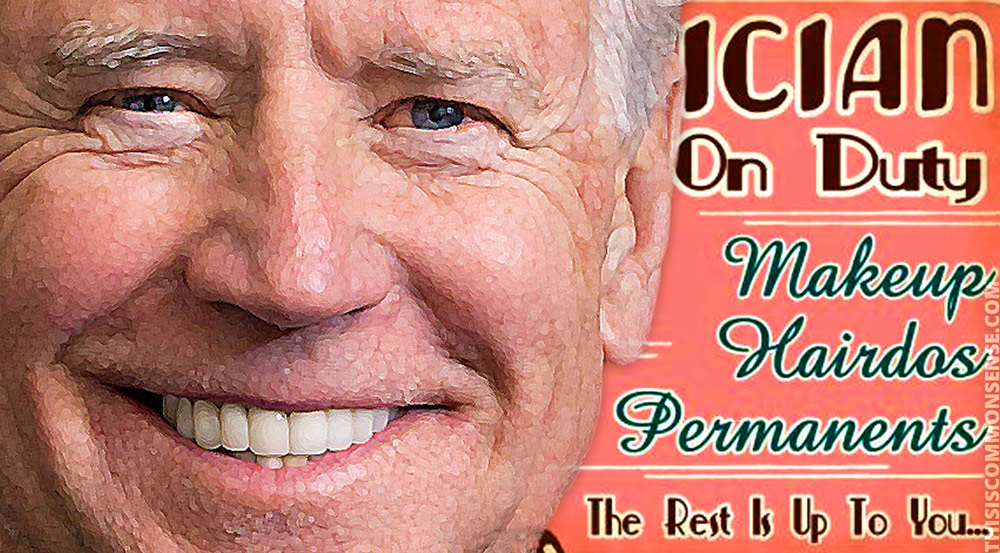
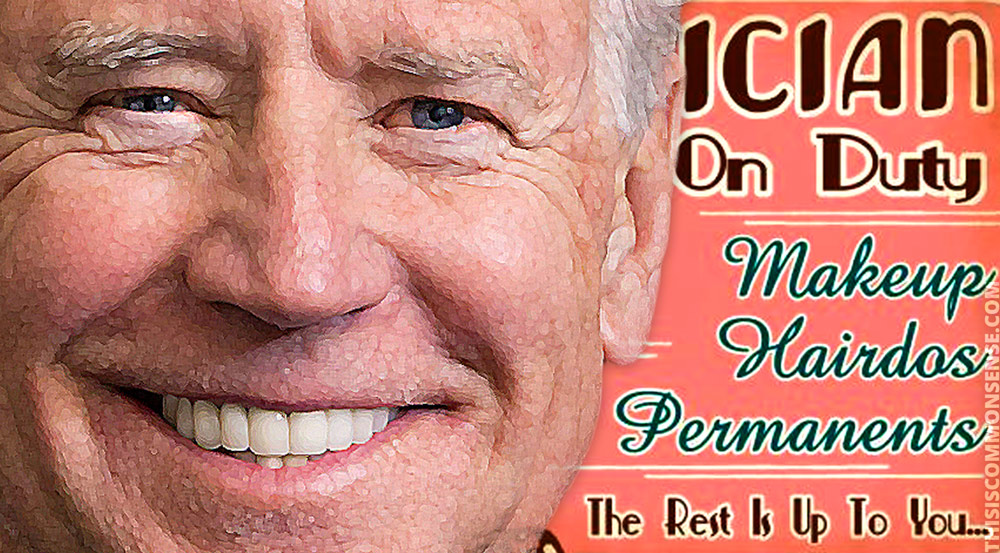
Joe Biden, late of the U.S. Senate and Blair House, is not someone I typically rush to for policy advice. Were I looking for a weather vane to indicate whence bad ideas come a-gusting, in full poisonous gasbaggery, Biden might serve as well as any of the budding socialists now running for the presidency.

But he has a clue about one thing: Occupational licensing.

Last week, Biden came out against the cosmetology licenses so common in states throughout the union. “Joe Biden knocks licensing requirements for hairdressers,” Philip Wegmann summarized on Twitter, “says it’s ridiculous that licenses take ‘400 hours’ of training: ‘It’s all about not helping workers.’”

Now, this is hardly a federal issue for a president to tackle. And Biden sure seems to be itching to run for the top banana position that he was so close to for eight years.

But states can do something — about their own stupid regulations. As Arizona just showed when the legislature passed a bill to acknowledge the occupational licenses from other states when a person moves to Arizona. This allows more freedom of movement among the states, and brings the state back into line with the common market idea of the U.S. Constitution. Governor Doug Ducey is expected to sign (or may already have done so, by the time this is published): it sure fits with the governor’s proclaimed desire to roll back regulations.

And this notion of openness and inclusion could be extended to other issues. You know, like concealed carry permits.

After all, states universally recognize all others’ drivers’ licenses. If you may navigate a metal-and-glass mortician’s little helper based on your state’s licensing, surely you can clip hair safely enough.

This is Common Sense. I’m Paul Jacob.


PDF for printing

Joe Biden, licensing, salon, Occupational licensing, cosmetology, license

See all recent commentary
(simplified and organized)
See recent popular posts
Categories
free trade & free markets national politics & policies too much government

Just Like That!

“We will do that,” he said.

Do what?

“We will look at the average costs of prescription drugs in Canada, the UK, Germany, Japan and France,” says Sen. Bernie Sanders (I/D-Vt.), “which are 50 percent lower than they are in the United States,” he told Margaret Brennan on Face the Nation

And Sanders promises: “if I am elected president I’m going to cut prescription drug costs in this country by 50 percent so that we are not paying any more than other major countries are paying. Maybe we can do better than that.” 

When Ms. Brennan asked how, he replied as above — looking at “average costs” as directly priced to consumers (patients) —  and then . . . “we will do that.”

Socialism is so easy!

Why have we waited so long for utopia?

Well, saying is not the same as doing. We must think “beyond Stage One,” as Thomas Sowell advises. For if “Medicare for All” tells a company it will pay only so much for a drug, that company cannot just sell that drug and all others below cost. No wonder that in socialized medicine schemes around the world, not all drugs are even available.

The world prescription drug market is set up . . . peculiarly. Americans in effect pay more (because of patents and trade agreements) thereby covering development costs. If we pay less, others may have to pay more (which would be an odd thing for a “socialist” to want) and we would all come to get even less.

Bernie is no wizard, and socialism has no magic wand with which to wave away scarcity.

This is Common Sense. I’m Paul Jacob.


PDF for printing

socialism, magic wand, economics, healthcare, prescription drugs, drugs,

See all recent commentary
(simplified and organized)
See recent popular posts
Categories
free trade & free markets political economy

Bitcoin to the Rescue

I own no Bitcoin; it’s not my thing. The blockchain concept Bitcoin is based upon seems clever, sure, but I often curse at my “devices,” so only my politics prevents me from full-blown Luddism. 

Besides, when I think “the people’s money” I don’t think “private fiat currency.” Which is what Bitcoin sure looks like to me.

But to quote from these very pages, “When times get tough, the tough . . . switch currencies.”

And times cannot get much tougher than in Venezuela right now. No wonder “many are turning to digital assets such as Bitcoin as an alternative to the Venezuelan bolivar,” writes Matthew Di Salvo for the BBC.

“Critics say Bitcoin and other cryptos — there are more than 1,600 globally — are unstable, use too much energy, and are used by money launderers or those wanting to buy illicit goods on the web,” Di Salvo explains.

These points need addressing. I’ll try:

  1. A wannabe money will be as unstable as investor demand. When actually used as money, though, we may expect more stability. And Bitcoin is deflationary, so it should be more stable than government money.
  2. As if our banks and ATMs don’t use energy!
  3. Used by bad people? Well, you can say that about cash. But if we get rid of cash — as many experts want to — you can kiss any hope for freedom goodbye.

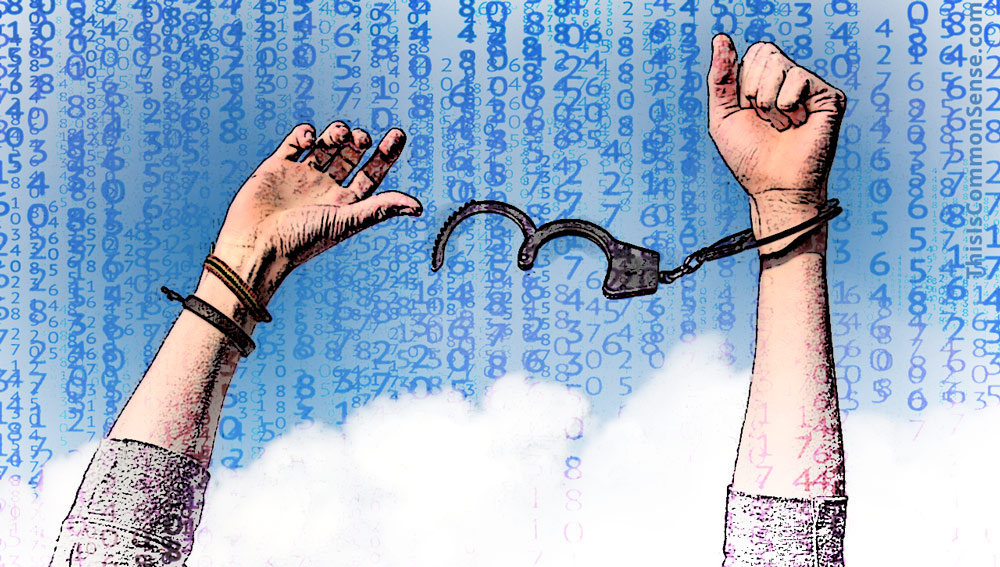
Venezuelans, by turning to keeping “their money in a digital wallet in the form of Bitcoin, Litecoin, Dash or any of the others,” are grabbing at something much better than what their malign inflation-happy government provides.

It is a pity that the “free-market” alternative is called “crypto” — meaning secret.

Freedom is the world’s best-kept secret?

This is Common Sense. I’m Paul Jacob.


PDF for printing

Bitcoin, cryptocurrency, Venezuella, freedom, privacy, cash, money

See all recent commentary
(simplified and organized)
See recent popular posts
Categories
free trade & free markets ideological culture too much government

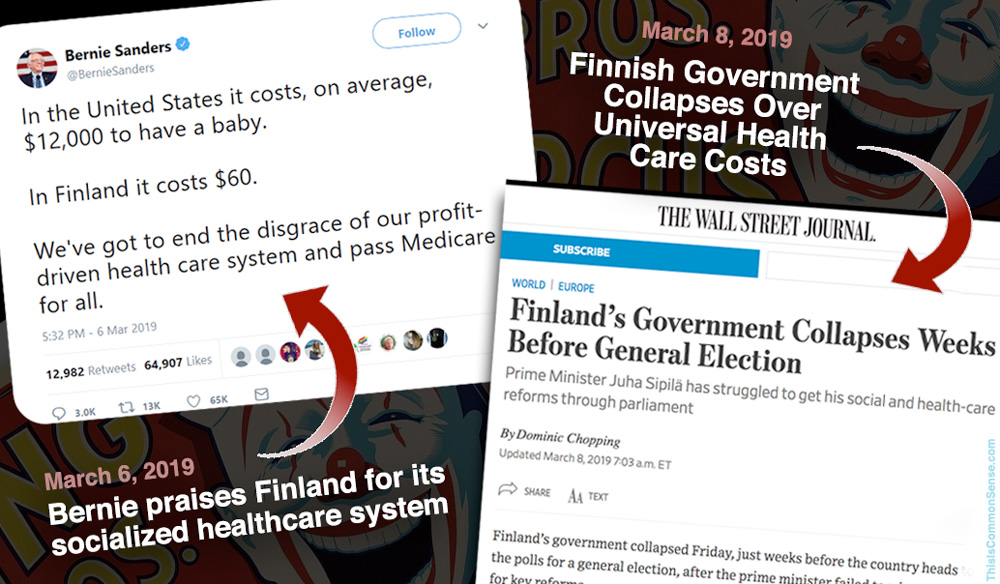
Finns Fail at Fix

Finland’s government-run health care system is a mess. 

This normally wouldn’t faze me much. I have to navigate our American mess, er, system. But Finland’s medical service delivery system is relevant to Americans — as is Denmark’s and Norway’s and Sweden’s — because the current crop of Democratic presidential hopefuls tout these “Scandinavian socialist” programs as models to follow.

Yet Finland’s program is in crisis.

How bad is it?

Bad enough for Finland’s government to fold early, before an election, with Prime Minister Juha Sipilä throwing in the towel earlier this month. He had been struggling “to get social and health-care reforms that he made the cornerstone of his government’s four-year term through parliament,” The Wall Street Journal informs us. Finland’s health care system is somewhat decentralized, and that quality of service varies district by district. Silipä had been trying to centralize administration while also allowing for some privatization.

Left-leaning parties have balked at this, hence the impasse.

So, what is the lesson? A medical delivery system should be anti-fragile, capable of functioning despite incompetents or corrupt officials in government, despite voting blocs at loggerheads. A vast segment of the service industry should not be held in hock to the political machinations of special-interest groups.

Behind all of it, though, is the looming demographic crisis: the population of Finland, like here in America and throughout the First World, is aging. This puts heavy stressors on welfare-state systems run on a Ponzi-like re-distributive basis.* Of course costs will increase and service levels will fall, given how it’s all set up.

But once in place, government-run medical systems do not heal themselves.

This is Common Sense. I’m Paul Jacob.


* An endemic problem for socialists, which they try to ignore. See “Finland: Government Collapses Over Universal Health Care Costs, #Bernie2020 Hardest Hit.”

PDF for printing

Bernie Sanders, Finland, health care, socialism, single payer, costs, spending

See all recent commentary
(simplified and organized)
See recent popular posts

Categories
free trade & free markets political economy Popular

Opportunity for . . . All?

Simple pleasures are the best. So are simple questions.

Senate Bill 2306 in North Dakota “would make it easier for spouses of military personnel to transfer their existing occupational licenses for use in North Dakota, provided they are in good standing and licensed by a reasonable entity,” explains Rob Port at his SayAnythingBlog.

Occupational licensing has exploded, covering a mere 4-5 percent of occupations 60 years ago, but nearly 30 percent today. That’s a serious hurdle for folks trying to break into the marketplace.

Over at the Foundation for Economic Education, economist Daniel Mitchell calls licensing a “win-win” for politicians and interest groups that “get to impose barriers that limit competition.” 

Not winning? Taxpayers and consumers, says Mitchell. “Or a poor person who wants to get a job.”

An Institute for Justice report released last November concluded that “licensing costs the American economy $197.3 billion” annually by “preventing people from working in the occupations for which they are best suited” and “forcing people to fulfill burdensome licensing requirements that do not raise quality.” Meanwhile, the health and safety benefits attributable to this licensing labyrinth seem scant.

A recent Grand Forks Herald editorial endorsing SB-2306 pointed to the state’s “more than 13,000 unfilled jobs, many of which require licensing,” arguing that “[o]ften, trailing military spouses are qualified to fill those openings, but because of the existing licensing process they are not able to immediately work.”

“[W]hy not make this sort of license reciprocity good for everyone moving into our state?” Mr. Port adroitly inquired.

Yes, Big Government: Tear down these barriers!

For all.

This is Common Sense. I’m Paul Jacob.


PDF for printing

licensing, license, permission, work, labor, regulations

See all recent commentary
(simplified and organized)
See recent popular posts


Categories
free trade & free markets media and media people too much government

A Former Economist

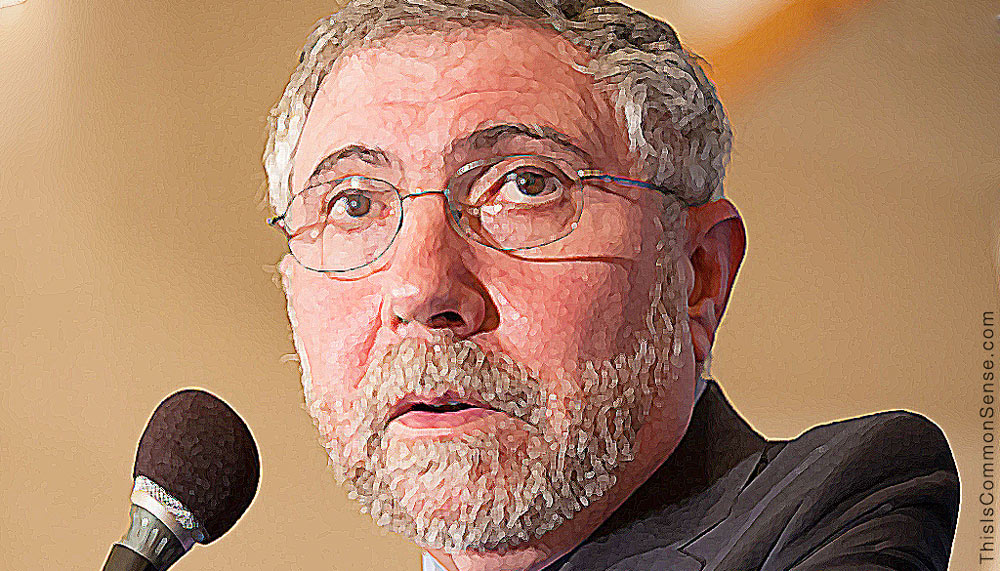
Paul Krugman, New York Times columnist and former economist, tested our patience last week with “Trump’s Big Libertarian Experiment.” How many non sequiturs will squeak past the Gray Lady’s editorial department? 

Loads — and all about how the federal government shutdown gives limited government folks what they want: less government.

Subsidy checks to farmers aren’t going out, as “libertarian organizations like Cato” have long advocated. Sure. But it’s no policy change.

As soon as there’s a budget deal, those checks will be made up.

Further, “businesspeople are furious that the Small Business Administration isn’t making loans.” 

Well, it’s high time businesses were weaned off the SBA teat — and a few whiners do not a case for subsidy make.

And then there’s the Food and Drug Administration, which can no longer inspect foods. Since “there’s a long conservative tradition, going back to Milton Friedman, that condemns the F.D.A.’s existence as an unwarranted interference in the free market” libertarians must be pleased, eh?

There is also a long tradition among economists that says businesses don’t get rich poisoning their customers, and that there are many mechanisms in place — and, barring the FDA, more would be in place — to ensure customers that they won’t be infected by eating . . . Romaine lettuce.

Which then Krugman admits . . . as if he had belatedly recalled Friedman’s lesson in Capitalism and Freedom. He concedes that the shutdown is not the way Friedman would go about limiting government. Besides, “libertarian ideology isn’t a real force within the G.O.P.”

So what’s the point?

Krugman ends with talk of a smell test: does lack of food inspections smell like freedom?

Something stinks here. But it isn’t spoiled food. Or freedom.

This is Common Sense. I’m Paul Jacob.


PDF for printing

Paul Krugman, libertarianism, libertarian, freedom, shutdown

See all recent commentary
(simplified and organized)
See recent popular posts
Categories
free trade & free markets

Towards a Genealogy of Policy

If it seems like each new government program is more intrusive than the last, there’s a reason. That last one did not work as planned. So a new one gets concocted to fix its mess. 

The latest? New York City Mayor Bill de Blasio has established a new enforcement bureau, the Mayor’s Office to Protect Tenants, to sic a “new sheriff” on property owners.

“When a landlord tries to push out a tenant by making their home unlivable, a team of inspectors and law enforcement agents will be on the ground in time to stop it,” the mayor explained last week in his latest State of the City Address. 

And he means business, er, government: “we will seize their buildings, and we will put them in the hands of a community nonprofit that will treat tenants with the respect they deserve.”

Well, that cannot possibly go wrong!

But what was the earlier program that put New York in its current situation?

Look to a very old government program, rent control, which New York has suffered under since World War II. 

Rent control protects current renters from rate hikes and the like, sure. But it discourages the production as well as the maintenance of rental properties, which in turn limits supply and ultimately hikes rents for future tenants.

Perhaps even worse, it incentivizes the landlords to boot out tenants while it more than nudges tenants to dig in . . .  even when moving would otherwise make more sense. 

The market thus thwarted, the de Blasios then set up more laws and more policing . . . and antagonism ramps up another notch.

This is Common Sense. I’m Paul Jacob.


PDF for printing

tenement, rent control, New York, deBlasio

See all recent commentary
(simplified and organized)
See recent popular posts