Categories
First Amendment rights general freedom media and media people moral hazard nannyism national politics & policies too much government

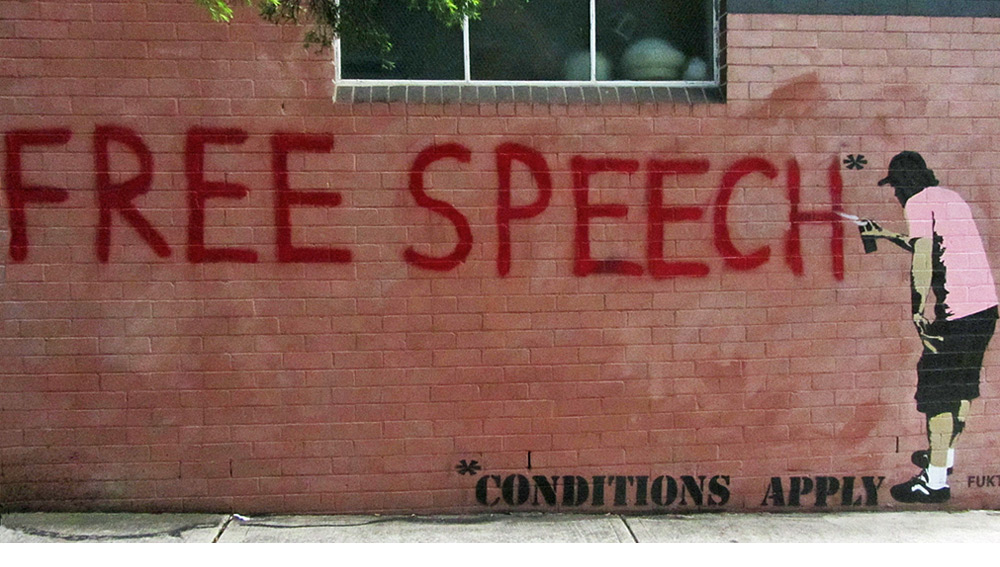
Why They Hate the First Amendment

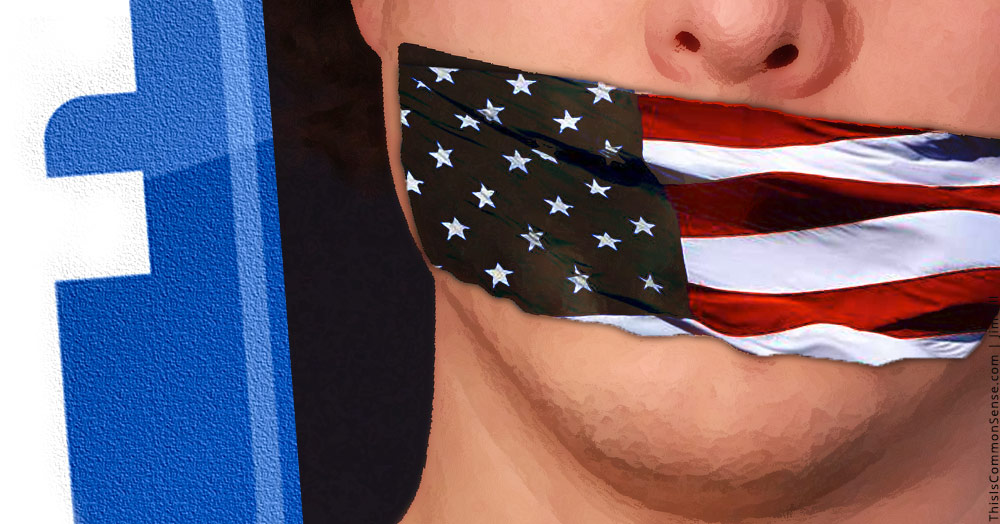
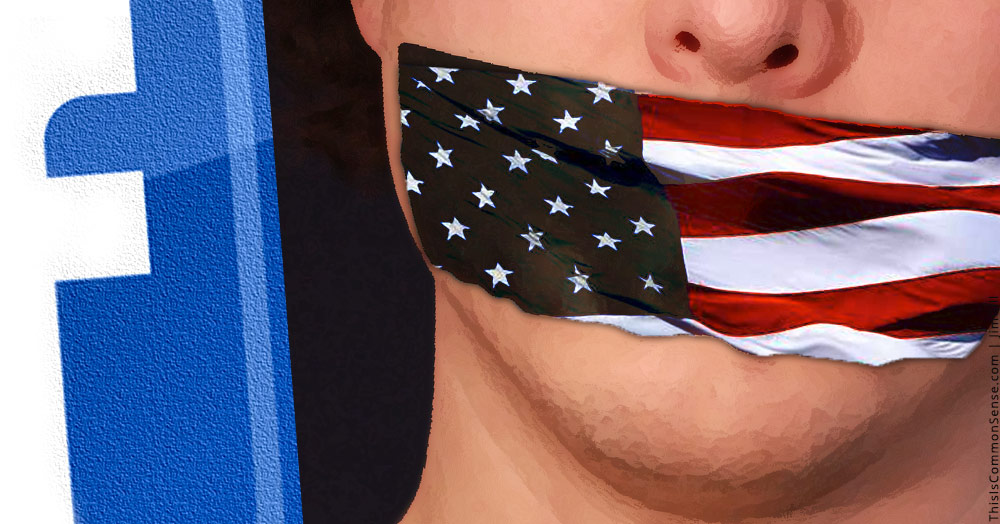
Does banning Facebook in the weeks leading up to an election sound like freedom?

“The corrosive effect of social media on democratic life,” writes The New Republic’s Jeet Heer, “has led both French President Emmanuel Macron and Canadian Prime Minister Justin Trudeau to make the same threat to Facebook: self-regulate or be regulated.”

But Macron doesn’t go far enough. “If fake news truly poses a crisis for democracy, then it calls for a radical response,” Heer insists.

“Many countries have election silence laws, which limit or prohibit political campaigning for varying periods of time ranging from election day alone to as early as three days before the election.” And Heer sees little reason not to apply such regulations to social media.

“What if you weren’t allowed to post anything political on Facebook in the two weeks before an election?”

This exactly parallels the prohibition of political spending “by corporations” before an election, as in the McCain-Feingold campaign finance regulation. Except here we have it directly affecting normal citizens.

The current excuse, “fake news,” appears to be defined by partisans almost entirely as the errors and lies and spin of their opponents’ side(s).

But since lying about one’s political enemies is at least as old as the Election of 1800, why is this different now?

Because, I submit, Facebook is just another area the folks pushing such obvious breaches of the First Amendment — politicians and most of the media — do not yet control.

Competition mustn’t be tolerated.  

This is Common Sense. I’m Paul Jacob.


PDF for printing


Photo credit: by John Nakamura Remy


Categories
First Amendment rights free trade & free markets general freedom initiative, referendum, and recall nannyism national politics & policies privacy property rights Second Amendment rights Tenth Amendment federalism too much government U.S. Constitution

Winning Too Much?

“We’re Number 17!!!”

This lacks a certain triumphant note.

It is nothing like the “We’re Number 1!” the Swiss are now hollering as they pump their arms into the air, waving giant #1 foam fingers against the backdrop of snow-covered Alps.

Actually, knowing the Swiss, they are probably a bit more restrained. Still, you get the point.

Number 1 in what, you ask? Creamy, delicious chocolate, perhaps? Banking? Skiing?

Freedom.

The Human Freedom Index 2017, jointly published by the institutes Cato, Fraser, and Liberales, is hot off the presses. The report ranks the countries of the world on “personal, civil, and economic freedom.”

This year, Switzerland switched places with Hong Kong, which had come in first the year before. The U.S. moved up from 23rd place in 2016, but down from 2008, when we were challenging Top 10 status at Number 11.

“Weak areas [for the U.S.] include rule of law, size of government, the legal system and property rights,” according to a Cato video.

Let’s compare Switzerland to the United States. The 1848 Swiss Constitution creates 26 sovereign cantons (states), greatly influenced by our system of federalism. In the 20th century, Americans in 26 states and most localities borrowed from the Swiss, establishing a system of direct democratic checks on government — what we call ballot initiatives and referendums.

Both countries have constitutional limits on government, protecting individual rights — even from fully democratic tyranny. But in the freest nation in the world, Switzerland, citizens possess a powerful direct democratic check on their government at all levels . . . while we do not.

After all, we’re Number 17.

This is Common Sense. I’m Paul Jacob.


PDF for printing


Categories
crime and punishment First Amendment rights general freedom ideological culture media and media people moral hazard nannyism national politics & policies Regulating Protest too much government

Twitter’s Merkel Tactics or Merkel’s Twitter Tactics?

Is Twitter cooperating with Germany’s new crackdown on social-media speech because otherwise it risks steep penalties? Or is Twitter just doing what it would do anyway?

When Germany’s new law against unwelcome speech went into effect this year, many Germans protested. “Please spare us the thought police!” was the headline in one top-selling paper, Bild.

The law requires social-media sites to block unapproved content — which includes “hate speech” and “fake news” — within 24 hours or face exorbitant fines. (Of course, every piece of news, no matter how well or shabbily reported, gets decried as hateful “fake news” by somebody.) Under the new law, Twitter suspended the accounts of two officials of the political party Alternative for Germany who tweeted that Muslim men have violent proclivities. Hateful, fake, inexact, whatever, such tweets by themselves threaten nobody and violate nobody’s rights.

Did Twitter act only under duress here?

Well, in the U.S., the company is not ordered by our government to muzzle anybody except perhaps terrorists or persons directly instigating a crime. Yet Twitter regularly suspends or bans users whose speech it considers objectionable. Moreover, it has become notorious for especially targeting speech that can be regarded as on the right end of the political spectrum — while leaving intact the tweet-speech of left-wing micro-bloggers no matter how threatening or abusive.

I don’t say America’s government should become involved. It should certainly not compel Twitter to drop its double standard.

Instead, it is Twitter itself that should become involved . . . and drop its double standard.

This is Common Sense. I’m Paul Jacob.


PDF for printing


Categories
Accountability First Amendment rights general freedom media and media people

Pravda in the Izvestia

Back in the USSR’s heyday, the joke about the two major newspapers, Pravda (meaning “truth” — and published by the Communist Party) and Izvestia (meaning “news” — and published by the Soviet State), was that “there’s no Truth in the News and no News in the Truth.”

Nowadays, in Trump’s America, we have fake news. And one reason Donald Trump won the presidency was his defiant stance against the “lying press.”

Which is why, when Trump announced, last week, his intent to give out awards to the news media for their top “fake news” stories of 2017, he was playing to his base. This week he announced his picks. It did not exactly bowl everyone over.

Indeed, I am going to skip most of it, noticing only that the press whined a bit and picked at the list on technical grounds, and that Sen. Flake gave Trump some flak.

But Trump’s pick for First Place is worth thinking about.

And the Duranty* goes toNew York Times economist Paul Krugman!

What for? The Nobel Laureate’s insane and unhinged prediction immediately after Trump’s win: “We are very probably looking at a global recession, with no end in sight.”

An embarrassing play for Doomsayer Attention, which has been “trumped” (so to speak) by new record stock market highs.

Of course, a global depression may be in the offing — but it probably won’t be Trump’s fault, and Krugman is totally resistant to acknowledging that dire event’s likely structural causes (debt, Fed policy).

But note: prophecy isn’t “news,” and in announcing the award Trump characterized his win in 2016 as a “landslide.”

So save a Duranty for Trump.

This is Common Sense. I’m Paul Jacob.


* My term, not a “Newsy” or “Fakesy,” and named, of course, after Walter Duranty, the Times’ Pulitzer Winning Fake News apologist for the Soviet Union and Stalin, back in the 1930s.


PDF for printing


Categories
Accountability crime and punishment First Amendment rights general freedom government transparency local leaders moral hazard Regulating Protest too much government U.S. Constitution

Lock Her Up

“Who Are We?” I asked Sunday at Townhall.com.

Today’s question: What have we come to?

Under a seemingly click-bait headline in The Atlantic, “Can Government Officials Have You Arrested for Speaking to Them?” Garrett Epps examines last week’s outrageous handcuffing and arrest of a Louisiana teacher, Deyshia Hargrave, for speech displeasing to the Vermilion Parish school board at a public meeting.

The elementary school teacher complained about a $30,000 raise the board was giving the superintendent, noting that teachers had not seen an increase in nearly a decade. After asserting that the raise would be “basically taken out of the pockets of teachers,” she was ruled out of order by the school board president and then asked to leave the premises. She calmly left the meeting room . . . only to be forced to the floor, handcuffed and arrested once in the hallway.

Police claimed the arrest was for “remaining after having been forbidden” and “resisting an officer.”

The school district announced it won’t press charges. Very funny. Anyone can see from the video that her treatment was excessive.

Next month, the U.S. Supreme Court will hear oral arguments in Lozman v. Riviera Beach, Florida, where an arrest was clearly retaliatory, but the city is newly claiming another violation it could have used to arrest Mr. Lozman.

Does this after-the-fact adding on of charges provide governments with an escape clause? As Epps argues, a Lozman decision “could either rein in, or embolden, the tiny-handed tyrants who rule county buildings and city halls around the country.”

If respectfully challenging our so-called public servants in meetings designed for that can lead to being arrested, handcuffed and dragged off, we no longer live in ‘the land of the free.’

This is Common Sense. I’m Paul Jacob.


PDF for printing


Categories
crime and punishment First Amendment rights general freedom government transparency ideological culture media and media people moral hazard nannyism national politics & policies too much government

No Joking Matter

He thought he was just horsing around.

Using the popular app WeChat, a Chinese construction worker supervisor Chen Sho Uli made a gossipy joke about government officials while chatting in a chat group. But being too casual about what you say — and where — can be dangerous in China. For his sin Chen was incarcerated for several days.

Picking quarrels” is another no-no in the country.

In lieu of Orwell’s telescreen in every room, modern Internet technology enables repressive governments to punish citizens for thoughtcrime that becomes app-speech crime. If the Chinese government can spy on you, it will. And penalize you for remarks it deems offensive to the dignity of the state.

Because of such repression, blogger Stephen Green observes that “strong encryption is everybody’s friend — except the tyrant’s.”

Agreed. Encryption is an important line of defense.

But some societies require this more than others, because harmless, incidental communications are not equally attacked by government, from country to country. Which means that encryption is actually a second line of defense.

The first is a cultural and political tradition respecting individual rights.

For one thing, robust encryption helps only those who engage in hyper-careful private discourse, or hyper-careful anonymous public discourse. Encryption won’t help thinkers of controversial thoughts who wish to express those thoughts publicly and under their own name. Everywhere we can, then, we must strengthen both the technological and cultural defenses of open discourse — recognizing that the latter is the more crucial and fundamental.

This is Common Sense. I’m Paul Jacob.


PDF for printing


Categories
crime and punishment First Amendment rights general freedom moral hazard property rights too much government

A Cakewalk Case?

The Justices seem split — on the “gay cake” case.

A Christian baker had no trouble selling a gay couple a pre-made cake, out of his showcase, but balked at selling a custom wedding cake of any kind. According to NPR’s Nina Totenberg, the couple understood that requesting a “gay” themed cake would go too far. But the baker’s refusal to decorate any wedding cake seemed unacceptable.

In Colorado, where the cake didn’t get made, there is a public accommodations law that says businesses must serve all customers regardless of race, religion, or sexual orientation. So Colorado went after the baker, the baker hired a lawyer, and Masterpiece Cakeshop v. Colorado Civil Rights Commission was heard by the Supreme Court this week.

Commonly billed as a conflict between First Amendment-guaranteed religious freedom* and the civil rights of citizens as defined and protected by a state law, it almost defies easy solution.

One could argue that the First Amendment right to freely associate (including the right not to associate) should extend to business. But that goes against legislation built up since the 1964 Civil Rights Act, which in many places ended an often violent racial segregation** no one wants back. However, a custom-made wedding cake is also expressive and therefore speech.

One could decide for Colorado on federalist grounds. And the late Justice Antonin Scalia, Ms. Totenberg tells us, argued that a general law not directed at a religion does not allow a specifically religious defense.

But one defense of the baker may work. The Colorado Civil Rights Commission has not applied its rulings equally. It sided with non-Christian bakers who refused to make cakes for Christians requesting Bible-verse cakes.

And that “takes the cake.”

This is Common Sense. I’m Paul Jacob


* In this regard, Justice Kennedy stated from the bench that it seemed to him “that the state in its position here has been neither tolerant nor respectful of Mr. Phillips’ religious beliefs.” Kennedy will likely be the swing vote.

** No small amount of this violence, segregation and discrimination was coerced by state laws in defiance of the Fourteenth Amendment and the Bill of Rights.


PDF for printing


Categories
Accountability First Amendment rights folly media and media people moral hazard national politics & policies too much government U.S. Constitution

Our Royals Are Not Amused

“You created these platforms,” Sen. Dianne Feinstein (D-CA) informed the top legal minds at Facebook, Twitter, and Google, “and now they’re being misused.”

“And you have to be the ones who do something about it — or we will.”

Take that as a threat.

But also take it as the grand moment when the Establishment showed its hand.

Consider: Facebook, Twitter, and YouTube (a Google product) are “media platforms.” So are books, libraries, newspapers and newsstands. Imagine being a king right after Johannes Gutenberg invented the printing press. Very quickly, the world changed.

People thought differently. And they began demanding change from government. The sovereigns had to make room for subjects-turned-citizens.

Royalty and aristocracy did try to regulate the new platforms of information and opinion. Censorship was all-too-common. The rulers killed upstarts for writing the wrong things, saying the wrong things.

So, which side would you be on, Mrs. Feinstein?

That is Scott Shackford’s basic take on this. I’m with him.

I just wish to expand: in my lifetime the media platforms of newspapers and television were regulated. Heavily. Mergers and business purchases were subject to government permission; the electromagnetic spectrum was licensed rather than treated as private property, and the actual content of radio and TV shows were regulated by the FCC.

And the Feinsteins of Washington got awfully secure in their positions. Had the regulation of American media done its trick?

Enter new media, uncorking the bottle of opinion.

No wonder the Establishment is scared.

We shouldn’t let them regulate political content on the Internet. Demand, instead, the opposite: a complete repeal of the regulation of business management — and non-criminal content regulation — of all media platforms

This is Common Sense. I’m Paul Jacob.


PDF for printing


Categories
First Amendment rights general freedom media and media people moral hazard national politics & policies Regulating Protest too much government

Crossing the Twitter Rubicon

No sooner had I upbraided media folks for overreacting to various presidential peccadillos regarding Puerto Rico, when Donald J. Trump, in his running media battle, crossed a line with this week’s most notorious tweet.

He first complained, perhaps correctly, that, “Fake @NBCNews made up a story that I wanted a ‘tenfold’ increase in our U.S. nuclear arsenal. Pure fiction, made up to demean.” But then the chief executive officer of the United States of America tweeted this: “With all of the Fake News coming out of NBC and the Networks, at what point is it appropriate to challenge their License?”

The answer to his question is: never.

The Federal Communications Commission licenses the network affiliates of ABC, NBC and CBS across the country — not the networks themselves — to broadcast their television signals using public airwaves. Still, through those affiliates a tyrannical FCC could no doubt damage the networks.

Government licensing of media outlets is anathema to the First Amendment. And the thought of the POTUS actively threatening the ability of NBC or other networks to report the news as they freely decide is . . . well, unthinkable.

I don’t buy the accusations that Trump is undermining freedom of the press by criticizing the press — even arguing by tweet, “The FAKE NEWS media (failing @nytimes, @CNN, @NBCNews and many more) . . . is the enemy of the American People!” The president is as free to criticize the media as the media is free to criticize the president.

It might be his duty.

But considering the use of official government power to potentially “shut down NBC and other American networks,” as UK’s Independent reported, or just to temper their coverage?

Despotism.

This is Common Sense. I’m Paul Jacob. 


PDF for printing


Categories
Accountability crime and punishment First Amendment rights general freedom media and media people moral hazard nannyism national politics & policies property rights responsibility too much government

Google: Disagreement

Once upon a time, Google penned a stern note to self: “Don’t be evil.”

What you regard as avoiding evil, though, depends on what you regard as doing good.

Does Google think it’s “good” to fire someone for offering reasoned objections to vapid pieties about why there are more men than women working as programmers, and about how to fix the problem? Assuming it is a problem.

If the answer is yes, then it’s up to more reasonable people to say, “No, Google, stomping on candid internal discussion of your (bad) politics and policies is not ‘doing good.’”

Alas, some Google critics push for a “remedy” worse than the problem: government force. They want government to impose new prohibitions and mandates on large private firms that help people to spread their opinions.

I don’t necessarily agree when a firm — Google, Twitter, PayPal or anybody else — stops providing services to persons expressing views that managers and HR departments disdain. Yet I may agree. No one is morally obligated — and no one should be legally compelled — to help spread the views of others.

I certainly refuse to distribute any installment of “Common Sense” guest-authored by The Anti-Paul-Jacob Club.

When market actors make bad decisions without violating anyone’s rights, others have many powerful and peaceful means of opposing those decisions. Criticism. Boycott. Competition.

But we shouldn’t seek to outlaw the decision-making.

The right to freedom includes no guarantee that one will always do the right thing as others see it.

This is Common Sense. I’m Paul Jacob.


PDF for printing