Categories
Accountability First Amendment rights folly media and media people moral hazard national politics & policies too much government U.S. Constitution

Our Royals Are Not Amused

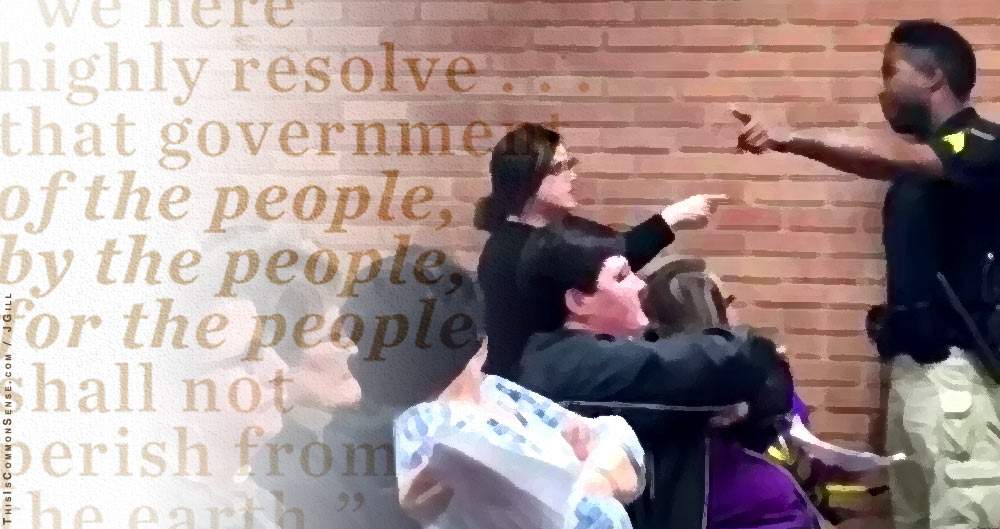
“You created these platforms,” Sen. Dianne Feinstein (D-CA) informed the top legal minds at Facebook, Twitter, and Google, “and now they’re being misused.”

“And you have to be the ones who do something about it — or we will.”

Take that as a threat.

But also take it as the grand moment when the Establishment showed its hand.

Consider: Facebook, Twitter, and YouTube (a Google product) are “media platforms.” So are books, libraries, newspapers and newsstands. Imagine being a king right after Johannes Gutenberg invented the printing press. Very quickly, the world changed.

People thought differently. And they began demanding change from government. The sovereigns had to make room for subjects-turned-citizens.

Royalty and aristocracy did try to regulate the new platforms of information and opinion. Censorship was all-too-common. The rulers killed upstarts for writing the wrong things, saying the wrong things.

So, which side would you be on, Mrs. Feinstein?

That is Scott Shackford’s basic take on this. I’m with him.

I just wish to expand: in my lifetime the media platforms of newspapers and television were regulated. Heavily. Mergers and business purchases were subject to government permission; the electromagnetic spectrum was licensed rather than treated as private property, and the actual content of radio and TV shows were regulated by the FCC.

And the Feinsteins of Washington got awfully secure in their positions. Had the regulation of American media done its trick?

Enter new media, uncorking the bottle of opinion.

No wonder the Establishment is scared.

We shouldn’t let them regulate political content on the Internet. Demand, instead, the opposite: a complete repeal of the regulation of business management — and non-criminal content regulation — of all media platforms

This is Common Sense. I’m Paul Jacob.

PDF for printing


Categories
First Amendment rights general freedom media and media people moral hazard national politics & policies Regulating Protest too much government

Crossing the Twitter Rubicon

No sooner had I upbraided media folks for overreacting to various presidential peccadillos regarding Puerto Rico, when Donald J. Trump, in his running media battle, crossed a line with this week’s most notorious tweet.

He first complained, perhaps correctly, that, “Fake @NBCNews made up a story that I wanted a ‘tenfold’ increase in our U.S. nuclear arsenal. Pure fiction, made up to demean.” But then the chief executive officer of the United States of America tweeted this: “With all of the Fake News coming out of NBC and the Networks, at what point is it appropriate to challenge their License?”

The answer to his question is: never.

The Federal Communications Commission licenses the network affiliates of ABC, NBC and CBS across the country — not the networks themselves — to broadcast their television signals using public airwaves. Still, through those affiliates a tyrannical FCC could no doubt damage the networks.

Government licensing of media outlets is anathema to the First Amendment. And the thought of the POTUS actively threatening the ability of NBC or other networks to report the news as they freely decide is . . . well, unthinkable.

I don’t buy the accusations that Trump is undermining freedom of the press by criticizing the press — even arguing by tweet, “The FAKE NEWS media (failing @nytimes, @CNN, @NBCNews and many more) . . . is the enemy of the American People!” The president is as free to criticize the media as the media is free to criticize the president.

It might be his duty.

But considering the use of official government power to potentially “shut down NBC and other American networks,” as UK’s Independent reported, or just to temper their coverage?

Despotism.

This is Common Sense. I’m Paul Jacob. 

PDF for printing


Categories
Accountability crime and punishment First Amendment rights general freedom media and media people moral hazard nannyism national politics & policies property rights responsibility too much government

Google: Disagreement

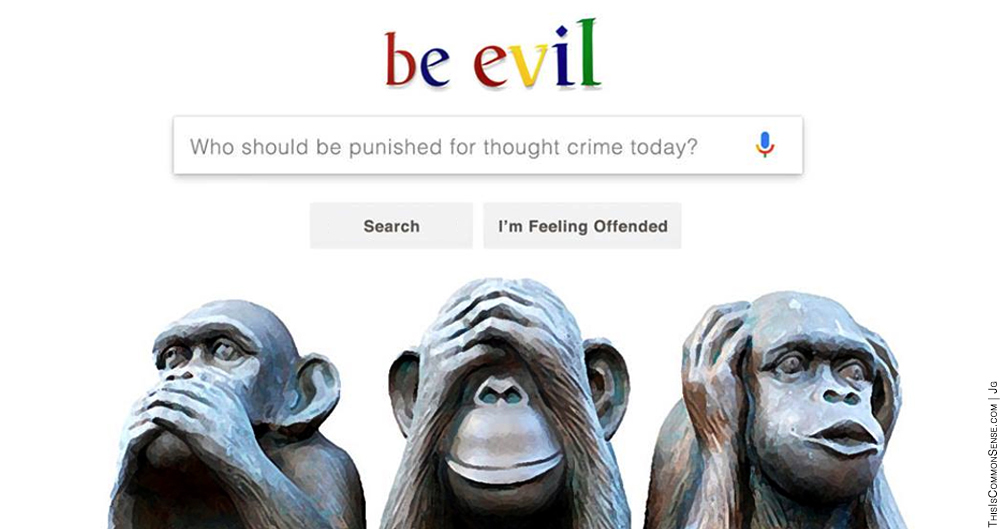
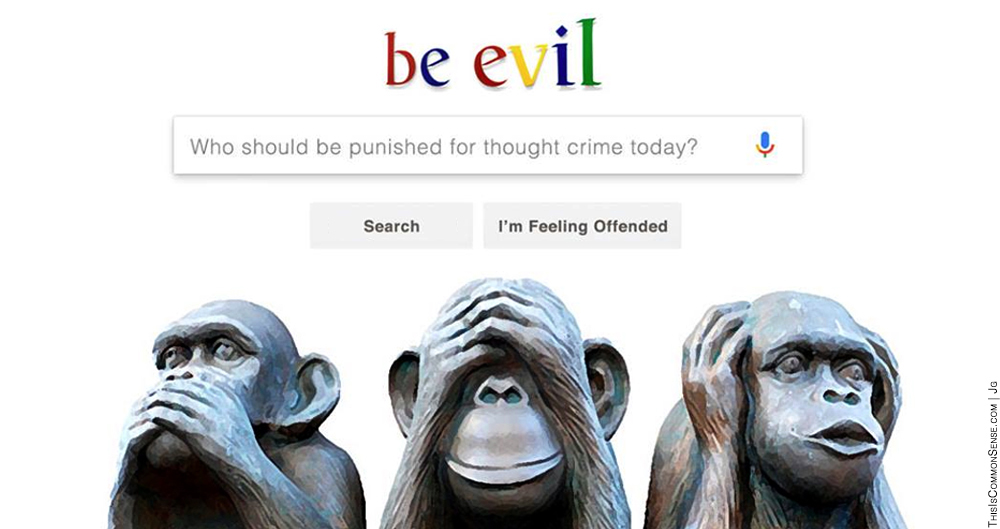
Once upon a time, Google penned a stern note to self: “Don’t be evil.”

What you regard as avoiding evil, though, depends on what you regard as doing good.

Does Google think it’s “good” to fire someone for offering reasoned objections to vapid pieties about why there are more men than women working as programmers, and about how to fix the problem? Assuming it is a problem.

If the answer is yes, then it’s up to more reasonable people to say, “No, Google, stomping on candid internal discussion of your (bad) politics and policies is not ‘doing good.’”

Alas, some Google critics push for a “remedy” worse than the problem: government force. They want government to impose new prohibitions and mandates on large private firms that help people to spread their opinions.

I don’t necessarily agree when a firm — Google, Twitter, PayPal or anybody else — stops providing services to persons expressing views that managers and HR departments disdain. Yet I may agree. No one is morally obligated — and no one should be legally compelled — to help spread the views of others.

I certainly refuse to distribute any installment of “Common Sense” guest-authored by The Anti-Paul-Jacob Club.

When market actors make bad decisions without violating anyone’s rights, others have many powerful and peaceful means of opposing those decisions. Criticism. Boycott. Competition.

But we shouldn’t seek to outlaw the decision-making.

The right to freedom includes no guarantee that one will always do the right thing as others see it.

This is Common Sense. I’m Paul Jacob.

PDF for printing


Categories
First Amendment rights folly general freedom moral hazard nannyism responsibility too much government

Legal Not to Lie About Your Milk

Mary Lou Wesselhoeft doesn’t have to lie about the milk she’s selling. The Florida Department of Agriculture has lost in court. Mary Lou has won.

Ocheesee Creamery sells pasteurized milk without any additives. One of her products is skim milk. Ocheesee sells skim milk without vitamin additives, which is perfectly legal to do. But the Florida government claims that only skim milk with the additives counts as real “skim milk,” the kind you can call skim milk in speech to customers. (Kafka, did you write this horror story? Fess up!)

Give credit to the judge who asked: “Can the state, consistent with the First Amendment, take two words out of the English language and compel its citizens to use those words only as the government says?” The reply of the government’s lawyer? “Yes.”

Creepy.

Mary Lou’s victory is also a victory for all Americans who want to exercise their right to tell the truth about what they’re selling. And it’s a victory for the Institute for Justice, which took up the case on her behalf. At its website, IJ points out how easy it would be to annihilate freedom of speech by letting the government redefine words at will. We’re not free if our freedoms can be arbitrarily defined away by the people in power.

The Institute specializes in defending our rights against senseless government intrusions. Until such laws and regulations are repealed, it seems that the Institute will always have much to do — unfortunately. But, fortunately, it keeps on doing it.

This is Common Sense. I’m Paul Jacob.


Printable PDF


Categories
Accountability First Amendment rights incumbents local leaders Regulating Protest U.S. Constitution

Homer’s Recall Odyssey

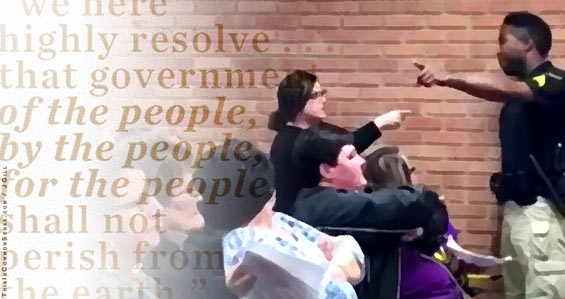
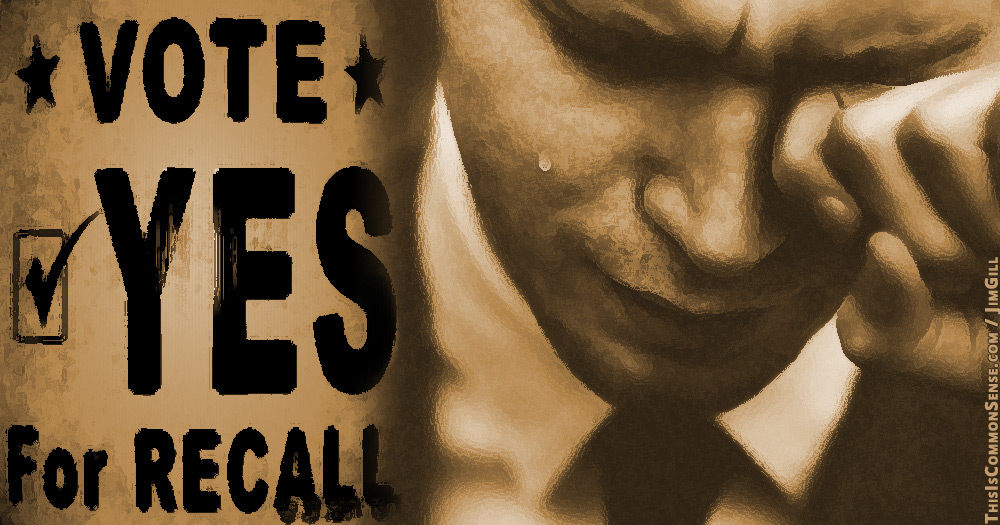
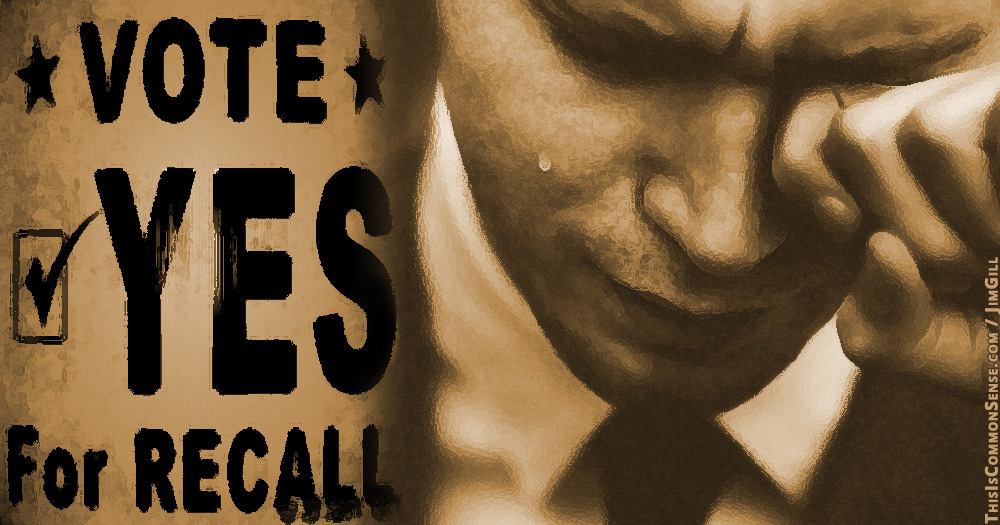
Freedom of speech isn’t a free pass to avoid the consequences of what one says. Or does. Tell that to three members of the Homer, Alaska, city council — Donna Aderhold, David Lewis and Catriona Reynolds — who are the subject of a recall petition.

Well, a superior court judge just did.

Represented by the ACLU, the trio sued to block a recall petition with more than enough voter signatures. Their lawsuit challenged the city attorney’s acceptance of the legal rationale for the recall, claiming the recall attempt punishes the politicians for their speech.

“To conclude that anytime a recall petition is based in part or in whole on what a politician said is protected by the First Amendment,” Superior Court Judge Erin Marston ruled, “would be to eviscerate the recall statute to such an extent that the populace would almost never be able to seek recall of any of their elected officials.”

Now the recall moves forward.

In most of this Land of the Free, citizens lack the ability to recall their elected officials. In places that do have the process, it is rarely used. When it is used, it is often portrayed as voters throwing a temper tantrum.

Or an unfair election do-over.

Or mean-spirited ‘vendetta politics.’

Not so. The petition requirements make recalls very difficult. Recalls don’t happen without some serious problems with the current officeholder(s). And once a recall is triggered, there follows a democratic vote to decide whether citizens want to keep the sitting hireling or find someone new.

Seems pretty reasonable.

When politicians are recalled and removed, they deserve it.*

This is Common Sense. I’m Paul Jacob.
 

* The problem seems never to be that good politicians are being recalled, but that too many politicians who should be recalled are not. Back in 2003, the governor of California was recalled. He deserved it. In 2011, a whopping 88 percent of Miami-Dade County voted to recall Mayor Carlos Alvarez. He earned it, too.


Printable PDF


Categories
crime and punishment First Amendment rights general freedom ideological culture moral hazard national politics & policies Regulating Protest U.S. Constitution

Thorns in the Parade

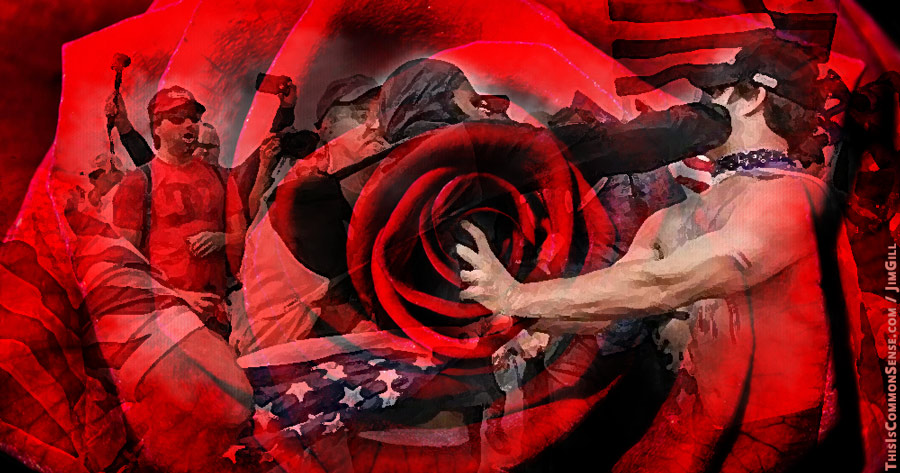
Portland, Oregon, styles itself as “The City of Roses.” For over a century, this Pacific Northwest city has held an annual Rose Festival, complete with multiple parades.

This year, there will be at least one parade less.

“The annual 82nd Avenue Rose Parade and Carnival scheduled for Saturday have been canceled because of threats against the Multnomah County Republican Party, a longtime participant in the parade,” we learn from the Portland Tribune. “In a Tuesday afternoon email, the 82 Avenue Business Association, which sponsors the Rose Festival-sanctioned event, said it canceled the entire event because [it] could not guarantee the safety of the community.”

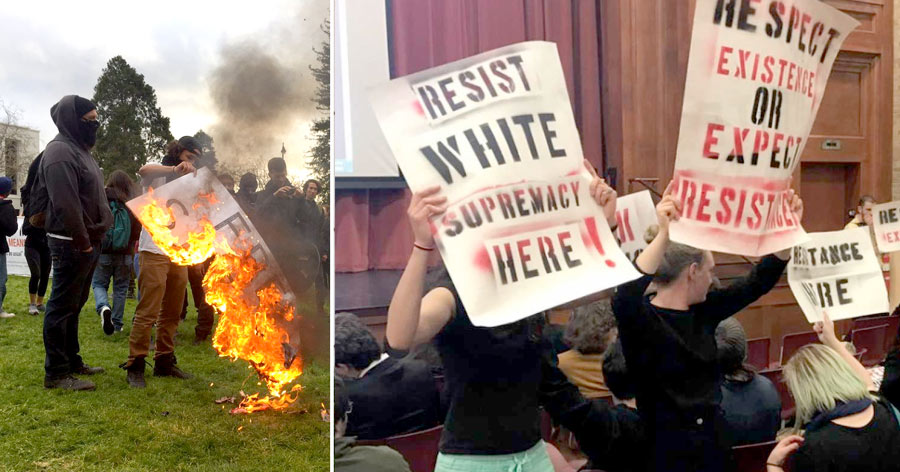
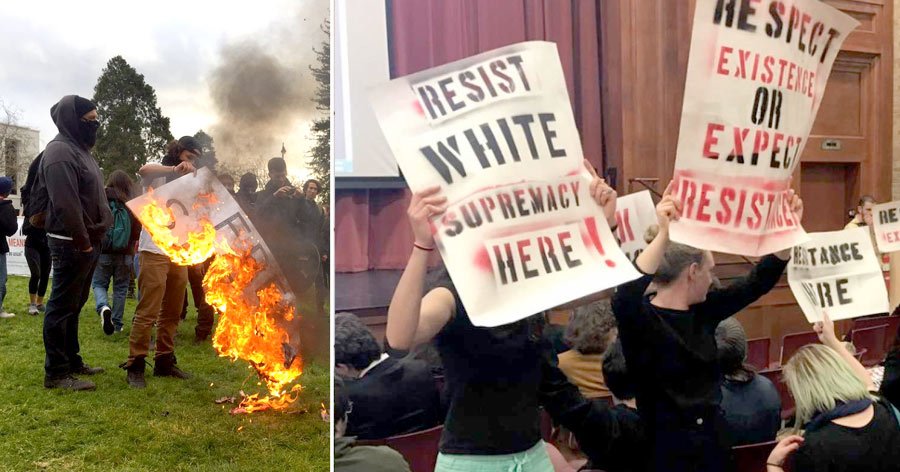
KOIN-6 News reported that the threats came from the Direct Action Alliance, an “antifa”-styled group that “created a Facebook event called ‘Defend Portland from Fascists at the Avenue of Roses Parade.’ The group wanted to disrupt the march because of ‘Nazis and fascists’ participating.”

Now, what you regard as “white supremacist” and what young pseudo-antifascists think of as “white supremacy” are probably very different. I doubt that many real Nazis and fascists would have marched on Saturday.

But the identification issue is irrelevant. If fascists want to peacefully parade, let them.

What is objectionable? Those who engage in violence to suppress views of which they disapprove.

Also objectionable? The organizers and the City of Roses police, who, by caving in, let free speech and assembly be squelched.

Spontaneous marches did occur on parade day, corralled to the left and right sides of the street. Literally and figuratively. Three violent activists were arrested but not identified by affiliation.

Portlanders used to worry that the clouds would rain on their parades. Now, it is ideological violence casting a dark shadow.

This is Common Sense. I’m Paul Jacob.

Printable PDF


Categories
crime and punishment First Amendment rights folly ideological culture moral hazard national politics & policies responsibility

Campus Freedom in Peril

  1. What is the percentage of tenured faculty on American campuses who are still unambiguously on the side of free intellectual exchange?
  2. What is the percentage of them who are willing to express that position openly?

Sociologist Charles Murray asked those questions near the end of his reflections on Thursday’s Middlebury College event, in which his speaking engagement was interrupted by shouting mobs and he and his colleagues were physically attacked*.

Murray thinks the answer to the first question is “more than 50 percent.” He doubts that is the answer to the second.

He is pessimistic about free inquiry on campus.

And has reason to be.

College faculty members are closing ranks, as many at Middlebury did, calling Murray — famous for books such as Losing Ground and The Bell Curve — “a discredited ideologue paid by the American Enterprise Institute to promote public policies targeting people of color, women and the poor”** and “not an academic nor a ‘critically acclaimed’ public scholar, but a well-funded phony.”

Mark J. Perry has listed many more complaints, all offered as reasons not to listen or debate with the famous intellectual.

That was last Thursday. On Saturday, a pro-Trump, “Proud Boys” march in Berkeley culminated not only in violence, bloodied faces, destroyed property, but also in the burning of a purloined “Free Speech” placard.

The University of California at Berkeley seems uninterested in controlling the mobs. Berkeley City Police have poorly defended non-leftist protestors. It’s open season on freedom of speech and the right to peaceably assemble.

Unless something is done, officially, mobbing will be the new normal. And our basic rights? A memory.

This is Common Sense. I’m Paul Jacob.
 

* His colleague Professor Allison Stanger was seriously injured in the riotous shoving and grabbing. Murray tweeted yesterday, “Everybody in the mob could be criminally prosecuted, but those who injured Prof. Stranger must be.”

** It is worth noting that his recent Coming Apart was entirely devoted to the economic performance and culture of white Americans.


Printable PDF


Categories
crime and punishment First Amendment rights ideological culture moral hazard national politics & policies responsibility

Wolves Crying Wolf

People have a right to defend themselves. Right? Especially against rape and murder.

“This is not about free speech,” Yvette Felarca yelled to the crowd at the University of California-Berkeley, gathered weeks ago to “shut down” a scheduled speech by Milo Yiannopoulos, the controversial Breitbart editor.

Felarca, a national organizer for By Any Means Necessary (BAMN)*, the militant group with the incendiary name, argued that Milo wasn’t “interested in any genuine debate.”

She continued, “But what they’re really trying to do is they’re trying to assert their power, threaten us, intimidate us, rape us, kill us! This is real. This is life and death.”

Given such sentiments, it is hardly surprising that the protest turned violent — leaving people beaten, bloody on the pavement, and racking up $100,000 in property damage.

Not to mention causing the cancellation of the talk sponsored by the Berkeley College Republicans. Felarca called this a smashing success. Asked by reporters how she could justify violence to squelch speech, Felarca simply dubbed Milo “a fascist.”

Yesterday, in my Townhall column, “Hate Is Our Business,” I addressed the Southern Poverty Law Center’s just-released report, “The Year in Hate and Extremism.” The report continued the SPLC’s habit of calling entirely peaceful conservative and religious organizations “hate groups.”

The man who shot a security guard at the Family Research Council in 2012, but was thankfully blocked from further mayhem, used the SPLC’s “Hate Map” to target their office.

In its reports, the “progressive” SPLC completely ignores BAMN and violent left-wing groups. And by crying wolf in mislabeling non-violent organizations as “hate groups,” it provides the unhinged — BAMN, Antifa, and lone-wolf lunatics — very dangerous ammunition.

This is Common Sense. I’m Paul Jacob.
 

* Ms. Felarca also has a day job, as a public school teacher at Martin Luther King, Jr. Middle School in the Berkeley Unified School District. That has generated some controversy.


Printable PDF


Categories
crime and punishment First Amendment rights general freedom ideological culture media and media people national politics & policies responsibility

The Silence of Violence

“The Free Speech Movement is dead.”

So said the Berkeley College Republicans after violence Wednesday night forced cancelation of a sold-out speech by Milo Yiannopoulos, the Greek-born British author, now a senior editor at Breitbart News. The reference, of course, is to the University of California’s history as a haven for free expression dating back to the 1960s.

Protests of the event gave way to

  • people beaten up on the streets,
  • rocks and bricks and Molotov cocktails hurled at police,
  • a young woman with a “Make America Great Again” parody hat pepper-sprayed in the face,
  • fires set, windows smashed at the Martin Luther King Jr. Student Union, along with
  • an estimated $100,000 of property damage.

Yet only one arrest was made Wednesday night, and two on Thursday, when a man in a suit wearing a Trump hat apparently triggered two guys to jump out of their car and assault him.*

CNN dubbed the “inflammatory” Yiannopoulos a “professional provocateur.” He has also been labeled a racist, which he denies, and a homophobe, even though he’s gay. Pushing the envelope against political correctness, for his part, Milo calls “college campuses . . . cancerous and toxic to free expression.”

Regardless of label, Yiannopoulos’s right to speak and the right of others to listen are constitutionally protected. And violence to block a peacefully expressed point of view is never justified.

Asked about the tactics used, one unnamed young protestor** explained, “Although, you know, it could get violent or whatever, with the fire, that’s what caused Milo to leave. We succeeded.”

The young woman added, “And next is Trump.”

Either we defend civilization against speech-squelching violence, or inherit an ugly silence.

This is Common Sense. I’m Paul Jacob.
 

*More arrests may be forthcoming. The Washington Post reported that, “University police rescued many people in the crowd who were being attacked, trapped or injured . . . and are collecting video to try to identify suspects.”

** The woman was part of the ominously-named group By Any Means Necessary.


Printable PDF


Categories
Accountability First Amendment rights government transparency media and media people national politics & policies

Prestige, Trump & the Media

“Donald Trump’s election has really undermined America’s democratic prestige in China,” offered Claremont McKenna College Professor Minxin Pei on a recent hour of The Diane Rehm Show, public radio from our nation’s capital. When Pei added that it has “set back the prospect of democracy in China for years,” Mrs. Rehm let out an audible moan.

Then Diane asked her guests, “as members of the press” what they “make” of President-Elect Trump’s “rejection of his meeting with The New York Times.”

“It seems,” bemoaned James Fallows, the Atlantic’s national correspondent, “a continuation of his not having any normal press conferences, dealing entirely outside normal press channels and seeming not to recognize the legitimacy of this part of the democratic fabric.”

“I don’t know anything about the specific details about the New York Times meeting,” admitted the Financial Times’ Geoff Dyer. Still, that didn’t stop Dyer from announcing that, “But it’s part of a pattern . . . to a much more conflict-ual, antagonistic, almost bullying relationship with the media.”

Elizabeth Economy, with the Council on Foreign Relations, found it “disturbing” that Donald Trump thinks “he can be his own media, he can simply tweet out whatever he wants, he can make his homegrown videos and sort of impart his information directly to the American public, without the mediating influence of the media.”

Let’s welcome Elizabeth to America.

“We are all recognizing we’re on new terrain now and need to find some way to keep telling the truth, or our best approximation of it, in very different circumstances,” concluded Fallows ominously.

Trump, as you’ll recall, did wind up attending that meeting at The Times.

This is Common Sense. I’m Paul Jacob.

Printable PDF

Donald Trump, media, journalism, twitter, tweet, direct, illustration