Categories
crime and punishment education and schooling folly general freedom moral hazard privacy responsibility too much government U.S. Constitution

Ecstatic with Independence

Utah’s legislature unanimously passed it; the governor signed it — the nation’s first measure protecting what’s become known as “free-range parenting.”

It was once known simply as “parenting.”

Certain activities are now exempt from a state law criminalizing child neglect. Children may legally “walk, run or bike to and from school, travel to commercial or recreational facilities, play outside and remain at home unattended” — thereby allowing “a child, whose basic needs are met and who is of sufficient age and maturity to avoid harm or unreasonable risk of harm, to engage in independent activities . . .”

Back in the day, we apparently played outside in a sort of statutory limbo.

Do we really need a law saying kids can walk on a public street?

Sadly, yes: government agencies across the country are grossly violating the most basic rights of parents to rear independent children.

Regular readers may recall my 2015 defenses* of the Meitiv parents against the absurd charge of “unsubstantiated neglect” leveled against them by Montgomery County (Maryland) Child Protective Services. Ultimately, Maryland authorities acknowledged that permitting one’s kids (in the Meitivs’ case, a 10- and a 6-year-old) to walk on a public sidewalk (from a local park) wasn’t prima facie evidence of a crime. 

The current free-range parenting movement was launched in 2008 when Lenore Skenazy publicly admitted — to mass shock and condemnation — to allowing her 9-year-old son to take a trip alone on New York City’s subway.

“My son got home,” she wrote in the New York Sun, “ecstatic with independence.”

Notice how rare it is to find anyone ecstatic with dependence.

Lesson? An old one: Happiness must be pursued with freedom.

This is Common Sense. I’m Paul Jacob.
 

* My writings on the Meitivs’ battle to keep their kids:


PDF for printing


Categories
crime and punishment free trade & free markets general freedom moral hazard national politics & policies too much government U.S. Constitution

High on Hemp?

Hemp is not marijuana.

And yet it is.

Earlier this week, Senate Majority Leader Mitch McConnell announced he will introduce legislation to legalize industrial hemp.

He is not concerning himself with marijuana, which is what we call the plant Cannabis sativa when cultivated for its Tetrahydrocannabinol (THC) content, the principal chemical in the plant that makes it ideal for “recreational” uses. Industrial hemp is Cannabis sativa, too, just with minuscule THC.

Hemp products are actually legal to buy and sell in the United States.

Sort of.

But growing it is murky, considering that ingestible hemp is a Schedule 1 drug no matter how little THC it has — despite the fact that Congress has allowed states to regulate the growth of low-THC hemp for “industrial” purposes.  

A complicating factor is that industrial hemp contains an oil, Cannabidiol (CBD), which is neither an ecstatic nor a hallucinogenic drug, but is widely believed to have many therapeutic powers. And is widely sold all over the country, wherever states have allowed for medical marijuana.

Nevertheless the DEA objects to it as much as to THC, saying that all ingestible forms of hemp are illegal.

Because of all this murkiness, McConnell’s bill might seem to be welcome step towards clarity.

Trouble is, since industrial hemp is indistinguishable from cannabis with THC — to look at; to smell; to touch — officials hoping to crack down on marijuana-as-a-psychoactive-drug would be much hampered were industrial hemp commonly and legally grown.

What a mess. The only real solution is to de-list all forms of Cannabis sativa from the War on Drug’s Schedule of Drugs It Unconstitutionally Proscribes.

This is Common Sense. I’m Paul Jacob.

PDF for printing


Categories
crime and punishment general freedom media and media people moral hazard nannyism national politics & policies privacy too much government U.S. Constitution

Unlovely Congress

If you recently tried to post a personal ad on Craigslist, the popular classified-ad site, you were in for a shock. Craigslist has suddenly discontinued all personals. You can still sell your used rototiller, but forget about telling the world you’re lost in Louisville looking for love.

The company doesn’t want to be prosecuted for helping people find each other en route to becoming partners in outlawry.

Congress has just passed legislation subjecting site publishers to criminal and civil liability when their users “misuse online personals unlawfully.” The president’s signature is expected. Craigslist doesn’t want all that open-ended liability. “Any tool or service can be misused,” it observes.

Indeed. If the principle underlying this law were consistently applied, any good or service that facilitates communication (or other human activity!) would expose providers to liability for any illegal conduct abetted by their products. Would curtain manufacturers be exempt? We all know how bad guys plotting evil pull their curtains. Freedom of speech, freedom of casual encounters, freedom of curtain-trafficking, it’s all at risk.

What about Congress’s goal of discouraging prostitution?

Will all U.S. prostitutes now retire?

Not if the last several thousand years are any clue. Especially as other sites follow Craigslist’s lead, prostitutes who had escaped the streets thanks to online means of client-hunting will tend to return to those streets. If so, neighborhoods less seedy and less dangerous thanks to Craigslist etc. will now tend to reacquire such unlovely qualities.

Thanks to (unlovely) Congress.

This is Common Sense. I’m Paul Jacob.


PDF for printing


Categories
crime and punishment education and schooling general freedom media and media people national politics & policies responsibility Second Amendment rights

Good Guy With Gun

Short version of the story: a good guy with a gun at a Maryland high school stopped a bad guy with a gun. In less than a minute. How? Because the good guy had a gun and was inside the school with the gun.

The bad guy was able to shoot a 16-year-old female student, apparently someone with whom he had a previous relationship, as well as a 14-year-old male before an officer on site responded. This officer, Blaine Gaskill, was on the spot in less than a minute. Gaskill and the assailant fired simultaneously. The assailant fell dead. What exactly happened is still unclear; there has been some media speculation that the bad guy may have shot himself.

But the 17-year-old shooter is dead. The female victim, though still alive, is unfortunately in critical condition. The male victim is in stable condition.

The good guy was armed — with a gun. And he was on site. If you’re learning about the incident here first, it’s because the story isn’t being plastered all over the place 24-7 as it would have been had the shooter been able to wreak much more havoc because nobody could quickly counter him.

So, is it okay to let responsible, well-trained administrators, teachers and others in schools be armed?

Well, ask the question a different way. If you happened to be inside the school at the time, would it be okay to survive when some maniac with a gun starts shooting at you and others inside that school?

Let’s defend our loved ones.

This is Common Sense. I’m Paul Jacob.


PDF for printing


Categories
crime and punishment general freedom media and media people moral hazard too much government

Governments Gone Wilding

I was late to the story, and had a hard time finding information on the anti-white violence in South Africa — farm families raped, pillaged, slaughtered, beheaded.

And I wasn’t at all aware of the “land reform” that South Africa’s Congress is voting on, the explicit aim of which is to expropriate white farmers without compensation.

Every day, I read through The Washington Post but noticed no articles there. Or elsewhere — until a fleeting Facebook post sent me to Lauren Southern’s video documentary, “Farmlands.”

The Wall Street Journal did cover the farm expropriation story — on its editorial pages. “No country ever became rich through its government’s seizure of private property (exhibit A: the Soviet Union), but politicians in South Africa want to give it another go.”

Zimbabwe on repeat.

Worse yet, it is being argued for on racial grounds, and some of its proponents are notoriously . . . genocidal?

Quartz takes a different approach, in an article charmingly titled “South Africa’s much needed land debate is being turned into an international racist rant.” The Leftwing publication appears to be gearing up to defend mass theft as “land reform,” heedless of its long, violent, destructive history.

Meanwhile, Ms. Southern, the “gonzo journalist” who detailed the ongoing race-based murder spree in South Africa* that Quartz failed to mention, found herself detained in Calais, France, prevented from entering Britain. Why? In part for “being racist.”

Southern had once engaged in a stunt pitching the provocation that “Allah is a gay god” — to seek reactions from people after a major news source produced an article claiming Jesus was gay.

Islam is a religion, not a race, of course, but it’s racial collectivism that still unhinges minds.

To what extent? Socialist expropriation, at least.

This is Common Sense. I’m Paul Jacob.

 

* “According to the best available statistics,” the BBC relates, “farm murders are at their highest level since 2010-11.


PDF for printing


Categories
Accountability crime and punishment education and schooling folly general freedom ideological culture moral hazard nannyism Second Amendment rights too much government U.S. Constitution

Insufferable Common Sense

Sometimes common sense and open discourse can’t be suffered — or won’t be, anyway.

So discovered Timothy Locke, a popular teacher at Cherry Hill High School East in New Jersey, after discussing the possibility of arming teachers to help protect adults and kids from would-be mass-murderers. Locke also suggested that he’d be among those bearing arms if allowed.

Most of Locke’s students were okay with his opining. But one student was bothered enough by the viewpoint to complain to administrators.

Without further ado, the school — the “Home of the Cougars,” which proudly proclaims its promotion of “a welcoming environment, community, diversity . . . participation . . . growth mindset, grit. . . ,” so forth — searched Locke’s belongings, subjected him to mental and physical evaluations, and suspended him.

Mental evaluation? Wasn’t that a ploy in the old Soviet Union: dissenters must be crazy, hence ought to be carted off to the loony bin? Let’s go nowhere near such sanctions against independent thinking here.

“The bottom line,” Locke summaraized, “is that I was very concerned about security at my school.”

Through an online petition and otherwise, hundreds of students have protested the shabby way that a teacher who inspires them has been treated.

Students less enthusiastic about Locke lament the teacher’s tendency to digress — still legal in all 50 states.

So what now? After a futile school board meeting deflecting questions on Locke’s fate, a second, special meeting is scheduled for tonight, March 6, at 7 pm in the Cherry Hill High School West Auditorium.

Let’s hope sanity prevails.

This is Common Sense. I’m Paul Jacob.

PDF for printing


Categories
Accountability crime and punishment general freedom ideological culture judiciary media and media people moral hazard national politics & policies Regulating Protest too much government

Post Blindfold

While the Supreme Court heard oral argument, Monday, in Janus v. American Federation of State, County and Municipal Employees (AFSCME), the court of public opinion focused not so much on the constitutionality of the law in question, i.e. justice, but instead on the partisan impact of the decision, i.e. politics.

A Washington Post editorial advances the notion that the court was presented “with two questions. The first is the legal issue . . .” and the second “implicit” question is “how the court should conduct judicial review in a deeply polarized society.”

Plaintiff Mark Janus and his legal team are seeking an “extraordinary remedy in the context of the Supreme Court’s tumultuous recent history,” claims the Post.

But that history is not Mr. Janus’s.

Or the union’s.

Or even U.S. labor relations’.

The editors are talking about Washington’s bitter 2016 political fight.

What does political polarization have to do with the facts or law of this case? Nothing. Except . . . what’s in peril is a system whereby government workers who do not wish to join a union are nonetheless forced to pay union dues.

So, if the Court nixes current law, AFSCME might wind up with fewer dues paying members . . . meaning less money for AFSCME’s political pet, the Democratic Party.

And Democrats — now stuck with a conservative replacement for the late Justice Scalia — are left only with Obama’s pronouncement: “Elections have consequences.”

And, embarrassingly, the Post’s bizarre case for “steering the court modestly down the middle of the road.”

A lady, blindfolded, holding scales and a sword symbolizes justice. That blindfold is not to avoid reading the law; it represents the imperative to ignore politics.

This is Common Sense. I’m Paul Jacob.

PDF for printing


Categories
crime and punishment government transparency media and media people moral hazard national politics & policies too much government

Why Paranoia

Goofy conspiracy theories? Worth a chuckle, maybe. But not when they are about live, blood-running-in-the-street topics. Then, cries Kevin Williamson of National Review, “shame.”

Paranoia-spinners “have failed to learn the sad lesson of Hillary Rodham Clinton,” Williamson warns. “When people have come to assume that every other word out of your mouth is a lie, it becomes very difficult to tell the truth effectively.”

Well, yes. But that cuts every which way, no?

Apropos of this, comedian Dave Smith, on his most recent Part of the Problem podcast, brought up Operation Northwoods, an early-’60s clandestine false flag proposal.

“The operation proposed creating public support for a war against Cuba by blaming it for terrorist acts that would actually be perpetrated by the U.S. Government,” Wikipedia summarizes. “To this end, Operation Northwoods proposals recommended hijackings and bombings followed by the introduction of phony evidence that would implicate the Cuban government.”

This outrageous moral horror was actually signed off on by “responsible” people . . . such as the Joint Chiefs of Staff.*

“Why do these conspiracy theories persist?” Dave Smith considers, referring to the trying-too-hard conspiracy conjectures such as the now-infamous “crisis actor” hoopla. “Well, there’s . . . these conspiracies that are absolutely real — and you guys [in the media] have no interest in talking about them. And the only people who do talk about them are people like Alex Jones.”

Seeing governments lie and cover up the truth, while media too often turn blind eyes, everyday concerned folks are obviously more open to conspiracy theories.

Everyone should remember that it is the truth that will set you free.

This is Common Sense. I’m Paul Jacob.

 

* It was signed by Chairman Lyman Lemnitzer and sent to the Secretary of Defense. President John F. Kennedy nixed it in 1962, and it was never implemented, thank goodness.


PDF for printing


Categories
Accountability crime and punishment general freedom ideological culture media and media people nannyism national politics & policies responsibility Second Amendment rights too much government U.S. Constitution

Self-Defense, Implausible?

Don’t take a GUN-FREE ZONE sign to a gun fight.

Whenever there’s a horrific incident of mass murder, advocates of citizen disarmament blame the right to protect oneself against armed attackers. The thinking seems to be that if we make it illegal for all civilians to have guns, bad guys willing to kill people will also refrain from using guns as they try to kill people.

This is implausible.

And if you do not see its implausibility immediately regarding firearms, consider drugs. Not taking them, but the war on same. Drugs didn’t vanish upon prohibition. Neither would guns if prohibited.

President Trump argues that students would be safer were schools a harder target. Why not arm well-trained teachers? “If you had a teacher who was adept with the firearm, they could end the attack very quickly.” He’s right.

Not a new idea, of course. It’s been argued, for example, by the NRA, whose chairman says that the way to stop a bad guy with a gun is with a good guy with a gun.

This idea is being practiced right now — in Israel.

As Tzvi Lev argues at the Arutz Sheva 7 site, Israel proves the NRA’s point.

Even Israel — where Arab communities are “rife with illegal weapons” despite their illegality — has not always been quick to recognize that it’s better to have lots of armed civilians when terrorists start shooting at civilians. But after terrorists attacked a school in 1974, the government began arming and training teachers — somehow failing to defer to the terrorists’ preference for gun-free zones.

In both of the only-two school shootings in Israel since then, teachers killed the attackers.

This is Common Sense. I’m Paul Jacob.


PDF for printing


Categories
crime and punishment general freedom ideological culture media and media people moral hazard nannyism national politics & policies privacy responsibility Second Amendment rights too much government U.S. Constitution

He Applied Himself

“I need to make this count,” wrote a young man in Everett, Washington.

Unfortunately, it looks like he wasn’t attempting a big career-oriented project. He was planning a mass shooting.

“I need to get the biggest fatality number I possibly can,” is one of many damning journal passages the police have made public. Apparently he had settled on attacking the high school he attended. “I’ve been reviewing many mass shootings/bombings (and attempted bombings) I’m learning from past shooters/bombers mistakes.”

Ambition and rigor: missapplied.

Fortunately, his grandmother read his journal and discovered a rifle in his guitar case. She turned him into the police the Tuesday before the Florida shooting I wrote about last week. And maybe just in time.

Meanwhile, last week’s Parkland, Florida, shooting dominates the headlines. Fellow students and neighbors of the Florida shooting victims have ramped up their condemnations and demands — including at a horrorshow “town hall” on CNN.

Yet the nature of the difficulties in preventing such atrocities has become lost in the rhetoric and anger.*

In a free society, we cannot arrest people before they commit a crime. In the Everett case, officials were “lucky”: despite the young man’s lack of a criminal record, they were able to charge him with a burglary they allege he committed the day before arrest — and his extensive planning notes are being taken as evidence for intent. He’s also been charged with attempted murder.

We should be in inquiry mode, right now. It could be helpful to know the exact motivations for both the Florida shooter and the Everett wannabe — and similar cases.

This is Common Sense. I’m Paul Jacob.
 

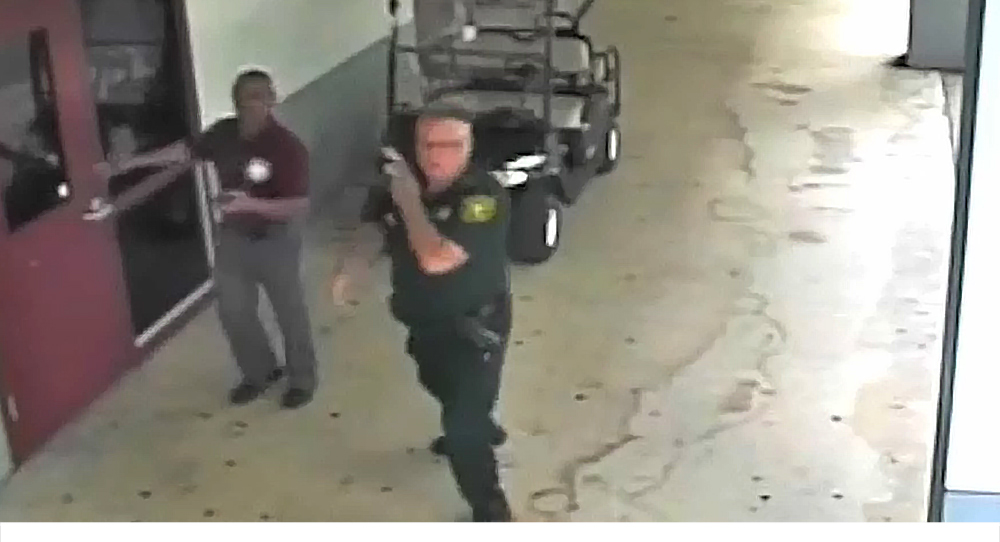
* Law enforcement is tasked with uncovering spree shooting plots today — and to protect, too. But the armed, uniformed school resource officer at the Parkland high school failed to protect. He heard the gunshots but never entered the building, while the shooter killed 17 innocents.


PDF for printing