Categories
Accountability general freedom ideological culture moral hazard national politics & policies political challengers responsibility too much government U.S. Constitution

The Wisdom of the Founders

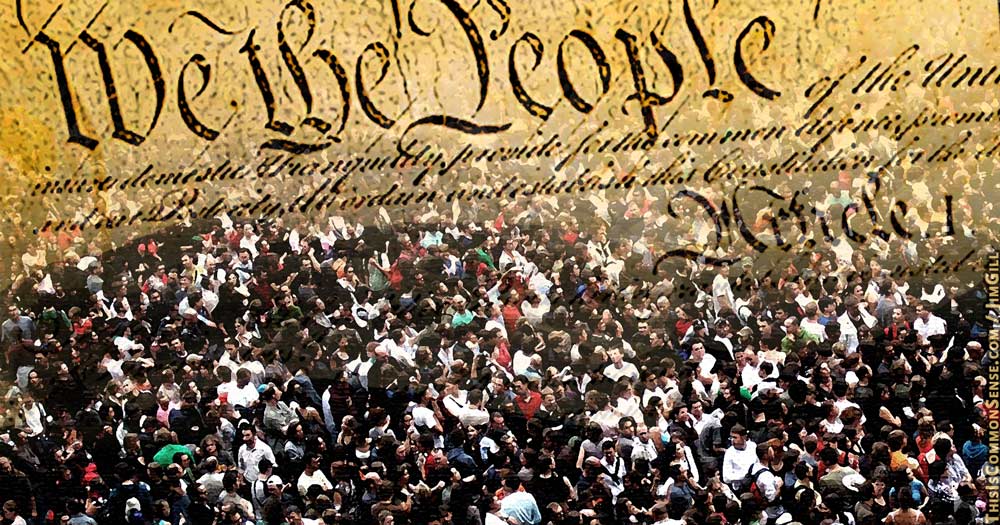
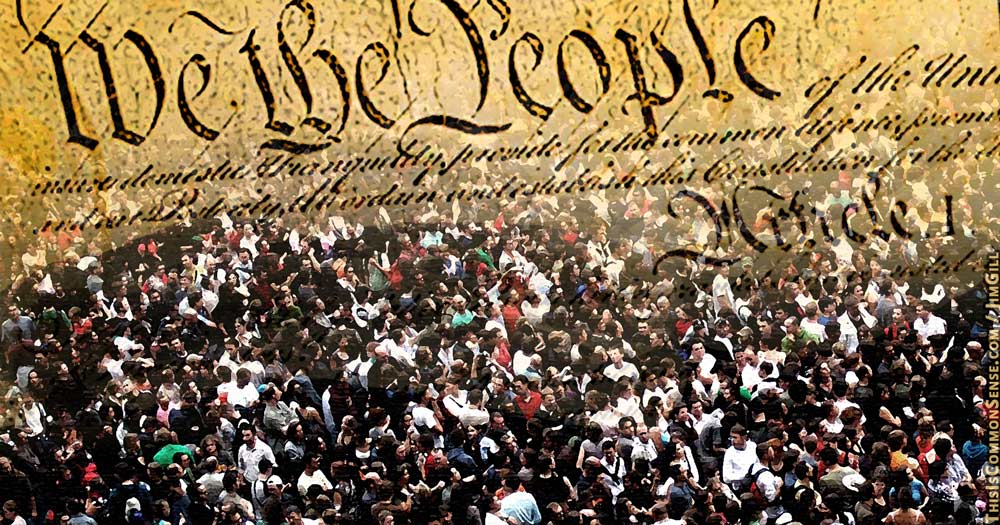
“At a certain point, you have to let go for the democracy to work,” President Barack Obama told HBO’s Bill Maher last week, praising “the wisdom of the founders.”

“There has to be fresh legs,” he continued. “There have to be new people. And you have to have the humility to recognize that you’re a citizen and you go back to being a citizen after this office is over.”

Maher failed to ask Mr. Obama how this “fresh” viewpoint squared with his support for Mrs. Clinton. Nevertheless, let’s applaud the president’s endorsement of term limits.

Speaking of the founders, and limits on power, and this being Election Day, I’m reminded of a commentary in Forbes, back on Election Day four years ago, written by Ed Crane, the man who built the Cato Institute into one of the nation’s preeminent think tanks. Bemoaning the “interminable presidential race,” Crane wished for “a nation in which it really didn’t matter who was elected President, senator or congressman.”

“Don’t get me wrong, because I’m not saying it doesn’t,” explained Crane, “only that it shouldn’t.” He added, “I believe the Founders had a similar view.”

His point is simple: Getting to vote for your next president and senator and congressman is swell, but it’s important to have a Constitution that restrains those elected, so they “don’t have a heck of a lot of power over you or your neighbors.”

“We are a republic of limited governmental ­powers,” or should be, argued Crane. “Such a nation allows for sleep on election night.”

Instead of gnashing of teeth.

This is Common Sense. I’m Paul Jacob.


Printable PDF

Constitution, voting, democracy, Ed Crane, fear


Categories
Accountability ballot access incumbents moral hazard national politics & policies political challengers responsibility

Vote Early & Often?

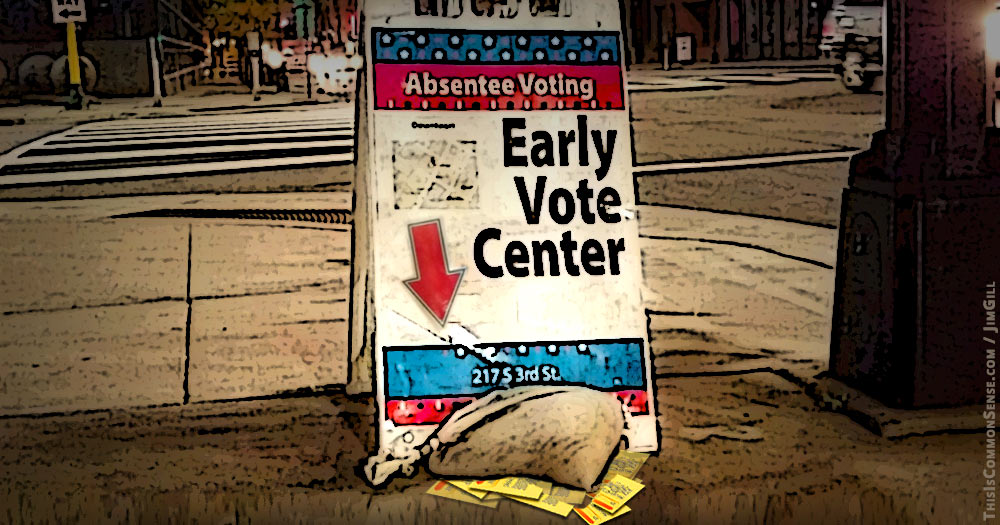
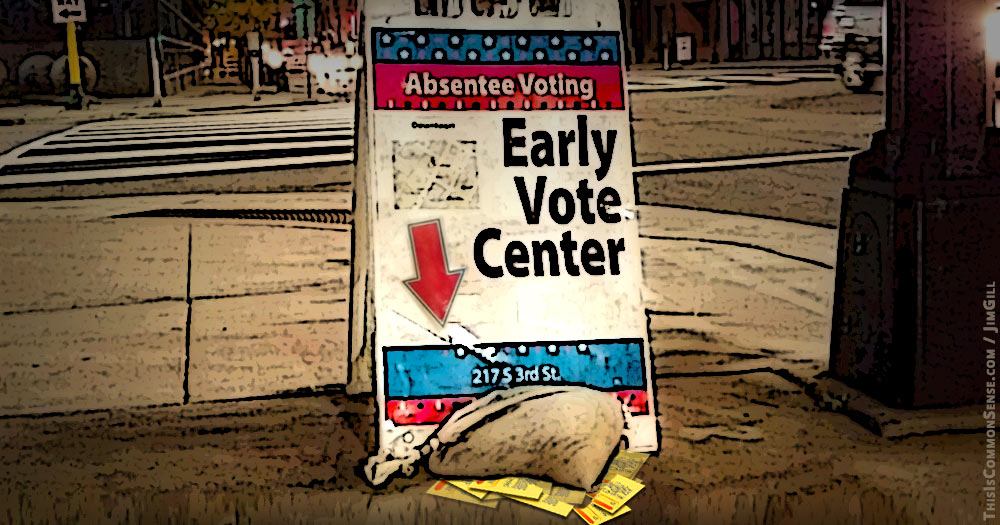
Voted yet? The Pew Research Center thinks about 50 million Americans have, representing 38.5 percent of the voter turnout forecast.

I’m for making it as easy as possible for people to cast a ballot. Who isn’t? Well, I mean who among normal people isn’t? I’m not counting politicians and their hacks.

But even I am opposed to extended “early voting.”

Here’s why:

First, the longer the voting period goes, the greater the cost — as more paid advertisements, phone calls and mailings are needed to keep reaching voters over many weeks. No problem here with more money in politics — money is essential, and my candidates and ballot issues could certainly always use more promotion. But let’s not artificially advantage big money by running the meter.

Several states now allow more than six weeks of voting prior to so-called Election Day. Even a three-week voting period is far more expensive than building toward a single day — or, say, a weekend through Tuesday voting period (four days).

Second, we ought to vote together, close to the same time, all of us privy to the latest public knowledge. This year’s drip of near daily “October”* surprises, thanks to WikiLeaks and the FBI, shows the potential problem should a major scandal or incident impact the race after so many folks have already voted.

Third, early voting tends to advantage incumbents. Challengers often don’t catch up to the better known and organized incumbent until the final days of the race.

As for voting often, as in more than once, that’s a crime. Plus, with these candidates, once is more than enough.

This is Common Sense. I’m Paul Jacob.
 

*Well into November, some of these surprises, eh? I mean, it is as if they saved the blood rituals for last.


Printable PDF

vote, early, often, democracy, early voting, illustration, joke, meme


Categories
Accountability general freedom initiative, referendum, and recall local leaders media and media people nannyism national politics & policies

Are We Special?

“Cringe-worthy,” said Kyle Clark, co-anchor of 9NEWS in Denver. He was mocking the 10-foot tall, carved, wooden Trojan Horse replica that Amendment 71 opponents are wheeling around the Rocky Mountain State.

Clark admits that Amendment 71 “would make it harder to change Colorado’s constitution,” but doesn’t seem to have any clue just how much harder.*

“Those opponents with their Trojan Horse want to paint 71 as a sneaky power grab by big money interests from out of state,” Clark continued. “Funny, though, when you find out who paid for their horse.”

Wait . . . this is BIG: Who paid for the horse?

“It’s an in-kind contribution from Citizens in Charge Foundation. They’re a group that protects the initiative process around the country. . . . based out of Woodbridge, Virginia,” replied an Amendment 71 opponent.

Hey, that’s my group!

“Amendment 71 might be a Trojan Horse funded by outside interests,” Clark concluded, but it’s “illustrated by the Trojan Horse funded by outside interests.”

Cute . . . but . . . ?

Does Mr. Clark seriously think that (a) an organization dedicated to making the ballot initiative process accessible to all, with no other interest or business before state government, providing a vehicle and a trailer to carry a wooden horse across the state is equivalent to (b) a multi-million-dollar paid media barrage funded largely by oil and gas interests with lucrative interests before state government?

Citizens in Charge Foundation is honored to work with Coloradans to save their initiative rights by defeating 71.

Speaking of interests and who’s paying . . . 9NEWS has received the better part of a million dollars in ad revenue from the interests supporting Amendment 71.

Compared to a peek at a wooden horse from opponents.

Kyle Clark didn’t mention that.

This is Common Sense. I’m Paul Jacob.
 

P.S. Please help save Colorado by making a contribution right now.


*Coloradans who have actually qualified ballot initiatives say Amendment 71 would kill the process for all but the wealthiest special interests.


Trojan Horse Trails in Colorado


Printable PDF

Trojan Horse, Colorado, Amendment 71, initiative, referendum, Citizens in Charge, Paul Jacob,


Categories
Accountability insider corruption media and media people national politics & policies political challengers responsibility

The Democracy Now

Once upon a time, the Democratic Party was fondly referred to as “The Democracy.”

But that was a long time before the Clintons took control of the party’s heart and soul. It’s certainly been an insider’s game since.

Case in point? The deliberate scuttling of the Bernie Sanders campaign. Debbie Wasserman-Schultz lost her chairperson-ship of the Democratic National Committee because of her (WikiLeaked email) collaboration with the Clintons over the dirty tricks that made sure Bernie got nowhere near the top levers of power.

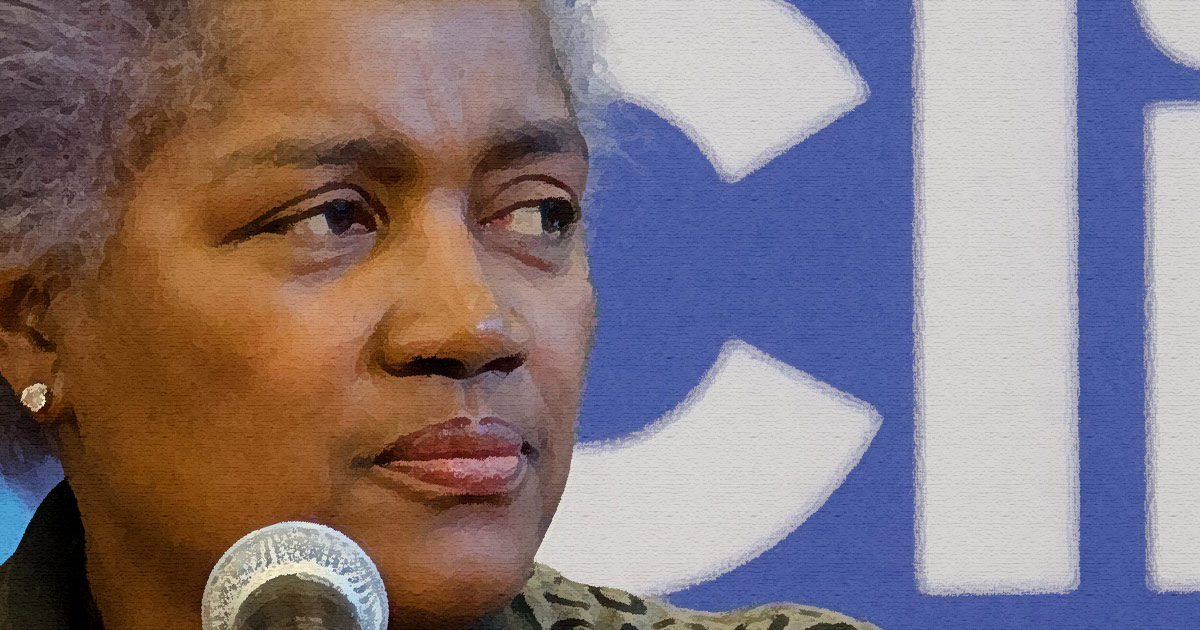
And now we have Donna Brazile, covertly doing all she can to ensure the election to the Presidency of arguably the most corrupt politician of our time.

This political operative left CNN’s talking head ranks under a cloud — she had leaked to Clinton campaign communication director Jennifer Palmieri details about a question to be asked at a CNN-hosted presidential debate. Though CNN is not for nothing popularly known as the Clinton News Network, even CNN muckety-mucks felt betrayed.

But when interviewed by the indefatigable Megyn Kelly of Fox News, Brazile defended herself from the charges — “as a Christian woman” who understood “persecution”; she also compared her interviewer to a thief, and blamed Russian hackers.

Now, as a result of another WikiLeaks email exposure, Brazile has been caught again. The network has severed ties with her, and she’s defending herself with lines like “I try to learn as much as I can, share as much as I can.”

Unquestionably.

Having proven her loyalties, it looks like Ms. Brazile’s on track for a job in the new administration.

This is Common Sense. I’m Paul Jacob.

Printable PDF

Donna Brazile, CNN, Hillary Clinton, question, illustration, Common Sense


Illustration based on original (cc) photo by Tim Pierce on Flickr


Categories
Accountability crime and punishment general freedom ideological culture judiciary national politics & policies U.S. Constitution

The Best Case for Trump Isn’t

I support neither Hillary Clinton nor Donald Trump for the presidency. Still, I do understand several reasons to vote for Trump, including, most obviously, “he’s not a Clinton.”

The most persuasive strategic reason given for voting for the man, however, and the one that has most purchase with me, is that he would appoint better Supreme Court justices than would Mrs. Clinton.

Note: if the Democrats gain hold of the U.S. Senate, an elected Donald Trump would “negotiate.” And the next set of Supremes might be quite bad.

But is all this irrelevant? It does not look like Trump will be elected, so any vote thrown at him will be just as “wasted” as a vote for Johnson, Stein, or Mickey Mouse.

More importantly, if Hillary wins, no biggie on the Supreme Court front IF (a big “if”?) the Republicans maintain congressional dominance.

Why?

Our Senators are not required to vote for any of a president’s appointees. But, alas, that is not what Democrats are saying now! Forget such self-serving nonsense. The Constitution does not specify the number of justices on the Supreme Court. It is nine now, sure, but the Highest court in the land was first manned by five justices, then seven.

So, after the election, unpack the court.* Back down to seven, at least.

And then let’s talk terms for the currently “serving for life” justices, and term limits.

In any case, the best case for Trump isn’t so much a case for him, as a plan of action no matter who is elected.

This is Common Sense. I’m Paul Jacob.
 

*This notion is more doable, I think, than Franklin Delano Roosevelt’s infamous court packing scheme, in which he threatened to put more justices in to over-rule those justices who thought his “New Deal” program unconstitutional. Congress, not required to vote in any proposed Supreme Court candidate, could balk at all and then, by law, reduce the number, even removing one justice from office if need be.


Printable PDF

Supreme Court, Congress, Hillary Clinton, Donald Trump, election, illustration


Questions Answered:
Does the best reason to vote for Donald Trump really hold water?
Does the Constitution specify the number of justices that should be on the Court?
Is Congress really at the mercy of any bully who occupies the Oval Office?

Ask the next question. --Theodore SturgeonThe Next Question:
Will voting for someone other than Trump be more of a “wasted vote” than voting for Trump himself, if, as polls indicate, he loses?


Categories
Accountability media and media people moral hazard national politics & policies responsibility

A Leaner Bear

Russia is being painted as Enemy No. 1 by Hillary Clinton, despite her predecessor’s mocking of the same notion four years ago, when Republican Mitt Romney said it.

Of course, Mrs. Clinton is just using Russia as a distraction from her conspiracies and crimes and inadequacies as revealed by WikiLeaks.

What’s more worrying is Russia’s military adventuring, surely.

Before we wander into the morass that is foreign policy, maybe we should consider the Russian military itself . . . and its supporting economy.

Last year, TASS confidently informed us that the military budget was going up 0.8 percent in 2016, with $750 million slated for nuclear weaponry. I still hear talk of the latter fact; not much of the former factoid, that shockingly modest increase.

Even last year it was commonly noted that Russia’s military budget was getting “squeezed” . . . by hard times. Lack of revenue.

Now the hammer has fallen on the sickle: “Russian defence budget set to drop by 12%” in yesterday’s IHS Jane’s 360 article by Craig Caffrey.

First, don’t be alarmed: “defence” is how Brits misspell “defense.”

Second, take heart: Russia simply cannot do all it may want even in its darkest hearts.

Third, take caution: a weaker Russia is still dangerous, in some ways more so. We might see increased (and relatively cheap) cyber-warfare, of which Mrs. Clinton is so particularly mindful.

Finally, let’s acknowledge that American politicians have never focused rationally on the Russian threat, often hyping it gratuitously to enhance their own power, or, for that same reason, ignoring the threat entirely, as when smirking at Romney’s wise concerns.

This is Common Sense. I’m Paul Jacob.


Printable PDF

Hillary Clinton, Russia, Wikileaks


Questions Answered:
Is Russia a threat?
Why are Democrats obsessed with Russia?
Why is Russia reducing its military budget?

Ask the next question. --Theodore Sturgeon

Ask The Next Question:
What kind of defense should a free people insist upon?


Categories
Accountability folly media and media people national politics & policies political challengers

The Un-gaffe-able Hillary Clinton

What a troublesome election season. My wife and I have argued for days . . . over which one of us first blurted out that Clinton’s statement about Mosul, Iraq, in the final presidential debate, was flat-out wrong.

Geographically. Map-wise.

Iraqi and Kurdish troops (with U.S. “advisors” and air cover) have set out to re-take Iraq’s second-largest city, under Islamic State control since June 2014. So both presidential candidates were questioned about it.

“What’s really important here is to understand all the interplay,” stated the former Secretary of State, authoritatively. “Mosul is a Sunni city. Mosul is on the border of Syria.”

The problem for Sec. Clinton?

Mosul is not on the Syrian border.

Syria is 100 miles to the west; Turkey, 75 miles north. Mosul is actually closer to the border of Turkey than Syria.

“It going to be tough fighting, but I think we can take back Mosul and then move on into Syria and take back Raqqa,” Mrs. Clinton asserted. “This is what we have to do.”

Really?

“Mrs. Clinton’s comments were uttered in the context of her strategic plan to take on ISIS,” explains Justin Raimondo of Antiwar.com. “If she really thinks that taking Mosul will somehow provide a gateway to ‘press into Syria,’ then she is in for a big surprise.”

Over at Reason.org, Anthony Fisher found that “Hillary Clinton’s foreign policy gaffe at Wednesday’s debate was noticed by almost no one in the mainstream political commentariat.”

Libertarian Gary Johnson of “What is Aleppo?” fame sure noticed, dubbing the massive coverage of his gaffe and the complete non-coverage of hers “a very hypocritical double standard.”

(Psst — they want her to win.)

This is Common Sense. I’m Paul Jacob.


Printable PDF

Hillary Clinton, Gary Johnson, Mosul, Syria, Turkey, illustration


Categories
Accountability insider corruption media and media people national politics & policies responsibility

Hillary Futures

Trust must be earned; Hillary Rodham Clinton hasn’t earned it.

And yet, if the polls hold, Mrs. Clinton will be elected the next president of these United States — the first-ever female commander-in-chief, sure, but viewed by a clear majority of Americans as untrustworthy.

Part of the problem is her husband Bill. The former president has been accused of inappropriate sexual advances and liaisons . . . and even sex crimes. Hillary’s campaign rightly keeps reminding people that he is not on the ballot. But wasn’t Hillary going to have Bill “run the economy”?

Besides, what’s most relevant is how she defended her philandering husband against his women accusers, with threats, intimidation, and a decided lack of feminist solidarity.

Older folks remember “Travelgate” (a self-serving gaucherie); even Millennials should recall the Bosnian “sniper fire” (self-aggrandizing fib). Then there’s Benghazi. Documents obtained by Congress show Mrs. Clinton immediately telling her daughter that the attack was a planned terrorist attack by an al-Qaeda affiliate. Nonetheless, Hillary publicly blamed the attack on an Internet video.

It was “extremely careless” for Hillary to have set up a private email server, vulnerable to foreign hacking. But how sly to use BleachBit to destroy her hard drive, erasing any money trail. And then, she responded to reporters asking if she wiped her server: “Like with a cloth or something?” Chutzpah.

Ugliest, though, was one of the earliest: cattle futures.

Evidence convinces me that Hillary took a nearly $100,000 bribe disguised as profits from trading cattle futures that she did not actually trade. James Blair, “who at the time was outside counsel to Tyson Foods Inc., Arkansas’ largest employer,” helped Clinton supposedly “out of friendship, not to seek political gain for his state-regulated client.”

The windfall profit was more than lawyer Hillary and Attorney General (and then Governor) Bill earned together annually from their two fulltime jobs. Quite a risky “gamble.” Does Hillary seem like a reckless gambler?

So many scandals and lies. From the next president.

This is Common Sense. I’m Paul Jacob.

Printable PDF

Hillary Clinton, lies, truth, untrustworthy, immigration, trade, drug war, war, Bosnia, Surveillance, Gay Rights, illustration


Categories
Accountability folly national politics & policies responsibility

Successful Strategy Fails

A dark cloud hangs over tonight’s debate.

Not the sex assault scandals. Not the WikiLeaks email apocalypse. Not even the banning of Gov. Gary Johnson from the debate stage. I refer, instead, to the obvious failure of American foreign policy.

Last week, U.S. warships in the Red Sea received missile fire. Not from a “policy disaster” country, mind you, but flowing from the fruits of our flagship foreign policy success!

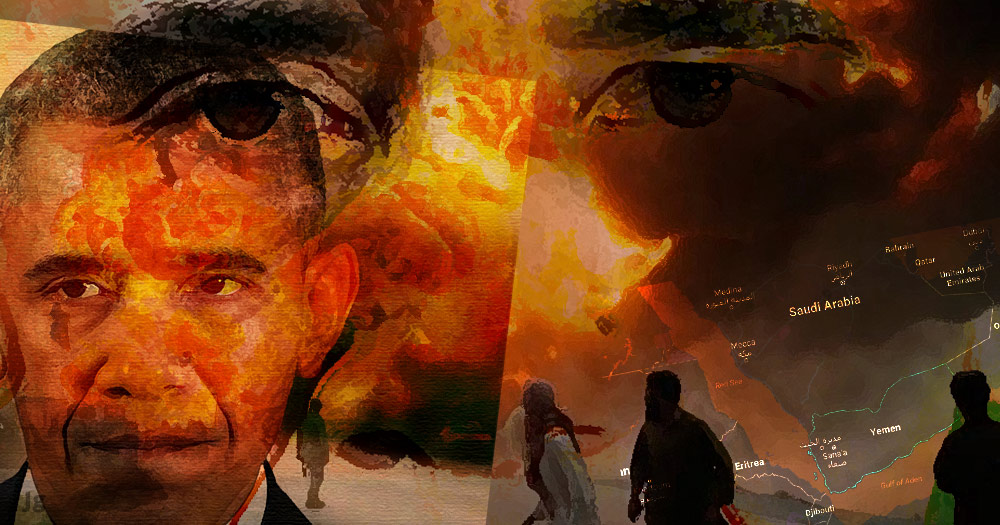
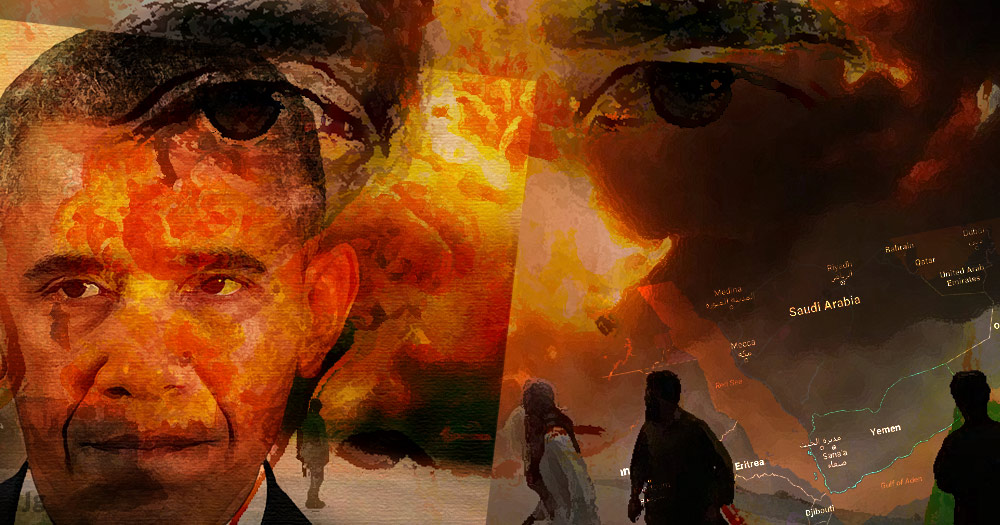
In September of 2014, President Barack Obama spoke directly to the nation about how he would fight ISIS, pointing to the “strategy . . . we have successfully pursued in Yemen and Somalia for years.”

Roughly four months later, Yemen’s U.S.-supported government fell to Houthi rebels allegedly backed by Iran. Still, the Orwellian oasis that is the state department continued to “stand by” the president’s declaration of success there.

Then, Saudi Arabia and a number of other Sunni-run states began bombing and blockading (and then invading) Yemen. With U.S. military support. Amnesty International, aid groups and Congressman Ted Lieu (D-Calif.) allege war crimes, as the bombing campaign targets civilians and medical facilities. Barely a week ago, an errant strike killed 140 members of a funeral party.

Meanwhile, as the U.S. shoots Tomahawk missiles at Yemeni radar installations, our war department spokesman refers to the return fire as “not connected to the broader conflict in Yemen.”

Sure.

And what of Somalia, Obama’s other success? In recent weeks, al-Shabab fighters have twice attacked U.S. soldiers, and a U.S. air strike mistakenly killed 22 Somali soldiers in the country’s north.

Blindly pursuing a failed strategy, Obama’s undeclared wars go on and on. So where does the likely next president stand?

This is Common Sense. I’m Paul Jacob.

Printable PDF

foreign policy, Obama, election, president, illustration


Categories
Accountability general freedom nannyism national politics & policies responsibility too much government

Report from the Lab

The State of Idaho does something the federal government should emulate. The only state I can think of that has a popular candy bar named after it has a legislature that regularly nixes regulations made by the state’s executive branch.

Think of it as a line-item veto for the legislature.

Now, at this point, if you know the Constitution but not today’s “living Constitution,” you might wonder: Don’t legislatures write the regulations? Alas, at the federal level, as in most states, the legislative branch has granted to bureaucrats in the Executive Branch a great deal of leeway to cook up what sure feel like “laws.”

“Last year the Federal Register,” Wayne Hoffman explains in theWall Street Journal, “which publishes agency rules, proposals and notices, exceeded 80,260 pages — the third-highest in its history, according to a report from the Competitive Enterprise Institute.”

Idaho provides a good model for taking back such ceded legislative power.

Let’s remember the idea of “the several states” experimenting with new and old ideas separately, heralded in a famous phrase, “laboratories of democracy.”

This allows good practices to spread slowly throughout all the states . . . based on results.

Meanwhile, Mr. Hoffman informs us, Idaho’s practice is traditional, not hallowed in the state’s constitution. A 2014 referendum narrowly failed to get Idahoans to change the constitution to incorporate this “best practice” into explicit law — the legislature had not adequately explained the situation to the public first time around — Idaho solons are trying again.

Make representatives responsible for regulations, and therefore more accountable.

This is Common Sense. I’m Paul Jacob.

Printable PDF

bureaucrats, regulation, laws, Idaho, illustration


Illustration: Golconda by René Magritte