Categories
Accountability government transparency media and media people national politics & policies too much government

Seventeen, Again

The first I heard of an actual enumeration of federal “intelligence agencies” was from Hillary Clinton. In the final presidential debate, she claimed that the truths spilling out of the Podesta emails had been revealed courtesy of Russian hackers, and she knew this because all 17 U.S. “intelligence agencies” had briefed her.

Seventeen!

The number, at least, does not come from a secret source. Business Insider had popularized it. “These 17 Agencies Make Up The Most Sophisticated Spy Network In The World,” Paul Szoldra informed us three-and-one-half years ago in a fascinating listicle.

Call me paranoid . . . but if I am told that the government has 17 spy agencies, I wonder about one more: The Really, Really Secret Infodump Agency. There is, after all, no official definition of “government agency”; the federal government doesn’t even publish an official overall count, intelligent or otherwise.

Besides, the prime number 17 just seems too . . . contrived. Sixteen or 18? Boring numbers. But 17? Its numerological magic lends plausibility to “the most sophisticated spy network in the world.”

Of course, when Mrs. Clinton insisted that all 17 had concurred that the Russians were on Trump’s side, I did not believe her. And now that mainstream media outlets — in an apparent frenzy to prove themselves a more reliable fake news source than the Twittersphere, blogosphere, Facebook-o-sphere and Breitbart combined — run with nearly the same story, I don’t believe them, either.

It is as if they’ve had their talking points delivered in a secret dossier.

Reasons for doubt? All the anonymous sources, all the hedges on the order of “may be linked to” and “‘one step’ removed.”

Fake news. Brought to you by the number 17.

This is Common Sense. I’m Paul Jacob.


Printable PDF

spy, spies, intelligence, agency, 17, Hillary Clinton, Russia


Original (cc) photo byAli T on Flickr

Categories
Accountability ballot access initiative, referendum, and recall

More Forced Registration

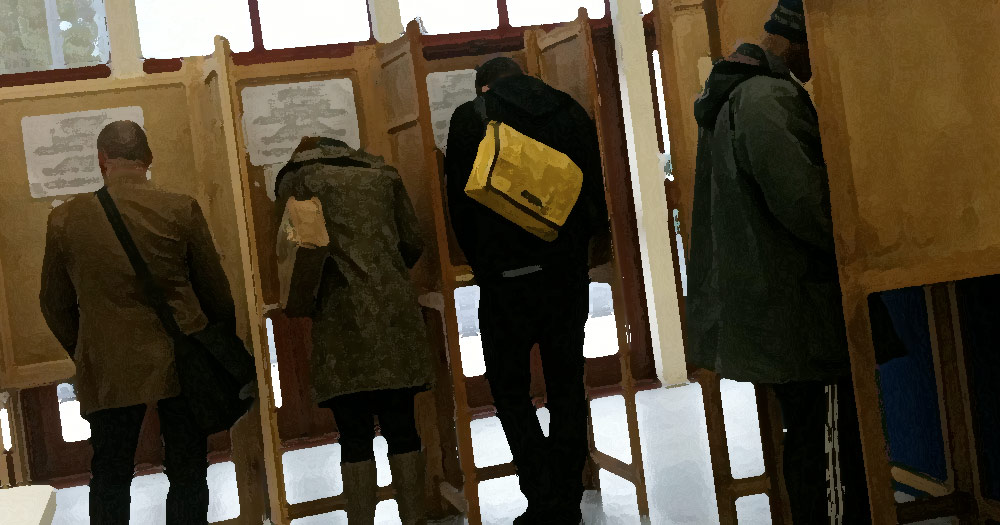
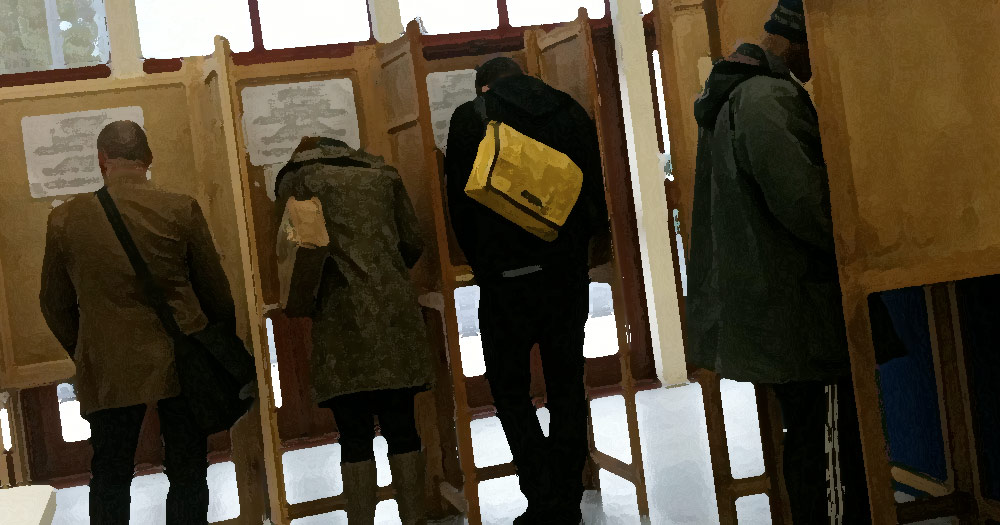
Voting’s a right, not a duty.

So voter registration and actual voting should be made easy. But I’m not for mandating that people vote, or for registering them involuntarily.

Which is why I oppose the Automatic Voter Registration Initiative (AVRI), an indirect Nevada initiative that state officials just announced has turned in enough petition signatures.

Now, you may not be familiar with this “indirect initiative” process. These are initiatives that first go to the legislature and then, should the legislature not pass them, appear on a later ballot (in this case, 2018’s) for voters to either enact or reject.

Currently, when Nevadans conduct business at the Department of Motor Vehicles, they’re asked if they’d like to register to vote. If they opt in, i.e., say “yes,” then the DMV transmits their information to the Secretary of State to be added to the voter rolls.

However, the new initiative would automate the process, so every person’s information gets whisked over to the Secretary of State, whether said person wants to be registered or not. It reads: “Unless the person affirmatively declines in writing,” he or she “shall be deemed to be an applicant to register to vote.”

Declining registration must be “in writing”?

A simple, “No, thank you,” won’t suffice?

Now, I understand: should the AVRI become law, the seriousness of the injury Nevada’s government would inflict on those seeking to remain unregistered admittedly pales in comparison to the Japanese internment camps during World War II, the Trail of Tears, civil asset forfeiture abuse, etc., etc.

But still. Assert a simple truth: people have a right to register and vote, which entails a right not to register and not to vote.

This is Common Sense. I’m Paul Jacob.


Printable PDF

vote, election, registration, automatic, illustration


Categories
Accountability folly ideological culture media and media people moral hazard national politics & policies privacy property rights responsibility too much government

A Hailstorm of Orthodoxy

Don’t worry, scientist Roger Pielke, Jr., informs us. He is doing fine — he has tenure.

It is too bad, though, that he no longer works in climate science.

He was drummed out of that endeavor by journalists, big-monied foundations, and the White House.

Climate Scientist

Are you skeptical? Well, drill down into the Podesta emails on WikiLeaks. There you can read infamous billionaire Tom Steyer gloating, “I think it’s fair [to] say that, without Climate Progress, Pielke would still be writing on climate change for 538,” a popular website. Pielke has not been published there at all since 2014.

Pielke had made the mistake of publishing the results of his research. He claims not to be heretical on the main points of the current orthodoxy. But Pielke ticked off all the wrong people with his demonstration that the evidence did not back up the climate change movement’s much-repeated charge that the weather has gotten more traumatic as the planet has gotten warmer.

Pielke relates all this in a fascinating Wall Street Journal commentary, “My Unhappy Life as a Climate Heretic.” Pielke is actually somewhat philosophical about the political and foundational forces arrayed against him — expressing more dismay at his betrayal by journalists and academics.

“You should come with a warning label,” jested one journalist who had merely quoted him. “Quoting Roger Pielke will bring a hailstorm down on your work from the London Guardian, Mother Jones, and Media Matters.”

This “hailstorm” is more widespread and damaging than the results of global warming itself. It effectively distorts both scientific research and the news.

Thus, a political orthodoxy rides herd over public opinion. Over us. By squelching good journalism and honest science.

This is Common Sense. I’m Paul Jacob.


Printable PDF

global warming, climate change, skeptic, Pielke, science, illustration


Categories
Accountability free trade & free markets insider corruption media and media people national politics & policies porkbarrel politics

Crony Carrier

Sure, I’ve complained about the over-the-top anti-Trump bias of much of the mainstream media (which may actually have improved Trump’s public standing). But, today, I enthusiastically celebrate that supercilious slant.

Why? Because it means much of the media amazingly finds itself on the right side, panning the recent deal to save 1,000 jobs at the Carrier Corporation.

Saving jobs is good per se. We want jobs to stay here in America. But, at what price?

Thus far, the deal remains secret, but according to Politico, “The agreement reportedly includes $7 million in state tax breaks over ten years offered by the Indiana Economic Development Corporation, a quasi-public entity that doesn’t require legislative approval for its deals.”

“Quasi-public entities” always make me queasy.

“Can American companies now merely threaten to go to Mexico,” asks Chris Rossini in the Ron Paul Liberty Letter, “in order to get a sweetheart deal for themselves?”

This special arrangement’s costs are not merely monetary: Special deals for some companies at the expense of others undermine the whole concept of equality under the law.

File under: crony capitalism.

Even the socialists at The Nation say the agreement “epitomizes corporate socialism at the expense of American taxpayers.”

“I certainly think that, if President Obama had done something like this, conservatives would have been freaking out,” argues Reason’s Peter Suderman.

Many are. Well, maybe not exactly “freaking out” — but vocally opposing the idea of the not-quite-yet-president picking winners and losers in the marketplace.

Crony capitalism didn’t make America great. Our revolution’s justification prompts the antithesis.

This is Common Sense. I’m Paul Jacob.


PDF for printing

Carrier, crony, cronyism, Trump, corporate, illustration


Categories
Accountability free trade & free markets insider corruption national politics & policies responsibility

United States of Corruption

When Hillary Clinton assured her insider sponsors (as we learned through WikiLeaks) that there would be a crucial difference between what she tells the people and what her actual policies would be, she was not merely admitting to a private and a public face.

The President is legally, and by honor, bound to serve the American people, not Goldman-Sachs. What she was confessing to was more than the mere appearance of a conflict of interests.

She boasted a plan of betrayal.

In that light, President-elect Donald Trump’s international business deals seem . . . what? His first diplomatic meeting — with Japanese Prime Minister Shinzo Abe — included his daughter and partner-in-business Ivanka.

It seems to at least wander into conflict-of-interest territory, if not stake claim and hoist up a flag proclaiming Trumpistan America!

So I was very pleased, yesterday, when the President-elect vowed to step out from the running of his global business and branding empire.

Earlier, he had brushed off conflict-of-interest concerns, saying he could run his empire and . . . ours.

Apparently, his new White House appointees have convinced him that this business dealing while President was a huge problem. “I feel it is visually important,” he explained Wednesday morning, “as president, to in no way have a conflict of interest with my various businesses.”

Thanks, Steve Bannon?

Or, maybe, Mitt Romney, with whom he dined* the night before?

I hope Mr. Trump follows through with this, as well as distance himself from business partner Ivanka as unofficial policy advisor.

Americans did not reject Corrupt Hillary only to wind up with a Corrupt Trump set.

This is Common Sense. I’m Paul Jacob.


Printable PDF

Romney, Trump, crow, corruption, dinner, illustration


Categories
Accountability First Amendment rights government transparency media and media people national politics & policies

Prestige, Trump & the Media

“Donald Trump’s election has really undermined America’s democratic prestige in China,” offered Claremont McKenna College Professor Minxin Pei on a recent hour of The Diane Rehm Show, public radio from our nation’s capital. When Pei added that it has “set back the prospect of democracy in China for years,” Mrs. Rehm let out an audible moan.

Then Diane asked her guests, “as members of the press” what they “make” of President-Elect Trump’s “rejection of his meeting with The New York Times.”

“It seems,” bemoaned James Fallows, the Atlantic’s national correspondent, “a continuation of his not having any normal press conferences, dealing entirely outside normal press channels and seeming not to recognize the legitimacy of this part of the democratic fabric.”

“I don’t know anything about the specific details about the New York Times meeting,” admitted the Financial Times’ Geoff Dyer. Still, that didn’t stop Dyer from announcing that, “But it’s part of a pattern . . . to a much more conflict-ual, antagonistic, almost bullying relationship with the media.”

Elizabeth Economy, with the Council on Foreign Relations, found it “disturbing” that Donald Trump thinks “he can be his own media, he can simply tweet out whatever he wants, he can make his homegrown videos and sort of impart his information directly to the American public, without the mediating influence of the media.”

Let’s welcome Elizabeth to America.

“We are all recognizing we’re on new terrain now and need to find some way to keep telling the truth, or our best approximation of it, in very different circumstances,” concluded Fallows ominously.

Trump, as you’ll recall, did wind up attending that meeting at The Times.

This is Common Sense. I’m Paul Jacob.


Printable PDF

Donald Trump, media, journalism, twitter, tweet, direct, illustration


Categories
Accountability general freedom ideological culture media and media people nannyism Regulating Protest responsibility too much government

Tyranny’s Days Are Numbered

Fidel Castro, the Cuban dictator for half a century, died Friday night.

“Although Castro was beloved by a legion of followers,” The Washington Post acknowledged, “detractors saw him as a repressive leader who turned Cuba into a de facto gulag.”

Many on the American left — especially in Hollywood — have been surprisingly enamored of Castro, and the supposed “accomplishments” of better education and healthcare delivery in his socialist paradise.

I guess we must all weigh whatever policy advances were made against Mr. Castro’s faults.

As the New York Times detailed: “Foreign-born priests were exiled, and local clergy were harassed so much that many closed their churches. . . . a sinister system of local Committees for the Defense of the Revolution that set neighbors to informing on neighbors. Thousands of dissidents and homosexuals were rounded up and sentenced to either prison or forced labor. . . . jailing anyone who dared to call for free elections. . . . imprisoning or harassing Cuban reporters and editors.”

Fidel Castro’s death reminds me of Irving Berlin’s jazz tune about Adolf Hitler, When That Man is Dead and Gone:

What a day to wake up on

What a way to greet the dawn

Some fine day the news’ll flash

Satan with a small mustache

Is asleep beneath the lawn

When that man is dead and gone

Saturday morning, that news finally flashed for Cuban Americans in south Florida. Followed by jubilation. Horns honking. Smiles, cheers and songs. Jigs were danced.

Fidel Alejandro Castro Ruz — that dictator, the person who imprisoned and murdered many seeking freedom — is dead and gone.

For now, sadly, his brand of tyranny continues through brother, Raúl Castro. But its days, too, are numbered.

This is Common Sense. I’m Paul Jacob.


Printable PDF

Castro, death, Cuba, Communism, freedom, illustration


Categories
Accountability folly free trade & free markets general freedom moral hazard nannyism national politics & policies

Thanksgivings, 1623 AD

The Pilgrims we were taught about in school deserve a Paul Harveyesque “Rest of the Story” treatment. Most students were not told about how they tried communism before they wised up, though I actually had a teacher who made a point of it.

Yes, initially, the “community” owned everything, and all worked together for the greater good and the Glory of God.

Of course, it was a disaster.

The commune plan sparked sloth, shirking, family quarrels and resentment — with men regarding their wives’ work for others a “kind of slavery.”

And then near-starvation.

The solution? Privatize! They allotted land, setting “corne every man for his owne perticuler.”*

That worked well, but they still had to endure a late Spring drought, and things looked bleak. Then, after prayers and expressions of humility (as Governor William Bradford explained**), the rain returned:

It came, without either wind, or thunder, or any violence, and by degreese in yt abundance, as that ye earth was thorowly wete and soked therwith. Which did so apparently revive & quicken ye decayed corne & other fruits, as was wonderfull to see, and made ye Indeans astonished to behold; and afterwards the Lord sent them shuch seasonable showers, with enterchange of faire warme weather, as, through his blessing, caused a fruitfull & liberall harvest, to their no small comforte and rejoycing. For which mercie (in time conveniente) they also sett aparte a day of thanksgiveing.

So the most obvious political lesson to be drawn from the Pilgrim experience got lost in stories of rain and corn and Indians and such.

But it’s worth noting that Bradford wrote his discussions of communism — and how very wrong Plato and his ilk were — in his primary text, while his talk of the drought was an afterthought in his mss., and appears as a footnote in the edition I’ve consulted.

Both*** Plymouth stories deserve to be told.

This is Common Sense. I’m Paul Jacob.


*I wrote about this a few years ago, offering some of the juiciest quotations, in “Plymouth’s Great Reform.”

** Bradford’s History of Plimoth Plantation, available for free at Gutenberg.org.

***The traditional date for the first Thanksgiving is given a few years earlier, with Squanto showing up and helping them plant and all. However, Bradford’s memoirs do not use the term thanksgiving (or “thanks-giveing”) or even “thanks” in relation to the harvests of 1621 at Plymouth Colony. But there is talk of plenty of food, including that Thanksgiving specialty, the turkey:

And now begane to come in store of foule, as winter aproached, of which this place did abound when they came first (but afterward decreased by degrees). And besids water foule, ther was great store of wild Turkies, of which they tooke many, besids venison, &c. Besids they had aboute a peck a meale a weeke to a person, or now since harvest, Indean corne to yt proportion. Which made many afterwards write so largly of their plenty hear to their freinds in England, which were not fained, but true reports.


PDF for printing

pilgrims, socialism, communism, thanksgiving, sharing, shirking, illustration


Categories
Accountability crime and punishment folly nannyism national politics & policies responsibility too much government

Virtually Useless

Here is something I don’t quite understand about us moderns — we, oh-so-sophisticated citizens of the world; we who say that government is instituted to help us . . . but often we expect almost no real help when it comes to even the basics.

Take this very “virtual” venue: the Internet; “the Web.”

This wasn’t a thing in the first decade of my adult life. I never expected to spend so much time “on” something that did not, then, exist in any meaningful way.

Well, computers opened up brave new worlds for us, but, did you notice? Bad guys were right there from the beginning, making “viruses” and “spyware” and “malware” of all kinds. Destroying billions of dollars of data and equipment, robbing us of the most important thing of all: time.

And what did the United States government do?

Nothing, or next to it.

Belatedly, and haphazardly, it scraped together a digital defense for its own infrastructure, and began to cook up ways to surveil us all.

But did it offer to help? What programs did it provide the public, or the states, to assist us with bad guys trying to steal our savings, credit, and virtual identities?

I haven’t seen anything. And our local governments have stood around useless, too.

Yet I haven’t heard anyone complain.

Our security has been up to us. Long ago, John McAfee invented the first anti-virus software, and an industry grew up from his kernel — and that industry is where we turn to for help.

Government has mostly just stood by — in the sole area of the computer industry that it could plausibly have warrant to “interfere.”

This is Common Sense. I’m Paul Jacob.


Ask the next question.

Questions Answered:

Does government fulfill its main function consistently?

Who do Americans turn to for effective security?

The Next Question:

If government doesn’t even bother doing its main job, why give it more jobs?


Printable PDF

web, crime, virus, government, illustration


Categories
Accountability general freedom initiative, referendum, and recall moral hazard national politics & policies political challengers term limits too much government U.S. Constitution

Fear and Freedom

“If Libertarian Gary Johnson doesn’t win the presidency,” I posted to Facebook last Monday, “I’m leaving the country.”

Well, Johnson didn’t win. And I wasn’t kidding. I’m writing this from a Parisian café.

Of course, I was also tongue-in-cheek, since — spoiler alert! — I am coming home next week.

This week, I’m speaking at the Global Forum on Modern Direct Democracy in San Sebastián, Spain — a gathering of pro-initiative folks from all over the world. We want people’s votes to count, even if we disagree with their candidate or issue.

Which brings us back to Donald J. Trump’s surprise victory. Protests have broken out in several cities — some violent. And some folks say they’re scared of what Trump may do as president. Sure, one can snicker at these fearful responses as liberal whining. And to the extent they’re talking about university professors canceling tests and coddling “traumatized” students . . . well, no argument here.

Still, I don’t just sympathize when I hear people fear a politician with power, I empathize.

For a long time, I’ve been worried by out-of-control presidential power — from unconstitutionally making laws through executive orders to making war without any real check on that power. Scary. Whether that president is George W or Obama or Hillary or Trump.

Government is a monopoly on force. Therefore, by definition, government is frightening.

Democracy is often an antidote to tyranny, a check on power, but not always. That’s why folks who truly appreciate democracy believe in individual rights that transcend any vote-getting public decision mechanism.

Scared by President-Elect Donald Trump? Protect yourself: enact greater limits on government.

This is Common Sense. I’m Paul Jacob.


Ask the next question.

Questions Answered:

Is fear a natural byproduct of government?

Which presidential powers lack sufficient checks and balances?

What is more important: individual freedom or democratic decision-making?

Is democracy a check on power or an enhancement?

The Next Question:

How do we go about creating greater limits on political power?


Printable PDF

Protect Yourself, limited government, meme