Categories
Accountability ballot access general freedom incumbents initiative, referendum, and recall national politics & policies political challengers responsibility too much government U.S. Constitution

Votes Without Poison

Strange election. So . . . round up the usual suspects!

Immediately after Hillary dried her tears and conceded, out came the Tweets, then the analyses: the “third parties” are to blame!

Over the weekend, I focused* on one such election post-mortem. The basic idea is not altogether wrong: minor party efforts together may have cost the Democrat her Electoral College advantage this time around, just as Nader’s Green Party run spoiled Al Gore’s bid in 2000 and several past congressional races have been spoiled for the GOP by Libertarians.

Is there a problem here? Yes. But do not blame the minor party voters. It’s the way we count their votes that is “problematic.” The current ballot-and-count system turn voters most loyal to particular policy ideas into enemies of those very same ideas.

When we minor party voters turn away from a major party — usually because said party tends to corrupt or betray our ideas, or make only small steps toward our goals — our votes aren’t so much wasted as made poisonous.

Because the candidate least preferred may prevail.

But there’s a way out: On election day, voters in Maine showed how to cut through the Gordian Knot. Voting in approval for Question 5, Maine now establishes “ranked choice voting.”

Under this system, you don’t “waste” your vote when expressing a preference for a minor party candidate. You rank your choices and, if your first choice proves unpopular, your second choice (or maybe your third) gets counted. So you don’t “poison” your cause.

Republicans and Democrats have more than enough reason, now, to adopt ranked choice voting across the country.

This is Common Sense. I’m Paul Jacob.

 

* See yesterday’s links page to my weekend Townhall column for the basic references. But there were many, many articles on the Minor Party Effect, including a skeptical one by Sasha Volokh’s.


Ask the next question.

Questions Answered:

What is the effect of minor parties on major party outcomes?

What causes those effects, voter intent or something else?

Is there a way to prevent this, short of further sewing up the ballot access system to minor parties?

The Next Question:

What might our elections look like if people spent more time discussing issues and ideas … and less about class, culture wars, and sex crimes?


Printable PDF

ranked choice, vote, voting, democracy, clown, illustration


Categories
Accountability moral hazard nannyism national politics & policies political challengers too much government U.S. Constitution

Term Limits Trump

Entering his campaign’s homestretch, underdog Donald J. Trump gave an important speech at Gettysburg, Pennsylvania. He emphasized his support for term limits in what he called his “100-day action plan to Make America Great Again.”

“[R]estoring honesty, accountability and change to Washington” is the top item on Trump’s agenda, along with a pledge to begin the drive for “a Constitutional Amendment to impose term limits on all members of Congress” on his very first day in the Oval Office.

Public disgust with the corrupt status quo in Washington — and the hope that he will shake things up — drove Trump’s victory.

Yet, today, the Elections Committee of Michigan’s House of Representatives hears testimony on several bills to weaken or repeal term limits. Have the limits lost public support? Not on your life.

Politicians simply want to stay ensconced in power, reaping the many benefits they’ve bestowed upon themselves. They want to stay in power longer.

Just look to California. Back in 2012, a dishonest ballot explanation tricked voters into thinking they were tightening their term limits law. But what they were actually doing was voting to weaken it.

Now, Golden State legislators can stay in the same seat for a dozen years. And special interests have noticed. They’re “investing” more heavily than ever before.

The Los Angeles Times summarized the result in its headline: “Longer terms for California’s Legislature mean a flood of cash from interest groups . . .”

Here’s for enacting real term limits at every level of government. And if the politicians and special interests don’t like it — good!

This is Common Sense. I’m Paul Jacob.


Printable PDF

Donald Trump, term limits, president, first, illustration


Categories
Accountability media and media people moral hazard national politics & policies

Indecency Abounds

The most indecent aspect of this bizarre election year? The “grab them” comment . . . from a decade ago? The lies about lies about lies? The “debates”?

Maybe not. Maybe it’s the infamous “mainstream media.”

Last week I wrote about the most obvious case, that of Donna Brazile and her helping hand emails to the Clinton campaign, accomplishing what years of mere induction and analysis could not: justifying, totally, the epithet for CNN as the “Clinton News Network.”

But it was nearly the whole media that was in the tank, as we say nowadays, for Mrs. Clinton. This has been obvious for some time. Even mainstream media mavens have noticed it, as I wrote not too long ago.

Will more journalists and TV faux-journalists notice?

They certainly have now noticed that they did not see a Trump victory coming.

Delusional about Hillary Clinton’s likability, and about how normal folks react to her history of corruption and scandal, TV talking heads and powerful newspapers doubled down in her favor . . . which may have actually helped precipitate a result against their intention.

The mainstream media triggers much of America, you see, especially the parts of the country that revolted against the prospect of a Clinton Dynasty.

Not that I place myself above journalists as objective, either. I’m not a journalist. I’m an activist. I am for liberty. Responsibility. Accountability. Limited government. I’m no more a fan of major party messiahs than I am of their rah-rah boys in the journalist biz.

I’m not exactly shouting about Trump’s win. I’m just happy that Hillary — and her vast Democratic-partisan media conspiracy — lost.

If this be indecency, make the most of it.

This is Common Sense. I’m Paul Jacob.


Printable PDF

Donald, Trump wins, media, failure, illustration


Categories
Accountability general freedom ideological culture moral hazard national politics & policies political challengers responsibility too much government U.S. Constitution

The Wisdom of the Founders

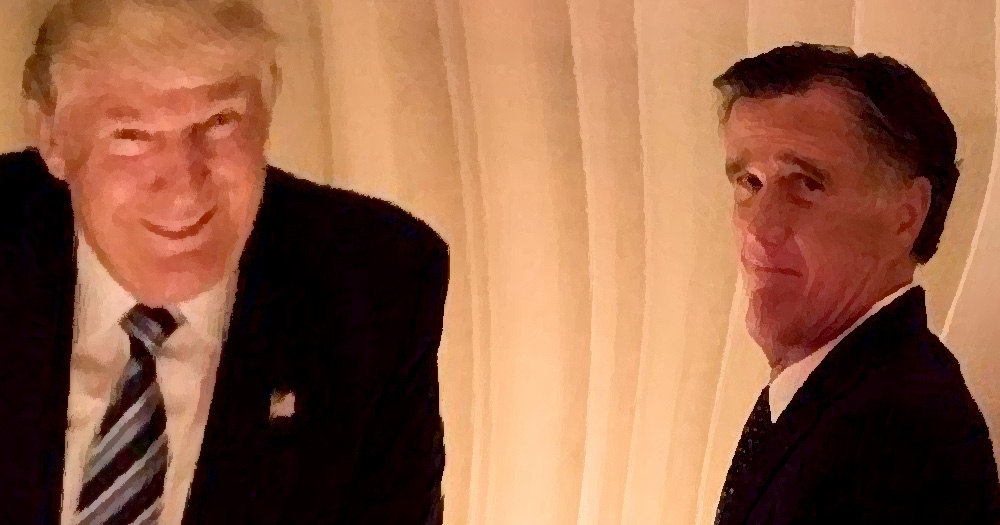
“At a certain point, you have to let go for the democracy to work,” President Barack Obama told HBO’s Bill Maher last week, praising “the wisdom of the founders.”

“There has to be fresh legs,” he continued. “There have to be new people. And you have to have the humility to recognize that you’re a citizen and you go back to being a citizen after this office is over.”

Maher failed to ask Mr. Obama how this “fresh” viewpoint squared with his support for Mrs. Clinton. Nevertheless, let’s applaud the president’s endorsement of term limits.

Speaking of the founders, and limits on power, and this being Election Day, I’m reminded of a commentary in Forbes, back on Election Day four years ago, written by Ed Crane, the man who built the Cato Institute into one of the nation’s preeminent think tanks. Bemoaning the “interminable presidential race,” Crane wished for “a nation in which it really didn’t matter who was elected President, senator or congressman.”

“Don’t get me wrong, because I’m not saying it doesn’t,” explained Crane, “only that it shouldn’t.” He added, “I believe the Founders had a similar view.”

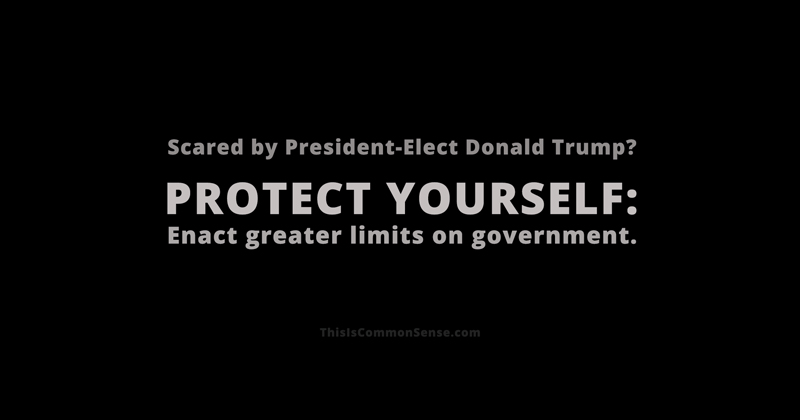
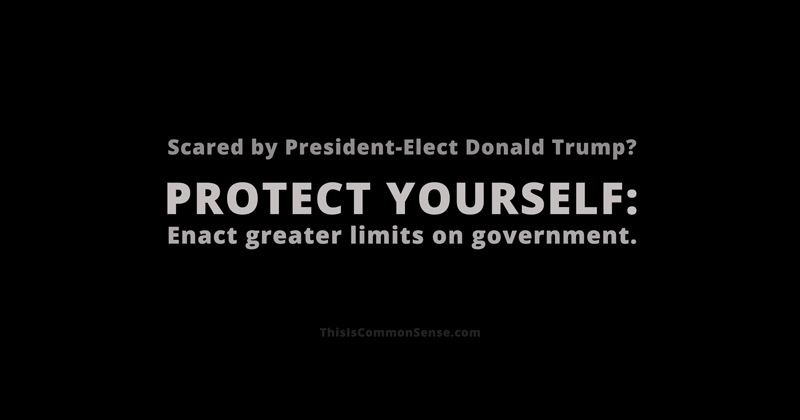
His point is simple: Getting to vote for your next president and senator and congressman is swell, but it’s important to have a Constitution that restrains those elected, so they “don’t have a heck of a lot of power over you or your neighbors.”

“We are a republic of limited governmental ­powers,” or should be, argued Crane. “Such a nation allows for sleep on election night.”

Instead of gnashing of teeth.

This is Common Sense. I’m Paul Jacob.

Printable PDF

Constitution, voting, democracy, Ed Crane, fear


Categories
Accountability ballot access incumbents moral hazard national politics & policies political challengers responsibility

Vote Early & Often?

Voted yet? The Pew Research Center thinks about 50 million Americans have, representing 38.5 percent of the voter turnout forecast.

I’m for making it as easy as possible for people to cast a ballot. Who isn’t? Well, I mean who among normal people isn’t? I’m not counting politicians and their hacks.

But even I am opposed to extended “early voting.”

Here’s why:

First, the longer the voting period goes, the greater the cost — as more paid advertisements, phone calls and mailings are needed to keep reaching voters over many weeks. No problem here with more money in politics — money is essential, and my candidates and ballot issues could certainly always use more promotion. But let’s not artificially advantage big money by running the meter.

Several states now allow more than six weeks of voting prior to so-called Election Day. Even a three-week voting period is far more expensive than building toward a single day — or, say, a weekend through Tuesday voting period (four days).

Second, we ought to vote together, close to the same time, all of us privy to the latest public knowledge. This year’s drip of near daily “October”* surprises, thanks to WikiLeaks and the FBI, shows the potential problem should a major scandal or incident impact the race after so many folks have already voted.

Third, early voting tends to advantage incumbents. Challengers often don’t catch up to the better known and organized incumbent until the final days of the race.

As for voting often, as in more than once, that’s a crime. Plus, with these candidates, once is more than enough.

This is Common Sense. I’m Paul Jacob.
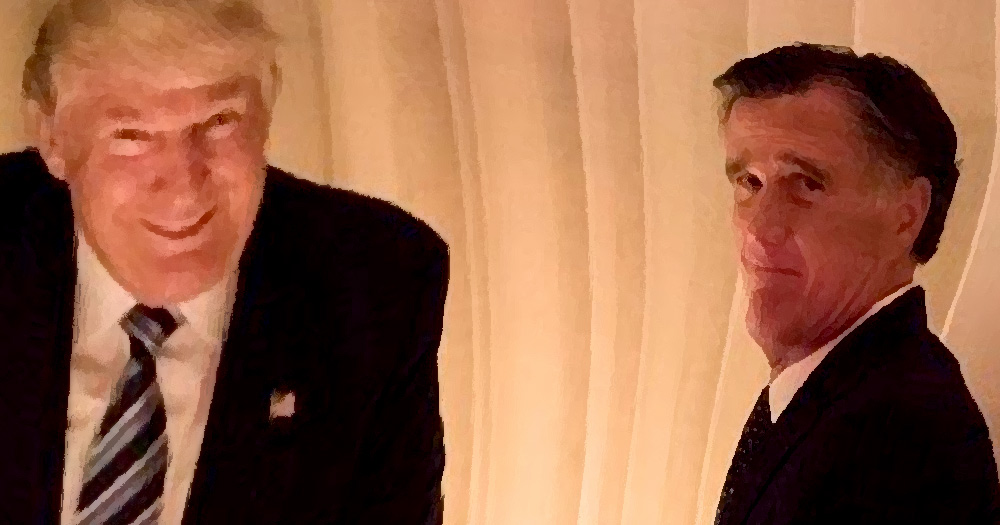
 

*Well into November, some of these surprises, eh? I mean, it is as if they saved the blood rituals for last.


Printable PDF

vote, early, often, democracy, early voting, illustration, joke, meme


Categories
Accountability general freedom initiative, referendum, and recall local leaders media and media people nannyism national politics & policies

Are We Special?

“Cringe-worthy,” said Kyle Clark, co-anchor of 9NEWS in Denver. He was mocking the 10-foot tall, carved, wooden Trojan Horse replica that Amendment 71 opponents are wheeling around the Rocky Mountain State.

Clark admits that Amendment 71 “would make it harder to change Colorado’s constitution,” but doesn’t seem to have any clue just how much harder.*

“Those opponents with their Trojan Horse want to paint 71 as a sneaky power grab by big money interests from out of state,” Clark continued. “Funny, though, when you find out who paid for their horse.”

Wait . . . this is BIG: Who paid for the horse?

“It’s an in-kind contribution from Citizens in Charge Foundation. They’re a group that protects the initiative process around the country. . . . based out of Woodbridge, Virginia,” replied an Amendment 71 opponent.

Hey, that’s my group!

“Amendment 71 might be a Trojan Horse funded by outside interests,” Clark concluded, but it’s “illustrated by the Trojan Horse funded by outside interests.”

Cute . . . but . . . ?

Does Mr. Clark seriously think that (a) an organization dedicated to making the ballot initiative process accessible to all, with no other interest or business before state government, providing a vehicle and a trailer to carry a wooden horse across the state is equivalent to (b) a multi-million-dollar paid media barrage funded largely by oil and gas interests with lucrative interests before state government?

Citizens in Charge Foundation is honored to work with Coloradans to save their initiative rights by defeating 71.

Speaking of interests and who’s paying . . . 9NEWS has received the better part of a million dollars in ad revenue from the interests supporting Amendment 71.

Compared to a peek at a wooden horse from opponents.

Kyle Clark didn’t mention that.

This is Common Sense. I’m Paul Jacob.
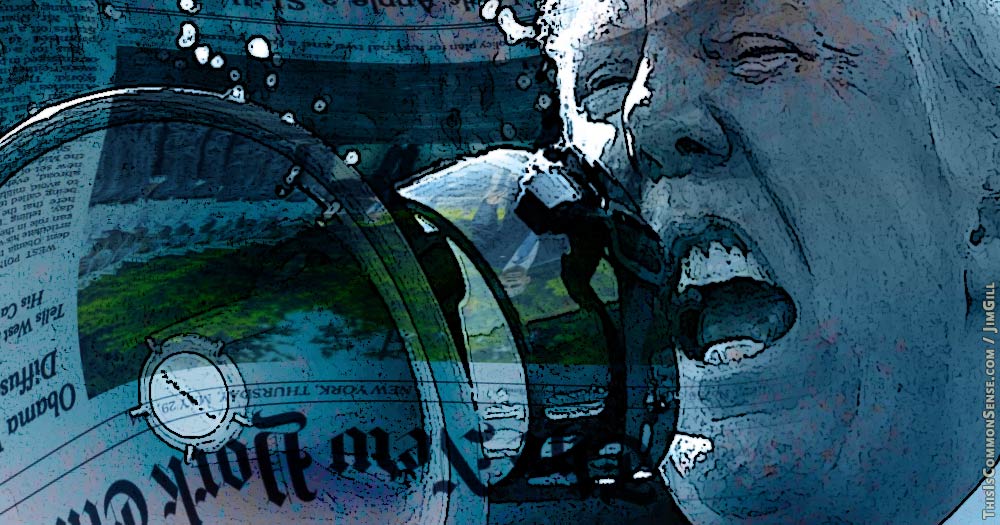
 

P.S. Please help save Colorado by making a contribution right now.


*Coloradans who have actually qualified ballot initiatives say Amendment 71 would kill the process for all but the wealthiest special interests.


Trojan Horse Trails in Colorado


Printable PDF

Trojan Horse, Colorado, Amendment 71, initiative, referendum, Citizens in Charge, Paul Jacob,


Categories
Accountability insider corruption media and media people national politics & policies political challengers responsibility

The Democracy Now

Once upon a time, the Democratic Party was fondly referred to as “The Democracy.”

But that was a long time before the Clintons took control of the party’s heart and soul. It’s certainly been an insider’s game since.

Case in point? The deliberate scuttling of the Bernie Sanders campaign. Debbie Wasserman-Schultz lost her chairperson-ship of the Democratic National Committee because of her (WikiLeaked email) collaboration with the Clintons over the dirty tricks that made sure Bernie got nowhere near the top levers of power.

And now we have Donna Brazile, covertly doing all she can to ensure the election to the Presidency of arguably the most corrupt politician of our time.

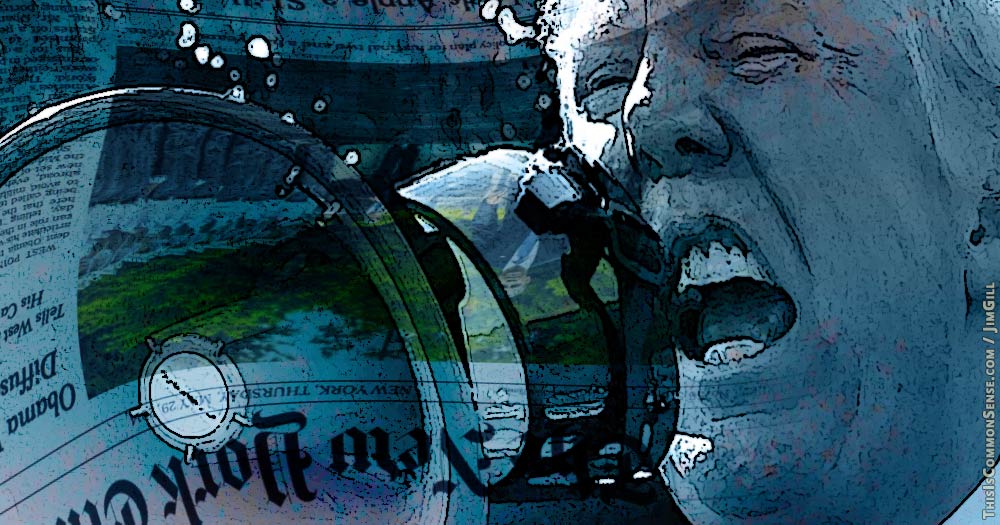
This political operative left CNN’s talking head ranks under a cloud — she had leaked to Clinton campaign communication director Jennifer Palmieri details about a question to be asked at a CNN-hosted presidential debate. Though CNN is not for nothing popularly known as the Clinton News Network, even CNN muckety-mucks felt betrayed.

But when interviewed by the indefatigable Megyn Kelly of Fox News, Brazile defended herself from the charges — “as a Christian woman” who understood “persecution”; she also compared her interviewer to a thief, and blamed Russian hackers.

Now, as a result of another WikiLeaks email exposure, Brazile has been caught again. The network has severed ties with her, and she’s defending herself with lines like “I try to learn as much as I can, share as much as I can.”

Unquestionably.

Having proven her loyalties, it looks like Ms. Brazile’s on track for a job in the new administration.

This is Common Sense. I’m Paul Jacob.

Printable PDF

Donna Brazile, CNN, Hillary Clinton, question, illustration, Common Sense


Illustration based on original (cc) photo by Tim Pierce on Flickr


Categories
Accountability crime and punishment general freedom ideological culture judiciary national politics & policies U.S. Constitution

The Best Case for Trump Isn’t

I support neither Hillary Clinton nor Donald Trump for the presidency. Still, I do understand several reasons to vote for Trump, including, most obviously, “he’s not a Clinton.”

The most persuasive strategic reason given for voting for the man, however, and the one that has most purchase with me, is that he would appoint better Supreme Court justices than would Mrs. Clinton.

Note: if the Democrats gain hold of the U.S. Senate, an elected Donald Trump would “negotiate.” And the next set of Supremes might be quite bad.

But is all this irrelevant? It does not look like Trump will be elected, so any vote thrown at him will be just as “wasted” as a vote for Johnson, Stein, or Mickey Mouse.

More importantly, if Hillary wins, no biggie on the Supreme Court front IF (a big “if”?) the Republicans maintain congressional dominance.

Why?

Our Senators are not required to vote for any of a president’s appointees. But, alas, that is not what Democrats are saying now! Forget such self-serving nonsense. The Constitution does not specify the number of justices on the Supreme Court. It is nine now, sure, but the Highest court in the land was first manned by five justices, then seven.

So, after the election, unpack the court.* Back down to seven, at least.

And then let’s talk terms for the currently “serving for life” justices, and term limits.

In any case, the best case for Trump isn’t so much a case for him, as a plan of action no matter who is elected.

This is Common Sense. I’m Paul Jacob.
 

*This notion is more doable, I think, than Franklin Delano Roosevelt’s infamous court packing scheme, in which he threatened to put more justices in to over-rule those justices who thought his “New Deal” program unconstitutional. Congress, not required to vote in any proposed Supreme Court candidate, could balk at all and then, by law, reduce the number, even removing one justice from office if need be.


Printable PDF

Supreme Court, Congress, Hillary Clinton, Donald Trump, election, illustration


Questions Answered:
Does the best reason to vote for Donald Trump really hold water?
Does the Constitution specify the number of justices that should be on the Court?
Is Congress really at the mercy of any bully who occupies the Oval Office?

Ask the next question. --Theodore SturgeonThe Next Question:
Will voting for someone other than Trump be more of a “wasted vote” than voting for Trump himself, if, as polls indicate, he loses?


Categories
Accountability media and media people moral hazard national politics & policies responsibility

A Leaner Bear

Russia is being painted as Enemy No. 1 by Hillary Clinton, despite her predecessor’s mocking of the same notion four years ago, when Republican Mitt Romney said it.

Of course, Mrs. Clinton is just using Russia as a distraction from her conspiracies and crimes and inadequacies as revealed by WikiLeaks.

What’s more worrying is Russia’s military adventuring, surely.

Before we wander into the morass that is foreign policy, maybe we should consider the Russian military itself . . . and its supporting economy.

Last year, TASS confidently informed us that the military budget was going up 0.8 percent in 2016, with $750 million slated for nuclear weaponry. I still hear talk of the latter fact; not much of the former factoid, that shockingly modest increase.

Even last year it was commonly noted that Russia’s military budget was getting “squeezed” . . . by hard times. Lack of revenue.

Now the hammer has fallen on the sickle: “Russian defence budget set to drop by 12%” in yesterday’s IHS Jane’s 360 article by Craig Caffrey.

First, don’t be alarmed: “defence” is how Brits misspell “defense.”

Second, take heart: Russia simply cannot do all it may want even in its darkest hearts.

Third, take caution: a weaker Russia is still dangerous, in some ways more so. We might see increased (and relatively cheap) cyber-warfare, of which Mrs. Clinton is so particularly mindful.

Finally, let’s acknowledge that American politicians have never focused rationally on the Russian threat, often hyping it gratuitously to enhance their own power, or, for that same reason, ignoring the threat entirely, as when smirking at Romney’s wise concerns.

This is Common Sense. I’m Paul Jacob.

Printable PDF

Hillary Clinton, Russia, Wikileaks


Questions Answered:
Is Russia a threat?
Why are Democrats obsessed with Russia?
Why is Russia reducing its military budget?

Ask the next question. --Theodore Sturgeon

Ask The Next Question:
What kind of defense should a free people insist upon?


Categories
Accountability folly media and media people national politics & policies political challengers

The Un-gaffe-able Hillary Clinton

What a troublesome election season. My wife and I have argued for days . . . over which one of us first blurted out that Clinton’s statement about Mosul, Iraq, in the final presidential debate, was flat-out wrong.

Geographically. Map-wise.

Iraqi and Kurdish troops (with U.S. “advisors” and air cover) have set out to re-take Iraq’s second-largest city, under Islamic State control since June 2014. So both presidential candidates were questioned about it.

“What’s really important here is to understand all the interplay,” stated the former Secretary of State, authoritatively. “Mosul is a Sunni city. Mosul is on the border of Syria.”

The problem for Sec. Clinton?

Mosul is not on the Syrian border.

Syria is 100 miles to the west; Turkey, 75 miles north. Mosul is actually closer to the border of Turkey than Syria.

“It going to be tough fighting, but I think we can take back Mosul and then move on into Syria and take back Raqqa,” Mrs. Clinton asserted. “This is what we have to do.”

Really?

“Mrs. Clinton’s comments were uttered in the context of her strategic plan to take on ISIS,” explains Justin Raimondo of Antiwar.com. “If she really thinks that taking Mosul will somehow provide a gateway to ‘press into Syria,’ then she is in for a big surprise.”

Over at Reason.org, Anthony Fisher found that “Hillary Clinton’s foreign policy gaffe at Wednesday’s debate was noticed by almost no one in the mainstream political commentariat.”

Libertarian Gary Johnson of “What is Aleppo?” fame sure noticed, dubbing the massive coverage of his gaffe and the complete non-coverage of hers “a very hypocritical double standard.”

(Psst — they want her to win.)

This is Common Sense. I’m Paul Jacob.


Printable PDF

Hillary Clinton, Gary Johnson, Mosul, Syria, Turkey, illustration