Categories
Accountability general freedom incumbents term limits too much government

Keystone Correlation

Ninety-three-year-old Robert Mugabe has ruled Zimbabwe with phony elections and brutal repression for the last 30 years. Conversely, only one president in U.S. history has served more than two four-year terms, and after that single exception a constitutional amendment was enacted, limiting the terms of future presidents to the traditional two terms.* 

Americans are better for the limited tenures; Zimbabweans worse for the longevity. 

Recently, Illinois was declared the most dysfunctional state in the union. Illinois also boasts the nation’s longest-serving — and by far the most powerful — Speaker of the House, Michael Madigan. What irony that incumbency should wreck the Land of Lincoln, when favorite son, Honest Abe, represented his Illinois district in Congress for only a single term and then stepped down as was the custom for the local party. 

In bankrupt Harrisburg, Pennsylvania, former Mayor Stephen Reed held power for 28 years (nearly as long as Mugabe and Madigan) during which time he managed to plunge the city into insolvency.

After leaving office, Reed also pled guilty to 20 counts of theft from the city. But was mysteriously sentenced to merely two years of probation.

There’s no question that the city of Harrisburg was traumatized by power being concentrated in one individual for an enormously long period of time,” current Mayor Eric Papenfuse acknowledged. “I don’t think anyone wants to see that again.”

The Harrisburg City Council hasn’t taken any action yet, but there appears to be ample support for term limits across the board, including from council members.

Understanding the correlation between long-serving politicians and long-suffering constituents is the keystone to critical reform.

This is Common Sense. I’m Paul Jacob. 


*  Technically, a president could serve up to ten years, as the 22nd Amendment prohibits a person from being elected president more than twice or if the person has “held the office of President, or acted as President, for more than two years of a term to which some other person was elected President . . . more than once.”


PDF for printing


Categories
Accountability folly free trade & free markets too much government

Jonesing for Disaster

First, do no harm. Second, stop harming.

You might think that these would be the Two Commandments of Government.

But no.

Politicians make a good show of saving us, sure. Sadly, appearance alone suffices. For them. Much easier to announce a new program than get rid of a harmful old one.

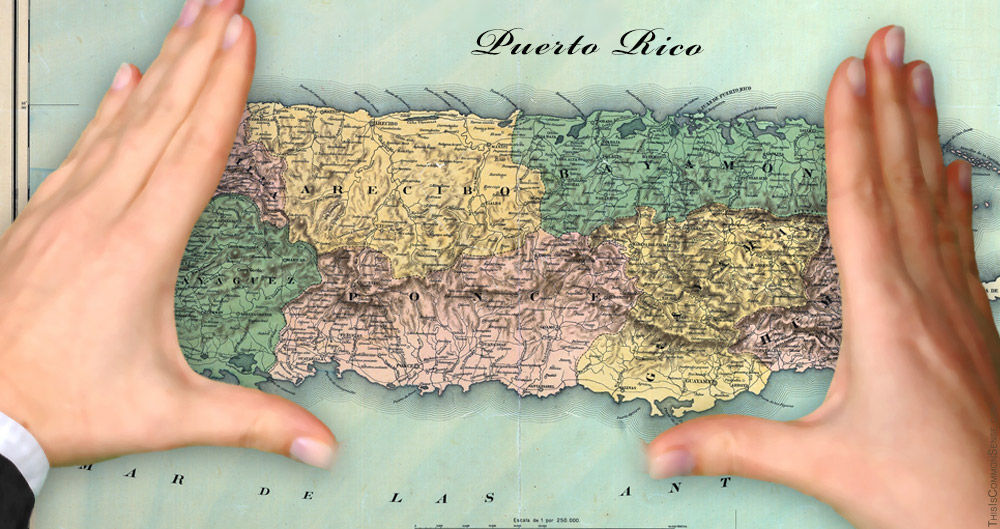
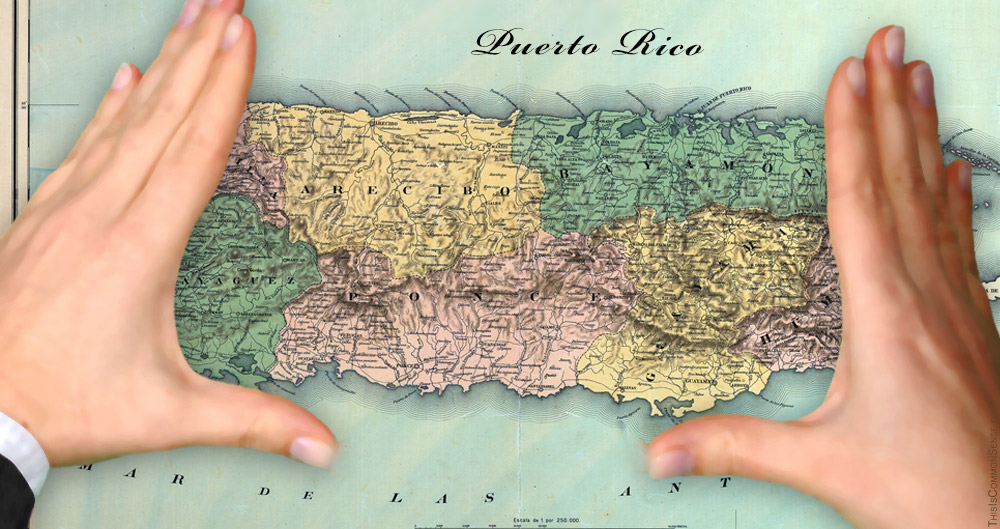
Latest case? Courtesy of a storm and a new president, we now get to witness hurricane recovery mismanagement all over again, but this time outside the continental United States.

“The administration announced some bad news for Puerto Rico,” writes Scott Shackford at Reason. It will not, Mr. Shackford explains, “be waiving the Jones Act, which significantly restricts the ability of foreign or foreign-owned ships from bringing goods to Puerto Rico.”

The “unincorporated U.S. territory” that is the island must take its lumps.

The Jones Act* limits foreign ships port access . . . down to one. The mandate allowing port-to-port commerce only to American-manned ships is designed to save a few jobs and grease a few union wheels in the mainland.

And now, especially, that old, ongoing “centralized government planning for the benefit of a small group of powerful U.S. shipping interests” amounts to a real kick to a people already devastated by Hurricane Maria.

Closing ports to much needed help doesn’t help. An emergency order could suspend the ongoing harm of throwing roadblocks in the way of a swift recovery and rebuilding.

Or Congress could repeal the Jones Act entirely.

Neither is likely.

So the wounded Puerto Ricans — prior to the storm hobbled by years of territorial misgovernance — can expect more fake government help.

This is Common sense. I’m Paul Jacob.


* Not to be confused with the Jones-Shafroth Act of 1917, which set up territorial  governance of the island.


PDF for printing


Categories
Accountability general freedom ideological culture media and media people moral hazard nannyism national politics & policies

Off the Field

At last Friday’s event to rally support* for Sen. Luther Strange, the Mitch McConnell-financed establishment candidate in today’s GOP runoff in Alabama, President Donald J. Trump veered — as he is wont to do — off topic: the NFL players refusing to stand for the national anthem.

Wouldn’t you love to see one of these NFL owners,” the commander-in-chief asked the crowd, “when somebody disrespects our flag, to say, ‘Get that son of a bitch off the field right now. Out! He’s fired!’?”

Trump’s trash-talking touched off bigger protests before Sunday’s games. Some argued the president was undermining freedom of expression. But, of course, the president was freely expressing himself.

And no doubt speaking for many others.

Polling conducted last year, after former San Francisco 49ers quarterback Colin Kaepernick first took a knee during the pregame anthem — which started this trend — found a majority opposed to his actions.

“NFL ratings are down massively,” the President correctly remarked.

The National Football League’s television ratings dropped 8 percent last year, and so far 2017’s ratings are down an additional 15 percent. Moreover, in a massive JD Power survey, the protests during the anthem were the top reason given for not watching the NFL.

Of course, Kaepernick was making a political statement, not trying to maximize his dollar-value in the marketplace. The now mysteriously unemployed quarterback said a year ago, “If they take football away, my endorsements from me, I know that I stood up for what is right.”

Whether one agrees with Kaepernick or not, he is paying a steep price to make a point. Firing folks won’t silence the message.

This is Common Sense. I’m Paul Jacob. 


* The president oddly quipped of his Strange endorsement: “There is something called loyalty, and I might have made a mistake and I’ll be honest, I might have made a mistake.” Trump added that Strange and his GOP opponent, Judge Roy Moore, were “both good men” and he would campaign hard for either Republican.


PDF for printing


Categories
Accountability folly general freedom ideological culture media and media people national politics & policies too much government

We Are At War — So What Else Is New?

As if on some hellish, punitive treadmill, we keep “experiencing” the last federal election, over and over.

Hillary Clinton, who didn’t get a majority of all votes and who lost in the Electoral College, keeps on grinding through her long list of people who failed her.

Her nuttiest charge, that “Russia ‘Hacked’ the election,” reached its apogee, last week, in the bizarre video featuring Morgan Freeman. The actor, who’s played both the President and God, intones that “We have been attacked; we are at war.”

Financed by a cobbled-together Committee to Investigate Russia, the notion seems to be: stretch Hillary Clinton’s conspiracy theory into the talking points for . . . a coup d’état.

Congress is, of course, investigating “what Russia did.”

Unearthed, so far? Not much.

As James Freeman wrote, in The Wall Street Journal, considering the paltry Russian presence on Facebook, “if Russian disinformation managed to change the outcome of the U.S. presidential contest, the Kremlin must have created the most influential advertising in the history of marketing.”

And when you add in the FBI’s multiple FISA requests to bug Trump’s campaign manager, it’s hard not to come to this conclusion: it was not Trump, but the Deep State that colluded with the Russians.

The Committee/Freeman video talks about “using social media to present propaganda and false information,” which puts the “hack” on the level of ideas — not real manipulation. Propaganda from the Kremlin is not appreciably different from propaganda from Clinton or Trump.

Lies were everywhere, and if “false information” were worth declaring war over, the American people would have revolted against Washington, D.C., decades ago.

This is Common Sense. I’m Paul Jacob.


PDF for printing


Categories
Accountability ballot access general freedom government transparency ideological culture initiative, referendum, and recall insider corruption local leaders national politics & policies property rights Regulating Protest responsibility too much government U.S. Constitution

The Great Faction

Politics isn’t a pretty business.

Frédéric Bastiat called the beast it serves “that great fiction” not because it doesn’t exist — intrusive state power sure persists — but rather because what it promises cannot really happen: “everyone living at the expense of everyone else.”

What can we do? How do we counteract a game that is rigged to increase the insanity, not reduce it?

Last week I indicated one thing a minor party with that goal in mind could do: use its power of spoiling elections to change major party behavior, and thus give citizens a fighting chance to restrain governmental metastasis.

Cancer.

I also suggested “blackmailing” the major parties into setting up a system of voting that . . . ends the power to blackmail! I believe that system — ranked choice voting — holds many positives, not the least of which is ending strategic voting, wherein voters are tempted to “falsify” their own preferences and support candidates they might dislike. This is as corrupting to the citizenry as the Great Fiction itself.

Let’s hope a savvy minor party leverages the major parties, gaining reforms to improve the system. Regardless, we can all — independently — push two other limits on political power:

  1. term limits at all levels, and
  2. initiative and referendum rights in all the states, not just the 26 that have it now.

Initiative and referendum rights would give ordinary citizens the leverage to possibly restrain the mad rush to live at each others’ expense. With the initiative, citizens can gain term limits, which produce more competitive legislative elections and lead to fewer legislators captured by the interests loitering in the capitol.

This is Common Sense. I’m Paul Jacob.


PDF for printing


Categories
Accountability free trade & free markets general freedom moral hazard nannyism responsibility too much government

Wabbit Season — or Duck Responsibility Season?

Venezuelans are starving. The country’s children are malnourished and — if something is not done soon — “it will be very difficult for these children ever to get back onto their nutritional growth curve.”

That is the testimony of the director of Caritas Venezuela.

Clearly, “Bolivarian” socialism has failed.

And yet, dictator Nicolas Maduro blames American “sanctions” for “exacerbating” the situation.

And offers up a “Rabbit Plan” to feed the people.

Yes, Maduro has called upon his countrymen to raise rabbits . . . and eat them.

But the source of the dark comedy isn’t just a dictator waxing eloquent on bunnies. “There is a cultural problem because we have been taught that rabbits are cute pets,” said the agriculture czar . . . whose first name is “Freddy.”

Holding a televised press conference with Maduro himself, last week, he insisted that “a rabbit is not a pet; it’s two-and-a-half kilos of meat that is high in protein, with no cholesterol.”

The funny part — the gallows humor, here — is this is what the grand planning of socialism has come to: not mass collaboration and an extended division of labor, but the people feeding themselves on small plots of land.

The Inca had developed a more effective mode of socialism.*

Just as humiliating for Bolivarians must be the trade embargo charge. Socialism is all about how superior government control is to the “anarchy in production” of market life. To blame their problems even a little on a capitalist country >not trading with them doesn’t merely admit defeat, it evades the last shred of responsibility.

I have a better “Rabbit Plan”: the tyrants should hop on down the bunny trail . . . freeing Venezuelans to recover.

This is Common Sense. I’m Paul Jacob.


* It depended upon radical inegalitarianism, subordination, drudgery, servility, and lack of any meaningful freedom.


PDF for printing


Categories
Accountability crime and punishment government transparency moral hazard responsibility too much government

Half a Win Is Better than None

Jennifer Anderson criticized her local sheriff. Her family’s home was raided in 2016 by the sheriff as a result.

Terrebonne Parish Sheriff Jerry Larpenter’s reaction to criticism was ugly and unconscionable, but it hasn’t been allowed to stand. On the other hand, the sheriff hasn’t been adequately punished, either.

Jennifer Anderson’s pseudonymous blog ExposeDAT criticized various public figures in Terrebonne Parish, Louisiana, including with respect to the business relationships between Larpenter and others. Bridling at the criticism — which had to do with assessment of publicly available facts — the sheriff submitted warrants to Facebook and AT&T to track down the identity of the blogger. Then he sent men to raid the Andersons’ home and grab computers and cell phones.

The Andersons fought back, suing in federal court. They wanted the raid and seizure and search of their private stuff to be declared unconstitutional.

Finally, this September, the Andersons reached an undisclosed settlement with Larpenter out of court. According to its terms, the Andersons aren’t allowed to discuss it any detail. But their attorney says the settlement is “a victory for citizens’ right to be critical of their elected officials without fear of retribution.” U.S. District Court Judge Lance Africk has said that “Jennifer Anderson’s speech [in her blog] falls squarely within the four corners of the First Amendment.”

All that’s fine, but why hasn’t this sheriff also at least been kicked out of his job for his blatant abuse of power?

This is Common Sense. I’m Paul Jacob.


PDF for printing


Categories
Accountability ideological culture local leaders national politics & policies political challengers responsibility

Crazy Like a … Spoiler

Seven Republican members of Congress — three in the last two weeks — have announced their retirement.* The Democrats, needing 24 additional seats to gain a majority, see an opening.

Steve Kornacki, MSNBC’s national political correspondent, calls these seven “pure retirements.” That is, these politicians aren’t seeking another office, they suffer from no scandal, and are “pretty good at getting re-elected”; they’re “just deciding to leave.” Kornacki notes that the GOP had eight pure retirements in 2006 when they lost the House, and the Democrats had eleven when their majority was destroyed in 2010.

On his MSNBC program, The 11th Hour, an exasperated Brian Williams complained, “On top of all that, since down is up and up is down, Bannon [is] threatening to — to use the verb of the moment — primary incumbent Republicans! Which is crazy.”

Williams refers to Steve Bannon, late of the Trump administration and now back at the helm of Breitbart News. Bannon is now working, as CNN reported, with “conservative mega-donor Robert Mercer, who is prepared to pour millions of dollars into attacks on GOP incumbents.” Incumbent Republicans thwarting Trump, that is.

“I don’t think anyone should be surprised,” remarked Ned Ryun, American Majority’s CEO. “It’s a natural reaction by the base to what they’ve perceived as a perhaps intentional inability to pass any Trump agenda items.”**  

Ah, more spoilers! This week we’ve talked about Libertarian spoilers; now, pro-Trump spoilers. And, for years, non-profit groups such as the Club for Growth and U.S. Term Limits have helped a challenger against an incumbent, and been dubbed dangerous to Republican hegemony for their trouble.

Seems what connects all these anti-establishment folks is a commitment to principle over power.

This is Common Sense. I’m Paul Jacob.


*  The retiring Republicans are Rep. Sam Johnson (R, TX-3), Rep. Lynn Jenkins (R, KS-2), Rep. Ileana Ros-Lehtinen (R, FL-27), Rep. John Duncan Jr. (R, TN-2), Rep. Dave Reichert (R, WA-9), Rep. Charlie Dent (R, PA-15), and Rep. Dave Trott (R, MI-11).

** Steve Kornacki responded to Brian Williams: “Absolutely unheard of for a nominee in either party to have that complete lack of support from Capitol Hill and then go out there and win the nomination [for president]. . . . You have this element where all these members of Congress, even though it’s a president of their party on paper, don’t really feel they’re part of this presidency.”


PDF for printing


Categories
Accountability ballot access folly media and media people moral hazard national politics & policies political challengers term limits

If This Be Blackmail. . .

The Republican Party now boasts of more positions of power than . . . ever? And yet the GOP is in danger of falling apart.

The Democrats, now forced to endure Hillary Clinton’s new absurdity, What Happened, appear at wits’ end. They just do not “get it.”

Alas, “not getting it” is not limited to the major parties. The Libertarian Party (which is my subject this week) has been around since 1972 . . . doing the same things over and over . . . with spectacular lack of electoral success.*

Sure, the party has had no small subtle influence — perhaps most notably the change in marijuana policies. Yet it could have even more. Without electing anybody, as I argued yesterday.

But that’s just the tip of the Titanic-killer.

Not only could party organizers threaten the major parties with running — and taking away votes — based on their candidates’ positions, Libertarian organizers could also threaten to run against candidates who will not publicly take up the cause of electoral reform.

Particularly, ranked choice voting.

Because of our first-past-the-post elections, Libertarians tend to take away votes from those most similar to themselves. With ranked choice voting (see a sample ballot), a voter whose favorite is a Libertarian will have his second-favorite choice count** towards that candidate; minor party candidates would no longer work as spoilers.

And that would allow voters to embrace their real preferences, not pretend to like candidates they actually distrust.

Since major party candidates would, in most circumstances, be hurt less by those closest to them, they should be willing to be “blackmailed” on this.

Jumping into the briar patch of supporting fresh reform to stop the spoilers.

This is Common Sense. I’m Paul Jacob.


*  The 3 million odd votes for the Johnson/Weld presidential ticket, though a leap ahead from previous outings, was seen by many as a disappointment: that’s all the dynamic duo of former governors could do in a year with the unpopular duo of Trump and Clinton as R and D standard-bearers?

** That is, in cases where only a small percentage of the vote favors the Libertarian most.


PDF for printing


Categories
Accountability general freedom national politics & policies responsibility too much government

It Didn’t Last

“September 11 is one of our worst days but it brought out the best in us,” proclaimed Tennessee Senator Lamar Alexander.

Today is the 16th anniversary of that terrible day . . . arriving as Hurricane Irma smashes into Florida and with fresh memories of so many acts of kindness and heroism by first responders and minuteman citizen volunteers alike rescuing folks from the recent flooding in Houston caused by Hurricane Harvey.

“These acts of mass murder were intended to frighten our nation into chaos and retreat,” then-President George W. Bush told the American people that frightful evening. “But they have failed. Our country is strong. A great people has been moved to defend a great nation.”

He was correct about the people of this country. All kinds of folks stepped up in a myriad of ways to help.

But what about the government?

Well, the “public’s trust in government,” according to Pew Research, “which was mired in the 30% range through much of the past decade, doubled in the wake of the attacks.”

That uptick wasn’t to last. Public disgust with the federal government reverted to form. By 2015, reports Pew, “Only 19% of Americans today say they can trust the government in Washington to do what is right ‘just about always’ (3%) or ‘most of the time’ (16%).”

What happened?

Well, have you met the Washington politicians?

And can our country really be “strong,” as Mr. Bush declared, if government cannot earn the trust of even one of every five Americans?

This is Common Sense. I’m Paul Jacob.


PDF for printing