Categories
Accountability crime and punishment folly general freedom local leaders moral hazard nannyism national politics & policies Popular privacy Regulating Protest too much government

The Last Straw

How much should we fine waiters who destroy our planet?

For how long should they go to jail?

I don’t know where you would hold such an evildoer after the earth has been destroyed. Or where he’d go when released. But we’re speaking hypothetically. Assume that planet-destroyers can be imprisoned on the moon, which let’s just say still orbits the earth’s decimated remains. Or assume that after being destroyed, the planet can be reconstructed. After serving his sentence, then, the waiter would be released to a reconstructed earth.

In that case, a maximum $1,000 fine as suggested by Ian Calderon, Democratic majority leader of the California State Assembly, seems only fair. However, a maximum of six months in jail is excessive. In my opinion, planet-destroying waiters should suffer no more than 100 days in jail.

Calderon has proposed a bill, AB-1884, to fine and/or imprison waiters who offer unsolicited plastic straws to restaurant patrons. In response to criticism of his silly and vicious bill, Calderon says hey, it’s “NOT a ban” on straws! Oh, okay. Anyway, “Penalties are based on the code section the bill is currently in, which it will be amended out of,” which sounds like Calderon was prior to the uproar . . . what, joking?

As long as we’re amending, let me amend my own implication that people who offer, use, make or sell plastic straws* are in fact helping destroy earth. Just kidding!

The earth will survive plastic straws. Will it survive the Calderons of the world?

Open question.

This is Common Sense. I’m Paul Jacob.


* Not that I’m confirming or denying ever using one myself.


PDF for printing


Categories
Accountability ideological culture media and media people moral hazard national politics & policies responsibility term limits too much government

The Politics of Inertia

Congress’s failure to establish, last week, any semblance of budgetary responsibility led to one of those “government shutdowns” that the press likes to yammer about so breathlessly.

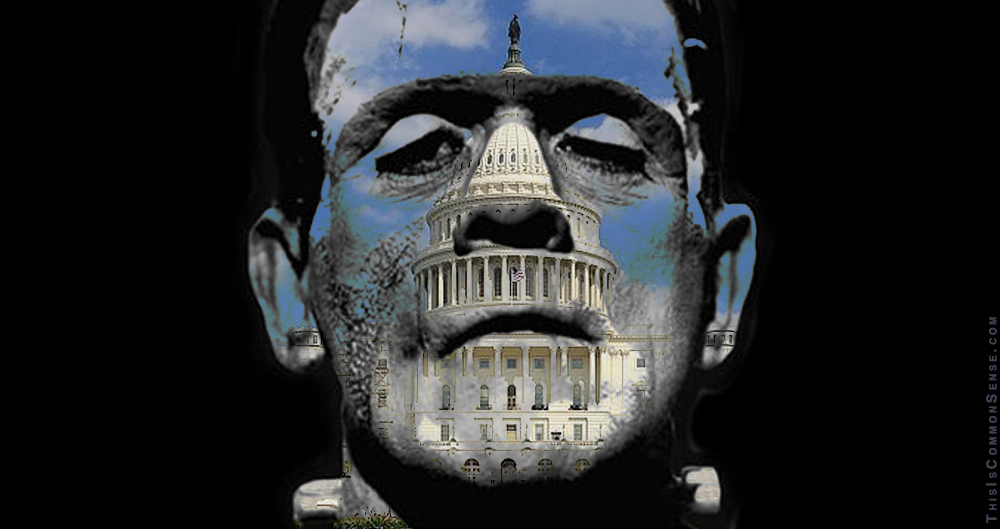
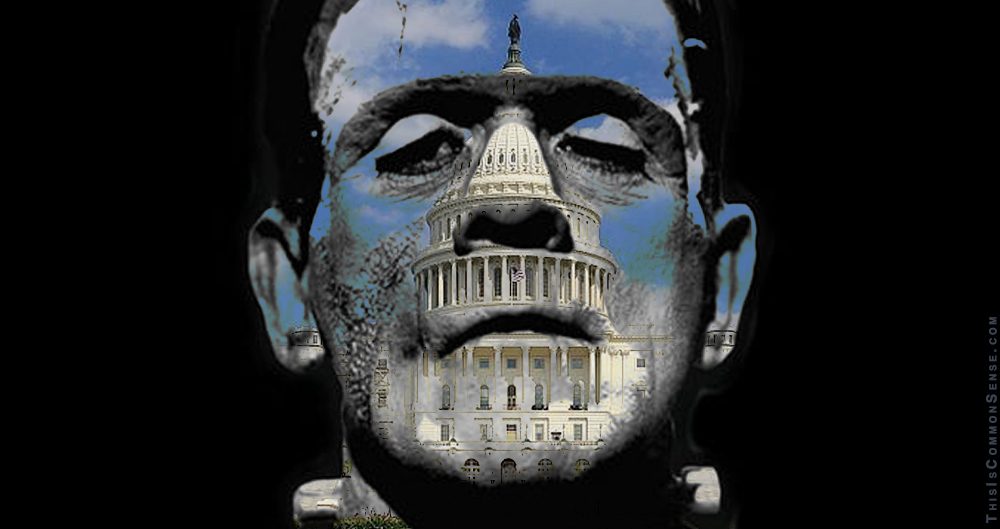
Then, early this week, Senate holdouts caved, allowing a short-term fix to bring the federal government fully back to life, like the monster in Dr. Frankenstein’s lab given a defibrillator jolt.

Usually these government shutdowns are caused by Republicans not playing along — Obamacare being the sticking point most recently — but this time the desperate negotiators were Sen. Chuck Schumer (D -NY) and his Democrat gang, whose “heroic” stance was all about immigration reform and “the Dreamers.”

After they folded, and the Monster was bequeathed new life, CNN’s Brooke Baldwin asked former Democratic National Committee chair Rep. Debbie Wasserman Schultz what her party had gained from its temporary obstructionism.

Her answer? “Potential for momentum.”

That had to be one of the more bizarrely drawn happy faces over complete and utter failure that we have witnessed since . . . well, the last one.

Even Ms. Baldwin was incredulous.*

The Democratic Party’s disarray is astounding. If any party has momentum on its side, it is the party of Andy Jackson and William Jennings Bryan, the party of the elitist media, insider government and the Deep State, and the resistance to Trump.

So why its current pathetic fortune? Because the Democrats have rested so long upon their “momentum.”

Inertia can sure have its downside.

On the “bright side,” Democrats will have occasion to revisit this, for no real budget has been established. All Congress even tries to do these days is provide temporary fix after temporary fix.

Call it potential for catastrophe.

This is Common Sense. I’m Paul Jacob.


* The CNN anchor may have been nonplussed by the specter of entropy in the odd Newtonian metaphor.


PDF for printing


Categories
Accountability crime and punishment general freedom government transparency ideological culture moral hazard national politics & policies Regulating Protest tax policy too much government

Still at Large

Blogger Paul Caron, dean of Pepperdine Law School, still counts the days since we learned that the IRS was blocking applications for nonprofit status from right-leaning groups at the behest of former IRS honcho Lois Lerner.

Now years later, the agency can still arbitrarily victimize any one of us. Nor have Lerner and other bad guys been brought to justice. Lerner collects a six-figure pension, instead.

And so, on Day 1699, Caron highlighted Kimberly Strassel’s proposal that President Trump make 2018 “the year of civil-service reform — a root-and-branch overhaul of the government itself. Call it Operation Drain the Swamp.” Exhibit A? The IRS and civil “servants” like “Lois Lerner, the IRS official who used her powers to silence conservative nonprofits.”  

And on Day 1709, Caron called our attention to Lerner’s attempt to suppress a deposition she gave in June “for a civil suit that victims [of IRS targeting] brought in 2013.” Lerner thinks we have no right to know why she felt justified in discriminating against applicants for tax-exempt status based on their political viewpoint.

Unfortunately, not everyone cares about justice as much as Caron.

Consider an obtuse Washington Post editorial pretending that the IRS didn’t really target conservative groups. Instead, “conservative groups, their allies in Congress and the IRS itself all bear responsibility” for the appearance otherwise.

And the aftermath.

Uh huh. If only victims of the abuse of power would stop being so indelicate as to object!

This is Common Sense. I’m Paul Jacob.


PDF for printing


Categories
Accountability ideological culture media and media people moral hazard national politics & policies

Ho Hum

The President of the United States allegedly had an affair — or a one-night stand with attempts at an affair — with a porn star. And paid her to keep silent. While he was married to his current wife, and his son was an infant. Donald Trump denies it, but a variety of reporters claim to have multiple corroborations.

It’s all very tawdry.

And it looks like it has elicited . . . yawns.

Sure, the newsmedia push it. But the American people seem almost bored.

The election of Donald Trump marks the end of an era, maybe. Trump has overwhelming support from social conservatives, and it isn’t for his morals. Meanwhile, the Left loathes the Donald for alleged mistreatment of women, which they deemed so unimportant when documented against President Bill Clinton that it birthed the “move on” movement.

So, what changed?

The political divide between left and right is now so forbidding that questions of character pale. Democrats won’t like Trump even were he to usher in the Millennium, and Trump might have to tattoo a 666 on his forehead and anoint himself the Beast to shake off his so-con support.

For conservatives, the prospect of a Hillary Clinton presidency, after eight years of Obamamania in the media, was simply too much to bear. Indeed, a large swarth of the Democratic Party faithful didn’t quite trust her.

As for Democrats, the inability to defeat an opposing candidate caught on audiotape bragging about grabbing women’s private parts must be as frustrating as devil-with-a-blue-dress Bill’s success in the 1990s was for Republicans.

Character? So passé.

I wonder if it will come back.

This is Common Sense. I’m Paul Jacob.


PDF for printing


Categories
Accountability First Amendment rights general freedom media and media people

Pravda in the Izvestia

Back in the USSR’s heyday, the joke about the two major newspapers, Pravda (meaning “truth” — and published by the Communist Party) and Izvestia (meaning “news” — and published by the Soviet State), was that “there’s no Truth in the News and no News in the Truth.”

Nowadays, in Trump’s America, we have fake news. And one reason Donald Trump won the presidency was his defiant stance against the “lying press.”

Which is why, when Trump announced, last week, his intent to give out awards to the news media for their top “fake news” stories of 2017, he was playing to his base. This week he announced his picks. It did not exactly bowl everyone over.

Indeed, I am going to skip most of it, noticing only that the press whined a bit and picked at the list on technical grounds, and that Sen. Flake gave Trump some flak.

But Trump’s pick for First Place is worth thinking about.

And the Duranty* goes toNew York Times economist Paul Krugman!

What for? The Nobel Laureate’s insane and unhinged prediction immediately after Trump’s win: “We are very probably looking at a global recession, with no end in sight.”

An embarrassing play for Doomsayer Attention, which has been “trumped” (so to speak) by new record stock market highs.

Of course, a global depression may be in the offing — but it probably won’t be Trump’s fault, and Krugman is totally resistant to acknowledging that dire event’s likely structural causes (debt, Fed policy).

But note: prophecy isn’t “news,” and in announcing the award Trump characterized his win in 2016 as a “landslide.”

So save a Duranty for Trump.

This is Common Sense. I’m Paul Jacob.


* My term, not a “Newsy” or “Fakesy,” and named, of course, after Walter Duranty, the Times’ Pulitzer Winning Fake News apologist for the Soviet Union and Stalin, back in the 1930s.


PDF for printing


Categories
Accountability crime and punishment government transparency media and media people moral hazard national politics & policies privacy Snowden

Clapper into the Clink?

Lying to Congress is a strange crime. A number of people have been prosecuted for it over the years, but Congress isn’t a court of law and, more to the point, Congress may present the densest source of lies in the United States.

The idea that it would be illegal for a citizen to lie to a den of liars is, well, a bit amusing.

But it is illegal, and definitely should be illegal, for government functionaries to give false testimony before Congress.

That’s why the case of the admittedly “untruthful”* James Clapper is so aggravating. When asked by Senator Ron Wyden, on the Senate floor, about data collection of phone calls by the U.S. federal government, he — the director of national intelligence under President Barack Obama from 2010 to 2017 — lied through his teeth.

And had not Edward Snowden leaked information on the National Security Administration’s metadata collection program, we would not have learned anything about it.

No wonder, then, that several congressmen want to prosecute Clapper before March 12, when the Statute of Limitations runs out on his crime. Steven Nelson at the Washington Examiner quotes Rep. Ted Poe (R-Tex.), Rep. Thomas Massie (R-Ky.), Rep. Louie Gohmert (R-Tex.), and Rep. James Sensenbrenner (R-Wis.) as all being in favor of siccing federal prosecutors on the forked tongue spymaster.

Senator Wyden warns that letting lies such as Clapper’s go unaddressed encourages Americans to be cynical about government, and “makes it possible, even probable, for hucksters and authoritarians to take power.”

Too late?

This is Common Sense. I’m Paul Jacob.


* Clapper’s March 2013 whopper at the Senate Intelligence Committee hearing was that the NSA was “not wittingly” collecting “any type of data at all” on millions of Americans. Later, to MSNBC, he characterized his artful dodge as having been “the least untruthful” way for him to respond.


PDF for printing


Categories
Accountability crime and punishment First Amendment rights general freedom government transparency local leaders moral hazard Regulating Protest too much government U.S. Constitution

Lock Her Up

“Who Are We?” I asked Sunday at Townhall.com.

Today’s question: What have we come to?

Under a seemingly click-bait headline in The Atlantic, “Can Government Officials Have You Arrested for Speaking to Them?” Garrett Epps examines last week’s outrageous handcuffing and arrest of a Louisiana teacher, Deyshia Hargrave, for speech displeasing to the Vermilion Parish school board at a public meeting.

The elementary school teacher complained about a $30,000 raise the board was giving the superintendent, noting that teachers had not seen an increase in nearly a decade. After asserting that the raise would be “basically taken out of the pockets of teachers,” she was ruled out of order by the school board president and then asked to leave the premises. She calmly left the meeting room . . . only to be forced to the floor, handcuffed and arrested once in the hallway.

Police claimed the arrest was for “remaining after having been forbidden” and “resisting an officer.”

The school district announced it won’t press charges. Very funny. Anyone can see from the video that her treatment was excessive.

Next month, the U.S. Supreme Court will hear oral arguments in Lozman v. Riviera Beach, Florida, where an arrest was clearly retaliatory, but the city is newly claiming another violation it could have used to arrest Mr. Lozman.

Does this after-the-fact adding on of charges provide governments with an escape clause? As Epps argues, a Lozman decision “could either rein in, or embolden, the tiny-handed tyrants who rule county buildings and city halls around the country.”

If respectfully challenging our so-called public servants in meetings designed for that can lead to being arrested, handcuffed and dragged off, we no longer live in ‘the land of the free.’

This is Common Sense. I’m Paul Jacob.


PDF for printing


Categories
Accountability folly government transparency local leaders moral hazard porkbarrel politics responsibility too much government

Babylon Goes Broke

A few Babylonian, er, California cities going bankrupt — Stockton, Vallejo, and Bell — should be seen as more than dead canaries in a coalminer’s care.

Indeed, you don’t need special prophetic gifts to see the dangers posed by over-promising cushy pensions to government workers. Californians are coming around. And the state’s governor, Jerry Brown, appears to be “calling for reductions in gold-plated, unsustainable public-sector pensions,” as Nick Gillespie informs us at Reason.

But statewide reforms will not be easy. The problem is huge, presenting grave costs. “Absent the ability to alter pensions, states and localities have to devote more and more of their taxes to simply covering the costs of retired workers,” Gillespie explains. “Worse still, they often raise taxes to cover rising costs, typically at the expense of providing basic services such as police and road maintenance.”

Yes, over-promising defined-benefit pension packages effectively distributes wealth away from basic government services and into the pockets of the people with whom politicians work most closely.

Unfortunately, the courts long ago decided that politicians’ promises to employees outweigh basic government duties. That is, the courts determined that “public-sector employees at all levels of government had an inviolable right to the pension benefits that existed on the day they were hired.”

But the courts seem to be lightening up on this “California Rule,” and the governor has dared mention that, come “the next recession,” some headway might be possible.

No matter what you may think of this rather desperate hope, the writing is on the wall. And it is in red ink and numbers, not Babylonian.*

As America’s Babylon is finding out.

This is Common Sense. I’m Paul Jacob.


* And not “Mene, Mene, Tekel, Upharsin.”


PDF for printing


Categories
Accountability government transparency insider corruption moral hazard national politics & policies porkbarrel politics too much government

Earmark This Bad Argument

With President Trump endorsing a return to earmarks, House Republicans too are reportedly “reconsidering” their usefulness and pondering “how they might ease back into the practice.” Lawmakers fret that they have lost too much power by giving up this instrument of corruption. (Not their characterization.)

Wikipedia defines “earmark” as a budgetary provision that “directs funds to a specific recipient while circumventing the merit-based or [competitive] allocation process.” An earmark is a taxpayer-funded goodie bestowed on a congressman’s constituent, the sort of crony willing to contribute to the bestower’s next election campaign in return.

Quid pro quo, pay-for-play, bribery. Whatever you call it, there’s darn good reason why political leaders who fight corruption have fought to end earmarks.

Congressional Republicans imposed a ban on earmarks in 2011 to show that they were anti-corruption. So why relapse? Well, “the time is right,” according to GOP Representative John Culberson, for Congress to prove it can use earmarks responsibly. His bad argument is that the “excesses” of a decade ago were committed by “knuckleheads [who] went overboard.”

Somebody alert Culberson to the fact that many of the same knuckleheads are still in office. Ahem. Congress is not yet term-limited, remember?

The more basic point is that earmarks are by nature corrosive of sound government. President Trump’s only metric is apparently “getting [things] done” as opposed to obstructionism, preferring “the great friendliness” when we had earmarks. Sure, stuff got done — a lot more spending, a lot more bad stuff.

To the extent they’re gone, earmarks should stay gone. The only appropriate action is to make it even harder to bring them back.

This is Common Sense. I’m Paul Jacob.


PDF for printing


Categories
Accountability general freedom moral hazard nannyism national politics & policies privacy tax policy

Hey, It’s Your Money

I leave it up to you how to spend your own money. You decide, based on your own circumstances and priorities.

Oh, you don’t need my permission?

Of course not.

But some people think that if you spend your own money on your own priorities in accordance with your own judgment, it is indeed a problem. At least when you get to keep more of your own money because of tax cuts.

President Trump has often suggested that recipients of new corporate tax cuts will spend the additional money mostly on increasing wages and hiring new workers. Yet some major corporations reportedly say that they will spend the additional money on paying dividends or buying back shares. Maybe others will buy more advertising, storage space or tools. Various commentators fret. But why should a firm hire new workers if other expenditures would be more productive at the moment?

Of course, in the long run, a company that is more profitable and successful can hire more people and can pay them more.

But wages are not the only expense that companies must cover in order to be successful in the long run. Managers do, and should, devote resources first to the improvements that they conclude are most urgent. That a company’s resources increase because of a tax cut doesn’t alter the necessity or reasonableness of pursuing economic goals in accordance with one’s best judgment.

An approach that, to be sure, also benefits present employees as well as future ones.

This is Common Sense. I’m Paul Jacob.


PDF for printing