Categories
folly free trade & free markets general freedom ideological culture too much government

Bitter Pill

When Martin Shkreli, CEO of Turing Pharmaceuticals, announced his August acquisition of Daraprim, the only available version of the anti-parasitic pyrimethamine, and his plan to raise its price from under $14.00 to $750 per dose, I did not comment. Everybody else seemed to know exactly how evil the man was, and how awful the system that allowed his machinations.

I knew only that I didn’t know enough.

After reading Mary J. Ruwart’s “The $750 Pill: Corporate Greed, Excessive Regulation—or Both?,” I’m glad I waited. According to Dr. Ruwart, who has worked in the pharmaceutical industry, even the barest facts in the case incite suspicion:

Daraprim was patented in the 1950s, and is used for treating parasitic infections in fewer than 13,000 people a year in the U.S.  Turing bought exclusive rights to distribute the drug in the U.S. from Impax for $55 million; drug sales are less than $10 million/year. Impax itself bought daraprim several years earlier. It upped the price from $1 to $13.50/pill, causing the number of prescriptions to drop about 30%.

As Ruwart explains, the drug is no longer patent-protected, and “any generic company could make daraprim. . . .” So, what gives?

A company cannot just jump into the market. It has to prove — to the Food and Drug Administration — that its new generic would enter the bloodstream exactly as the old one. With the FDA’s red tape, this costs millions.

Which allows companies like Turing to effectively reclaim a monopoly for a little-used generic. Blame the FDA.

Still, there is some competition, from a company with a similar drug, priced at $1 per tablet.

This is Common Sense. I’m Paul Jacob.

Printable PDF

Martin Shkreli, Turing Pharmaceuticals, Daraprim, greed, FDA, ilustration, Common Sense


Categories
free trade & free markets general freedom government transparency national politics & policies responsibility too much government

Post Dated

What does a business do whose market share is decreasing, is billions of dollars in debt, and which incurred one-third of that debt just last year?

Realistically, it cannot be sustained. Not as a normal business.

Of course, the business in question has been struggling to reform, has been cutting costs. But can’t cut enough.

I’m referring to the United States Postal Service. Not a “normal business,” either: no “normal business” is authorized in the U.S. Constitution — or must suffer with the 535 members of Congress as its board of directors.

Kevin Kosar, writing at the Foundation for Economic Education, says the “existential crisis is already happening.”

And by this he doesn’t mean that the organization is going through a bout of anxiety leading to Nausea, or is so estranged from humanity that on a beach the company will kill an Arab — though that may be indeed true, “going postal” and all. He means, simply, what his title says: “USPS Is Going Down, and It’s Taking Billions with It.”

Many on the left say the problem is Congress’s insistence that the enterprise fund its employee retirement program. Kosar quotes an economist who figures that, even without current (and still inadequate) levels of pension contributions, the post office would have “lost $10 billion over the past seven years.”

Besides, those pensions must be paid for at some time — postponing them just delays the inevitable, making a future bust that much bigger, less manageable. (Current level of unfunded liability? $54 billion — which is not accounted for in its official debt.)

The Internet is more important than the post, now. Could it be time to junk mail?

This is Common Sense. I’m Paul Jacob.


Printable PDF

USPS, Postal Service, Post Office, Mail, bankrupt, government, inefficiency, Common Sense, Illustration


Categories
general freedom responsibility too much government

Security vs. Compassion?

My family isn’t in a position to take in any Syrian refugees.

Not that we’ve been asked.

Months ago, President Obama simply announced that “we” would take 10,000 refugees. After last Friday’s terrorist attack in Paris, and upon evidence that one of the perpetrators came into Europe with other refugees, 31 governors declared that their states will not accept Syrian refugees.

But note: this country doesn’t belong to Obama; those states don’t belong to those governors.

Back in September, I floated a different approach. “If I were president, I’d push for Congress to pass legislation specifically authorizing the acceptance of as many Syrian refugees as [Americans] stepped forward to sponsor. . . .”

“Sponsors could be individuals, families, churches, glee clubs, what-have-you, and would agree to cover costs for the Syrian person or family for one year or two or three,” I proposed. “But no welfare, no food stamps, no government housing. . . .”

Granted, my suggestion came before the latest terrorism. It was aimed not at security concerns but at sparing taxpayers. Why shouldn’t voluntary generosity dictate the extent of “our” generosity?

But come to think of it, my plan offers greater security, too. Why? It involves the personal faces of citizens, not merely a faceless bureaucracy. No matter how much vetting the government does, an ongoing link to an actual American provides another check.

There’s a legitimate debate about security vs. compassion. Millions are in need, displaced by terror — from both Daesh (ISIS) and the Assad regime. The Niskanen Center’s David Bier notes the resistance to accepting Jewish refugees prior to and during World War II, out of fear some might be spies. Christians may find Matthew 25:44-45 compelling.

On the other hand, there is undeniable risk. GOP presidential aspirants have called taking Syrian refugees “insane” and “looney.” Speaker Paul Ryan argues for a “better safe than sorry” pause.

Me? I support accepting the risk . . . but only if committed individual citizens step forward.

Not by any politician’s decree.

This is Common Sense. I’m Paul Jacob.


Printable PDF

Syrian refugees, refugees, Syria, immigration, welfare, food stamps, compassion, charity, Common Sense, illustration


Artwork based on original photo by Phil Warren on Flickr (endorsement of this message is not implied):

Categories
crime and punishment general freedom nannyism national politics & policies tax policy too much government

Not Plutonium

If Ohioans pass Issue 3 today, the days of pot prohibition will disappear like the smoke from a wild night’s last bong hit.

That’s sorta what Nick Gillespie of Reason argued yesterday, anyway. “[I]f marijuana can be legalized in Ohio,” he wrote, “it can — and will be — legalized everywhere and the war on pot is effectively over.” Why?

Ohio is the ultimate embodiment of mythical “middle America” and a state that once plastered “the Heart of It All” on its license plates. It’s poised to become just the fifth state to legalize weed — before liberal blue states like California, Maryland, New York, Massachusetts, and perhaps most importantly, before its dark twin in college sports and economic dissipation, Michigan. Given its paradigmatic normalcy, Ohio can be the place where the drug war . . . finally goes to die.

But there is a disturbing aspect to Issue 3: “Crony Capitalism.”

The constitutional amendment would not simply legalize growth and sale, subject to regulation similar to alcohol or tobacco. Though it would legalize home growth, it stakes out a complicated limited licensing system for commercial sale, allowing for only a handful of growers in the state.

Gillespie quotes one pro-legalization activist who objects to the very idea that “any group or corporation has the exclusive right to grow marijuana and sell it. It’s not plutonium. It’s an agricultural commodity that should be regulated like one.”

A recent poll shows voters evenly split on Issue 3, but increasingly troubled that the measure creates an un-free market, a lucrative marijuana monopoly for those funding the initiative.

Today’s balloting may determine only whether voters like marijuana more than they dislike monopolies.

This is Common Sense. I’m Paul Jacob.

Printable PDF

marijuana, legalization, Ohio, law, crime, illustration, Common Sense


Categories
folly general freedom ideological culture meme nannyism national politics & policies too much government

Ignore Those Pesky Extremists!

We have nothing to fear from BIG GOVERNMENT!


Click below for high resolution image:

Elizabeth Warren, Extremists, extremism, Tea Party, Big Government, Statism, collage, photomontage, illustration, Jim Gill, Paul Jacob, Common Sense, meme, memes


Categories
general freedom ideological culture national politics & policies political challengers porkbarrel politics too much government

Biden His Time

Vice-President Joe Biden announced, yesterday, that he will not run for the Democratic Party’s presidential nomination, ending many weeks of speculation.

The Veep’s exit from a race he never entered benefits Mrs. Clinton, who in those same polls has a larger lead head-to-head against Sen. Bernie Sanders (I-Vt.).

Much of “Middle-Class” Joe’s speech was the usual laundry list of progressive pie-in-the-sky, money-can-too-buy-us-love shibboleths:

  • “President Obama has led this nation from crisis to recovery, and we’re now on the cusp of resurgence.”
  • The public schools fail to adequately educate kids — at stupendous cost. Rather than innovate, Biden demands we “commit to 16 years of free public education for all of our children.”
  • Biden’s biggest pitch was for “a moon shot to cure cancer.” (Cancer will be cured . . . but not by politicians.)

Still, Joe voiced something other candidates fail to emphasize:

[W]e have to end the divisive partisan politics that is ripping this country apart. . . . I don’t think we should look at Republicans as our enemies. They are our opposition. They’re not our enemies. And for the sake of the country, we have to work together.

That hasn’t been Hillary Clinton’s approach, having compared conservative Republicans to terrorist groups. Plus, to the question “Which enemy that you made during your political career are you most proud of?” she answered, “Republicans.”

“Four more years of this kind of pitched battle may be more than this country can take,” Joe Biden added.

I guess Joe’s not for Hillary.

This is Common Sense. I’m Paul Jacob.

Printable PDF

Joe Biden, president, election, nuzzle, statue of liberty, photomontage, collage, illustration, Jim Gill, Paul Jacob, Common Sense


Categories
folly ideological culture meme nannyism national politics & policies political challengers too much government

All Those Egos, One Basket

In Tuesday night’s debate, Democrats  put all their egos in one ideological basket: progressivism. Even Jim Webb managed to sound progressive . . . until he identified his prime personal enemy — the man he shot in wartime.

Bernie Sanders once again insisted on lecturing Americans on what it means to be a “democratic socialist.” Martin O’Malley relentlessly pursued an impossible dream, 100 percent carbon-free electric production by 2050 — far enough off to avoid any possible accountability. And Hillary Clinton said that, sure, she’s a progressive, “a progressive who likes to get things done!”

But what has she “got done,” ever?

It was her secrecy regarding the initial health care reforms back in her husband’s first term that helped spark the firestorm of opposition that led to the Revolution of ’94, and to the triangulating successes of the master of manipulative compromise, Bill Clinton. His was not a “progressive era,” though Democrats still use the 1990s as proof that their (“our”) policies “work.”

With exception of Bernie on gun control and Hillary on foreign policy and spying (Snowden gave out secrets to the enemy: traitor; she gave out who-knows-what via her insecure email server: blankout), the spend-spend-spend mantra of progressivism, mixed with “fair taxes” (higher tax rates) on the top 1 percent, was not challenged on the stage.

How far would they go to close ranks? Bernie sided with her regarding “your damned e-mails.” That’s so ideological as to eschew any consideration of character or loyalty or trust.

Quite a revolution . . . in the party.

This is Common Sense. I’m Paul Jacob.


Printable PDF

progressivism, meme, progressives, magic, Paul Jacob


Categories
folly general freedom too much government

Worth a Crackdown?

Charming. That is the best word to describe the “Little Free Library” movement.

Haven’t heard of it? It is the practice by which just plain folks share their books by building these little birdhouse-sized free lending libraries that they place in their yards by the curb. Usually, the little “libraries” encourage folks to take a book, bring a book.

Sometimes they advise readers to just take.

It’s the spirit of the public library, only provided privately, and without great pretense. Or expense.

The example in the artwork, above, is from across the country, in the tiny burg of Cathlamet, Washington. A reader sent me the photo. It is obvious: libraries like this are both quaint and useful — encouraging literacy, the activity of reading, and the appreciation of learning.

And yet, local governments across the country are cracking down.

Andrew Collins, writing at the Franklin Center website, points to an excellent Conor Friedersdorf article published early this year in The Atlantic, “The Danger of Being Neighborly Without a Permit.” Both these pieces present how meddlesome, ugly, intrusive, and anti-social local governments can be. Harassing friendly book providers with cease-and-desist letters, fines, and other niggly, invasive spins on zoning and public nuisance laws is just so idiotic it hardly merits much comment. But I agree with Friedersdorf — folks hosting Little Free Libraries are acting in the “venerable tradition” described by Alexis de Tocqueville in Democracy in America, the cooperative, neighborly culture that made our country great.

Government officials attacking this new, endearing bit of Americana are grand examples of the pettiness that is bringing America down.

This is Common Sense. I’m Paul Jacob.


Printable PDF
Little Free Library, illustration, Common Sense, Paul Jacob


Categories
folly ideological culture national politics & policies political challengers too much government

Fiorina Fires Back

Politicians love talking up job creation. Presidential candidates, especially, pretend to a Svengali-like virtuosity in producing paychecks and, if only handed the keys to the White House, creating — presto! — a bunch more.

This year, Republican Carly Fiorina, the former CEO of Hewlett-Packard, has been repeatedly attacked by Democrats, democratic socialists and her Republican opponents for firing 30,000 workers during her tenure running the company. As if she did so out of meanness.

Sunday, on Meet the Press, Chuck Todd went at her again.

“I find it very rich,” Fiorina fired back. “Barbara Boxer, Hillary Clinton, all the Democrats who are attacking me, they’ve never created a job, they’ve never saved a job, and their policies destroy jobs, including Mrs. Clinton’s latest position on Keystone Pipeline.”

Mrs. Fiorina offers context for her “failure”: “I led HP through a very difficult time. The NASDAQ dropped 80 percent. Some of our strongest competitors went out of business altogether, taking every job with them.” As she sees it, her team “saved 80,000 jobs. We went on to grow to 150,000 jobs. We quadrupled the growth rate of the company, quadrupled the cash flow of the company, tripled the rate of innovation of the company. And went from lagging behind to leading in every single product and every single market. I will run on that record all day long.”

I’m not endorsing Fiorina, either as candidate or as CEO. Just sayin’ that those attacking her on 30,000 jobs don’t know anything at all about actually creating even one real one.

This is Common Sense. I’m Paul Jacob.


Printable PDF

Fiorina, employment, HP, CEO, Hillary Clinton, Barbara Boxer, jobs, Presidential, collage, photomontage, illustration, JGill, Common Sense


Categories
Common Sense folly general freedom ideological culture national politics & policies political challengers tax policy too much government

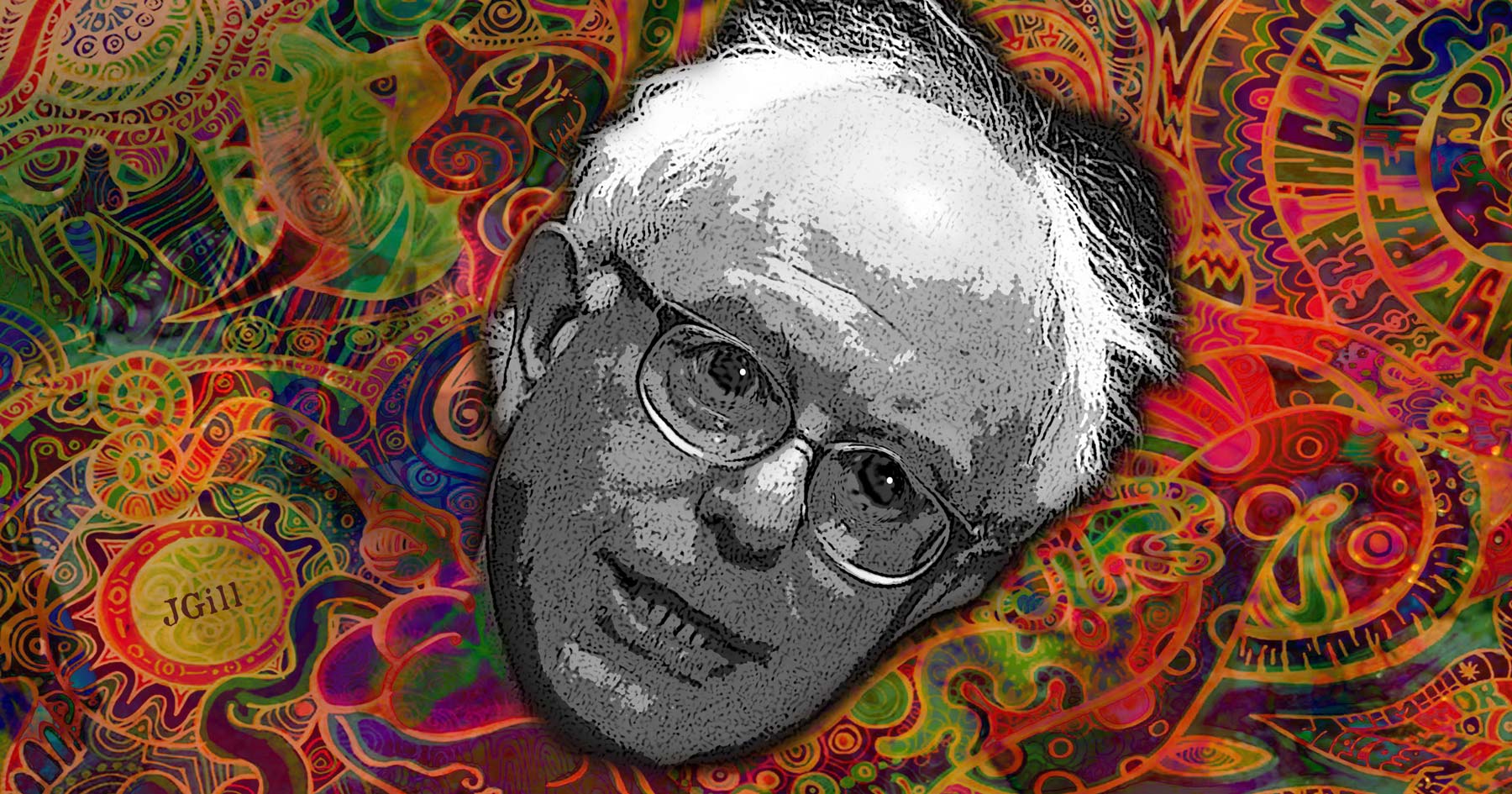
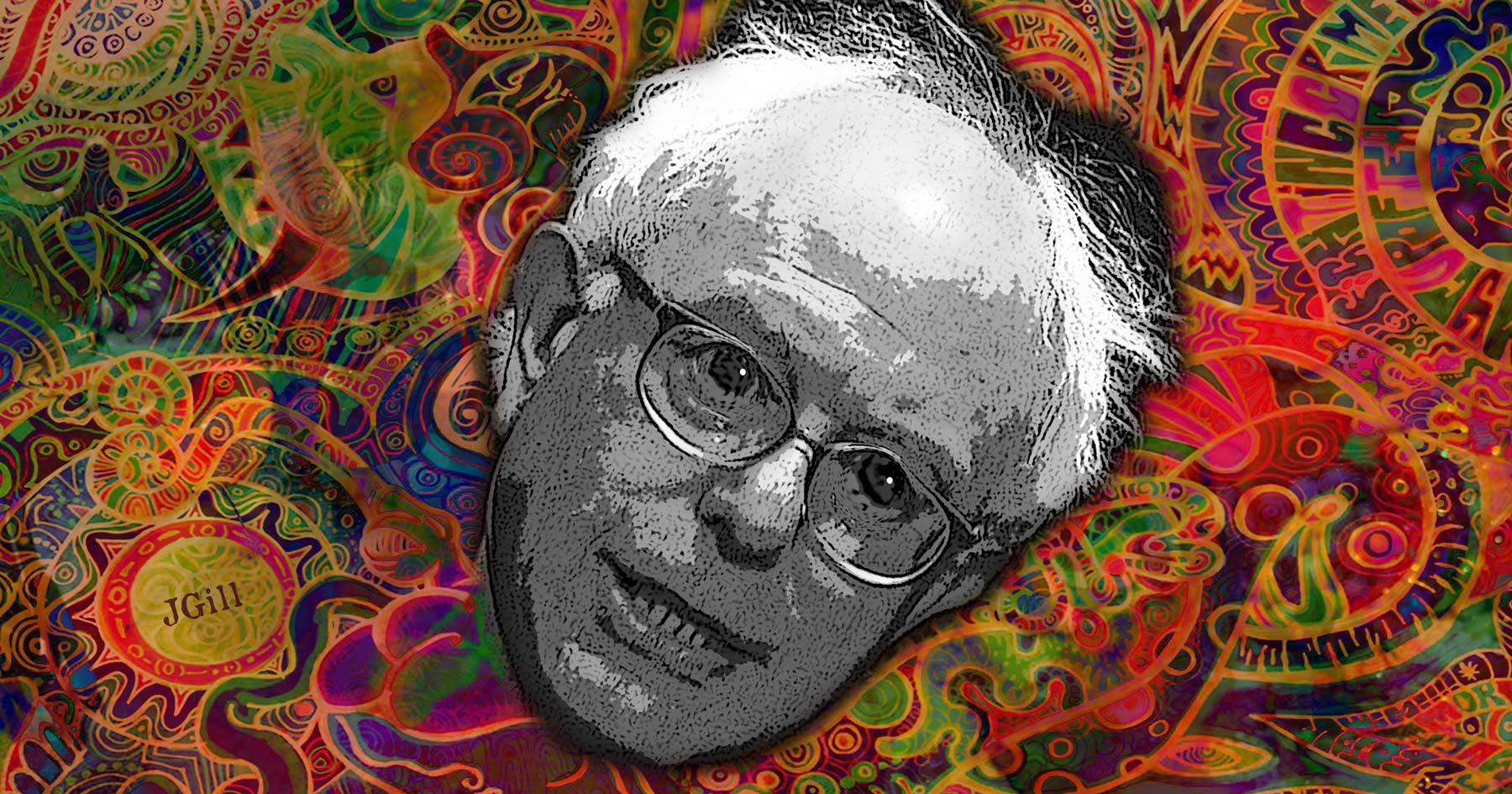
Weekend with Bernie: Fairy-Tale “Free”

Bernie Sanders is many a progressive’s fairy-tale candidate.

Well, yeah.

Not “once upon a time,” but today . . .  the federal government’s public debt is in the double-digit trillions. The total debt — consisting also of unfunded/underfunded welfare state “promises” — may be in the triple digits. Still, politicians pat themselves on their backs when they deliver annual deficits under half a trillion per year.

Meanwhile, Senator Sanders, former member of America’s Socialist Party and current caucuser with the Democrats, is running on the “freebie” platform: let’s spend more!

He serves as the pusher of a very old folly: thinking that good things come to us without cost.

But the costs have to be paid.

And will be.

That’s the essence of common-sense wisdom since ancient times. Usually I conjure up an accountant or an economist to explain this, but why not go back to folklore? Folk and fairy tales, along with myths both ancient and modern (remember Tolkien’s Lord of the Rings?), tell us that magic powers come at a price.

And those costs can be killer.

Far-left-of-center magic pretends that not only can Bernie provide “free” stuff for everyone (including those of us in his “hard-working middle class”), but also that the wherewithal for these goodies (college, medicine, food, shelter, meaningful work) can easily come from . . . three pot-of-gold sources: “the rich,” “print more money,” and that least plausible sprinkle of fairy dust, “government efficiency.”

We tell children fairy tales not to make them wish for magic solutions, but to illuminate the logic of responsibility.

Bernie didn’t get that lesson.

This is Common Sense. I’m Paul Jacob.


Printable PDF

Bernie Sanders, Free, Fairy Tale, promises, collage, photomontage, James Gill, Paul Jacob, Common Sense, illustration