Categories
Accountability folly free trade & free markets general freedom initiative, referendum, and recall local leaders moral hazard porkbarrel politics responsibility too much government

Go Nats?

Just a few miles away from where I live sits the stadium of the Potomac Nationals. I’m a fan. I’d hate to see the team we call the P-Nats leave.

But . . . Hasta la vista.

The owner of this minor league affiliate of Major League Baseball’s Washington Nationals is demanding a new stadium. He threatens to move out of Prince William County, Virginia, if he does not get it.

The Prince William County board of supervisors has already expressed interest in floating bonds to raise the $35 million the fancy new stadium would require — with the privately owned team paying the money back, with interest, over the next 30 years.

Compared to other crony-ish deals around the country, not such a terrible taxpayer swindle. Still, zillions of wrongs don’t make this right. County taxpayers would be on the hook in case of default. And if the marketplace believed the team could actually make such payments, a bank or other investors would come to the rescue.

Thankfully, a monkey wrench has been thrown into the deal. A county supervisor has proposed that voters should get a chance to decide, via a November referendum. The board of supervisors will consider the referendum tonight.

Voters should get the final say. But if there is a referendum, as much as I love having the team here, I will vote NO. I don’t cotton to forcing others to pay for my preferred entertainment.

Government has certain legitimate roles. Subsidizing sports is not one.

Even if the new stadium would be closer to my home than the old one.

This is Common Sense. I’m Paul Jacob.


Printable PDF


Categories
folly free trade & free markets general freedom moral hazard nannyism responsibility too much government

Signature Nonsense

Did anyone really need this?

Last year, California’s Governor Jerry Brown signed into law Assembly Bill No. 1570, which concerns collectibles, particularly signed-by-author or artist books. But it doesn’t mention books, and is confusingly written. What a mess.

Who asked for it?

It certainly wasn’t the struggling booksellers who have come to depend on signed authors’ copies. In the Age of Amazon.com, book vendors need to add value to stay afloat.* Author-signed copies help.

The law says that for signed-by-creator collectibles sold for more than $5 — yes, a mere five smackers — sellers must provide customers a Certificate of Authentication. The law specifies nine “helpful” directions for said certificates. So imagine an edition of Brian Doherty’s Radicals for Capitalism, signed by the author at, say, a non-profit dinner, or at a bookstore signing, or even a late-night bar —discounted to not much over five bucks.** The bookseller must not only provide a certificate, but list the book’s provenance. Talk about an added cost of doing business.

I mention Mr. Doherty not merely because of his excellent book, but because he has not unreasonably confessed that “my own interests could be harmed by any attempt to actually enforce the letter of this law.”

This week on EconTalk, economist Mike Munger mentioned the market’s built-in regulatory features — reputation being the most obvious — for helping consumers avoid getting ripped off buying books . . . and paintings . . . and anything else improved by creator signature.

But, really, can’t we make do with a little caveat emptor as well as caveat lector? Better than regulations this dense.

This is Common Sense. I’m Paul Jacob.
 

* The number of independent bookstores plummeted (down a thousand) around the country between 2000 and 2007. But there seems to be an increase since then, despite (or because of?) Abebooks and Alibris and other dot coms.

** I found a signed copy of Doherty’s history at Abebooks for $10.


Printable PDF


Categories
First Amendment rights folly general freedom moral hazard nannyism responsibility too much government

Legal Not to Lie About Your Milk

Mary Lou Wesselhoeft doesn’t have to lie about the milk she’s selling. The Florida Department of Agriculture has lost in court. Mary Lou has won.

Ocheesee Creamery sells pasteurized milk without any additives. One of her products is skim milk. Ocheesee sells skim milk without vitamin additives, which is perfectly legal to do. But the Florida government claims that only skim milk with the additives counts as real “skim milk,” the kind you can call skim milk in speech to customers. (Kafka, did you write this horror story? Fess up!)

Give credit to the judge who asked: “Can the state, consistent with the First Amendment, take two words out of the English language and compel its citizens to use those words only as the government says?” The reply of the government’s lawyer? “Yes.”

Creepy.

Mary Lou’s victory is also a victory for all Americans who want to exercise their right to tell the truth about what they’re selling. And it’s a victory for the Institute for Justice, which took up the case on her behalf. At its website, IJ points out how easy it would be to annihilate freedom of speech by letting the government redefine words at will. We’re not free if our freedoms can be arbitrarily defined away by the people in power.

The Institute specializes in defending our rights against senseless government intrusions. Until such laws and regulations are repealed, it seems that the Institute will always have much to do — unfortunately. But, fortunately, it keeps on doing it.

This is Common Sense. I’m Paul Jacob.

Printable PDF


Categories
Accountability incumbents insider corruption moral hazard national politics & policies term limits too much government

Most Hated

I was once “the most hated man in Washington.”* Why? For my work on term limits.

I wore the appellation as a badge of honor.

Last year I noted that Ted Cruz had taken up the mantle, but now, certainly, it’s President Donald Trump’s.

Has ever a president been as hated?

Thomas Jefferson was characterized as the Antichrist. Andrew Jackson made many enemies in overthrowing the Second National Bank. But John Tyler is the most interesting case.

President Tyler was a Jeffersonian democrat who took up the office from William Henry Harrison, who died several weeks after being sworn in. Tyler was never accepted as legitimate by — get this — the Whig Party that nominated him. He was dubbed “His Accidency.” After opposing a revival of the national bank notion, there were riots, and his party expelled him. He received hundreds of death threats in the mail. Later he was almost impeached.

Admittedly, Republicans haven’t abandoned Trump — yet. But the Democrats have opposed him from the beginning. And the Entertainment Industrial Complex never ceases to wage a culture war against him. What should the most hated man do?

Make the most of it.

One of his promises was to put congressional term limits into the Constitution. Congress is reluctant. But Trump can do what I couldn’t: use all the powers of the presidency — from the bully pulpit to the veto pen — to leverage those in Congress into proposing a constitutional amendment.

It won’t make President Trump any less hated in Washington, but will win support everywhere else.

This is Common Sense. I’m Paul Jacob.
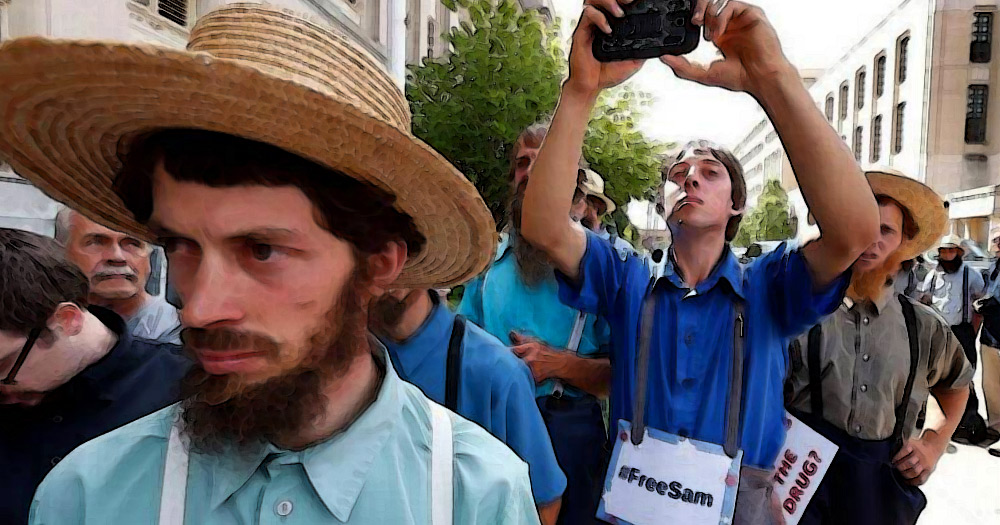
 

* That was in days of yore, the 1990s, and it was Bob Novak who gave me the appellation. Politicians, lobbyists and other government insiders hate term limits.


Printable PDF


Categories
folly free trade & free markets local leaders moral hazard nannyism property rights responsibility too much government

Housing Horror

Housing in Oregon’s north-central urban region is becoming more and more like San Francisco’s — out of the budgetary reach of huge swaths of average workers.

“The median rental household can’t comfortably afford a two-bedroom apartment in 28 of Oregon’s 36 counties,” Elliot Njus writes for The Oregonian. But it is worst in Portland and the three counties in the region: Multnomah, Washington, Clackamas. 

The findings come from a group called the National Low Income Housing Coalition. Njus quotes Alison McIntosh, of another group, the Neighborhood Partnerships, who not unreasonably concludes that “folks are really struggling to make ends meet.”

Well, yeah. This was predicted, long ago.

The state of Oregon began a comprehensive land-use planning system, decades ago, to prevent urban sprawl. At about the same time the Portland-region’s three major counties began a concentrated effort to . . . concentrate populations within the area. Confine them. Regulate them. Economists and other critics* from the very beginning predicted rising housing costs. And other problems.

Now, of course, the usual groups react in precisely the wrong ways: rent control. The State House in Salem recently passed legislation to uncork rent control. Thankfully for renters, the Senate nixed the idea. 

But we can be sure this proven housing killer (a disaster where tried) will resurface. Common sense (as well as reams of economic research) tells folks how bad an idea this would be, exacerbating the problem it aims to solve.

Alas, some folks look at government more as magic than as just another flawed, human institution.

This is Common Sense. I’m Paul Jacob.
 

* One set of critics can be found at the Cascade Policy Institute, which describes Oregon’s land-use regulatory system as “the nation’s most restrictive” — adding that “every square inch of Oregon has been zoned by government planners, with the result that development of any type is prohibited on most private land.”


Printable PDF


Categories
crime and punishment free trade & free markets general freedom moral hazard nannyism too much government

Sin, Soda and Say

Government policy in Seattle, Washington, is being driven by an outright socialist on the city council. The mayor, apparently starving for attention, proposed a goofy new sin tax last year.

Now, writes Reason’s Baylen Linnekin, “Seattle lawmakers are expected to vote early next week on a citywide soda tax that would add more than $2.50 to the cost of a twelve-pack of soda.”

The tax’s proponents’ rationale is too familiar: sugary sodas are bad for us, so we must be discouraged from drinking them.

Besides, politicians want to spend our money.

The problem, of course, is that the more successful they are at the first task, discouraging the ‘sin’ itself, the less revenue for them to throw at voters to prove their ‘caring’ nature . . . and buy votes.

But it is not as if those are the only competing factors involved. “The tax would undoubtedly drive consumers,” writes Linnekin, “to buy more groceries in the city’s suburbs.” Bellevue and Kirkland are nice towns. And nearby.

Arguing for a tax like this — as a social engineering mechanism — is not only crude, but flies in the face of the very best wisdom, that of Jean-Baptiste Say:

A tax can never be favorable to the public welfare, except by the good use that is made of its proceeds.

But elitist nannyism corrupts politicians, who make it their job to steer our consumption.* And they tend to be resistant to the “best scheme of finance,” which is, as J.-B. Say put it, “to spend as little as possible; and the best tax is always the lightest.”

If the tax goes in, Seattleites, drive to out-of-town Costco or Walmart.

Then drive your greedy nannies out of office.

This is Common Sense. I’m Paul Jacob.
 

* Considering the mayor’s push to include diet sodas in the sin tax, how competent at this are they? It’s the sugary drinks that are known killers, but the diet drinks are mainly imbibed by wealthier folks. The mayor wants to appease the socialist on the council, and pointedly not favor the “privileged.”


Printable PDF


Categories
Accountability crime and punishment folly general freedom media and media people moral hazard nannyism responsibility too much government

Another Push for Censorship

It’s almost as if politicians are hell-bent on expanding government at the expense of our freedoms . . . and grandstanding to ‘look like they are doing something.’

The two proclivities are not unrelated.

Take Theresa May, Great Britain’s Tory Prime Minister. After yet another terrorist attack in her country, this time on the London Bridge, she re-iterated her party’s intent to censor the Internet.

“We cannot allow this ideology the safe space it needs to breed,” May said on Sunday. But this “safe space,” she went on, “is precisely what the Internet, and the big companies that provide Internet-based services, provide.”

Now, blaming ISPs and social platforms is a crude form of business scapegoating—something I would expect from her opponent in the upcoming elections, Jeremy Corbyn, the much-loathed (but inching ahead in the polls) top banana of Labour.

As a conservative, May should understand markets and the limitations of government interventionism a bit better than a nearcommunist. She might recall that previous attempts to regulate the means of communication almost never to work, and, in those few cases when they do, never stay scaled to the original target issue.

They expand. To cover more than just terrorism, as in this case.

What’s more, Jim Killock of the Open Rights Group makes the case that such a move would likely “push these vile networks into even darker corners of the web, where they will be even harder to observe” — scuttling the alleged purpose of the Conservative Party’s longed-for censorship.

May knows this. But she is a politician. She has power, and she wants to keep it.

It’s almost as if power corrupts or something.

This is Common Sense. I’m Paul Jacob.

Printable PDF


Categories
general freedom moral hazard nannyism responsibility too much government

The $659,000 Non-Question

The so-called “Motor Voter” law of 1993 created a national mandate: when people obtain their drivers’ licenses at the Department of Motor Vehicles, ask them if they’d also like to register to vote.

The federal mandate is perhaps heavy-handed, but the underlying idea has merit.

Now a new idea is gaining ground, taking the notion (nudge, nudge) a step further. Let’s not bother asking people if they want to sign up to vote, the proposal runs. Government should simply register them. Without asking.

It is a form of paternalism.

“It flips the presumption, where right now they ask you if want to be registered,” argues D.C. Council member Charles Allen. “Instead of that, we’re just going to go ahead and get you registered, and that absolutely helps enfranchise voters.”

“Lawmakers in 32 states have introduced measures in the last year to automatically register drivers to vote,” reports the Washington Post.

Some folks contend there isn’t much difference between asking if someone wants to register and registering them without asking. Well, if there isn’t much difference, why spend the $659,000 that Washington, D.C. officials estimate it will cost over the next four years for their new “don’t-ask” program.

Of course, there is a difference in the two policies: sort of like between offering people something to eat and force-feeding them.

Some Americans have no desire to vote or be registered. It is surely no business of any state or local government to act as if their preferences don’t count.

And what good are a bunch of names on a voter list if they aren’t interested? Is someone going to vote for them?

This is Common Sense. I’m Paul Jacob.


Printable PDF


Categories
Accountability folly free trade & free markets general freedom initiative, referendum, and recall nannyism national politics & policies property rights responsibility too much government

Minimum Shock

“Three restaurants vacated the Bay this week, with Berkeley’s Bistro Liaison getting the most attention,” the San Francisco edition of Eater informs us. “It’s a bittersweet exit for the owners, who plan to start new careers.”

The week in question was in February. But this was not an isolated event. Sixty-four Bay-area restaurants and fast food joints closed their doors this last winter.

That is a lot of closures.

Why?

Every eatery has a different story, but the entry December 17* provides a big clue: minimum wage hikes.

Citizens should hardly be surprised. They got what they asked for. The minimum wage went up to $13.00 per hour last July, and will go up another two bucks next year. And this was the result of a citizen initiative. “On November 4, 2014, San Francisco voters passed Proposition J, raising the minimum wage to $15.00 by 2018,” the City Office of Labor Standards and Enforcement tells us.

And the thing about minimum wage laws is that they do not — either by magic or by law — directly raise any wages. They, by law and quite directly, prohibit wage contracts below the minimum established.

Businesses then react, struggling to accommodate the newly imposed costs. Sometimes they keep all their employees and economize on other inputs, but often they must re-arrange hours and workers and whole production schemes.

If hemmed in elsewhere, they just go out of business.

Just as one should expect, according to the law of supply and demand.**

Citizens might wish to reconsider. That is, initiate a measure to repeal a previously successful initiative . . . that gave us this unsuccessful policy.

This is Common Sense. I’m Paul Jacob.

 

* The entry reads thusly: “OAKLAND — alaMar Kitchen and Bar as you know it is shuttering on December 17, but will reopen in the new year with a fast casual format. The owner points to minimum wage raises and the cost of doing business in the Bay Area as the reasons cited for the closure/change.”

** It is often said that businesses just “raise prices” and “pass along the costs” to consumers in general, but, for reasons of supply and demand, they cannot do this without decreasing sales and thus revenue.


Printable PDF


Categories
Accountability insider corruption moral hazard national politics & policies porkbarrel politics too much government

Cronyism Pays

Daniel Mitchell, a senior fellow in fiscal policy at the Cato Institute, is a nice guy. But he’s sort of depressing, too.

Weeks ago, writing for the Foundation for Economic Education (FEE), Mitchell offered that “The Washington, DC Gilded Class Is Thriving.” He even provided a “depressing chart” graphing “median inflation-adjusted household income for the entire nation and for the District of Columbia.”

There is a graphic divide: while “the nation’s capital used to be somewhat similar to the rest of the nation . . . over the past 10 years, DC residents have become an economic elite, with a representative household ‘earning’ almost $14,000 more than the national average.”

Dan Mitchell highlights that “the entire region is prospering at the expense of the rest of the nation.” Among the nation’s counties, the top four wealthiest are in suburban Washington, D.C. The nation’s capital region boasts nine of the country’s top 20 richest counties.

Now Mitchell’s back with another FEE column exclaiming more bad news: “The ROI for Cronyism is Huge.” (ROI is “return on investment.”)

Mitchell cites a study entitled, “All the President’s Friends: Political Access and Firm Value,” conducted by University of Illinois professors Jeffrey R. Brown and Jiekun Huang. “Using novel data on White House visitors from 2009 through 2015,” they explain, “we find that corporate executives’ meetings with key policymakers are associated with positive abnormal stock returns. . . .”

The authors find a lot evidence showing that “political access is of significant value to corporations.”

None of this should surprise. Cronyism pays, and it sticks close to power, even geographically.

This is Common Sense. I’m Paul Jacob.


Printable PDF