Categories
Accountability general freedom ideological culture media and media people national politics & policies political challengers porkbarrel politics Regulating Protest responsibility tax policy too much government

“Our Agenda Was Common Sense”

The Republican Party doesn’t need to bury the corpse. Its victim has been assimilated, like the Borg did with alien peoples in the Star Trek universe, or maybe it was just soaked up as if the GOP were a giant fungus amongus.

So, what’s dead? The Tea Party, which was killed by partisanship, says Matt Kibbe, President and Chief Community Organizer at Free the People. He admits that the movement’s obituary has been written many times, but, he argues, “this time is different. Republicans, now controlling both the legislative and executive branches, jammed through a ‘CRomnibus’ spending bill that strips any last vestiges of spending restraint from the budget process.”

Kibbe identifies the Tea Party’s central theme simply: “Our agenda was common sense: We demanded that Washington politicians stop spending our money like it was theirs, and keep out of our health care. But in Washington, common sense is often seen as radical.”

This, he insists, was not a partisan movement.

But only Republicans played to it. Kibbe calls Sarah Palin a “political huckster” who “helped hijack our purpose,” and fingers Mitt Romney as the man who scuttled Tea Party “political momentum” in 2012. “And then Donald Trump split the Tea Party right down the middle, and that was the end.”

Nail in the coffin? The recent budget deal.

Kibbe signs the autopsy, but assures us: “American principles of individual freedom, fiscal responsibility, and constitutionally limited government, are all still very much alive.”

I sure hope so. But it takes more than a handful of Freedom Caucus members on Capitol Hill to realize it in practice.

Like a new citizen movement.

This is Common Sense. I’m Paul Jacob.


PDF for printing


Categories
Accountability folly general freedom government transparency ideological culture media and media people moral hazard nannyism national politics & policies too much government

Threat Assessment

Don’t drink transmission fluid. Or perform a swan dive off the Empire State Building. Or munch on a Tide Pod.

Be cautious, in other words, of the advice offered in “Boycott the Republican Party,” the Atlantic opinion piece authored by Jonathan Rauch and Benjamin Wittes, both scholars at the Brookings Institution. Their erudite suggestion? Conservatives should “vote mindlessly and mechanically against Republicans at every opportunity, until the party either rights itself or implodes (very preferably the former).”

My Sunday column at Townhall.com, “Friendly Suicide Advice for the GOP,” reviewed their proposal and analysis. “[H]orrified” by President Trump, they see congressional Republicans as enablers of his “existential” threat “to American democracy.”

Big government has long frightened me, so I’m certainly not suggesting anyone relax just now. I do wonder, however, why these writers and others in the media have been so blasé to past presidential usurpations (noted in the column) with life-and-death implications.

Rauch and Wittes go so far as to reassuringly explain that “the Democratic Party is not a threat to our democratic order.”

Really?

In 2016, every single Democratic Party U.S. Senator voted to partially repeal the First Amendment of the Constitution. The Democrats’ proposal would have largely ended the prohibition that “Congress shall make no law . . . abridging the freedom of speech,” replacing it with “Congress and the States may regulate and set reasonable limits on the raising and spending of money by candidates and others to influence elections.”

In our present “democratic order,” the Constitution recognizes the primary importance of walling off political speech from regulation by these very politicians. The Democrats seek to repeal that order . . . that freedom . . . that criticism.

This is Common Sense. I’m Paul Jacob.


PDF for printing


Categories
First Amendment rights free trade & free markets general freedom initiative, referendum, and recall nannyism national politics & policies privacy property rights Second Amendment rights Tenth Amendment federalism too much government U.S. Constitution

Winning Too Much?

“We’re Number 17!!!”

This lacks a certain triumphant note.

It is nothing like the “We’re Number 1!” the Swiss are now hollering as they pump their arms into the air, waving giant #1 foam fingers against the backdrop of snow-covered Alps.

Actually, knowing the Swiss, they are probably a bit more restrained. Still, you get the point.

Number 1 in what, you ask? Creamy, delicious chocolate, perhaps? Banking? Skiing?

Freedom.

The Human Freedom Index 2017, jointly published by the institutes Cato, Fraser, and Liberales, is hot off the presses. The report ranks the countries of the world on “personal, civil, and economic freedom.”

This year, Switzerland switched places with Hong Kong, which had come in first the year before. The U.S. moved up from 23rd place in 2016, but down from 2008, when we were challenging Top 10 status at Number 11.

“Weak areas [for the U.S.] include rule of law, size of government, the legal system and property rights,” according to a Cato video.

Let’s compare Switzerland to the United States. The 1848 Swiss Constitution creates 26 sovereign cantons (states), greatly influenced by our system of federalism. In the 20th century, Americans in 26 states and most localities borrowed from the Swiss, establishing a system of direct democratic checks on government — what we call ballot initiatives and referendums.

Both countries have constitutional limits on government, protecting individual rights — even from fully democratic tyranny. But in the freest nation in the world, Switzerland, citizens possess a powerful direct democratic check on their government at all levels . . . while we do not.

After all, we’re Number 17.

This is Common Sense. I’m Paul Jacob.


PDF for printing


Categories
crime and punishment folly general freedom local leaders moral hazard nannyism privacy responsibility too much government

The Winds of Regulation

Among the many goofy occupational licensing laws in these United States, Arizona’s licensing for professional blow-drying services is up there with the silliest. 

“Under current law, using a blow-dryer on someone else’s hair, for money, requires more than 1,000 hours of training and an expensive state-issued license,” we learn at Reason. “Blow-drying hair without a license could — incredibly — land you in jail for up to six months.”

This came into the news because of a campaign to deregulate the cosmetology industry — just a bit, anyway. Gov. Doug Ducey, in his recent State of the State address, “mocked the state agency that licenses stylists, barbers, nail technicians and affiliated professionals in Arizona, and endorsed legislation to remove training requirements for those who simply wash, brush and blow-dry customers’ hair.”

Licensed cosmetologists — well, at least some organized ones — have gone into a tizzy.

Hardly surprising, since occupational licensing, though usually argued for on consumer safety grounds, rarely finds consumers clamoring for it. 

It’s groups of established businesses, professionals.*

Brandy Wells, the sole non-cosmetologist on the state board overseeing the regulation of the industry, supports the liberalizing bill. So of course she has been called every name in the book. But even she was amused by one stylish denigration: “your logic on deregulation of cosmetology is much like your hair, dull and flat.”

The issue may seem trivial, with not all that much on the line — though jobs are . . . and freedom is

But it doesn’t lack for hot air.

This is Common Sense. I’m Paul Jacob.


* As Adam Smith argued, whenever businessmen (“dealers”) in the same industry group together, their proposals should be listened to “with great precaution.”


PDF for printing


Categories
Accountability government transparency insider corruption moral hazard national politics & policies term limits too much government

Captured Congress

“Do you think party leaders exert too much control over members of Congress and over the agenda,” Full Measure host Sharyl Attkisson asked retiring Rep. Darrell Issa, “in a way that might be motivated by donations and corporate influence and special interests?”

Winner of five Emmys, as well as the 2012 Edward R. Murrow Award for Excellence in Video Investigative Reporting, Attkisson’s “exit interview” with Congressman Issa (R-Calif.) is illuminating.

It happens every day,” he replied, “that a lobbyist calls the majority leader, the minority leader, the speaker, and some chairmen or ranking member gets a call saying, ‘hey go light on that.’”

Issa pointed out that the committee chairs “really don’t control the committees. More and more it’s controlled out of the speaker’s office and out of the minority leader’s office. You know, they pick who gets the committees and then they pick really what you get to do.”

And it’s getting worse, he said.

As chairman of the House Oversight Committee, Issa has led a number of very high-profile investigations. His investigation of Countrywide, Attkisson noted, “revealed that federal public officials and their staffers, both Democrats and Republicans, had quietly received lucrative VIP loans from Countrywide as the company sought to influence their decisions.”

“It was much more effective than political giving,” Issa offered.

He also accused Republican leaders of removing the Benghazi investigation from his committee to a select committee to “keep it from going too far.”

“I have seen the defense-related committees that take money from defense contractors go easy on defense oversight,” Attkisson explained, prompting the congressman to agree “that happens every day here.”

Between the party bosses and the special interests, our Congress has been captured.

This is Common Sense. I’m Paul Jacob.

N. B. Full Measure is broadcast every Sunday on 162 Sinclair Broadcast Group stations reaching 43 million households in 79 media markets.


PDF for printing

Categories
Accountability crime and punishment government transparency ideological culture media and media people national politics & policies too much government

Smoke But No Gun

The Republican memo soaking up so much attention paints an ugly picture of a republic gone off the rails — but it should not be mistaken for The Facts.

We have smoke, sure. And the smoke can be seen, not unreasonably, as a sign of . . . a vast insider conspiracy.

But we have only second-hand information; the “smoking gun” has yet to be presented.

The House Intelligence Committee Report memo relates to the behavior of the FBI and its use of a dossier prepared by a former British intelligence officer, Christopher Steele. This operative was hired by Fusion GPS, a political research firm, which was under contract first with a conservative website, The Washington Free Beacon, and then with the Democratic National Committee and the Hillary Clinton for President campaign. His assignment was to research an alleged connection between Trump and the Russian government.

Steele dug up some interesting stuff, which would have been more persuasive had not some of it been obviously fabricated (I’m thinking of the infamous Russian prostitution story). The dossier got into the hands of the FBI by a circuitous route* and was used, says the memo, to get FISA warrants to electronically surveil a Trump campaign operative, Carter Page. Tellingly, the FBI never told the FISA court the specific origin of the dossier.

To get to the truth, we need more — the FISA warrants themselves, at the very least.

There may be a proverbial smoking gun somewhere in this mess. The missing-then-discovered text messages of two partisan FBI agents do suggest a conspiratorial mindset.

That being said, let’s not jump to conclusions. Alan Dershowitz is right: a non-partisan investigation is necessary.

This is Common Sense. I’m Paul Jacob.


* Including Sen. John McCain!


PDF for printing


Categories
free trade & free markets general freedom too much government

Bank on It?

It took me a moment. And I assure you, I wasn’t high.

When I read that California State Treasurer John Chiang was considering a “marijuana bank,” my first thought was that he was talking about warehousing bud and leaf.

Well, no. That would be stupid.

So, maybe reporters and bloggers shouldn’t call it a “marijuana bank.” What these government officials are doing is trying to determine “the potential of a public bank to service the cannabis industry in California.”

A state bank, in other words. Not unheard of.

But would it be stupid?

Not according to Treasurer Chiang.* But his notion is not just about serving an industry that the federal government still tries to suppress — and continues to use its regulatory powers over banks to monkey-wrench.

Chiang defends his move in part on anti-capitalist grounds: “We see deepening public dissatisfaction and cynicism over the private banking system — a dissatisfaction that can be traced to the financial excesses of Wall Street, which triggered the worst recession since the Great Depression.”

Was the financial crisis the result of “bad actors” in the industry alone? No. The American banking industry is heavily regulated, the government-created Federal Reserve is very hands-on in its control of money and banking, and federal regulatory and financial bodies have exerted similar influence over housing industry financing for scores of years.

So of course a Californian politician wants to solve a government-induced problem by creating more government.

That’s what’s stupid, if you ask me.

This is Common Sense. I’m Paul Jacob.


* He’s going forward with a big study to “answer questions about costs, benefits, risks, and legal and regulatory issues, including the needs for capitalization, deposit insurance, and access to interbank transfers of funds.”


PDF for printing


Categories
Accountability crime and punishment folly general freedom local leaders moral hazard nannyism national politics & policies Popular privacy Regulating Protest too much government

The Last Straw

How much should we fine waiters who destroy our planet?

For how long should they go to jail?

I don’t know where you would hold such an evildoer after the earth has been destroyed. Or where he’d go when released. But we’re speaking hypothetically. Assume that planet-destroyers can be imprisoned on the moon, which let’s just say still orbits the earth’s decimated remains. Or assume that after being destroyed, the planet can be reconstructed. After serving his sentence, then, the waiter would be released to a reconstructed earth.

In that case, a maximum $1,000 fine as suggested by Ian Calderon, Democratic majority leader of the California State Assembly, seems only fair. However, a maximum of six months in jail is excessive. In my opinion, planet-destroying waiters should suffer no more than 100 days in jail.

Calderon has proposed a bill, AB-1884, to fine and/or imprison waiters who offer unsolicited plastic straws to restaurant patrons. In response to criticism of his silly and vicious bill, Calderon says hey, it’s “NOT a ban” on straws! Oh, okay. Anyway, “Penalties are based on the code section the bill is currently in, which it will be amended out of,” which sounds like Calderon was prior to the uproar . . . what, joking?

As long as we’re amending, let me amend my own implication that people who offer, use, make or sell plastic straws* are in fact helping destroy earth. Just kidding!

The earth will survive plastic straws. Will it survive the Calderons of the world?

Open question.

This is Common Sense. I’m Paul Jacob.


* Not that I’m confirming or denying ever using one myself.


PDF for printing


Categories
Accountability ideological culture media and media people moral hazard national politics & policies responsibility term limits too much government

The Politics of Inertia

Congress’s failure to establish, last week, any semblance of budgetary responsibility led to one of those “government shutdowns” that the press likes to yammer about so breathlessly.

Then, early this week, Senate holdouts caved, allowing a short-term fix to bring the federal government fully back to life, like the monster in Dr. Frankenstein’s lab given a defibrillator jolt.

Usually these government shutdowns are caused by Republicans not playing along — Obamacare being the sticking point most recently — but this time the desperate negotiators were Sen. Chuck Schumer (D -NY) and his Democrat gang, whose “heroic” stance was all about immigration reform and “the Dreamers.”

After they folded, and the Monster was bequeathed new life, CNN’s Brooke Baldwin asked former Democratic National Committee chair Rep. Debbie Wasserman Schultz what her party had gained from its temporary obstructionism.

Her answer? “Potential for momentum.”

That had to be one of the more bizarrely drawn happy faces over complete and utter failure that we have witnessed since . . . well, the last one.

Even Ms. Baldwin was incredulous.*

The Democratic Party’s disarray is astounding. If any party has momentum on its side, it is the party of Andy Jackson and William Jennings Bryan, the party of the elitist media, insider government and the Deep State, and the resistance to Trump.

So why its current pathetic fortune? Because the Democrats have rested so long upon their “momentum.”

Inertia can sure have its downside.

On the “bright side,” Democrats will have occasion to revisit this, for no real budget has been established. All Congress even tries to do these days is provide temporary fix after temporary fix.

Call it potential for catastrophe.

This is Common Sense. I’m Paul Jacob.


* The CNN anchor may have been nonplussed by the specter of entropy in the odd Newtonian metaphor.


PDF for printing


Categories
crime and punishment First Amendment rights general freedom ideological culture media and media people moral hazard nannyism national politics & policies Regulating Protest too much government

Twitter’s Merkel Tactics or Merkel’s Twitter Tactics?

Is Twitter cooperating with Germany’s new crackdown on social-media speech because otherwise it risks steep penalties? Or is Twitter just doing what it would do anyway?

When Germany’s new law against unwelcome speech went into effect this year, many Germans protested. “Please spare us the thought police!” was the headline in one top-selling paper, Bild.

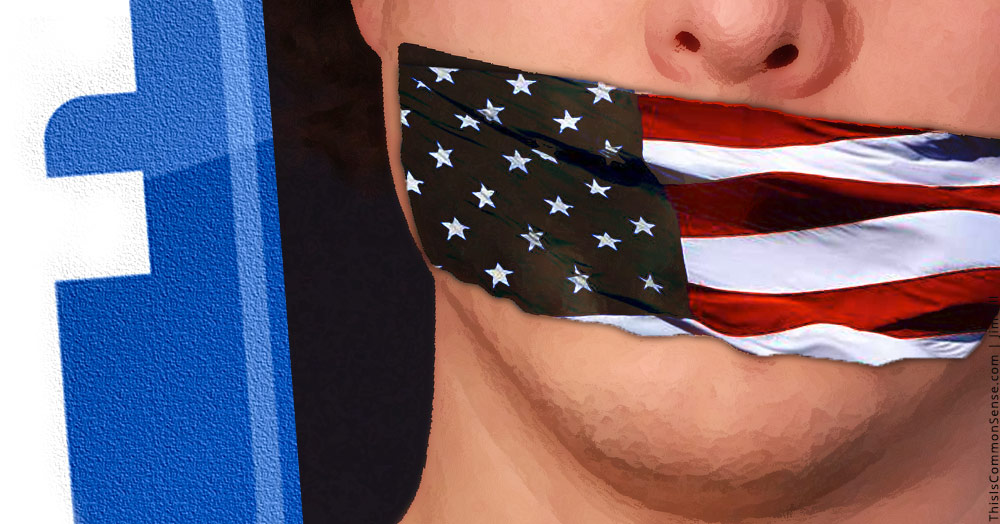
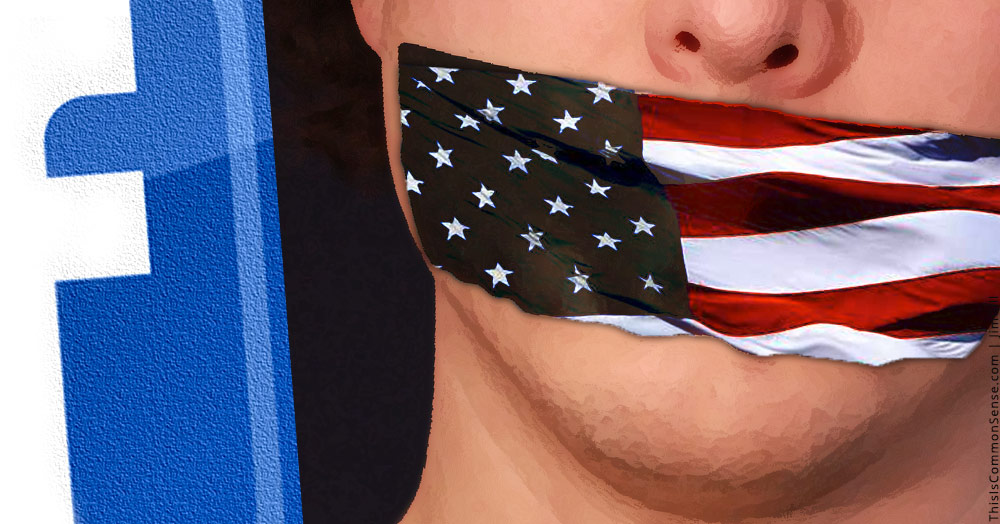
The law requires social-media sites to block unapproved content — which includes “hate speech” and “fake news” — within 24 hours or face exorbitant fines. (Of course, every piece of news, no matter how well or shabbily reported, gets decried as hateful “fake news” by somebody.) Under the new law, Twitter suspended the accounts of two officials of the political party Alternative for Germany who tweeted that Muslim men have violent proclivities. Hateful, fake, inexact, whatever, such tweets by themselves threaten nobody and violate nobody’s rights.

Did Twitter act only under duress here?

Well, in the U.S., the company is not ordered by our government to muzzle anybody except perhaps terrorists or persons directly instigating a crime. Yet Twitter regularly suspends or bans users whose speech it considers objectionable. Moreover, it has become notorious for especially targeting speech that can be regarded as on the right end of the political spectrum — while leaving intact the tweet-speech of left-wing micro-bloggers no matter how threatening or abusive.

I don’t say America’s government should become involved. It should certainly not compel Twitter to drop its double standard.

Instead, it is Twitter itself that should become involved . . . and drop its double standard.

This is Common Sense. I’m Paul Jacob.


PDF for printing