Categories
crime and punishment general freedom

Injustice By Quota

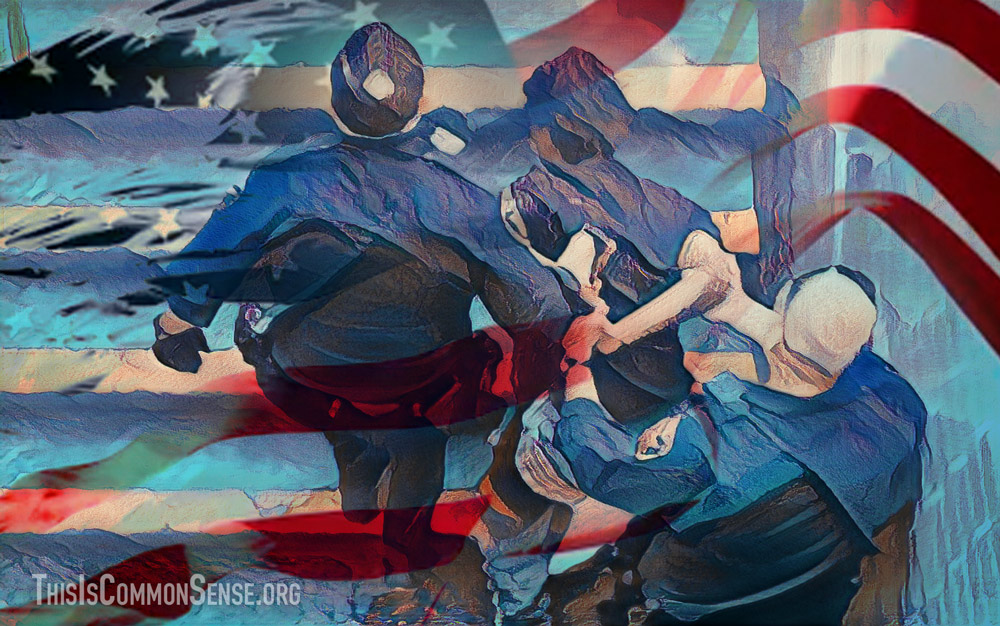
Let’s say there are 100 murders — in a certain city in 2021. How many arrests for murder should there be in that city that year?

We can’t know in advance. Setting lagtime aside, consider the other factors. Some of the killers may have killed more than once. Some of the murders may never be solved. Some honest arrests may prove to be mistaken. We can only say: “As many arrests as possible, so long as persons are arrested for murder only if and when there is good cause to do so.”

Properly, one establishes sound criteria for making arrests and good investigative procedures. Not quotas. The same principles apply to every kind of arrest.

“Yes, Paul Jacob. But all this is bleedingly obvious. Why go on about it?”

Alas, what is really basic common sense to you and me apparently clashes with the desire of some within and without police departments for “proof” of effective results. Proof like total number of arrests. (Of course, in a police state, you might arrest half the population, far exceeding any quota, and still get lots of crime.)

The errant fondness for arrest quotas is at least being ended, almost, in Virginia, where the governor has signed legislation to prohibit Virginia agencies and police departments from using them.

I write “almost” because the legislation does not include a ban on quotas for traffic tickets, which are like being half-arrested. Tickets are one way municipalities make money.

Well, maybe we can all just stop driving.

This is Common Sense. I’m Paul Jacob.


PDF for printing

Photo credit: arrests

See all recent commentary
(simplified and organized)
See recent popular posts

Categories
Thought

George Santayana

[Everything] ideal has a natural basis and everything natural an ideal development.

George Santayana, Reason in Common Sense (1905).
Categories
Today

Dachau

On April 29, 1945, U.S. troops of the Seventh Army liberated the Dachau concentration camp.

Categories
government transparency partisanship term limits

A Bazooka to Congress

It is “like bringing a bazooka to a sword fight,” complains an anonymous long-serving Democratic congressional aide.

“Democratic leaders are hammering Republicans,” Mike Lillis explains in The Hill.

At issue? The House Republican caucus is “considering term limits,” Punchbowl News was first to report, “on committee leaders of both parties if the GOP flips control of the House next year.” 

Republicans, since taking Congress back in the 1994 term limits wave, have mostly imposed a three-term limit on committee chairmanships, when in the majority, and on a committee’s ranking opposition member, when in the opposition. What may be different in the next Congress is that Republicans are looking to impose term-limits on committee leaders of both parties. 

Democrats, too. By House rule.

Though Democratic Party bigwigs won’t like it . . . especially current committee chairs who would get the heave-ho next year, such as Representatives Frank Pallone (D-N.J.) now in his 34th year in Congress; Bobby Scott (D-Va.), in his 30th year; Adam Smith (D-Wash.) in his 26th year; Bennie Thompson (D-Miss.), in his 26th year; and Maxine Waters (D-Calif.), in her 32nd year.*

Some younger congressional Democrats, on the other hand, see term limits . . . as an opportunity.

“High functioning organizations become so by building strong benches and limiting the tenure of leaders,” tweeted Rep. Dean Phillips (D-Minn.), now in his 4th year. “No matter which party controls Congress in ’23, we should adopt term limits for committee chairs & get serious about developing a new generation of leaders.”

Lillis calls it “a recurring predicament for Democratic leaders.”

But no fuss at all for the rest of us: we’re for term limits. On committee leadership as well as Congress membership.

This is Common Sense. I’m Paul Jacob.


* Even without this change, these Democrats would lose their chairmanships in the next Congress, should the GOP gain a majority in this November’s elections. But with this change they would also be denied the position of ranking member and thus would lose their hold on the chairmanship if Democrats won back the majority in 2024.

PDF for printing

See all recent commentary
(simplified and organized)
See recent popular posts

Categories
Thought

George Eliot

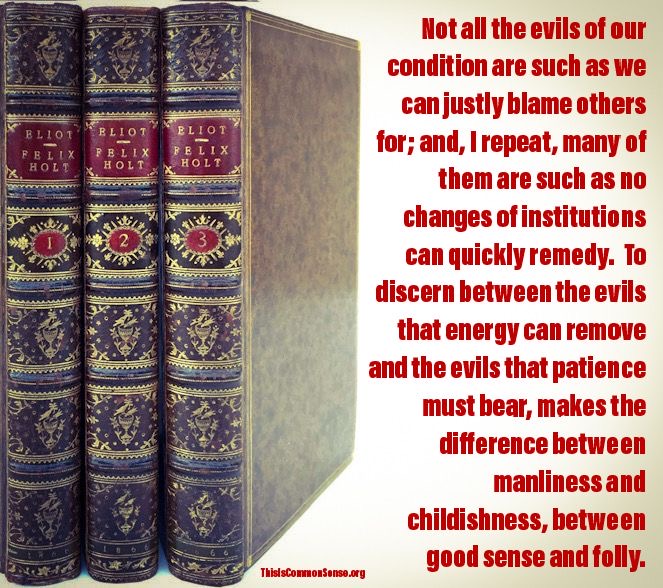
Not all the evils of our condition are such as we can justly blame others for; and, I repeat, many of them are such as no changes of institutions can quickly remedy.  To discern between the evils that energy can remove and the evils that patience must bear, makes the difference between manliness and childishness, between good sense and folly.

Mary Ann Evans writing as George Eliot, in The Essays of George Eliot (1883), “Address to Working Men, by Felix Holt” (January 1868) — signed by the hero of her 1866 social novel Felix Holt, The Radical.
Categories
Today

Maryland Makes Seven

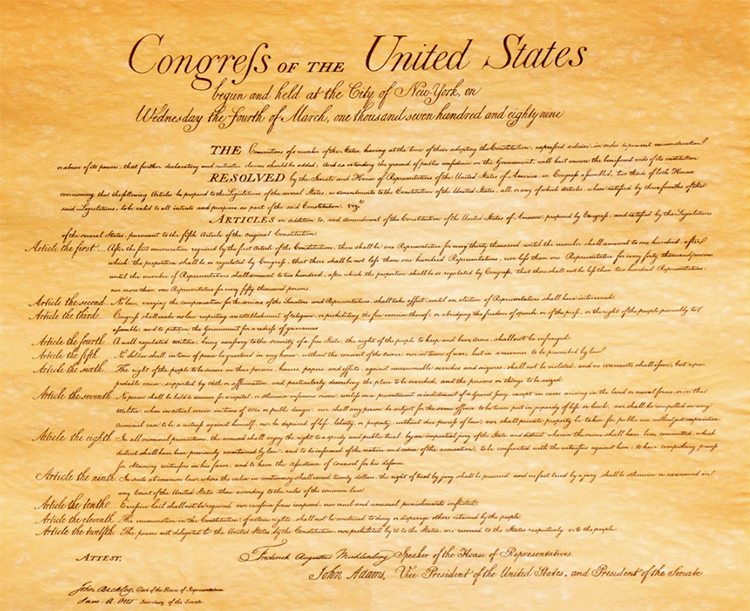
On April 28, 1788, Maryland became the seventh state to ratify the United States Constitution.

Categories
general freedom too much government

Worse Than Shanghaied

Two years into the pandemic, we in America are now mostly arguing about masks.

We’ve suffered pretty repressive measures, here. But we haven’t had to cope with:

● Being literally imprisoned in your home. Stopped from going out even to get food.

● Having fences erected around your home. “What if a fire breaks out?” one Shanghai resident asked a reporter. “I don’t think anyone in their right mind can seal person’s homes.” (Well, fire is not a virus.)

● Being ejected from your home and forced into public barracks for people infected with COVID-19.

● Being ejected from your home so that it can be disinfected.

● Being subjected to a “zero COVID-19” policy, zero common sense.

This is the fate of millions in Shanghai and elsewhere in China.

In the U.S., maybe you were harassed for conducting unmasked church services or keeping your shop open. Maybe you got arrested for paddle boarding, alone, in the Pacific Ocean.

It got pretty bad. But what we are seeing in Shanghai is the reality of a totalitarian regime when it chooses to fully exercise its power to repress. At any moment, the Chinazi state may make it impossible for millions to take the simplest steps to survive.

Shanghai residents may not even complain about their fate. To the extent they have voiced any complaints publicly, the Chinese government has struggled to eliminate all traces of the complaints.

Here, at least, we can gripe. 

But what does a people do when not allowed to protest or argue against their oppressors?

They scream. At night, the people of Shanghai yell out their windows.

Think of it as the soundtrack of mass misery.

This is Common Sense. I’m Paul Jacob.


PDF for printing

See all recent commentary
(simplified and organized)
See recent popular posts

Categories
Thought

Poor Richard

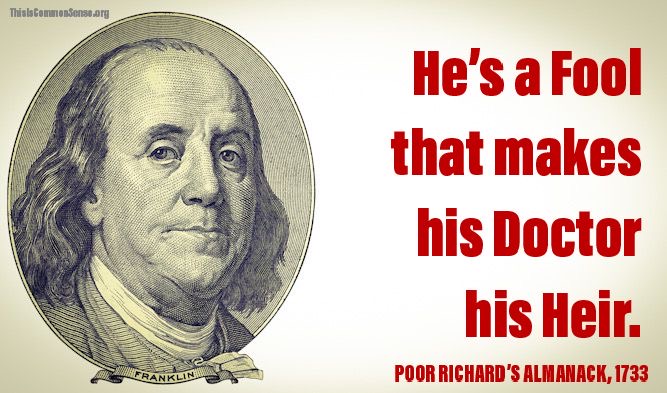
He’s a Fool that makes his Doctor his Heir.

Benjamin Franklin, Poor Richard’s Almanack (1733).

Categories
Today

Wollstonecraft & Spencer

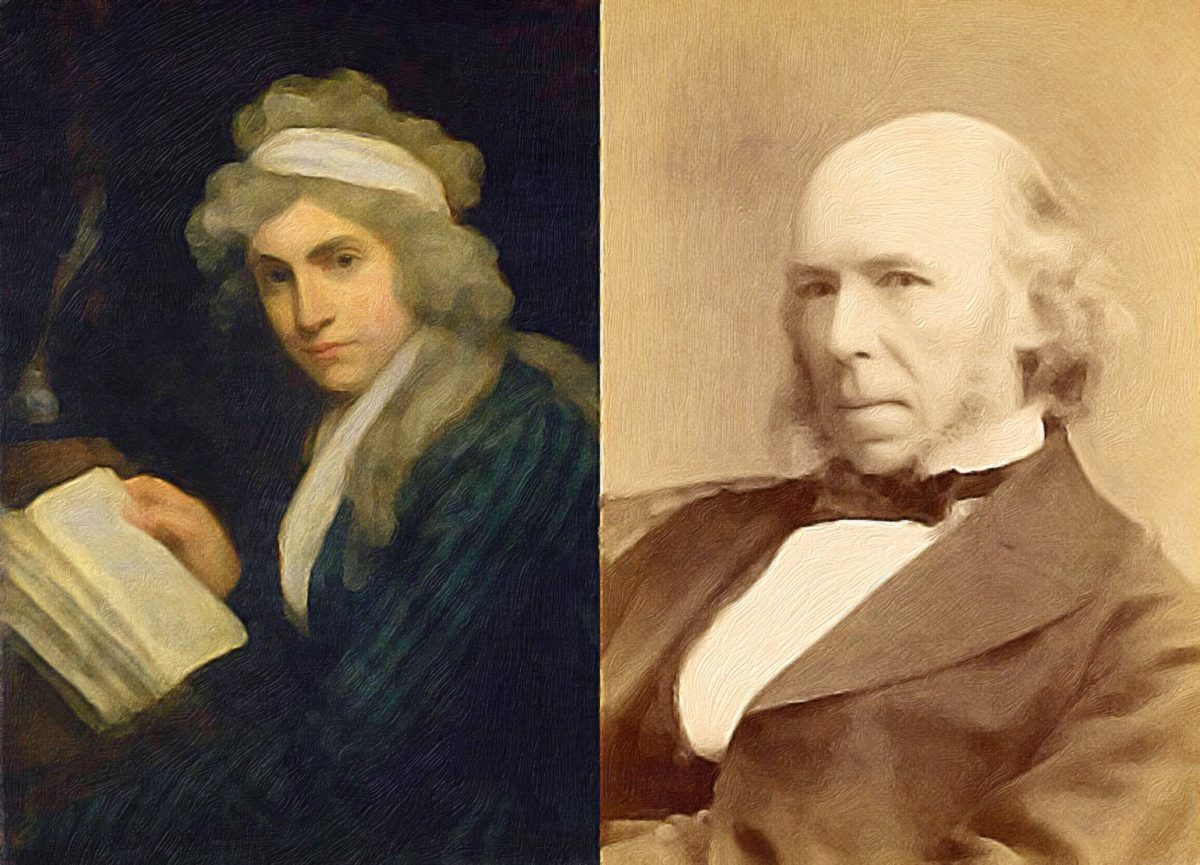
On April 27, 1759, English philosopher and author Mary Wollstonecraft was born. Wollstonecraft married anarchist philosopher William Godwin and the couple begat one daughter, Mary Shelley, author of Frankenstein: or, The Modern Prometheus. Wollstonecraft herself wrote several important political treatises, including her response to Edmund Burke’s Reflections on the Revolution in France (1790), A Vindication of the Rights of Men (1790), and her valiant effort in the emancipation of women, A Vindication of the Rights of Women (1792).

English philosopher, psychologist, sociologist, and political theorist Herbert Spencer was born in Derby, England, on April 27, 1820. Among Spencer’s most famous books are First Principles, Principles of Ethics (chiefly its first part, The Data of Ethics), The Study of Sociology, The Man versus the State, and two editions of Social Statics. Spencer was an evolutionary theorist as well as a religious and political philosopher, and coiner of the phrase “survival of the fittest.” He called the basic principle of a free political order “The Law of Equal Freedom.”


Categories
First Amendment rights Internet controversy social media

Musk’s Twitter’s Must-Do’s

Twitter is selling itself to billionaire Elon Musk “for an estimated $44 billion.”

Since deals sometimes fall through at the last second, the sale may yet be thwarted. For example, the government could try to foul things up — objecting, perhaps, to the possibility that if Mr. Musk takes over, obnoxious repression of speech would be dealt a grievous blow.

So, fingers crossed. But say Musk now has Twitter. What next?

Well, Elon Musk should stick to his stated free-speech absolutism. He should unfetter speech on Twitter. He is already being pressured to keep banning “misinformation,” i.e., disagreement with people who certainly don’t want their own alleged misinformation to be censored, only their opponents’.

Others want “hurtful” speech — impassioned polemics and invectives by their adversaries — to be squelched.

Musk has said that Twitter should “just be very cautious” about imposing any bans and suspensions. This is vague. Does it not imply the wrong kind of wiggle room for dealing with controversy? Musk must make no attempt to fine-tune Twitter’s speech to appease the censor faction, for this tribe cannot be satisfied until all with whom they disagree are silenced.

Twitter requires massive, sweeping, immediate changes, including restoring the banned or suspended accounts of all users kicked off for “misinformation” and the like.

Ban terrorists and others calling for — or facilitating — criminal actions. That’s it.

Current Twitter employees who try to sabotage the more free-wheeling policies should be unceremoniously shown the door.

This is Common Sense. I’m Paul Jacob.


PDF for printing

See all recent commentary
(simplified and organized)
See recent popular posts