Categories
Thought

Matt Walsh

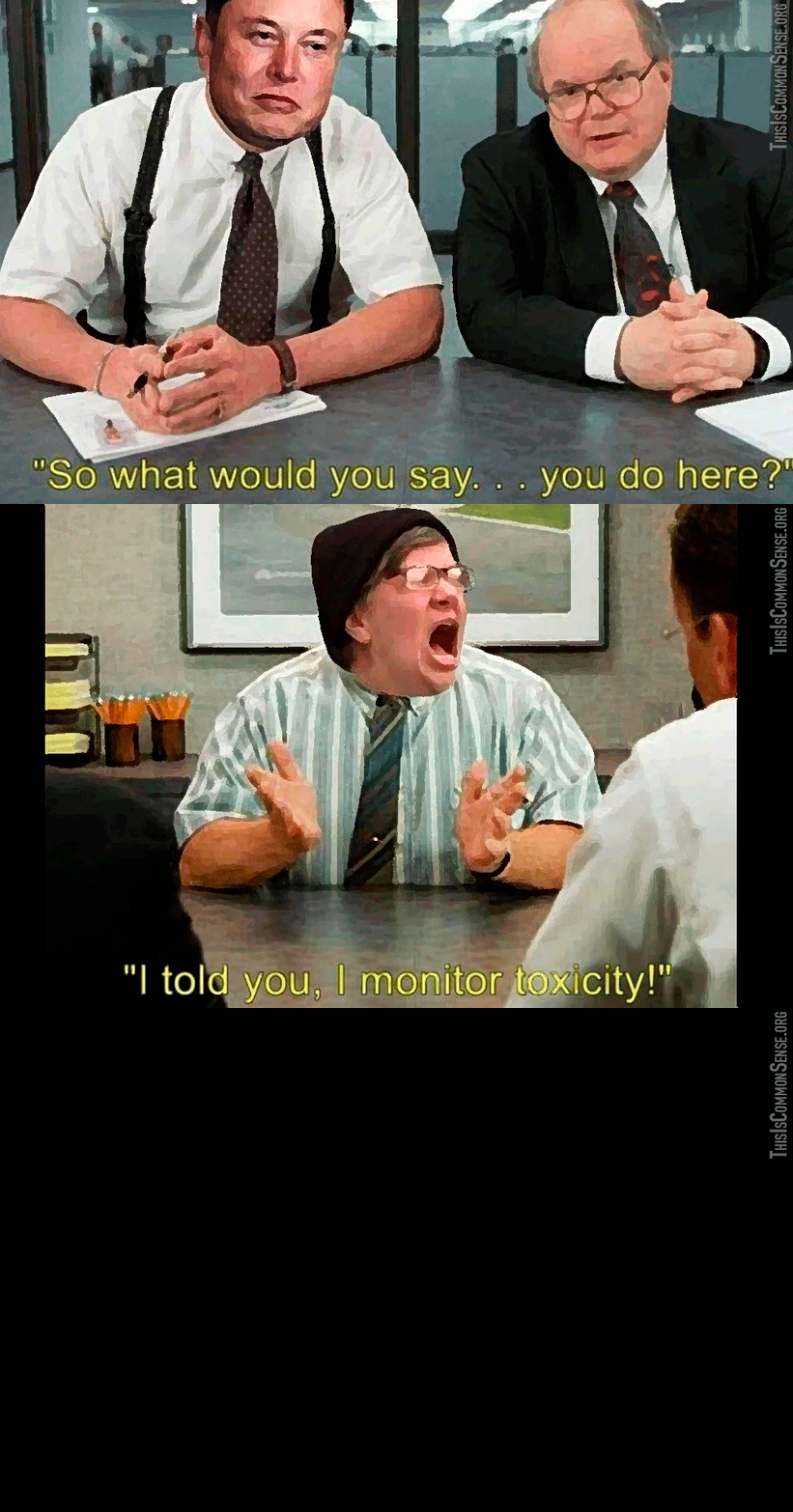
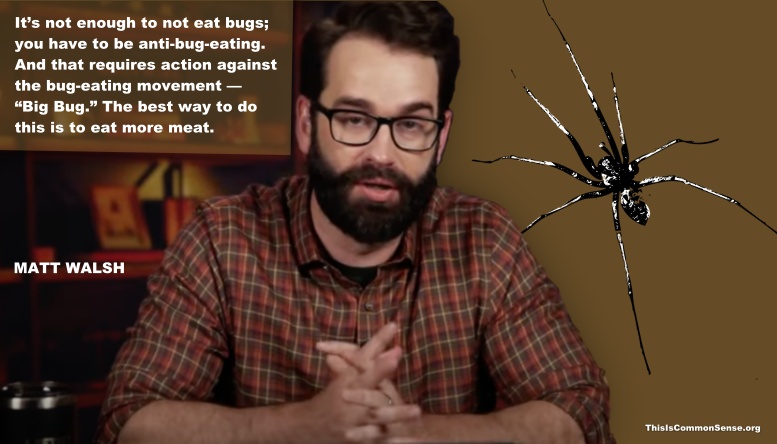
Outlets like Time magazine tell us eating bugs is the solution to all of your problems, and, you know, the people telling you to do it aren’t doing it themselves, as always, but they want you to eat bugs. That’s why recently I’ve come to the realization of something: It’s not enough to not eat bugs; you have to be anti-bug-eating. And that requires action against the bug-eating movement — “Big Bug.” The best way to do this is to eat more meat.

Matt Walsh, on his podcast touting a sponsor, GoodRanchers.com/WALSH.
Categories
Today

Between the crosses

In 1791, the Constitution of May 3, the first modern constitution in Europe, was proclaimed by the Sejm of the Polish–Lithuanian Commonwealth.

On May 3 in 1915, Lieutenant Colonel John McCrae composed the poem “In Flanders Fields,” the most famous poem of World War I. The Canadian physician wrote it after presiding over the funeral of friend and fellow soldier Lieutenant Alexis Helmer, who died in the Second Battle of Ypres. It is in the form of a rondeau.

Categories
First Amendment rights national politics & policies

Homeland Censorship Board

We’re in a twilight zone beyond mere “mission creep” now. 

Two months ago, creeps at the Department of Homeland Security (DHS) created a new censorship board, secret until its existence was revealed in congressional testimony.

This disinformatively named Disinformation Governance Board is headed by an open critic of the First Amendment, Nina Jankowicz. The purpose of the amendment being to protect freedom of speech and other rights from governmental assault, the new board and its director are especially alarming.

The DHS was formed after 9/11 to protect national security and combat terrorism, a form of politically motivated violence. And whatever the exact definition of “terrorism” should be, we can at least agree that arguing about the origins and issues of elections, pandemics, or Russian invasions doesn’t qualify. The bitterest clashing over facts is just speech, unless part and parcel of criminal acts.

But the purpose of the Disinformation Board is to combat and “address this threat” of election disinformation.

Merriam-Webster defines “disinformation” as “false information deliberately and often covertly spread” to “influence public opinion or obscure the truth.”

The First Amendment protects dishonest and mistaken honest speech, not just infallible honest speech. But by “disinformation,” foes of freedom of speech often mean “any speech we dispute.”

If the government can repress any speech that it chooses to label “disinformation,” that portends the end of freedom of speech. 

The very existence of the Disinformation Board warrants a lawsuit on First Amendment grounds.

And since disinformation was coined to designate, specifically, government-concocted and distributed misinformation — a term of art in the “intelligence” and propaganda biz, called dezinformatsiya by Stalin  — it is especially rich to see the current administration apply it directly against the people.

This is Common Sense. I’m Paul Jacob.


PDF for printing

See all recent commentary
(simplified and organized)
See recent popular posts
Categories
Thought

H.L. Gold

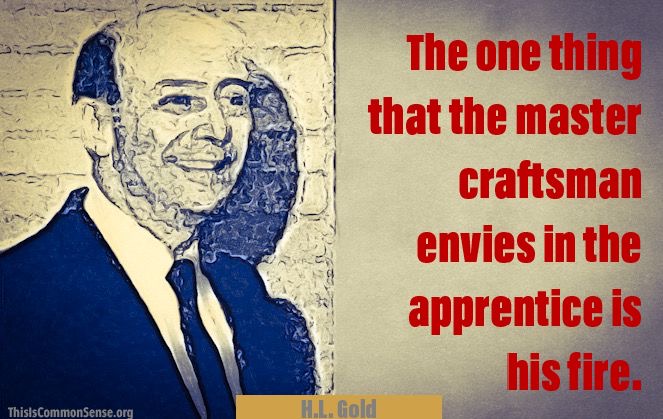
The one thing that the master craftsman envies in the apprentice is his fire.

H.L. Gold, The Fifth Galaxy Reader (1961), p. xi.
Categories
Today

Run for the Border

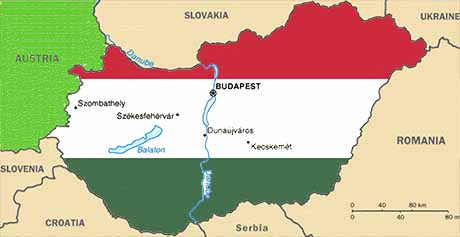
On May 2, 1989, Hungary began dismantling its border fence with Austria, allowing a number of East Germans to defect.

Categories
by Paul Jacob video

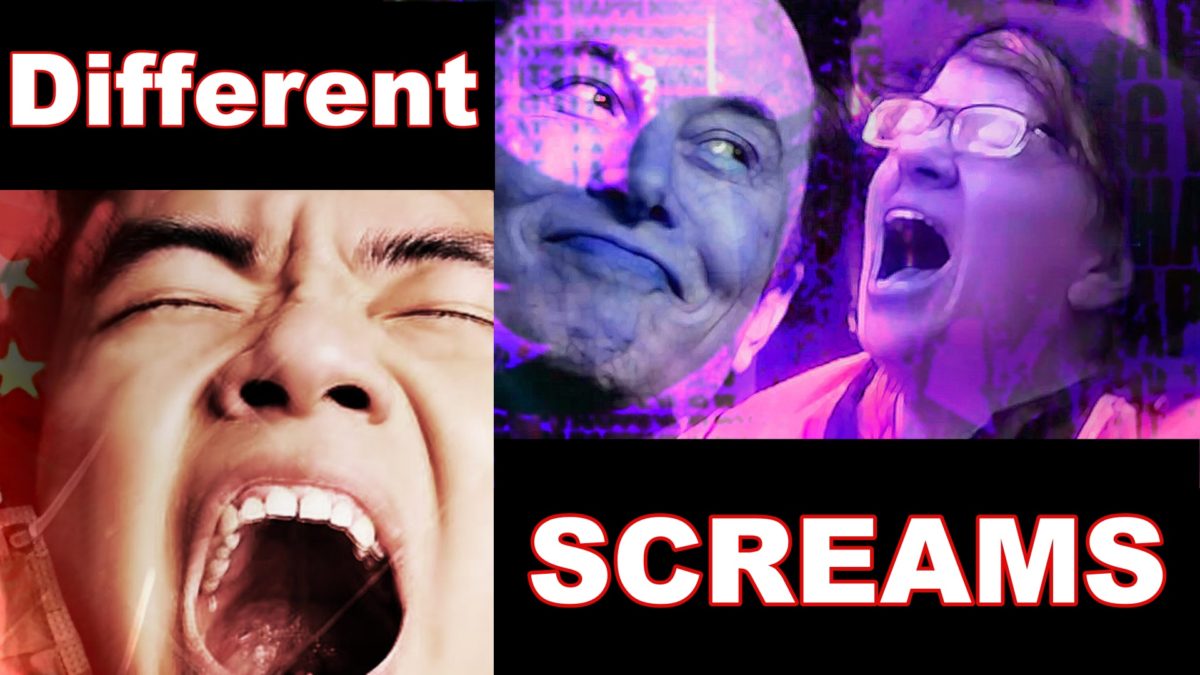
Watch: Different Screams

Paul Jacob laughs, sighs, weeps, cheers, and jeers his way through the big stories of the week, from Shanghai (really bad news), Virginia (really good news), to the Twitterverse (good news plus a lot of gallows chortling).

This podcast covers the final week of April 2022.

This Week in Common Sense: audio podcast hosted on SoundCloud.
Categories
Thought

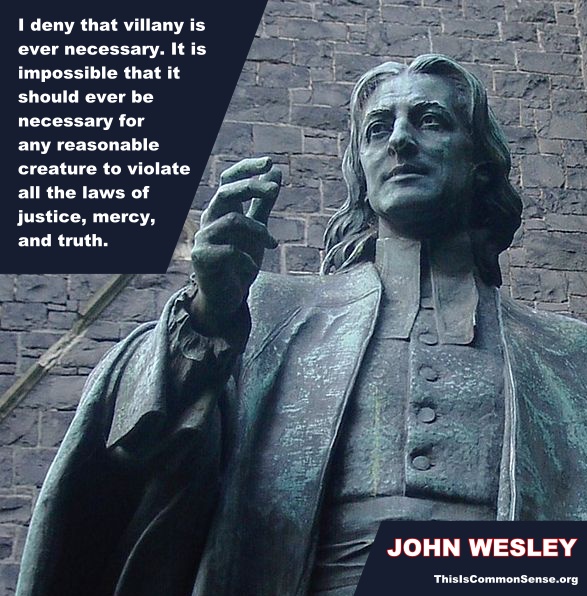
John Wesley

I deny that villany is ever necessary. It is impossible that it should ever be necessary for any reasonable creature to violate all the laws of justice, mercy, and truth. No circumstances can make it necessary for a man to burst in sunder all the ties of humanity. It can never be necessary for a rational being to sink himself below a brute. A man can be under no necessity of degrading himself into a wolf. The absurdity of the supposition is so glaring, that one would wonder any one can help seeing it.

John Wesley, Thoughts Upon Slavery (1774).

Categories
Today

Truly Antifascist

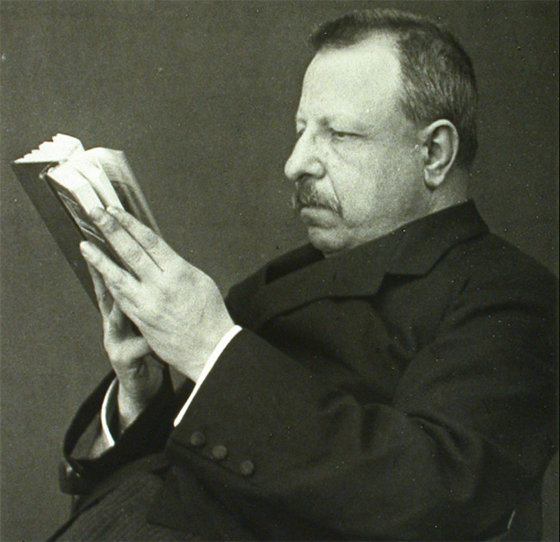
The Manifesto of the Anti-Fascist Intellectuals, written by philosopher Benedetto Croce [pictured, above] in response to the Manifesto of the Fascist Intellectuals by Giovanni Gentile, sanctioned the unreconcilable split between the philosopher and the Fascist government of Benito Mussolini, to which he had previously given a vote of confidence on October 31, 1922. 

The manifesto was published by Il Mondo on May 1, 1925, which was Workers’ Day, symbolically responding to the publication of the Fascist manifesto on the Natale di Roma, the founding of Rome (celebrated on April 21). The Fascist press claimed that the Crocian manifesto was “more authoritarian” than its Fascist counterpart — a typical leftist dismissal of what used to be called “liberalism” — in Italian, liberismo — but which Croce dubbed liberism, to distinguish it from the dirigiste quasi-socialisms of self-described “liberals” of the time.

Categories
audio podcast

Listen: Different Screams

Paul Jacob laughs, sighs, weeps, cheers, and jeers his way through the big stories of the week.

This Week in Common Sense for April 29, 2022.
Categories
Today

Nobel Laureate Economist

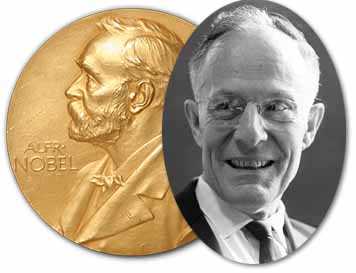
On April 30, 1902, economist Theodore W. Schultz was born. His work studying the quick post-war recovery in Germany and Japan led to his development of “human capital theory,” explicated in books such as Investing in People (1981) and several major papers, including “Investing in human capital” (1961) and “Transforming traditional agriculture” (1964).

He was co-winner (with William Arthur Lewis) of the 1979 Alfred Nobel Memorial Prize in Economic Sciences. Schultz died in 1998.