Categories
ideological culture national politics & policies political challengers

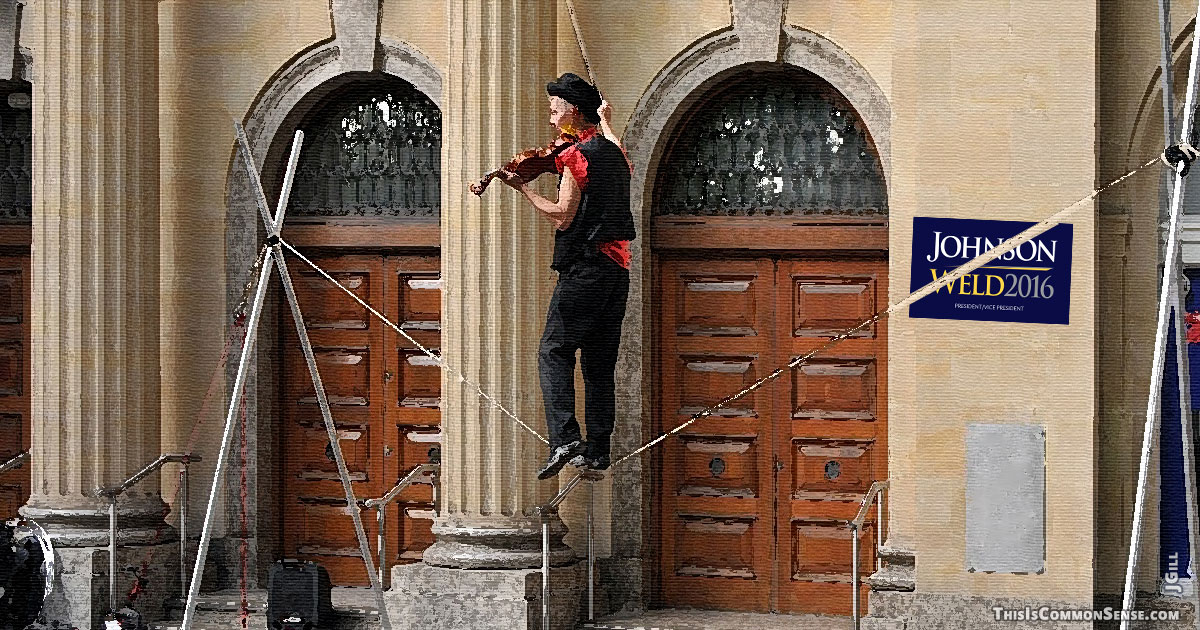
Libertarianish, Democratish?

With the two most disliked and distrusted politicians in American history snatching the two major party presidential nominations, lots of voters — free-market conservatives, libertarians, liberals concerned about civil liberties and war, moderates, decency advocates — are looking for an alternative.

The Libertarian Party, our age’s perennial “third party” on state ballots, has a golden opportunity.

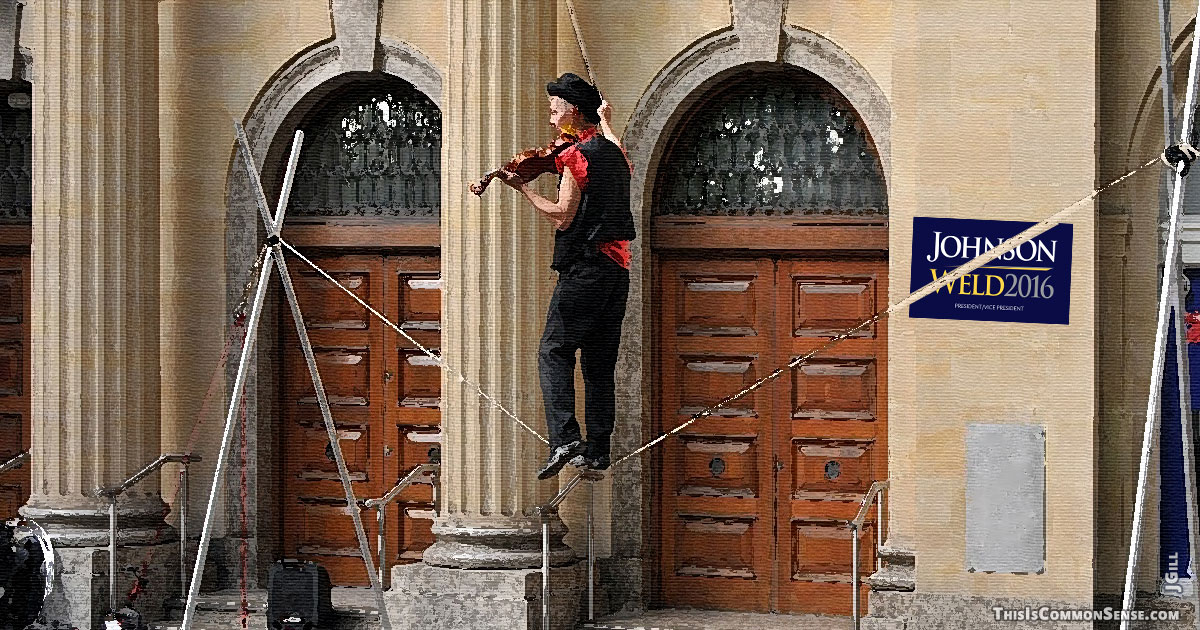
Perhaps that’s why delegates to 2016’s Libertarian Party nominating convention chose two two-termed former Republican governors to take up the freedom banner: New Mexico’s Gary Johnson and Massachusetts’s Bill Weld.

Both are nice men. They are the most accomplished and credentialed politicians in the race — more than Hillary Clinton; far more than Donald Trump. They don’t seem radical or threatening.

But that might be a problem. They are too nice. They are not threatening enough.

I’m not suggesting they threaten anyone, but in ideological terms they often appear more as moderates than as libertarians, as Ilya Shapiro noticed last week when he asked the pointed question, “Is Johnson-Weld a Libertarian Ticket?

The Johnson-Weld take, economist Mark Thornton noted, is more libertarianish than libertarian: the pair are “fiscally conservative and socially liberal for Republicans which is great, but they fall short of Libertarian.”

This isn’t exactly a shock. Anyone who watched the bizarre CNN town hall with Johnson and Weld will remember that odd moment when Johnson called Democrat Hillary Clinton “a wonderful public servant” and Weld dubbed her a “lifelong friend.”

No need to attack Mrs. Clinton personally, of course, but when a Libertarian cannot find one discouraging word about what a President Hillary would mean, it seems they want to appear Democratish.

And not libertarian.

Well, it’s a strategy. But it won’t appeal to #NeverHillary voters, or impress many #NeverTrumpers, either.

This is Common Sense. I’m Paul Jacob.   

Printable PDF

Gary Johnson, Weld, Libertarian, moderates, presidential, election, illustration


Categories
Accountability government transparency ideological culture media and media people moral hazard nannyism national politics & policies political challengers porkbarrel politics responsibility Second Amendment rights too much government U.S. Constitution

The Clinton Chasm

Hillary Clinton is roundly disliked by millions of outsiders, but admired by hundreds of politicians and activists. What sets her apart?

She listens.

Well, that’s Ezra Klein’s take in “Understanding Hillary,” an almost-believable piece of apologetics courtesy of Vox.

He calls Hillary’s problem “The Gap,” though “Vast Chasm” is more like it.

There’s a huge difference between how the public sees her — “Polls show most Americans doubt her basic honesty” — and how her fellow insiders feel about her. “She inspires a rare loyalty in ex-staff,” Klein informs us, “and an unusual protectiveness even among former foes.”

Klein emphasizes Mrs. Clinton’s capacity to talk naturally and listen carefully, when dealing one-on-one with insiders and constituents, and in small groups. “She gets things done,” he asserts, though I think what he really means is she moves her agenda forward. Actual accomplishments? Open to dispute.

On the crucial issue of trust, Klein buys into what Hillary is selling. She says people doubt her because she’s been so often attacked.

I don’t know about you, but I doubt her because . . . well, cattle futures, for starters. Her ridiculous “vast right-wing conspiracy” dodge to all those rich 1990s scandals: the blue dress, President Bill losing his law license, even the crony takeover of the White House travel office. Hillary has led the way more recently with the Benghazi “video” lie and her private server and email scandal. Plus, witness the ongoing conflict presented by the Clinton Foundation raking in millions from unsavory foreign sources..

Klein, on the other hand, argues that the media is against her.

This is Common Sense. I’m Paul Jacob.

Printable PDF

Hillary Clinton, trust, lie, truthful, Ezra Klein, illustration, VOX


Categories
general freedom national politics & policies political challengers too much government U.S. Constitution

Is That a Constitution in Your Pocket?

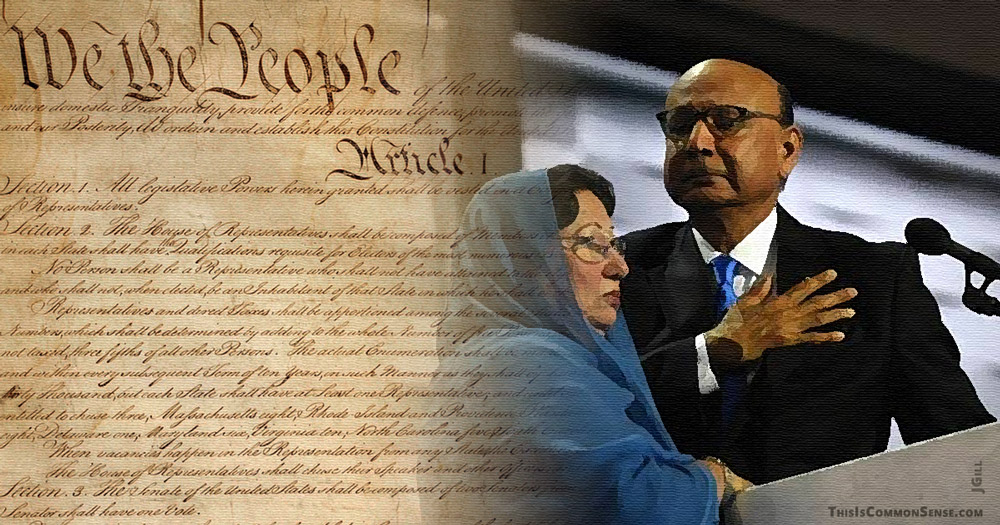
“We were blessed to raise our three sons in a nation where they were free to be themselves and follow their dreams.”

Those eloquent words came from the lips of Khizr Khan, the Pakistani immigrant who spoke at the Democratic National Convention last week about losing his son, Capt. Humayun Khan, to a suicide bomber in Iraq.

Describing his family “as patriotic American Muslims with undivided loyalty to our country,” and charging that, “Trump consistently smears the character of Muslims.” Khan asked Donald J. Trump a great question: “Have you even read the U.S. Constitution?”

Then, reaching into his suit pocket, Khan pulled out a copy, adding, “I will gladly lend you my copy.”

Yesterday at Townhall, I declared Khan my Person of the Week. Not just because Mr. Khan is fond of handing out pocket-sized copies of the U.S. Constitution and told the New York Times that his “real hero” is Thomas Jefferson, but because he asked a great question.

Let’s ask all the candidates. That question, for sure, and three additional ones:

  1. Do you favor repealing parts of the First Amendment to allow incumbent congressmen to regulate their own campaigns and their opponents’ in regard to raising and spending money?
  2. In the Heller case, the Supreme Court ruled that the Second Amendment provides individuals a “right to bear arms” — will you appoint justices who agree or disagree with Heller?
  3. As president, will you issue an executive order instructing all federal agencies and police agents to cease any use of civil asset forfeiture?

I’ve got more questions. I bet you do, too.

This is Common Sense. I’m Paul Jacob.

Printable PDF

Khizr Khan, Pakistan, Democrat, convention, Democratic, Donald Trump, illustration


Categories
Accountability crime and punishment moral hazard national politics & policies responsibility

Freddie’s Dead

Marilyn Mosley is frustrated. This State’s Attorney in Baltimore, Maryland, angrily dropped charges against the remaining three police officers not already acquitted in the death of Freddie Gray, who died from injuries sustained while in police custody.

Clearly, Mosley lacked the evidence to convict these officers of murder, manslaughter, false arrest, etc. Were the charges politically motivated, as police allege? Or did police impede her investigation, as she charges?

I don’t know. But here’s what we do know:

Upon sighting police April 12th of last year, Gray ran but was apprehended. Police confiscated a knife, which was perfectly legal to carry. Then police called for a van, and video captured police dragging 25-year-old Freddie Gray, screaming in agony, to that van.

Police transported him on a very circuitous route “downtown” that ended up at the hospital, after police discovered during a stop that he wasn’t breathing. A week later Freddie died.

The cause of death was a spinal injury.

The video suggests impairment before the travel therapy administered by police, though the injury could have been worsened in transit. Gray wasn’t wearing a safety belt. In fact, the medical examiner ruled it a homicide based on his not being belted in.

Whether the spinal injury was a freak accident, caused by police misconduct or, as alleged, Gray was trying to injury himself to seek damages, the medical evidence shows no serious bruises or broken bones — just the spinal injury.

We don’t know what happened.

What we do know is that a man was taken into police custody without any legitimate charge, not treated or attended to as he should have been, and he’s dead.

There’s no victory or vindication here for police.

This is Common Sense. I’m Paul Jacob.

 

AND ANOTHER THING: To what degree is Freddie Gray a casualty of the war of drugs? Back in June, defense attorneys for the police released an email that Prosecutor Mosley’s office had sent to police asking for an “enhanced” police presence to combat drug dealing in the area Freddie Gray was arrested. That was three weeks prior to his arrest.


Printable PDF

Freddie Gray, police brutality, misconduct, Baltimore, illustration


Categories
Accountability moral hazard nannyism national politics & policies responsibility too much government

ABC’s of Deceptive Politics

In breaking news, a major politician has promised to give important benefits to the poor and the middle class.

She did not specify where those benefits would come from. But we know where they do come from: taxpayers. What this politician has done is promise to take from some to give others. Actually, it’s even more complicated — after taking from some folks, then there’s the skimming off the top (or: taking a big chunk); and after that, there’s the hoopla about the money she is “giving” back.

This is how politicians work. Vague talk and big promises, backed up by the ability to tax and the sanction to threaten your life if you don’t comply.

Characteristically, they avoid talk of the costs of their actions. They focus on the “benefits.”

Many, many years ago, a great American sociologist explained the process:

A and B put their heads together to decide what C shall be made to do for D. The radical vice of all these schemes, from a sociological point of view, is that C is not allowed a voice in the matter, and his position, character, and interests, as well as the ultimate effects on society through C’s interests, are entirely overlooked. I call C the Forgotten Man.

That was written in 1883. In 1932, a major politician took the term, “The Forgotten Man,” and applied it not to C but to D.

And since then, politicians have tended to ignore C entirely, except to make them feel guilty for not doing more for D (and, by implication, A and B).

You can see why I prefer direct action on discrete issues by responsible citizens. In which the C’s are consulted.

This is Common Sense. I’m Paul Jacob.


Printable PDF

con game, politics, redistribution, Clinton


Original Photo Credit: David Goehring on Flickr (Creative Commons)


Categories
Accountability free trade & free markets moral hazard national politics & policies responsibility

It’s the Stupid Economy

When Bill Clinton ran for president, the slogan inside his campaign’s war room was a blunt reminder to focus on “the Economy, Stupid.” This was Clinton’s first enduring contribution to the American stock of catch-phrases.

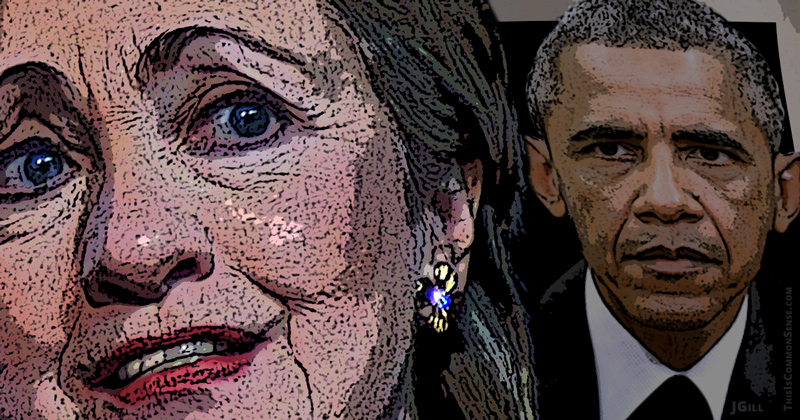
Now, Bill’s wife, Hillary, seeks the top banana position. But she has a harder job than Bill: he could fight against a lackluster incumbent caught in a big lie (“No New Taxes,” another slogan). Hillary is almost required to defend the outgoing president, in no small part because she served in his Cabinet.

If she were candid, she’d address the weak recovery and long-term stagnation.

Her slogan could be, “It’s the Stupid Economy.”

No matter what politicians say, however, secular (long-term) stagnation is a thing. Lots of people have given up, are off the roles of job-searchers and so don’t appear in official unemployment statistics, and too many people have taken early retirements on trumped-up disability claims.

At least, economist Lawrence Summers is decrying it, jet-setting around the world to meet with financial leaders and political functionaries.

I doubt his diagnosis, however. Summers talks Keynesian, pointing to inadequate aggregate demand. While there may be something to the general shift in the desire to hold monetary assets, leading to deflation and even negative interest rates, I bet the underlying problem is regime uncertainty — when widespread fears of the future and doubts about governmental consistency and follow-through lead the owners of capital to withhold investing in production.

There are also the effects of general regulatory and redistributionist kludge.

When the problems stem from your favored policies, you can’t revive FDR’s slogan “nothing to fear but fear itself” and let it go at that.

Hillary will surely explain — Thursday night.

This is Common Sense. I’m Paul Jacob.   

Printable PDF

HIllary Clinton, Obama, Bill Clinton, economy, election, illustration


Categories
Accountability national politics & policies

Bombed into Submission?

Was the United States of America recently bombed into submission?

In the Battle of Britain, the Brits survived the German blitz. The North Vietnamese persevered through storms of our B-52s, for years. Bombing alone never seems to conquer an opponent.

But Russian air strikes against U.S. positions in Syria sent Secretary of State John Kerry scurrying to the negotiation table.

In June, but just reported last week, Russian planes bombed a “secret base of operations for elite American and British forces” in Syria. (No Brits were at the base at the time, only Americans.) Putin’s planes also attacked “a site linked to the Central Intelligence Agency.”

“U.S. military and intelligence officials” told the Wall Street Journal that the strikes were “part of a campaign by Moscow to pressure the Obama administration to agree to closer cooperation over the skies in Syria.”

It seems to have worked. Sec. Kerry quickly struck a deal with the Russian Federation – but “over Pentagon and CIA objections.”

Those critics complained that “the White House gave in to Russian bullying,” and also “doubt[ed] that Moscow would abide by the terms of the agreement,” according to the Journal.

“Officials close to Mr. Kerry said he shares the skepticism of military and intelligence officials about Russian intentions, which is why he inserted a clause during negotiations to allow the U.S. to suspend cooperation with the Russians if they started bombing U.S. allies again.”

What a deal! Kerry sure knows how to lead from behind.

Does anybody think our Middle East policy makes sense?

This is Common Sense. I’m Paul Jacob.

Printable PDF

Russia, Syria, Air Base, bombing, John Kerry


Categories
Accountability ideological culture insider corruption media and media people national politics & policies

Sorry Not Sorry

Today, the Democratic National Convention begins in Philadelphia.

Yesterday, Debbie Wasserman Schultz, chairwoman of the Democratic National Committee, announced her resignation amidst a growing controversy over the DNC’s favoritism toward Hillary Clinton over Bernie Sanders during this year’s presidential contest.

Months ago, Sen. Sanders called for Wasserman Schultz to step down, noting her closeness to the Clinton campaign and angered by what his campaign perceived as unfair treatment. To which, Wasserman Schultz had smugly responded, “Spoken like someone who has never been a member of the Democratic Party and has no understanding of what we do.”

It seems Sanders had a lot better understanding of what the DNC does than she thought.

Thanks to WikiLeaks, the American people have also gotten in the know. Last Friday, WikiLeaks released 20,000 emails from top DNC officials, reportedly snatched by Russian hackers. In the emails, one can read the DNC’s top financial officer suggesting a smear against Sanders over his religion. “AMEN,” responded the DNC’s CEO.

Yes, indeed, the Democratic Party establishment was rigging the process. “The release provides further evidence,” Michael Sainato wrote in The Observer, that “the DNC broke its own charter . . . by favoring Clinton as the Democratic presidential nominee, long before any votes were cast.”

Caught breaking the rules, Wasserman Schultz is out!

Sorta. She’s out after the convention, not before.

Furthermore, Debbie Wasserman Schultz is still “in.” Mrs. Clinton just offered her a position on the campaign, and said she was “grateful to Debbie for getting the Democratic Party to this year’s historic convention in Philadelphia.”

By hook and by crook.

This is Common Sense. I’m Paul Jacob.  

Printable PDF

Debbie Wasserman Schultz, democrat, democratic party, Hillary Clinton, Bernie Sanders


Photo credit: Medill DC on Flickr (Creative Commons)


Categories
government transparency ideological culture meme national politics & policies too much government

Hannah Arendt

“No one has ever doubted that truth and politics are on rather bad terms with each other.”

—Hannah Arendt
(in her 1967 essay, “Truth and Politics.”)


Hannah Arendt, Truth, politics, quote, quotation, meme


Categories
ideological culture media and media people national politics & policies

No One Owns Anybody Else

“The left does not own homosexuals anymore,” said Milo Yiannopoulos, to a crowd outside the Republican National Convention. And the crowd cheered.

I’ve talked about Milo before. He’s a controversial figure. So much so that Twitter just banned him for life. (That had something to do with his tweets about, of all things, the new Ghostbusters movie, and the racist tweets of his followers directed at one of its stars.)

Openly gay, he nevertheless has his priorities. “Donald Trump is best placed to end the tyranny of political correctness in this country. Many Trump supporters and Republicans have their challenges with the gay thing. But there’s a world of difference between refusing to bake a cake and opening fire” . . . at gay men and women in a nightclub.

There’s a lot to be said of Milo’s somewhat startling acceptance amongst conservative Republicans. Robby Soave deals with the important stuff at Reason.

What interests me is the basic contention: “The left does not own . . .”

The idea that people of certain races or sexual proclivities belong, naturally, to one side of the political spectrum is . . . itself racist or sexist.

The issues that divide left, right, center, today, are not primarily about race. Or sexual orientation/preference/display, etc. Balanced budgets, war, rule of law, taxation, redistribution — positions on these issues don’t adhere to people because of race or sex or what-have-you.

I wish gays and Republicans the best in coming to terms with this most obvious of truths. Let’s hope blacks, Asians, the homely and the beautiful also come to their senses. So we can all discuss politics rationally.

This is Common Sense. I’m Paul Jacob.

Printable PDF

DePaul University, Black Lives Matter , Social Justice Warriors, Dangerous Faggot Tour, Milo Yiannopoulis , provocative,