Categories
free trade & free markets national politics & policies responsibility too much government

The Skinny on Trumponomics

President Donald Trump does not trust economists. So he is demoting the Council of Economic Advisors, booting out of the Cabinet the Council’s chairperson.

If this were only because economists as economists cannot do what he has been able to do — make a big success in business and trade — we could give him something like a pass.

After all, successful entrepreneurs have a knack for guessing an unpredictable future. Economists, not so much. Why the difference? Maybe because entrepreneurs have “skin in the game.” Governments boards and bureaus — or endowed professorships — don’t risk anything like skin.

Besides, prediction is an art, not a science.

Could Trump be fooled by his knack for working with real risk?

But all this may be irrelevant.

Trump’s problem seems to be that he cannot find enough reputable economists to jump on board his protectionist bandwagon.

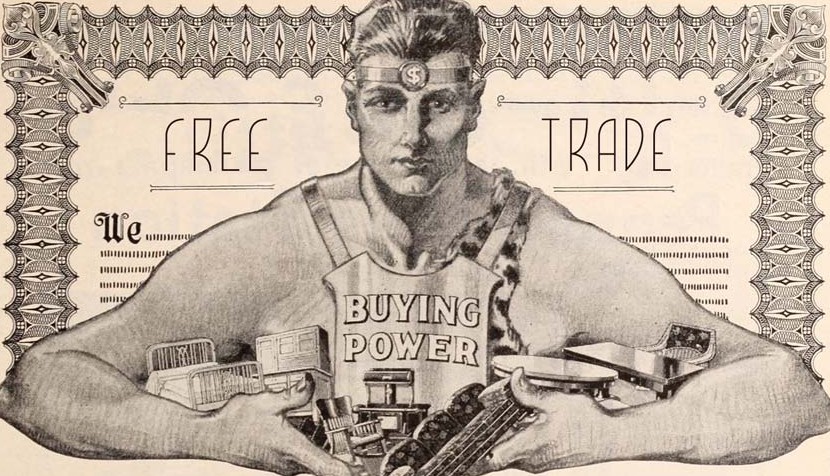
Trade barriers, high tariffs and punitive measures to control corporate behavior — among Trump’s most popular policies — aren’t big among economists.

According to Josh Zumbrun, writing in the Wall Street Journal, a “survey of every former living member of the CEA for both Republican and Democratic administrations found that not one member publicly supported Mr. Trump’s campaign.”

Economist Pierre Lemieux, writing in response to Zumbrun’s article, clarified Trump’s particular problem: economists “have methods and theories that prevent them from saying stupidities. They are difficult to turn into parrots. And they believe in the benefits of exchange.”

That latter notion, really basic, is what protectionists like Trump do not understand.

And the kind of predictions economists can successfully make run like this: “Well, that won’t work!”

It’s usually said about protectionism.

But whose skin is on the line now?

This is Common Sense. I’m Paul Jacob.


Printable PDF


Categories
Accountability general freedom government transparency responsibility too much government

The Confidence Game

Romania’s parliament has confidence in . . . itself.

Sorta. A parliamentary no-confidence vote failed, despite 161 lawmakers voting for the resolution and only eight voting with the government.

Confused? The no-confidence measure failed because the Social Democrats, controlling nearly two-thirds of the 465 seats in parliament, abstained on the measure, which required a majority of parliament to vote affirmatively.

Not a very confident vote of confidence.

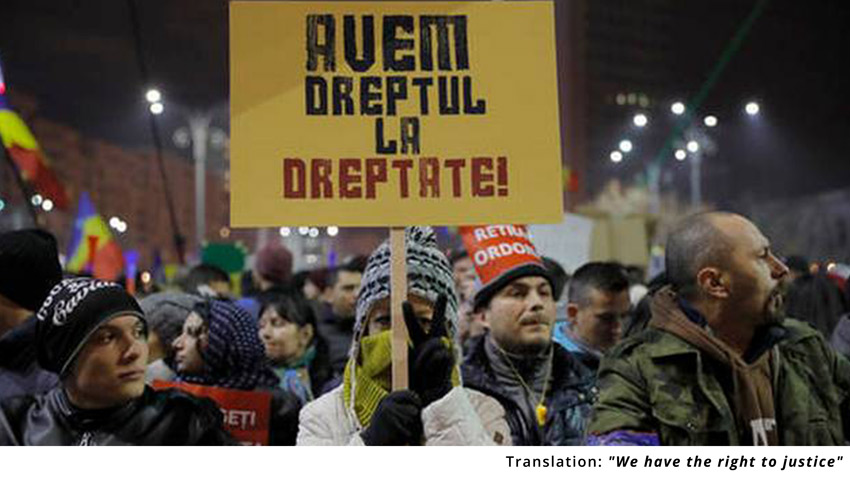
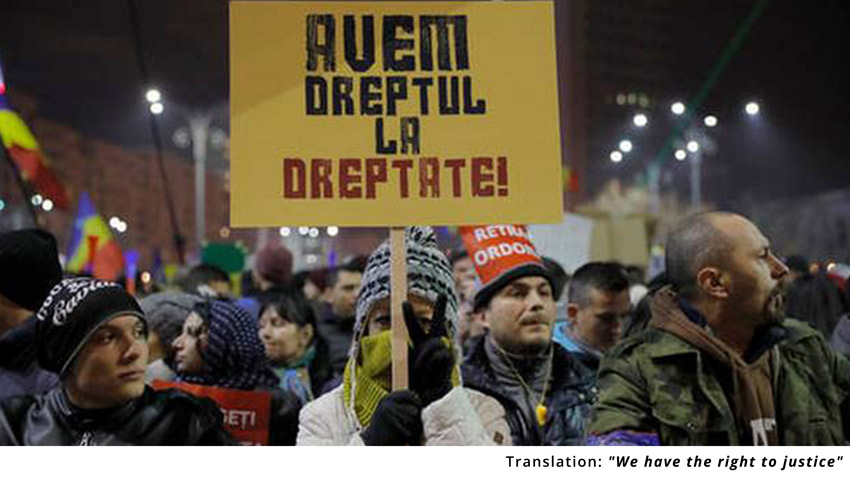
The vote came after eight days of protests in Bucharest, the capital, and around the country — the largest since the 1989 fall of communism. A quarter of a million people took to the streets of Bucharest last Sunday, and half a million nationwide.*

The protests came after last week’s late night corruption decree, issued “by the cabinet, without parliamentary debate,” as Reuters reported — and “designed to decriminalize a number of graft offences, cut prison terms for others and narrow the definition of conflict-of-interest.”

“The emergency ordinance . . . effectively decriminalized some forms of corruption if the amount involved was less than $47,000,” explained the New York Times, meaning amnesty for Liviu Dragnea, the head of the ruling Social Democrat Party, and dozens of other politicians convicted of graft and corruption.

The decree was hastily rescinded, but Romanians cannot trust their government.

“It’s too late,” one protester said. “Their credibility is zero.”

“This government has offered us a perfect demonstration of what it can do during its first 30 days in office,” another quipped. “Conclusion: they must leave.”

But Prime Minister Sorin Grindeanu told fellow legislators, “I do hope that as of today we get back to work.”

Unfortunately, that’s what Romanians fear.

This is Common sense. I’m Paul Jacob.


* The same ratio of protesters to population in the U.S. would mean eight million protesters nationally.


Printable PDF


Categories
folly ideological culture media and media people

The Advertising Hypocrisy Gap

“What do I tell my daughter?”

So begins the Audi advertisement millions of Americans saw last Sunday during the yearly super celebration of commercials that, sandwiched in between them, included one of the most exciting football championship games ever. 

The ad shows a father watching his young girl racing go-carts against young boys, and his thoughts continue: “Do I tell her that her grandpa’s worth more than her grandma?”

She won’t believe that. 

“That her dad is worth more than her mom?”

Not unless you want to sleep on the couch. 

“Do I tell her that despite her education, her drive, her skills, her intelligence, she will automatically be valued less than every man she ever meets?”

His daughter wins the race and dad considers, “Or maybe I’ll be able to tell her something different.”

Maybe? Maybe he’s fallen hook, line and sinker for the canard of the “gender pay gap.”

That gap is simply the median income of all men in the economy compared to the median income of all women. As the Washington Post explains, “The gender wage gap . . . can be primarily explained by differences in industry and occupation choice, hours worked, and gaps for taking time off to have children.

The Post also discloses that Audi has “just two women on its senior leadership team in the United States and no women on its global management board.” I don’t know what they’re going to tell their daughters.

But I’ve always told my daughters they can do anything they put their minds to.

And perhaps I’ll add this advice: “Don’t buy an Audi.” 

This is Common Sense. I’m Paul Jacob.


Printable PDF

Categories
folly government transparency national politics & policies political challengers responsibility

No Innocence Abroad

After establishing, during the big Super Bowl day interview, that President Donald Trump respects Russian leader Vladimir Putin, Bill O’Reilly asked why.

After all, the Fox News star challenged, “Putin’s a killer.”*

“We’ve got a lot of killers,” Trump replied. “What, you think our country’s so innocent?”

This disturbed just about everyone. On the left, it was more evidence of Russian influence. The right recoiled at Trump doing the leftist thing, equating our moral failings with the much worse failings of others.

“I don’t think there’s any equivalency between the way that the Russians conduct themselves,” insisted Senate Majority Leader Mitch McConnell (R-Ky), “and the way the United States does.”

But is that really what Trump said? He merely pooh-poohed America’s innocence.**

And not without cause. His predecessor, after all, holds the world record (not Nobel-worthy) in drone-striking the innocent as well as the guilty in seven countries . . . none of which the U.S. has declared war upon.

But wait: if “we’ve got killers” is the new acceptable-in-public truth, then why not “we’ve got currency manipulators”?

Yes, I’m shifting focus from east of Eastern Europe onto the Far East. According to a different Fox report, “Trump accused China and Japan of currency manipulation, saying they play ‘the devaluation market and we sit there like a bunch of dummies.’”

Despite incoherent objections from Japan***, let’s not forget the obvious: the U.S. manipulates currency, too. What do you think the Federal Reserve is for?

I mention this not to rub Trump’s nose in hypocrisy. It’s to establish an estoppel principle here.

How may we object when others do that which we do ourselves?

This is Common Sense. I’m Paul Jacob.

* The Russian State is asking for an apology from O’Reilly. Not for a retraction on the grounds of truth, mind you, but an apology. O’Reilly wryly balks.

** Which certainly doesn’t absolve Vladimir Putin of guilt.

*** Yoshihide Suga, a spokesperson for the Japanese Government, insists that “the aim of monetary policies that have pulled the yen lower is to spur inflation, not devalue the currency.” Nice distinction. Thanks.


Printable PDF

Categories
crime and punishment folly ideological culture media and media people moral hazard national politics & policies responsibility

God Knows You’re Good

“The trouble with fighting for human freedom,” wrote H. L. Mencken, “is that one spends most of one’s time defending scoundrels.”

Henry Louis Mencken (1880 – 1956), master prose stylist and social critic, knew whereof he wrote. But he also penned things to which few would give their hearty assent.

Today, we find several controversialists who, like Mencken, side with individualism against collectivism. They are raising a ruckus.

But are they “scoundrels”?

Does it matter?

The big news, last week, was the anti-Milo Yiannopoulis riot in Berkeley. But also last week, Robby Soave explains, “Black bloc ‘anti-fascists’ attacked right-wing media figure Gavin McInnes outside a New York University building,” where things got so crazy that one protester, a professor, screamed at the police for protecting Mr. McInnes when they “should” have — get this — been beating him up!

She called McInnes a Nazi. And insinuated he was a rape threat, etc.

So what did Reason writer Soave do? “McInnes,” he noted, “routinely says obnoxious things that deserve criticism. He’s something of a Diet Milo.”

What Soave did not do was ever address the Nazi charge, the rape charge, or any of the calumnies hurled at McInnes. Were Mencken the one being attacked, would he have written that the Sage of Baltimore “routinely writes obnoxious things that deserve criticism”?

Sure, true. But is that the stance you want to take?

Soave finds Milo and Gavin icky.

I feel his pain. But . . . when “Nazi” is the charge, calling the accused “obnoxious” and “deserv[ing] criticism”?

Gavin McInnes isn’t a Nazi. Or a rapist. And he retains free speech rights, regardless of what one thinks about his anti-feminism, or other controversial opinions.

This is Common Sense. I’m Paul Jacob.


Printable PDF

Categories
Accountability free trade & free markets national politics & policies responsibility

No Set Prices?

“Paul,” an old boss of mine used to say, “there are no set prices.”

He meant that when a vendor said it would cost x, my choice wasn’t just yes or no. Negotiate. I could say, “Boy, I’d sure like that, but golly, I can’t afford to pay x. Any chance you’d consider 4/5ths of x?”

It was amazing how often I bought what was priced at x for less than x.*

Consider government waste — from the Pentagon’s $400 hammers to millions in cost overruns for weapons systems. Politicians pay lip service to getting waste under control, but actually do something about it?

Yeah, right.

That’s why I took notice last December when then President-Elect Trump tweeted “Cancel order!” in response to the high price of a future Air Force One from Boeing. Then, Trump sent Lockheed stock down 3 percent with another tweet:

Based on the tremendous cost and cost overruns of the Lockheed Martin F-35, I have asked Boeing to price-out a comparable F-18 Super Hornet!

“Mr. Trump . . . would like to squeeze Lockheed for a better deal . . .” the New York Times explained, adding that Trump had “sent shock waves through the military industry.”

Sen. Richard Blumenthal from Connecticut, where the F-35’s engines are manufactured, responded, “The suggestion that costs are out of control is just plain wrong.”

Well, last week, CNN reported that, “Defense giant Lockheed Martin has agreed to sell 90 new F-35 fighter jets to the US Defense Department . . . a deal that amounts to more than $700 million in savings over the last batch of aircraft delivered.”

There are no set prices.

This is Common Sense. I’m skinflint Paul Jacob. 

* Even when a vendor wouldn’t budge on price, I could always call back a day later and say I’d finagled a way to afford it. Even then, the message that cost mattered likely started any future negotiations from a better position. 


Printable PDF

Categories
meme

Peaceful?

The purpose of the demonstration was to shut down a speech.

The speech would not have been shut down without the presence of violent protestors.

The peaceful protestors are claiming a victory that wouldn’t have been possible without the participation of violent protestors.

Categories
crime and punishment First Amendment rights general freedom ideological culture media and media people national politics & policies responsibility

The Silence of Violence

“The Free Speech Movement is dead.”

So said the Berkeley College Republicans after violence Wednesday night forced cancelation of a sold-out speech by Milo Yiannopoulos, the Greek-born British author, now a senior editor at Breitbart News. The reference, of course, is to the University of California’s history as a haven for free expression dating back to the 1960s.

Protests of the event gave way to

  • people beaten up on the streets,
  • rocks and bricks and Molotov cocktails hurled at police,
  • a young woman with a “Make America Great Again” parody hat pepper-sprayed in the face,
  • fires set, windows smashed at the Martin Luther King Jr. Student Union, along with
  • an estimated $100,000 of property damage.

Yet only one arrest was made Wednesday night, and two on Thursday, when a man in a suit wearing a Trump hat apparently triggered two guys to jump out of their car and assault him.*

CNN dubbed the “inflammatory” Yiannopoulos a “professional provocateur.” He has also been labeled a racist, which he denies, and a homophobe, even though he’s gay. Pushing the envelope against political correctness, for his part, Milo calls “college campuses . . . cancerous and toxic to free expression.”

Regardless of label, Yiannopoulos’s right to speak and the right of others to listen are constitutionally protected. And violence to block a peacefully expressed point of view is never justified.

Asked about the tactics used, one unnamed young protestor** explained, “Although, you know, it could get violent or whatever, with the fire, that’s what caused Milo to leave. We succeeded.”

The young woman added, “And next is Trump.”

Either we defend civilization against speech-squelching violence, or inherit an ugly silence.

This is Common Sense. I’m Paul Jacob.


*More arrests may be forthcoming. The Washington Post reported that, “University police rescued many people in the crowd who were being attacked, trapped or injured . . . and are collecting video to try to identify suspects.”

** The woman was part of the ominously-named group By Any Means Necessary.


Printable PDF


Categories
Accountability free trade & free markets general freedom government transparency nannyism national politics & policies responsibility too much government

Sledgehammer to a Bureaucracy

The media hysterically pushes the line that the new Trump administration is so much “in chaos” it even frightens seasoned (salt-and-pepper?) heads in the Republican Party. But perhaps folks at the Environmental Protection Agency have more reason to panic.

“It looks like the EPA will be the agency hardest hit by the Trump sledgehammer,” writes Julie Kelly over at National Review.

Ms. Kelly offers striking reasons to hit the agency hard, quoting from Steve Malloy, the author of Scare Pollution: Why and How to Fix the EPA. “I can think of no agency that has done more pointless harm to the U.S. economy than the EPA — all based on junk science, if not out-and-out science fraud.” Malloy looks forward to the new president’s promised rethink and restructuring of the agency.

Just how bad is it?

Environmentalists often cry foul over any corporate funding of ecological research. But if one worries about money influencing results, the case against grants funded by regulatory agencies for regulatory purposes is even stronger.

Especially when the agency is run by ideologues.

Trump’s transition team seeks to make all the EPA’s relevant data public, for peer and public review, and would really like to curtail the agency’s research funding entirely.

Pipe dream? Better than the recent nightmare: “For eight years,” writes Kelly, “President Obama used the agency as his de facto enforcer of environmental policies he couldn’t pass in Congress even when it was controlled by his own party.”

The EPA needs to be checked. And balanced. And more.

This is Common Sense. I’m Paul Jacob.


Printable PDF


Categories
crime and punishment ideological culture judiciary national politics & policies Second Amendment rights Tenth Amendment federalism term limits U.S. Constitution

Perry Mason for the Court

Legend has it that a juror once ran up to attorney Neil Gorsuch, after Gorsuch won a case proving a gravel pit owner had been cheated, declaring, “You’re Perry Mason.”

These days, Gorsuch sits on the Tenth Circuit Court of Appeals, and is President Donald Trump’s nominee for the late Justice Scalia’s seat on the nation’s highest court.

And now Gorsuch is receiving testimonials worthy of the indefatigable TV lawyer.

Brad Smith, the chairman of the Center for Competitive Politics, expressed his pleasure “that President Trump has nominated someone who will defend a robust First Amendment.”

Ballot access expert Richard Winger noted that Gorsuch has a “good record in cases involving independent candidates and minor parties.”

“I am hard-pressed to think of one thing President Trump has done right in the last 11 days since his inauguration,” wrote Neal Katyal in the New York Times. “Until Tuesday,” continued the Georgetown law professor, “when he nominated an extraordinary judge and man, Neil Gorsuch, to be a justice on the Supreme Court.”

Katyal, who had served as an acting solicitor general in the Obama administration, added that Gorsuch’s record of holding government officials accountable “should give the American people confidence that he will not compromise principle to favor the president who appointed him.”*

Even I have pertinent testimony: back in 1992, Gorsuch argued (in a co-authored Cato Institute paper) that term limits were “constitutionally permissible” as “institutional constraints on the power of government” that “the Framers,” if alive today, would likely see as “necessary preconditions for liberty.”

No, Gorsuch is not actually Perry Mason — I never knew where Perry stood on term limits.

This is Common Sense. I’m Paul Jacob.


* On Reason’s Hit & Run blog, Damon Root strongly agreed.


Printable PDF