Categories
Accountability local leaders moral hazard national politics & policies term limits

Renewed Interest in Self-Service

“Michigan’s strictest-in-the-nation term limits law will force nearly 70 percent of state senators out of office in 2019 and more than 20 percent of representatives,” reports the Detroit News, “a mass turnover that is fueling renewed interest in reform.”

What?!! Could term limitation laws actually make our poor underpaid and overworked politicians vacate their powerful perches . . . even when they don’t want to?

Heaven forbid!

Who could have foreseen this strange turn of events, whereby limits on the number of terms politicians can stay in office would mandate that politicians, having reached that limit, would be summarily cast out?*

Of course, that “renewed interest in reform” comes not from citizens, but politicians.

Oh, and powerful lobbyists and special interests.

The paper continues: “Term limits remain popular with the voting public, but critics say Michigan rules have thrust inexperienced legislators into complex policy issues they may be ill-equipped to address.”

Rich Studley, the Michigan Chamber of Commerce’s head-honcho, argues that “experience really matters.” His lobbying outfit, “an influential business group with significant financial resources,” is working to organize a ballot measure to weaken the limits it has long opposed.

“Any reform plan is unlikely to extend or repeal term limits,” explains the News, “but may instead allow legislators to serve longer in the House or Senate.”

Come again? If legislators could serve “longer” than currently allowed, that would clearly “extend” the limits.

I smell a scam swirling around Lansing.

This is Common Sense. I’m Paul Jacob.


* The “mass turnover” consists of 26 of 38 senators termed-out and 24 of 110 in the House. Yet, there were 25 senators and 34 representatives termed-out in 2010, and the state survived.


PDF for printing


Categories
Accountability general freedom ideological culture media and media people moral hazard national politics & policies

Not So Bad, Communism?

First the good news. The New York Times has repudiated Walter Duranty’s 1930s-era “journalism” for whitewashing — “underestimating” — the murderousness of Soviet Communism.

So that’s done, right?

Whatever its failings today, the paper will certainly no longer allow writers to use its august pages to discount blatant systematic evil.

Right?

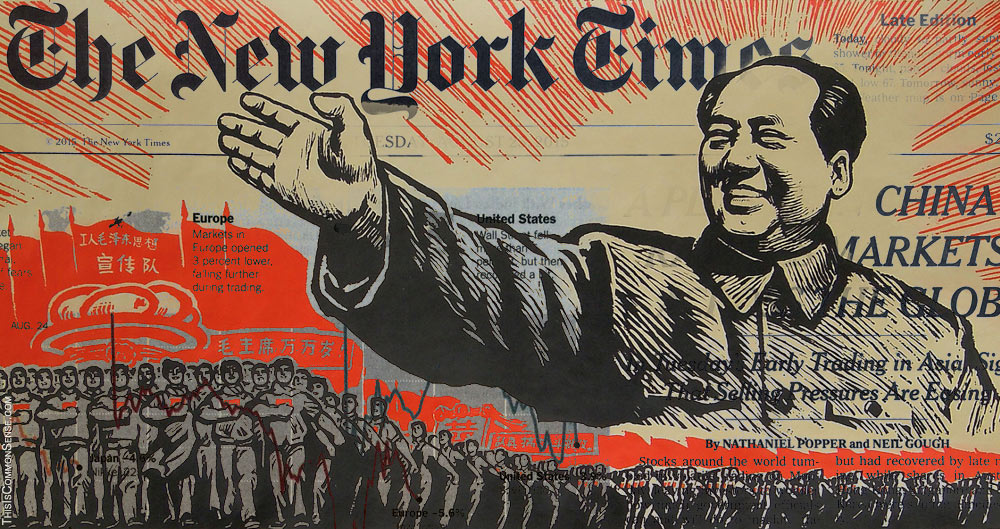
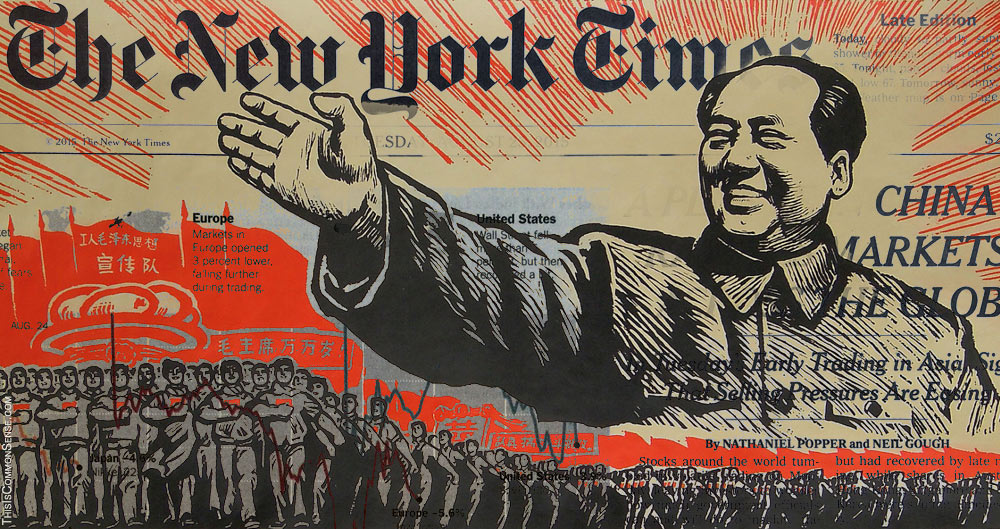
But Helen Raleigh, a writer for The Federalist who is an immigrant from China, finds that the Times does indeed persist in glossing over the sins of Communism. In commemorating the centenary of the Bolshevik Revolution, the paper is “once again proving itself Communism’s greatest apologist” through articles variously arguing that “women had better sex under socialism to now claiming China’s Communist revolution taught Chinese women to ‘dream big’…”

As if, suggests Raleigh, Duranty’s ghost were still calling the shots.

In rebuttal, she recounts what so many people suffered under Communism, as exemplified by the fate of her Aunt San.

At age 15, her aunt was forced by Mao’s government to leave the city and work in the countryside, separately from her siblings, who were forced to do the same but in different villages. Cutting family ties was important “so people could devote themselves 100 percent to the Communist Party’s causes.”

Primitive farming, mandatory singing of gruesomely cheerful revolutionary songs, food rations, malnutrition, ritual humiliation, derailed education, derailed or extinguished lives.

Just a few of the standard ingredients of the totalitarianism that, according to the Times of 2017, taught women to “dream big.”

Which should remind us: despite only a few countries’ close ties to the doctrine — Cuba, Venezuela, North Korea — Communism’s threat to world peace, prosperity, and freedom remains big.

The Times must change.

This is Common Sense. I’m Paul Jacob.


PDF for printing


Categories
general freedom initiative, referendum, and recall political challengers Regulating Protest

Self-Determination, Anyone?

An election can be a clarifying event.

So can the suppression of an election.

Over the weekend, more than two million Catalans, greater than 40 percent of those eligible, voted in a referendum on independence from Spain. To which Spain’s Prime Minister Mariano Rajoy declared, “There was no independence referendum in Catalonia today.”

Rajoy certainly tried to stop it.

Spanish authorities shut down referendum websites and sent hordes of national police into the region to seize ballots and forcibly prevent people from voting. News reports are full of those police using rubber bullets on crowds, smashing their way into polling places and roughing up people.

Nearly a thousand citizens of Catalonia were injured in various clashes.

While the referendum result was a lopsided 90 percent opting for independence, previous polling shows Catalans split on the question. Perhaps the suppression worked best with those opposed to separation from Spain, who seem to have stayed home.

Let the people have a fair vote and follow the result. Anything less suggests support for the unthinkable: holding the Catalans in Spain against their will.  

Last week, Iraqi Kurds also held a referendum in which voters overwhelmingly favored separation — in this case from Iraq and for the formation of their own wholly independent nation. And, likewise, others, including the United States, tried to block the vote. Thankfully, not by force.

Yet. Turkey and Iran oppose an independent Kurdistan because they fear it will embolden demands by their own Kurdish populations for greater autonomy. Or independence.

In a world with respect for freedom, the principle is obvious: self-determination. Take it as far as you like.

Or even as far as Ludwig von Mises took it.*

This is Common Sense. I’m Paul Jacob. 


* “The right of self-determination,” Mises wrote in Liberalism (1927), “in regard to the question of membership in a state thus means: whenever the inhabitants of a particular territory, whether it be a single village, a whole district, or a series of adjacent districts, make it known, by a freely conducted plebiscite, that they no longer wish to remain united to the state to which they belong at the time, but wish either to form an independent state or to attach themselves to some other state, their wishes are to be respected and complied with. This is the only feasible and effective way of preventing revolutions and civil and international wars.”


PDF for printing


Categories
folly ideological culture national politics & policies political challengers U.S. Constitution

O That Wacky Gerrymandering

Hillary Clinton: always wrong.

Oh, I’m sure that when she tells the maid “We need milk,” she’s accurate enough. Otherwise — forget it.

Her latest howlers pertain to the movement to convene a Convention of States. If two thirds of the states call for the convention, it “will be” convened, per the U.S. Constitution. If 38 states approve a convention-proposed amendment, it will be added to the Constitution.

Different pro-convention groups support different amendments, on everything from a balanced budget to spending limits to term limits. U.S. Term Limits is promoting a Term Limits Convention to propose an amendment for congressional term limits. 

A great idea.

Clinton, though, sees calamity: “The right wing, aided and funded by the Mercers, Koch brothers, etc. [sic], is very serious about calling a constitutional convention,” she warned recently.

“Part of their gerrymandering is to control state legislatures, elect Republican governors, and to call a constitutional convention [no, a convention of states] and,” the author of What Happened elaborates, “if you really get deep into what they are advocating, limits on the First Amendment, no limits on the Second Amendment, limits on criminal justice . . . [A] very insidious right-wing agenda.”

Gee, the old multiple-fallacies-and-vague-ominous-assertions-per-second trick!

First, how to “gerrymander” statewide gubernatorial elections?

Or “gerrymander” the enthusiasm of millions for restraints on government?

Or apply the districting concept to the Founders’ constitutional provision for end-running Congress?

As for the political issues she blunderingly raises, Clinton seems to regard any political disagreement whatever with herself as proof of billionaire-funded “right-wing conspiracy.”

Well, left-wing conspirators always say such things.

This is Common Sense. I’m Paul Jacob.


PDF for printing


Categories
Accountability general freedom incumbents term limits too much government

Keystone Correlation

Ninety-three-year-old Robert Mugabe has ruled Zimbabwe with phony elections and brutal repression for the last 30 years. Conversely, only one president in U.S. history has served more than two four-year terms, and after that single exception a constitutional amendment was enacted, limiting the terms of future presidents to the traditional two terms.* 

Americans are better for the limited tenures; Zimbabweans worse for the longevity. 

Recently, Illinois was declared the most dysfunctional state in the union. Illinois also boasts the nation’s longest-serving — and by far the most powerful — Speaker of the House, Michael Madigan. What irony that incumbency should wreck the Land of Lincoln, when favorite son, Honest Abe, represented his Illinois district in Congress for only a single term and then stepped down as was the custom for the local party. 

In bankrupt Harrisburg, Pennsylvania, former Mayor Stephen Reed held power for 28 years (nearly as long as Mugabe and Madigan) during which time he managed to plunge the city into insolvency.

After leaving office, Reed also pled guilty to 20 counts of theft from the city. But was mysteriously sentenced to merely two years of probation.

There’s no question that the city of Harrisburg was traumatized by power being concentrated in one individual for an enormously long period of time,” current Mayor Eric Papenfuse acknowledged. “I don’t think anyone wants to see that again.”

The Harrisburg City Council hasn’t taken any action yet, but there appears to be ample support for term limits across the board, including from council members.

Understanding the correlation between long-serving politicians and long-suffering constituents is the keystone to critical reform.

This is Common Sense. I’m Paul Jacob. 


*  Technically, a president could serve up to ten years, as the 22nd Amendment prohibits a person from being elected president more than twice or if the person has “held the office of President, or acted as President, for more than two years of a term to which some other person was elected President . . . more than once.”


PDF for printing


Categories
Accountability folly free trade & free markets too much government

Jonesing for Disaster

First, do no harm. Second, stop harming.

You might think that these would be the Two Commandments of Government.

But no.

Politicians make a good show of saving us, sure. Sadly, appearance alone suffices. For them. Much easier to announce a new program than get rid of a harmful old one.

Latest case? Courtesy of a storm and a new president, we now get to witness hurricane recovery mismanagement all over again, but this time outside the continental United States.

“The administration announced some bad news for Puerto Rico,” writes Scott Shackford at Reason. It will not, Mr. Shackford explains, “be waiving the Jones Act, which significantly restricts the ability of foreign or foreign-owned ships from bringing goods to Puerto Rico.”

The “unincorporated U.S. territory” that is the island must take its lumps.

The Jones Act* limits foreign ships port access . . . down to one. The mandate allowing port-to-port commerce only to American-manned ships is designed to save a few jobs and grease a few union wheels in the mainland.

And now, especially, that old, ongoing “centralized government planning for the benefit of a small group of powerful U.S. shipping interests” amounts to a real kick to a people already devastated by Hurricane Maria.

Closing ports to much needed help doesn’t help. An emergency order could suspend the ongoing harm of throwing roadblocks in the way of a swift recovery and rebuilding.

Or Congress could repeal the Jones Act entirely.

Neither is likely.

So the wounded Puerto Ricans — prior to the storm hobbled by years of territorial misgovernance — can expect more fake government help.

This is Common sense. I’m Paul Jacob.


* Not to be confused with the Jones-Shafroth Act of 1917, which set up territorial  governance of the island.


PDF for printing


Categories
Accountability general freedom ideological culture media and media people moral hazard nannyism national politics & policies

Off the Field

At last Friday’s event to rally support* for Sen. Luther Strange, the Mitch McConnell-financed establishment candidate in today’s GOP runoff in Alabama, President Donald J. Trump veered — as he is wont to do — off topic: the NFL players refusing to stand for the national anthem.

Wouldn’t you love to see one of these NFL owners,” the commander-in-chief asked the crowd, “when somebody disrespects our flag, to say, ‘Get that son of a bitch off the field right now. Out! He’s fired!’?”

Trump’s trash-talking touched off bigger protests before Sunday’s games. Some argued the president was undermining freedom of expression. But, of course, the president was freely expressing himself.

And no doubt speaking for many others.

Polling conducted last year, after former San Francisco 49ers quarterback Colin Kaepernick first took a knee during the pregame anthem — which started this trend — found a majority opposed to his actions.

“NFL ratings are down massively,” the President correctly remarked.

The National Football League’s television ratings dropped 8 percent last year, and so far 2017’s ratings are down an additional 15 percent. Moreover, in a massive JD Power survey, the protests during the anthem were the top reason given for not watching the NFL.

Of course, Kaepernick was making a political statement, not trying to maximize his dollar-value in the marketplace. The now mysteriously unemployed quarterback said a year ago, “If they take football away, my endorsements from me, I know that I stood up for what is right.”

Whether one agrees with Kaepernick or not, he is paying a steep price to make a point. Firing folks won’t silence the message.

This is Common Sense. I’m Paul Jacob. 


* The president oddly quipped of his Strange endorsement: “There is something called loyalty, and I might have made a mistake and I’ll be honest, I might have made a mistake.” Trump added that Strange and his GOP opponent, Judge Roy Moore, were “both good men” and he would campaign hard for either Republican.


PDF for printing


Categories
Accountability folly general freedom ideological culture media and media people national politics & policies too much government

We Are At War — So What Else Is New?

As if on some hellish, punitive treadmill, we keep “experiencing” the last federal election, over and over.

Hillary Clinton, who didn’t get a majority of all votes and who lost in the Electoral College, keeps on grinding through her long list of people who failed her.

Her nuttiest charge, that “Russia ‘Hacked’ the election,” reached its apogee, last week, in the bizarre video featuring Morgan Freeman. The actor, who’s played both the President and God, intones that “We have been attacked; we are at war.”

Financed by a cobbled-together Committee to Investigate Russia, the notion seems to be: stretch Hillary Clinton’s conspiracy theory into the talking points for . . . a coup d’état.

Congress is, of course, investigating “what Russia did.”

Unearthed, so far? Not much.

As James Freeman wrote, in The Wall Street Journal, considering the paltry Russian presence on Facebook, “if Russian disinformation managed to change the outcome of the U.S. presidential contest, the Kremlin must have created the most influential advertising in the history of marketing.”

And when you add in the FBI’s multiple FISA requests to bug Trump’s campaign manager, it’s hard not to come to this conclusion: it was not Trump, but the Deep State that colluded with the Russians.

The Committee/Freeman video talks about “using social media to present propaganda and false information,” which puts the “hack” on the level of ideas — not real manipulation. Propaganda from the Kremlin is not appreciably different from propaganda from Clinton or Trump.

Lies were everywhere, and if “false information” were worth declaring war over, the American people would have revolted against Washington, D.C., decades ago.

This is Common Sense. I’m Paul Jacob.


PDF for printing


Categories
Common Sense folly free trade & free markets general freedom ideological culture media and media people moral hazard nannyism national politics & policies

Evil Capitalists Hook Brazil On Eating

Have you heard the latest?

More and more peoples around the world these days have the unfortunate misfortune of having adequate food — not merely vegetables either!! — thanks to the ruthlessly profit-seeking food producers and their unconscionable engagement in the division of labor, capital accumulation, and international trade.

It’s right there in The New York Times, which is, as you know, the paper of record.

“DealBook: How Big Business Got Brazil Hooked on Junk Food.”

Dastardly! Those Big American Businessmen must have kidnapped the Brazilians, strapped them into chairs, and pumped Doritos into those poor souls with a syringe. Heaven knows, the fecklessly irresponsible Brazilians can’t be held responsible for their own diets.

How bad is it?

This bad: “As growth slows in wealthy countries, Western food companies are aggressively expanding in developing nations, contributing to obesity and health problems.”

One expert quoted in the story (no hungry people consulted) says, “Part of the problem . . . is a natural tendency for people to overeat as they can afford more food.”

Worse than Hurricane Irma!

Thanks to the Times’s aggressive investigative journalism, we know that these brazenly food-selling companies do not even nag their international customers to be careful about their diets. Ergo, it’s chips and other indiscriminately convenient snacks for everybody, no strings attached.

It’s become all too easy to be well-fed and overfed and mis-fed.

Thanks a lot, capitalism.

Oh for the good old hunting-and-gathering days when human beings spent much of their time starving, and the world had the human population of Binghamton. No problem with anyone gorging on Twinkies and Doritos back then. No problem of epidemics of corpulence.

We’ve lost that swell paradise . . . perhaps forever.

This is Common Sense. I’m Paul Jacob.


PDF for printing


Illustration based on original photo by David Goehring on Flickr.


Categories
Accountability ballot access general freedom government transparency ideological culture initiative, referendum, and recall insider corruption local leaders national politics & policies property rights Regulating Protest responsibility too much government U.S. Constitution

The Great Faction

Politics isn’t a pretty business.

Frédéric Bastiat called the beast it serves “that great fiction” not because it doesn’t exist — intrusive state power sure persists — but rather because what it promises cannot really happen: “everyone living at the expense of everyone else.”

What can we do? How do we counteract a game that is rigged to increase the insanity, not reduce it?

Last week I indicated one thing a minor party with that goal in mind could do: use its power of spoiling elections to change major party behavior, and thus give citizens a fighting chance to restrain governmental metastasis.

Cancer.

I also suggested “blackmailing” the major parties into setting up a system of voting that . . . ends the power to blackmail! I believe that system — ranked choice voting — holds many positives, not the least of which is ending strategic voting, wherein voters are tempted to “falsify” their own preferences and support candidates they might dislike. This is as corrupting to the citizenry as the Great Fiction itself.

Let’s hope a savvy minor party leverages the major parties, gaining reforms to improve the system. Regardless, we can all — independently — push two other limits on political power:

  1. term limits at all levels, and
  2. initiative and referendum rights in all the states, not just the 26 that have it now.

Initiative and referendum rights would give ordinary citizens the leverage to possibly restrain the mad rush to live at each others’ expense. With the initiative, citizens can gain term limits, which produce more competitive legislative elections and lead to fewer legislators captured by the interests loitering in the capitol.

This is Common Sense. I’m Paul Jacob.


PDF for printing