Categories
crime and punishment government transparency subsidy

Learing in Minnesota

These days, we are apt to see the “meme” (joke) about the news before the news itself.

Take “Learing.” If you haven’t seen Nick Shirley’s YouTube video blowing the lid off what has quickly become the biggest fraud story of our time, you may not get the joke.

Some 30 days ago, my “Red-​Flagged Welfare Fraud” decried “the more than $1 billion in fraud” conducted mostly by Somalis in Minnesota, taking taxpayer money and siphoning it off for personal and perhaps even terrorist benefit. Two weeks later, a weekend update — “Walz Waltzes, Spins” — discussed the Governor of Minnesota’s lame attempts to seem “in charge.”

Now, the fraud total is estimated to be over nine billion!

A new element of the story is young Mr. Shirley’s reporting. He went to “day care centers” all over Minneapolis, confronting “workers” and noticing there were no children actually being fed or taught. These were sham programs. 

In a partly funny moment, he appeared in front of one alleged day care that had misspelled its own name on the building’s sign: “Quality Learing Center.” 

A whole lot of folks on X — but not on BlueSky — thought this was funny-haha. 

The rest of us shake our heads. It may not even be funny-peculiar, as inquiries into more states have begun, with Washington and Ohio receiving the most attention so far.

We’ll need more Nick Shirleys to cover it all, for the mainstream press has shown … some reluctance to put in much elbow grease.

Meanwhile, there is a silver lining, expressed last night on Hannity by Terry Schilling of the American Principles Project: “It actually kind of makes me relieved that there were no children in these obviously corrupt and probably dangerous daycare facilities.”

This is Common Sense. I’m Paul Jacob.


PDF for printing

Illustration created with Nano Banana

See all recent commentary
(simplified and organized)

See recent popular posts
Categories
litigation Tenth Amendment federalism U.S. Constitution

Planned Parenthood Gets the Boot

Medicaid is a huge handout and also a massive burden, straining resources and tax revenues, and (of course) adding to the debt. It is also known for its complexity, a federal program run by the states. 

Some reformers, seeing the program as an over-complicated mess, yearn to “simplify” it by providing medical care as a “free” federal program. Others, concerned about the dangers of centralization and the obvious incompetence of bureaucracies far removed from taxpayers, advise collapsing Medicaid completely back to the states, to be organized and funded locally.

In this context, the Supreme Court’s ruling yesterday allowing South Carolina to remove Planned Parenthood from its Medicaid program is instructive.

“The majority opinion in the 6 – 3 decision in Medina v. Planned Parenthood South Atlantic was written by Justice Neil Gorsuch,” explains Matthew Vadum in The Epoch Times. “The new ruling reverses a federal appeals court decision that blocked South Carolina from excluding Planned Parenthood from the program.”

The key issue in the litigation regards a supposed right to choose medical providers: South Carolina, by dropping Planned Parenthood, was alleged to be abridging the right of recipients to choose their medical providers.

Remember that choosing your doctor was falsely promised by President Barack Obama in his medical insurance scheme — so, obviously, the option is highly valued by Americans. But is it a “right”?

“New rights for some mean new duties for others,” Justice Gorsuch wrote, elucidating a basic principle of legal philosophy. 

Applying the idea of rights to government handouts (in which taxpayers are on the hook) is a recipe for disaster. 

Applying federalism, on the other hand, makes not only constitutional sense, but — because the states are closer to both taxpayers and those in need — Common Sense.

I’m Paul Jacob.


PDF for printing

Illustration created with Krea and Firefly

See all recent commentary
(simplified and organized)

See recent popular posts
Categories
subsidy tax policy

Oh, SNAP!

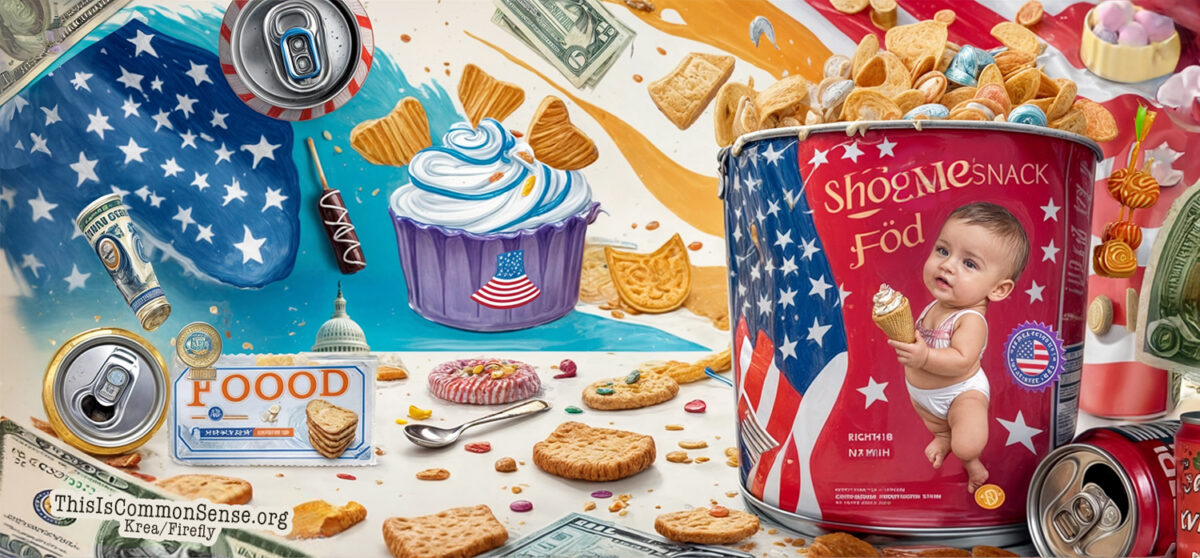
It appears that recipients of “food stamps” (the Supplemental Nutrition Assistance Program, or SNAP) “often have lower diet quality and higher rates of diet-​related health issues compared to non-​participants,” according to an article in healthjournalism​.org

“While it’s unclear whether SNAP directly causes these outcomes or if other factors are at play, some argue that the program, at minimum, sustains unhealthy eating habits by not restricting purchases of nutritionally poor foods.”

Among the “some” who argue for restrictions is Robert Kennedy, Jr., head of Health and Human Services. He promises to purge unhealthy foods from the subsidy list.

Currently, the taxpayer-​funded “benefit” may “be used for ‘any food or food product intended for human consumption,’ except alcohol, tobacco and hot foods, including those prepared for immediate consumption. Critics argue that SNAP’s allowance for purchasing sugary snacks, soda and junk food promotes unhealthy eating habits, which can lead to obesity and other related health issues.”

The critics are undoubtedly correct; indeed, the proposed limitations will almost certainly be too tame. 

If the program must exist, it should do good without enabling demonstrable harm. So instead of a cumbersome and extensive list of prohibited food items, there should be a concise list of allowed categories:

  • uncooked meats and dairy products without added sugars
  • fresh, frozen, dried, and canned beans, fruits and vegetables
  • staple ingredients of traditional meals, such as flour, spices, and oils

Some rail against any idea of restricted benefits, but government handouts are not there to expand the “freedoms” of the poor; they are provided to help folks weather hard times. 

The freedoms of taxpayers have already been sacrificed for their sake. Forcing taxpayers to watch SNAP’s EBT card users in the grocery line buying candy and sodas adds insult to the benefactors while injuring the beneficiaries.

This is Common Sense. I’m Paul Jacob.


PDF for printing

Illustration created with Krea and Fireflly

See all recent commentary
(simplified and organized)

See recent popular posts

Categories
national politics & policies subsidy tax policy

Kamala Hood

American politics is largely devoted to the grand task of taking from some and giving to others, a sort of Robin Hood mania that has nothing to do with giving back to taxpayers what was taken from taxpayers (as in the legend) — or doing much of anything for the poor — but, instead, to ostentatiously give to some and quietly take from as many people as possible.

Nevertheless, that giving is not always ostentatious. Sometimes it is surreptitious

Or at least not ballyhooed.

Kamala Harris has taken up an old Democratic Party stalking point: soak the rich! Though she tries not to mention just how much money she and her fellow Biden Administration insiders have been giving to a few big corporations.

“Despite Harris’ rhetoric of fighting for the middle class,” writes Jack Salmon at Reason, “her policies have disproportionately benefited the wealthy and large corporations while leaving middle- and lower-​income Americans behind. Far from soaking the rich, Harris’ legacy has been one of feeding them.”

Corporate subsidies have “exploded,” explains Mr. Salmon, going from a ten-​year budget allocation of $1.2 trillion in 2021 to now surpassing $2 trillion.

Nearly doubled!

“The beneficiaries of this largesse are extremely concentrated,” Salmon notes, most of it going to “just 15 large corporations, seven of which are foreign.” Of course, a lot of this is under cover of “saving the planet” and fighting “climate change”: “Wind turbine manufacturers like General Electric, Vestas, and Siemens/​Gamesa — who collectively produce 79 percent of all turbines — are among the biggest winners.”

Robbing from the few and giving to the many makes neither for good mathematics or a winning political strategy. Robbing from the many and giving to the few is what usually works. But if your appeal is to “the left,” you have to pretend to grab most from the super-​rich few.

Your pals.

This is Common Sense. I’m Paul Jacob.


PDF for printing

Illustration created with PicFinder and Firefly

See all recent commentary
(simplified and organized)

See recent popular posts
Categories
ideological culture subsidy

Race-​Based Handouts?

The decision won’t be the end of the matter, but it’s a good sign.

U.S. District Judge Mark Pittman has ruled that a federal agency established to give subsidies to businesses, in its current form called the Minority Business Development Agency, may no longer use race or ethnicity as a criterion for distributing benefits.

The ruling comes in response to a lawsuit filed by the Wisconsin Institute for Law & Liberty on behalf of three business owners who weren’t allowed to apply for help from the MBDA because they’re white. The plaintiffs argue that the Agency violates the constitutional requirement of equal treatment under the law.

According to Judge Pittman, although “the Agency may intend to serve listed groups, not punish unlisted groups, the very design of its presumption punishes those who are not presumptively entitled to MBDA benefits.”

Supporting rights-​based governance, I’m no fan of any welfare programs. As long as we have them, though, why should the handouts or the ability to apply for them be determined by race?

Government-​imposed racial discrimination is unjust on its face. It should be extirpated wherever it exists. The Minority Business Development Agency is one of those places.

If Pittman’s ruling is allowed to stand, it may have a salutary effect on many other agencies and programs. 

The MBDA’s name presents a problem, however. 

I guess it won’t be too hard to remove the word “Minority” and call the agency the Business Development Agency. 

Or just shut it down.

This is Common Sense. I’m Paul Jacob.


PDF for printing

Illustration created with PicFinder and Firefly

See all recent commentary
(simplified and organized)

See recent popular posts
Categories
subsidy too much government

Throwing Big Bucks at the Rich

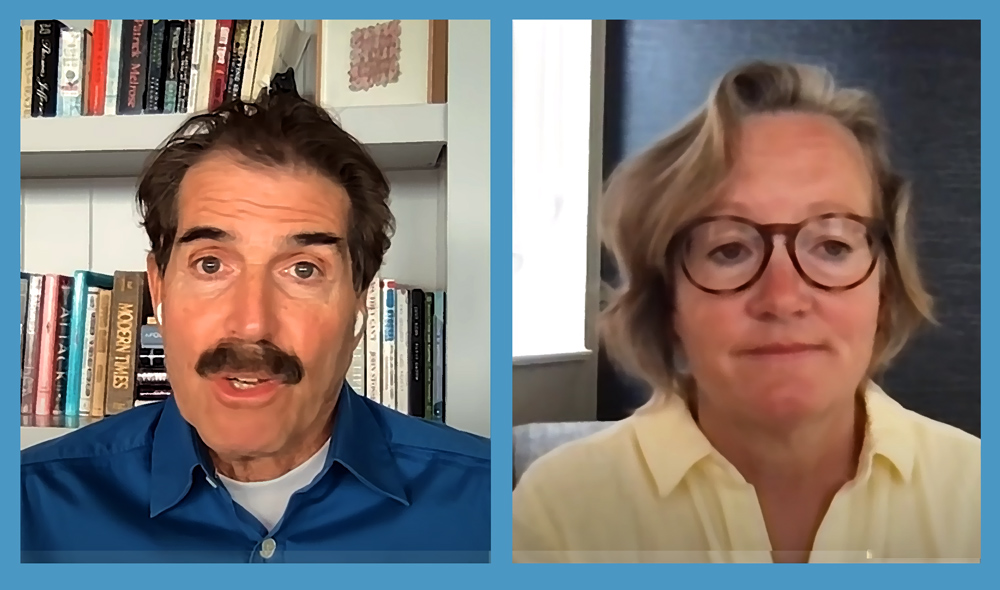
John Stossel’s latest YouTube video focuses on the many ways “your tax dollars end up in millionaires’ pockets.” 

In an interview with Lisa Conyers, co-​author of Welfare for the Rich, they deplore how recent COVID Relief funds went to state governments already flush with surpluses and, disproportionately, to wealthier local communities.

“Politicians also give your money to companies that promise jobs,” explains Stossel, using as an example the Ohio case wherein General Motors closed its Lordstown plant … after receiving tens of millions of tax dollars to keep it open. 

Regarding Wisconsin’s Foxconn subsidy, Conyers notes that it came to a million bucks per job. Actually, Stossel corrects, the cost of each Foxconn job was $1.42 million.

Soon the subject shifts to the spectacular subsidies billionaire sports team owners receive for their lavish stadiums. Some folks apparently still think this welfare is an investment that pays off by stimulating greater economic activity. But Stossel points out the stark math: $188 billion in welfare to the wealthy sports moguls and $40 billion back in benefits. 

“The Vikings stadium is so nice,” Bob Fastner deadpans in a comment left at YouTube, “that I can’t afford to go inside.”

“20 years ago, our small town almost subsidized a sports stadium for all the reasons your program described,” offers Friendly One in another comment. “A small independent radio station brought the true financial history of such projects to public awareness, stopped it. It became a thriving business center instead.”

“The politicians don’t call each other out on this and just continue stealing from us,” observes Kiki The Great. “Something all of us can agree on,” comments Mr. Beat. “End corporate welfare!”

Left or right, we don’t support corporate welfare — so why is there so much of it?

This is Common Sense. I’m Paul Jacob.


PDF for printing

See all recent commentary
(simplified and organized)

See recent popular posts